How Much Is San Giovenale Triptych Worth?
Last updated: April 3, 2026
Quick Facts
- Methodology
- comparable analysis
Practical market value: effectively not for sale while held in the Museo Masaccio d’Arte Sacra in Reggello; institutional custody and Italian patrimony rules make commercial disposition unlikely [1]. Hypothetically, if transferable with clear title and export permission, a comparable‑analysis approach produces a very tentative sale range of USD 2,000,000–15,000,000, with low confidence because of absent auction precedent and restricted liquidity.
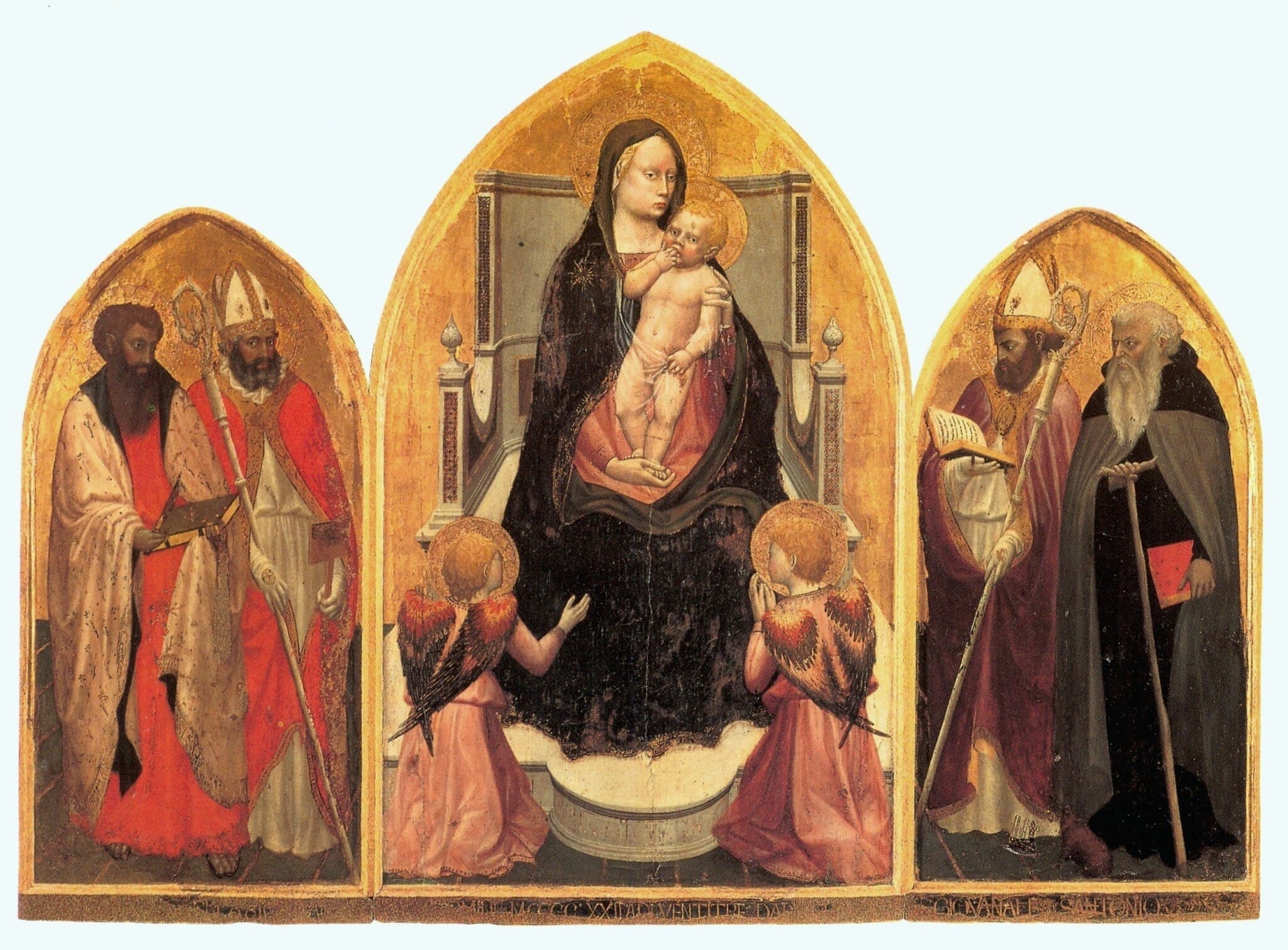
San Giovenale Triptych
Masaccio, 1422 • Tempera on wood (triptych)
Read full analysis of San Giovenale Triptych →Valuation Analysis
Valuation conclusion: The San Giovenale Triptych (c.1422) by Masaccio is for practical purposes off‑market while it remains in the Museo Masaccio d’Arte Sacra in Reggello; under that custodial scenario it is not commercially saleable and its market value is largely academic [1]. If hypothetically transferable with clear title and export permission, a market‑based comparable analysis supports a very tentative sale range of USD 2,000,000–15,000,000. This band reflects the artist’s name premium tempered by the panel’s early/minor status, custodial/legal restrictions, and very low liquidity.
The appraisal uses a comparable_analysis because no securely autograph Masaccio painted panel has appeared in the modern international auction record. I therefore relied on adjacent market signals and adjusted for significance, condition and exportability. High‑profile rediscoveries of Old Master drawings closely connected to Masaccio’s imagery (for example the Michelangelo sheet sold at Christie’s Paris in 2022) and blockbuster Quattrocento painting sales set the market ceiling for rare 15th‑century material; such lots demonstrate potential peak demand but are imperfect analogues for an early Masaccio triptych in museum custody [2][3].
Key drivers behind the range are: (1) attribution and scholarly importance — the triptych is an early documented Masaccio and has strong academic value, which elevates institutional interest; (2) rarity and liquidity — virtually no autograph Masaccio panels circulate, narrowing likely buyers to museums and a handful of deep‑pocketed private collectors; (3) condition and conservation history — the panels’ structural and surface condition (including any 20th‑century restorations after rediscovery) will materially affect price; and (4) legal/cultural constraints — being in Italy and held by a public museum makes export and sale difficult without ministerial clearance [1][4].
The low end (≈USD 2M) represents a conservative, transferable scenario where attribution is accepted but competition is modest, condition is fair, and legal/export obstacles limit bidder participation. The high end (≈USD 15M) is a best‑case outcome requiring exceptional condition, incontrovertible technical corroboration of autograph status, clean provenance and export permission, and vigorous competitive bidding from institutions or leading private collectors. Given the absence of direct auction precedent for Masaccio panels, both endpoints are speculative and the estimate carries low confidence.
To meaningfully narrow the band, obtain: a technical/conservation dossier (dendrochronology, IRR, pigment analysis), documented provenance and cultural‑property status from the museum or Italy’s Ministry of Culture, and an independent market appraisal from Old Master specialists at major auction houses. With those inputs the estimate can be revised to a defensible reserve or acquisition target [1][2][3].
Key Valuation Factors
Art Historical Significance
High ImpactThe San Giovenale Triptych is commonly regarded as Masaccio’s earliest documented panel work (c.1422) and is consequential to scholarship on his formative development—particularly his early use of volumetric modelling and spatial logic. That scholarly prominence increases institutional interest and elevates non‑commercial value (museums, publishers and researchers). However, it is not as publicly iconic as Masaccio’s Brancacci Chapel cycle or the Trinity, so its headline market prestige is lower. In a sale context, academic significance tends to attract museum bids but does not guarantee broad commercial competitiveness without superb condition, provenance and exportability.
Attribution / Authenticity
High ImpactA secure autograph attribution to Masaccio materially raises the painting’s value versus works labelled as workshop or circle. Market confidence depends on technical and documentary support: clear underdrawing, pigment and panel analysis, and consistent provenance strengthen an asking price and draw institutional attention. Conversely, any weakening of the attribution (reclassification to workshop or follower) would reduce value sharply, likely to a small fraction of the Masaccio price band. Robust scientific corroboration therefore has high leverage on market realization.
Rarity and Liquidity
High ImpactAuthentic painted panels by Masaccio are extraordinarily rare in the international market because the canonical works are museum‑held or in‑situ frescoes. That scarcity both supports a high theoretical ceiling for a perfectly transferable masterpiece and suppresses liquidity because the buyer pool is limited—primarily national museums, major international institutions and a tiny set of collectors. Low liquidity increases uncertainty, lengthens marketing/hypothecation timeframes, and typically reduces the number of potential bidders, which can depress realized prices versus theoretical maxima.
Condition & Conservation
Medium ImpactPhysical condition of wooden panels, paint layers and original ground is a major value determinant. The triptych was rediscovered and conserved in the 20th century; any structural issues (splits, worm damage, losses) or intrusive historic restorations will reduce marketability and price. Conversely, well‑documented, reversible conservation treatment and up‑to‑date technical imaging (IRR, X‑radiography) increase buyer confidence and can move the estimate upward. Because the public record does not supply a detailed recent condition report, condition uncertainty is a significant but remediable risk.
Legal & Cultural Restrictions
High ImpactItalian cultural patrimony law and museum ownership are the dominant practical constraints. If the triptych is designated a national cultural asset and is in public custody, export and sale to overseas buyers will be legally constrained or prohibited; deaccession from public collections in Italy is rare and highly regulated. Even if a private owner held clear title, obtaining export licences and satisfying provenance requirements is often onerous. These restrictions sharply reduce the effective market and are the principal reason the work is treated as effectively not for sale.
Sale History
San Giovenale Triptych has never been sold at public auction.
Masaccio's Market
Masaccio (Tommaso di Ser Giovanni di Simone) is a canonical early‑Renaissance master whose surviving painted oeuvre is small and largely museum‑held. Because key works are in situ or institutional collections, there are virtually no modern public auction comparables for securely autograph Masaccio paintings. Market interest in the Masaccio name therefore concentrates on drawings, workshop pieces, and rediscoveries tied to his imagery; prices for those categories can be strong when scholarship is robust. Institutional demand is the primary value driver for any Masaccio painting, but legally transferrable painted panels are rare and attract a limited, specialist buyer pool.
Comparable Sales
A Nude Man (after Masaccio) and two figures behind him
Michelangelo Buonarroti
Directly tied to Masaccio's Brancacci imagery (a Michelangelo sheet after Masaccio); shows collector demand and headline pricing for material linked to Masaccio's visual legacy.
$24.3M
2022, Christie's Paris
~$26.7M adjusted
Portrait of a Young Man Holding a Roundel
Sandro Botticelli
Top‑end Quattrocento painting sale (Botticelli) demonstrating the market ceiling for rare 15th‑century Italian works; useful to gauge sentiment though Botticelli is materially more prominent than Masaccio.
$92.2M
2021, Sotheby's New York
~$106.0M adjusted
Madonna of the Magnificat
Sandro Botticelli
Marquee sale of a high‑quality 15th‑century Italian masterpiece; indicates continued institutional/collector willingness to pay tens of millions for major Quattrocento paintings.
$48.5M
2022, Christie's New York (The Collection of Paul G. Allen)
~$53.4M adjusted
Current Market Trends
The Old Masters market is currently top‑heavy: rare rediscoveries and marquee Quattrocento lots drive headline prices while the broader segment remains selective. Recent high‑profile sales of drawings and Botticelli masterworks have lifted interest in 15th‑century material; concurrently, restorations and scholarship on the Brancacci cycle have increased attention to Masaccio’s visual legacy. These trends support high ceilings for scarce, well‑provenanced works, but also accentuate liquidity and attribution risks for pieces like the San Giovenale Triptych.