How Much Is Virgin and Child (central panel of the Pisa Polyptych) Worth?
Last updated: April 3, 2026
Quick Facts
- Methodology
- comparable analysis
If accepted as an autograph Masaccio, in sound condition with clear title and legally exportable, the Virgin and Child (central panel of the Pisa Polyptych) would realistically be valued in the range USD 20–150 million. If attribution, condition, provenance or exportability are in doubt, market interest is likely to fall to a USD 5–25 million band. The work is currently held by the National Gallery, London (NG3046) and has not been offered on the modern open market [1].
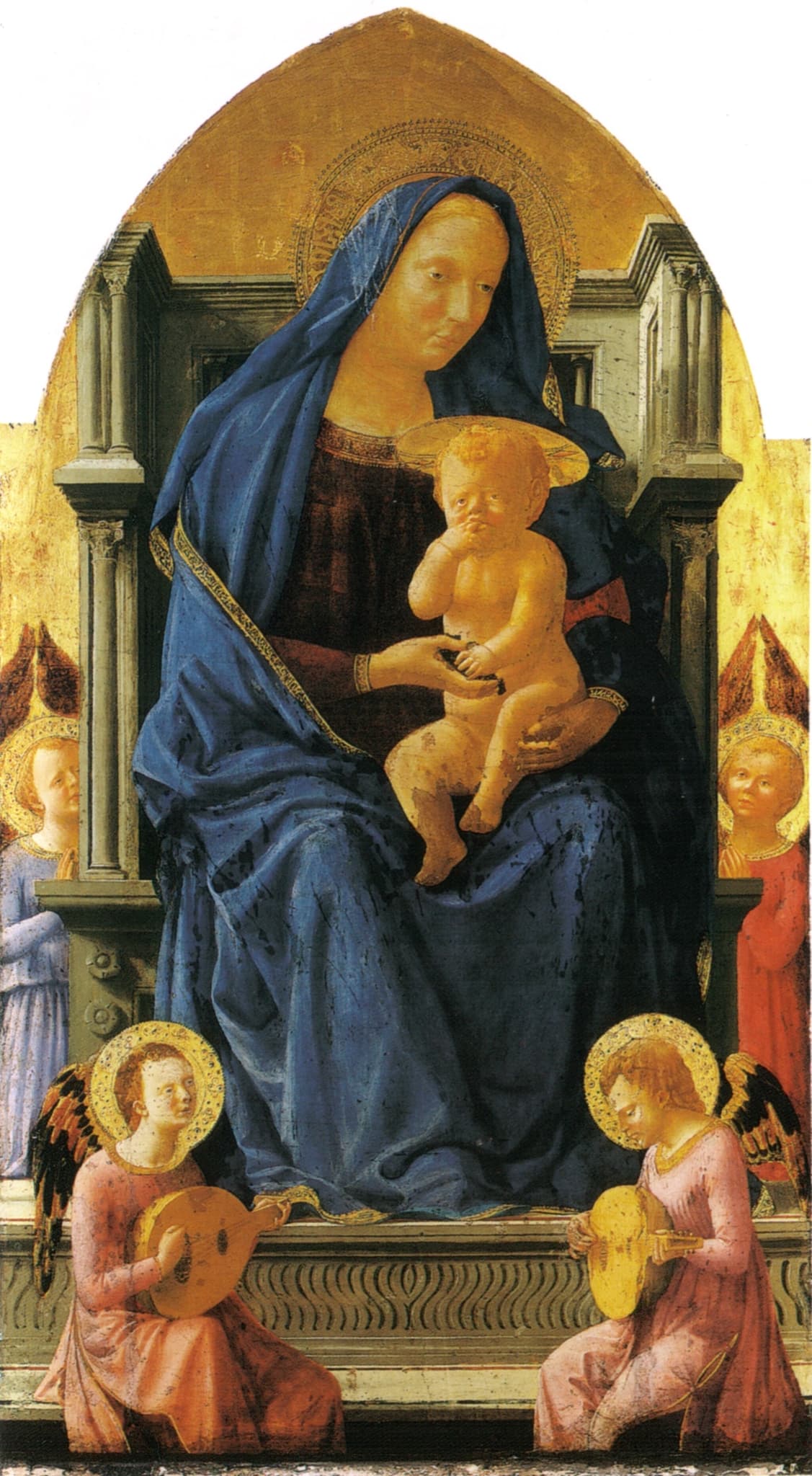
Virgin and Child (central panel of the Pisa Polyptych)
Masaccio, 1426 • Tempera on panel
Read full analysis of Virgin and Child (central panel of the Pisa Polyptych) →Valuation Analysis
Valuation summary: This assessment treats Masaccio's Virgin and Child (central panel of the Pisa Polyptych) as a hypothetical market object under four key assumptions: accepted autograph attribution, sound physical condition, clear title, and legal exportability. Under those conditions a realistic market range is USD 20–150 million, with a working expectation in the multi‑tens of millions; if attribution, condition or exportability are doubtful, market interest would likely fall to the US$5–25 million band. The panel is currently in the National Gallery, London (NG3046) and has not been offered on the modern open market, so direct auction comparables are limited [1].
Why this range: Masaccio is a formative figure of the early Quattrocento and securely attributed portable works are extremely scarce. Scarcity combined with canonical importance places an authenticated Masaccio panel in strong institutional and private demand. Comparable sale data are necessarily indirect: authenticated exceptional Renaissance material can realize low‑tens of millions at auction (for example, a rediscovered Michelangelo drawing at Christie’s in 2022) while isolated outliers demonstrate the very highest market ceilings for rare canonical works [2][3]. A Masaccio panel is generally less market‑dominant than the rarest Leonardo or Michelangelo works, but far more valuable than typical workshop pieces.
Key contingencies: Attribution certainty and technical confirmation (infra‑red reflectography, X‑radiography, pigment analysis and, for wood supports, dendrochronology) are decisive. Condition and conservation history directly affect both aesthetic appeal and insurability; heavy overpaint or structural instability steeply reduce realizable value. Provenance completeness and legal/exportability are equally important: Italian patrimony and national preemption rights can prevent or delay export and sale, effectively narrowing the buyer pool or removing the work from the open market entirely [1].
Sale scenarios: (1) Clean attribution, prime condition, exportable: strong institutional competition and well‑funded private buyers could place the painting within the USD 20–150M band, most likely via a private sale or negotiated transfer. (2) Secure but contested attribution or heavy restoration: realistic market interest probably USD 5–25M. (3) Museum‑held or patrimony‑blocked: effectively not sellable on the open market; value becomes theoretical and relevant to insurance or replacement valuations rather than an auction realization.
Recommendation: To refine value, secure a full conservation report and a targeted technical programme (IRR, X‑ray, pigment analysis, dendrochronology where relevant), complete provenance and title research, and obtain legal advice on export/patrimony. After technical confirmation, obtain formal appraisals from specialist old‑master departments and consult leading museums and dealers. I can coordinate database searches, draft a technical brief, and identify the appropriate specialists to narrow this estimate to a formal market valuation.
Key Valuation Factors
Art Historical Significance
High ImpactMasaccio is central to the development of early Renaissance painting; his innovations in perspective, modelling and naturalism are milestones in Western art. The central panel of the Pisa Polyptych (1426), if accepted as autograph, is a major portable work that exemplifies his mature style outside his fresco cycles such as the Brancacci Chapel. That rare combination of canonical importance and portability makes the panel both a scholarly touchstone and a high‑priority acquisition target for major collections focused on foundational moments in painting. Because securely attributed Masaccio panels are extremely scarce and usually museum‑held, this factor is the single strongest upward pressure on market value.
Attribution & Technical Confirmation
High ImpactAttribution is the primary determinant of market value for a Quattrocento panel. Confirmatory technical evidence—clear underdrawing patterns consistent with Masaccio's hand, pigment and binder analysis that match period materials, and dendrochronology where applicable—can convert an attributed or workshop piece into an autograph, dramatically increasing value. Infra‑red reflectography revealing compositional changes and characteristic working methods is particularly persuasive. Ambiguous or contradictory technical results, or evidence of later overpainting, materially reduce buyer confidence and compress the price expectation. Consequently, dealers and institutions demand comprehensive technical reports before committing to purchase.
Condition & Conservation History
High ImpactPhysical condition and the recorded conservation history are immediate determinants of market acceptability and price. Structural stability of the support, integrity of the original ground and paint, degree of craquelure, evidence of historic loss, and the extent and quality of restorations all affect aesthetics, long‑term stability, and insurability. High‑quality, well documented conservation that reveals substantial original paintwork supports top‑end valuations; conversely, large fills, heavy overpaint, or unstable joins substantially diminish market interest and raise insurance and shipping complications. A full condition report is a non‑negotiable precondition for major sales.
Provenance & Legal/Exportability
High ImpactComplete, unbroken provenance into the nineteenth century and beyond reduces title risk and increases buyer confidence. The panel's recorded history — origin in Pisa and later nineteenth‑century ownership before museum acquisition — is helpful for authenticity but also implicates cultural property regimes. If a work is subject to national patrimony controls or institutional retention, export can be impossible or limited, effectively removing it from the global free market. Institutional preemption rights and heritage claims can delay or prevent sale; therefore provenance research and clarity on export permissions are essential to any realistic market valuation.
Market Rarity & Demand
Medium ImpactSecurely attributed Masaccio panels are extremely rare; because supply is effectively zero to very low, any market appearance would attract intense attention. Demand is bifurcated between museums (which face budgetary and legal constraints) and high‑net‑worth private buyers (who can pay top prices but may be cautious about contested attributions and export limitations). Recent high‑profile Old Master sales demonstrate willingness to pay significant sums for fresh, authenticated material, but patrimony issues and scholarly dispute mean realized prices vary widely and are highly context dependent.
Sale History
Virgin and Child (central panel of the Pisa Polyptych) has never been sold at public auction.
Masaccio's Market
Masaccio occupies an outsized place in art history relative to the number of surviving portable works. His innovations in perspective and naturalistic modelling mark a turning point in Western painting, but most canonical works (notably his frescoes) are immobile and held by institutions. Consequently his market presence is minimal and liquidity low; when a securely attributed panel appears, rarity elevates demand from leading museums and well‑funded private collectors. Price formation is episodic and driven by institutional budgets, legal controls and scholarly consensus, which supports high valuations for authentic works but makes realized prices infrequent and unpredictable.
Comparable Sales
Salvator Mundi
Leonardo da Vinci
Record public‑market price for a canonical Renaissance masterpiece; while far more famous and singular than Masaccio, it defines the extreme upper bound the market has paid for a major Renaissance autograph work.
$450.3M
2017, Christie's New York
~$585.4M adjusted
A Rediscovered Michelangelo Drawing (study)
Michelangelo Buonarroti
Recent high‑end sale for an authenticated Renaissance autograph work (drawing). Demonstrates that exceptional, securely attributed Renaissance material can reach low‑tens of millions at public sale—even if in a different medium—so is a realistic upper‑mid benchmark for rarity/collector appetite.
$24.4M
2022, Christie's Paris
~$26.8M adjusted
Attributed panel (circle of Andrea di Giusto) — Dorotheum
Attributed to Andrea di Giusto (or circle)
Example of market outcomes for Quattrocento/attributed/circle material: substantially lower realized values than securely attributed masterpieces. Useful as a lower‑end floor when attribution or condition is in doubt.
$22K
2024, Dorotheum (April 2024 sale; attributed/circle lot)
~$22K adjusted
Current Market Trends
The Old Masters market remains supply‑constrained; demand for exceptional, securely attributed early Renaissance works is strong among museums and high‑net‑worth collectors but moderated by cultural‑property rules and cautious institutional budgets. Recent high‑profile sales show appetite for rarity, yet provenance, exportability and technical certainty increasingly determine outcomes. Institutional priorities often favour loans and research rather than outright purchases, narrowing immediate institutional demand and shifting emphasis to private buyers for the highest‑value portable works. These dynamics justify a wide valuation band tied to attribution, condition and exportability.