How Much Is Portrait of Ambroise Vollard Worth?
Last updated: March 10, 2026
Quick Facts
- Methodology
- comparable analysis
For an authenticated, museum‑quality oil Portrait of Ambroise Vollard (1899) by Paul Cézanne, I estimate a market range of $50–$120 million, with the precise outcome depending on condition, provenance/catalogue‑raisonné status and exhibition history. If attribution, provenance or condition are compromised, value would fall materially below this band.
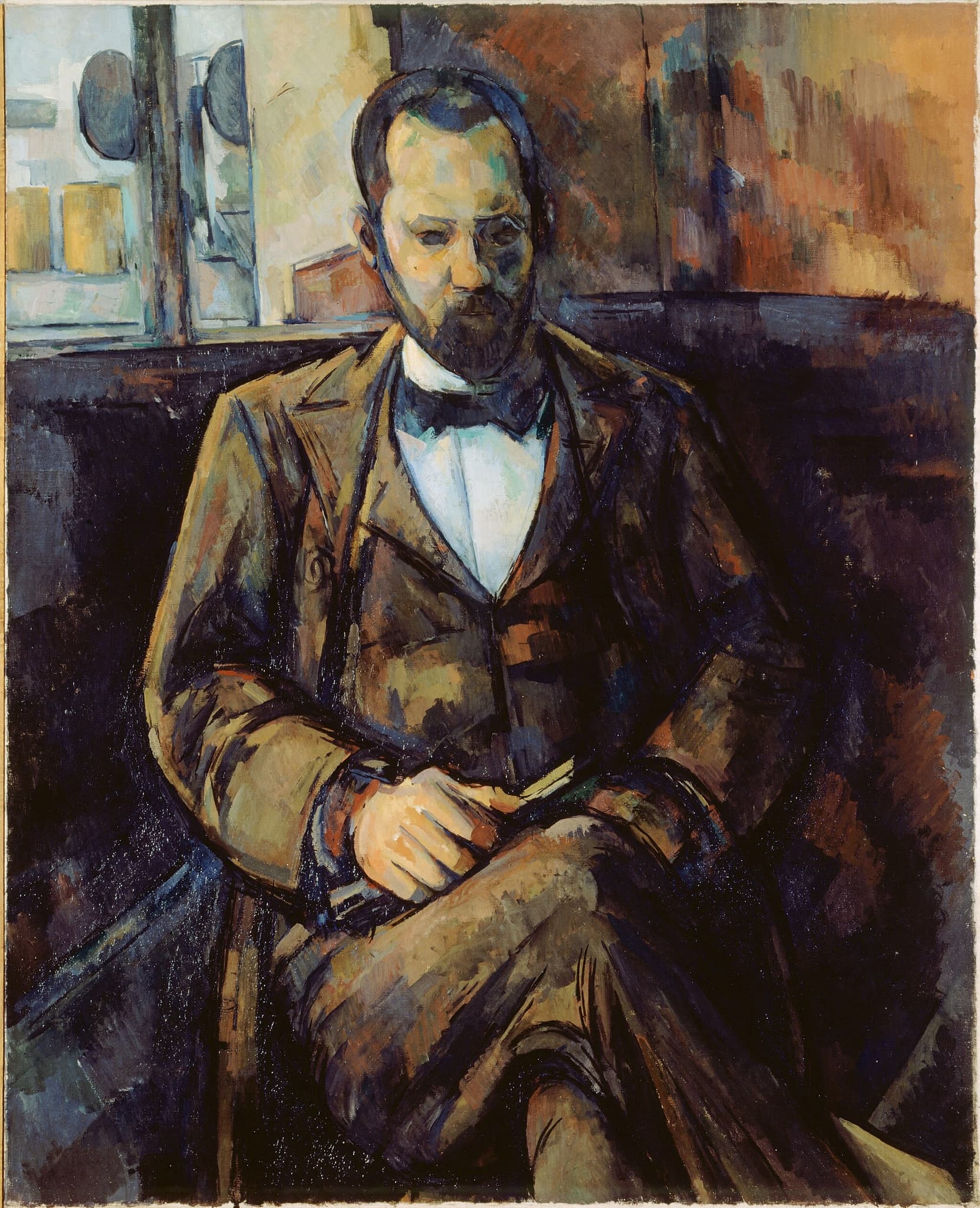
Portrait of Ambroise Vollard
Paul Cézanne, 1899 • Oil on canvas
Read full analysis of Portrait of Ambroise Vollard →Valuation Analysis
Valuation conclusion: Based on a direct comparables analysis of recent high‑end Cézanne sales and the canonical/museum status of the 1899 Portrait of Ambroise Vollard, an authenticated, exhibition‑quality oil on canvas of this subject offered on the open market today would most reasonably be expected to realize in the band of $50,000,000–$120,000,000. This band presumes confirmed catalogue‑raisonné entry, an unbroken provenance, major exhibition/publication history and very good to excellent condition; any significant weakness on those pillars will compress value materially.
Comparables and market anchors: The public auction ceiling for Cézanne is exemplified by the Nov 9, 2022 Mont Sainte‑Victoire sale at Christie’s (reported $137.79M), which sets the trophy benchmark for the artist [2]. Several other mature Cézannes — landscapes and still lifes — have realized in the mid‑tens to low‑double‑tens of millions in recent seasons (for example, works sold at Sotheby’s and Christie’s in 2021–2023) and therefore establish a broad mid‑market band that informs portrait pricing [3][4]. The Petit Palais holds the canonical 1899 portrait in its collection (inventory PPP2100), so that particular canvas has no recent public‑sale history and functions as an art‑historical reference point rather than an available comparandum [1].
How the band was derived (method and weighting): I prioritized direct auction comparables of mature Cézanne oils (40%), provenance/exhibition/catalogue‑raisonné evidence (30%), and condition/technical integrity (30%). Portrait subject matter typically trades below the highest landscape trophies but above undistinguished studio works; therefore a museum‑quality Vollard portrait logically sits in the upper middle market to trophy band. The low end of the band reflects well‑provenanced, authenticated portraits without truly exceptional monumentality or exhibition pedigree; the high end assumes top‑tier scholarly consensus, landmark exhibition inclusion and pristine condition.
Scenarios and contingencies: Best‑case (museum‑quality, published and exhibited, excellent condition): $80–$120M (or higher in a private treaty to a sovereign/institutional buyer). Realistic authenticated sale without exceptional exhibition history: $30–$70M. Problematic attribution/poor provenance or heavy restoration: under $10M and often substantially less. Key actions to move a canvas into the upper band are: confirmed catalogue‑raisonné entry, full provenance documentation and technical imaging (X‑ray, IRR, pigment analysis) prior to marketing.
Next steps: obtain high‑resolution recto/verso images, compile provenance and exhibition/publication records, commission a condition and technical report, and then seek in‑hand appraisals from the Impressionist & Modern specialists at Christie’s/Sotheby’s (or leading dealers). With that material the range can be narrowed to a +/-10–20% figure and an optimal route to market recommended.
Key Valuation Factors
Art Historical Significance
High ImpactAmbroise Vollard was one of the most important dealers and patrons of early modern art and Cézanne's portraits of him carry notable historical weight. A well‑executed 1899 portrait of Vollard sits at the intersection of provenance importance and artist merit: it documents the relationship between a major supplier/collector and a central figure in Post‑Impressionism. That historical connection attracts both institutional interest and high‑net‑worth private collectors, increasing buyer competition and price resilience. Institutional collectors, in particular, place a premium on works that are both exhibition‑worthy and foundational to Cézanne scholarship, which supports a top‑tier valuation when other quality indicators are present.
Attribution & Catalogue‑Raisonné Status
High ImpactClear entry in the accepted catalogue‑raisonné(s) and agreement from major Cézanne scholars materially raises market value and marketability; conversely, a painting lacking such documentation faces steep discounts and buyer reticence. For the Petit Palais 1899 canvas the cataloguing act (and any cross‑references in standard lists) secures the painting's canonical status. For any unknown canvas, technical imaging (X‑rays, infrared reflectography, pigment analysis) and expert verification are essential. Auction houses will not place a work in high‑value evening sales without strong scholarly endorsement and catalogue confirmation, so catalogue status is often a gating factor for realizing the upper band of value.
Provenance & Legal Title
High ImpactProvenance chain and clear title are decisive in the Cézanne market. A documented bequest to or continuous museum ownership (as in the Petit Palais example) eliminates market exposure, but if a privately‑held canvas can demonstrate an unbroken, reputable chain of ownership and exhibition history, it will substantially support higher price realizations. Gaps, contested ownership, potential restitution claims, or ambiguous import/export history will deter leading buyers and can reduce the value by an order of magnitude. Full documentation of sales invoices, exhibition catalogs, and loan history is required before a major house will underwrite a high estimate.
Condition & Conservation
High ImpactCondition directly affects both the technical authenticity assessment and market price. Original surface integrity, absence of heavy overpainting, stable craquelure, and a minimal need for invasive restoration favour top‑market outcomes. Serious interventions (extensive relining, major inpainting, discolored varnish, unstable paint layers) reduce the eligible buyer pool and attract significant discounts; sometimes the work is relegated to specialist or regional sales. A current, professional conservation report will quantify restoration history and projected conservation costs—information that the market treats as mandatory at seven‑figure and above estimates.
Market Comparables & Demand
High ImpactRecent marquee Cézanne auction results set the extant public benchmarks and influence hammer expectations: trophies have reached the high tens to low hundreds of millions, while many mature oils trade in the $30M–$60M range. Demand for canonical Cézannes remains concentrated among museums, sovereign collections and a small number of very deep‑pocket private buyers. Frequency of trophy consignments is low, creating episodic spikes when important works appear. Consequently, an authenticated, exhibited Vollard portrait would be highly marketable and capable of achieving a price toward the top of the band, provided the other pillars (catalogue, provenance, condition) are in place.
Sale History
Portrait of Ambroise Vollard has never been sold at public auction.
Paul Cézanne's Market
Paul Cézanne is a blue‑chip, low‑volatility name in the Impressionist/Post‑Impressionist market. Public auction benchmarks were reset in 2022 by a trophy Mont Sainte‑Victoire sale (reported $137.79M), and a small number of high‑quality oils and still lifes have continued to realize strong mid‑ to high‑tens of millions. Institutional demand is steady, supply of major canvases is rare, and the most important works are sought by museums and ultra‑high net worth collectors, supporting resilient pricing for authenticated, well‑provenanced masterpieces.
Comparable Sales
Mont Sainte-Victoire (La Montagne Sainte-Victoire)
Paul Cézanne
Record-setting Cézanne landscape (Paul G. Allen single-owner sale). Same artist, medium and mature period — acts as the market ceiling/benchmark for blue-chip Cézanne oils.
$137.8M
2022, Christie's New York
~$154.3M adjusted
Clairière (The Glade)
Paul Cézanne
Major late-period Cézanne landscape sold at Sotheby's 2022 (hammer reported $36M; price realized $41.69M). Shows competitive demand in the mid–high tens of millions for strong mature oils.
$41.7M
2022, Sotheby's New York
~$47.1M adjusted
L'Estaque aux toits rouges
Paul Cézanne
Important Cézanne landscape from the Cox Collection (Nov 2021). Demonstrates mid–high tens of millions for high-provenance, museum-quality oils.
$55.3M
2021, Christie's New York (The Cox Collection sale)
~$65.3M adjusted
Fruits et pot de gingembre
Paul Cézanne
Still life by Cézanne sold Nov 2023 (~$38.9M). Still lifes are a useful genre-comparable to portraits in terms of market tiers for high-quality mature oils.
$38.9M
2023, Christie's New York
~$41.3M adjusted
Current Market Trends
Since the 2022 single‑owner trophy sales, the market has normalized: fewer trophy Cézannes have been consigned and the Impressionist & Modern segment has softened in volume, though 'flight to quality' remains in effect. Top‑quality, exhibition‑ready works still command competitive bidding, but cadence is sporadic and timing, provenance and exhibition history are critical to realize peak values.
Sources
- Petit Palais — Portrait of Ambroise Vollard (inventory PPP2100)
- Christie’s — Paul G. Allen sale / Mont Sainte‑Victoire result (Nov 9, 2022) press report
- Sotheby’s lot page — Clairière (The Glade) (May 17, 2022)
- Christie’s — Cox Collection sale coverage (L'Estaque aux toits rouges, Nov 11, 2021)
- List of paintings by Paul Cézanne — public catalogue references and listings