How Much Is Rideau, Cruchon et Compotier (Curtain, Jug and Fruit Bowl) Worth?
Last updated: March 10, 2026
Quick Facts
- Last Sale
- $60.5M (1999, Sotheby's New York)
- Methodology
- comparable analysis
Based on the painting’s documented Sotheby’s 1999 sale (USD 60.5M) as the primary precedent, calibrated to more recent Cézanne auction benchmarks and market dynamics, I estimate a likely auction selling range today of USD 100–150 million. This range assumes confirmed authenticity, catalogue‑raisonné inclusion, excellent condition, and top‑tier marketing/provenance.
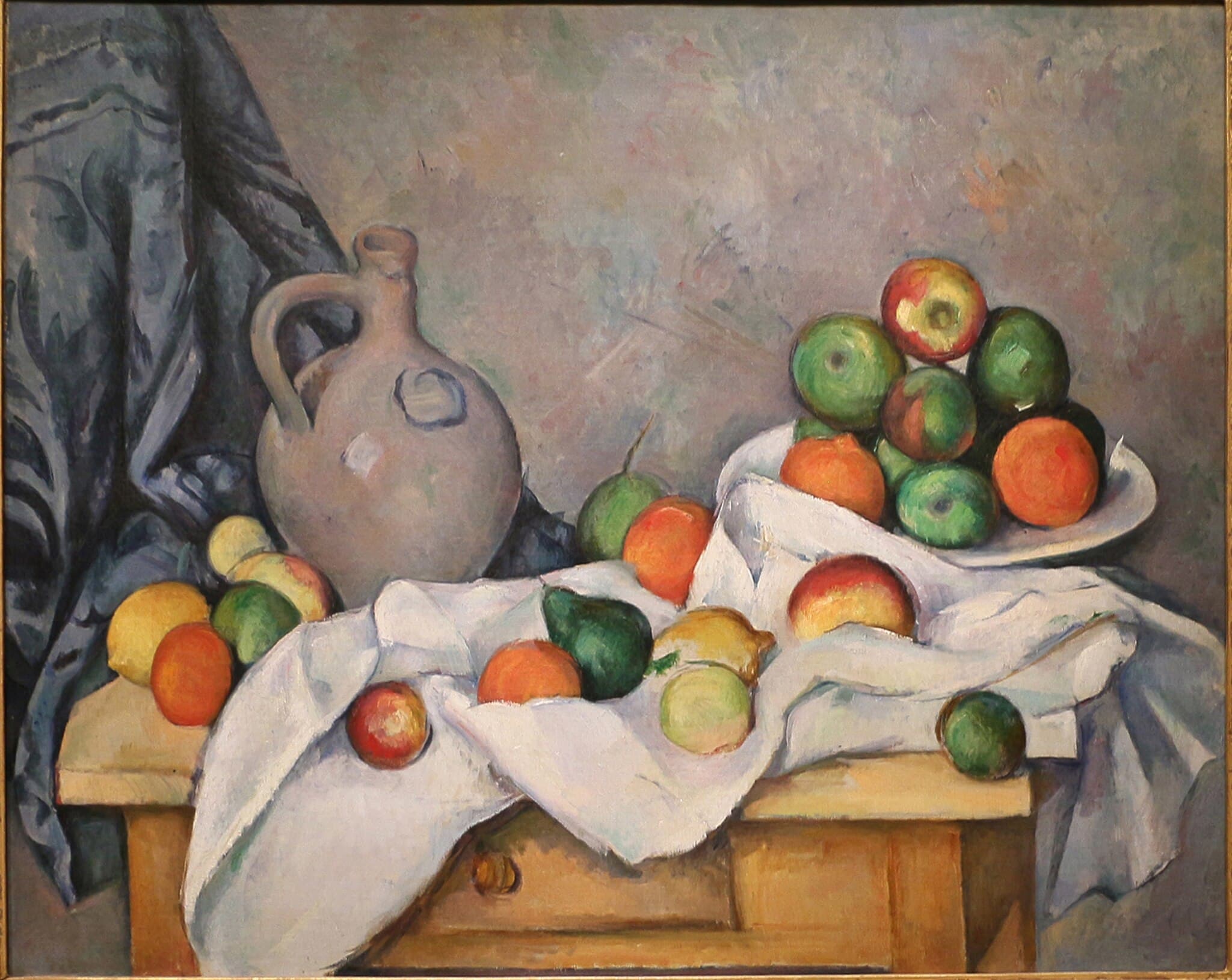
Rideau, Cruchon et Compotier (Curtain, Jug and Fruit Bowl)
Paul Cézanne, 1894 • Oil on canvas
Read full analysis of Rideau, Cruchon et Compotier (Curtain, Jug and Fruit Bowl) →Valuation Analysis
Valuation conclusion: I place the market estimate for Paul Cézanne’s Rideau, Cruchon et Compotier (c.1893–94) at USD 100,000,000–150,000,000 under the key assumptions of confirmed authenticity, an authoritative catalogue‑raisonné entry, excellent to pristine condition, and sale via a major international evening auction with strong institutional and private bidding. The 1999 Sotheby’s result (USD 60,502,500) is the principal direct precedent and, when adjusted to contemporary market context, supports a high nine‑figure valuation for a museum‑quality example [1]. The artist’s public benchmark set by Christie’s 2022 La Montagne Sainte‑Victoire (USD 137,790,000) illustrates that nine‑figure outcomes are achievable for canonical Cézanne works in the right circumstances [2].
How the range was derived: The lower bound reflects a conservative contemporary re‑pricing of the 1999 sale (the 1999 realized amount translates to a significantly larger 2025‑equivalent when market momentum and long‑term price appreciation for top Cézannes are considered). The upper bound is informed by 1) the La Mont Sainte‑Victoire record, 2) the scarcity of comparable late‑career, museum‑quality still lifes at public auction in the last decade, and 3) the observed spread between mid‑tier mature still lifes (many realized in the high‑single to low‑double‑tens of millions) and the rare canonical monument that drives nine‑figure premiums. In practice, this estimate represents a market‑forward positioning: a fully authenticated, immaculately conserved Rideau with documented, illustrious provenance and strong pre‑sale marketing should reasonably be expected to fall within this band in a robust evening sale; lesser provenance or condition will reduce realizations materially [1][2].
Key sensitivities and assumptions: authenticity and catalogue‑raisonné inclusion are binary drivers — unresolved attribution or missing catalogue documentation will severely constrain buyer confidence and likely limit the work to the USD 35–75M band or lower. Condition (structural stability, extent of restoration, lining, inpainting) and size materially affect institutional interest and bidder depth. Provenance and exhibition/publication history (Whitney/Barnes/Rosenberg mentions in auction literature) are significant positive multipliers when documented. Finally, marketing and sale strategy (single‑owner sale vs. open evening lot) will determine whether the painting realizes toward the lower or upper end of the stated interval.
Next steps to firm a formal reserve or private‑sale target: obtain high‑resolution recto/verso photography, a full condition/conservation report with technical imaging, confirm the catalogue‑raisonné entry and complete provenance paperwork, and consult the Impressionist & Modern specialist teams at the major houses for a formal written estimate and marketing plan. With those items in hand a definitive pre‑sale valuation and reserve recommendation can be set to maximize competitive bidding or to structure a controlled private transaction.
Key Valuation Factors
Art Historical Significance
High ImpactRideau, Cruchon et Compotier belongs to Cézanne’s mature still‑life production (c.1893–94), a period when his formal approach to mass, plane and colour was fully developed and highly influential on modern art. That historical placement gives the work intrinsic art‑historical weight: mature still lifes are central to Cézanne scholarship and collecting. However, a title alone does not determine canonical status — the painting’s compositional virtuosity, palette, scale and any demonstrable influence on subsequent critical narratives determine whether it is regarded as a textbook masterpiece or an important but secondary example. If the painting is shown to be an outstanding, well‑documented example, its art‑historical significance will be a primary value driver and justify a high‑nine‑figure valuation.
Provenance
High ImpactPublished auction literature and sale listings reference a distinguished provenance (names cited in auction documentation include dealers/collectors and prominent collections). A continuous, documented chain of ownership that ties the work to reputable dealers or major collections (as the Whitney consignment suggests) substantially reduces attribution risk and elevates institutional bidding capacity. Conversely, gaps, ambiguous transfers, or unresolved private transactions (the reported 1999 private resale) create friction for museums and conservative buyers and lower the realistic market ceiling. Clear documentary proof of every step in the chain is therefore crucial to sustaining a USD 100–150M estimate.
Condition & Conservation
High ImpactPhysical condition and conservation history are decisive. A structurally sound canvas or panel, stable paint layer, minimal intrusive restoration, and a clean conservation record enable full market confidence; technical imaging that confirms original paint stratigraphy and period materials is particularly persuasive for top bidders. Significant relining, overpainting, structural instability or heavy restoration will reduce marketability and can erode value by tens of millions. A formal condition report and x‑ray/IRR documentation are therefore prerequisites for marketing the painting at the top end of the range.
Market Comparables & Precedents
High ImpactThe 1999 Sotheby’s sale (USD 60.5M) is the direct precedent for this exact painting and provides the primary anchor; when adjusted to current market conditions it sits in the low‑to‑mid nine‑figure equivalent. Christie’s 2022 La Montagne Sainte‑Victoire (USD 137.79M) establishes a modern appetite for canonical Cézannes and defines the top of the market. More recent mature still‑life and landscape results (mid‑to‑high‑tens of millions for many examples) create the lower‑mid comparables that inform a realistic sale band. Together, these precedents justify a market positioning between those historic and modern reference points.
Exhibition & Publication History
Medium ImpactInclusion in major exhibitions, retrospectives and authoritative publications materially increases institutional demand and market perception. A painting illustrated in major Cézanne monographs, shown in museum retrospectives, or catalogued in the accepted catalogue‑raisonné carries demonstrable premium potential. The Whitney consignment provenance and any subsequent loans to notable exhibitions would strengthen buyer confidence. Absence of exhibition history or limited scholarship makes it harder to present the work as a museum‑quality exemplar and can reduce auction competition.
Sale History
Sotheby's New York
Private sale (reported)
Paul Cézanne's Market
Paul Cézanne is a foundational figure bridging Impressionism and Modernism; his late‑career still lifes and Sainte‑Victoire landscapes are among the most sought‑after 19th‑century works. The public auction market is top‑heavy: a small number of canonical works drive very large sums (a record of USD 137.79M in 2022 demonstrates nine‑figure capacity), while many mature still lifes and landscapes trade in the high‑single to low‑double‑tens of millions. Institutional demand, scarcity of museum‑quality examples and the artist’s canonical status support strong pricing at the top end of the market.
Comparable Sales
Rideau, Cruchon et Compotier (Curtain, Jug and Fruit Bowl)
Paul Cézanne
Direct precedent — the identical painting sold at Sotheby’s (Whitney consignment); establishes the primary market benchmark for this work.
$60.5M
1999, Sotheby's New York
~$113.3M adjusted
La Montagne Sainte‑Victoire (1888–90)
Paul Cézanne
Artist, mature period and museum-quality masterpiece; set a modern auction record for Cézanne in 2022 and therefore defines the top of the market (landscape vs. still life).
$137.8M
2022, Christie's New York
~$146.9M adjusted
Clairière (The Glade) (c.1895)
Paul Cézanne
Mature Cézanne work from a similar mid‑1890s period sold at a major house in 2022 — useful for gauging demand for mature-period Cézannes (landscape example).
$41.7M
2022, Sotheby's New York
~$44.4M adjusted
L’Estaque aux toits rouges (1883–85)
Paul Cézanne
High-quality mature Cézanne landscape sold in 2021 (Cox Collection) — demonstrates mid‑to‑high‑tens‑of‑millions demand for notable mature works.
$55.3M
2021, Christie's New York
~$63.7M adjusted
Fruits et pot de gingembre (c.1890–93)
Paul Cézanne
Direct subject‑matter and date comparable (still life, early 1890s) — the most relevant recent still‑life sale to Rideau for judging category pricing.
$38.9M
2023, Christie's New York
~$39.8M adjusted
Current Market Trends
Since the 2022 record result the Impressionist/Post‑Impressionist market has been selective: a post‑record cooling in 2023–24 gave way to a targeted recovery by 2025 with a pronounced "flight to quality." Scarcity of museum‑calibre supply and major exhibitions (e.g., large Cézanne retrospectives) continue to underpin top‑end pricing, but buyers are more discerning and provenance/condition certainty is essential for nine‑figure outcomes.
Sources
- Sotheby's — The Most Iconic Impressionist Artworks Sold at Sotheby’s (references the 1999 Whitney sale)
- Christie's — Paul G. Allen collection / La Montagne Sainte‑Victoire sale coverage (Nov 9, 2022)
- Observer — 'Paul Cézanne Painting Ends Up in Las Vegas After Sale Goes Sour' (reporting on reported private resale)
- Christie's lot — Fruits et pot de gingembre (c.1890–93) sale (2023) — comparable still life result
- Sotheby's — Modern Evening Auction catalogue (Clairière / related comparables, 2022)