How Much Is The Bay (Gulf) of Marseilles, Seen from L'Estaque Worth?
Last updated: March 10, 2026
Quick Facts
- Methodology
- comparable analysis
Assuming an authenticated, museum‑scale oil on canvas by Paul Cézanne from the L'Estaque group, I estimate its market value at approximately $15–60 million, with the most likely outcome in the low–mid tens of millions. This range is driven by direct L’Estaque comparables (notably the Cox 2021 sale) and wider Cézanne landscape benchmarks, and is conditional on provenance, catalogue‑raisonné status, condition and scale.
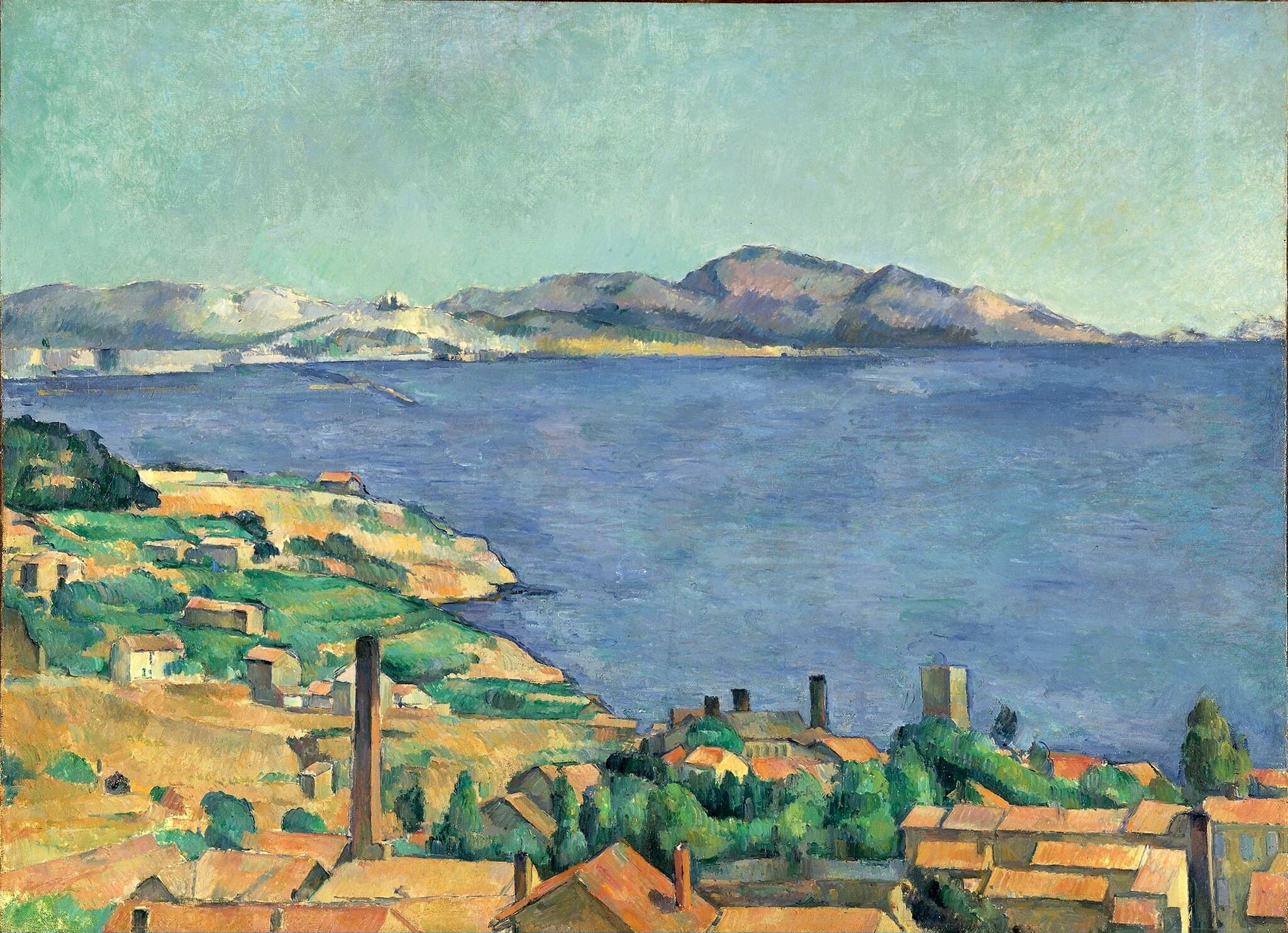
The Bay (Gulf) of Marseilles, Seen from L'Estaque
Paul Cézanne, 1885 • Oil on canvas
Read full analysis of The Bay (Gulf) of Marseilles, Seen from L'Estaque →Valuation Analysis
Valuation conclusion: On the balance of accessible market evidence and museum/comparables analysis, a well‑provenanced, authenticated, museum‑scale The Bay (Gulf) of Marseilles, Seen from L'Estaque by Paul Cézanne would reasonably be estimated in the range $15–60 million, with a most‑likely outcome in the low–mid tens of millions if the work is a finished, high‑quality canvas. This opinion assumes clear catalogue‑raisonné placement, stable condition and demonstrable exhibition/provenance history.
Why this range: High‑quality L’Estaque canvases that appear from single‑owner or museum contexts have recently traded in the mid‑to‑high tens of millions; a representative high‑end comparable is the Cox Collection L’Estaque lot (Christie’s, 2021) which anchored buyer expectations in that bracket [3]. The market ceiling for Cézanne at public sale is defined by an exceptional Sainte‑Victoire canvas (Christie’s, 2022), but that ceiling reflects the rarity of true one‑off masterpieces and should not be taken as the default for all L’Estaque works [5]. Institutional holdings of the motif (Met and Art Institute of Chicago) demonstrate there are canonical museum variants which, if yours matches their quality and catalogue references, would support prices toward the upper part of this range [1][2]. At the other extreme, small studies, workshop variants, or works with incomplete provenance or heavy restoration commonly realize far lower sums, sometimes in the low millions.
Key assumptions and sensitivities: This valuation is conditional on (A) confirmed authenticity and catalogue‑raisonné entry, (B) a clear and continuous provenance or notable museum/collector history, (C) good surface condition or conservation with no disqualifying overpaint or structural issues, and (D) competitive market exposure (major house evening sale or curated private placement). Any weakness in these areas can materially reduce value; conversely, top‑tier provenance, exhibition history and literature can push the price toward or above the high estimate cited here [3][4].
Method and next steps: The figure is derived by weighting recent, relevant auction comparables and adjusting for relative scale, finish and provenance. To convert this opinion into a sale estimate, undertake (1) object‑level verification (dimensions, signature, labels), (2) catalogue‑raisonné checks and provenance assembly, (3) a full conservation/technical report (X‑ray, IRR, pigment analysis), and (4) consultations with leading Cézanne specialists or an auction house specialist. Those steps will narrow the range and produce a sale‑ready estimate and marketing strategy.
Practical note: If the work is a smaller study, workshop variant or lacks documentary provenance, anticipate an outcome nearer the lower bound; if it is a museum‑scale, catalogue‑listed canvas with strong provenance and exhibition history, expect a competitive price in the mid‑to‑high tens of millions [1][3][5].
Key Valuation Factors
Art Historical Significance
High ImpactPaul Cézanne’s L'Estaque views are a pivotal subset of his mid‑1880s output and are widely cited in scholarship as crucial to his development of structural painting and modernist form. A finished, ca.1885 Bay/Gulf of Marseilles from L'Estaque carries meaningful art‑historical weight because the motif demonstrates Cézanne’s spatial compression, color modulation and compositional experiments that influenced 20th‑century movements. When a canvas from this group is securely attributed and included in monographs or exhibition catalogues, it commands significantly higher prestige and marketability than a studio study or derivative example. Therefore art‑historical significance is a primary driver of upside value.
Provenance & Exhibition History
High ImpactContinuous, well‑documented provenance (important private collectors, notable estate ownership, museum loans) and a history of inclusion in major exhibitions / catalogue entries materially increase the price that buyers will pay. Works with museum provenance or long‑standing inclusion in catalogues raisonnés trade with lower authentication risk and therefore attract institutional buyers and top private collectors, producing price premiums. Conversely, gaps in provenance, contested ownership, or lack of scholarly citation reduce buyer confidence and can suppress value, sometimes by multiples, particularly for high‑end Cézanne sales.
Condition & Technical Integrity
High ImpactOriginal paint surface, minimal invasive restoration, stable canvas support and no structural issues are essential to achieving the upper range. Heavy lining, extensive overpaint, or past restorations that alter compositional reading will reduce value materially. Technical analysis (X‑ray, IRR, pigment characterization) that confirms period materials and a coherent working method consistent with Cézanne increases market acceptability. Condition problems not visible in photos can be decisive at sale and often drive buyers to discount aggressively.
Comparable Sales & Demand (size/quality)
Medium ImpactRecent auction evidence shows a wide band of outcomes for L'Estaque subjects: museum‑quality, single‑owner examples have realized in the mid‑to‑high tens of millions, while smaller or weaker examples have sold in the low single‑millions. The work’s scale, finish and perceived ‘mastery’ relative to published comparable lots will determine its placement within the $15–60M band. Market demand for Cézanne landscapes remains strong for trophy canvases, but the market is top‑heavy and selective; comparable sales therefore provide the primary quantitative anchor for this valuation.
Sale History
The Bay (Gulf) of Marseilles, Seen from L'Estaque has never been sold at public auction.
Paul Cézanne's Market
Paul Cézanne is a canonical Post‑Impressionist and a blue‑chip artist in today’s market: scarcity of high‑quality oils, institutional demand and collector recognition sustain strong prices. The artist’s public‑sale ceiling was reset by an exceptional Sainte‑Victoire canvas (Christie’s, 2022), and important still lifes and landscapes regularly achieve multi‑million to multi‑tens‑of‑millions results. The market bifurcates between rare trophy canvases (which attract global institutions and deep‑pocketed collectors) and a broader mid‑market where smaller studies and works on paper trade at much lower levels. Provenance and catalogue‑raisonné status are particularly influential for Cézanne.
Comparable Sales
L’Estaque aux toits rouges
Paul Cézanne
Large, museum-quality L'Estaque landscape sold from the Cox single-owner collection — closest direct comparable in subject, period and scale to a museum-scale 'Bay of Marseilles/ L'Estaque' view.
$55.3M
2021, Christie's New York
~$63.1M adjusted
Vue sur L'Estaque et le Château d'If
Paul Cézanne
Direct L'Estaque motif and period; demonstrates market for canonical L'Estaque views (sold after long institutional ownership). Useful lower-tier museum/comparable benchmark.
$20.5M
2015, Christie's London
~$25.6M adjusted
Clairière (The Glade)
Paul Cézanne
High-quality Cézanne landscape (museum deaccession) from the same broad period; similar buyer set and price tier for important landscapes — good cross-check for demand/price levels.
$41.7M
2022, Sotheby's New York
~$45.4M adjusted
La mer à L'Estaque
Paul Cézanne
Same L'Estaque subject but a much lower result — likely a smaller study or lower-provenance example. Shows the lower bound for less significant L'Estaque works.
$3.2M
2023, Christie's New York (Langmatt / museum deaccession tranche)
~$3.3M adjusted
La Montagne Sainte‑Victoire
Paul Cézanne
Iconic Cézanne motif and the artist's auction record (Paul G. Allen sale). Not the same subject but establishes the market ceiling for an exceptional, uniquely important Cézanne masterpiece.
$137.8M
2022, Christie's New York
~$150.2M adjusted
Current Market Trends
Post‑2022 the Cézanne market has been top‑heavy: a landmark single‑owner sale established a new price ceiling, but subsequent years saw fewer trophy canvases at auction and more selectivity from buyers. Institutional exhibitions (e.g., major Cézanne retrospectives) and curated single‑owner groupings continue to drive spikes in activity; absent those contexts, mid‑market lots are more sensitive to economic cycles and buyer caution.
Sources
- Metropolitan Museum of Art — The Gulf of Marseille Seen from L'Estaque (object page)
- Art Institute of Chicago — The Bay of Marseilles, Seen from L'Estaque (Ryerson Collection)
- Christie's — L’Estaque aux toits rouges (Cox Collection) — sale context and results (Nov 2021)
- Christie's — Vue sur L’Estaque et le Château d'If (sale reference / press coverage, Feb 2015)
- Christie's — La Montagne Sainte‑Victoire (auction record context, Nov 2022)