How Much Is Samson and Delilah Worth?
Last updated: March 20, 2026
Quick Facts
- Last Sale
- $5.0M (1980, Christie's, London)
- Methodology
- comparable analysis
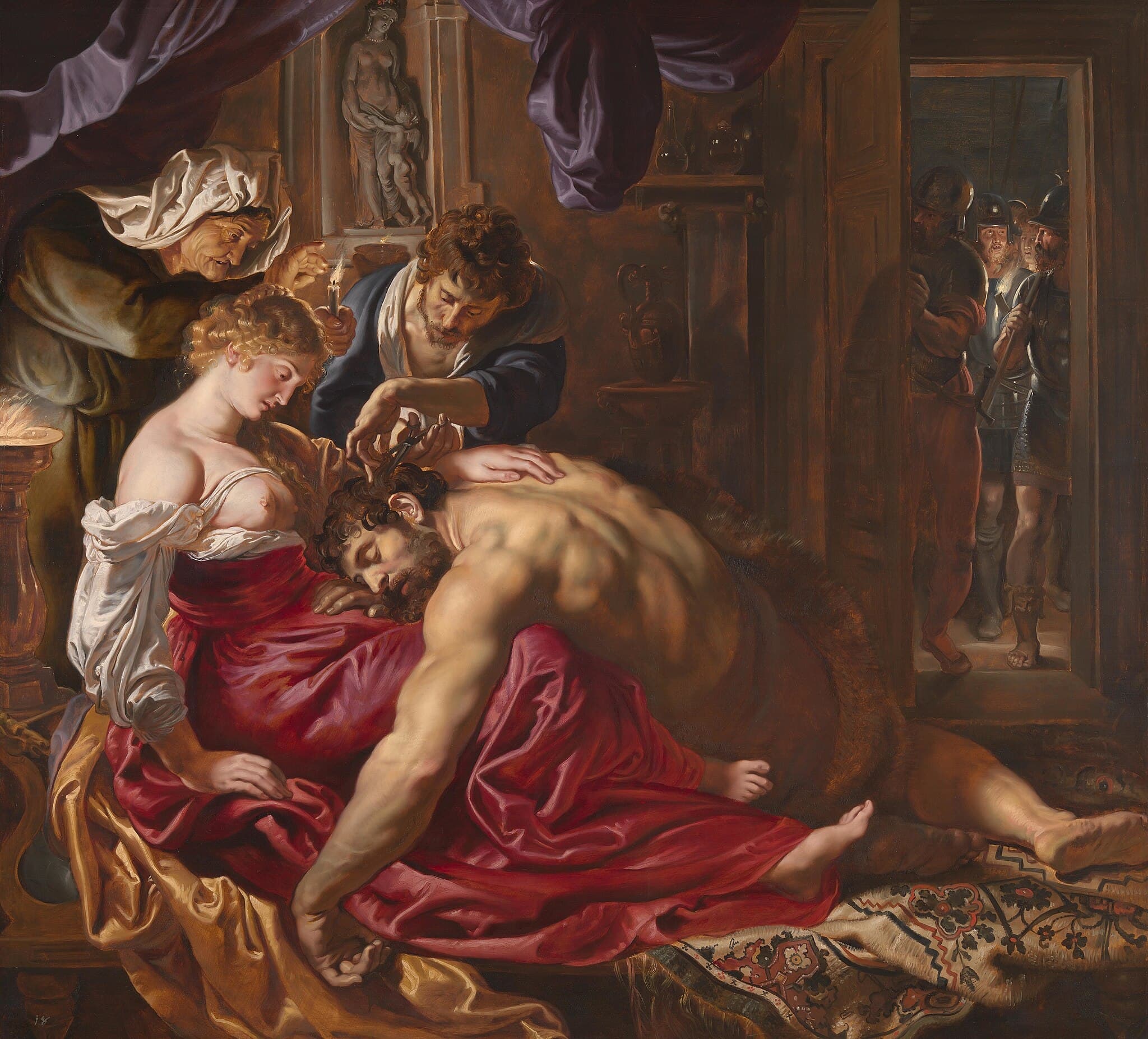
Assuming an accepted, fully-autograph, museum-quality attribution to Peter Paul Rubens, the defensible market estimate is US$20–80 million. If attribution is downgraded (workshop/assistant or later copy) or if there are major provenance or condition issues, value falls sharply into the mid-six-figure to low-single-million ranges.
Valuation Analysis
This valuation is driven by comparative auction evidence for top-tier Rubens compositions, the known institutional record for the Samson and Delilah composition, and the principal market sensitivities for Old Master pictures. Using recent high‑end Rubens sales and the picture's documented history as anchors, the defensible market window for a securely attributed, museum‑quality Samson and Delilah is US$20–80 million. This range reflects the gap between blockbuster Rubens rediscoveries and smaller, securely attributed works sold at lower seven-figure levels.
High‑end comparables establish the ceiling: rediscovered monumental Rubens canvases have produced very large results in the past two decades, and strong single‑owner offerings (e.g., Lot and His Daughters, The Massacre of the Innocents) demonstrate an upper market that can reach tens of millions. More recently, the biblical Salome realized US$26.9 million at Sotheby’s (2023), illustrating continued institutional and private demand for narrative Rubens canvases [2]. At the opposite end, credible but smaller autograph works have sold in the single millions or lower.
The specific Samson and Delilah most commonly discussed in scholarship and market literature was sold at Christie’s in 1980 and is now in the National Gallery, London; the Gallery’s catalogue and technical work form the primary documentary reference for that picture and its attribution history [1]. The 1980 transaction (reported widely at roughly £2.3–2.5m at the time) is a useful historical anchor but must be weighed against modern comparables, inflation, and the long-running scholarly debate concerning versions and workshop involvement.
Attribution, provenance and condition are the single biggest determinants of value. A fully endorsed autograph attribution supported by clear provenance and positive technical findings will attract institutional and high‑net‑worth competition and justify prices toward the upper end of this window. By contrast, a firm workshop attribution or substantial restorative loss will reduce buyer confidence and typically move value into the lower millions (workshop) or into the thousands–low hundreds of thousands (later copy/follower).
To refine and tighten valuation, the following are decisive: an up‑to‑date conservation report; dendrochronology for panel dating; infrared reflectography and X‑radiography to identify underdrawing and pentimenti; pigment and binder analysis to confirm 17th‑century materials; and written opinions from leading Rubens scholars or museum curators. These steps materially reduce market risk and narrow the estimate range.
In sum, on a comparative basis and pending confirmatory technical and connoisseurial evidence, the market‑driven valuation for a securely attributed Samson and Delilah by Peter Paul Rubens is US$20–80 million. Any downgrade in attribution or significant condition/provenance weakness will cause a rapid and substantial downward revaluation.
Key Valuation Factors
Art Historical Significance
High ImpactSamson and Delilah, when accepted as autograph, occupies a prominent place among Rubens's narrative and biblical works: it demonstrates his early Antwerp palette, dramatic chiaroscuro and complex figural groupings. The composition exists in multiple versions and studio variants, which increases scholarly interest but also raises attribution complexity. For museums and top collectors, a canonical autograph Samson and Delilah is a high‑value, high‑prestige acquisition because it illuminates Rubens's development and workshop practice. That intrinsic art‑historical importance drives institutional demand and supports premium pricing, but only if the work is demonstrably autograph and in sound condition.
Attribution & Provenance
High ImpactAttribution is the single most consequential factor for price. A securely documented autograph by Rubens, corroborated by catalogues raisonnés, leading curators and technical data, commands the top of the range; documented provenance back to the 17th–19th centuries (e.g., Rockox ownership, Liechtenstein, documented sales) materially increases buyer confidence. Conversely, uncertain or thin provenance, or scholarly dispute about authorship, will sharply reduce the buyer pool and price. Provenance that documents continuous ownership and exhibition/publication history is therefore essential to realize the higher estimates.
Condition & Conservation History
High ImpactCondition directly affects market value. Excessive varnish, old restorations, large inpainting areas, or panel instability reduce authenticity perception and market competition. Conversely, stable structural condition and well‑documented, minimal conservation increase value. A full conservation report — mapping original paint, later overpaint, varnish stratigraphy and any losses — is required to quantify restoration impact on marketability. Heavy or poorly documented interventions can subtract tens of percent from a theoretical top‑end price; impeccable condition can be a deciding factor between institutional purchase and private sale.
Technical Findings & Scientific Testing
High ImpactScientific evidence is decisive in modern Old Master valuation. Dendrochronology (for oak panels) can date the wood and rule out later copies; infrared reflectography and X‑rays reveal underdrawing, pentimenti and workshop practice; pigment and binder analyses confirm period materials. Positive technical concordance with other accepted Rubens panels (matching felling dates, underdrawing style, 17th‑century pigments) is a strong market booster. Negative or ambiguous technical results increase attribution risk and depress price. These tests are therefore integral before a sale or formal appraisal.
Market Comparables & Demand
Medium-high ImpactRecent auction results for major Rubens works set the practical ceiling for value: rediscovery sales and single‑owner consignments have achieved high‑seven to eight‑figure totals. Mid‑tier autograph Rubens have realized tens of millions or lower single millions depending on scale and quality. The Old Masters market has been selectively resurgent: museum‑quality rediscoveries attract competitive bidding while mid‑level lots can see weaker demand. Consequently, an autograph Samson and Delilah that attracts institutional interest could realize values at the upper end of the stated range; otherwise, demand narrows and prices moderate.
Sale History
Samson and Delilah has never been sold at public auction.
Peter Paul Rubens's Market
Peter Paul Rubens remains a top-tier name in the Old Masters market: institutional demand is strong, supply of unquestioned autograph canvases is limited, and record sales demonstrate a high ceiling for museum‑quality rediscoveries. Rubens works that are securely attributed and in strong condition regularly attract museums and high‑net‑worth collectors, producing seven‑ to eight‑figure results. At the same time the market is highly attribution‑sensitive; credible workshop attributions and copies trade at a substantial discount. Overall, Rubens is blue‑chip within the Old Masters category, but price realization depends on clear scholarly and technical endorsement.
Comparable Sales
The Massacre of the Innocents
Peter Paul Rubens
Same artist; large-scale, museum-quality Rubens and the auction record for the artist — demonstrates the market ceiling for a securely attributed masterpiece.
$76.7M
2002, Sotheby's, London
~$132.2M adjusted
Lot and His Daughters
Peter Paul Rubens
Major Rubens composition sold at high seven figures in 2016 — a top-tier market comparable for large, highly desirable Rubens canvases.
$58.2M
2016, Christie's, London
~$75.1M adjusted
Salome Presented with the Head of Saint John the Baptist
Peter Paul Rubens
Biblical subject by Rubens sold in 2023; shows recent demand and price levels (~$25–30M) for high-quality autograph works of the artist.
$26.9M
2023, Sotheby's, New York
~$27.9M adjusted
Annunciation
Peter Paul Rubens
Recent (2025) sale of a Rubens work at the lower–mid market level for accepted autograph pieces — useful for assessing a lower-bound for credible Rubens works.
$4.8M
2025, Sotheby's, New York
Samson and Delilah (Christie's sale 1980 — now National Gallery NG6461)
Peter Paul Rubens
The same painting's last public sale / National Gallery acquisition price — the primary historical anchor for valuation (important context though attribution debate affects market relevance).
$5.0M
1980, Christie's, London
~$18.8M adjusted
Current Market Trends
The Old Masters market has become selective: 2023–2025 saw strong results for rediscoveries and single‑owner consignments while many mid‑tier lots met buyer caution. Museum interest, high‑profile exhibitions, and authoritative re‑attributions drive spikes in demand. Sellers must therefore pair rigorous technical documentation and scholarly endorsement with realistic marketing to capture top prices.