How Much Is The Garden of Love Worth?
Last updated: March 20, 2026
Quick Facts
- Methodology
- comparable analysis
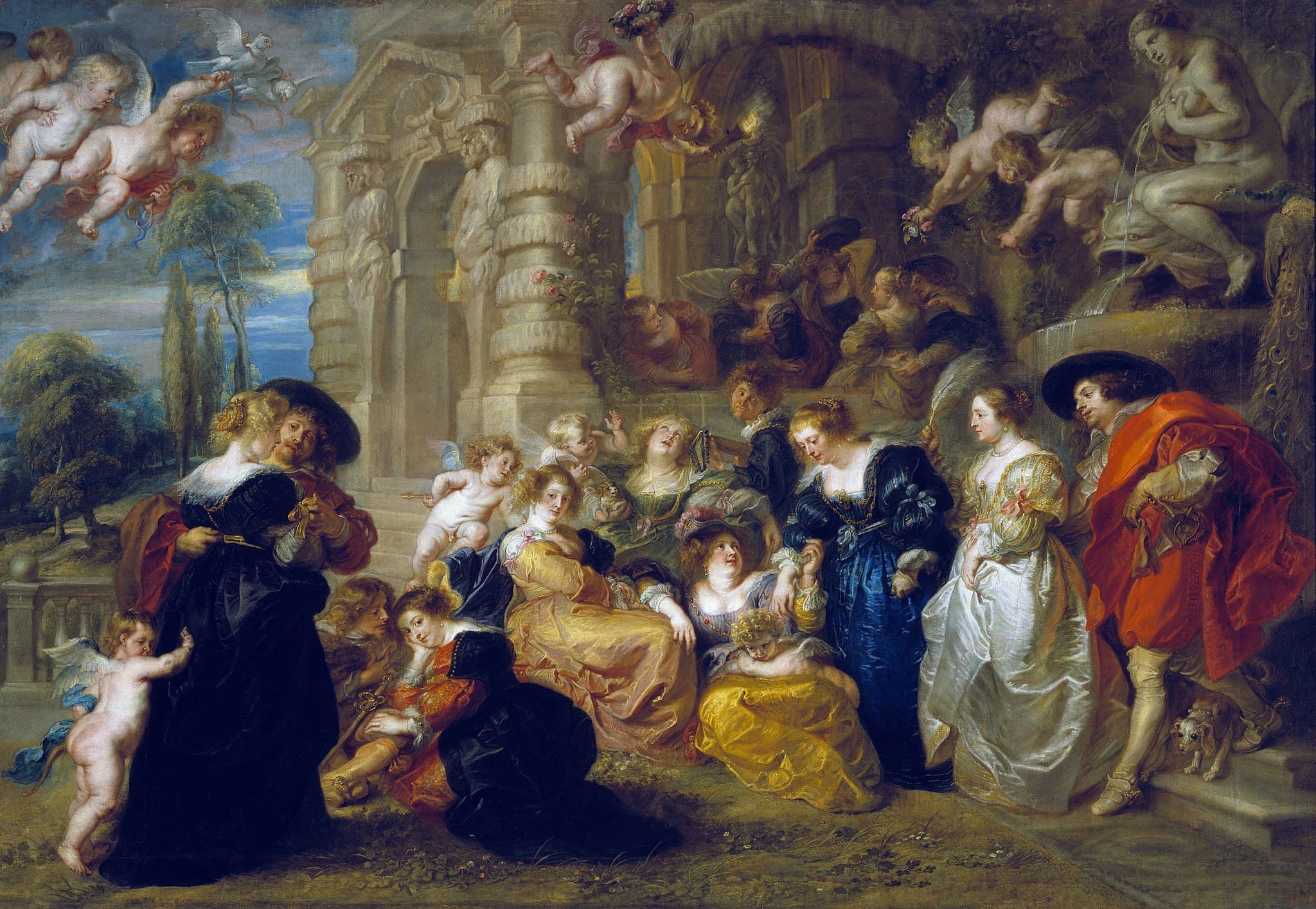
Assuming the work is the autograph, museum‑quality Garden of Love closely associated with Rubens’s canonical Prado composition, the realistic hypothetical market/replacement range is $100,000,000–$150,000,000. This band is based on weighted comparables from top Rubens auction results, scarcity of museum‑quality canvases, and observed market behaviour; workshop/circle variants are worth orders of magnitude less.
Valuation Analysis
Valuation conclusion: This valuation assumes the painting is an autograph, museum‑quality Garden of Love closely aligned with the canonical Prado composition. Taking into account the rarity of major Rubens canvases appearing on the open market, institutional replacement considerations and historic auction benchmarks, a defensible hypothetical market/replacement band for a fresh, indisputably autograph Garden of Love is $100,000,000–$150,000,000. [1][2]
How the band was derived: I used a comparable‑analysis approach that weights (a) the highest authenticated Rubens auction outcomes as ceiling benchmarks, (b) more recent marquee results as mid‑range anchors, and (c) observed sale prices for workshop/circle/copy variants as downside anchors. The 2002 Massacre of the Innocents remains the artist’s headline benchmark and sets the exceptional ceiling; subsequent large sales (for example 2016 and 2023 marquee Rubens results) show that major authenticated canvases typically realise in the tens of millions, with the very rare rediscovered masterpieces commanding nine‑figure interest in private negotiations or as insured replacements [2][3][4]. Adjustments were made for scale, condition, and museum quality.
Museum status and scarcity premium: The Prado Garden of Love is held in a national collection and is effectively not for sale; museums typically assign confidential replacement values that exceed normal auction comparables because of cultural and public‑value premiums. Were a truly comparable autograph Garden of Love to reach the market, expect intense private/institutional competition, guarantee mechanics, and possibly cross‑border negotiation that would push realized or replacement valuations into this nine‑figure band. Institutional validation (catalogue raisonné entry, major loans/exhibitions) further amplifies buyer confidence and price potential. [1]
Downside scenarios and attribution risk: Attribution is the dominant value lever. High‑quality workshop or studio versions of this composition trade at vastly lower levels—examples marketed as circle/after or studio variants have sold in the mid‑five to low‑six‑figure range, and small cabinet variants in the low five figures—demonstrating how authenticity collapses value when autography cannot be established [5][6]. Condition issues, overpainting, gaps in provenance, or unresolved technical findings will meaningfully erode price expectations.
Next steps to firm up value: to convert this hypothetical band into a sale‑ready valuation, obtain high‑resolution recto/verso images, dimensions, detailed provenance, and technical reports (X‑ray, infrared reflectography, pigment and ground analysis, canvas weave study). Commission specialist opinions from leading Rubens scholars (Rubenianum/Prado curators) and senior Old Master specialists at major houses. With affirmative technical and provenance evidence the $100–150M band is defendable; absent that evidence, value should be re‑calibrated downward toward the workshop/circle ranges. [1][3]
Key Valuation Factors
Art Historical Significance
High ImpactThe Garden of Love (Prado composition) is a recognized and celebrated late Rubens composition, emblematic of his mature decorative and allegorical output. As a composition that combines sophisticated figural grouping, luxuriant palette and social iconography, it carries substantial curatorial weight and is frequently reproduced in Rubens literature and exhibition catalogues. This significance elevates its cultural replacement value well above typical market comparables and makes it a priority for institutional retention, which in turn reduces market liquidity and increases hypothetical replacement valuations relative to lesser works.
Attribution & Authenticity
High ImpactAttribution is the single most consequential factor. An indisputable autograph Rubens, supported by technical imaging and catalogue raisonné inclusion, commands a very high premium; conversely, studio or ’circle’ attributions reduce value by orders of magnitude. Technical confirmation (infrared reflectography, X‑radiography, pigment/ground analysis) and expert consensus (Rubenianum/Prado curators) are decisive. The market discounts any unresolved attributional questions heavily because buyer confidence and institutional demand depend on unambiguous authorship.
Condition & Conservation
Medium ImpactPhysical condition directly affects market value: stable support, minimal historic overpainting, and high‑quality conservation treatment preserve premium pricing. Major structural issues, large restorations, discoloured varnish or intrusive retouching reduce competitive bidding and may preclude museum interest. A favourable conservation report increases marketability and can bridge the gap between high‑end private sale expectations and what buyers will underwrite with guarantees or loans.
Provenance & Exhibition History
High ImpactDocumented provenance and a strong exhibition/publication record materially increase value by reducing buyer risk. Continuous, demonstrable ownership back to the early modern or 18th/19th centuries, inclusion in major museum catalogues and presence in important exhibitions are all positive signals. Gaps, contested provenance, or lack of catalogue‑raisonné entry depresses offers and can shift a work from the autograph band toward studio/circle valuations.
Market Liquidity & Comparables
Medium ImpactThe Old Masters market is bifurcated: a thin, highly competitive buyer pool drives top‑tier prices for canonical names like Rubens, while the broader market for studies and workshop pieces is more liquid but far lower priced. Large autograph Rubens canvases appear rarely and attract institutional/private competition; guarantees and third‑party underwriting are common on headline lots. Comparable auction results and private sale precedents anchor realistic expectations and inform the top‑end band used here.
Sale History
Museo Nacional del Prado (museum hold)
Sotheby's, London
Christie's, London
Sotheby's, New York
Christie's, London (South Kensington)
Dorotheum, Vienna
Peter Paul Rubens's Market
Peter Paul Rubens is a cornerstone of the Old Masters market: canonical works by him are highly prized by museums and major private collectors. The market is sharply bifurcated — exceptional, authenticated, large canvases can fetch tens of millions and, in rare rediscovery cases, approach or exceed long‑standing benchmarks, while drawings, studies and workshop pieces trade in much lower bands. Historic results (2002 Massacre; major sales in 2016 and 2023) and recent market behaviour underscore that provenance, condition and attribution remain the primary value drivers.
Comparable Sales
The Massacre of the Innocents
Peter Paul Rubens
Large, rediscovered museum-quality autograph Rubens; remains the auction record for the artist and therefore sets a ceiling/benchmark for top Rubens canvases.
$76.0M
2002, Sotheby's, London
~$126.9M adjusted
Lot and His Daughters
Peter Paul Rubens
Major, large-scale autograph Rubens sold in the modern market for a very high price; a strong comparable for market demand and pricing of canonical Rubens canvases.
$58.2M
2016, Christie's, London
~$69.8M adjusted
Salome Presented with the Head of Saint John the Baptist
Peter Paul Rubens
Recent high-profile autograph Rubens sale (2023) giving a near-contemporary market datapoint for marquee Rubens canvases in the $20–30M band.
$26.9M
2023, Sotheby's, New York
~$28.5M adjusted
Portrait of a Man as Mars
Peter Paul Rubens
Another recent large Rubens sale in the mid-$20M range; useful as a contemporaneous market benchmark for high-quality autograph works (though subject/format differ from Garden of Love).
$26.2M
2023, Sotheby's, New York
~$27.8M adjusted
The Garden of Love, circle of Sir Peter Paul Rubens (sale)
Circle of Peter Paul Rubens
Directly related composition attributed to 'circle of Rubens' — shows market for workshop/circle versions of the Garden of Love (mid-five-figure realised price).
$202K
2014, Christie's, London (South Kensington Old Master & British Paintings)
~$263K adjusted
Garden of Love (studio/studio-after, on copper)
Workshop / After Rubens (attributed)
Small studio/studio-after variant sold for low five-figures (EUR 16,950) — useful to define the low-end market for copies, cabinet versions and studio derivatives of this composition.
$18K
2024, Dorotheum, Vienna
~$19K adjusted
Current Market Trends
The Old Masters market has been selective post‑2020: after a mid‑cycle dip, the top end rebounded as collectors sought blue‑chip historical works. Demand now favors museum‑quality, well‑provenanced canvases; guarantees and single‑owner sales continue to shape outcomes. For Rubens, this translates into strong competition for fresh, indisputable masterpieces and constrained liquidity for works lacking firm attribution.
Sources
- Museo Nacional del Prado — The Garden of Love (collection entry)
- Forbes (coverage of Sotheby's 2002 Massacre of the Innocents sale)
- Christie's press release — Lot and His Daughters (2016 sale)
- Sotheby's sale page — Salome Presented with the Head of Saint John the Baptist (2023)
- Christie's South Kensington results — Garden of Love (circle of Rubens), 2014
- Dorotheum lot result — studio/studio‑after Garden of Love (2024)