How Much Is The Blind Leading the Blind (Parable of the Blind) Worth?
Last updated: April 3, 2026
Quick Facts
- Methodology
- comparable analysis
If hypothetically offered on the open market today, Pieter Bruegel the Elder’s The Blind Leading the Blind (1568) would most plausibly command in the region of $100–150 million. This range reflects the work’s canonical status and extreme rarity of autograph Bruegel paintings in private hands, tempered by material/condition concerns (distemper on linen) and strong Italian patrimony/export constraints.
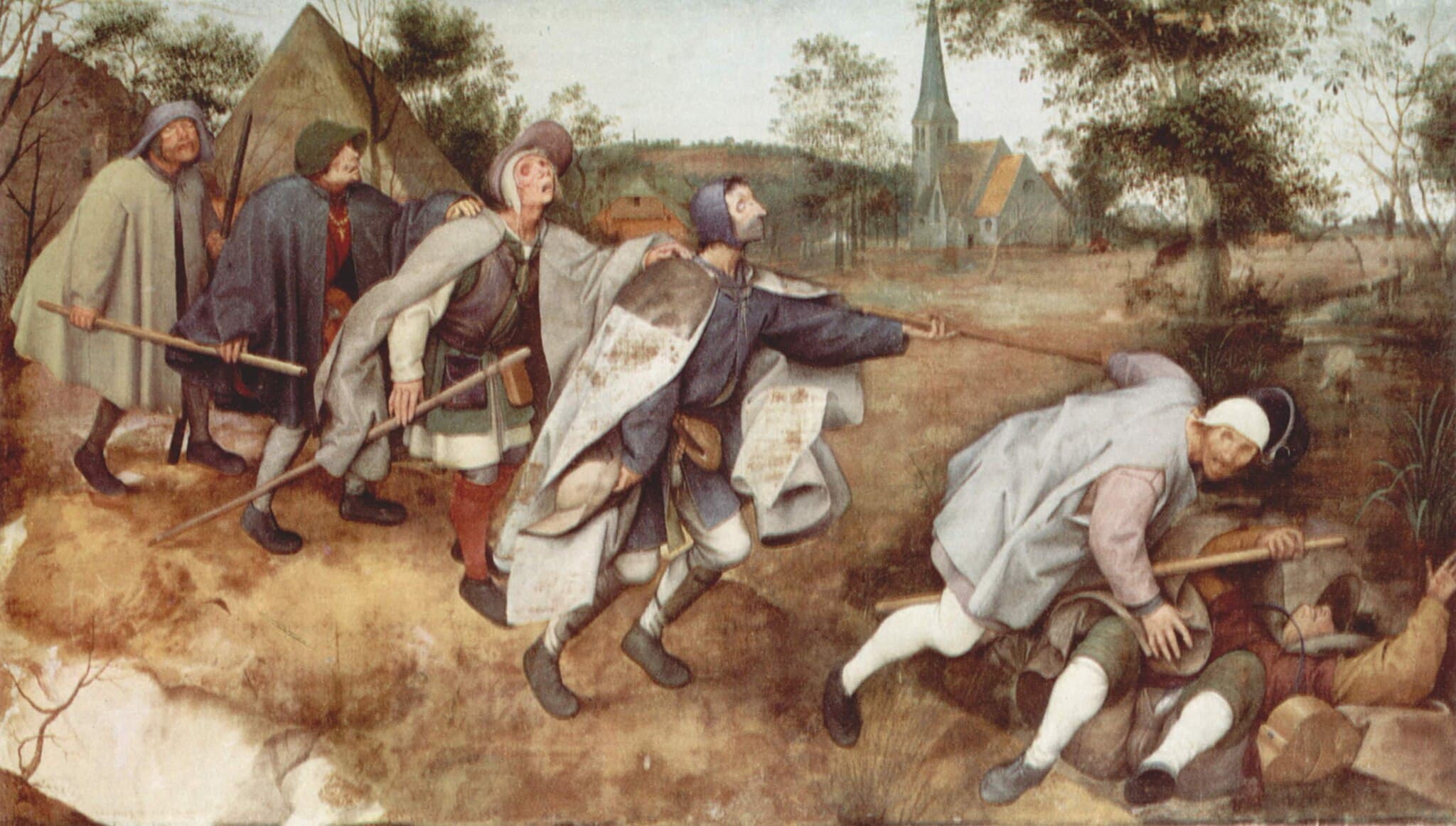
The Blind Leading the Blind (Parable of the Blind)
Pieter Bruegel the Elder, 1568 • Distemper/glue‑size on linen (canvas)
Read full analysis of The Blind Leading the Blind (Parable of the Blind) →Valuation Analysis
Valuation conclusion: Based on a comparable‑analysis approach anchored to the scarcity of autograph Bruegel pictures, recent Bruegel drawing and workshop sale levels, and precedent for trophy Old Master transactions, a defensible market window for The Blind Leading the Blind is approximately $100–150 million if it could legally and physically be sold and transferred to a willing buyer under clear title. The painting is an institutional treasure in the Museo Nazionale di Capodimonte, with continuous Farnese/Neapolitan provenance that makes a market offering hypothetical and legally complex [1].
Comparables and market logic: Direct modern auction comparables for a museum‑grade Bruegel of this importance are essentially absent; when Bruegel compositions do appear they more commonly take the form of drawings or later studio copies that trade in the low‑to‑mid seven‑figure band, and rare autograph paintings that have reached auction have historically realized single‑ to low‑seven‑figure outcomes (see the principal modern public examples) [2]. That limited record forces an extrapolative approach: the lower bound of the range recognizes current auction evidence and the material/transfer discounts that buyers would apply; the upper bound reflects the high premium multiple museums and ultra‑high‑net‑worth collectors would place on a canonical, museum‑quality Bruegel, analogous to how singular Old Master trophies have fetched extraordinary sums in exceptional markets.
Condition and medium: The work’s execution in distemper/tempera on linen (rather than a stable oil on panel) is a critical moderating factor. Distemper is comparatively fragile, sensitive to environmental changes, and often requires specialized, ongoing conservation and insurance regimes; these technical realities produce additional buyer risk, potentially compressing competitive bidding and raising transactional costs that translate into price discounts unless conservation and condition reporting are unequivocally favourable [4].
Legal/provenance constraints: The painting’s institutional ownership and long Farnese/Capodimonte history render it subject to Italian cultural‑heritage protections and deaccession/export limitations, which in practice strongly reduce the pool of prospective purchasers and can preclude international sale absent government approval. Any realized market value therefore depends not only on buyer appetite but on an institutional and legal pathway to sale that is rarely available for works of this calibre [1].
Practical sale scenarios: Under an exceptional, legally cleared, technically sound sale process (competitive international tender or auction with multiple museums/private bidders), the work could plausibly reach the top of the stated band or slightly above. Under more constrained circumstances (domestic sale only, visible conservation concerns), final proceeds would gravitate toward or below the lower end. This valuation is therefore a reasoned, conditional market estimate grounded in comparable evidence and the painting’s unique status, not an observed auction result for this specific work.
Key Valuation Factors
Art Historical Significance
High ImpactThe Blind Leading the Blind is a signature, late‑career composition by Pieter Bruegel the Elder and ranks among his most reproduced and debated single‑panel works. Its narrative complexity, compositional command and central place in Bruegel scholarship make it a museum‑level masterpiece: for institutions and top private collectors it functions as a cultural trophy with long‑term institutional and exhibition value. That intrinsic importance is the principal upward price driver because it induces multiple competing institutions and deep‑pocket private buyers to bid aggressively for any opportunity to secure such a canonical picture.
Rarity & Market Demand
High ImpactAutograph paintings by Bruegel the Elder are exceptionally scarce on the open market; most major examples are already held in national museums and rarely, if ever, enter the trade. This scarcity concentrates demand among a small set of buyers (major museums, sovereign collections, ultra‑high‑net‑worth individuals) and creates the potential for outsized prices when a securely attributed, exhibition‑quality Bruegel becomes available. That dynamic supports a high valuation ceiling, but only if the work is transferably marketable and legal/export issues are resolved.
Condition & Medium
High ImpactThe painting’s distemper/tempera on linen support materially affects marketability. Distemper is more vulnerable to abrasion, flaking and environmental stress than oil on panel/canvas, increasing conservation complexity, insurance premiums and shipment risk. Buyers will price these risks into bids unless a contemporary, thorough technical/conservation dossier demonstrates long‑term stability. In short: excellent technical condition mitigates a key discount; any unresolved condition issues will substantially lower achievable price and limit buyer appetite.
Provenance & Legal Constraints
High ImpactContinuous institutional provenance (Farnese → Neapolitan royal holdings → Museo di Capodimonte) affords the work unquestioned authenticity and curatorial value but also places it squarely within Italian cultural‑heritage protection regimes. Italian export/deaccession rules and national patrimony designations create high procedural barriers to sale and often restrict cross‑border transfer, which constrains the effective buyer universe and depresses realizable market value relative to an unrestricted, freely exportable trophy work.
Comparable Sales & Auction Precedent
Medium ImpactThere are few directly comparable modern public sales of museum‑grade Bruegel paintings; available comparables are mainly drawings or later studio works that trade in the low‑to‑mid seven‑figure range, and rare Younger/studio paintings that have achieved low‑eight‑figure sums. Because of this thin precedent, valuation requires extrapolation from both the highest credible Bruegel lots and from exceptional Old Master trophy sales. That approach supports a broad banded estimate rather than a single definitive auction prediction.
Sale History
The Blind Leading the Blind (Parable of the Blind) has never been sold at public auction.
Pieter Bruegel the Elder's Market
Pieter Bruegel the Elder occupies the uppermost tier of Northern Renaissance names: his works are central to museum collections and scholarship. The market for his output is dominated by a small number of autograph paintings (most museum‑held) and a larger, active market for drawings and later studio copies. When securely attributed Bruegel drawings appear they can reach mid‑six to low‑seven figures; authenticated paintings in private hands are vanishingly rare, which creates intense competition and the potential for very high realizations if a canonical picture were ever legitimately offered.
Comparable Sales
The Drunkard Pushed into the Pigsty
Pieter Bruegel the Elder
Autograph/attributed Bruegel painting sold at auction; one of the few modern auction highs for a Bruegel composition and therefore a direct (if imperfect) market anchor for Elder paintings.
$5.1M
2002, Christie's, London
~$9.2M adjusted
A Village with a Group of Trees and a Mule
Pieter Bruegel the Elder
Securely attributed Bruegel drawing sold in 2023 — shows current market strength for autograph Bruegel sheets (mid-to-high six figures / low seven figures), illustrating demand and scarcity for certified works on paper.
$1.7M
2023, Christie's (Old Masters & British Drawings)
~$1.8M adjusted
The Netherlandish Proverbs
Pieter Brueghel the Younger
Large, complex proverbs composition by a close workshop/follower (the Younger). Prices for high-quality Brueghel-dynasty paintings show robust mid‑single to low‑eight‑figure demand for comparable subject matter and scale, though authorship is less prestigious than the Elder.
$8.1M
2018, Christie's, London
~$10.4M adjusted
Salvator Mundi
Leonardo da Vinci
Extreme outlier but useful as a trophy‑case example: a uniquely important Old Master in private sale that shows the top‑end potential if provenance/attribution/market dynamics align for a canonical, museum‑quality work.
$450.3M
2017, Christie's, New York
~$593.5M adjusted
Current Market Trends
Recent Old Masters market data show resilience in the $1M–$10M bracket while the very top end (> $10M) has seen fewer trophy transactions. That environment supports strong demand for well‑provenanced Old Master works but makes buyers more selective at the ultra‑top. Museum interest, high‑quality exhibitions and scholarly reattributions continue to drive attention to Bruegel material.
Sources
- Museo Nazionale di Capodimonte — 'La parabola dei ciechi' (object page / provenance)
- Christie's — 'The Drunkard Pushed into the Pigsty' (Pieter Bruegel the Elder) sale record, 10 July 2002
- Artnet Intelligence — Mid‑Year 2025 Old Masters market report
- University of Siena / technical notes on distemper/tempera supports and conservation considerations