How Much Is The Fall of the Rebel Angels Worth?
Last updated: April 3, 2026
Quick Facts
- Methodology
- comparable analysis
Hypothetical market valuation for Pieter Bruegel the Elder’s The Fall of the Rebel Angels (1562) is USD 30,000,000–120,000,000. The wide band reflects extreme scarcity of autograph Bruegel panels, institutional ownership, limited public price discovery, and strong sensitivity to condition, provenance and sale venue.
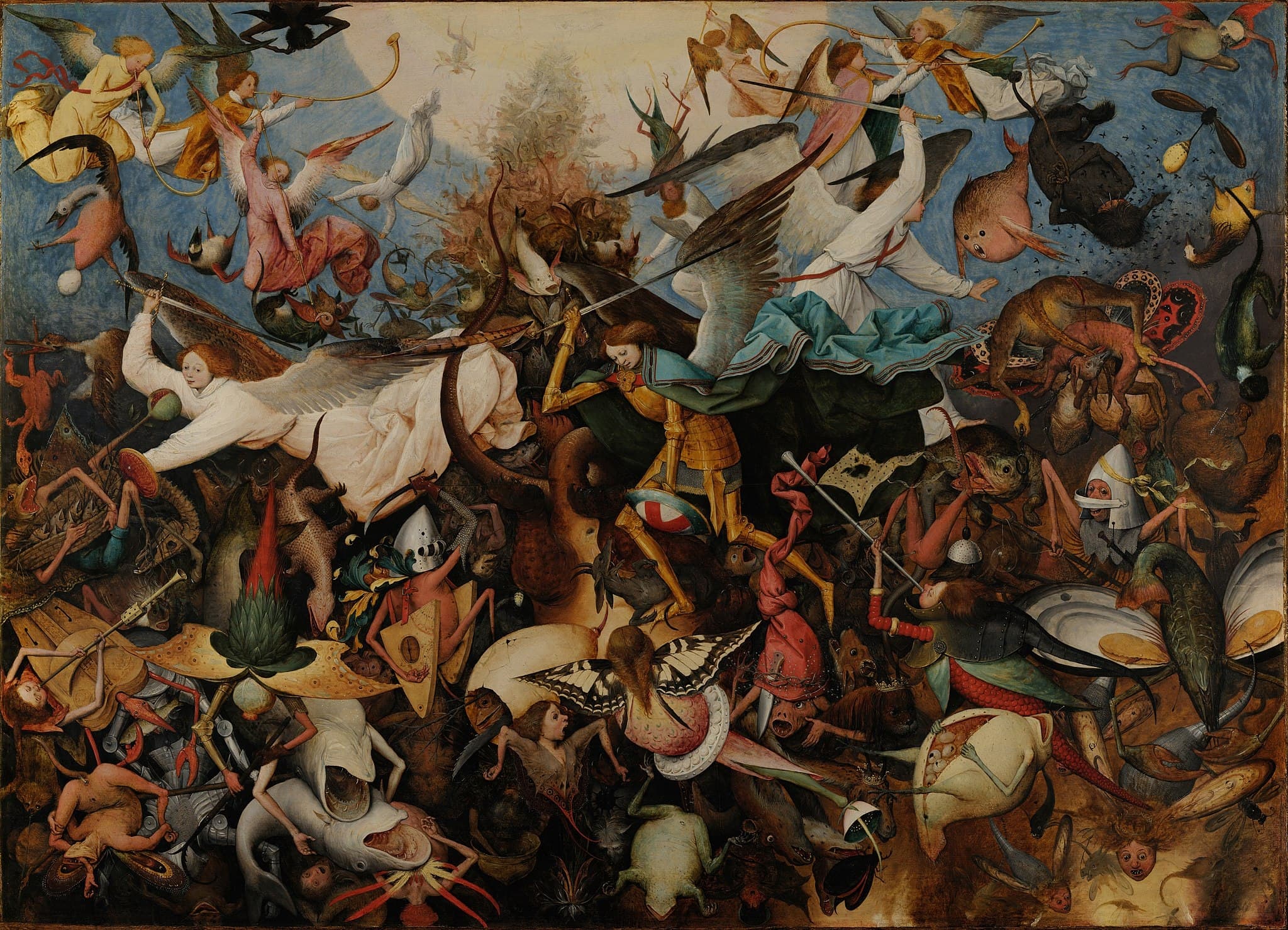
The Fall of the Rebel Angels
Pieter Bruegel the Elder, 1562 • Oil on panel
Read full analysis of The Fall of the Rebel Angels →Valuation Analysis
Valuation conclusion: Based on comparable‑analysis and market context I estimate a hypothetical market value for Pieter Bruegel the Elder’s The Fall of the Rebel Angels (1562) in the range of USD 30,000,000 – 120,000,000. This is a market (not insurance) estimate for an authenticated, marketable autograph panel offered under normal competitive conditions; it assumes clear provenance and no insurmountable export restrictions. The work is currently held by the Royal Museums of Fine Arts of Belgium (Oldmasters Museum), which explains the absence of modern sale data [1].
Why the band is wide: Bruegel the Elder’s autograph oil panels almost never appear on the open market. Public price discovery is therefore scant and the valuation necessarily relies on indirect comparables (workshop pieces, later family members, drawings) and market dynamics for top‑tier Old Masters. Recent institutional interest in Bruegel and a resilient mid‑range Old Masters market increase the probability of strong bids if the painting were marketable, but few true comparables exist to produce a narrow figure [2].
Comparables and market signals: The brunt of public sale evidence comes from Pieter Brueghel the Younger and studio/’after’ works, which trade in the mid‑six to low‑seven figure range; one public sale attributed to the Elder (a small composition) and notable Younger sales provide calibration but are materially smaller in scale and significance than the museum masterpiece would be [3]. Market reports (Artnet, The Art Newspaper) show Old Masters were relatively resilient in 2024–25, but the >$30M segment is driven by extreme scarcity and institutional demand rather than routine auction turnover [2][4].
Key conditional drivers: Final value would be determined by (a) technical/condition report (dendrochronology, pigment and underdrawing analysis, conservation history), (b) provenance/legal status (clean chain of title and absence of restrictive national patrimony claims), and (c) sale mechanism (competitive global auction vs discreet private treaty to an institution). A pristine, incontrovertibly autograph panel with museum‑quality condition and spotless provenance offered at auction with multiple institutional/foundational bidders could push toward the upper bound; significant restoration, uncertain attribution, or export blockage would materially depress value toward the lower bound or make sale impossible [1][2].
Practical next steps: for any formal sale or insurance use obtain high‑resolution imaging, a recent conservation report, dendrochronology, full provenance documentation and outreach to top Old Master departments (Christie’s, Sotheby’s, DACS/major museums). With those documents the band can be sharply narrowed; absent them the above range is the market‑realistic appraisal based on available public data and category dynamics.
Key Valuation Factors
Art Historical Significance
High ImpactThe Fall of the Rebel Angels (1562) is widely regarded as a major, canonical painting in Pieter Bruegel the Elder’s oeuvre. It encapsulates the artist’s dense narrative composition, inventive grotesque figures and moral allegory—qualities that confer outsized scholarly and institutional importance. Works of this caliber are culturally significant, frequently treated as national patrimony, and are prioritized by major museums. That elevated cultural status translates into a market premium when such a work becomes, even hypothetically, available: institutions and top collectors view acquisition as both curatorial imperative and prestige purchase, which supports a high valuation.
Rarity & Market Liquidity
High ImpactAutograph panels by Bruegel the Elder rarely change hands; most canonical works are museum‑held and do not generate regular auction price discovery. That extreme scarcity constrains liquidity and concentrates the buyer pool to a handful of well‑funded museums, foundations and ultra‑high‑net‑worth collectors willing to transact in the tens of millions. The result is an inherently wide valuation band: without repeated market transactions, prices are set by institutional appetite, competitive private bids, or exceptional auction events rather than by a steady public market.
Condition & Conservation
High ImpactPanel support condition, paint stability, historic restorations and the presence/absence of overpainting materially affect value. Scientific tests (dendrochronology, IR reflectography, pigment analysis) that confirm period materials and an unaltered autography can elevate a work toward the high end; conversely, extensive restoration, structural panel problems, or uncertain surface history reduce marketability and price. A full technical report is therefore indispensable to convert the hypothetical band into a firm figure suitable for sale or insurance.
Provenance & Legal/Export Constraints
High ImpactA clean, well‑documented provenance raises buyer confidence and value; gaps, wartime transfers, or contested ownership materially depress price or bar sale. National patrimony and export controls—especially for works held long‑term in public collections—may legally prevent sale or require permits that are hard to obtain. Because the best‑known 1562 panel is in a Belgian national museum, potential export restriction and deaccession rules are central determinants of whether a market transaction could occur at all.
Sale Venue & Buyer Pool
High ImpactWhether the painting would be offered at a marquee auction, as a private treaty to a museum, or via an institutional deaccession program has major price implications. Auctions can generate competitive bidding and headline prices but require a saleable title and investor appetite; private sales often trade at negotiated prices but may limit competitive pressure. The limited but deep buyer pool for a canonical Bruegel will determine whether the work approaches the upper or lower bound of the estimated range.
Sale History
The Fall of the Rebel Angels has never been sold at public auction.
Pieter Bruegel the Elder's Market
Pieter Bruegel the Elder occupies top‑tier status among Northern Renaissance masters. Genuine autograph panels are extremely scarce and overwhelmingly museum‑held, which limits public auction data and concentrates demand among institutions and very large private collectors. Secondary‑market activity is dominated by his followers, copies and prints; those segments trade more frequently and inform mid‑market pricing, but they are imperfect proxies for autograph Elder panels. When an authenticated Bruegel Elder panel does appear, it attracts specialist attention and the potential for very large institutional bids, making valuation highly case‑specific.
Comparable Sales
Small circular composition (attributed to Pieter Bruegel the Elder)
Pieter Bruegel the Elder
Rare public auction sale of a work attributed to Bruegel the Elder — one of the few modern public price datapoints for an Elder panel; smaller in scale and presumably less important than the museum masterpiece but useful as direct (scarce) Elder evidence.
$5.1M
2002, Christie's London
~$8.8M adjusted
The Fight / Battle Between Carnival and Lent
Pieter Brueghel the Younger
High‑value sale within the Brueghel family (the Younger) and a commonly cited benchmark for family/period demand — useful as a proxy for what major Brueghel‑family works can achieve in competitive auction, though by a different hand and therefore not directly comparable in authorship/significance.
$10.7M
2011, Christie's London
~$14.7M adjusted
Rare Pieter Brueghel the Younger canvas (reported sale)
Pieter Brueghel the Younger
A recent mid‑market sale for a Younger work showing active demand for workshop/follower canvases; illustrates the typical price gap between workshop/follower pictures and an authenticated Elder masterpiece.
$845K
2023, Paris auction house (reported in press)
~$860K adjusted
A Village with a Group of Trees and a Mule (attributed)
Pieter Bruegel the Elder (attributed) / drawing
Public auction result for a work/drawing attributed to Bruegel the Elder — demonstrates how medium (drawing vs. oil panel) and degree of attribution affect realised prices; useful to show demand for securely attributed Elder material even outside panel pictures.
$1.7M
2023, Christie's (Old Master & British Drawings & Watercolours sale)
~$1.7M adjusted
The Nest Robber
Pieter Brueghel the Younger
A strong 2025 sale for a Younger/workshop piece illustrating contemporary buyer interest in Brueghel‑family works and providing a near‑term market anchor in the mid‑seven‑figure range.
$3.0M
2025, Sotheby's New York
Current Market Trends
As of 2024–25 the Old Masters category showed relative resilience in the $1M–$10M bracket while the >$10M segment was more selective. Recent Bruegel exhibitions and scholarship increased attention, but the supply of autograph Elder panels remained essentially unchanged. This combination—heightened interest and near‑zero supply—supports strong theoretical prices for any saleable masterpiece while keeping realized public sale instances very rare.
Sources
- Royal Museums of Fine Arts of Belgium — collection entry: Pieter Bruegel the Elder, The Fall of the Rebel Angels
- Artnet Intelligence — Mid‑Year 2025 Market Report (Old Masters coverage)
- Christie's — Results/press (Old Masters and notable Brueghel family sales)
- The Art Newspaper — Market commentary on the 2024–25 auction climate