How Much Is The Harvesters Worth?
Last updated: April 3, 2026
Quick Facts
- Methodology
- comparable analysis
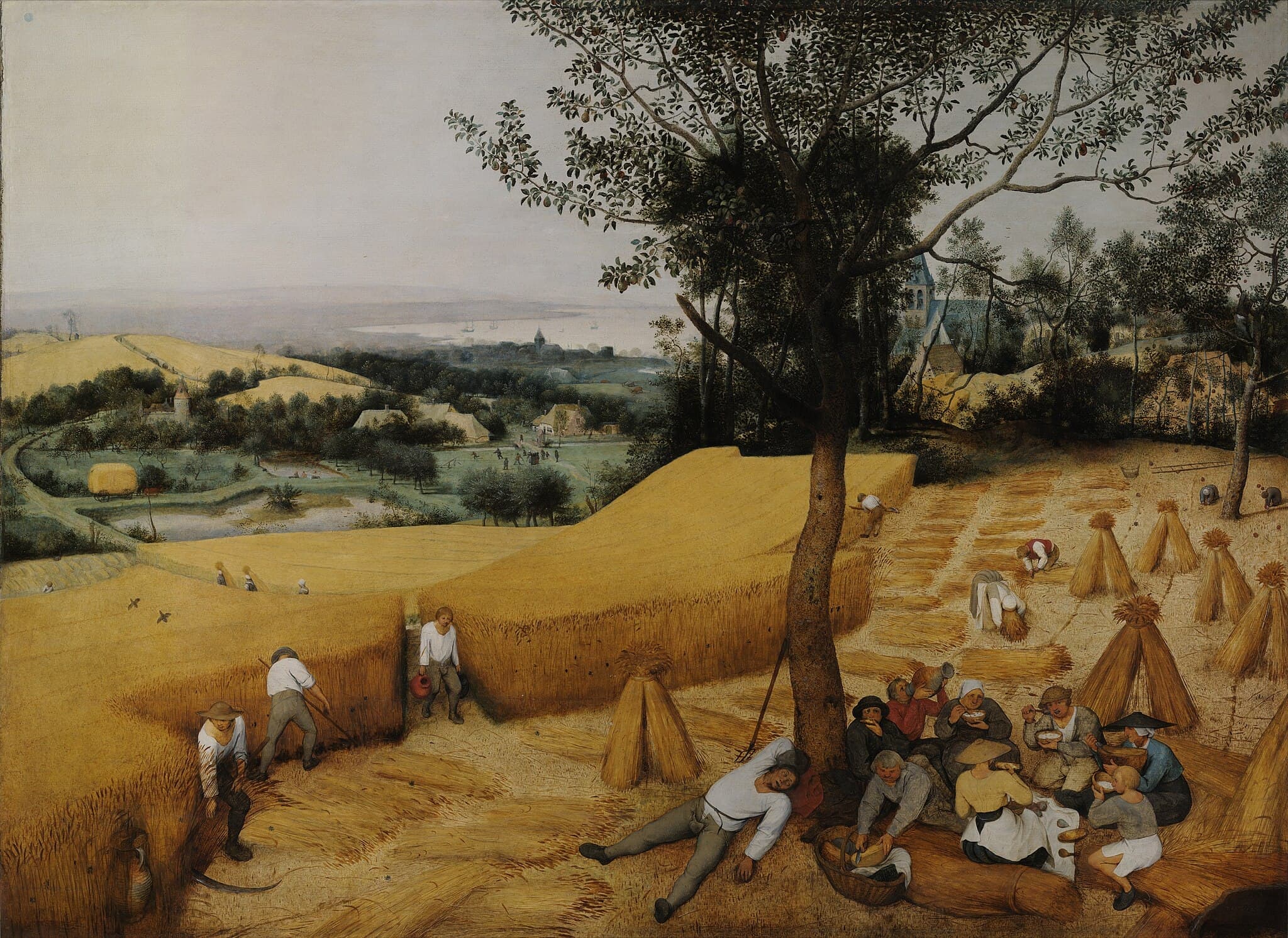
The Harvesters (1565) by Pieter Bruegel the Elder — currently in the Metropolitan Museum of Art — would be a trophy‑level, museum‑quality masterpiece if ever legitimately offered. Based on scarcity of autograph Bruegel panels, provenance, and Old Master trophy precedents, a realistic hypothetical market band is US$100–300 million; a formal insured or sale valuation would require conservation reports and confidential comparables.
Valuation Analysis
Top‑line valuation and approach. This is a hypothetical market valuation for Pieter Bruegel the Elder’s The Harvesters (1565), which is presently held by the Metropolitan Museum of Art and not available on the open market [1]. Because there is no modern public auction price for this specific work, the estimate below is derived from a structured comparable analysis and reasoned extrapolation from the small set of autograph Bruegel sales, high‑end Old Master trophy outcomes and the painting’s provenance and institutional context [2][3].
Comparable anchors and amplification. The only well‑documented modern auction sale of a small autograph Bruegel painting (The Drunkard Pushed into the Pigsty) is orders of magnitude below what a canonical, museum‑held work would command; that sale is therefore a lower anchor but not a practical market ceiling [2]. By contrast, widely reported trophy Old Master transactions (e.g., major Rubens and the unique Leonardo Salvator Mundi example) demonstrate the market’s capacity to pay into the high tens to hundreds of millions for unique, institutionally important masterpieces and thus define an upper market envelope [3]. The Harvesters’ canonical status pushes it squarely into the trophy category.
Market mechanics and buyer dynamics. If legitimately offered, sale mechanics (public auction vs private treaty) and buyer composition (national museums, sovereign purchasers, ultra‑high‑net‑worth collectors, or partnerships of institutions) will drive final pricing. Museum ownership is a double‑edged factor: it increases desirability but also makes sale practically improbable and legally/ethically complex; when deaccessioning does occur for top works, private treaty sales to institutions or sovereign buyers are the likeliest routes, often producing price outcomes above typical auction comparables.
Discounts, risk factors and conditionality. Important downward modifiers that justify a broad band: (a) lack of direct public‑sale comparables for autograph Bruegel panels, (b) potential conservation issues for a 16th‑century panel that must be confirmed by technical imaging and reports, and (c) legal/deaccession/export constraints and reputational/public scrutiny that can narrow the buyer pool. These factors mean the range is inherently conditional and the midpoint should be treated as indicative rather than definitive [1][4].
Recommendation. The USD 100–300 million band reflects conservative‑to‑ambitious scenarios: conservative assumes constrained private sale, technical caveats and limited bidding competition; ambitious assumes a headline, multi‑party acquisition by an institution or sovereign buyer in a competitive process. To convert this hypothetical into a formal valuation, obtain the Met’s conservation/technical reports, assemble confidential private‑sale comparables from major houses, and engage senior Old Master specialists for a formal insured appraisal [1][2][3][4].
Key Valuation Factors
Art Historical Significance
High ImpactThe Harvesters is one of Pieter Bruegel the Elder’s most iconic and widely cited works (part of his Seasons cycle) and functions as a keystone in Northern Renaissance studies and public imagination. Its art‑historical centrality multiplies market value because canonical works are irreplaceable and coveted by leading institutions and private collectors. In practice, significance means two things for valuation: (1) a scarcity premium as genuine, large‑scale Bruegel autographs rarely—if ever—enter the market, and (2) reputational friction against sale that can compress supply and inflate competition if a legitimate opportunity arises. For insurers and potential buyers, cultural primacy translates into persistent demand and trophy pricing.
Rarity & Provenance
High ImpactAutograph paintings by Bruegel the Elder are extremely scarce in private hands; most important panels reside in national or major museum collections. The Harvesters has a long, published provenance and has been in the Metropolitan Museum of Art since 1919, which both confirms authenticity and substantially reduces market liquidity. Provenance strengthens value because it reduces attribution risk, but museum ownership simultaneously imposes practical obstacles to sale (deaccession policy, donor restrictions). When provenance is secure and the work is museum‑quality, potential buyers will bid aggressively, but many qualified purchasers will be institutional, narrowing market channels.
Condition & Technical Conservation
High ImpactPanel stability, prior restorations and technical findings (infrared reflectography, dendrochronology, paint layer analysis) materially influence insurable and realizable value. For a 16th‑century oak panel, risks include warping, splits, past over‑painting and structural interventions; conversely, well‑documented conservation can enhance buyer confidence and support top valuations. Without access to the Met’s conservation reports and technical imagery, any market estimate must remain conditional. A pristine or well‑conserved Harvesters will command the upper end of the band; significant conservation interventions would depress value and complicate export or institutional offers.
Market Demand & Buyer Pool
High ImpactDemand for blue‑chip Old Masters is concentrated among a small set of deep‑pocket institutions, sovereign buyers, and private collectors who prize canonical provenance. This concentrated buyer pool can produce outsized bids for trophy works, but it also creates lumpy, irregular price discovery: when multiple qualified parties compete, results spike; when interest is limited by constraints (export, controversy), outcomes moderate. Confidential private sales frequently set industry reference points that are not public; thus, access to private‑sale comparables is critical for precise valuation.
Institutional & Legal Constraints
Medium ImpactBecause The Harvesters is housed in a major public collection, sale is governed by deaccession policies, donor covenants and potential national patrimony or export control regimes. Public and curatorial resistance to selling iconic works is a material risk and can prevent a market transaction altogether. Even when sale is technically possible, reputational issues and legislative or donor stipulations often steer potential transfers toward institutional-to-institutional arrangements rather than the open market, which affects both price realization and the likelihood of a sale.
Sale History
The Harvesters has never been sold at public auction.
Pieter Bruegel the Elder's Market
Pieter Bruegel the Elder is a foundational figure in Northern Renaissance art; autograph paintings by him are exceedingly rare and primarily held in major museums. Consequently, the market for his works is dominated by drawings, prints and follower/workshop pieces at auction, while autograph panels rarely, if ever, appear. This scarcity, combined with high scholarly consensus around attribution for major panels, makes genuine Bruegel paintings trophy assets: when they do change hands (typically via private treaty or institutional transfer) they attract significant attention and premium pricing relative to follower works. Price discovery is therefore episodic and often based on extrapolation from related Old Master benchmarks.
Comparable Sales
The Drunkard Pushed into the Pigsty
Pieter Bruegel the Elder
One of the best-documented modern public-auction sales of an autograph Bruegel painting; directly relevant as a same-artist auction precedent though much smaller/less canonical than The Harvesters.
$5.1M
2002, Christie's, London
~$9.0M adjusted
Massacre of the Innocents
Peter Paul Rubens
Historic blockbuster Old Master sale that establishes a market ceiling for museum-quality Northern/Baroque masterpieces; useful as a trophy-piece benchmark though different artist/period.
$76.7M
2002, Sotheby's, London
~$135.0M adjusted
Salvator Mundi
Leonardo da Vinci
The record auction sale for a single painting; not a direct Bruegel comparable but demonstrates the potential trophy pricing that a unique, canonical museum masterpiece can attract.
$450.3M
2017, Christie's, New York
~$580.9M adjusted
Group of Brueghel-dynasty works (selected lots)
Various (Brueghel circle / followers)
Recent public-market realisations for Brueghel-family and follower works (multi-lot aggregate) showing that non-Elder, dynasty works trade in the high-six to low-seven-figure band—useful to contrast against autograph-Elder scarcity.
$7.0M
2025, Brussels/Paris sales (reported aggregate, May 2025)
Rediscovered Pieter Brueghel the Younger (regional sale)
Pieter Brueghel the Younger
A 2023 rediscovery sale illustrating market demand/pricing for Brueghel-iconography when the work is by a follower rather than the Elder; highlights the premium scarcity of authentic Elder paintings.
$850K
2023, French regional auction (reported, March 2023)
~$887K adjusted
Copy after Bruegel (drawing)
After Pieter Bruegel the Elder (copy)
Recent sale of a Bruegel-related drawing (contemporary copy) showing active market interest in works on paper and providing a lower-end benchmark for Bruegel material.
$101K
2024, Christie's, New York (Old Master & British Drawings)
~$103K adjusted
Current Market Trends
The Old Masters segment has been cyclical: a softer 2024 was followed by selective rebounding in 2025 as buyers sought historically anchored, low‑volatility assets. Demand is concentrated at the top end for museum‑quality works, while the active market remains for drawings, prints and followers. Supply constraints for autograph Bruegel works persist, so any legitimate offering of The Harvesters would be headline news and likely to draw cross‑border institutional and sovereign interest.
Sources
- Metropolitan Museum of Art — The Harvesters (object no. 19.164)
- Christie’s — The Drunkard Pushed into the Pigsty (sale record, 10 July 2002)
- Market benchmarks — major Old Master trophy sales (e.g., Rubens Massacre of the Innocents; Leonardo Salvator Mundi coverage)
- Recent curatorial programming that informs market interest — Ashmolean: 'Bruegel to Rubens: Great Flemish Drawings' (2024)