How Much Is The Triumph of Death Worth?
Last updated: April 3, 2026
Quick Facts
- Methodology
- extrapolation
For the autograph c.1562–63 Triumph of Death (Museo Nacional del Prado) the work is a museum masterpiece and effectively off‑market; a hypothetical open‑market estimate is $100–150 million. If the work is a workshop or later copy, value falls sharply to the mid‑five to low‑seven figure range depending on quality and attribution.
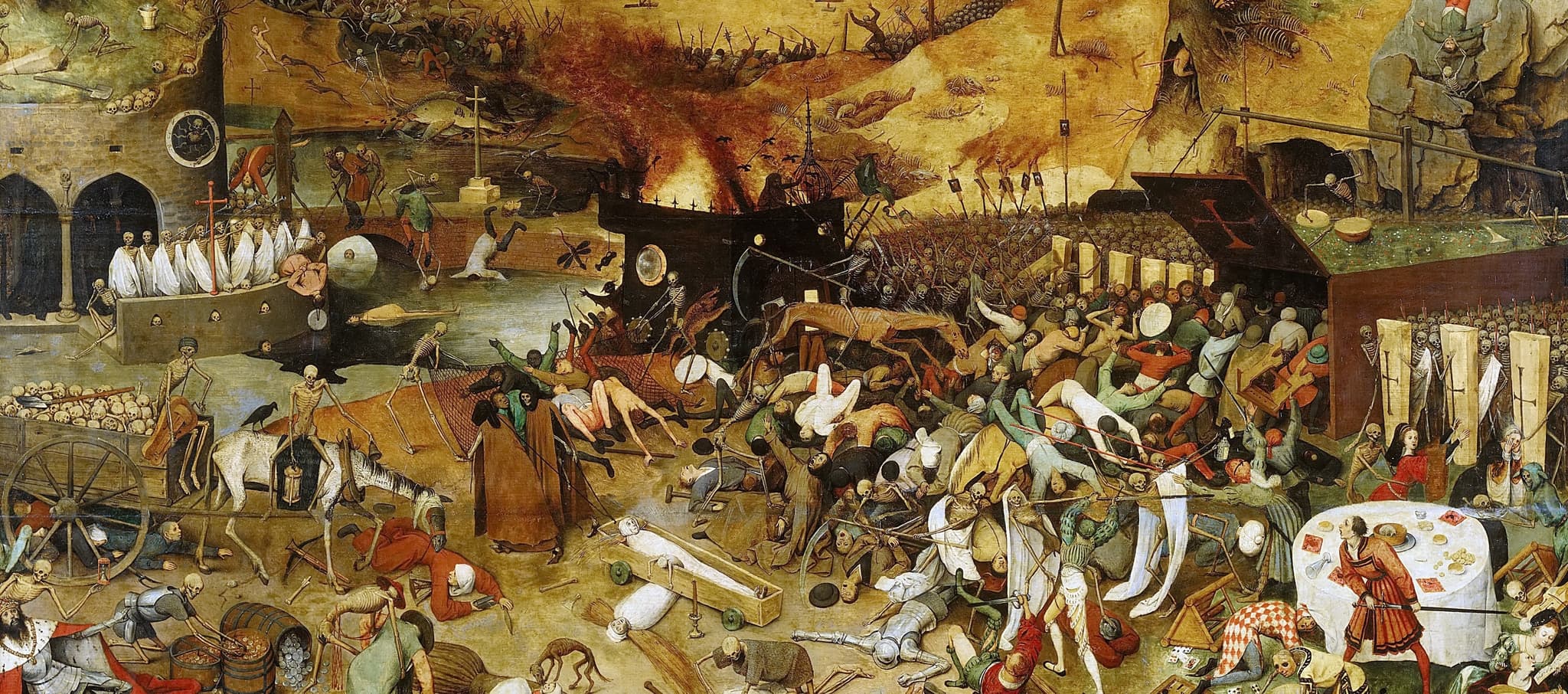
The Triumph of Death
Pieter Bruegel the Elder • Oil on panel
Read full analysis of The Triumph of Death →Valuation Analysis
Scope and headline. This valuation addresses the canonical, autograph Triumph of Death by Pieter Bruegel the Elder now in the Museo Nacional del Prado (Madrid). The painting is a museum masterpiece and not offered on the public market; the figure given here is a theoretical, open‑market range for an undisputed autograph panel of this scale and importance ($100–150 million) derived by extrapolating from scarce public sales, high‑end Brueghel‑dynasty comparables and institutional acquisition precedent [1].
Comparables and why we extrapolate. Direct auction comparables for major Bruegel autograph panels are extremely limited because originals rarely change hands. The most commonly cited public example of an autograph Bruegel is a small roundel (The Drunkard Pushed into the Pigsty) sold at Christie’s London in 2002, a sale that demonstrates demand for autograph Bruegel panels when they appear but is not scale‑comparable to a large museum composition [2]. High‑quality workshop or Brueghel family groups have achieved mid‑six to low‑seven figure totals; institutional purchases of major Flemish Renaissance works (see recent institutional acquisition activity) show museums will pay strongly for fresh, high‑quality attributions. The $100–150M range reflects a scarcity premium and size/importance multiplier applied to those market signals.
Range mechanics and sensitivities. The lower bound ($100M) assumes a private sale to a major institution or sovereign collector under favorable market conditions; the upper bound ($150M) anticipates aggressive institutional competition in a buoyant market or a discreet private‑treaty transaction among ultra‑high‑net‑worth collectors. The most important sensitivities are attribution certainty (the single largest value driver), structural/paint layer condition, and legal/patrimony constraints. Any credible attribution downgrade to workshop/follower collapses market value to a small fraction of the autograph range. Condition issues (panel splits, significant overpainting) and gaps in provenance reduce value materially.
Legal and market practicality. Spain’s cultural‑heritage regime and the painting’s museum custody make an actual sale unlikely; therefore the estimate is hypothetical and intended to express economic replacement/market value rather than a transactional, realizable figure. Insurance appraisals for major museum works are normally confidential and typically do not reflect a freely marketable hammer price. For any specific transactional advice, technical testing (dendrochronology, infrared reflectography, X‑radiography, pigment analysis) and consultation with leading Old Master specialists and major auction houses would be required.
Recommendation. If you require a transaction‑grade appraisal or are in possession of a different version/copy, provide high‑resolution images, dimensions, provenance documentation and any conservation reports; commission dendrochronology and multispectral imaging; and coordinate with top Old Masters specialists at leading institutions or auction houses. For the Prado original specifically, treat the $100–150M as a reasoned theoretical range, not a near‑term market expectation [1][2].
Key Valuation Factors
Art Historical Significance
High ImpactThe Triumph of Death ranks among Bruegel’s most important and widely reproduced compositions. Its complex apocalyptic iconography, compositional scale and place in 16th‑century Northern Renaissance scholarship make it a canonical work: high curatorial interest, repeated exhibition history and deep literature all strengthen intrinsic value. Because museums prize—often above private buyers—such emblematic works, significance translates into an institutional scarcity premium: when a work of this kind becomes available it attracts museum and national collection interest, amplifying competitive pressure and justifying a materially higher value multiple relative to lesser genre pieces.
Rarity & Supply
High ImpactAutograph paintings by Pieter Bruegel the Elder are extremely rare (only a few dozen accepted autograph panels), and the most significant examples are concentrated in major museums. This structural scarcity means there is almost no liquid market supply of comparable masterpieces, which forces price discovery to rely on extrapolation from smaller autograph sales, high‑quality workshop lots and institutional acquisitions. Scarcity drives a steep premium: an otherwise comparable composition with secure autograph attribution typically trades at many multiples of workshop or later copy values because competitive institutional demand meets negligible supply.
Attribution & Technical Certainty
High ImpactAttribution is the single biggest determinant of value. A secure attribution to Pieter Bruegel the Elder—supported by connoisseurship, dendrochronology, infrared reflectography and pigment cross‑sections—carries a decisive premium. Any credible scholarly dispute or lack of robust technical analysis materially reduces market value (often from eight‑figure estimates to low‑seven or six‑figure levels). Buyers and institutions require documented technical dossiers and catalogue‑raissoné endorsement to transact at the top end, so investment in scientific testing and leading expert consensus is essential to realize the high estimate range.
Condition & Conservation
Medium ImpactCondition affects price materially but is secondary to attribution. A well‑conserved panel with documented, reversible restorations and no structural instability supports the high estimate; conversely, significant paint loss, unstable panel joins, heavy non‑original retouching or past restorations of uncertain quality reduce buyer confidence and depress value. The Prado’s stewardship and recent conservation work increase confidence for the canonical painting; for any other candidate object a professional conservation report is a prerequisite to market placement.
Legal / Patrimony Constraints
High ImpactSpanish cultural patrimony law, export controls and the painting’s inclusion in a national museum collection create formidable legal and practical barriers to sale and export. These constraints limit the buyer universe (domestic retention rights, right of tanteo) and can suppress liquidity, effectively converting theoretical market value into a less‑liquid institutional valuation. Even when a private transaction is possible, legal procedures and potential national interest claims lengthen process time and increase transaction risk, which buyers internalize into price.
Sale History
The Triumph of Death has never been sold at public auction.
Pieter Bruegel the Elder's Market
Pieter Bruegel the Elder occupies a top tier among 16th‑century Northern Renaissance artists, yet his market is defined by extreme scarcity of autograph paintings. Major panels are concentrated in national museums and seldom appear at auction; when small autograph works have appeared they fetched mid‑single to low‑seven figure sums, while high‑quality workshop/son (Brueghel dynasty) works have realized mid‑six to low‑seven figures more frequently. Because primary supply is nearly absent, theoretical valuations for museum‑quality autograph works sit well above observed auction records and depend heavily on institutional demand and attribution certainty.
Comparable Sales
The Drunkard Pushed into the Pigsty
Pieter Bruegel the Elder (roundel, attributed)
Small autograph (roundel) often cited as the best‑documented public auction example of an autograph Bruegel the Elder; shows realized market for direct Bruegel panels when they do appear.
$5.1M
2002, Christie's London
~$8.8M adjusted
The Four Seasons (set of 4)
Pieter Brueghel II (Pieter Brueghel the Younger / workshop)
High‑quality Brueghel‑dynasty/workshop group sold at a major house; useful for assessing top prices for Brueghel family workshop material (mid‑single to low‑double‑digit millions).
$8.4M
2016, Christie's London
~$10.5M adjusted
The painter and the connoisseur (after Pieter Bruegel)
After Pieter Bruegel the Elder (contemporary copy/drawing)
Recent sale of a drawing/copy after Bruegel; illustrates market levels for works on paper and copies after Bruegel in the current market cycle.
$101K
2024, Christie's (Old Master & British Drawings sale)
~$104K adjusted
Current Market Trends
The Old Masters segment is presently selective and cautious: supply of top‑quality material is limited, museums remain active buyers, and attributions/technical publications drive spikes in demand. Recent years have seen few blockbuster Bruegel autograph sales; market strength for Flemish Renaissance works has been episodic, meaning timing, provenance and exhibition history are critical to achieving top prices.
Sources
- Museo Nacional del Prado — El triunfo de la muerte (Pieter Bruegel the Elder) collection entry
- Christie’s — The Drunkard Pushed into the Pigsty (sale archive, 2002)
- Christie’s — The Four Seasons (Pieter Brueghel II) sale archive (2016) — market context for high‑quality Brueghel‑dynasty material
- The Art Newspaper — Reporting on the Prado restoration and exhibition of The Triumph of Death (2018)
- Artnet Intelligence / Old Masters market commentary (2025) — market trend context