How Much Is Dream Caused by the Flight of a Bee around a Pomegranate a Second before Awakening Worth?
Last updated: March 9, 2026
Quick Facts
- Methodology
- comparable analysis
Estimated open‑market value for the original 1944 oil‑on‑panel 'Dream Caused by the Flight of a Bee around a Pomegranate a Second before Awakening' is USD 10,000,000–25,000,000. This reflects its status as an iconic, museum‑held Dalí masterpiece with proven provenance and strong market comparables; final realization would depend on confirmed condition, sale venue and whether the work is deaccessioned or offered via a guaranteed/private placement.
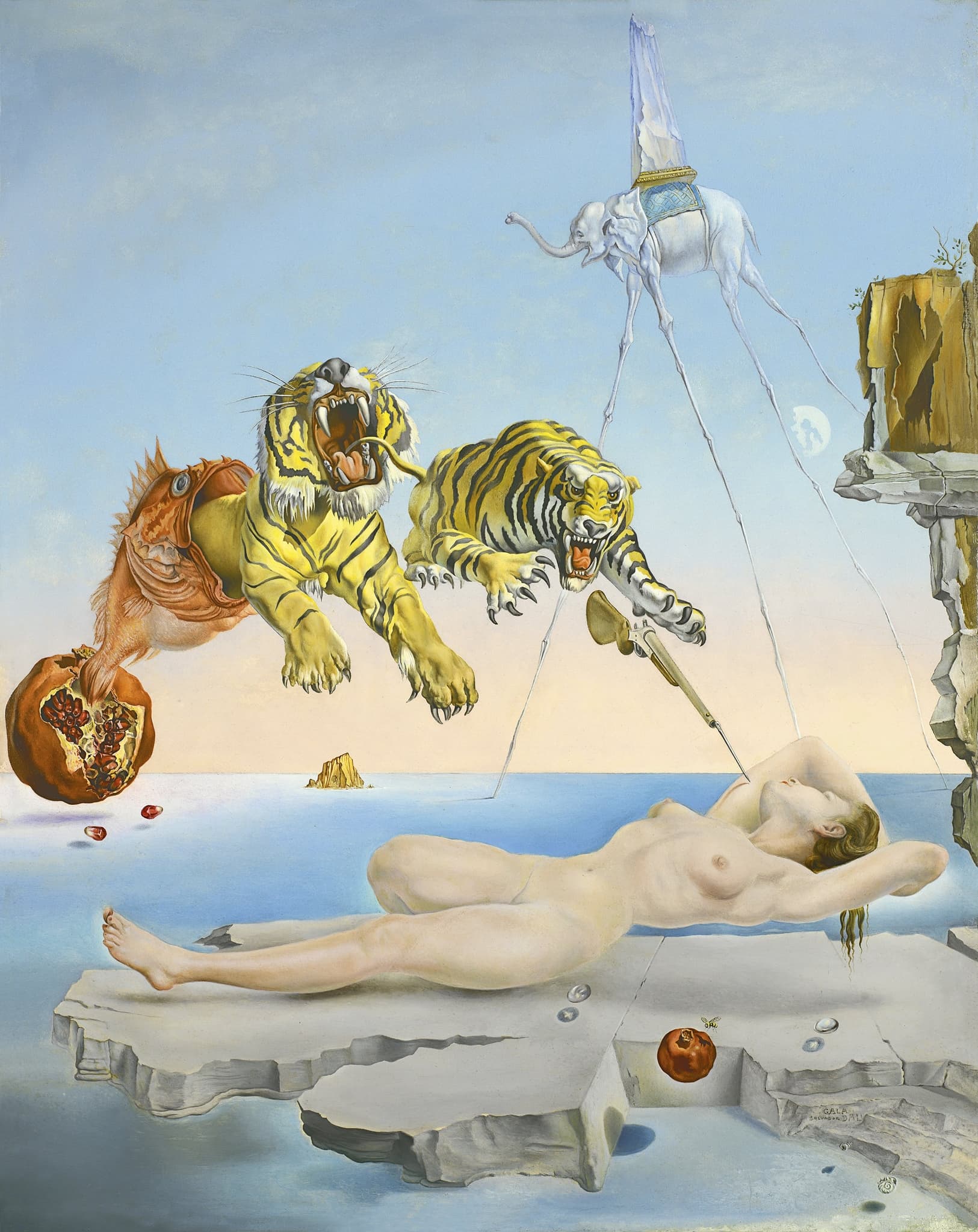
Dream Caused by the Flight of a Bee around a Pomegranate a Second before Awakening
Salvador Dali, 1944 • Oil on panel
Read full analysis of Dream Caused by the Flight of a Bee around a Pomegranate a Second before Awakening →Valuation Analysis
Valuation conclusion: Using comparables, recent category momentum, and the documented provenance, I estimate an open‑market range of USD 10,000,000–25,000,000 for the original 1944 oil‑on‑panel. This assumes confirmed authenticity, a good physical condition or conservationally manageable issues, and a properly marketed sale through a top international venue or a competitive private placement with active institutional interest. The primary source for the work’s cataloguing and museum holding is the Dalí Foundation catalogue raisonné, which records the painting and its subsequent Thyssen‑Bornemisza association [1].
Rationale and comparables: The lower‑mid estimate reflects recent mature‑period Dalí oils achieving mid‑seven figures at major houses (for example, a 2024 Sotheby’s Paris result that shows strong demand for high‑quality Dalí oils in themed Surrealism sales) while the upper band recognizes Dalí’s demonstrated ability to reach low tens of millions for museum‑quality, rare works when competitive bidding and institutional interest converge [2]. The artist’s public auction ceiling (commonly cited from a 2011 Sotheby’s sale) indicates there is precedent for low‑tens‑of‑millions outcomes for top‑tier Dalí canvases, but these are exceptional and rely on multiple positive sale conditions.
Positive drivers: This composition is among Dalí’s most recognizable and carries strong cultural and curatorial value; museum provenance (recorded sale at Sotheby’s in 1974 and later the Thyssen collection) reduces attribution risk and enhances desirability. Negative/limiting factors include the work’s effective off‑market status while museum‑held (necessitating deaccession or special arrangement to change ownership), the small panel format (51 × 41 cm) which can moderate top prices relative to larger masterpieces, and any undisclosed conservation history that could depress bids or invite condition‑based discounting.
Sale strategy and final pricing sensitivity: If offered publicly, the painting’s final price would be highly sensitive to (a) the sales channel (evening 'trophy' sale vs. targeted private sale), (b) guarantees/third‑party underwritings, (c) the intensity of institutional bidding, and (d) transparency of provenance and conservation records. In a major evening auction with strong marketing and multiple competing bidders, final proceeds could approach the top of the stated range; in a limited private placement or where condition or export constraints reduce buyer interest, the work would more likely settle near the lower bound. Recommended next steps before any firm pricing: obtain the museum accession/lot records (Sotheby’s 1974 lot sheet), a detailed condition report, and formal pre‑sale estimates from a senior specialist at a global house.
Key Valuation Factors
Art Historical Significance
High ImpactThis composition is one of Salvador Dalí’s most widely recognized and reproduced images from his mature Surrealist period. Its iconography—the floating nude, the pomegranate, the dream/awakening theme—appears in major publications and exhibitions, conferring strong curatorial interest and public recognition. Iconic status elevates institutional buyer interest and media attention at sale, increasing the probability of competitive bidding when the work is on the market. Because museum and high‑profile private collectors prize canonical, visually recognizable works, the painting’s cultural weight is a primary upward driver of value. Reputationally it sits with Dalí’s most collectible motifs, which supports a premium over average‑tier works.
Provenance & Sale History
High ImpactThe painting’s provenance includes a recorded Sotheby’s sale (3 July 1974) and subsequent inclusion in the Thyssen‑Bornemisza collection, as catalogued in the Dalí Foundation raisonné. Strong, museum‑level provenance reduces attribution and authenticity risk and is attractive to both institutions and blue‑chip private collectors. However, the museum holding also means the work has not circulated recently, so market comparables are fewer and liquidity is constrained until a formal deaccession or negotiated sale occurs. Clear, documented provenance is a significant positive factor in setting and defending a multi‑million dollar estimate.
Condition, Medium & Size
Medium ImpactThe work is a small oil on wood panel (approx. 51 × 41 cm). Panels can be structurally stable but are susceptible to wood movement, craquelure, or historical restorations; any such issues materially affect buyer confidence and hammer price. The modest size works against the scale premium that large canvases command, but for iconic imagery size is a secondary consideration; collectors will pay for rarity and importance. A current, detailed conservation report is required to quantify upside or downside adjustments; absent that report a prudent valuation retains a condition‑sensitivity discount relative to pristine, larger masterpieces.
Market Comparables & Demand
High ImpactComparables show a broad band for Dalí: high‑quality oils in strong sale conditions can achieve multi‑million to low‑tens‑of‑millions results, while many works (prints, late studio pieces) trade at far lower levels. Recent themed Surrealism sales (e.g., a notable Sotheby’s Paris Dalí result in 2024) demonstrate active mid‑seven‑figure demand for prime works; historic top sales (artist auction record, 2011) demonstrate ceiling potential. Category momentum (Surrealism centenary, renewed institutional programming) has increased demand, but realized price will be determined by sale mechanics—guarantees, marketing, and competing bidders.
Ownership & Liquidity Constraints (Museum Holding / Deaccession)
High ImpactThe painting’s location in a major museum collection is a double‑edged sword: it confers prestige and trust but drastically reduces immediate market liquidity. Deaccessioning processes are governed by institutional policy and national regulations and are infrequent; works sold by museums often come with restrictions, reputational scrutiny, and limited buyer pools. If the museum were to sell, the route (public auction vs. private placement) and the transparency of sale documentation would strongly affect realized price. For valuation purposes, museum ownership raises the work’s theoretical desirability but lowers the practical probability of a near‑term transaction.
Sale History
Sotheby's London
Salvador Dali's Market
Salvador Dalí is a blue‑chip twentieth‑century Surrealist with strong global name recognition and a highly diverse secondary market. His market is bifurcated: a small number of canonical oils have achieved seven‑ to low‑eight‑figure results (artist record commonly cited from 2011), while a far larger volume of prints, bronzes and studio/late works trade in the low thousands to mid six‑figures. Institutional interest and high‑profile exhibitions lift demand episodically. Dalí is marketable, but realized prices depend heavily on provenance, rarity and condition; only a handful of works reach the artist’s public ceiling.
Comparable Sales
Portrait de Paul Éluard
Salvador Dalí
Dalí's auction record and a canonical early Surrealist oil—serves as the artist-level ceiling and a benchmark for demand in museum-quality, single-owner works.
$21.6M
2011, Sotheby's London
~$30.2M adjusted
Rose méditative
Salvador Dalí
Recent sale of a mature-period Dalí oil in a Surrealism-themed sale; indicates mid–seven-figure results for high-quality Dalí oils in the current market and is a closer-market-style comparable.
$4.2M
2024, Sotheby's Paris
~$4.3M adjusted
Les Distractions de Dagobert
Leonora Carrington
Record-setting Surrealist sale in 2024 that demonstrates category-level appetite for canonical Surrealist masterpieces; useful as a market-ceiling comparator for trophy works in the movement.
$28.5M
2024, Sotheby's New York
~$29.3M adjusted
Current Market Trends
The Surrealism market received a notable boost around the movement’s centenary (2024), producing renewed institutional programming and select high‑profile auction records that widened the category ceiling. At the same time, the broader art market saw uneven performance and greater use of private sales and guarantees. This environment benefits well‑catalogued, museum‑grade masterpieces when marketed strategically, but it also increases selectivity—top results require precise timing, institutional interest and competitive bidding.
Sources
- Salvador Dalí Catalogue Raisonné — entry for 'Dream Caused by the Flight of a Bee…' (catalogue no. P596)
- Sotheby's — 'Surrealism and Its Legacy' sale page (includes Dalí results, Oct 2024)
- Antiques & Art Ireland — coverage of Dalí auction record (Portrait de Paul Éluard, Sotheby's London, Feb 2011)
- Museo Nacional Thyssen‑Bornemisza — collection (general source for museum holding/registration)