How Much Is The Sacrament of the Last Supper Worth?
Last updated: March 9, 2026
Quick Facts
- Methodology
- comparable analysis
Hypothetical market value if offered: approximately $10–30 million, with a central expectation in the $15–20M band. This is a theoretical estimate only — The Sacrament of the Last Supper (1955) is held by the National Gallery of Art and has not been publicly offered in the modern market.
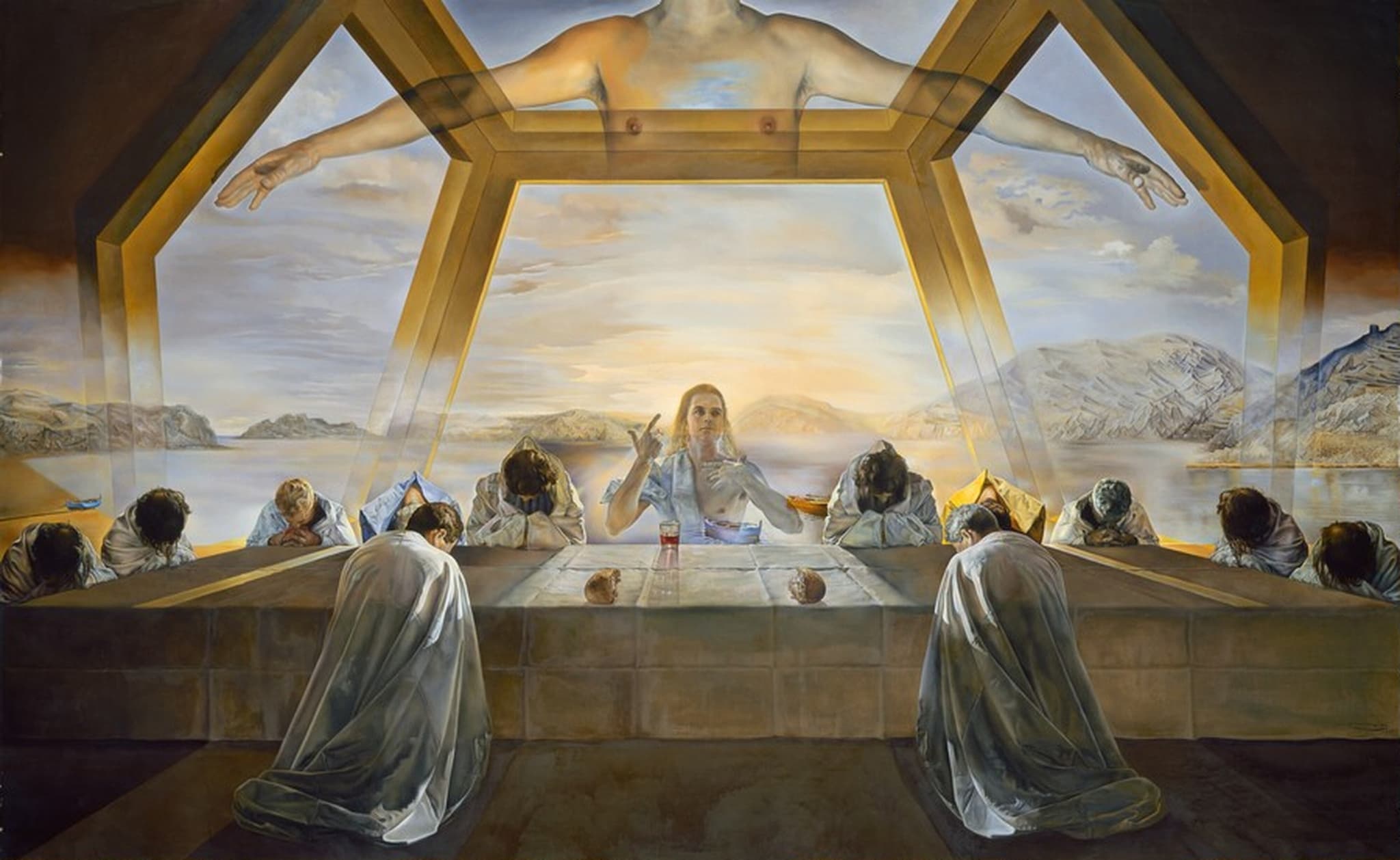
The Sacrament of the Last Supper
Salvador Dali, 1955 • Oil on canvas
Read full analysis of The Sacrament of the Last Supper →Valuation Analysis
Overview: If Salvador Dalí’s The Sacrament of the Last Supper (1955) were to be placed on the open market today, a defensible realized range is roughly $10–30 million, with a plausible central outcome around $15–20 million. This valuation is expressly hypothetical because the work is museum‑held (National Gallery of Art) and has effectively been off‑market since its acquisition and gift to the NGA [1].
Comparables & auction ceiling: The market ceiling for a trophy Dalí canvas is set by landmark sales such as Portrait de Paul Éluard (1929) which established a practical auction upper bound in the low‑to‑mid‑$20M range and demonstrates what well‑circumstanced Dalí masterpieces can achieve at competitive international auction [2]. Other major Dalí oils (for example Printemps nécrophilique, reported ~ $16.3M) support mid‑to‑high eight‑figure realizations for canonical works from peak periods [3]. By contrast, several late/post‑war Dalí canvases have traded in the low single‑digit millions in recent years (e.g., Meditative Rose ≈ €3.9M / ≈ $4.2M in 2024), which establishes a plausible lower band for post‑war/Nuclear Mysticism works when they lack the combined trophy attributes of provenance and singularity [4].
Provenance, condition & institutional context: The painting’s provenance (purchase from the artist by Chester Dale in 1956 and subsequent gift/accession to the National Gallery of Art) materially increases buyer confidence and supports valuation toward the upper half of the range should the work be legitimately offered [1]. Museum stewardship typically implies professional conservation oversight; however, I have not reviewed a museum condition report. Any undisclosed conservation interventions, structural problems, or significant inpainting would reduce market value. Conversely, a spotless conservation history plus significant exhibition and publication history would strengthen the top end.
Sale channel, liquidity & buyer pool: Realized price would depend heavily on channel: a highly marketed international evening sale with competitive bidding can drive prices to the high end of this band, while a private treaty sale to a single institution or a negotiated placement could result in a lower outcome (but may preserve institutional ownership). Deaccession rules, donor restrictions and legal/cultural property constraints make an actual sale unlikely absent exceptional circumstances; these factors also affect liquidity and potential buyer competition.
Risk factors & final position: Key upside drivers are trophy‑level buyer competition, institutional interest and a clean condition report. Downside risks include limited bidding pool for a single‑artist trophy, any conservation issues, and donor restrictions preventing or complicating sale. Taking comparables, provenance and market context together yields the stated hypothetical band; for a formal selling strategy or insured valuation, obtain the NGA condition file, confirm any encumbrances, and commission a specialist auction house estimate and written appraisal [2][3].
Key Valuation Factors
Art Historical Significance
High ImpactThe Sacrament of the Last Supper (1955) is a canonical large‑scale work from Dalí’s post‑war 'Nuclear Mysticism' and religious period. It is widely reproduced, frequently cited in scholarship, and recognized as a major example of Dalí’s mature oeuvre. That canonical status increases desirability among institutions and top collectors seeking museum‑quality examples, and supports a premium relative to more common or workshop‑attributed works. As a visually iconic, thematically charged painting it benefits from both historical importance and public recognizability, which are key drivers of demand for trophy pieces.
Provenance & Exhibition History
High ImpactDirect acquisition from the artist by notable collector Chester Dale, and the subsequent gift to the National Gallery of Art, create exemplary provenance with long institutional stewardship. This provenance reduces attribution and authenticity risk for buyers, improves market confidence, and supports higher estimates than for works with patchy or dealer‑level histories. The museum context also implies a strong exhibition and publication record, further underpinning desirability. However, the same museum ownership can make a sale legally or ethically difficult and thus reduces the practical likelihood of market appearance.
Market Comparables & Auction Record
High ImpactPublic auction comparables set practical pricing bounds: Dalí’s auction high‑water marks (early 2010s trophy sales) establish a ceiling in the low‑to‑mid tens of millions, while important late‑period canvases have sold in the mid‑to‑low millions more recently. These sale results demonstrate a bifurcated market—some museum‑quality canvases approach mid‑teens, but many post‑war works realize single‑digit millions—so the painting’s canonical status and provenance are the principal factors that push it toward the upper end of comparable outcomes.
Condition & Conservation
Medium ImpactCondition is a material variable. Museum stewardship often implies good baseline condition, but restorations, relining, or historic overpainting can diminish value substantially if they are structural or visually intrusive. Conversely, documented, museum‑grade conservation and recent technical study add confidence and can lift buyer willingness to pay. A formal condition report, pigment/varnish analysis and conservation history from the NGA are necessary to refine any estimate with precision.
Sale Channel & Legal Constraints
Medium ImpactWhether the work sells at a high‑profile evening auction, via private treaty, or through an institutional transfer will materially affect the outcome. Deaccession rules, donor covenants and cultural‑property considerations may prevent or complicate sale and reduce liquidity. If sold privately to another institution, the price might be below competitive auction peaks; if marketed as a single‑lot evening sale with international promotion, it could realize toward the high end. The limited pool of qualified trophy buyers also constrains volatility.
Sale History
Private acquisition by Chester Dale
National Gallery of Art (Chester Dale gift)
Salvador Dali's Market
Salvador Dalí remains one of the most recognizable and widely collected Surrealist artists. His market is broad and bifurcated: a large secondary market for prints and works on paper sits alongside a much smaller, more volatile market at the top for museum‑quality canvases. Dalí’s public auction record dates from the early 2010s (low‑to‑mid‑$20M territory), and while some major canvases have fetched mid‑to‑high eight figures, many important late/post‑war oils have realized in the low single‑digit millions. The name recognition and institutional demand keep the top market active, but true trophy outcomes are rare and episodic.
Comparable Sales
Portrait de Paul Éluard
Salvador Dalí
Major Dalí canvas and the artist's auction record — a museum‑quality Surrealist masterpiece. While from an earlier (1929) period than The Sacrament (1955), it establishes the practical auction ceiling for Dalí and therefore bounds the high end of valuation.
$21.6M
2011, Sotheby's, London
~$29.4M adjusted
Printemps nécrophilique
Salvador Dalí
Important Dalí oil (1930s) sold in a major sale; a museum‑quality, canonical Surrealist canvas that realized a mid‑eight‑figure price. Comparable as a benchmark for high‑mid results on major Dalí paintings (helps set mid‑to‑high market expectations).
$16.3M
2012, Sotheby's, New York
~$21.6M adjusted
Meditative Rose (c.1958)
Salvador Dalí
Close in date/style to The Sacrament (late 1950s, Dalí's post‑war/Nuclear Mysticism period). Its 2024 Paris result (~€3.9M / ≈$4.2M) shows contemporary realizations for post‑war Dalí canvases that are not trophy museum pieces — useful to calibrate the lower end for similar‑period works.
$4.2M
2024, Sotheby's, Paris
~$4.3M adjusted
Symbiose de la tête aux coquillages
Salvador Dalí
A recent 2025 Dalí canvas sale (reported ~ $4.198M) illustrating current market demand for many post‑war Dalí oils — reinforces that important but non‑trophy Dalí canvases in the modern market are often realized in the low single‑digit millions; useful to set the lower boundary.
$4.2M
2025, Sotheby's (Surrealism sale)
Current Market Trends
Surrealism has been a stronger pocket of the market since the 2023–2024 cycle, driven by centenary programming, major museum activity and a small number of trophy sales that lifted category visibility. Demand for canonical works is healthy, but top‑end outcomes remain concentrated among a handful of artists and rare masterpieces. Macro conditions, buyer liquidity and the presentation channel will determine whether a museum‑quality Dalí realizes a trophy price or falls nearer the mid‑market.
Sources
- National Gallery of Art — object entry: The Sacrament of the Last Supper (Salvador Dalí)
- Sotheby's — Portrait de Paul Éluard (2011 sale listing / coverage)
- Report: Dalí, Printemps nécrophilique (2012 sale reporting)
- Observer — Coverage of recent Surrealism sales including Meditative Rose (Sotheby's Paris, Oct 2024)
- Forbes — Coverage of the Magritte $121.2M sale and wider Surrealism market context (Nov 2024)