How Much Is Adoration of the Magi Worth?
Last updated: March 29, 2026
Quick Facts
- Methodology
- comparable analysis
Assuming the panel is a confirmed, autograph, museum‑quality Sandro Botticelli Adoration of the Magi, the preliminary market valuation is $100–150 million. This range is derived from recent top‑end Botticelli auction results, the extreme scarcity of museum‑quality Botticelli panels on the market, and the likely institutional buyer pool.
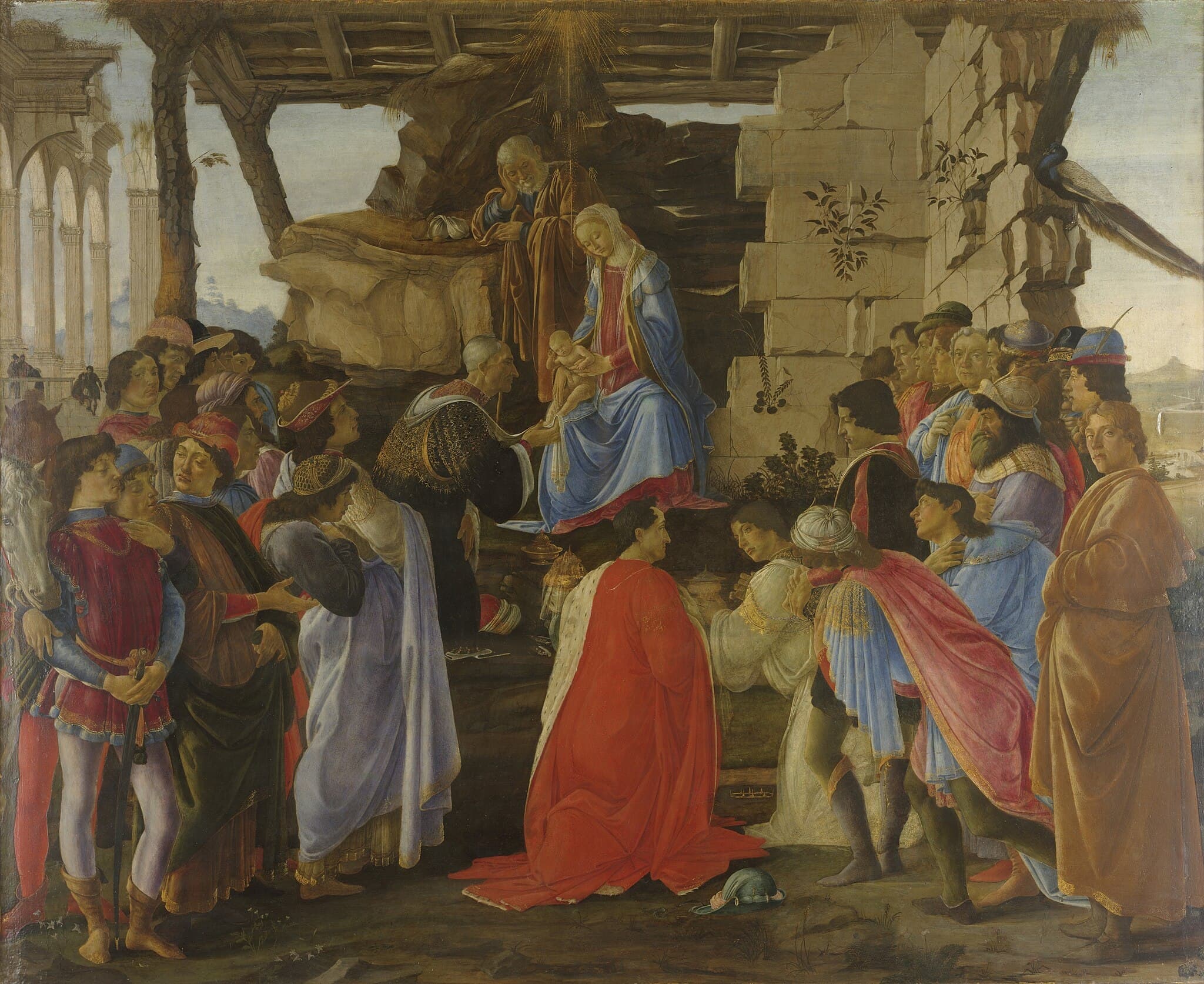
Adoration of the Magi
Sandro Botticelli • Tempera on panel
Read full analysis of Adoration of the Magi →Valuation Analysis
Valuation premise and headline. This estimate assumes the work is a securely attributed, autograph Botticelli altarpiece of museum quality (clean provenance, acceptable condition, and scholarly consensus). Under that assumption, a preliminary market range of $100–150 million is justified by extrapolating from the artist’s modern auction ceiling and high‑value devotional comparables, tempered by the practical uncertainty that accompanies near‑unique Old Master offerings [1][2].
Why the top range is plausible. Botticelli’s modern auction record (a securely attributed portrait realized in 2021) established a new headline benchmark for the artist; large, historically important devotional panels can attract similar or higher institutional competition when they become available, because museums and sovereign institutions prize canonical altarpieces and are willing to pay premiums for completeness, provenance, and exhibition value [1]. Recent devotional sales in the $40–50 million band demonstrate sustained demand for autograph Botticelli religious panels and provide a conservative mid‑market anchor [2]. The step‑up to $100M+ for a major Adoration reflects the combined effect of rarity (very few altarpieces ever come to market), scale/significance of the composition, and the potential for bidding contests or private treaty guarantees when a museum‑quality work is offered.
Key sensitivities and required evidence. The single dominant variable is attribution certainty: a secure autograph classification (supported by IRR underdrawing consistent with Botticelli’s hand, pigment analysis, and dendrochronology for wood panels) is necessary to sustain the $100–150M range. Condition and restoration history can reduce realizable value substantially; heavy overpainting or loss of original paint will reduce value (often by orders of magnitude). Provenance — especially documented pre‑19th‑century ownership and publication/exhibition history — materially increases museum interest and market certainty. Technical imaging and two independent Botticelli specialists should be engaged before marketing.[2][3]
Sale mechanics and market channel. A work of this significance would likely be handled via a major auction house Old Masters evening sale with pre‑sale guarantees or as a high‑profile private treaty alongside museum negotiations. Either route tends to deliver the highest net result for the seller when attribution, condition and provenance are strong. Conversely, if the panel proves to be a studio/workshop piece or a later follower, expect a collapse in value to the $10,000–1,000,000 range; an autograph but secondary or heavily restored work would more plausibly trade in a $3–30 million band.
Conclusion and next steps. The $100–150 million range is a reasoned, comparables‑driven estimate for a confirmed, museum‑quality autograph Adoration; confirmatory technical analysis, full provenance documentation, and independent scholarly sign‑off are the immediate next steps to validate or materially revise this valuation.
Key Valuation Factors
Art Historical Significance
High ImpactThe Adoration of the Magi is a major devotional subject in Renaissance art; Botticelli’s treatments are particularly prized for composition, figural inventiveness, and documented patronage. If this panel is a principal altarpiece or a particularly early/innovative variant with identifiable sitters or important commissions attached, it carries exceptional scholarly and display value. Museums prize canonical, well‑documented works for permanent collection building and blockbuster loans, and such institutional demand drives top‑end market pricing. The presence of patron portraits embedded in an Adoration can elevate both art‑historical importance and market desirability, producing a premium over other devotional or portrait works.
Attribution Certainty
High ImpactAttribution is the decisive variable. Secure, unanimous attribution to Botticelli — supported by underdrawing analysis (IRR), pigment and binder chemistry consistent with late 15th‑century Florentine practice, and wood dating — is required to sustain the $100–150 million band. Any significant dissent among leading Botticelli specialists, or evidence that major parts of the composition are workshop contributions, will reduce value dramatically. Proven technical documentation and independent scholarly endorsements convert speculative interest into actionable market confidence and are therefore central to price realization.
Condition & Restoration History
High ImpactCondition and conservation history materially affect value: stable original paint, minimal historic overpainting, and well‑documented conservation work preserve marketability and museum eligibility. Heavy restoration, large paint losses, or invasive 19th/20th‑century retouching typically reduce buyer confidence and price — sometimes by an order of magnitude. A rigorous condition report, conservation dossier, and traces of original preparatory techniques (underdrawing, punched or incised guidelines) will protect value; conversely, compromised condition will push buyers toward risk discounts or restrict sales to the lower private market.
Provenance & Exhibition History
High ImpactLong, documented provenance (especially pre‑19th century), inclusion in catalogue raisonnés, and a record of scholarly publication/exhibition greatly increase both monetary and institutional interest. Clear title and absence of restitution/looting concerns are prerequisites for institutional buyers and international export. Works with prominent collection histories or exhibition pedigrees command premium pricing because they reduce acquisition risk and facilitate museum acquisition or loan opportunities. Gaps or unresolved ownership claims depress marketability and may preclude sale to major public institutions.
Market Liquidity & Demand
Medium ImpactSupply scarcity is the most important macro factor: museum‑quality Botticelli paintings rarely enter the market, concentrating demand among a small set of museums and ultra‑high‑net‑worth collectors. This limited buyer pool creates episodic intense bidding when a confirmed masterpiece appears, producing outsized results. However, liquidity is low — sales are infrequent and price discovery is driven by a handful of trophy transactions. Short‑term market conditions can affect timing and final price (auction vs private sale, guarantees), but rarity and institutional interest sustain long‑term value.
Sale History
Sotheby's New York
Sotheby's New York
Christie's (Private collection dispersal), New York
Sotheby's London
Sandro Botticelli's Market
Sandro Botticelli is an A‑list Renaissance master with extremely limited market supply. Modern auction activity is thin but can produce headline results — a securely authenticated Botticelli realized over $92 million in 2021, and several devotional paintings have sold in the $40–50 million range in recent years. Institutional demand, scholarly reassessments (recent exhibitions and new attributions), and the rarity of museum‑quality panels underpin high price potential. At the same time, attribution disputes, condition issues, and infrequent sales create significant volatility and uncertainty in valuations.
Comparable Sales
Portrait of a Young Man Holding a Roundel
Sandro Botticelli
Secure, autograph Botticelli that set the modern auction record; demonstrates the ceiling for top-quality, fully authenticated Botticelli paintings even though the subject and scale (portrait) differ from a large altarpiece.
$92.2M
2021, Sotheby's New York
~$108.2M adjusted
The Man of Sorrows
Sandro Botticelli
Religious panel by Botticelli sold at a high mid‑range price; closer in subject matter (devotional imagery) to an Adoration and therefore a useful market midpoint for important Botticelli devotional works.
$45.4M
2022, Sotheby's New York
~$49.4M adjusted
Madonna of the Magnificat (ex-Paul G. Allen)
Sandro Botticelli
Major Botticelli Madonna with strong provenance that achieved a high price in a high‑profile private-collection sale; relevant as a near‑term benchmark for important Madonna/Devotional compositions.
$48.5M
2022, Christie's (Paul G. Allen sale), New York
~$52.7M adjusted
Madonna and Child with the Young St John the Baptist ("Rockefeller Madonna")
Sandro Botticelli
Earlier high‑profile sale of a Botticelli Madonna illustrating the lower end of autograph Botticelli pricing in the 2010s and useful to show market movement since that sale.
$10.4M
2013, Christie's New York
~$14.3M adjusted
The Virgin and Child Enthroned
Sandro Botticelli
Rare-to-market devotional Botticelli offered in 2024; recent sale in London that reflects current institutional/collector demand for autograph religious panels and is a practical recent comparator for smaller/less monumental works.
$12.6M
2024, Sotheby's London
~$12.7M adjusted
Current Market Trends
The Old Masters market cooled after a trophy‑led peak in 2021–2022, with fewer ultra‑high‑value lots in 2023–24. Despite this, scarcity means that authenticated Botticelli panels still attract strong institutional interest; final prices are supply‑driven and depend heavily on attribution, provenance, and condition. Export controls and museum acquisition efforts can also influence outcomes.