How Much Is Pallas and the Centaur Worth?
Last updated: March 29, 2026
Quick Facts
- Methodology
- comparable analysis
Hypothetical market value for Botticelli’s Pallas and the Centaur, were it transferable with clean title and no export restrictions, is estimated at $100–150 million. This range is grounded in recent autograph Botticelli sale highs, the painting’s museum‑quality status and Medici/Uffizi provenance, but remains theoretical because institutional ownership and Italian cultural‑heritage law make an actual sale highly unlikely.
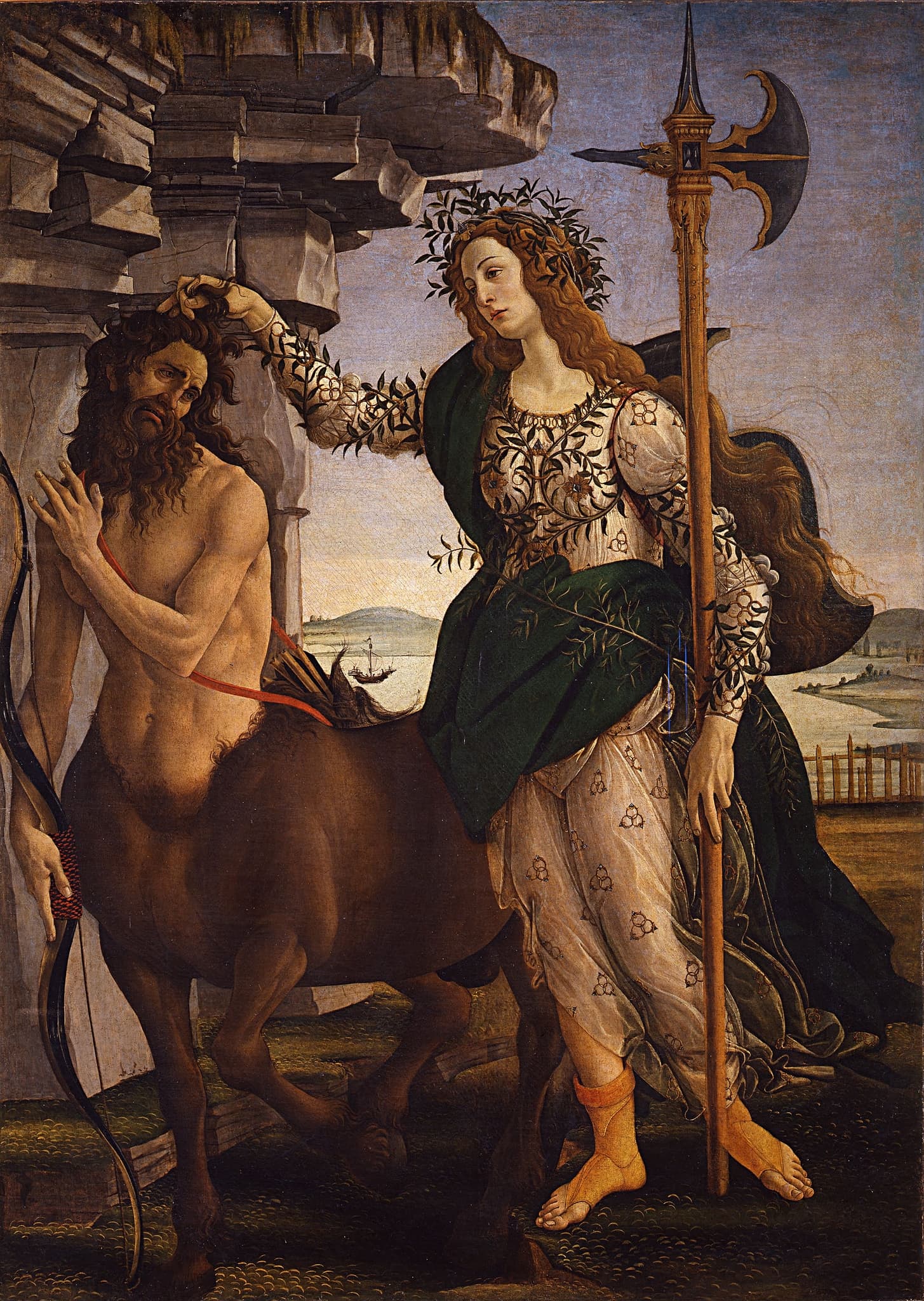
Pallas and the Centaur
Sandro Botticelli • Tempera on panel
Read full analysis of Pallas and the Centaur →Valuation Analysis
Headline valuation and context. If Pallas and the Centaur were hypothetically transferable with clean title, indisputable autograph attribution and unrestricted export, a reasoned market range is approximately $100–150 million. That range is produced by a comparable‑analysis anchored to the highest recent autograph Botticelli results while adjusting for the work’s exceptional scarcity and institutional pedigree.
Comparables and market anchors. Auction evidence shows a clear, if thin, price ladder for top Botticellis: the 2021 auction record reset expectations for the artist and demonstrated a deep buyer pool for museum‑quality autographs [1]. Subsequent multi‑million‑dollar autograph sales in 2022 further established a robust upper tier. Those outcomes provide the primary market anchors used to place a large, securely‑provenanced mythological panel at the estimate above.
Work quality and provenance uplift. Pallas and the Centaur is a mature, high‑quality Botticellian mythological composition with continuous Medici → Uffizi provenance; that institutional history materially increases scholarly certainty and exhibition value but simultaneously reduces market liquidity because the work is held by the Galleria degli Uffizi [2]. Institutional provenance and long public exposure raise the credibility premium buyers pay for autograph works, which is explicitly incorporated into the top end of the range.
Legal and practical constraints (critical caveat). The single largest determinant of the estimate’s theoretical character is Italy’s cultural‑heritage regime and the practical reality that major Uffizi holdings are not normally transferable to the international market. Any real transaction would require rare legal approvals (or a domestic transfer), politically sensitive negotiations and likely national retention policies. The valuation therefore assumes a hypothetical clearing of export/title obstacles purely for market‑valuation purposes.
Condition and attribution risk. The mid‑ to high‑end of the estimate presumes excellent condition, no substantial structural or restoration issues, and clear, current attribution to Botticelli (or overwhelmingly accepted autograph status). A negative finding in conservation imaging or attributional doubt would reduce market value sharply; conversely, fresh technical confirmation of autograph status could push value toward the top of the range.
Recommendation to refine valuation. To tighten the estimate to a formal appraisal band: obtain a current technical conservation report (IRR, X‑ray, pigment analysis), a full archival provenance dossier, and confidential market testing via leading Old Masters teams at Sotheby’s/Christie’s. In practice, because of the Uffizi ownership and export constraints, this valuation functions as a theoretical market ceiling rather than a forecast of an imminent commercial sale.
Key Valuation Factors
Art Historical Significance
High ImpactPallas and the Centaur occupies a high place in Botticelli’s mythological corpus: a mature, large‑scale allegorical composition linked stylistically to Primavera and Birth of Venus. Those mythological panels are rare outside museum holdings and are heavily favored in scholarship and exhibition programming. The painting’s aesthetic quality, compositional completeness and its role in Florentine Renaissance iconography contribute a strong premium: canonical authorship and demonstrable museum‑quality elevate buyer willingness to pay substantially above workshop or attributed pieces. In short, the work’s art‑historical weight is one of the primary drivers pushing a hypothetical market value toward the upper part of the estimated range.
Provenance & Institutional Ownership
High ImpactContinuous Medici provenance into the Pitti/Uffizi inventory confers exceptional provenance capital: sustained public ownership, long exhibition and cataloguing history, and association with premier Renaissance collections materially improve attribution certainty and scholarly acceptance. That provenance increases value because it reduces attribution risk and enhances institutional interest. At the same time, institutional ownership (Uffizi) sharply constrains marketability: museums rarely deaccession major canonical works and Italian national patrimony status creates practical barriers. The provenance therefore both elevates theoretical price potential and, paradoxically, makes a real market transaction unlikely.
Condition & Conservation
High ImpactTop‑end valuations assume excellent technical condition and a clean conservation history. For tempera/panel paintings of this age, structural panel integrity, losses, inpainting, and prior restoration interventions are critical. A current technical dossier (X‑ray, IRR, pigment analysis, dendrochronology where applicable) is mandatory: discovery of significant overpainting, major fills, or compromised panel structure can materially reduce buyer confidence and price, sometimes by orders of magnitude. Conversely, high‑quality conservation and demonstrable original materiality support the premium demanded by museums and private blue‑chip buyers.
Comparables & Price Evidence
Medium-high ImpactDirect market comparables for museum‑grade Botticellis are few but informative: a 2021 auction record and several mid‑tens‑of‑millions results in 2022 provide a pricing ladder for securely attributed works. At the same time, many Botticelli‑circle or workshop attributions sell for far lower sums, illustrating high dispersion. Because Pallas and the Centaur is a large, well‑provenanced mythological panel, it warrants a premium relative to mid‑market autographs and a positioning closer to the upper comparables—hence the $100–150M band—while acknowledging limited direct price points.
Legal / Export / Cultural‑heritage Constraints
High ImpactItalian cultural‑property law and practice represent the single largest non‑market risk. The Codice dei beni culturali and administrative practice make permanent export of significant movable cultural property difficult and often effectively prohibited. Even with willing institutional parties, obtaining authorization for an international sale would be an exceptional process, politically sensitive and legally constrained. In valuation terms this constraint converts market value estimates into theoretical ceilings: the painting’s practical marketability is severely limited, and any real sale would likely occur only domestically or under exceptional, well‑documented legal arrangements.
Sale History
Pallas and the Centaur has never been sold at public auction.
Sandro Botticelli's Market
Sandro Botticelli is a canonical Renaissance master whose genuinely autograph paintings are exceptionally scarce in the buyer market because most major works reside in museums. When accepted autographs have appeared in the last decade they have produced headline results—most notably a 2021 auction record—demonstrating a deep pool of institutional and ultra‑high‑net‑worth buyers willing to pay premiums for museum quality, provenance and exhibition history. The market is highly polarized: unquestioned autograph works can command tens to low hundreds of millions in exceptional cases, while workshop or attributed pieces typically sell at a small fraction of those sums.
Comparable Sales
Portrait of a Young Man Holding a Roundel
Sandro Botticelli
Artist auction record and clear, securely attributed autograph Botticelli — serves as a high‑end market ceiling for the artist.
$92.2M
2021, Sotheby's, New York (Masters Week)
~$106.0M adjusted
The Man of Sorrows
Sandro Botticelli
High‑quality, securely attributed devotional Botticelli that demonstrates mid‑high market demand for autograph works after the 2021 record.
$45.4M
2022, Sotheby's, New York
~$50.4M adjusted
Madonna of the Magnificat
Sandro Botticelli
Museum‑quality autograph Botticelli sold from a major private collection (Paul G. Allen) — useful mid‑high comparable for size/quality of devotional/panel works.
$48.5M
2022, Christie's, New York
~$53.8M adjusted
The Virgin and Child Enthroned (attributed to Botticelli)
Sandro Botticelli (attribution)
Attributed (not unanimously accepted) Botticelli‑style work — illustrates the pricing gulf between secure autograph works and attributed/workshop pieces.
$12.6M
2024, London Old Masters sale (4 Dec 2024)
~$12.9M adjusted
Current Market Trends
The Old Masters/Italian Renaissance market is smaller and more selective than Contemporary/Modern sectors. Since 2022 the market has been polarized: top museum‑grade works still attract strong bids while mid‑tier lots face greater scrutiny. Institutional exhibitions, reattributions and strong provenance remain the principal demand drivers. Liquidity is limited; top results are event‑driven and rely on a small set of capable buyers and institutions.