How Much Is Diana and Actaeon Worth?
Last updated: April 10, 2026
Quick Facts
- Last Sale
- $72.1M (2009, Acquired by the National Gallery (London) & National Galleries of Scotland — negotiated 'save for the nation' purchase)
- Methodology
- comparable analysis
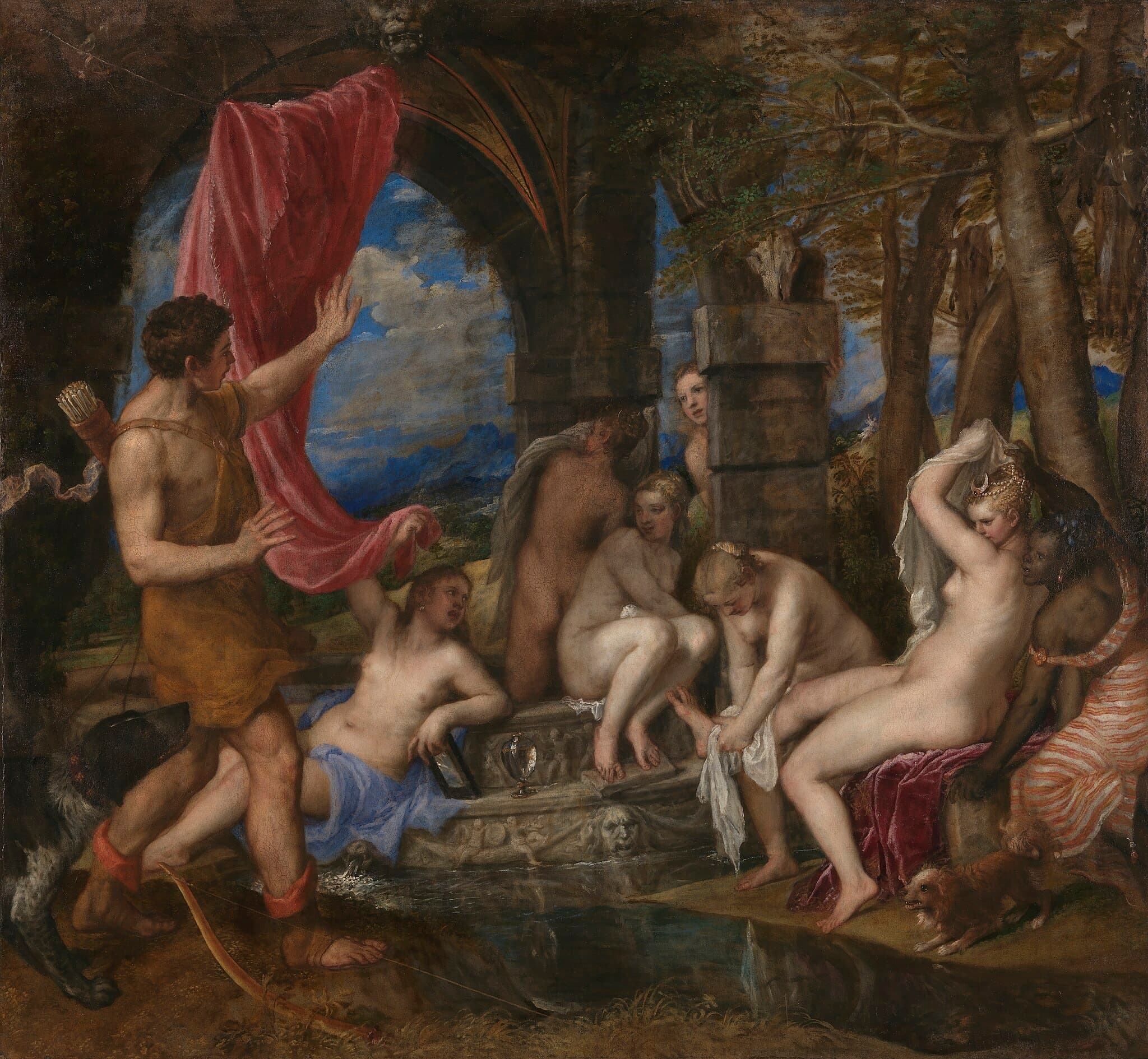
Anchored to the documented 2009 institutional acquisition (the strongest hard benchmark) and adjusted for inflation, market movement, and scarcity, I estimate Titian’s Diana and Actaeon at $100–150 million in a hypothetical open market. This assumes an autograph, museum‑quality work with clean provenance and favourable condition; institutional ownership and export/legal constraints materially reduce the likelihood of an actual sale.
Valuation Analysis
Valuation conclusion: I estimate a market value range of $100–150 million for Titian’s Diana and Actaeon (autograph, museum‑quality). This is presented as a hypothetical open‑market band because the painting is currently held by UK national institutions and therefore not freely tradable; the range is grounded in the painting’s documented institutional acquisition, inflation‑adjusted benchmarks, and recent high‑end Titian auction evidence.
The single strongest hard benchmark is the 2009 “save for the nation” negotiated acquisition by the National Gallery (London) and National Galleries of Scotland for £50,000,000 — approximately $72.11 million at the time [1]. A straightforward CPI‑style uplift and reasonable market adjustment from 2009 to the present yields an indicative present‑value in the region of roughly $100–110 million, which I treat as a conservative lower bound for a freely marketable, autograph work in excellent condition. The companion Diana and Callisto was acquired in 2012 for £45,000,000 (~$71.2M then), and together the paired transactions provide mutually reinforcing institutional price anchors for these poesie canvases [3].
By contrast, public auction comparables for Titian are substantially lower: Christie’s sale in July 2024 realized c. $22.18M and other high‑quality auction results have historically sat in the mid‑seven to low‑eight‑figure band [2]. That divergence is common for Old Masters: the highest values frequently appear in negotiated museum or private treaty transactions rather than at auction. Auction results therefore provide useful floor/comparative data but do not capture the institutional‑treaty premium that the Bridgewater transactions represent.
How the $100–150M band was derived: the lower bound is effectively the 2009 documented price uplifted to current value for inflation and modest market appreciation; the mid‑range and upper bound reflect additional premiums for the painting’s canonical art‑historical status, scarcity of autograph Titian poesie, and the likelihood of intense private/institutional competition if the work were ever freely marketable. The upper bound (~$150M) is a plausible private‑treaty or negotiated sale outcome in a highly competitive environment with no export or legal encumbrances. Offsetting downward pressures include any adverse condition findings, attributional dispute, or the practical and political barriers arising from the painting’s public‑interest status.
Caveats and next steps: this is a reasoned market valuation, not a formal appraisal. To refine the figure into a single market price would require a full technical condition and conservation report, confirmation of title and exportability, and confidential market soundings with Old Masters specialists at major auction houses or independent valuers. Given the painting’s institutional custody and cultural protections, an actual open‑market disposal is unlikely; treat this as a realistic hypothetical valuation should the painting ever become freely marketable.
Key Valuation Factors
Art Historical Significance
High ImpactTitian’s Diana and Actaeon is one of the artist’s most important mythological 'poesie' canvases, painted for Philip II and widely treated in scholarship and exhibitions. Its narrative complexity, scale and coloristic mastery place it at the top tier of Titian’s oeuvre and make it a museum‑quality trophy. Buyers — particularly institutions and ultra‑high‑net‑worth collectors who focus on Old Masters — attach a premium to works that carry demonstrable art‑historical influence and provenance, because those attributes reduce attribution risk and increase institutional impetus to acquire. The painting’s canonical status therefore materially supports valuation above typical auction comparables.
Provenance & Legal Status
High ImpactDiana and Actaeon benefits from an exceptional, well‑documented provenance culminating in the Bridgewater ownership and the 2009 'save for the nation' acquisition. That chain enhances buyer confidence and supports higher valuations. Conversely, its current public‑institution custody, alternating‑display arrangement and national‑interest protection introduce export and legal frictions that limit marketability. These protections can both support price (by reinforcing rarity) and suppress realizable value (by reducing the buyer pool and complicating transfers). Formal title and export clearance would therefore be essential to unlock top‑end private valuations.
Condition & Conservation
High ImpactCondition is decisive for Old Masters. Museum stewardship suggests the painting likely has professional conservation oversight and technical study, which typically supports valuation. However, any evidence of significant overpainting, structural instability, or unresolved restoration work can reduce value materially. A full technical dossier (X‑ray, infrared reflectography, pigment analysis, varnish and cleaning history) is required to confirm an autograph attribution and to validate a top‑band valuation. For this estimate I assume museum‑level condition, but the valuation band is sensitive to adverse conservation findings.
Market Scarcity & Comparable Sales
High ImpactAutograph Titian mythological canvases of this importance almost never reach the open market, so supply is extremely constrained. The 2009 and 2012 Bridgewater transactions are the most relevant direct comparables and act as institutional price anchors. Public auction highs for Titian remain far lower, illustrating a structural gap between auction liquidity and negotiated institutional/private sales. Scarcity therefore creates significant upside potential if the work were freely marketable and unencumbered, but that upside is contingent on clear attribution, clean title and exportability.
Saleability & Marketability (Institutional Ownership)
Medium ImpactBecause the painting is effectively held in public trust, immediate saleability is very low. If ever disposed it would likely be via negotiated channels (government transfer, acceptance‑in‑lieu, or rare private treaty), each with distinct pricing dynamics. Institutional custody reduces exportability and buyer competition in a standard auction setting, which can compress the realizable price relative to a theoretical unrestricted market maximum. That said, institutional records and conservation documentation increase buyer confidence when a sale is possible, which supports value at the top end of a hypothetical range.
Sale History
National Gallery (London) & National Galleries of Scotland — negotiated acquisition (save for the nation)
National Gallery (London) & National Galleries of Scotland — negotiated acquisition
Christie's, London (auction)
Sotheby's, New York (auction)
Titian's Market
Titian is one of the most collectible Old Masters; autograph works are rare and are predominantly held in museums. The market for Titian is supply‑constrained and driven by institutional demand, attribution certainty, and conservation documentation. Auction records for the artist remain lower than institutional/private‑treaty benchmarks, which is typical of the Old Masters market: the public market provides floor comparables, while negotiated museum purchases set the upper anchors. When a securely attributed Titian of major importance appears with clean provenance and exportability, it can command substantially higher prices than auction comparables indicate.
Comparable Sales
Diana and Actaeon
Titian
Direct documented institutional acquisition of the exact painting; the single strongest, most reliable benchmark because it is the actual transaction for this object.
$72.1M
2009, Acquired by the National Gallery (London) & National Galleries of Scotland — negotiated 'save for the nation' purchase
~$108.3M adjusted
Diana and Callisto
Titian
Companion painting from the same commission/series, acquired by the same institutions; closely comparable in provenance, importance and transaction context.
$71.2M
2012, Acquired by the National Gallery (London) & National Galleries of Scotland — negotiated purchase (companion painting)
~$99.9M adjusted
Rest on the Flight into Egypt
Titian
Recent public auction high for a Titian; useful as a public-market comparable but materially lower than private/institutional treaty prices for museum‑quality Titians.
$22.2M
2024, Christie's, London (2 July 2024) — auction record for Titian in the recent market
~$22.7M adjusted
A Sacra Conversazione
Titian
Earlier major auction realization for Titian; demonstrates that auction-level prices for the artist have historically lagged private/institutional sales of top-tier works.
$16.9M
2011, Sotheby's, New York (28 January 2011)
~$24.2M adjusted
Current Market Trends
The Old Masters market is specialist and episodic: aggregate volumes can be subdued, but exceptional, well‑provenanced works still attract deep institutional and private capital. Recent marquee results (including a 2024 auction high for a Titian) show top‑end resilience. Key near‑term drivers are scarcity of supply, attribution certainty, conservation assurance and institutional interest; export controls and national protections continue to influence saleability and pricing dynamics.