How Much Is Diana and Callisto Worth?
Last updated: April 10, 2026
Quick Facts
- Last Sale
- $71.7M (2012, Negotiated acquisition by National Gallery (London) & National Galleries of Scotland)
- Methodology
- comparable analysis
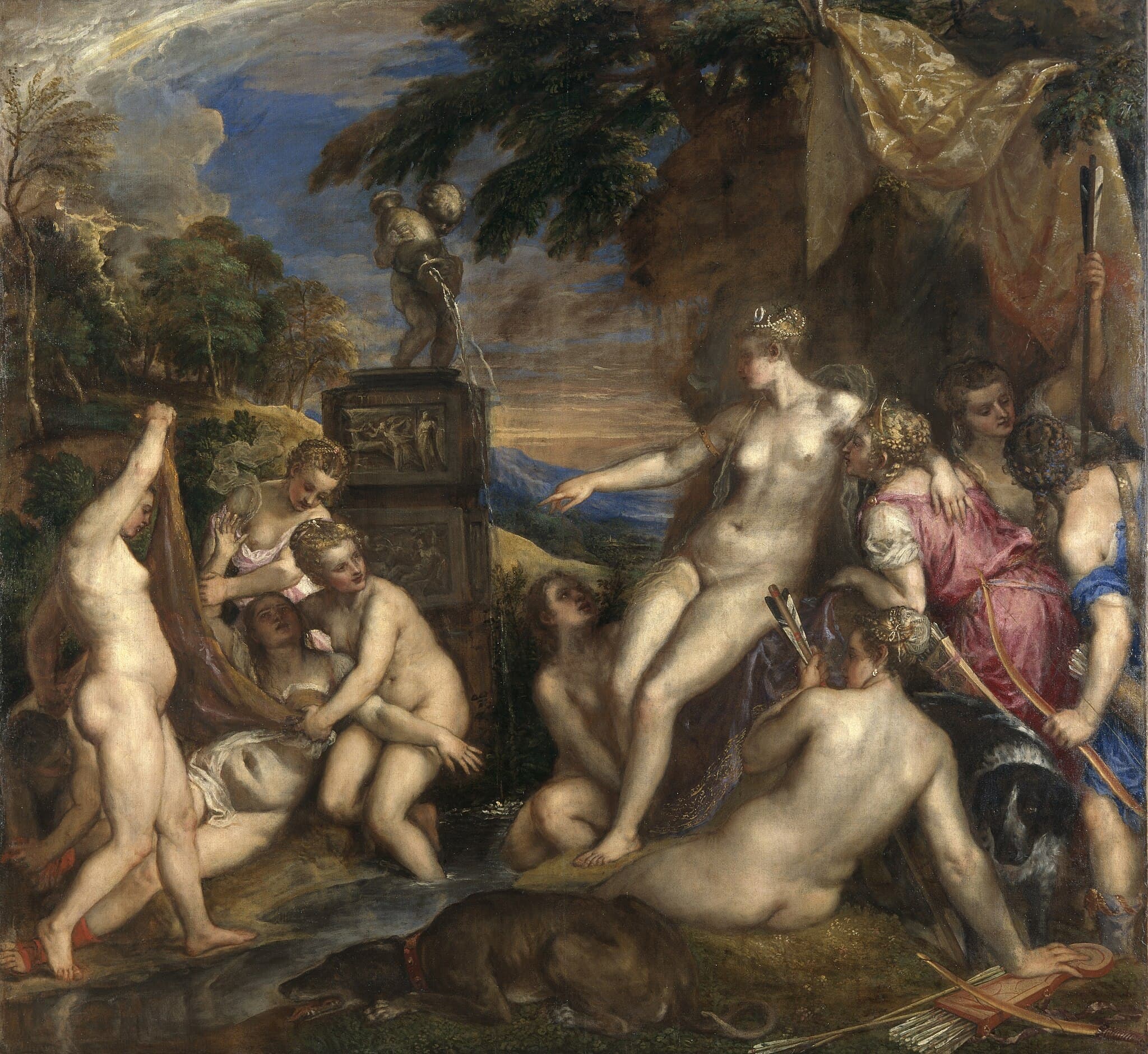
If you mean the canonical Titian Diana and Callisto now held in UK national collections, a realistic market valuation—if it were ever available for sale—would be approximately $100–$150 million. This range is anchored to the 2012 negotiated institutional acquisition (the de facto market benchmark) and adjusted against recent autograph Titian auction results and market liquidity constraints.
Valuation Analysis
Overview: Titian’s Diana and Callisto (the large mid‑16th‑century poesie commonly paired with Diana and Actaeon) is a first‑rank masterpiece. The most relevant concrete market benchmark is the negotiated institutional acquisition reported at £45 million in 2012 (≈ $71.7M at the time), which functions as a de facto valuation for the actual painting in question [1]. By contrast, public‑market saleroom evidence for securely attributed Titians sits notably lower: Christie’s July 2024 sale of a confirmed Titian established an auction high in the low‑$20M range and illustrates the persistent gap between negotiated institutional valuations and open‑market hammer prices [2].
Method and rationale: This appraisal uses comparable_analysis: the 2012 negotiated purchase anchors the lower bound after allowance for inflation and market movement, while recent auction results provide the public‑market context. Because the 2012 sale was a targeted institutional negotiation rather than an open competitive auction, it sets a higher institutional benchmark than saleroom records. Converting that benchmark into today’s market and allowing for a realistic private‑treaty premium for an undisputed autograph Titian yields a preliminary band of $100–$150M. The lower end reflects a conservative, market‑adjusted institutional floor; the upper end envisions an exceptional, highly competitive private/institutional sale with perfect attribution, excellent condition and no legal impediments.
Key risk and uplift factors: Upside requires uncontested autograph attribution, exemplary condition, stellar provenance and clear exportability; any weakness on those fronts materially lowers value. Downside scenarios—significant workshop participation, major restorative intervention, provenance gaps or legal export restrictions—could reduce marketability or eliminate competitive bidding. Crucially, the canonical Diana and Callisto is currently held by UK national institutions after a public campaign; works in public collections are rarely deaccessioned and legal/ethical constraints make a commercial sale highly improbable in practice [1].
Conclusion and next steps: The $100–$150M range represents a reasoned estimate reflecting the 2012 institutional purchase, adjusted for current market dynamics and scaled against saleroom evidence. To refine this estimate to a market‑ready appraisal I require confirmation of which physical version is intended, an up‑to‑date technical and condition report, the full provenance chain, and any export/alienation constraints. With that documentation I will produce a detailed, sourced valuation model with inflation adjustments and itemised comparables.
Key Valuation Factors
Art Historical Significance
High ImpactTitian’s Diana and Callisto is a cornerstone of his mythological oeuvre and is widely discussed in scholarship as one of his mature poesie. As a large‑scale, narrative canvas with close ties to Diana and Actaeon, it carries exceptional curatorial and academic weight. Museums prize such works for their didactic value and ability to anchor exhibitions and catalogues; collectors pay premiums for pieces with demonstrable influence on the history of painting. Because the painting is central to Titian’s narrative achievement, its cultural prestige translates directly into market value, making art‑historical significance a very strong positive driver of price.
Attribution / Authenticity
High ImpactSecure autograph attribution to Titian is the single most important determinant of monetary value. Autograph works command many multiples of prices paid for workshop or follower pieces. Technical studies (infrared reflectography, pigment analysis, studio comparisons) and consensus in the catalogue raisonné community materially affect bidder confidence. Any credible downgrade to 'studio' or 'circle' status would produce substantial discounts and likely shift the sale audience from top museums/collectors to a more limited buyer pool. Clear, modern authentication supports the high end of the valuation band.
Condition / Conservation
High ImpactCondition affects aesthetic presentation, insurability and legal exportability. Major restorations, heavy relining or pervasive overpaint reduce value and deter top bidders; conversely, a stable, well‑documented conservation history preserves buyer confidence and can justify premiums. For a multisecular canvas of this scale, even routine conservation interventions must be disclosed; undisclosed or invasive treatments will trigger discounts. A current, detailed technical and condition report is essential to support the estimated valuation and to inform buyer due diligence.
Provenance & Legal / Ownership Status
High ImpactDocumented provenance that links the painting to reputable historical owners and exhibitions increases marketability and price. Gaps, contested ownership claims, or wartime transfers can suppress demand or preclude sale. Legal constraints—national treasure status, inalienability while held in a public trust, or restrictive export licenses—can effectively remove the work from the open market. The canonical Diana and Callisto is in UK public ownership following a national fundraising campaign; that provenance supports institutional valuation but makes commercial sale highly unlikely.
Market Liquidity & Comparable Sales
Medium ImpactLiquidity for top‑tier Titian paintings is limited: masterpieces rarely appear at auction, and public sales that do occur typically land in the low‑teens to low‑twenties of millions. Negotiated institutional purchases (like the Diana pair) produce higher, non‑competitive benchmarks. This bifurcation between auction and private/institutional pricing creates valuation uncertainty. Whether a specific sale reaches the $100–$150M band depends on the number and depth of interested buyers, sale mechanism (private treaty vs auction) and absence of legal or conservation impediments.
Sale History
Negotiated purchase — National Gallery (London) & National Galleries of Scotland
Negotiated purchase — National Gallery (London) & National Galleries of Scotland
Christie's, London
Sotheby's, London
Sotheby's, New York
Titian's Market
Titian is at the apex of the Old Master market: his autograph works are rare, highly sought by major museums and discerning private collectors, and central to canonical collections. Auction records for Titian historically lag the very highest Old Masters, but institutional acquisitions and private treaty transactions can place individual masterpieces well above saleroom highs. Because top Titians rarely come to market, public auctions give an incomplete picture; negotiated sales and museum purchases often establish the most relevant top‑end benchmarks. Collectability is extremely high, but liquidity is limited to a small pool of deep‑pocketed buyers.
Comparable Sales
Diana and Callisto
Titian
Direct benchmark — the actual painting in question; institutional negotiated purchase that established a de facto modern market valuation for this specific Titian.
$71.7M
2012, National Gallery (London) & National Galleries of Scotland — negotiated purchase
~$101.6M adjusted
Diana and Actaeon
Titian
Companion poesie and near-identical significance; purchased in the same national campaign — a directly comparable institutional valuation.
$72.3M
2009, National Gallery (London) / National Galleries of Scotland — negotiated purchase
~$109.6M adjusted
The Rest on the Flight into Egypt
Titian
Recent saleroom high for an autograph Titian (July 2024); shows current auction‑market ceiling for high-quality works by the artist.
$22.2M
2024, Christie's, London
~$22.8M adjusted
Venus and Adonis
Titian (and workshop)
High-quality Titian offered at auction (2022); useful for assessing market pricing where attribution/workshop involvement varies.
$13.6M
2022, Sotheby's, London
~$15.1M adjusted
A Sacra Conversazione
Titian
Earlier important auction result for Titian (2011); helps show the historical auction range below institutional purchase prices.
$16.9M
2011, Sotheby's, New York
~$24.4M adjusted
Current Market Trends
Demand for top‑tier Old Masters remains specialist but steady. Recent auction activity (including a 2024 Christie’s high) shows selective appetite for autograph works, while museums and national campaigns continue to drive the largest publicly disclosed valuations. Broader economic conditions, currency movements, philanthropic priorities and export legislation are the principal near‑term variables that will determine whether a canonical Titian becomes available and what price it would achieve.
Sources
- National Gallery / National Galleries of Scotland press coverage of the Diana purchases
- Christie's press release — July 2024 evening sales (Titian auction high)
- ABC News — coverage of the 2012 institutional purchase of Diana and Callisto
- Sotheby's article on Titian's Venus and Adonis (contextual comparable)