How Much Is Perseus and Andromeda Worth?
Last updated: April 10, 2026
Quick Facts
- Methodology
- comparable analysis
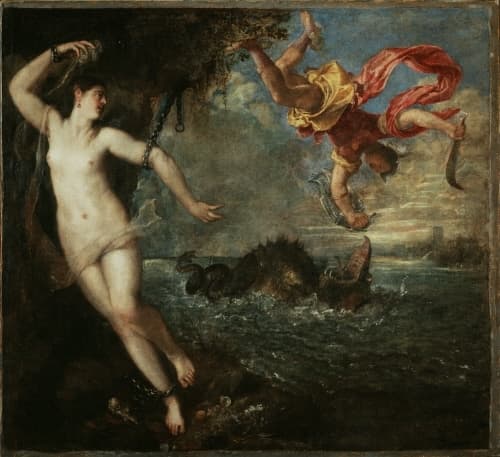
If fully authenticated as an autograph, museum‑quality Titian poesie, Perseus and Andromeda would command USD 100–150 million on the modern market (private‑treaty/institutional level). Attribution, condition and documented provenance are determinative and can move value by orders of magnitude.
Valuation Analysis
Valuation conclusion: Based on public scholarship, market comparables and institutional acquisition precedent, a securely attributed, museum‑quality Perseus and Andromeda by Titian would reasonably be valued today in the range USD 100–150 million. That range reflects realistic private‑treaty or museum purchase pricing for a canonical Titian poesie that meets the highest standards of attribution, condition and provenance.
Rationale and comparables: The estimate relies on a blend of auction anchors for autograph Titian works (recent Christie’s/Sotheby’s results in the low tens of millions) and museum‑level precedent showing substantially higher institutional willingness to pay for landmark poesie. In particular, the joint national acquisition of Diana and Actaeon in 2009 demonstrates that institutions can and will fund nine‑figure outcomes for the right Titian masterpiece; that institutional precedent is the principal reason a top‑quality Perseus and Andromeda could sit in the USD 100–150M band [2]. Auction records alone (mid‑ to high‑single‑digit millions to low tens of millions) provide a floor but not the full market ceiling for museum‑grade works.
Provenance, condition and attribution uncertainty: The Wallace Collection example of Perseus and Andromeda provides essential context: the picture has an important historic provenance and museum ownership, but scholars and technical reports note compositional changes, cropping and conservation history that materially affect attribution and marketability [1]. Those technical and condition variables are decisive: a work with unambiguous catalogue‑raisonné endorsement and clean technical evidence will approach or reach the top of the range; one with contested attribution or heavy restoration will fall far below it.
Risk / alternative scenarios: If the painting is judged a workshop piece with significant studio intervention, expect values in the low‑seven to low‑eight figure range (roughly USD 1–10M). If it is a later copy, fragment, or heavily compromised by restoration, market realizations typically fall into five‑ or low‑six figure ranges (roughly USD 50k–500k). These downward scenarios reflect the Old Master market’s extreme sensitivity to attribution and condition.
Next steps to firm the estimate: To move from this conditional range to a firm market valuation, obtain high‑resolution imagery, a full conservation report, infrared and X‑radiography, pigment and canvas analysis, and formal written opinions from leading Titian scholars or Old Master specialists at major auction houses. Those inputs will determine whether the painting can be sustained at the USD 100–150M level or should be regraded into a lower bracket.
Key Valuation Factors
Art Historical Significance
High ImpactTitian’s Perseus and Andromeda—if accepted as an autograph poesie—sits within a small, highly prized subset of his mythological commissions and embodies the artist’s mature colourito, compositional daring and narrative complexity. Works of this category are core collection items for major museums and represent cultural touchstones that institutions and states view as national patrimony. That cultural and scholarly importance translates directly into market value because buyers for canonical masterpieces are few but well funded; they will pay a significant premium for works that demonstrably advance the historical narrative of the artist and his circle. Conversely, disputed works lose that magnetism rapidly.
Attribution & Scholarship
High ImpactAttribution is the dominant single variable for Old Masters. A painting with unambiguous catalogue‑raisonné acceptance, corroborating technical imaging (infrared reflectography, X‑ray, dendro/weave analysis) and published curatorial endorsement will be priced at a materially different level than the same composition judged to be studio‑led or a later replica. The market discounts works with unresolved scholarly disputes heavily because institutional buyers and blue‑chip collectors demand certainty before committing nine‑figure sums. Technical studies and authoritative written opinions are therefore essential enablers of the high valuation proposed here.
Provenance & Exhibition History
High ImpactA continuous, well documented provenance stretching back to major early owners (royal or princely collections) and inclusion in landmark exhibitions materially increase a work’s marketability. The painting’s history through high‑status collections and its presence in museum holdings or loan histories reduce legal/title risk and strengthen attribution arguments. Gaps, contested ownership or poor documentation reduce buyer confidence and discount realizable value. For museum‑level pricing a clean, celebrated provenance and prominent exhibition record are indispensable.
Condition & Technical State
High ImpactPhysical integrity—including extent of original paint, degree of cropping, structural stability of panel/canvas and amount of later overpaint or restoration—has an immediate and quantifiable impact on price. A Titian poesie with intact paint surface and limited invasive restoration commands top market interest. Conversely, extensive retouching, compositional losses, or unstable supports erode both aesthetic quality and attribution confidence, and thus depress prices heavily. A full conservation report and technical imaging are required to quantify this factor accurately.
Market Rarity & Liquidity
Medium ImpactSecurely attributed Titian masterpieces rarely come to market; scarcity supports high theoretical value because demand from museums and high‑net‑worth collectors outstrips supply. However, the same rarity reduces liquidity and produces uneven pricing outcomes: auction records can understate the private treaty prices institutions will pay, while the infrequency of comparable sales makes precise market signaling difficult. Timing, philanthropic budgets and national export controls further influence whether a particular work realizes its theoretical price.
Sale History
Perseus and Andromeda has never been sold at public auction.
Titian's Market
Titian (Tiziano Vecellio) is among the most important and sought‑after names in the Old Master market. Securely attributed, museum‑quality Titians rarely appear for sale; when they do they draw strong institutional interest and competition from major private collectors. Auction records for autograph works have historically sat in the low tens of millions, but exceptional museum acquisitions (private treaty or state‑supported buys) have demonstrated the capacity to reach much higher sums. Collectability is driven by scarcity, art‑historical significance and authoritative scholarship; small changes in attribution or condition produce outsized value shifts.
Comparable Sales
Rest on the Flight into Egypt
Titian
Same artist; recent auction record for an autograph Titian (major Old Masters sale) giving a contemporary market anchor for high‑quality Titian paintings.
$22.2M
2024, Christie's, London
~$22.5M adjusted
A Sacra Conversazione
Titian
Same artist; major auction sale of an autograph Titian in the 2010s — useful precedent for what the market pays for securely attributed, museum‑quality works even when subject differs.
$16.9M
2011, Sotheby's, New York
~$24.1M adjusted
Diana and Actaeon (joint acquisition)
Titian
Directly comparable subject/type: a canonical Titian poesie (mythological) acquired at museum level. Shows the premium institutions will pay for autograph Titian masterpieces.
$82.0M
2009, Joint purchase by the National Gallery (London) and National Galleries of Scotland
~$122.7M adjusted
Current Market Trends
The current market favours top‑tier Old Masters with clean provenance and unquestioned attribution. Institutional demand remains the primary driver for canonical names like Titian, and public acquisitions continue to set benchmarks. Auction activity is sporadic and selective; important works that do appear attract concentrated bidding. Overall, the market is robust for blue‑chip Old Masters but highly selective—only works meeting strict technical and provenance criteria reach the highest price bands.
Sources
- Wallace Collection – Titian (Perseus and Andromeda) and related press materials
- National Gallery (London) press release: Diana and Actaeon is secured for the nation
- Christie’s press release: Titian’s 'Rest on the Flight into Egypt' leads Christie’s Old Masters sale (2 July 2024)
- Wikipedia: Perseus and Andromeda (Titian) – provenance and sale history summary