How Much Is Venus and Adonis Worth?
Last updated: April 10, 2026
Quick Facts
- Methodology
- comparable analysis
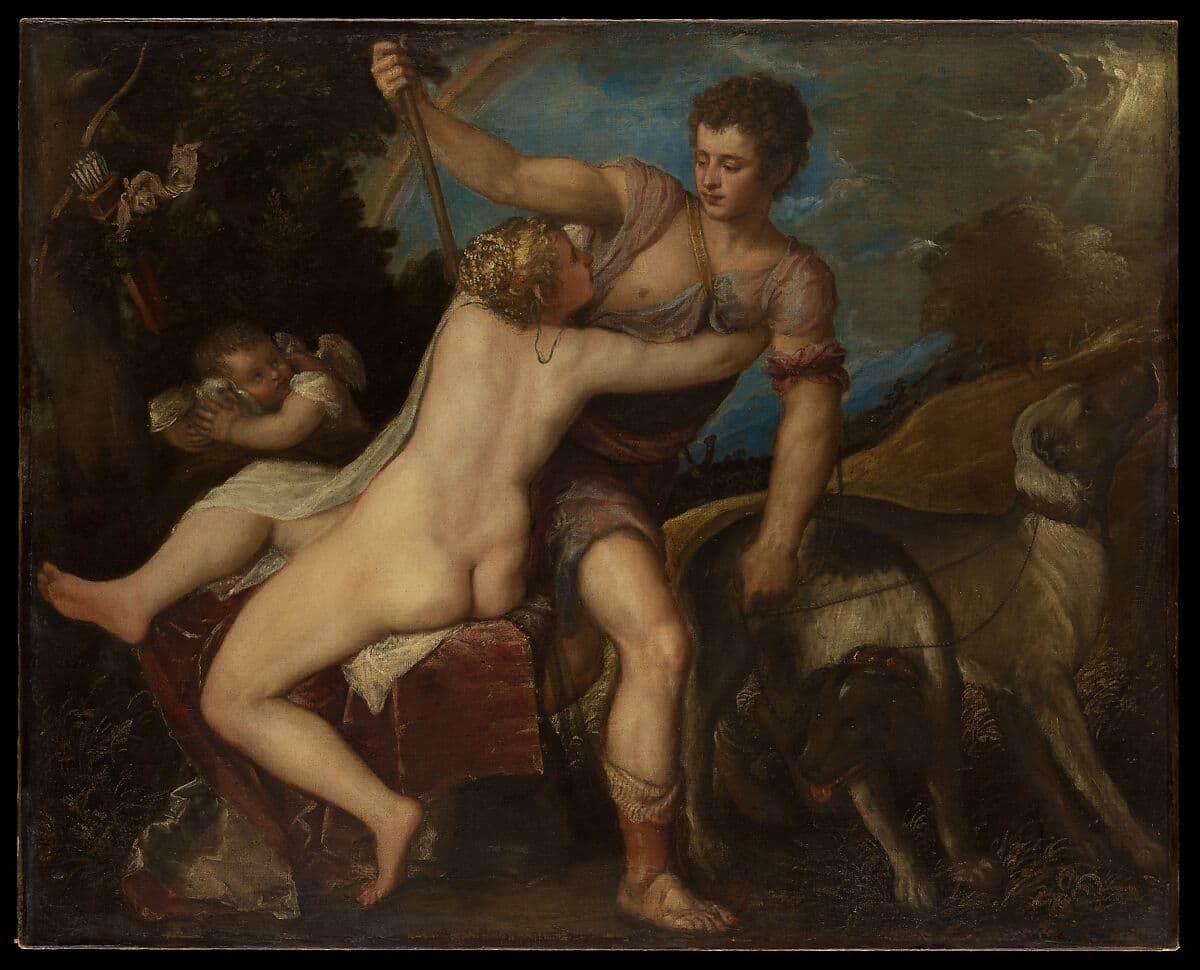
For a securely authenticated, museum‑quality c.1554 Venus and Adonis by Titian (the canonical poesie composition), the estimated market value today is USD 100–150 million. This range assumes excellent condition, uninterrupted provenance, full scholarly consensus on autograph status, and exportability—any breach of these assumptions materially reduces value.
Valuation Analysis
Valuation conclusion: For a securely authenticated, museum‑quality autograph c.1554 Venus and Adonis by Titian—comparable to the canonical Prado composition—the market value today is estimated at USD 100,000,000–150,000,000. This range assumes exceptional condition, uninterrupted pre‑20th‑century provenance, full scholarly consensus on autograph status, and legal exportability; absent any of those conditions the value would fall substantially. [1]
Comparable evidence: Public auction comparables for the subject and for Titian generally sit well below this range: a high‑quality 'Titian and workshop' Venus and Adonis sold at Sotheby’s London for ~USD 13.6M in 2022, and autograph Titian canvases have realized in the high‑teens to low‑twenties millions at auction (Christie’s 2024 record of ~USD 22.2M). Conversely, negotiated museum purchases of Titian poesie (notably major UK acquisitions) have involved multiple‑tens of millions, demonstrating that off‑market, museum‑level prices can be materially higher than auction outcomes. [2][3][4]
Why USD 100–150M: The lower bound (USD 100M) reflects a conservative institutional‑purchase multiple above the best public auction results, adjusted for rarity, scholarship, and the historical importance of a canonical poesie. The upper bound (USD 150M) represents a credible price in a competitive private sale environment where major museums or a single deep‑pocketed collector contend for a once‑in‑a‑generation Titian masterpiece—particularly in an anniversary or fundraising context. Achieving prices at the top end requires near‑perfect condition, pristine legal status and a motivated institutional buyer. [3][4]
Downside sensitivities and market mechanics: Attribution uncertainty (studio versus autograph), significant restoration needs, gaps in provenance, or national patrimony/export restrictions can reduce marketability and together could collapse the value back toward documented workshop sale levels (low‑to‑mid tens of millions). The canonical Prado work itself is museum‑held and effectively off‑market, so this valuation is necessarily hypothetical and contingent on a sale scenario that is rare and complex. Public auctions tend to set conservative price discovery for Old Masters; private treaty or museum negotiations often produce the highest outliers. [1][2][5]
Practical next steps to refine the figure: Commission a full technical dossier (infrared reflectography, X‑radiography, pigment/medium analysis), secure a complete provenance chain and catalogue‑raisonné endorsement, and obtain early guidance from cultural authorities about exportability. With those elements confirmed, targeted outreach to major institutions and discreet canvassing of private collectors can test demand and narrow the estimate toward a single‑point figure.
Key Valuation Factors
Art Historical Significance
High ImpactTitian's Venus and Adonis is a canonical mid‑16th‑century poesie composition that exemplifies his mature mythological painting and chromatic mastery. As part of the small group of Titian 'poesie' tied to Philip II and other royal patrons, a securely attributed c.1554 autograph canvas carries exceptional scholarly and cultural value. That artistic importance translates directly into market value because institutions and top collectors prize works that materially advance exhibition and scholarship capabilities. The painting's role in scholarship, regular inclusion in major retrospectives, and status as a touchstone of Venetian Renaissance art elevate its market standing above routine Old Master works.
Provenance & Ownership
High ImpactClear, continuous provenance going back to the 16th–17th centuries (royal or major private collections) materially increases buyer confidence and price. The canonical Prado canvas benefits from documented early royal connections; works with similar uninterrupted chains have the best chance of commanding institutional sums. Conversely, any gaps, wartime transfers, or unresolved ownership claims can trigger legal challenges or require restitution steps that suppress price or make a sale impossible. Provenance also affects exportability and eligibility for museum acquisition funds, so a pristine provenance is as important as attribution.
Condition & Technical Attribution
High ImpactTechnical confirmation of autograph passages and a stable physical state are decisive. Infrared reflectography, X‑rays, pigment analysis and conservation records must show original paint layers and artist‑level interventions to support a full‑value attribution. Heavy retouching, unstable supports, or removal of major overpaintings reduce market value—sometimes dramatically. Buyers at the top end expect a full conservation history and will discount for significant interventions. A flawless technical report can justify premiums above auction comparables; ambiguous technical evidence pulls value down toward workshop/attributed levels.
Market Scarcity & Demand
High ImpactAuthentic mid‑16th‑century Titian canvases of major mythological subjects rarely enter the market, creating acute scarcity. Demand for such masterpieces is concentrated among national museums, flagship institutions, and a handful of ultra‑high‑net‑worth collectors; when two or more such buyers compete, prices can leap. Recent selective strength in the top tier of the Old Masters market demonstrates buyer willingness to pay premiums for canonical works. However, the buyer pool remains narrow; absence of multiple competitive bidders reduces the likelihood of extreme headline prices.
Legal / Export Constraints & Museum Retention
Medium ImpactNational patrimony laws and export licensing in countries like Spain, Italy and others often prevent or heavily condition the sale of culturally significant works. A painting held in a national or state museum is effectively off‑market unless deaccessioned, which is rare and typically politically fraught. Even when private owners hold major works, export restrictions can delay buyers, lower demand, or compel sales to domestic institutions only. The legal context therefore serves as a practical ceiling or barrier, reducing liquidity even when scholarly and market conditions are favorable.
Sale History
Venus and Adonis has never been sold at public auction.
Titian's Market
Titian is one of the highest‑tier Old Masters: artistically seminal, historically influential and chronically undersupplied on the market. Public auction evidence is sparse and lumpy, with autograph canvases infrequently appearing and fetching in the high‑teens to low‑twenties of millions at auction in recent notable sales. Institutional, negotiated purchases for canonical poesie have demonstrated much larger price points, reflecting museums' willingness to invest heavily to secure flagship works. Overall, Titian occupies the top echelon of the Old Masters market, where a single sale can reset expectations but sales are rare and attribution plays an outsized role.
Comparable Sales
Venus and Adonis
Titian (and workshop)
Same composition/subject (Venus and Adonis). This lot was catalogued as 'Titian and workshop'—a direct market benchmark for high‑quality, non‑fully‑autograph versions of the composition.
$13.6M
2022, Sotheby's London, Old Masters Evening Sale
~$15.0M adjusted
Rest on the Flight into Egypt
Titian
A securely attributed/autograph Titian that set a new auction record in 2024—useful as an upper‑end public‑auction benchmark for museum‑quality Titian works.
$22.2M
2024, Christie's London, Old Masters Sale
~$22.5M adjusted
A Sacra Conversazione (Madonna and Child with Saints Luke and Catherine of Alexandria)
Titian
Earlier autograph Titian that realized a strong auction price (pre‑2024 record). Useful to compare how autograph works have performed over time and to gauge inflation‑adjusted auction ceilings.
$16.9M
2011, Sotheby's New York, Old Masters Sale
~$24.2M adjusted
Current Market Trends
The Old Masters market through 2024–2025 showed selective strength: overall volume was subdued but top‑tier, museum‑quality works attracted competitive interest and occasional record outcomes. Scarcity, strong institutional demand, and landmark exhibitions (including anniversary programming) have concentrated buyer appetite on canonical works. However, market liquidity remains limited and prices are sensitive to provenance, condition and exportability—all critical for a Titian poesie to achieve a seven‑figure, let alone nine‑figure, price.
Sources
- Museo Nacional del Prado — Venus y Adonis (Titian, c.1554) collection entry
- Sotheby's — Titian and workshop, Venus and Adonis (Old Masters Evening Sale, 7 Dec 2022)
- Christie's press release — Titian: Rest on the Flight into Egypt (Christie's London, 2 July 2024)
- National Gallery (London) — Titian Q&A and documentation on museum acquisitions (Diana and Actaeon / Diana and Callisto)
- Los Angeles Times — Reporting on Getty acquisition and earlier market activity (1992)