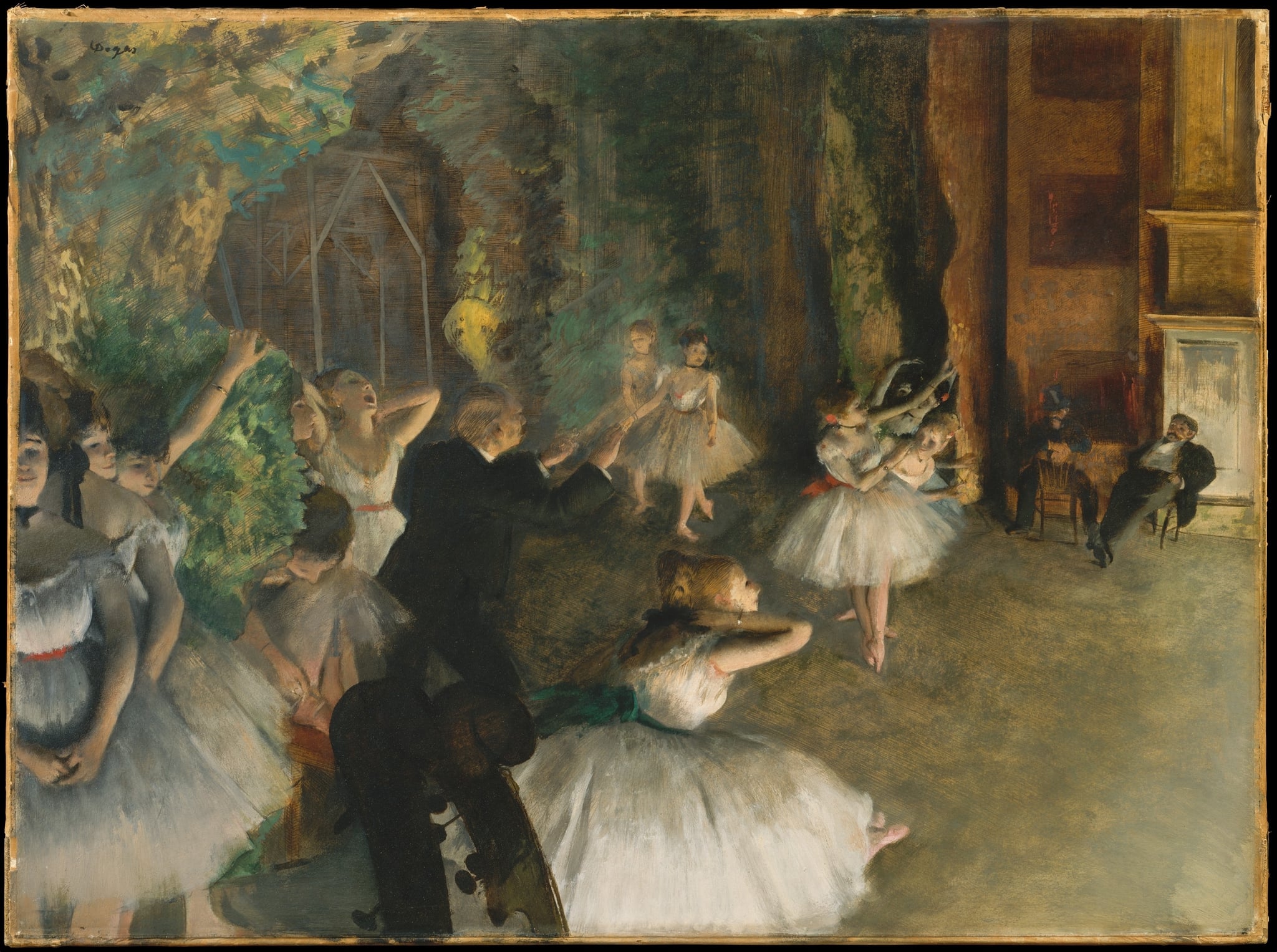
Abonnés (subscribers) in the wings Symbolism
In nineteenth-century images of the Paris Opéra, abonnés—male subscribers with backstage privileges—often appear in the wings as a visual shorthand for patronage and oversight. Their liminal placement marks the boundary between public spectacle and the backstage economy of labor. Artists used these figures to register classed and gendered dynamics around theatrical work.
Abonnés (subscribers) in the wings in The Rehearsal of the Ballet Onstage
In Edgar Degas’s The Rehearsal of the Ballet Onstage (ca. 1874), abonnés lounge in the wings while ballerinas stretch, yawn, and repeat steps under harsh footlights. By setting these subscribers at the edge of the stage action, Degas contrasts their ease with the disciplined exertion driven by the ballet master/conductor, turning rehearsal into a study of unequal vantage points. The looming double bass anchors the labor of music, while the abonnés’ offstage presence underscores how privileged observers frame and monitor the work unfolding before them.