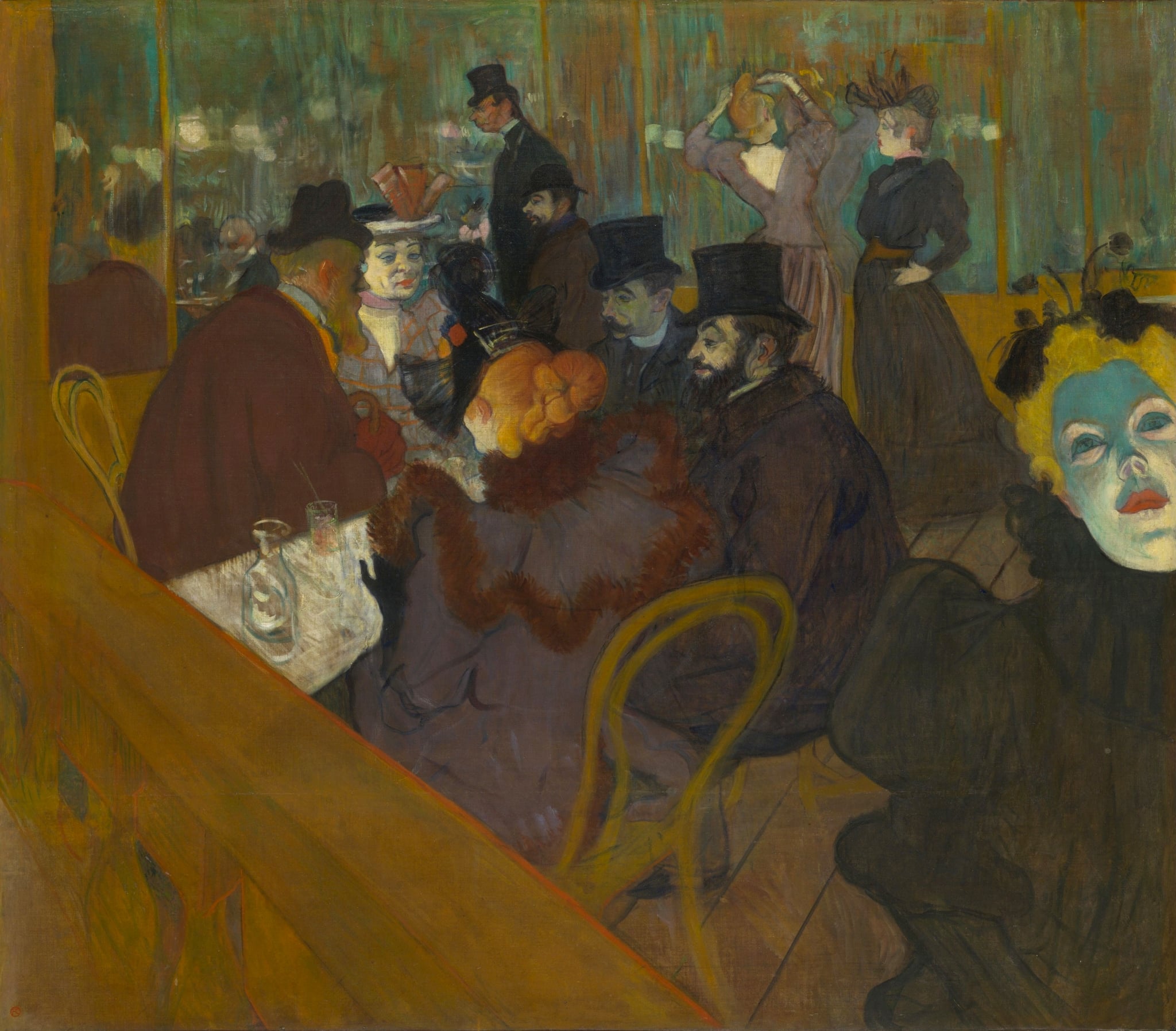
Green‑blue, masklike face Symbolism
In modern painting, a green‑blue, masklike face often signals the unnatural cast of gas or electric light, which flattens features and turns likeness into a performative façade. Associated with nightlife interiors and the culture of spectacle, this chromatic mask conveys artifice, anonymity, and the psychic distance of the modern city.
Green‑blue, masklike face in At the Moulin Rouge
In Henri de Toulouse-Lautrec’s At the Moulin Rouge (1892–1895), harsh artificial lighting lends several figures a cool, green‑blue cast that makes their faces appear masklike. Within this crowded cabaret, the diagonal banister, abrupt croppings, and multiplying mirrors intensify the sense that public identity is staged and fragmented; allure coexists with fatigue, and the tinted, masklike visage becomes a visual shorthand for urban alienation.