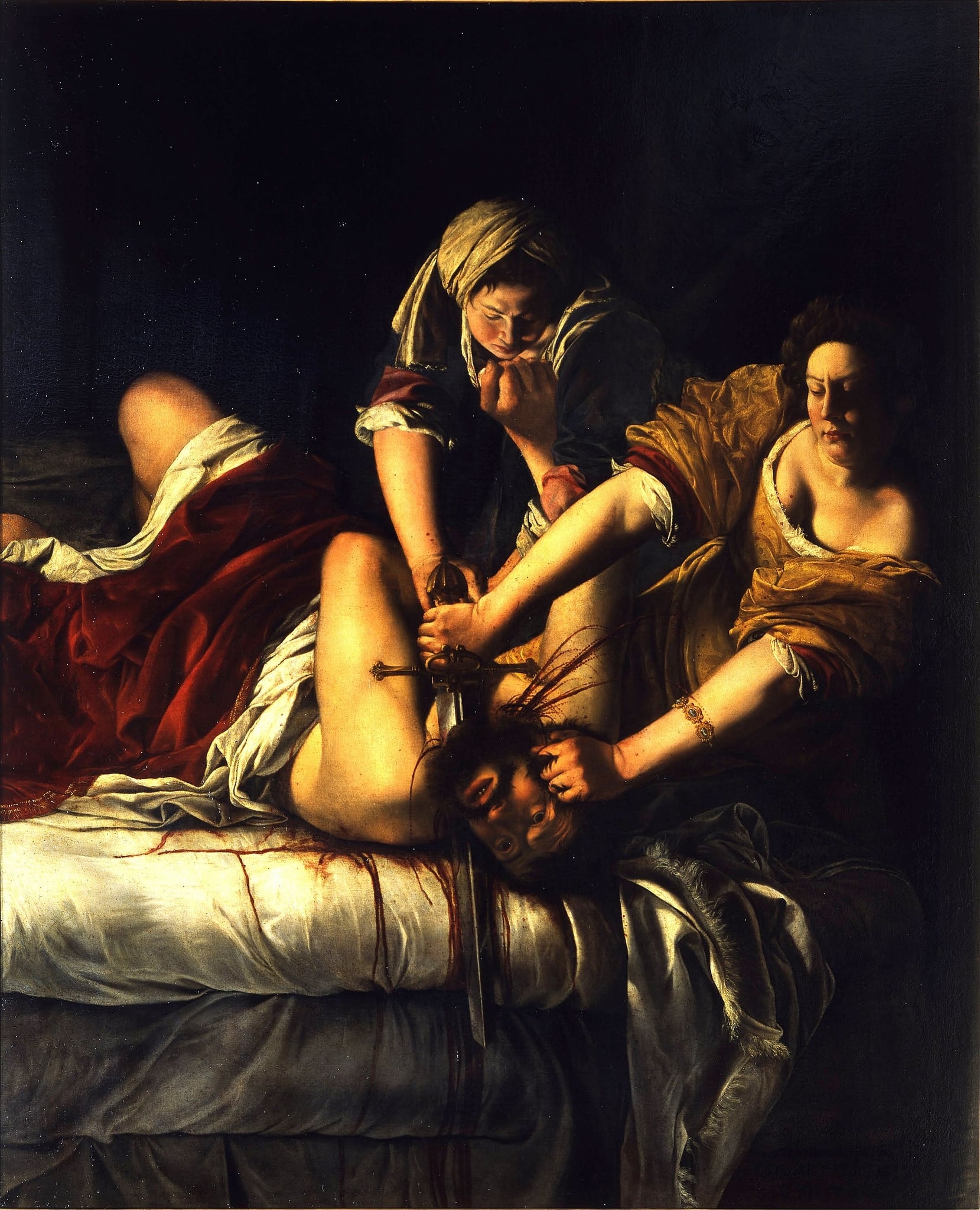
Interlocked Female Hands and Straining Forearms Symbolism
Interlocked female hands and straining forearms symbolize cooperative strength—will made operative through shared action. In art history, especially in narratives of Judith and her maidservant, the focus on joined grips and taut musculature communicates solidarity, resolve, and collective agency. The motif makes collaboration itself the instrument of efficacy.
Interlocked Female Hands and Straining Forearms in Judith Slaying Holofernes
In Artemisia Gentileschi’s Judith Slaying Holofernes (c. 1612–13), the symbol is crystallized through the painting’s hard light and close focus on the women’s arms at work. Judith’s firm grasp on the sword and Holofernes’s hair, paired with her maid’s bracing hold, produce a compact structure of force: forearms flex, hands clamp, and their coordinated effort subdues the general. Set against a dark ground and stark white linens, these interdependent gestures read as the engine of the scene’s justice, rendering female collaboration not as accompaniment but as the decisive means of action.