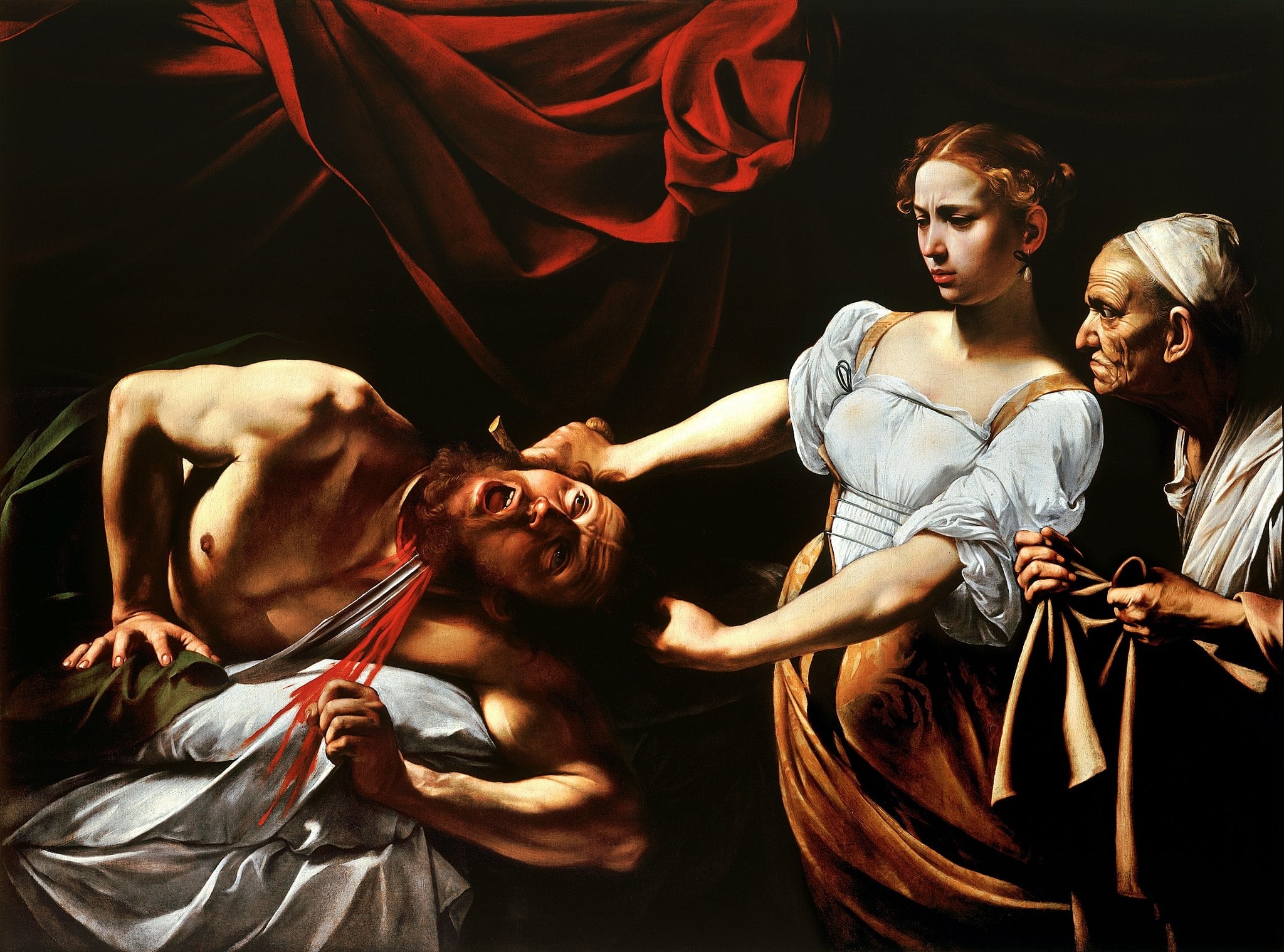
Raking light/tenebrism Symbolism
Tenebrism is the Baroque practice of setting figures in stark light against enveloping darkness; raking light is the steep, side-lit variant that sculpts forms with high contrast. In art, this lighting heightens drama while signaling revelation: it exposes guilt, clarifies virtue, and makes decisive truths visible.
Raking light/tenebrism in Judith Beheading Holofernes
In Caravaggio’s Judith Beheading Holofernes (1599), a sharply angled beam cuts the figures from darkness, turning the biblical execution into a present-tense revelation. The light isolates the act, modeling Judith’s cool determination while brutally exposing Holofernes’s convulsed resistance and the ribboning blood. Framed by the red curtain, this tenebrist contrast functions as moral illumination: virtue, steadied and clear, overthrows tyranny laid bare, making deliverance feel material and irreversible.