Colonialism & empire
Featured Artworks
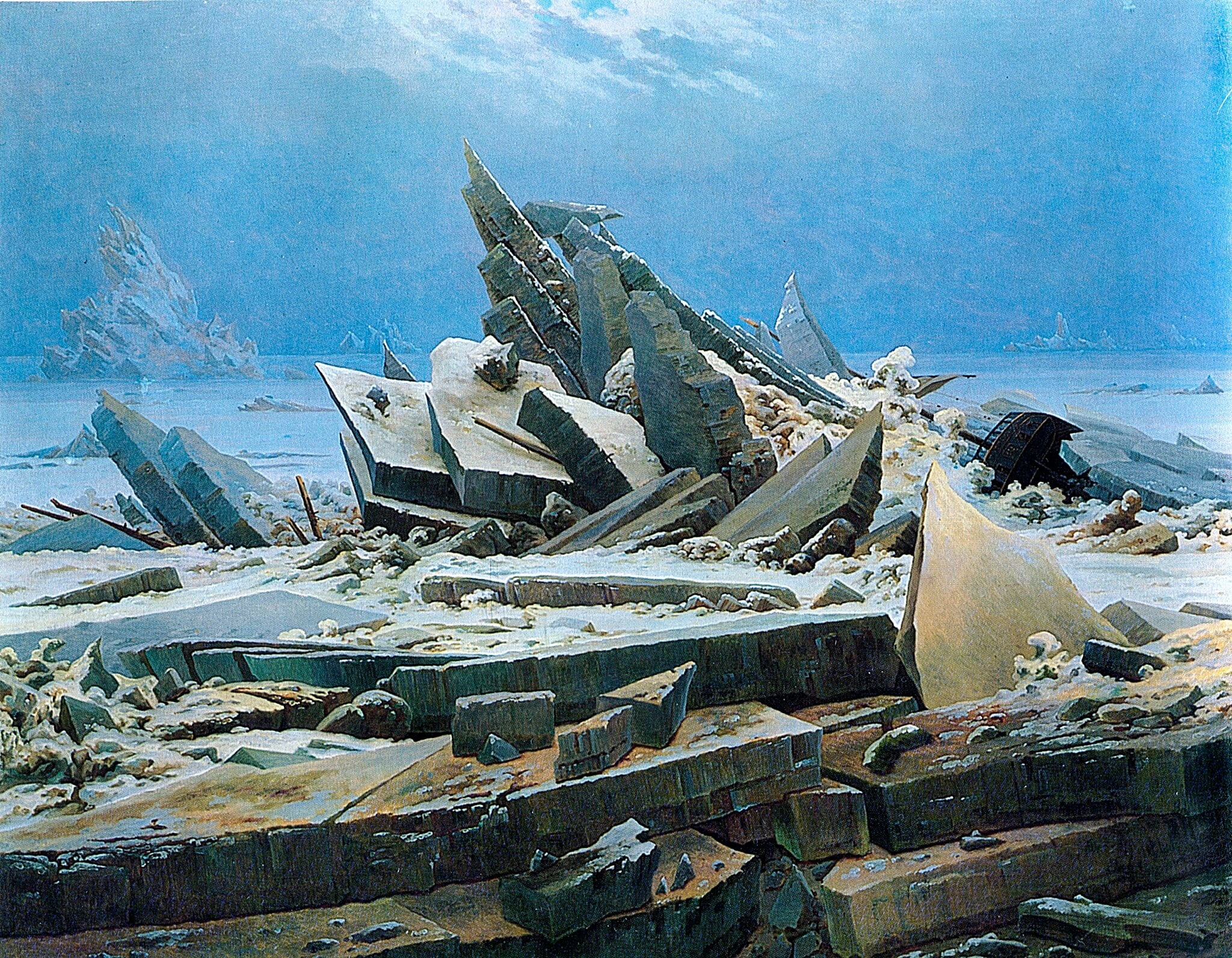
The Sea of Ice
Caspar David Friedrich (1823–1824)
Caspar David Friedrich’s The Sea of Ice turns nature into a <strong>frozen architecture</strong> that crushes a ship and, with it, human pretension. The painting stages the <strong>Romantic sublime</strong> as both awe and negation, replacing heroic conquest with the stark finality of ice and silence <sup>[1]</sup><sup>[3]</sup>.
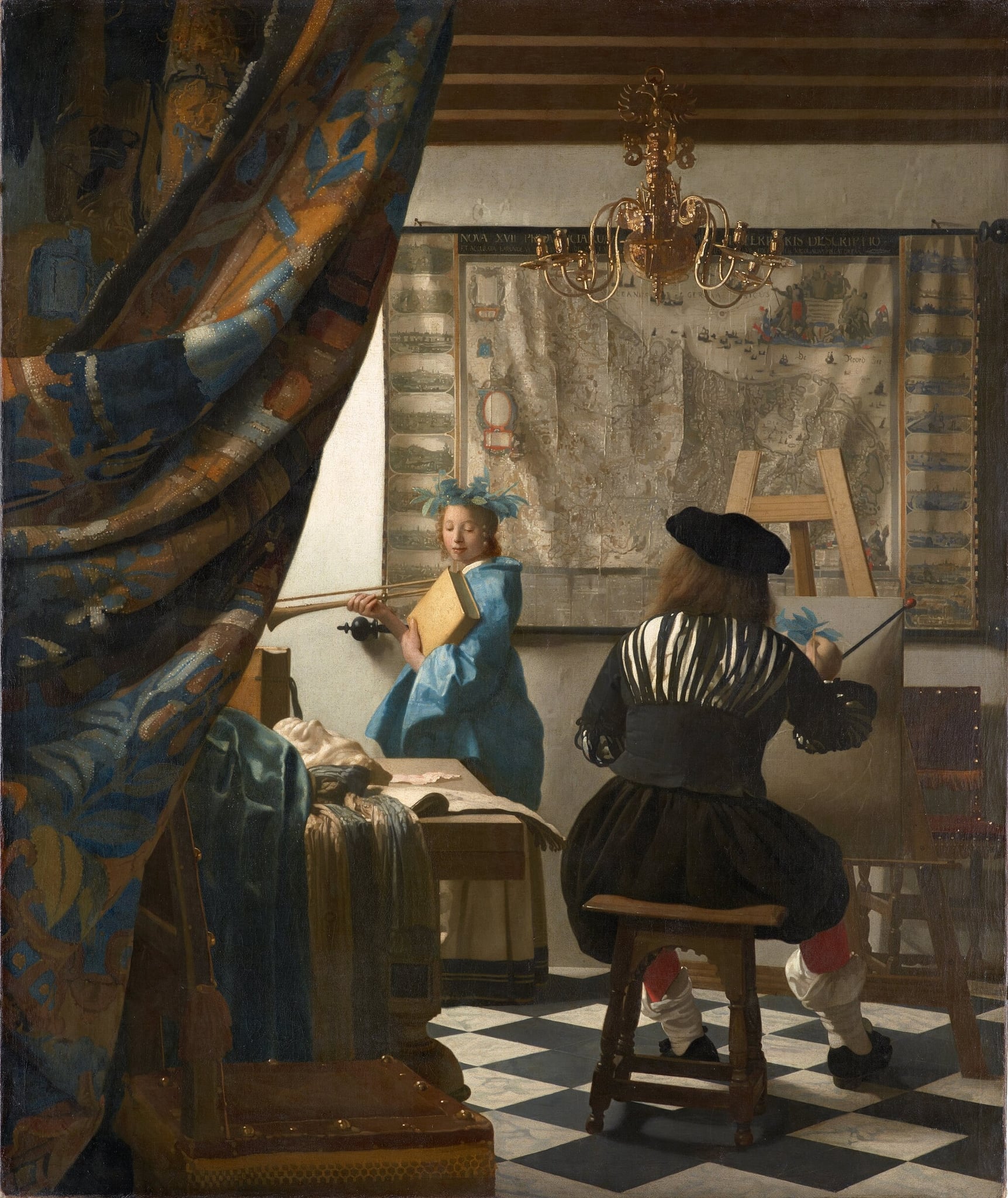
The Art of Painting
Johannes Vermeer (c. 1666–1668)
Johannes Vermeer’s The Art of Painting is a self-aware allegory that equates <strong>painting with history and fame</strong>. Framed by a parted <strong>tapestry</strong> like a stage curtain, an artist in historical dress paints the muse <strong>Clio</strong>, while a vast <strong>map of the Seventeen Provinces</strong> and a <strong>double‑headed eagle</strong> chandelier fold national memory into the studio scene <sup>[1]</sup><sup>[3]</sup>.
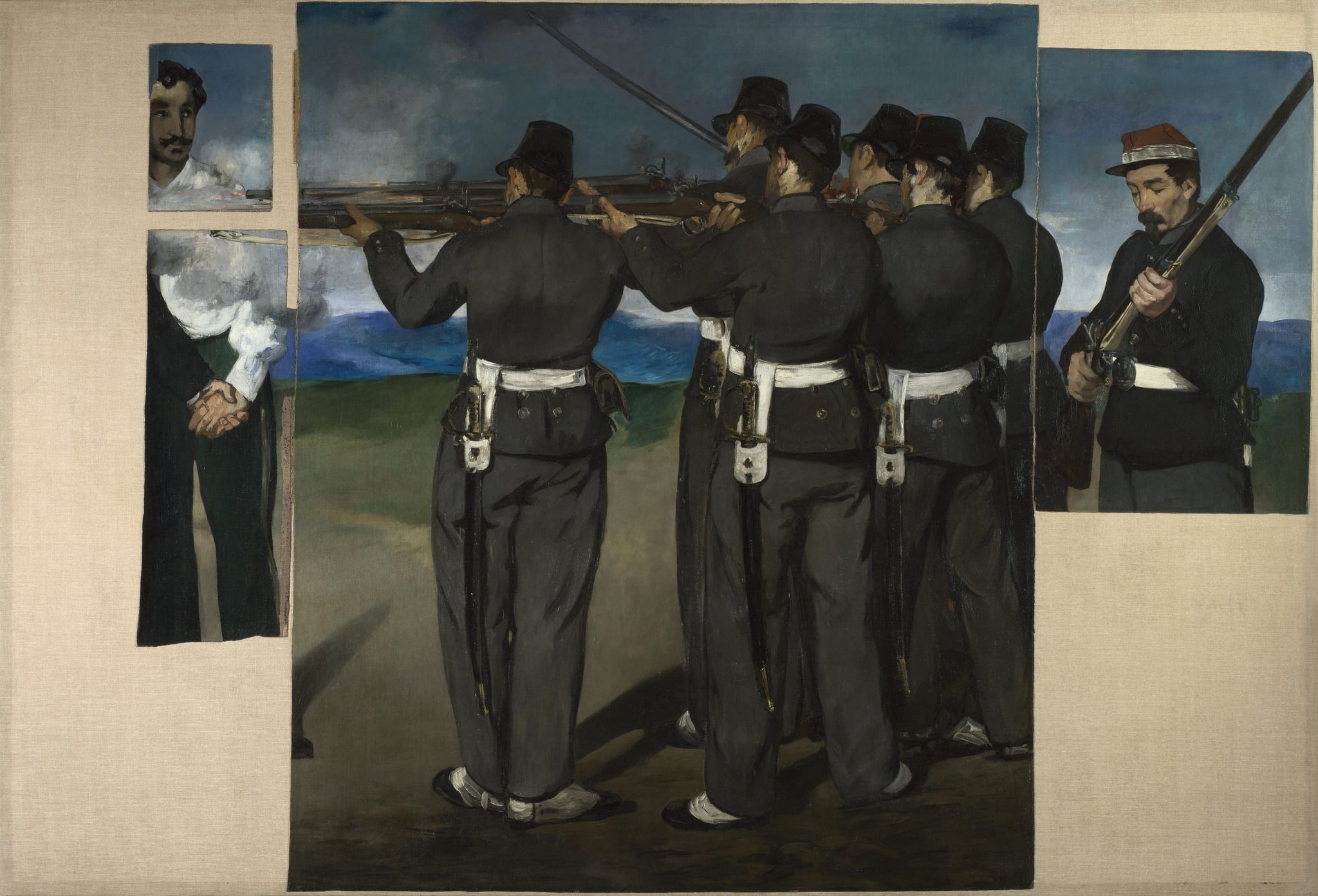
The Execution of Emperor Maximilian
Édouard Manet (1867–1868)
Manet’s The Execution of Emperor Maximilian confronts state violence with a <strong>cool, reportorial</strong> style. The wall of gray-uniformed riflemen, the <strong>fragmented canvas</strong>, and the dispassionate loader at right turn the killing into <strong>impersonal machinery</strong> that implicates the viewer <sup>[1]</sup><sup>[2]</sup>.
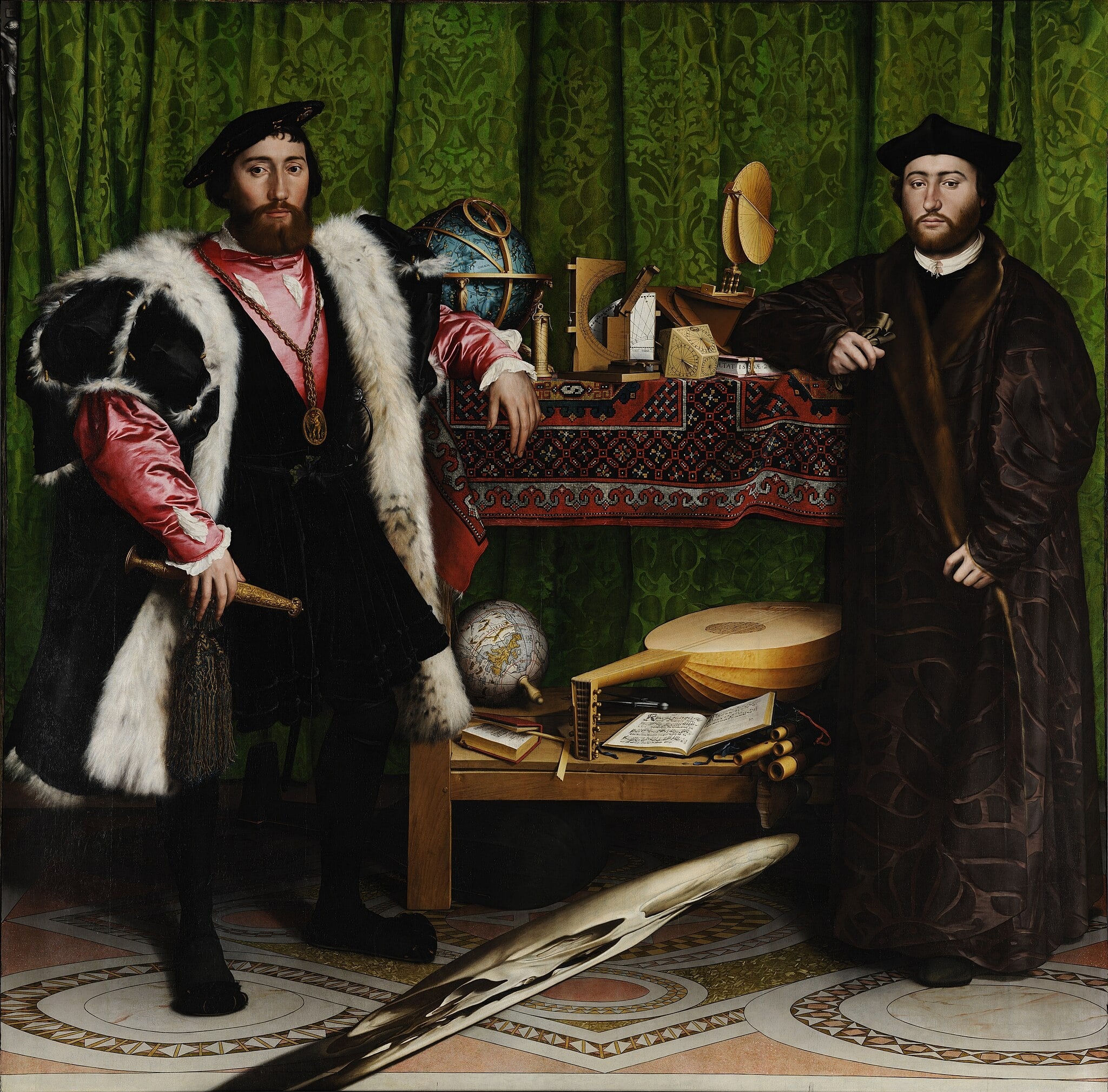
The Ambassadors
Hans Holbein the Younger (1533)
Holbein’s The Ambassadors is a double-portrait staged before a green curtain, where shelves of scientific instruments, books, and musical devices enact <strong>Renaissance learning</strong> while an anamorphic <strong>skull</strong> and a veiled <strong>crucifix</strong> counter it with mortality and salvation <sup>[1]</sup><sup>[2]</sup>. The work balances worldly status—fur, velvet, Oriental carpet—with a sober theology of limits amid the <strong>Reformation’s discord</strong> <sup>[1]</sup><sup>[2]</sup>.
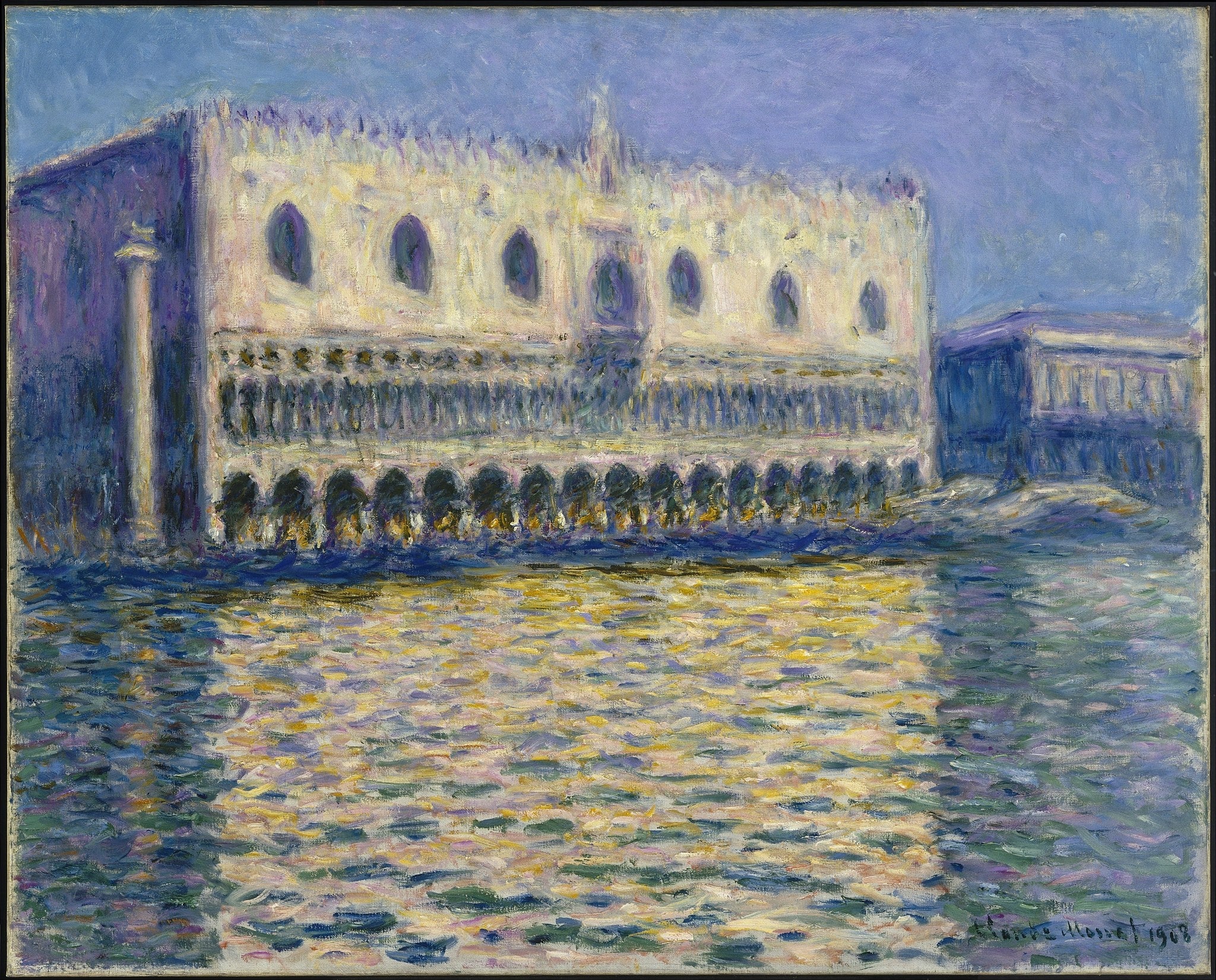
The Doge's Palace
Claude Monet (1908)
Monet’s The Doge’s Palace translates Venice’s emblem of authority into an <strong>atmospheric drama</strong> of lilac, cream, and ultramarine. Architecture becomes a <strong>screen for light</strong>, as the ogival windows and double arcades blur into vibrating strokes mirrored by the lagoon’s <strong>second architecture</strong>—its reflection <sup>[1]</sup><sup>[4]</sup>.
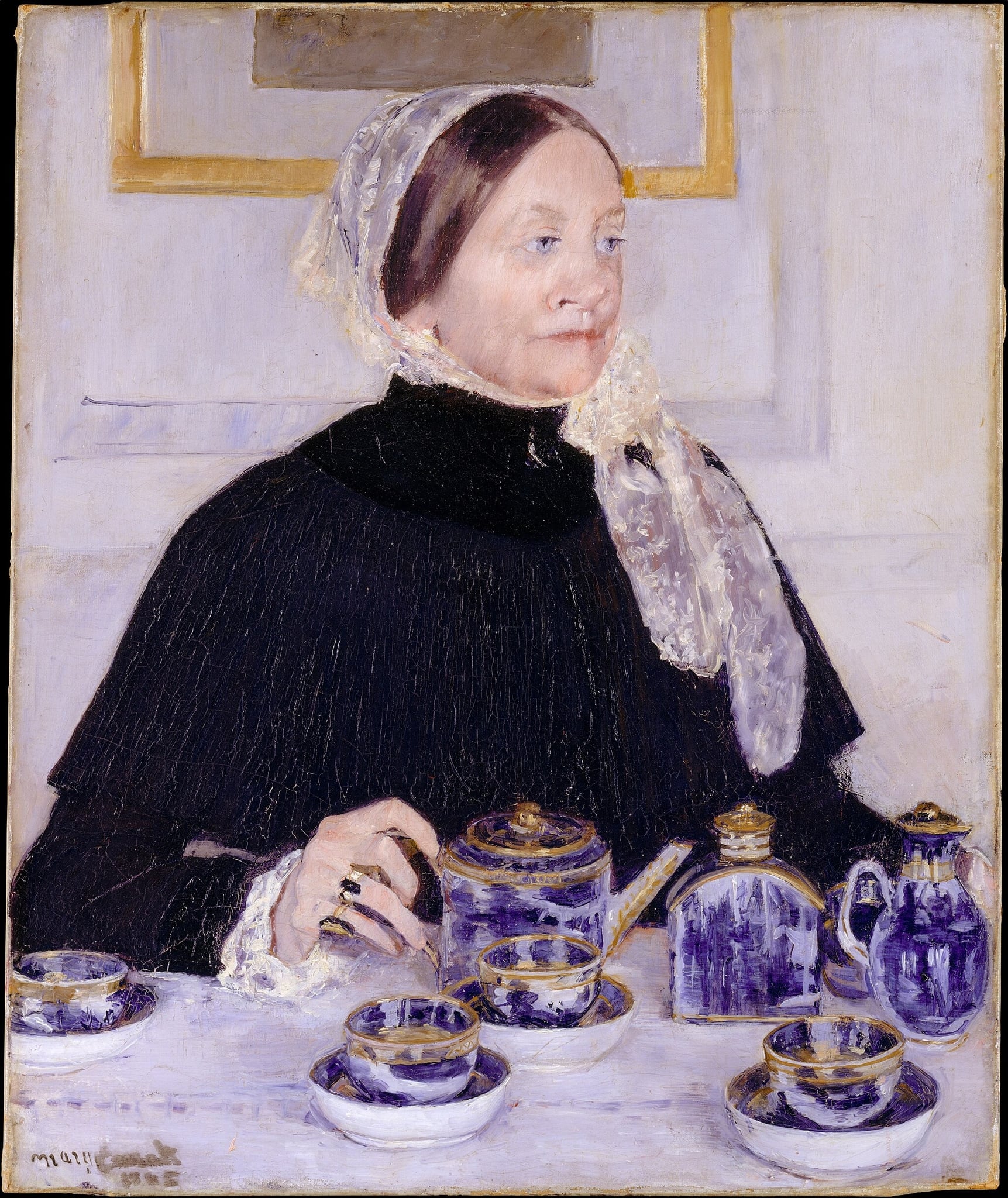
Lady at the Tea Table
Mary Cassatt (1883–85 (signed 1885))
Mary Cassatt’s Lady at the Tea Table distills a domestic rite into a scene of <strong>quiet authority</strong>. The sitter’s black silhouette, lace cap, and poised hand marshal a regiment of <strong>cobalt‑and‑gold Canton porcelain</strong>, while tight cropping and planar light convert hospitality into <strong>modern self‑possession</strong> <sup>[1]</sup><sup>[5]</sup>.
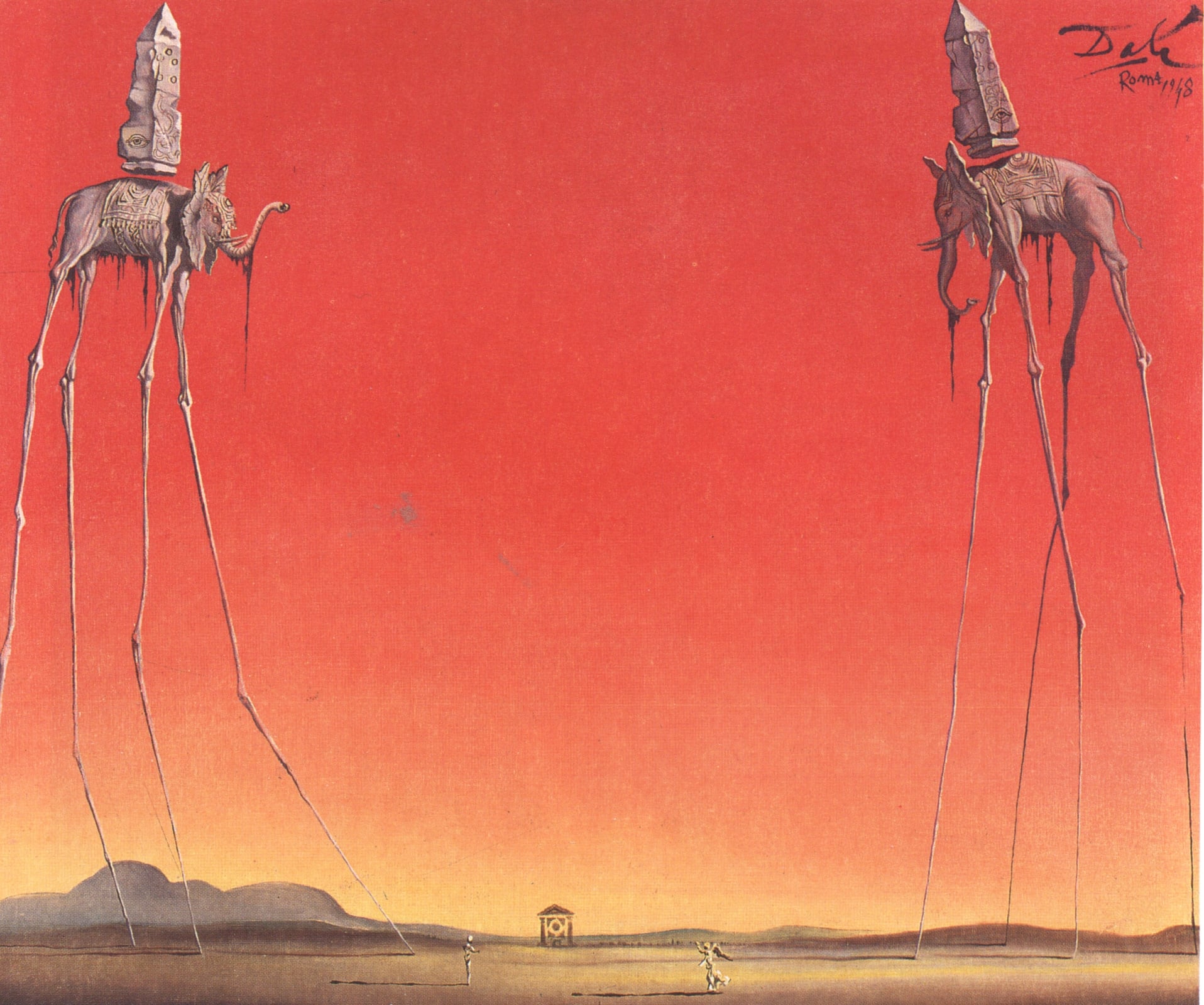
The Elephants
Salvador Dali (1948)
In The Elephants, Salvador Dali distills a stark paradox of <strong>weight and weightlessness</strong>: gaunt elephants tiptoe on <strong>stilt-thin legs</strong> while bearing stone <strong>obelisks</strong>. The blazing red-orange sky and tiny human figures compress ambition into a vision of <strong>precarious power</strong> and time stretched thin <sup>[1]</sup><sup>[2]</sup>.
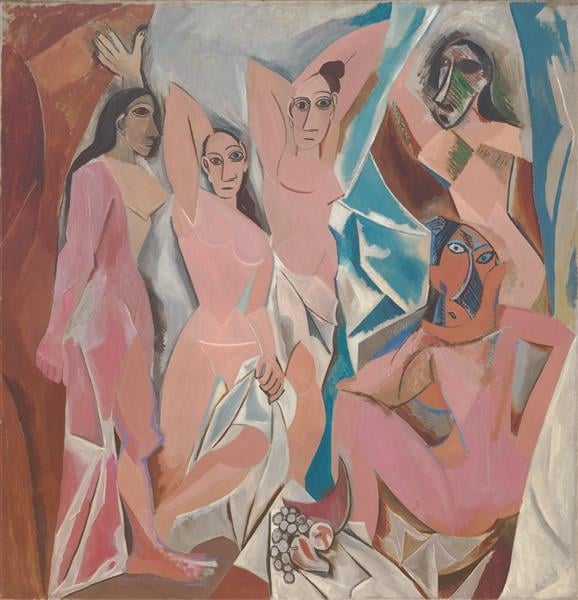
Les Demoiselles d'Avignon
Pablo Picasso (1907)
Les Demoiselles d'Avignon hurls five nudes toward the viewer in a shallow, splintered chamber, turning classical beauty into <strong>sharp planes</strong>, <strong>masklike faces</strong>, and <strong>fractured space</strong>. The fruit at the bottom reads as a sensual lure edged with threat, while the women’s direct gazes indict the beholder as participant. This is the shock point of <strong>proto‑Cubism</strong>, where Picasso reengineers how modern painting means and how looking works <sup>[1]</sup><sup>[2]</sup>.

La Japonaise (Camille Monet in Japanese Costume)
Claude Monet (1876)
Claude Monet’s La Japonaise (Camille Monet in Japanese Costume) (1876) stages a witty confrontation between <strong>Parisian modernity</strong> and the fashion for <strong>Japonisme</strong>. A fair-skinned model in a blazing red uchikake preens before a wall tiled with uchiwa fans, lifting a <strong>tricolor</strong> hand fan that asserts Frenchness amid the imported decor. The painting turns costume, props, and gaze into a performance about <strong>desire, display, and identity</strong> <sup>[1]</sup><sup>[2]</sup>.
Palm Trees at Bordighera
Claude Monet (1884)
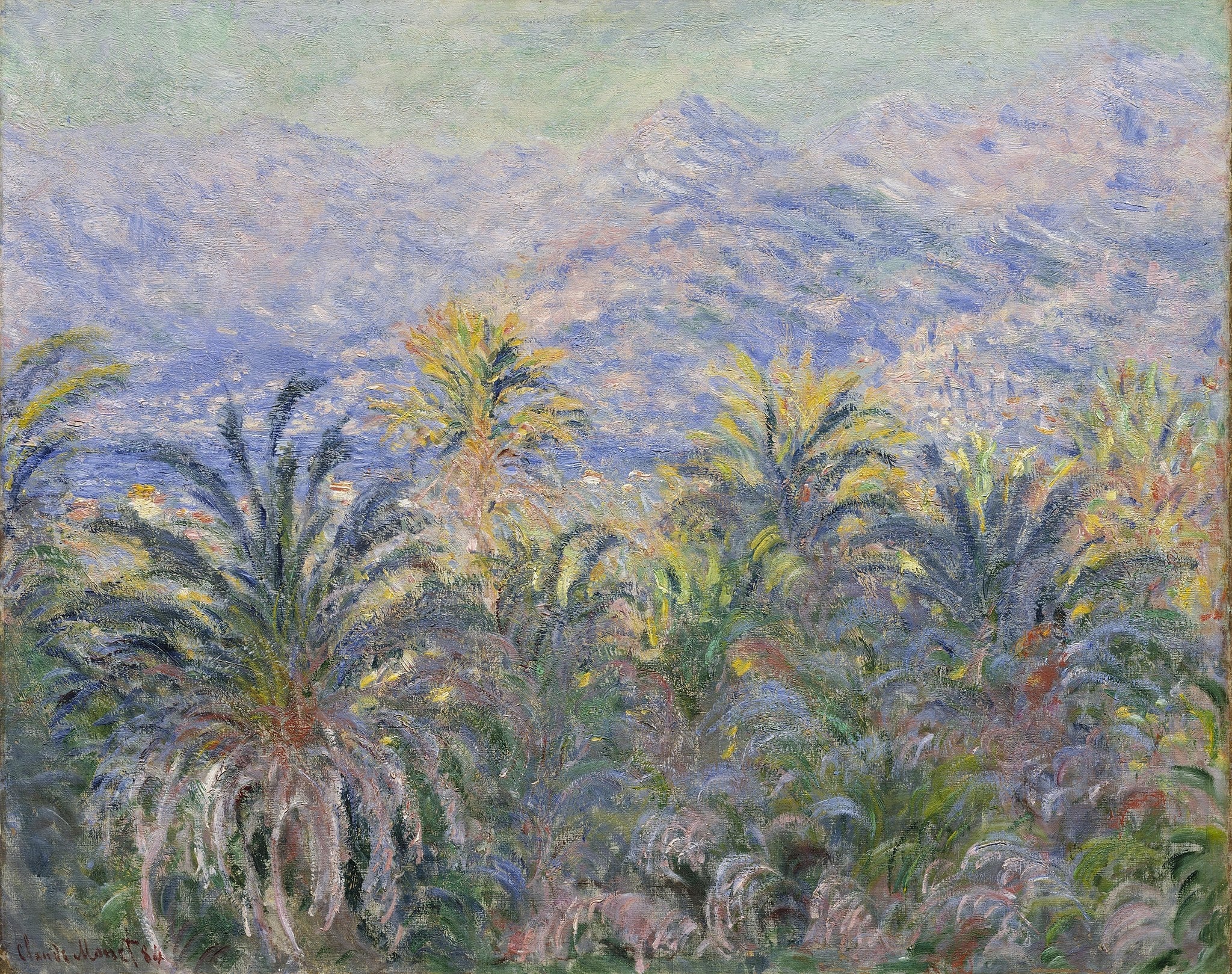
Claude Monet’s Palm Trees at Bordighera (1884) turns a Riviera grove into <strong>vibrating atmosphere</strong>: palm fronds surge across the foreground while a <strong>cobalt sea</strong> and <strong>violet-blue Alps</strong> dissolve into a misted sky. Monet pushes cool mauves, blues, and lemon tints into broken strokes so the scene reads as <strong>light-in-motion</strong> rather than botany <sup>[1]</sup><sup>[2]</sup>.
The Great Odalisque
Jean-Auguste-Dominique Ingres (1814)
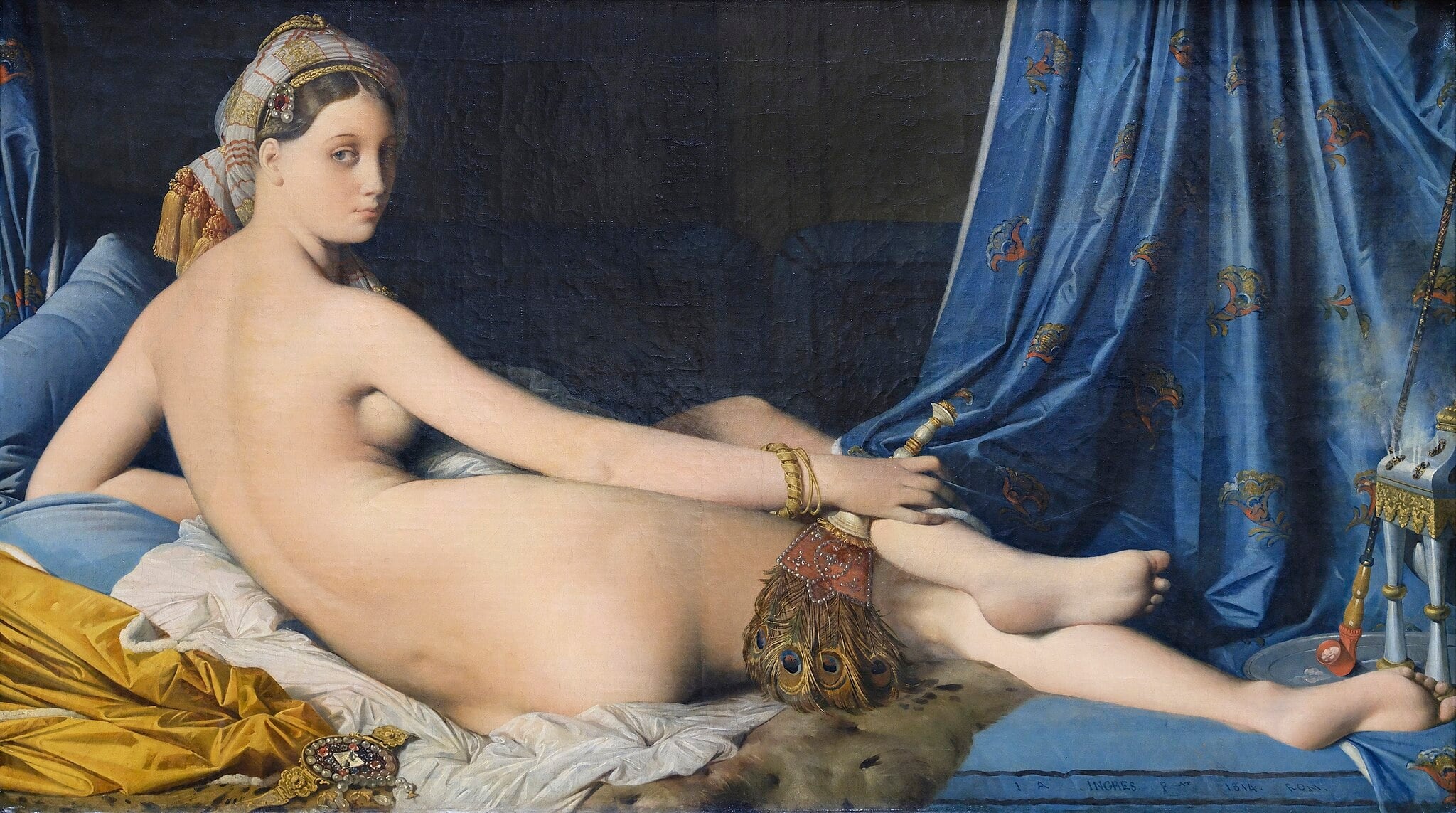
Jean-Auguste-Dominique Ingres’s The Great Odalisque (1814) turns a reclining nude into an idealized, remote vision, polished to an <strong>enamel-like finish</strong> and staged with <strong>Orientalist</strong> props—turban, peacock-feather fan, blue curtain, and hookah. Commissioned by Caroline Murat and shown at the <strong>Salon of 1819</strong>, it fuses classical line with erotic fantasy, its elongated back and rotated shoulder declaring beauty as a constructed ideal <sup>[1]</sup><sup>[3]</sup>.
Grande Odalisque
Jean-Auguste-Dominique Ingres (1814)
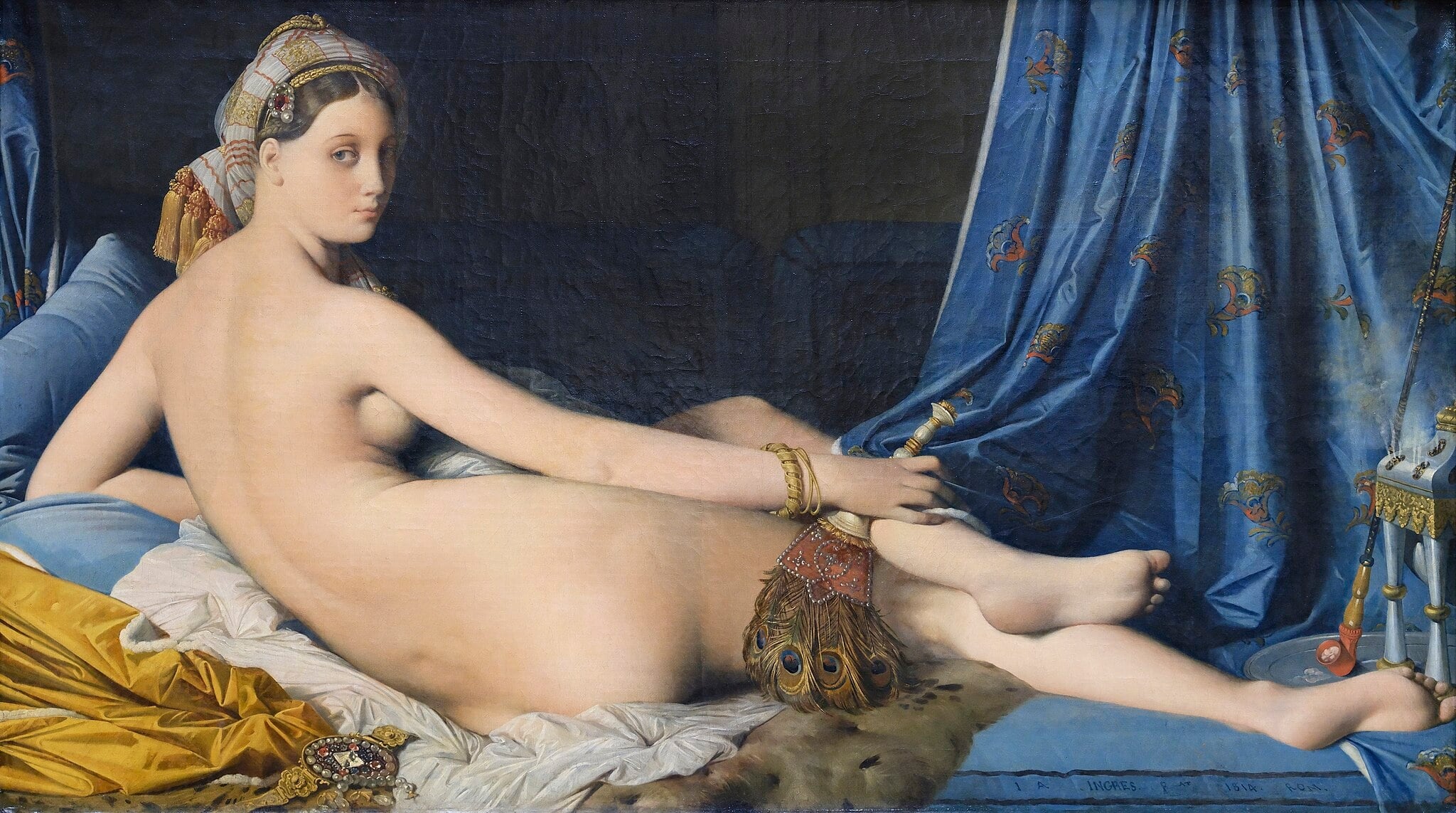
In Jean-Auguste-Dominique Ingres’s Grande Odalisque (1814), a nude woman reclines against cool satin and a deep blue, patterned curtain, her spine drawn into an elegant, impossible arc. With a jeweled turban, bracelets, and a peacock-feather fan, she turns to meet the viewer’s look, poised yet distant. The image fuses <strong>Neoclassical idealization</strong> with <strong>Orientalist fantasy</strong>, privileging line and artifice over realism <sup>[1]</sup><sup>[2]</sup>.