Erotic desire
Featured Artworks
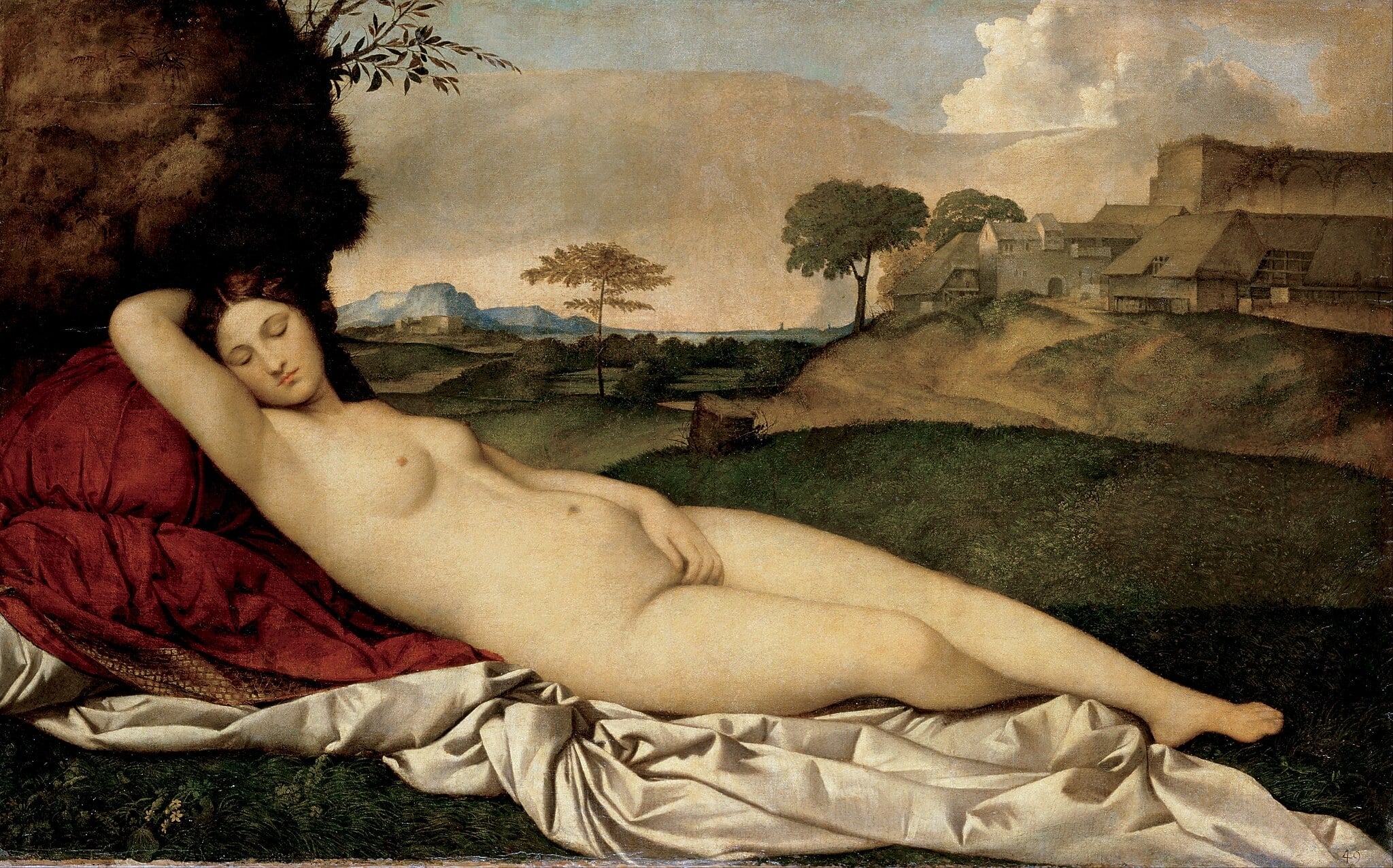
The Sleeping Venus
Giorgione (c. 1508–1510)
In The Sleeping Venus, the goddess reclines across a rolling landscape, her body a serene diagonal that fuses human beauty with nature’s forms. Cool, <strong>silvery drapery</strong> and <strong>deep red cushions</strong> intensify her luminous flesh, while the right-hand <strong>Venus pudica</strong> gesture suspends desire between revelation and restraint. The painting crystallizes the Venetian ideal of poetic harmony (<strong>poesia</strong>) and inaugurates the fully realized reclining nude in Western art <sup>[2]</sup><sup>[4]</sup><sup>[6]</sup>.
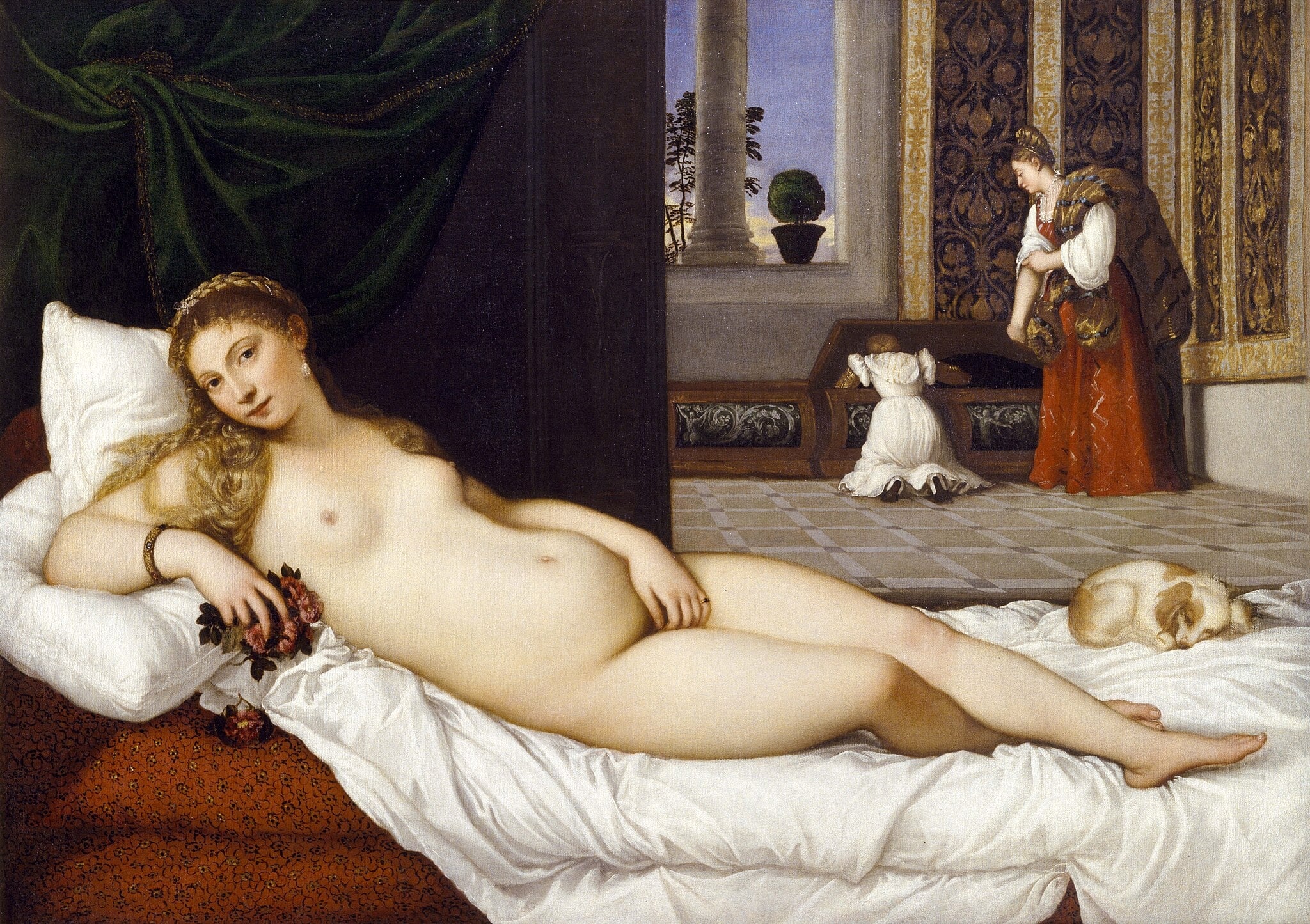
Venus of Urbino
Titian (1538)
Titian’s Venus of Urbino turns the mythic goddess into an ideal bride, merging frank <strong>eroticism</strong> with the codes of <strong>marital fidelity</strong>. In a Venetian bedroom, the nude’s direct gaze, roses, sleeping lapdog, and attendants at a cassone bind desire to domestic virtue and fertility <sup>[1]</sup><sup>[2]</sup>.
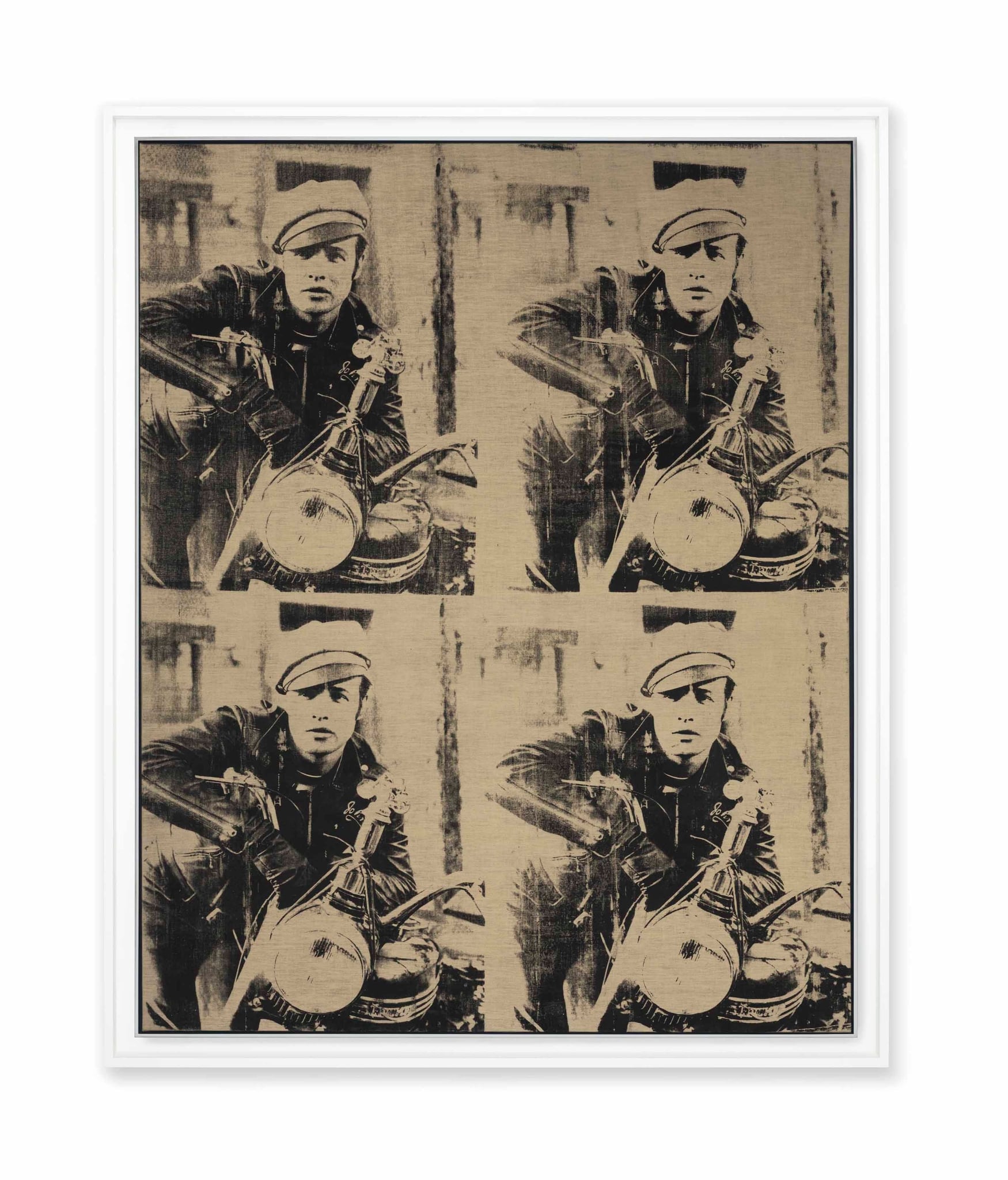
Four Marlons
Andy Warhol (1966)
Four Marlons is a 1966 silkscreen by Andy Warhol that multiplies a single biker film-still into a tight 2×2 grid on raw linen. Its inky blacks against a tan, unprimed ground turn the glare of the headlamp, the angled handlebars, and the figure’s guarded pose into a <strong>repeatable icon</strong> of outlaw cool. Warhol’s seriality both <strong>amplifies and drains</strong> the image’s aura, exposing fame as a commodity pattern <sup>[1]</sup><sup>[3]</sup>.

Combing the Hair
Edgar Degas (c.1896)
Edgar Degas’s Combing the Hair crystallizes a private ritual into a scene of <strong>compressed intimacy</strong> and <strong>classed labor</strong>. The incandescent field of red fuses figure and room, turning the hair into a <strong>binding ribbon</strong> between attendant and sitter <sup>[1]</sup>.
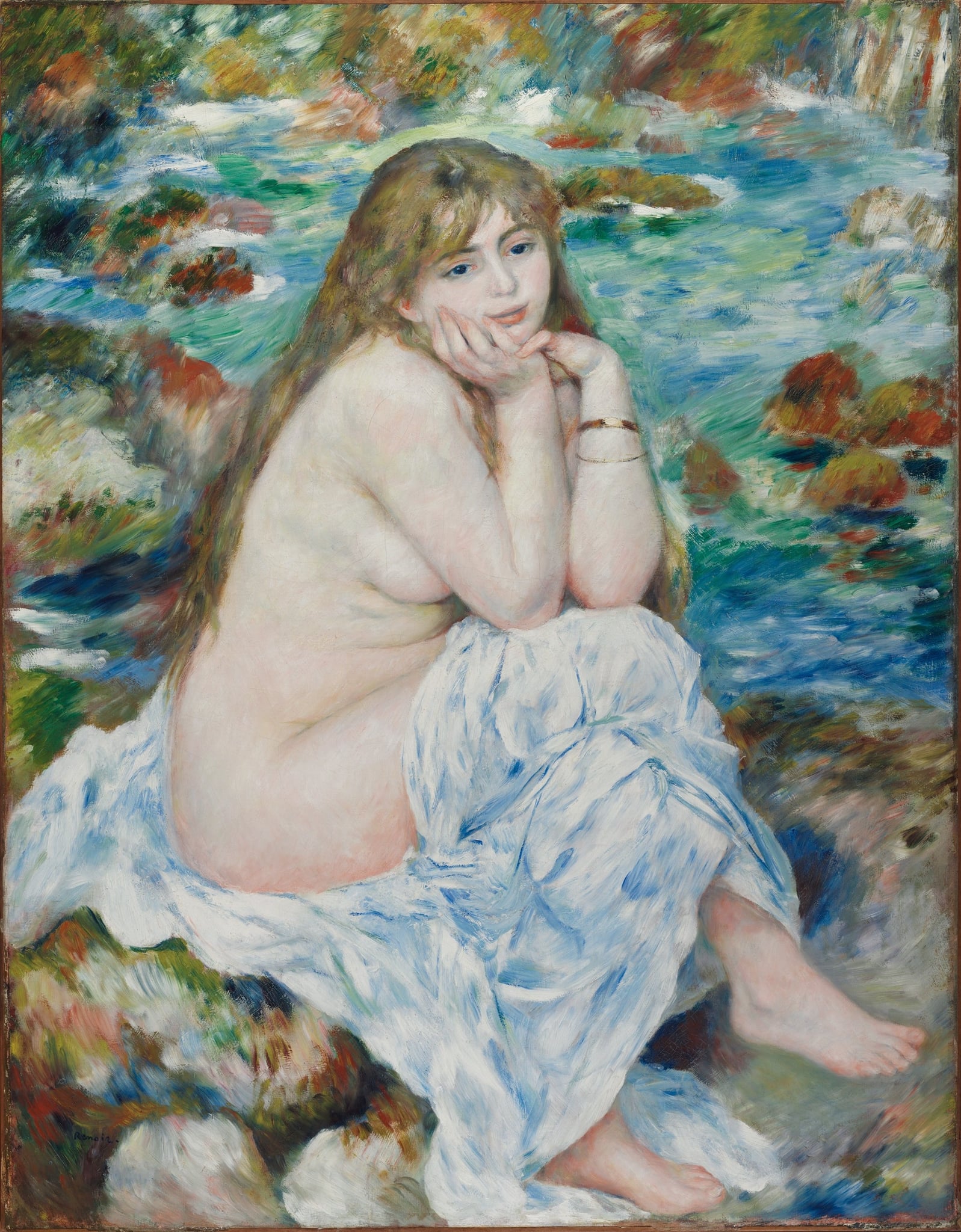
Seated Bather
Pierre-Auguste Renoir
Renoir’s Seated Bather stages a quiet pause between bathing and reverie, fusing the model’s pearly flesh with the flicker of stream and stone. The white drapery pooled around her hips and the soft, frontal gaze convert a simple toilette into a <strong>modern Arcadia</strong> where body and landscape dissolve into light. In this late-Impressionist idiom, Renoir refines the nude as a <strong>timeless ideal</strong> felt through color and touch <sup>[1]</sup><sup>[2]</sup>.
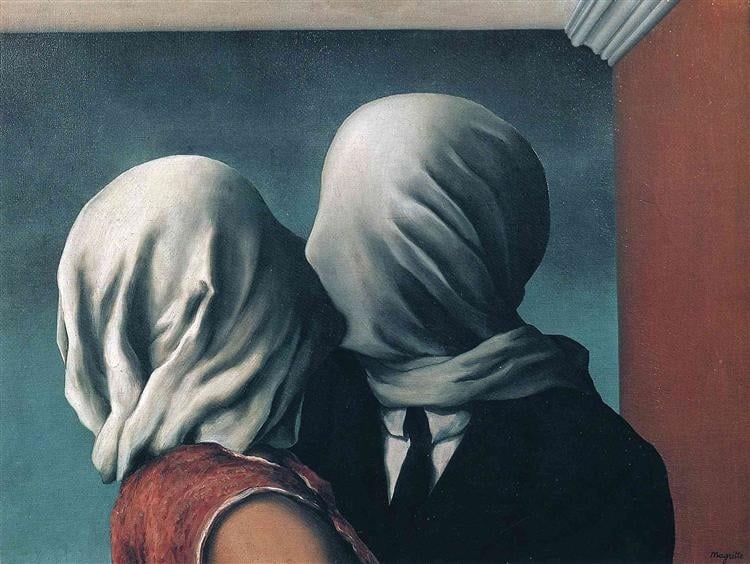
The Lovers
Rene Magritte (1928)
René Magritte’s The Lovers turns a kiss into an emblem of <strong>desire obstructed</strong>: two figures—she in red, he in a dark suit—press together while their heads are swathed in <strong>white cloth</strong>. Within a cool blue‑grey interior bounded by crown molding and a rust-red wall, intimacy becomes an image of <strong>opacity</strong> rather than revelation <sup>[1]</sup>.
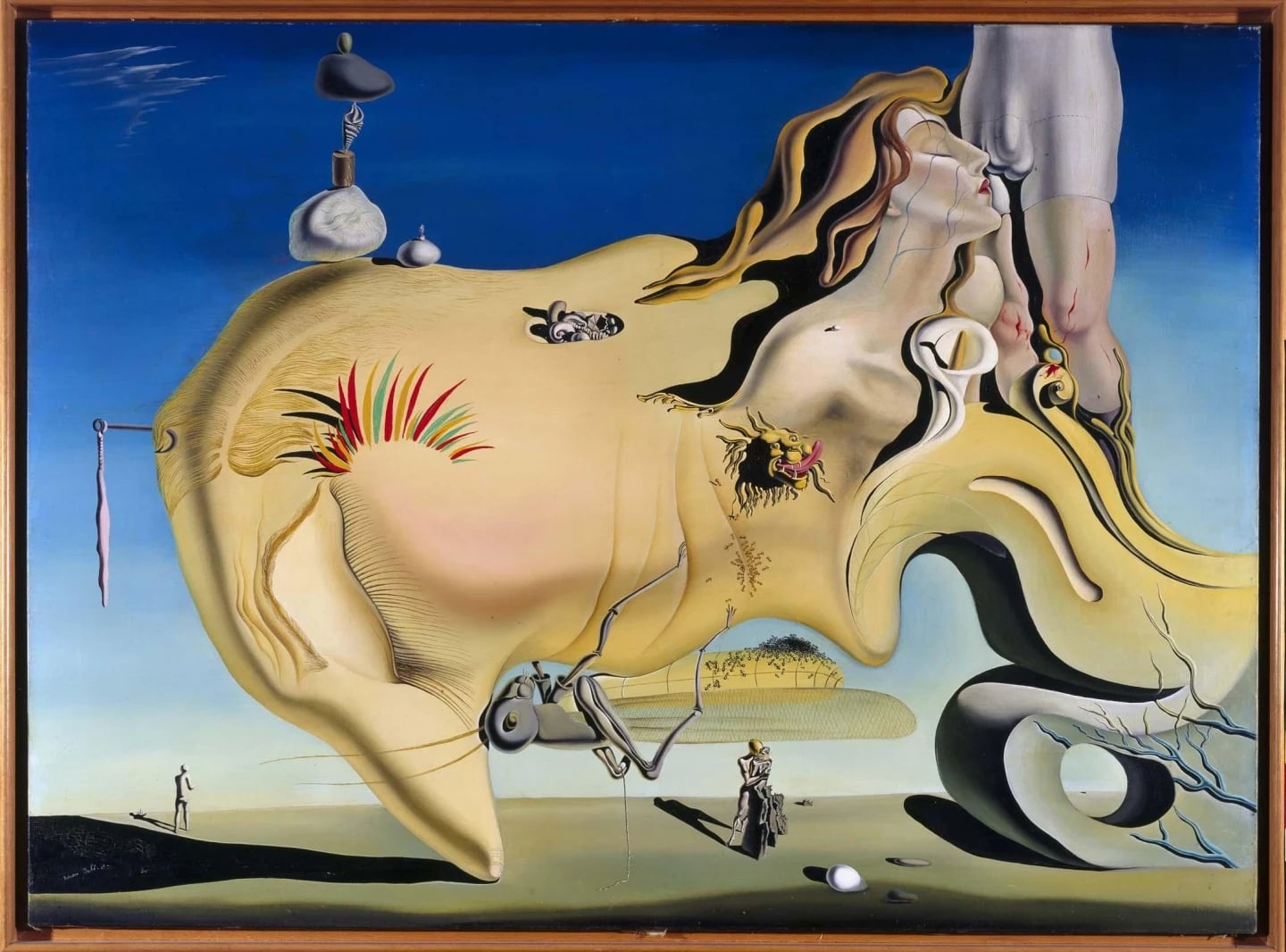
The Great Masturbator
Salvador Dali (1929)
The Great Masturbator condenses Dalí’s newly ignited desire and crippling dread into a single, biomorphic head set against a crystalline Catalan sky. Ants, a gaping grasshopper, a lion’s tongue, a bleeding knee, crutches, stones, and an egg collide to script a confession where <strong>eros</strong> and <strong>decay</strong> are inseparable <sup>[1]</sup><sup>[3]</sup><sup>[4]</sup>. Its precision staging turns autobiography into a <strong>surreal map of compulsion</strong> at the moment Gala enters his life <sup>[1]</sup>.
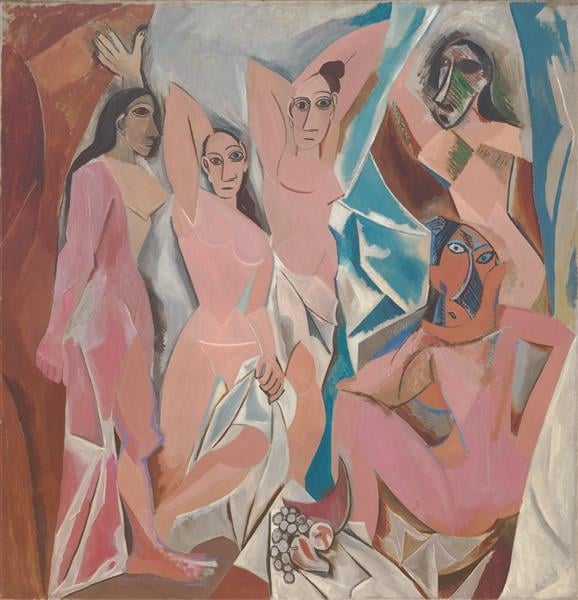
Les Demoiselles d'Avignon
Pablo Picasso (1907)
Les Demoiselles d'Avignon hurls five nudes toward the viewer in a shallow, splintered chamber, turning classical beauty into <strong>sharp planes</strong>, <strong>masklike faces</strong>, and <strong>fractured space</strong>. The fruit at the bottom reads as a sensual lure edged with threat, while the women’s direct gazes indict the beholder as participant. This is the shock point of <strong>proto‑Cubism</strong>, where Picasso reengineers how modern painting means and how looking works <sup>[1]</sup><sup>[2]</sup>.
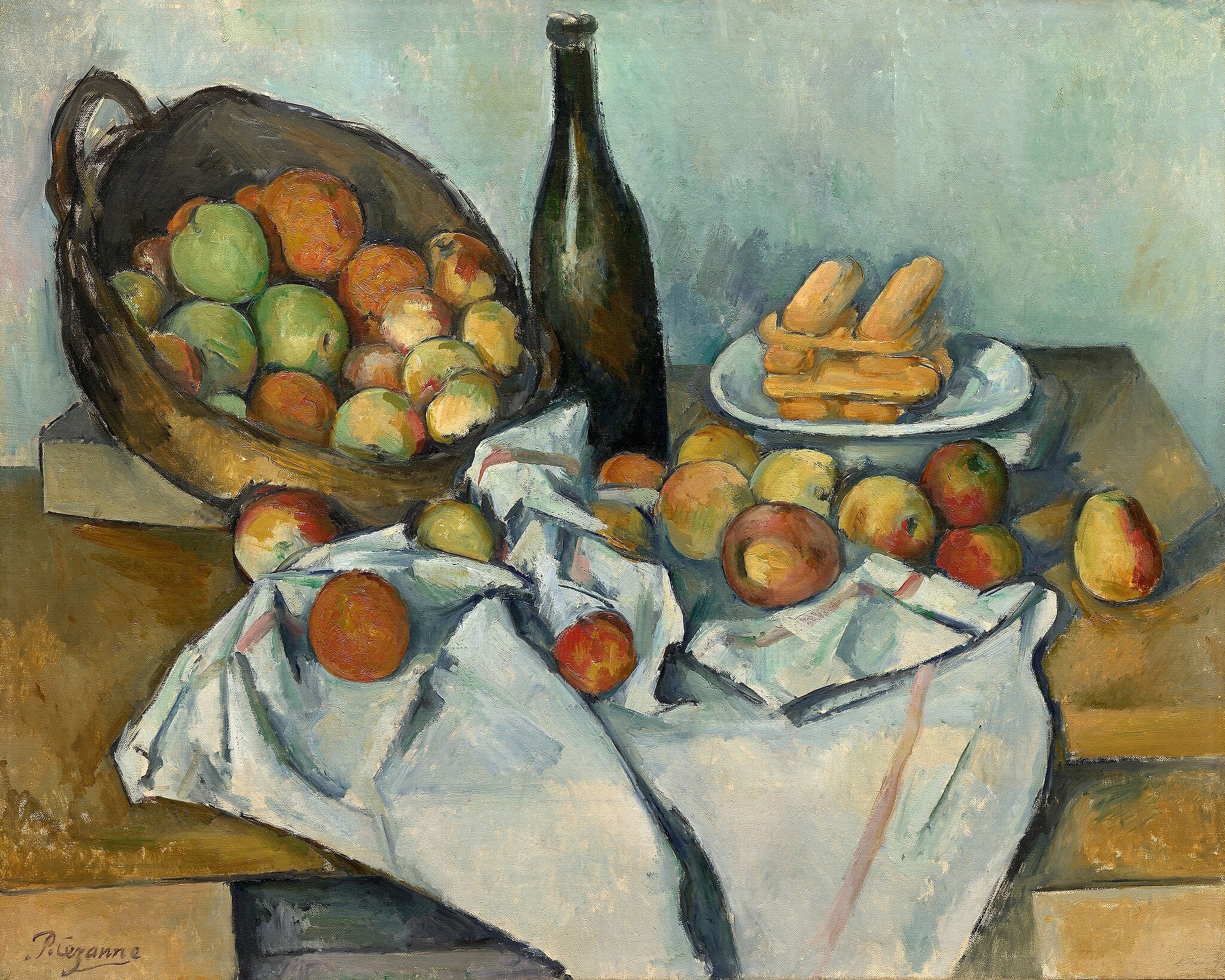
Still Life with a Basket of Apples
Paul Cézanne (c. 1893 (AIC range 1887–1900))
Paul Cezanne’s Still Life with a Basket of Apples stages a quiet crisis of balance: a basket tilts forward, a dark bottle leans, and a rumpled cloth surges like a ridge across the table. Through <strong>purposeful misalignments</strong> and <strong>constructed color</strong>, the painting turns ordinary fruit into an inquiry into how we see over time <sup>[1]</sup><sup>[3]</sup>.
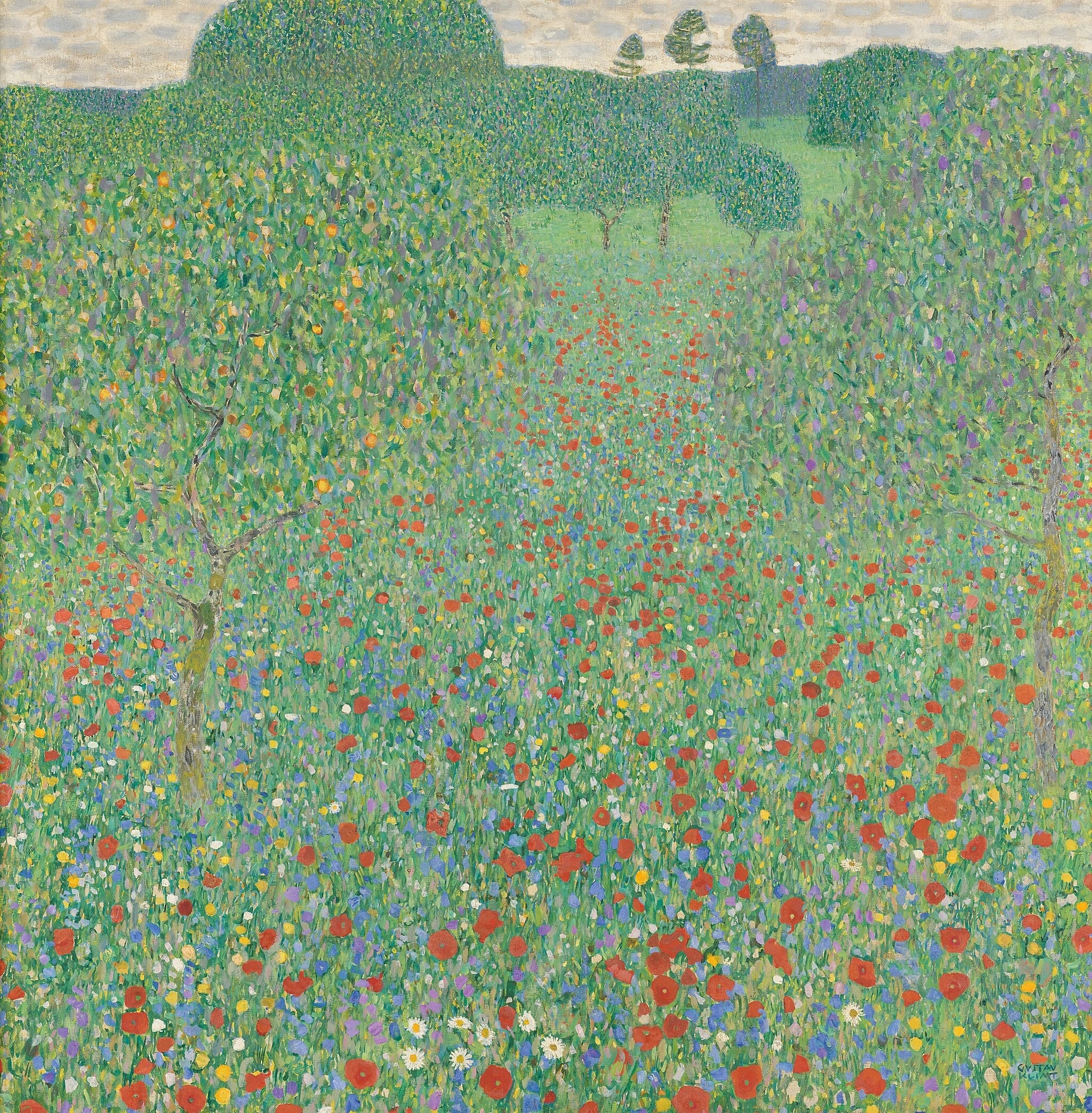
Flowering Poppies
Gustav Klimt (1907)
Gustav Klimt’s <strong>Flowering Poppies</strong> (1907) turns a meadow into a shimmering, all-over field where botany becomes <strong>ornament</strong>. A square canvas packed with red poppies, daisies, and fruiting trees compresses depth and invites a drifting gaze rather than linear recession <sup>[1]</sup><sup>[2]</sup>. The result is a sensuous, immersive vision that fuses observed nature with <strong>decorative abstraction</strong> <sup>[2]</sup>.
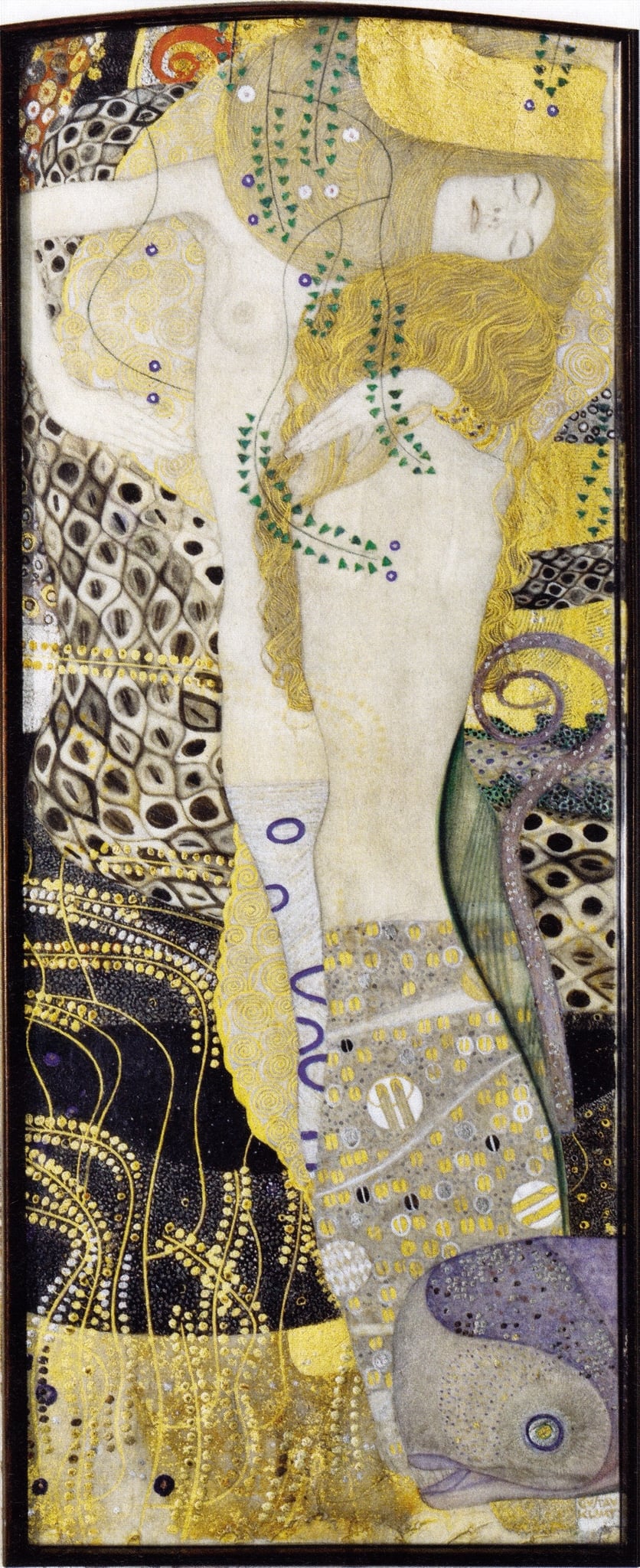
Girlfriends (Water Serpents I)
Gustav Klimt (1904; last revisions by 1907)
Gustav Klimt’s Girlfriends (Water Serpents I) stages two elongated nudes drifting in a jeweled, underwater field where bodies and ornament fuse into a single, <strong>luminous</strong> surface. Closed eyes, interlaced arms, and hair that streams like <strong>currents</strong> seal the scene in intimate secrecy, while metallic scales, eye-shaped ovals, and a watchful fish charge the water with <strong>erotic</strong> and <strong>mythic</strong> tension <sup>[1]</sup><sup>[2]</sup><sup>[3]</sup>.
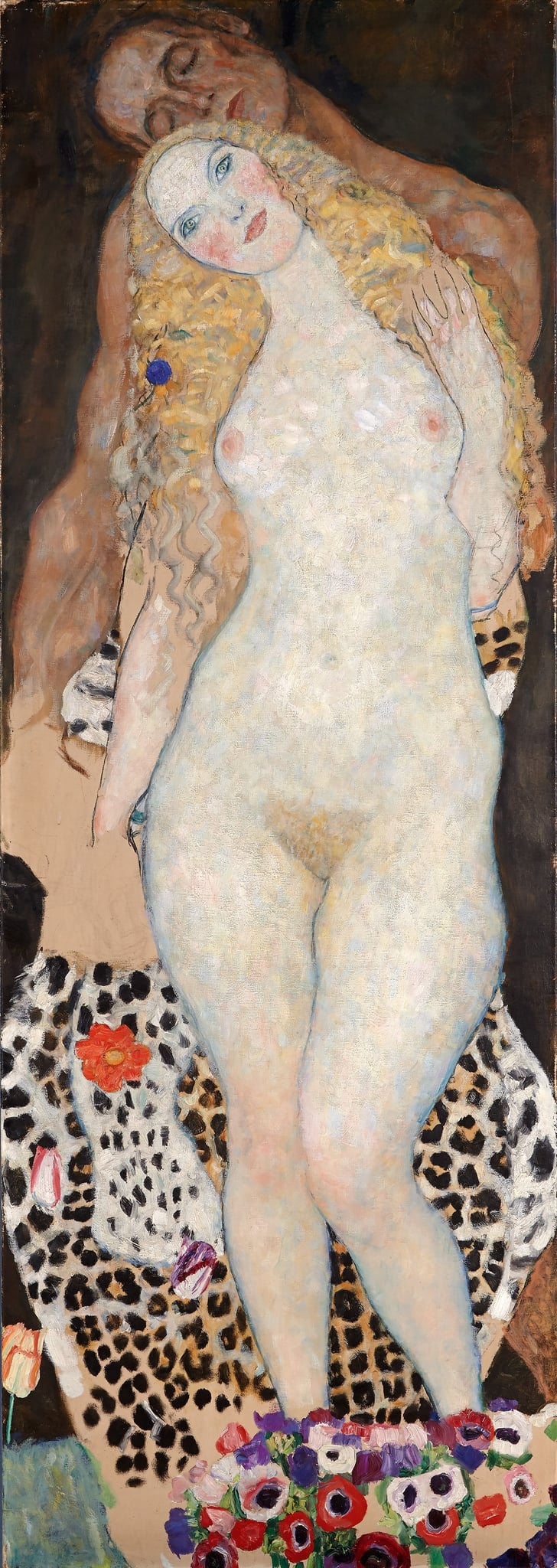
Adam and Eve
Gustav Klimt (1916–1918 (unfinished))
Gustav Klimt’s Adam and Eve recasts the biblical pair as a <strong>sensual, timeless allegory</strong> rather than a didactic tale. Eve’s <strong>luminous, opalescent body</strong> and direct gaze dominate, while Adam recedes in shadow, enfolding her amid a <strong>leopard pelt</strong> and a <strong>carpet of anemones</strong> that signal erotic vitality and fertility <sup>[2]</sup><sup>[3]</sup>.
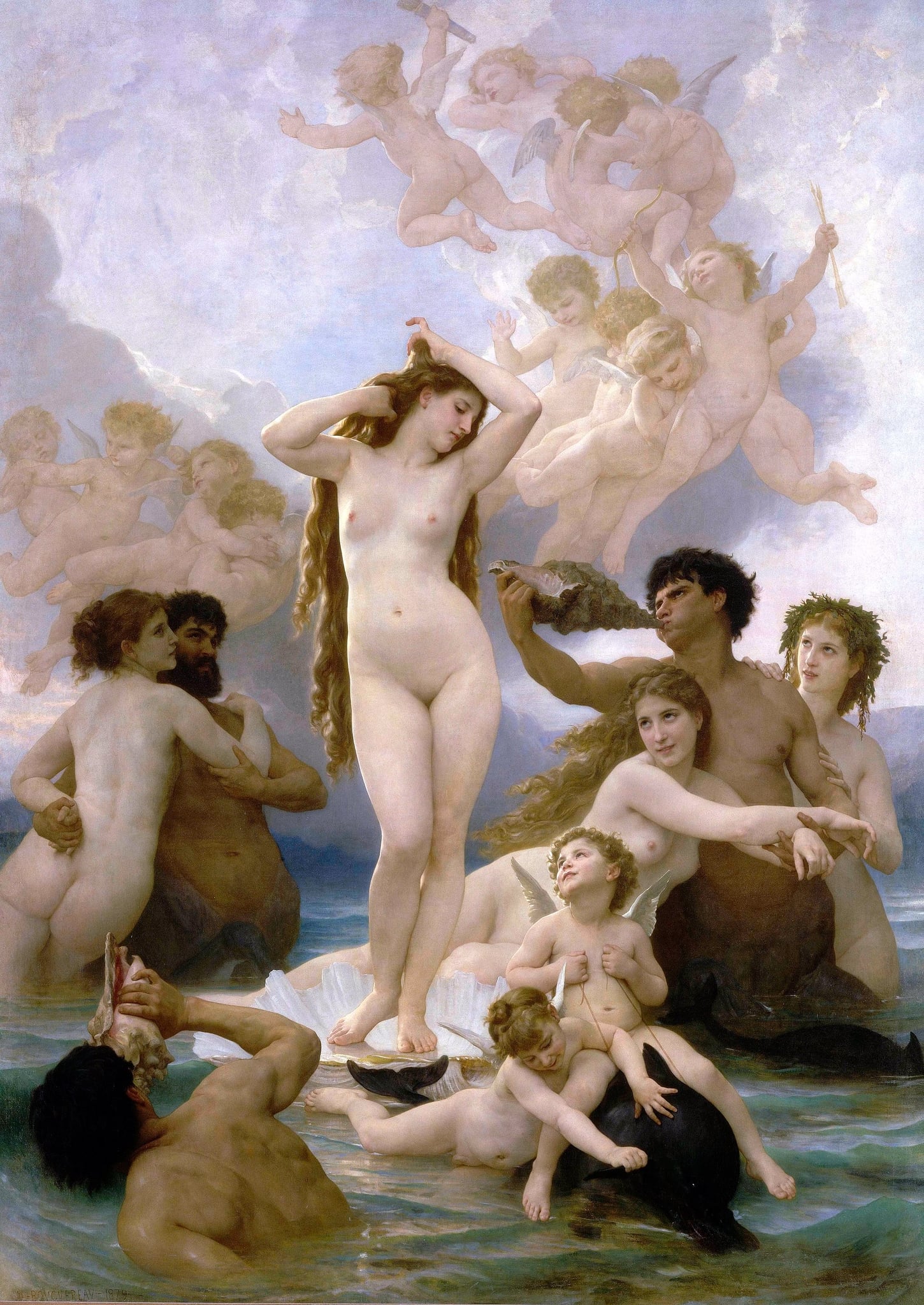
The Birth of Venus (Bouguereau)
William-Adolphe Bouguereau (1879)
A triumphant epiphany of <strong>Venus</strong> rising on a scallop shell, surrounded by tritons, nereids, dolphins, and a swirling halo of <strong>putti</strong>. Bouguereau fuses classical iconography with a porcelain finish to proclaim the civilizing power of <strong>ideal beauty</strong> and <strong>erotic love</strong> <sup>[1]</sup><sup>[5]</sup>.
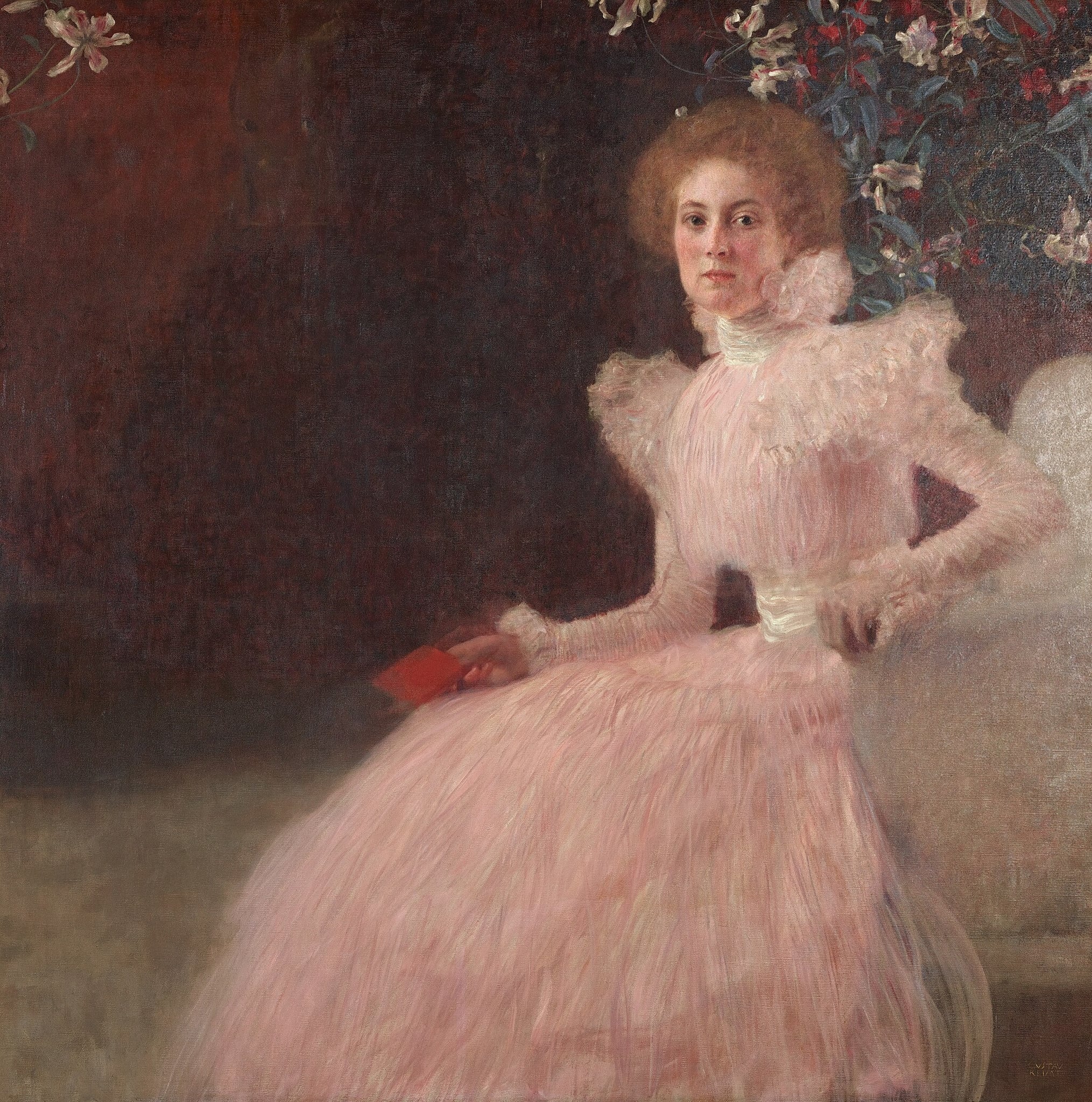
Sonja Knips
Gustav Klimt (1897/1898)
In Sonja Knips, Gustav Klimt stages a poised young woman as a modern self—held taut between <strong>lucid presence</strong> and <strong>ornamental dissolution</strong>. The square canvas, the feathery pink dress, the climbing white lilies, and the single <strong>red sketchbook</strong> in her hand crystallize an identity that is reflective, intelligent, and self‑aware within a decorous world <sup>[1]</sup><sup>[2]</sup><sup>[4]</sup>.
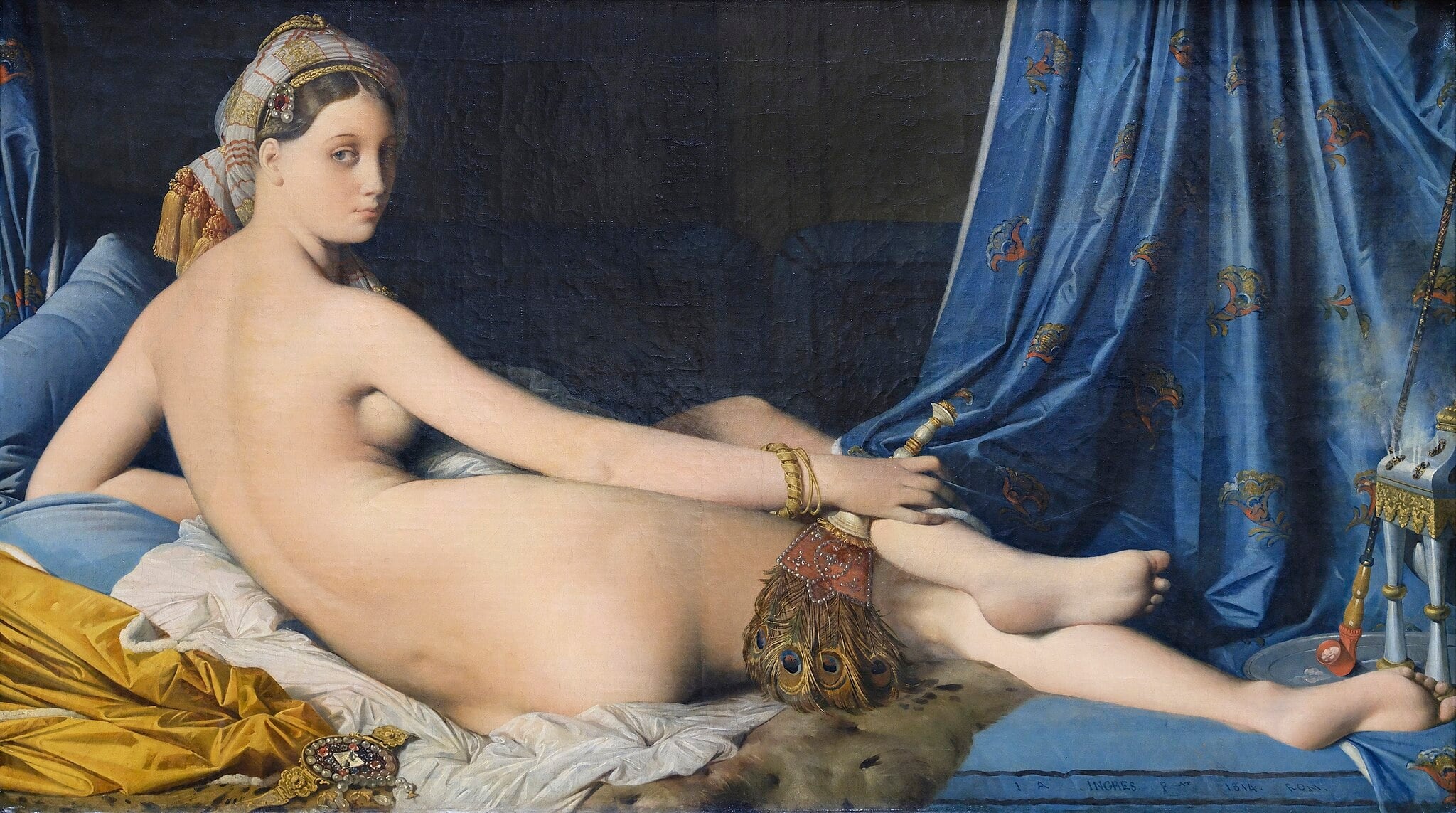
The Great Odalisque
Jean-Auguste-Dominique Ingres (1814)
Jean-Auguste-Dominique Ingres’s The Great Odalisque (1814) turns a reclining nude into an idealized, remote vision, polished to an <strong>enamel-like finish</strong> and staged with <strong>Orientalist</strong> props—turban, peacock-feather fan, blue curtain, and hookah. Commissioned by Caroline Murat and shown at the <strong>Salon of 1819</strong>, it fuses classical line with erotic fantasy, its elongated back and rotated shoulder declaring beauty as a constructed ideal <sup>[1]</sup><sup>[3]</sup>.
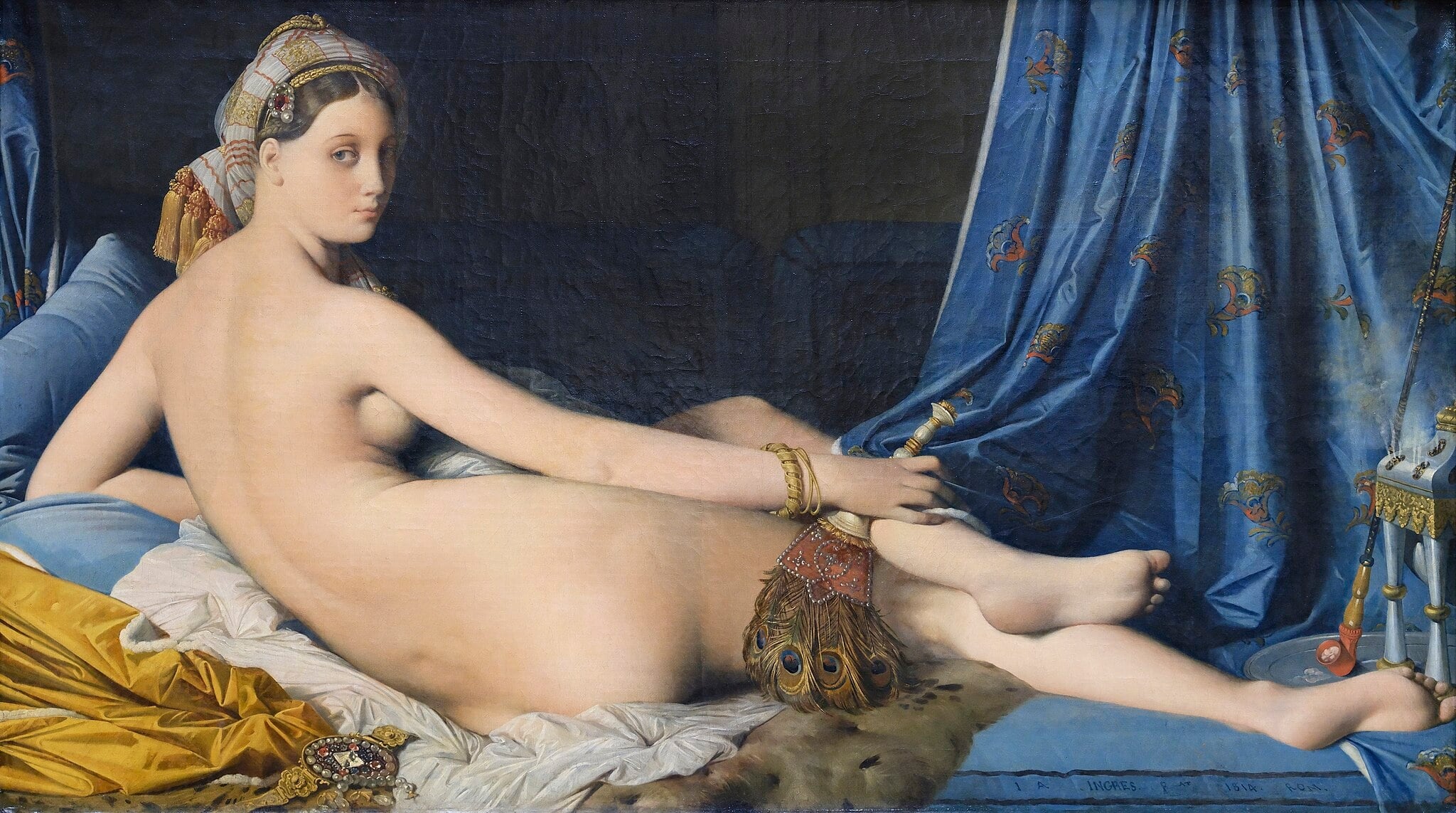
Grande Odalisque
Jean-Auguste-Dominique Ingres (1814)
In Jean-Auguste-Dominique Ingres’s Grande Odalisque (1814), a nude woman reclines against cool satin and a deep blue, patterned curtain, her spine drawn into an elegant, impossible arc. With a jeweled turban, bracelets, and a peacock-feather fan, she turns to meet the viewer’s look, poised yet distant. The image fuses <strong>Neoclassical idealization</strong> with <strong>Orientalist fantasy</strong>, privileging line and artifice over realism <sup>[1]</sup><sup>[2]</sup>.