Edgar Degas Paintings in New York — Where to See Them
New York matters for experiencing Edgar Degas because the city holds approximately 16 of his paintings on permanent display, concentrated at the Metropolitan Museum of Art. Though three institutions—the Met, the Museum of Modern Art (MoMA), and the Brooklyn Museum—figure on the map, the Met is where you’ll actually see his works, making the city a focused destination to study Degas’s brushwork, composition, and recurring themes in person.
At a Glance
- Museums
- The Met, MoMA, Brooklyn Museum
- Highlight
- Visit The Met for Degas' renowned pastels and ballet scenes
- Best For
- Impressionism enthusiasts and ballet-art lovers
The Metropolitan Museum of Art
With 16 paintings by Edgar Degas in the collection, the Met is one of the best places to see the artist’s development in oil across different subjects and periods. Those paintings sit within a broader 19th‑century European galleries context at the Met, allowing you to compare Degas’s approaches to composition, color and figuration directly with his contemporaries — which clarifies how his work bridged academic practice and modern experimentation. Seeing multiple Degas paintings in one visit reveals his recurrent interests (ballet, racehorses, portraits) and subtle shifts in technique that a single loaned painting can’t convey.
The Dance Class
1874
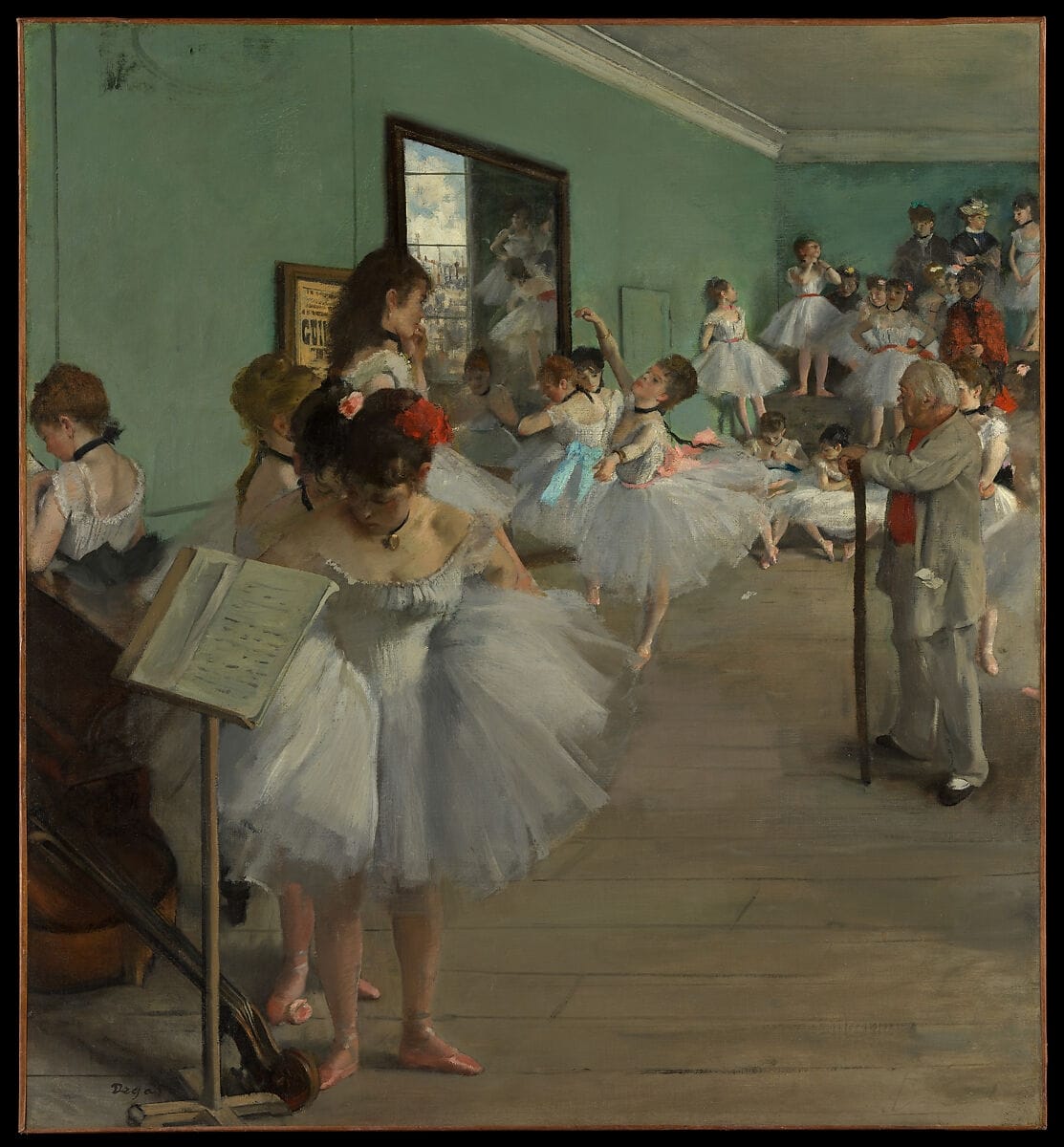
Depicts a crowded Paris Opéra rehearsal room where a teacher (likely Jules Perrot) examines a dancer while others wait, stretch, or chat—an intimate slice of ballet life. Significant for its complex composition and Degas’s modern interest in candid, everyday moments rather than staged historical subjects. Look for the asymmetrical arrangement of figures, the glimpses in mirrors and doorways that extend the space, and the careful observation of posture and gesture. ([vmuseum.fr](https://www.vmuseum.fr/en/artist/edgar-degas-the-dance-class-823.html?utm_source=openai))
Must-see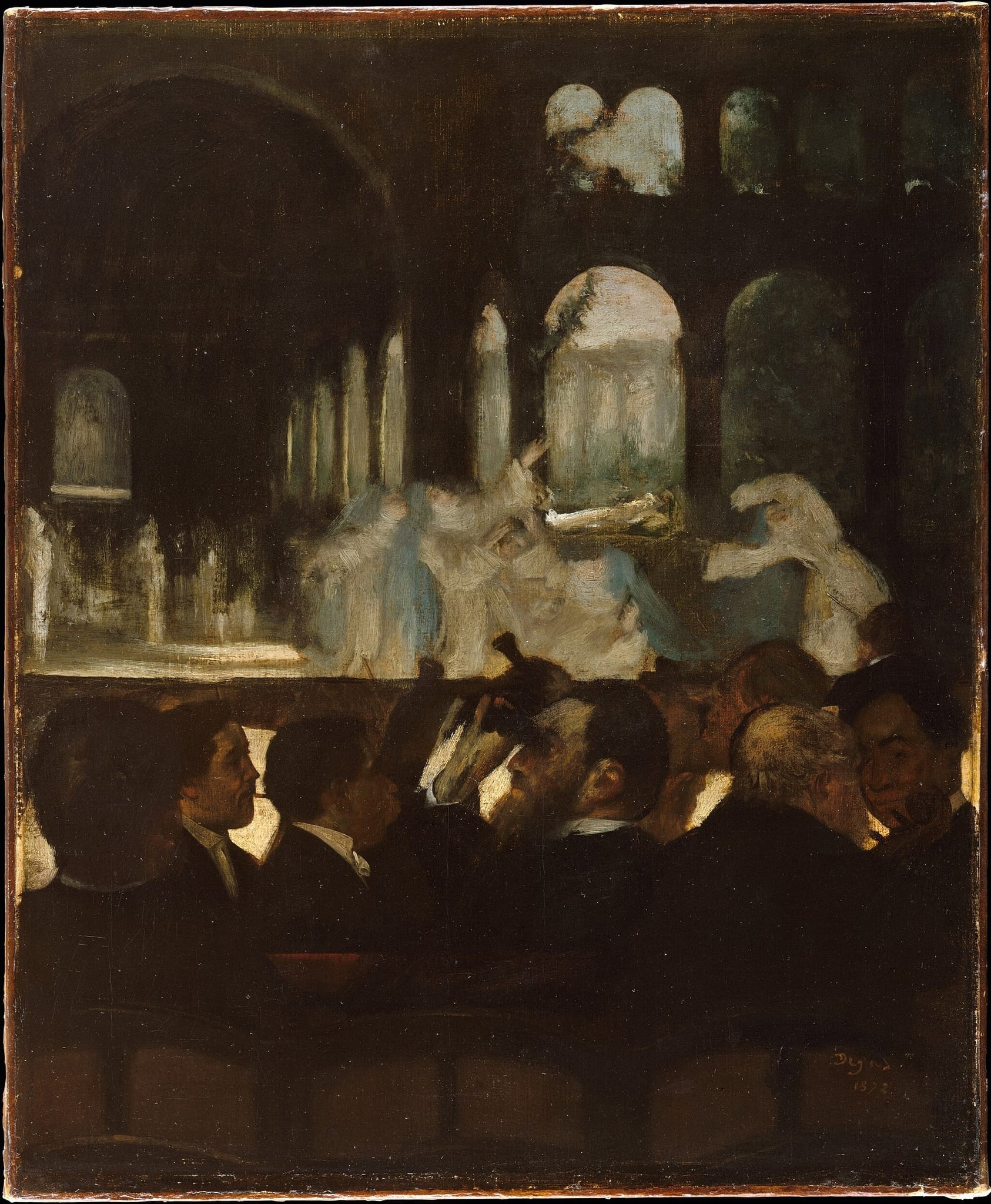
The Ballet from "Robert le Diable"
1871
Shows a scene from the famous Meyerbeer opera where dancers perform the ‘ballet of the nuns,’ with an indifferent spectator at center directing his binoculars toward the audience. Important as an early example of Degas’s fascination with theatrical performance and his ability to capture onstage spectacle alongside offstage viewers. Notice the contrast between staged choreography and casual spectatorship—the cropping and tilted viewpoint that give a snapshot-like immediacy. ([metmuseum.org](https://www.metmuseum.org/art/collection/search/110000561?utm_source=openai))
Must-see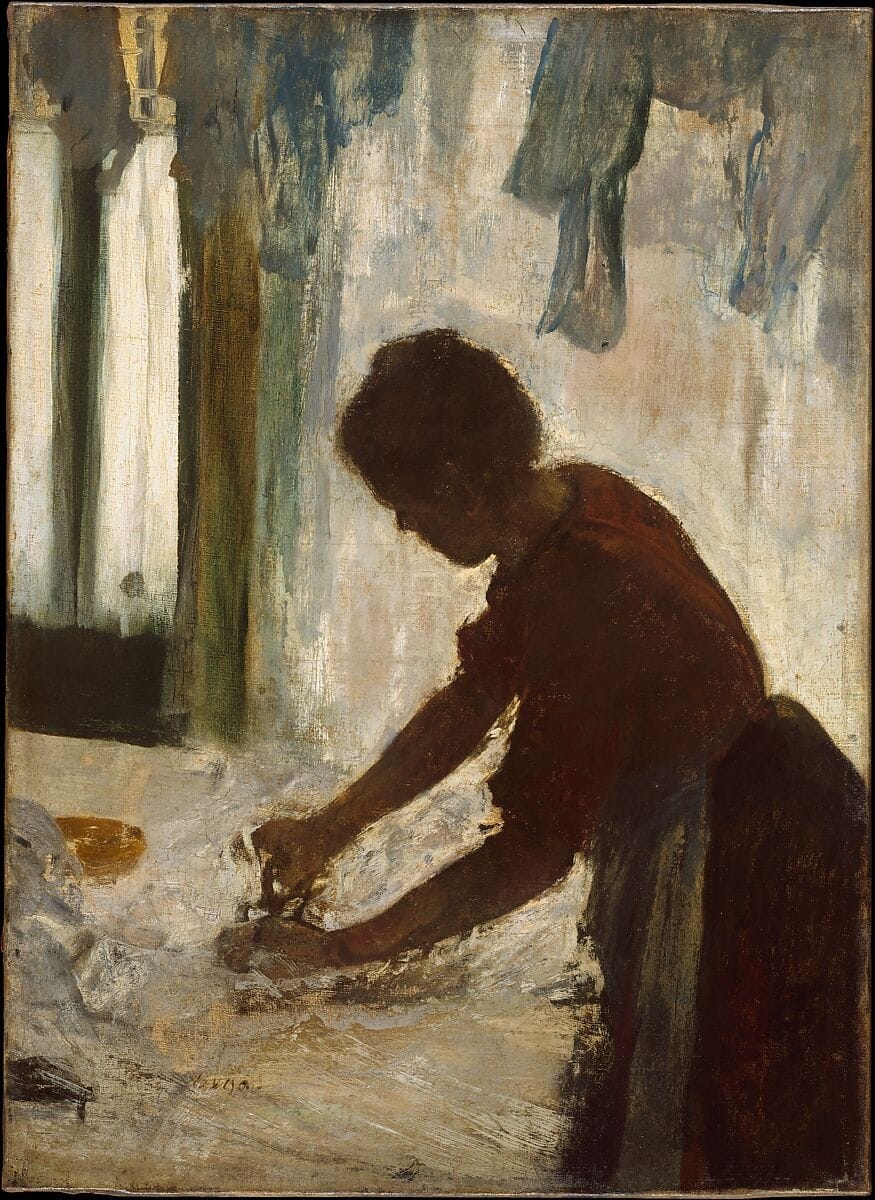
A Woman Ironing
1873
Portrays a laundress bent over her work, emphasizing the physicality and concentration of everyday labor. Significant because Degas treated working women with empathy and studied their gestures as compositional elements rather than sentimental subjects. Look for the strong, simplified silhouette, the economy of color, and the focus on the hands and posture that convey repetition and effort.
Must-see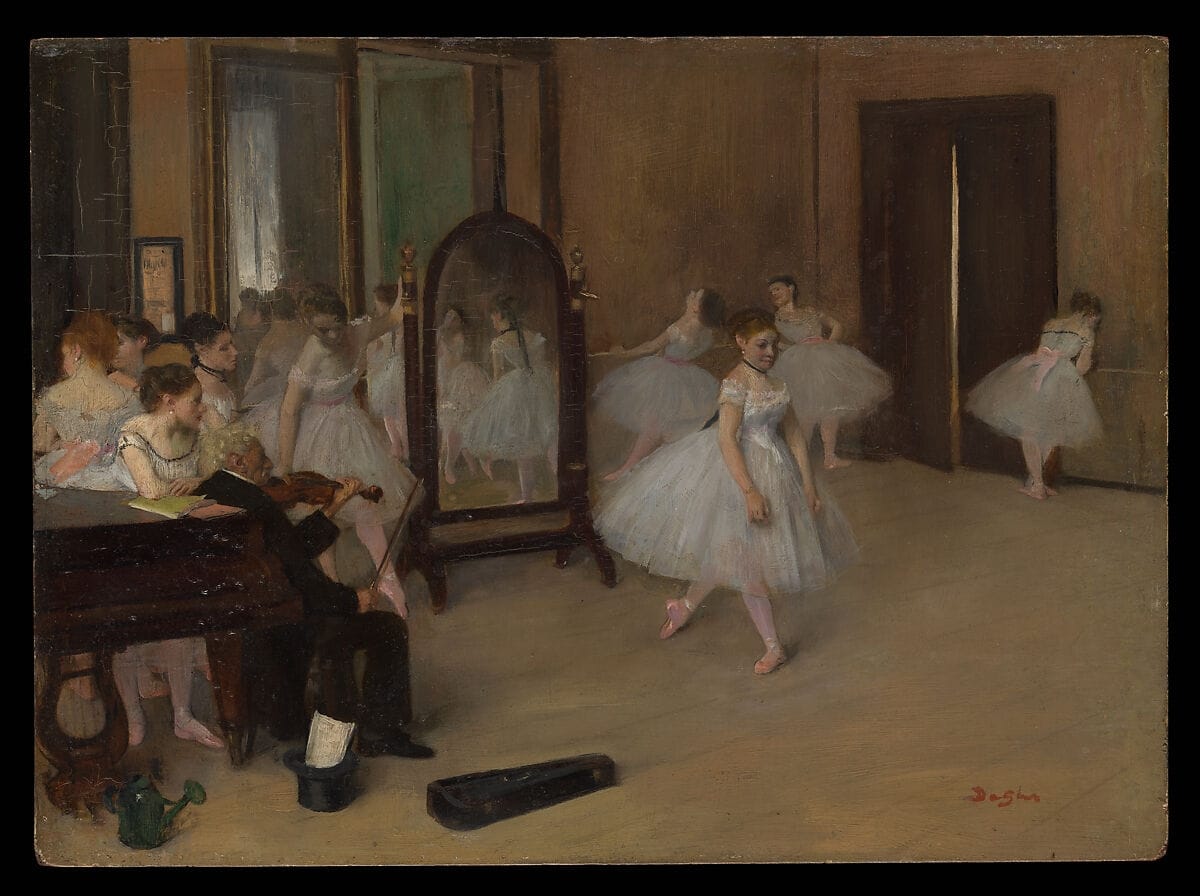
The Dancing Class
ca. 1870
An earlier treatment of Degas’s recurring ballet-class theme, showing pupils in a studio engaged in various preparatory poses under the teacher’s eye. Significant as part of Degas’s developing investigation into modern urban leisure and the routines behind public performance. Observe the informal groupings, the subtle diagonals through the composition, and how Degas balances individual characterization with an overall pattern of movement.
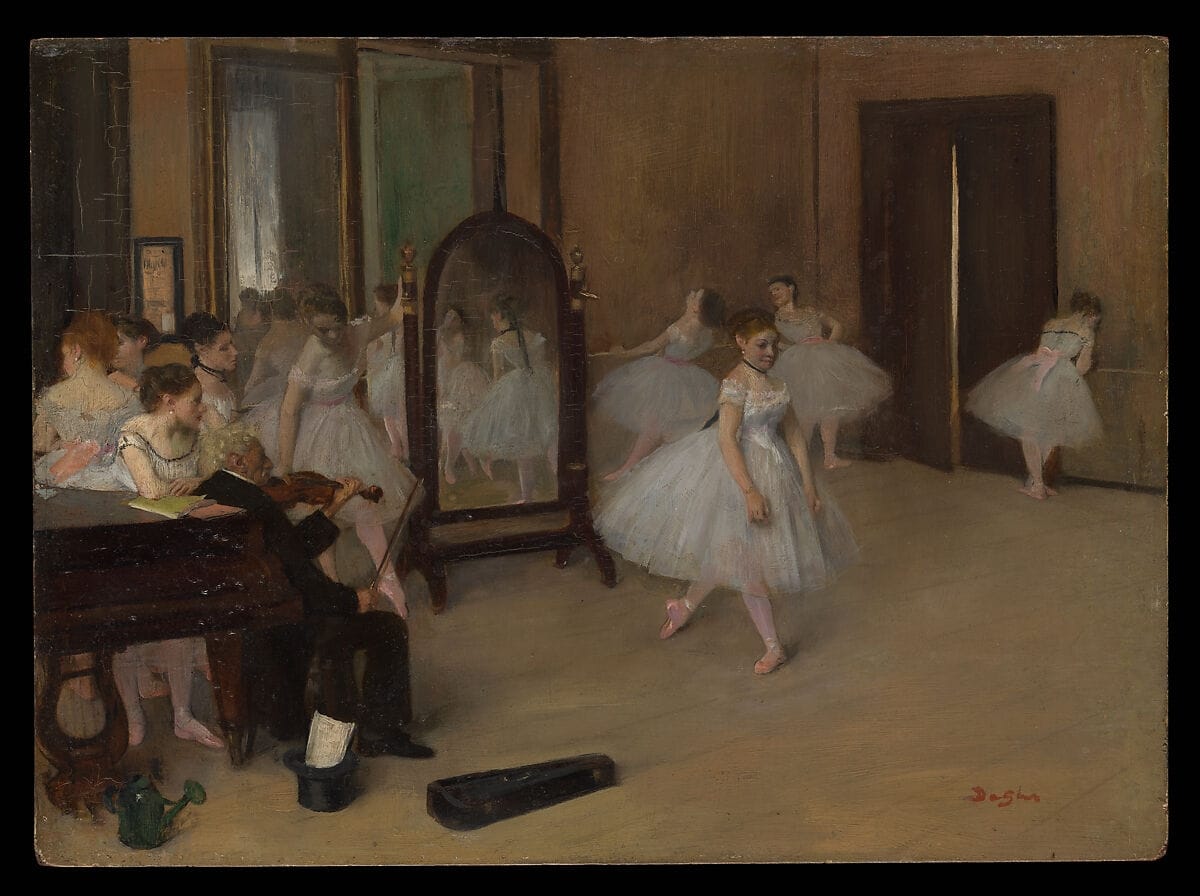
The Dancing Class (small study)
ca. 1870
A smaller, more intimate study of the ballet-class subject that captures a condensed, immediate view of dancers at work. Important as evidence of Degas’s working process—compositional experiments and studies that informed his larger canvases. Look for loosened brushwork, abbreviated details, and a focus on light and posture rather than finish.
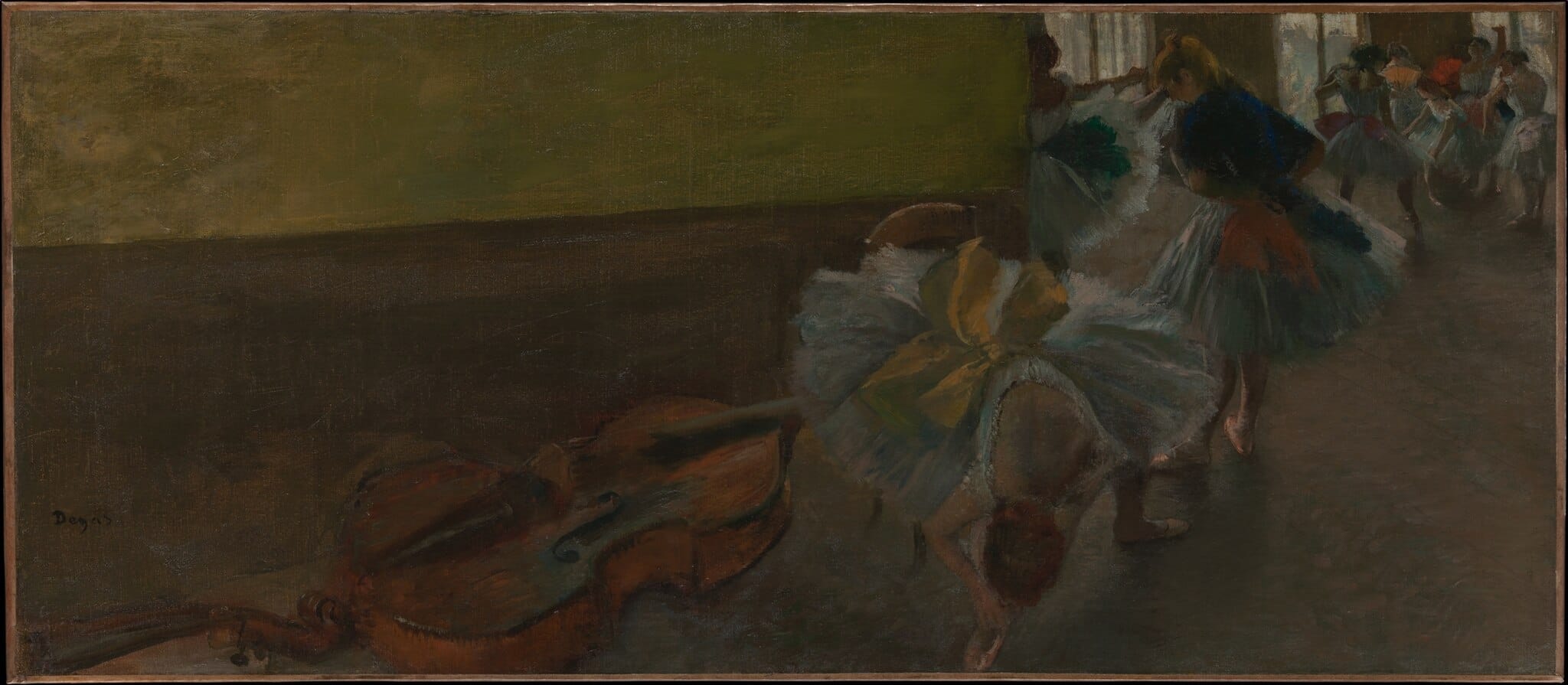
Dancers in the Rehearsal Room with a Double Bass
1875
Shows dancers in a practice room accompanied by a double bass player, combining musical and choreographic elements of the opera-house world. Significant for Degas’s interest in the interaction between musicians and dancers and for the way everyday objects (the instrument) anchor the scene in a real setting. Note the weighty, dark shape of the double bass against the lighter, more delicate figures, and how Degas composes verticals and diagonals to organize the space.
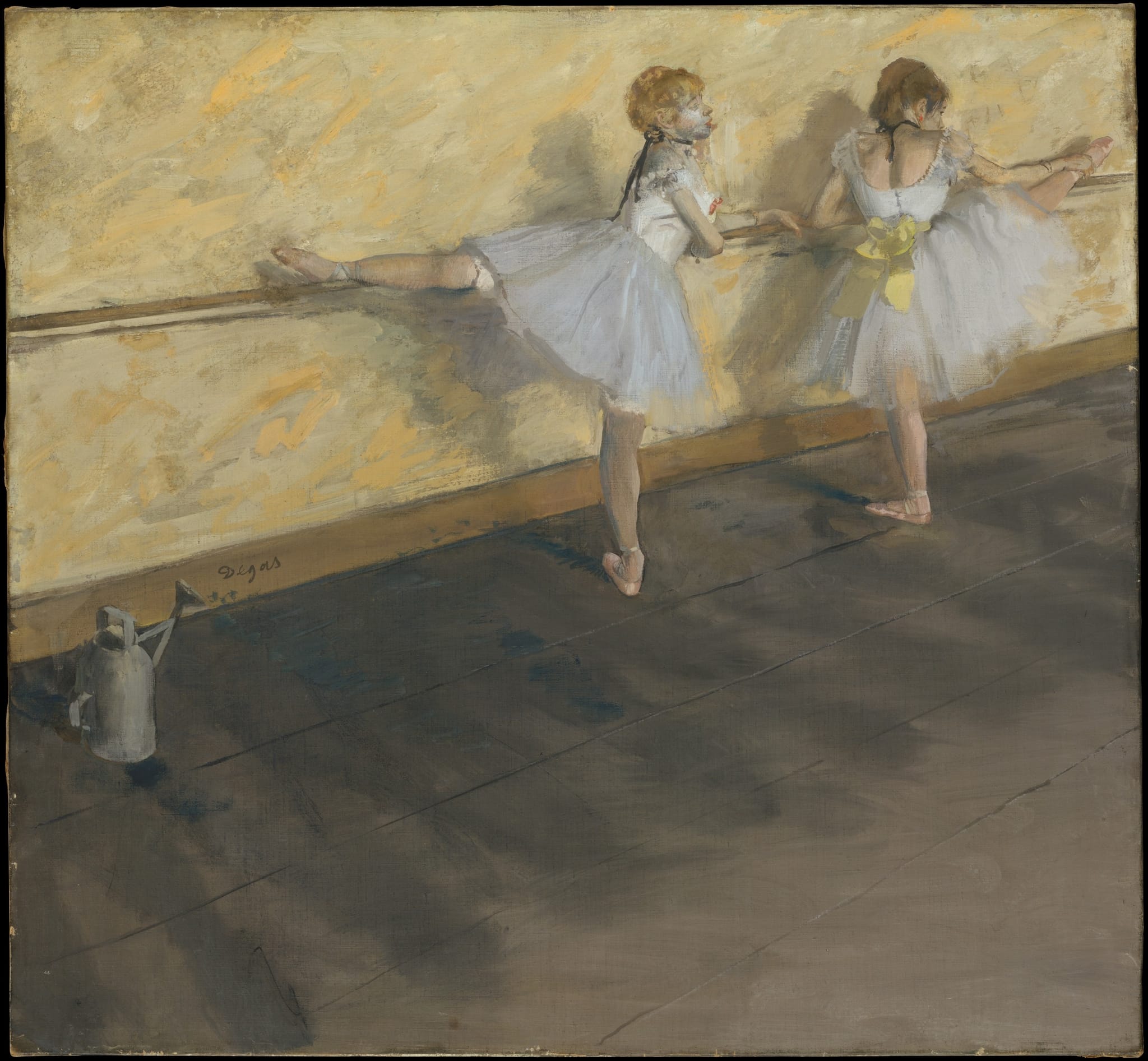
Dancers Practicing at the Barre
1877
Depicts a line of dancers warming up at a barre, caught in routine practice rather than performance. Significant as a study of repetition, rhythm, and the disciplined labor behind the illusion of effortless ballet. Look closely at the subtle variations in pose across the line and how Degas uses posture, negative space, and limited palette to create a sense of quiet concentration.
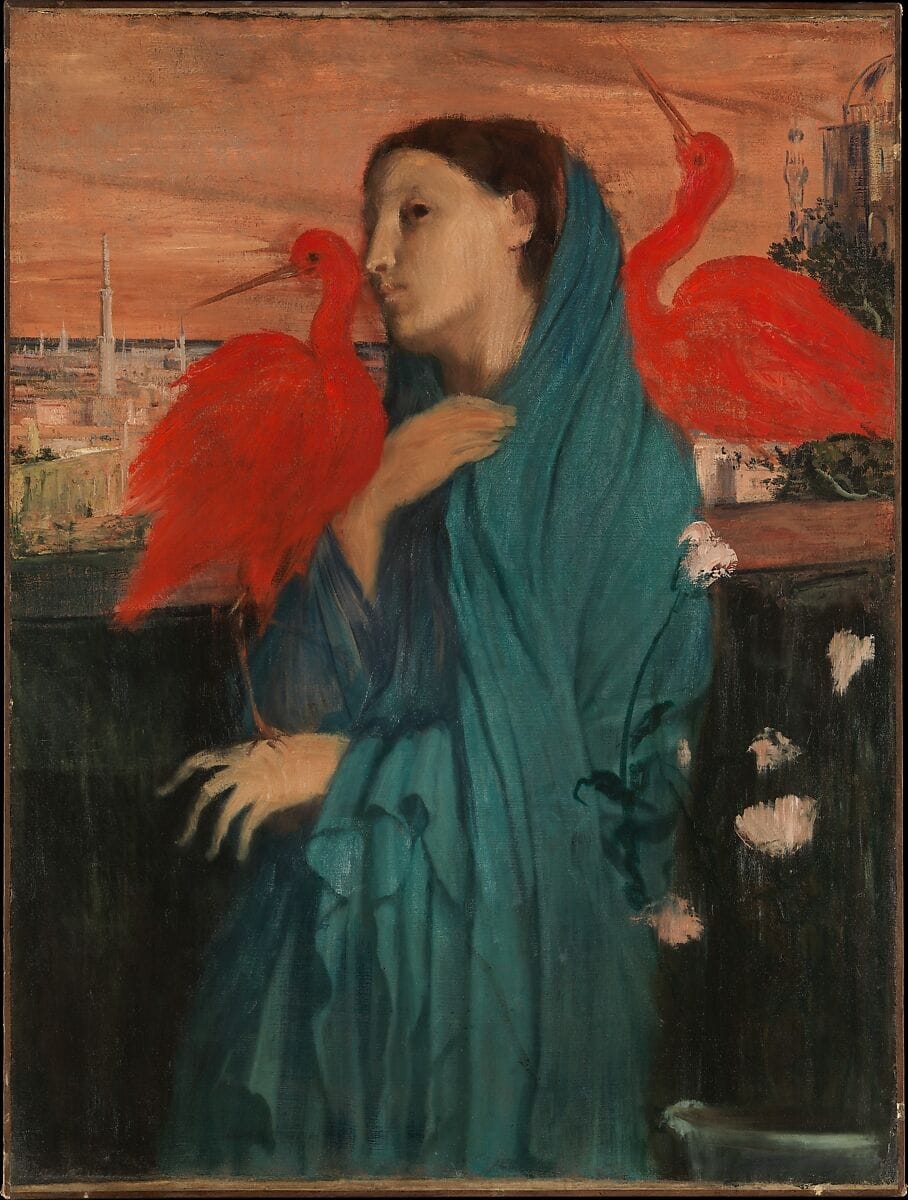
Young Woman with Ibis
ca. 1865
Portrays a young woman posed formally while an exotic ibis stands nearby, combining portraiture with an unusual animal motif. Significant because it demonstrates Degas’s experimentation with portrait types and his occasional inclusion of curious props to suggest character or narrative. Attend to the sitter’s reserved expression, the vertical emphasis of the composition, and the visual counterpoint between human figure and bird.
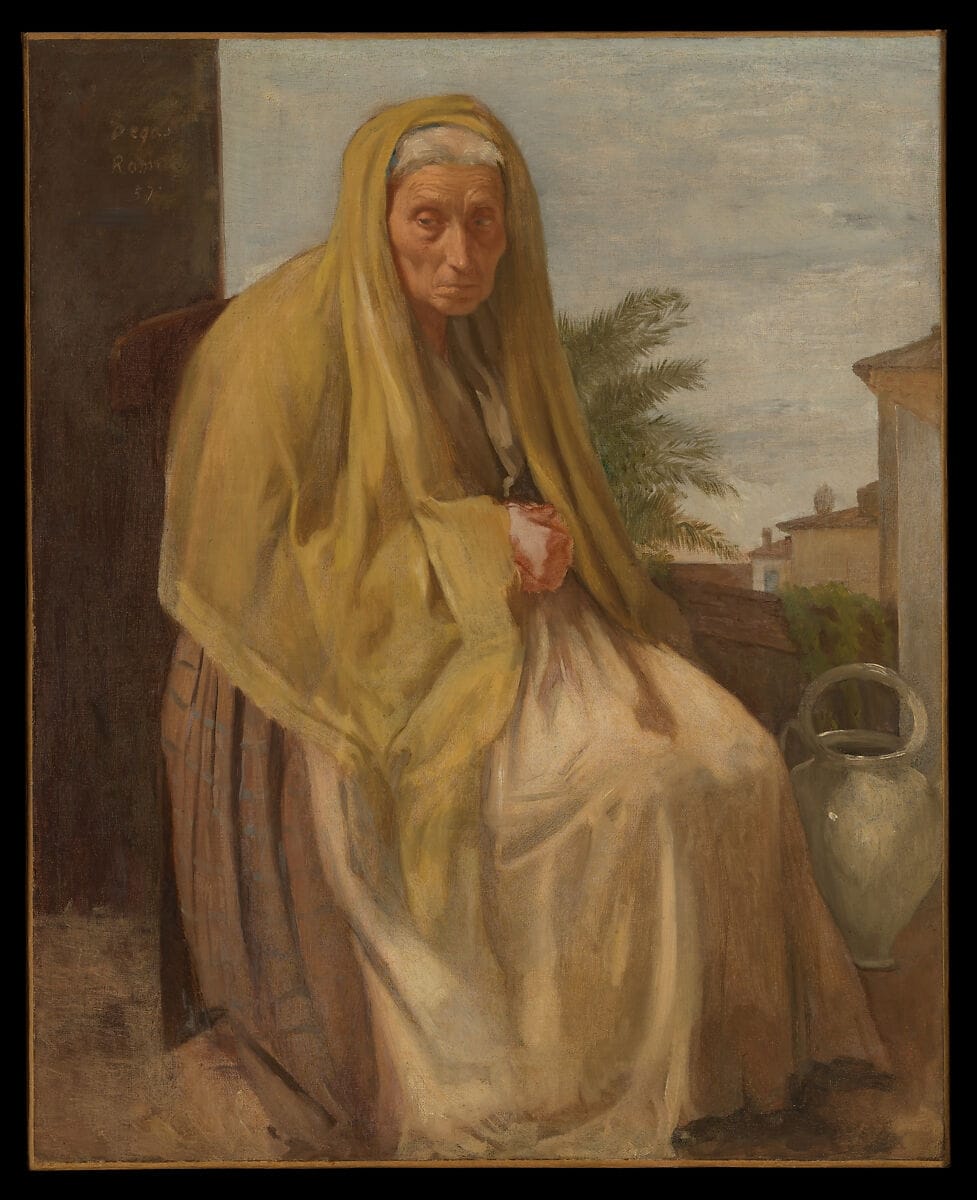
The Old Italian Woman
1857
A small, sympathetic portrait of an elderly Italian woman captured with directness and tactile brushwork. Important as an example of Degas’s early interest in individual physiognomy and character studies outside academic types. Look for the textured handling of skin and hair, the economical palette, and the frank, unidealized attention to age and expression.
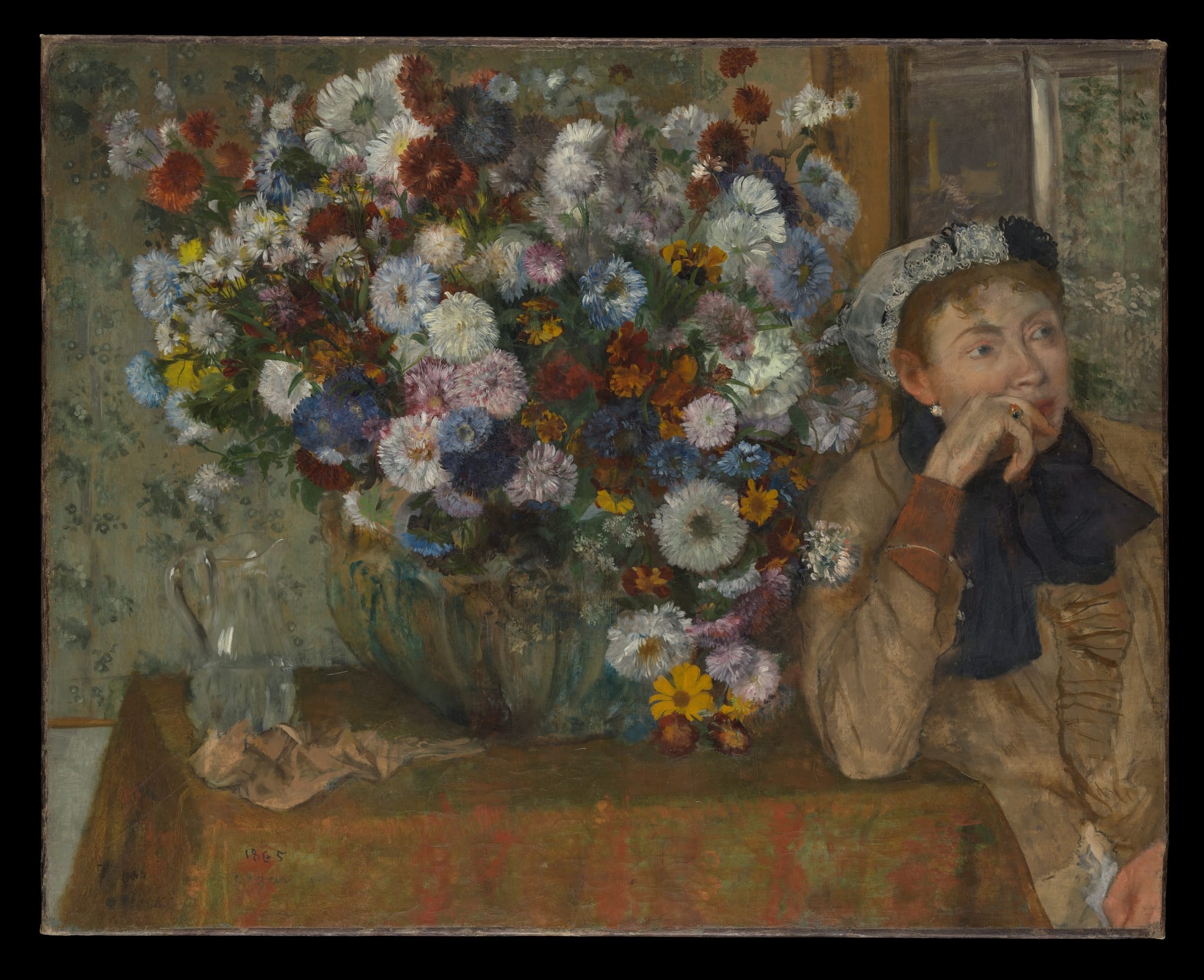
A Woman Seated beside a Vase of Flowers
1865
Shows a seated woman next to a vase of flowers, a quiet domestic portrait that balances figure and still life. Significant for Degas’s early development as a portraitist and his attention to interior arrangements that reveal social status and taste. Notice the compositional placement of the vase as a foil to the sitter and the calm, measured brushwork that links object and person.
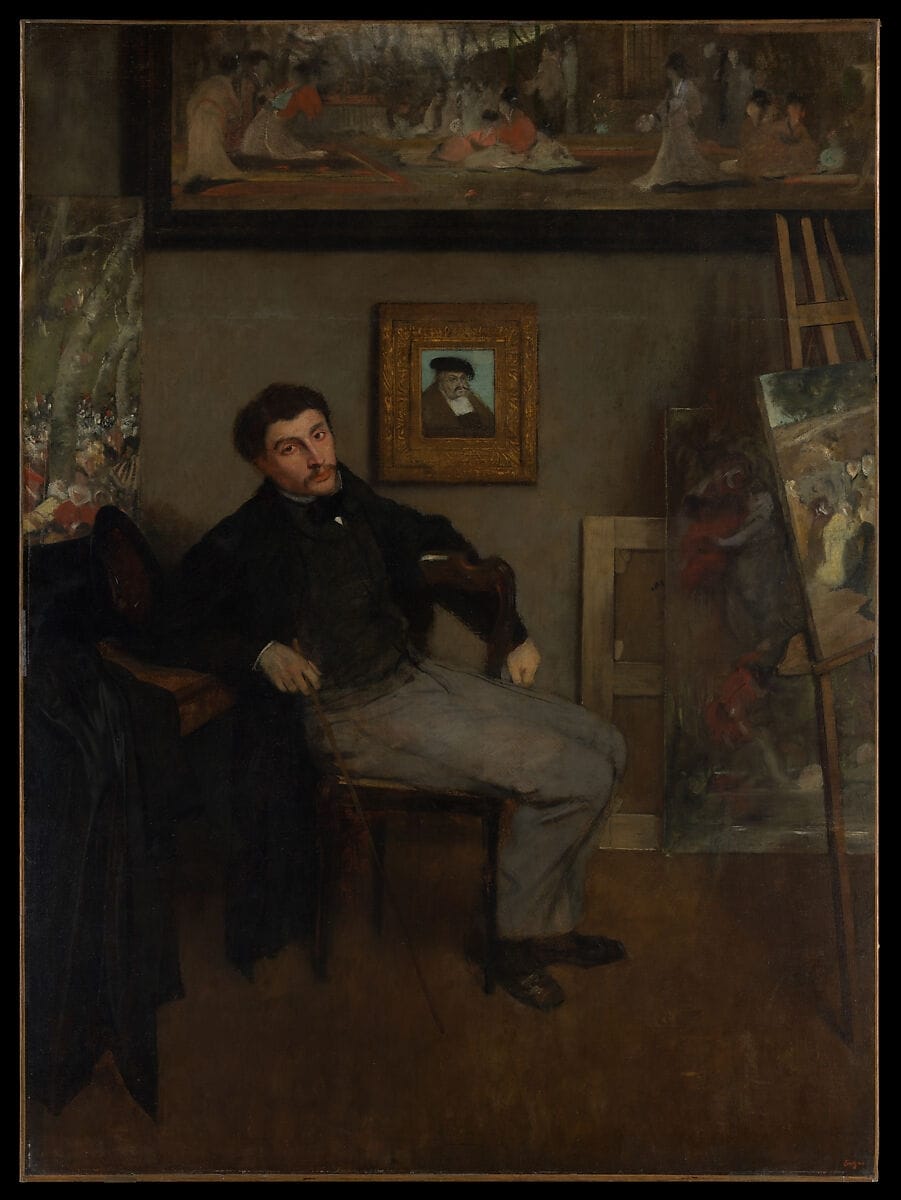
James-Jacques-Joseph Tissot
ca. 1867–68
A portrait of the artist James Tissot, rendered with precise observation of costume and expression. Significant because it documents Degas’s circle and his skill in capturing fellow artists’ presence with a mix of formality and psychological insight. Look for the careful treatment of garments and accessories and the way Tissot’s posture and gaze convey personality.
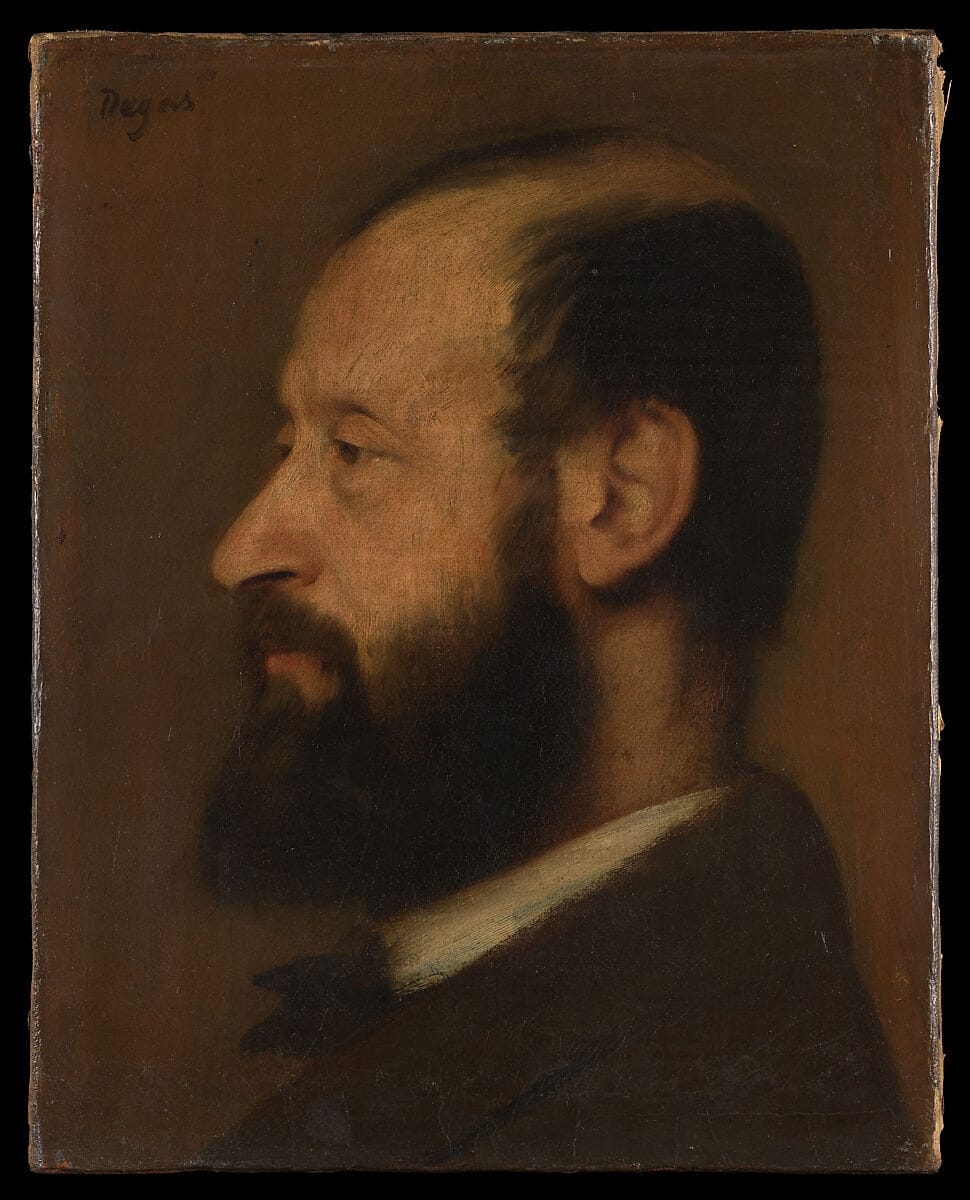
Joseph-Henri Altès
1868
A focused portrait of Joseph-Henri Altès, the celebrated flautist of the Paris Opéra, presented with quiet dignity. Significant because it belongs to Degas’s series of musician portraits that document the people who animated the opera house and prefigure his larger ensemble works. Look for the careful attention to Altès’s hands and facial features, and the restrained backdrop that centers the musician.
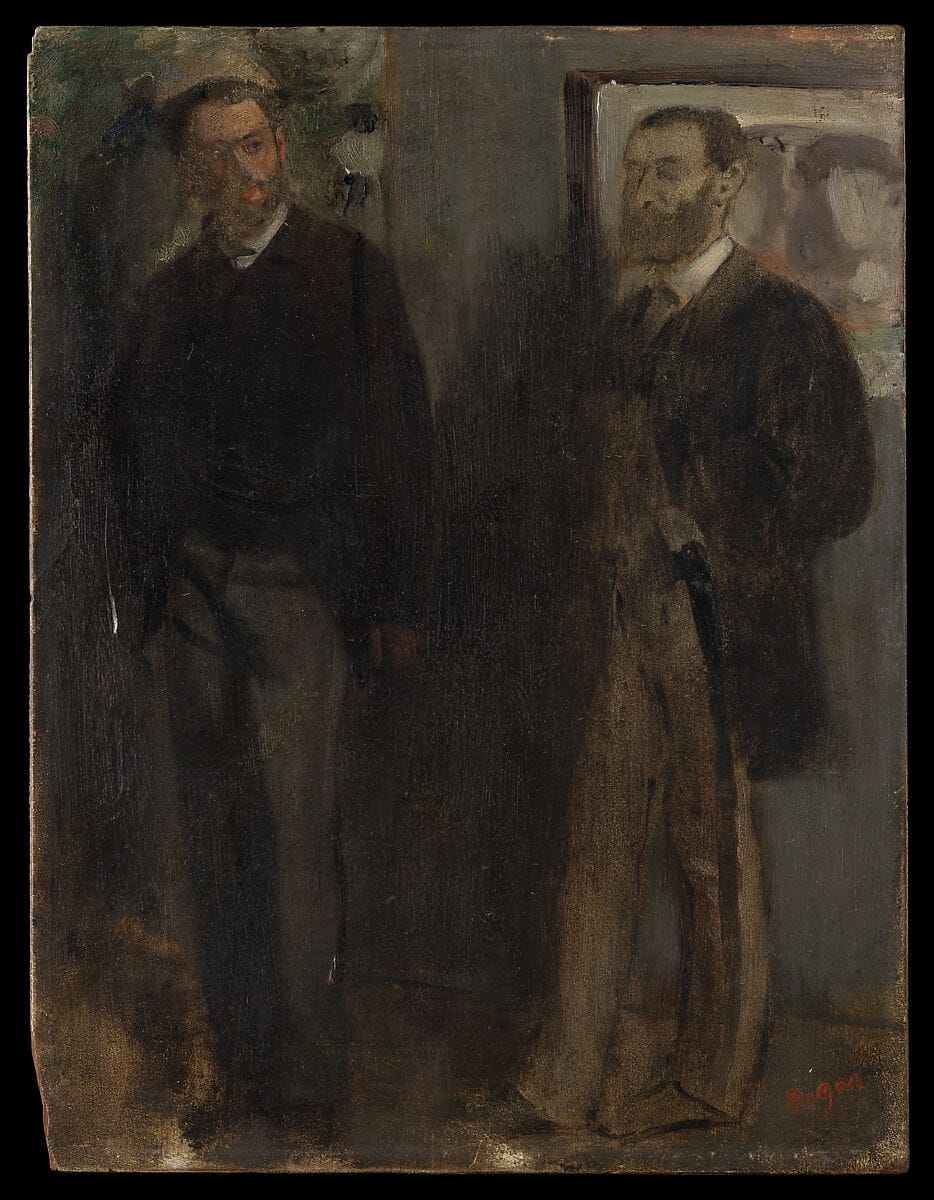
Two Men
ca. 1865–69
Shows two male figures together in a restrained composition that emphasizes character and social presence. Significant as a study in interpersonal posture and the contrasts between individuals rather than an overt narrative. Pay attention to how Degas differentiates each man through stance, clothing, and facial expression while using economy of detail.
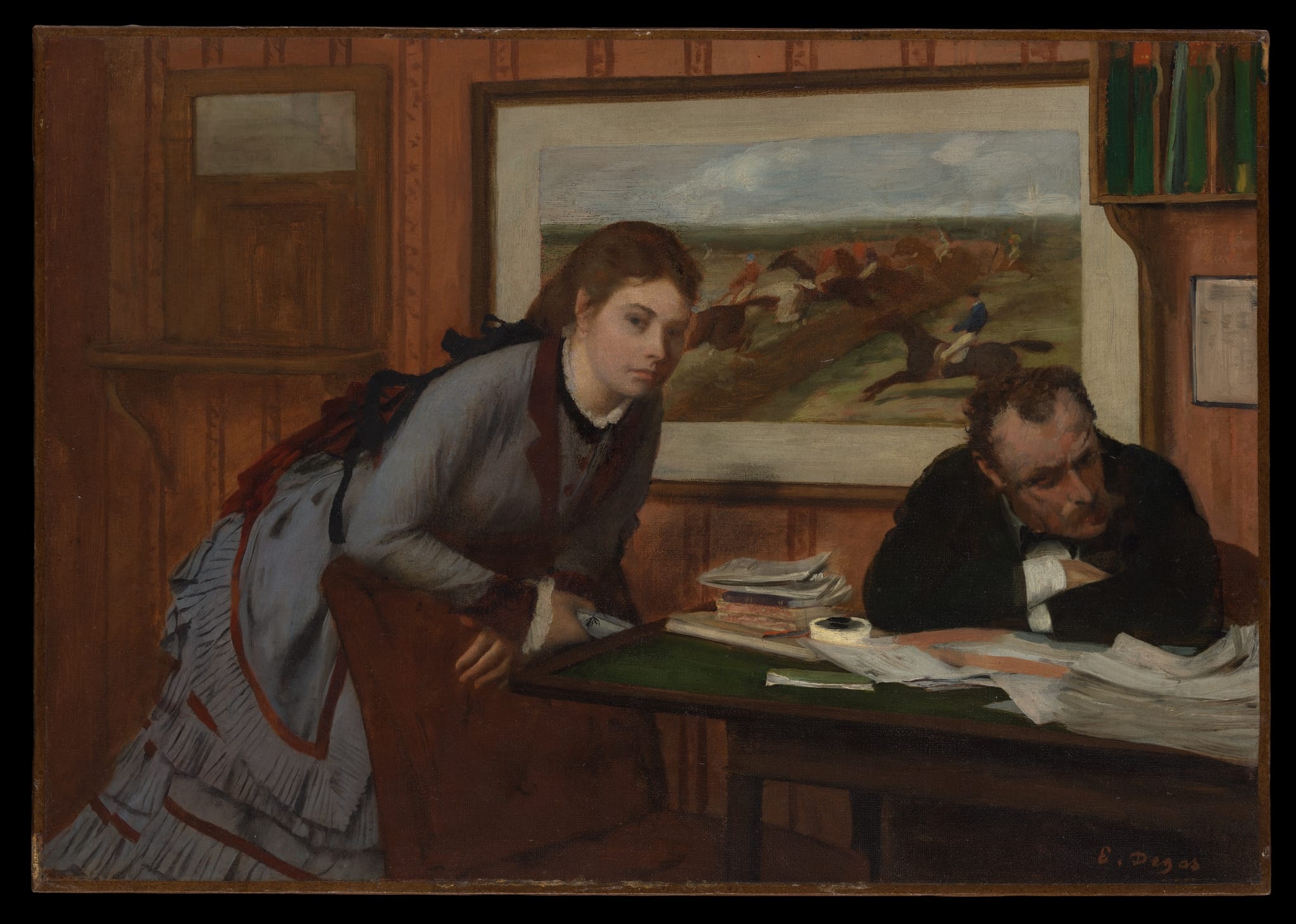
Sulking
ca. 1870
Depicts a solitary figure withdrawn in mood, conveying irritability or petty grievance through body language. Significant for Degas’s interest in fleeting, psychological states and his ability to render emotion through pose rather than facial dramatics. Look for the compact, inward posture and the pictorial economy that isolates the emotion within the composition.
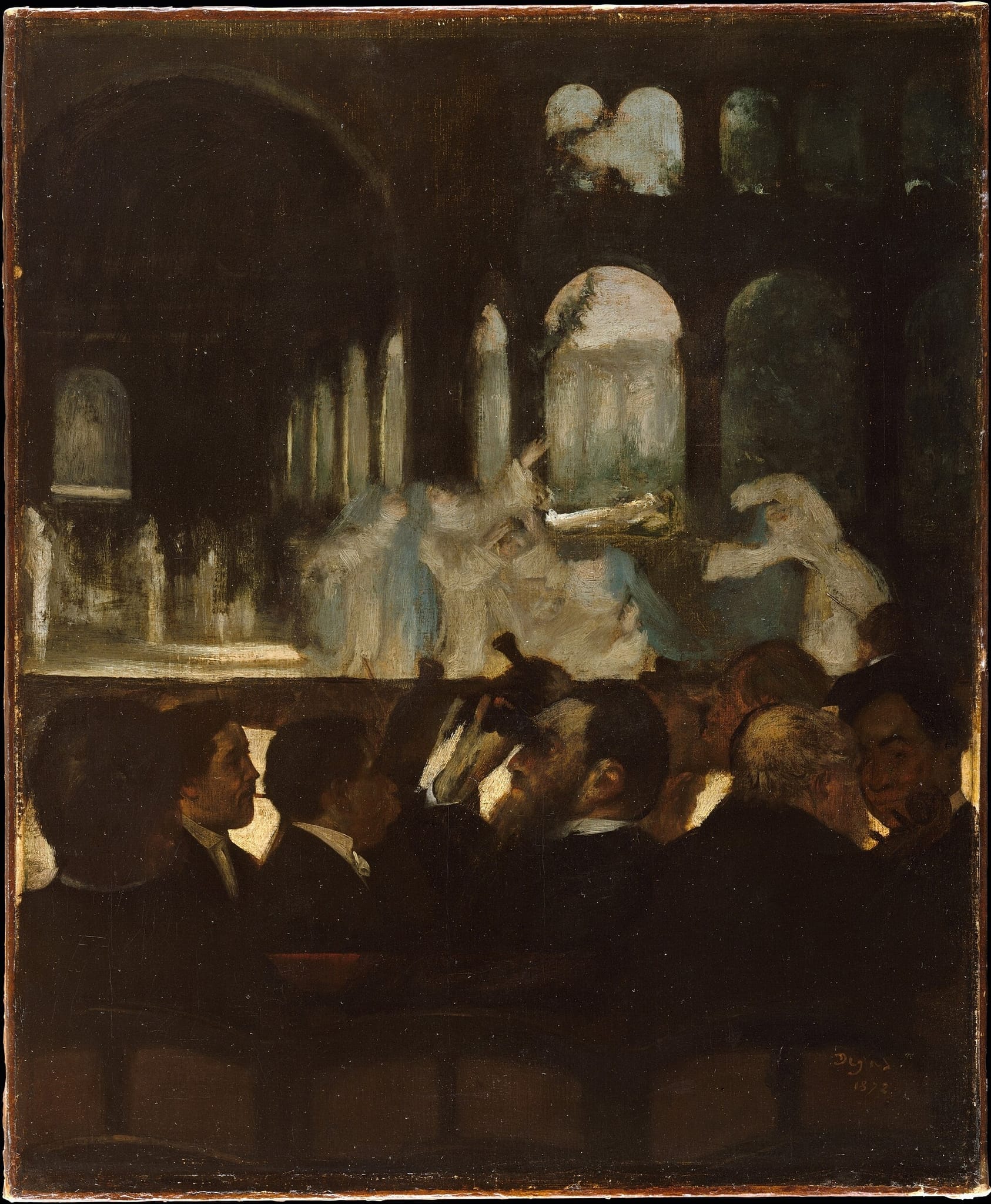
The Ballet from "Robert le Diable" (variant study)
ca. 1871
A variant study of the Robert le Diable ballet scene that explores alternate arrangements and emphases of the same theatrical subject. Important because Degas often made multiple versions and studies to refine viewpoint, cropping, and the balance between stage action and audience. Compare compositional differences—cropping, figure placement, and emphasis on spectatorship—to see how subtle changes alter narrative focus. ([metmuseum.org](https://www.metmuseum.org/art/collection/search/110000561?utm_source=openai))
The Museum of Modern Art (MoMA)
Even though MoMA holds no paintings by Degas, it matters for experiencing his legacy because the museum frames Degas as a precursor to modernist concerns — composition, cropping, and the use of photography‑like viewpoints — that shaped 20th‑century art. MoMA often shows Degas in dialogue with Cézanne, Picasso and early modern photographers in thematic displays or loans, which helps viewers see how his formal experiments anticipated modern art’s priorities.
Brooklyn Museum
Although the Brooklyn Museum has no paintings by Degas, it matters because it often approaches his work through focused exhibitions, prints, drawings, or objects that highlight social history and the networks of patronage and display in which Degas operated. The museum’s regional perspective and community programming can provide fresh contextual readings — for example, emphasizing performance and everyday life as cultural practices — that deepen understanding of themes present across Degas’s painted oeuvre.