Edgar Degas Paintings in Washington DC — Where to See Them
Washington DC matters for experiencing Edgar Degas because the city houses approximately six of his paintings on permanent display, all concentrated at a single institution: The Phillips Collection. The Phillips’s intimate galleries and thoughtful juxtapositions let you study Degas’s handling of form and movement up close, placing his figure studies and pastels in conversation with early modernist tastes and American collecting—so you get a focused, close-up view of his work you won’t find scattered across many museums.
At a Glance
- Museums
- The Phillips Collection
- Highlight
- See Degas's intimate pastel dancers at The Phillips Collection
- Best For
- Lovers of Impressionism and intimate museum experiences
The Phillips Collection
The Phillips Collection matters for experiencing Degas because Duncan Phillips assembled a compact, conversational installation style that lets you view Degas’s works in intimate dialogue with contemporaries (Impressionists and Post‑Impressionists), revealing how his approaches to composition and color influenced and diverged from his peers. The museum’s small scale and close viewing distance make subtleties—brushwork, pastel layering, and compositional cropping—far more legible than in larger, more cavernous institutions, so you can study the tactility and altered perspectives that are central to Degas’s practice.
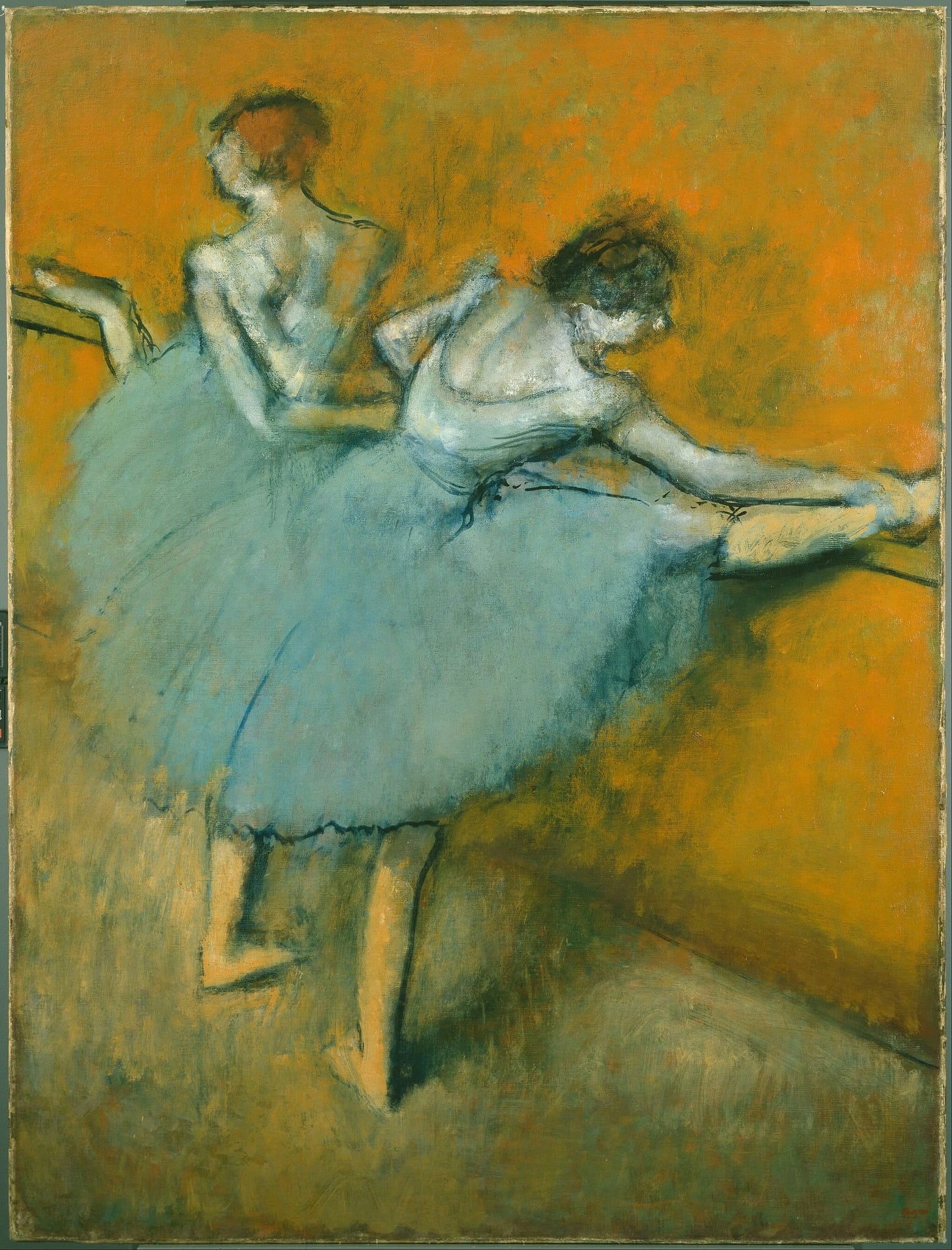
Dancers at the Barre
c. 1900
Shows several ballet students practicing at a barre, rendered with Degas’s late, economical brushwork and a muted palette. Significant as an example of his lifelong interest in rehearsals and the behind‑the‑scenes world of dance, where he explored movement and spatial composition. Look for the stark cropping, the varied poses that imply motion, and the rough, almost pastel‑like handling that emphasizes gesture over detail.
Must-see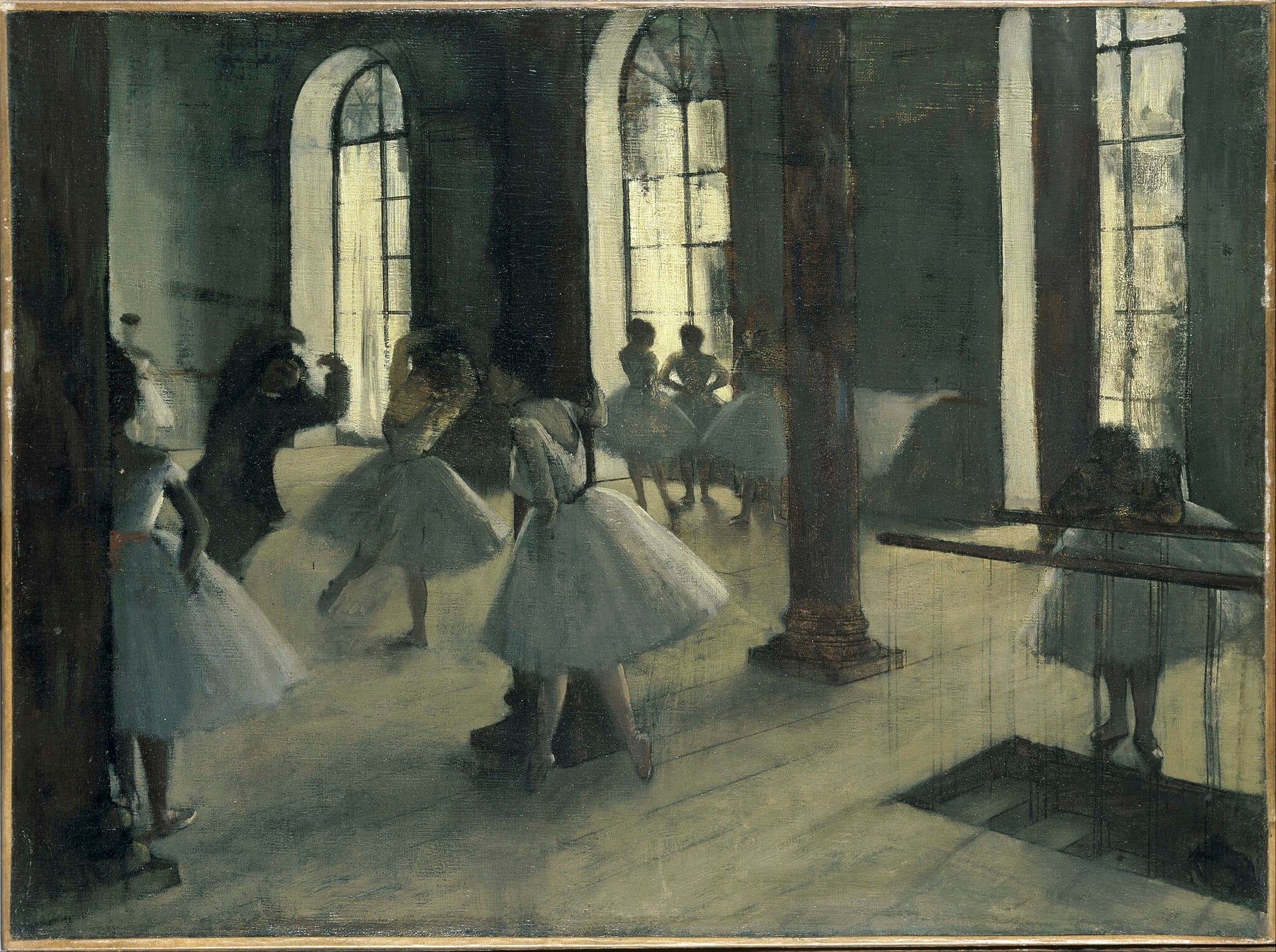
La Répétition au foyer de la danse
c. 1870–c. 1872
Depicts dancers rehearsing in the foyer of the opera house, a candid scene of bodies gathered and preparing rather than performing onstage. Important for its early experimentations with informal composition and influences from photography and Japanese prints, which informed Degas’s asymmetry and vantage points. Notice the casual poses, the off‑center framing, and the subtle interplay of light that focuses attention on figures rather than on a theatrical narrative.
Must-see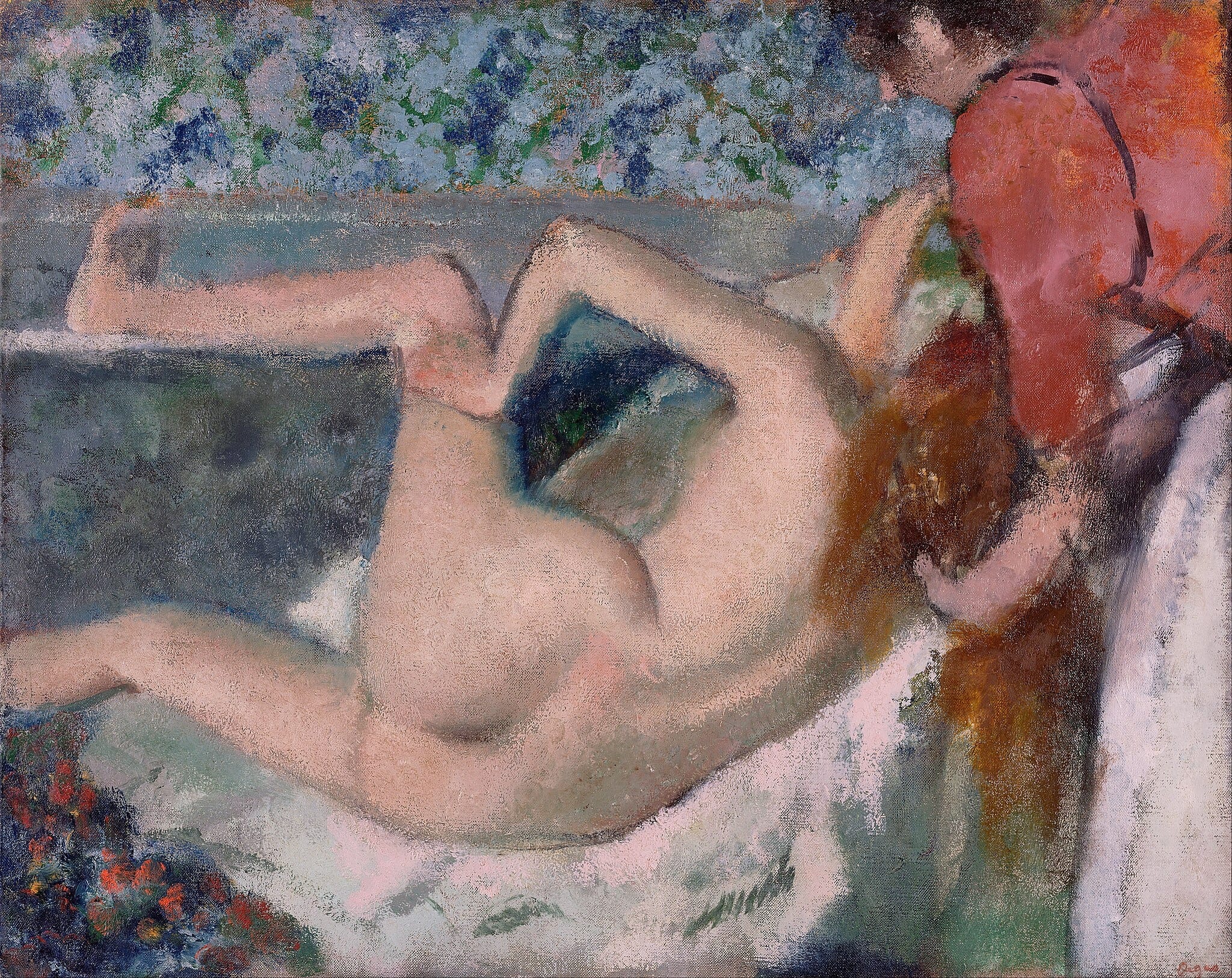
After the Bath
c. 1895
Presents a woman drying or adjusting herself after bathing, painted with soft, tactile strokes and an intimate, private atmosphere. Significant as part of Degas’s late preoccupation with bathers and female privacy, where he shifted toward more intimate studies and experimental surface textures. Look for the sensual but unidealized modeling of the body, the close cropping, and the visible brush or pastel marks that create a sense of immediate touch.
Must-see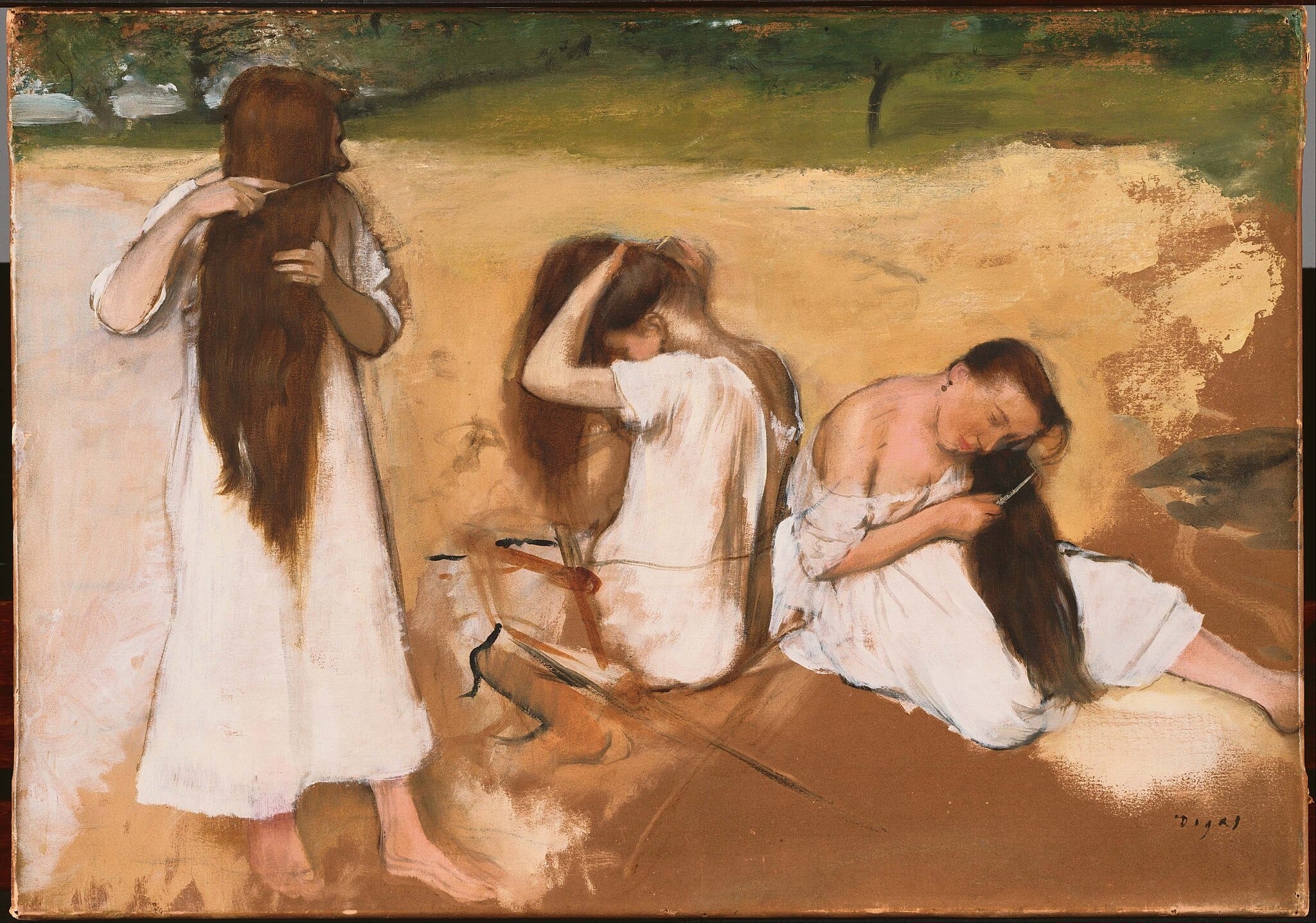
Women Combing Their Hair
c. 1875–c. 1876
Shows two women engaged in the everyday, unposed act of arranging their hair, rendered with a focus on posture and quiet domesticity. Important because it captures Degas’s interest in candid, modern life scenes and his investigation of compositional balance through ordinary gestures. Observe the subtle economy of line, the attention to rhythm in the arms and backs, and how the simple act becomes a study in form and negative space.
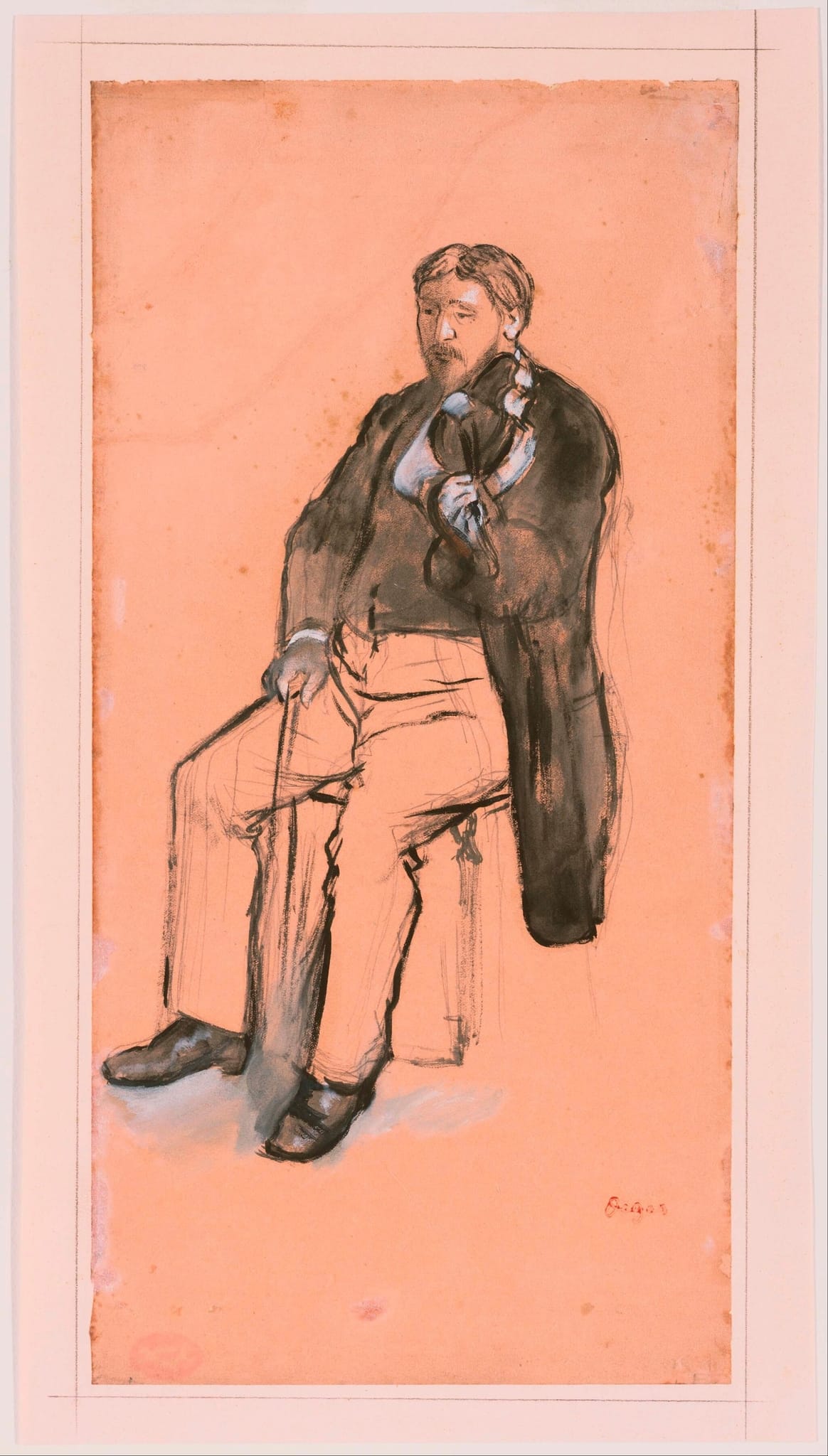
Seated Violin Player
1872
Portrays a musician seated with his violin, absorbed in playing or rehearsal, using restrained color and a concentrated composition. Significant as part of Degas’s series of musician and rehearsal subjects that explore the relation between performer and practice, highlighting his observational discipline. Look for the concentrated facial expression, the precise placement of hands and instrument, and the careful study of posture that conveys sound and focus without auditory cues.
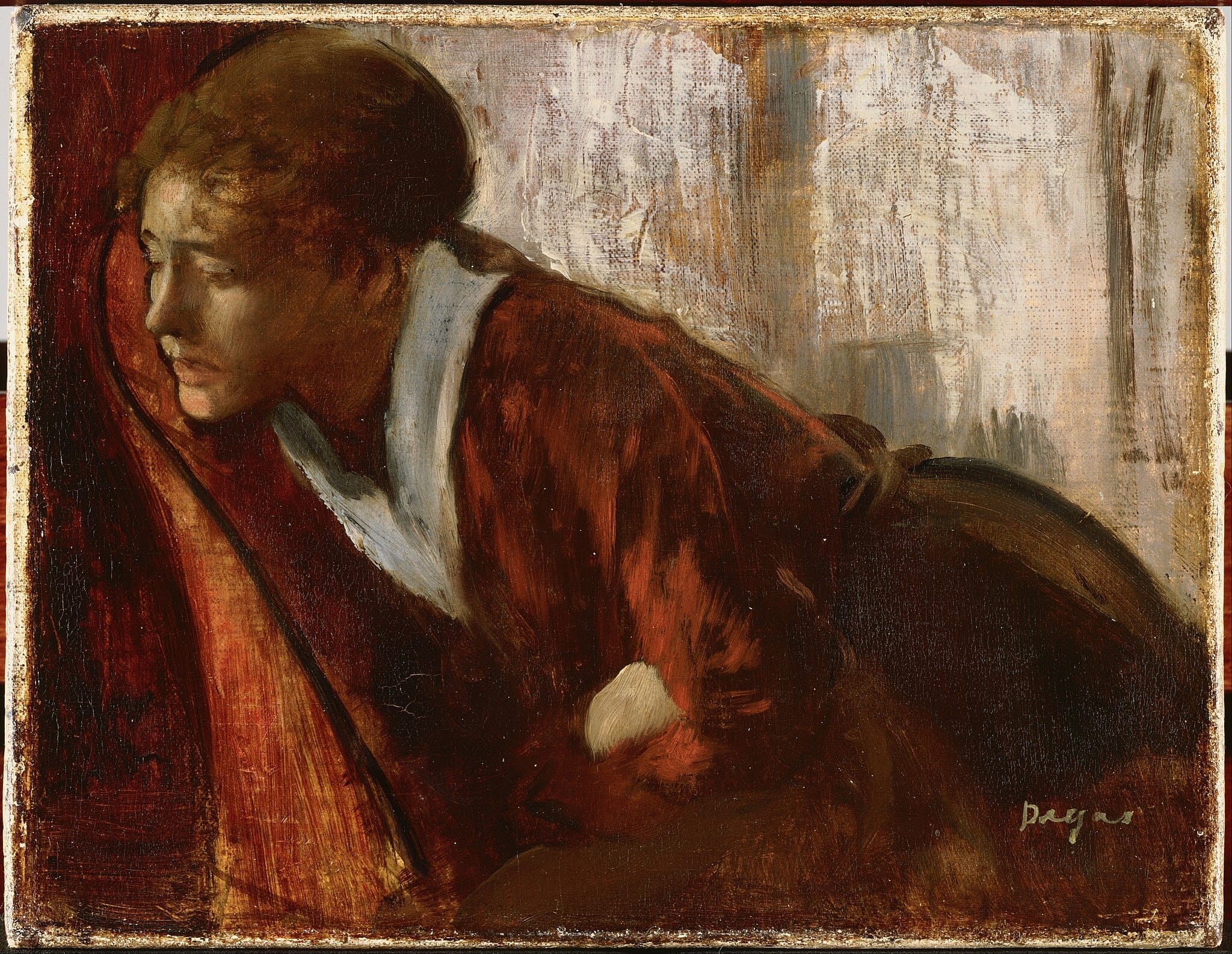
Melancholy
late 1860s
Features a solitary, pensive figure—often interpreted as a woman in a reflective or sorrowful state—rendered with muted tones and contemplative stillness. Significant for its psychological depth and for showing Degas’s early engagement with mood and interior emotion rather than purely formal studies. Pay attention to the figure’s posture, the subdued palette, and the way space and light emphasize introspection and emotional distance.