Henri Matisse Paintings in New York — Where to See Them
New York matters for experiencing Henri Matisse because the city offers approximately 10 of his paintings on permanent display across four major institutions, making it a concentrated stop for his painted work — in practice those works are housed at the Museum of Modern Art. That practical concentration means you can prioritize MoMA to see his canonical paintings in one visit, while noting that the Brooklyn Museum, the Whitney, and The Frick currently do not have Matisse paintings on permanent view.
At a Glance
- Museums
- MoMA, Brooklyn Museum, Whitney Museum of American Art, The Frick Collection
- Highlight
- See Matisse's major works at MoMA—the city's primary Matisse collection
- Best For
- Modern art enthusiasts and those seeking Matisse's masterpieces
The Museum of Modern Art (MoMA)
MoMA’s collection and exhibition history make it the central place in New York to encounter Matisse’s major developments across painting, collage, and printmaking; the museum’s holdings include early Fauve works, mature decorative compositions, and the large-scale experiments that influenced mid‑20th‑century modernism. Because MoMA displays a sequence of Matisse paintings (10 in the current tally), you can trace how his use of color, space, and form evolved — from the shock of his Fauve palette to the pared-down line and bold flat color of his later work.
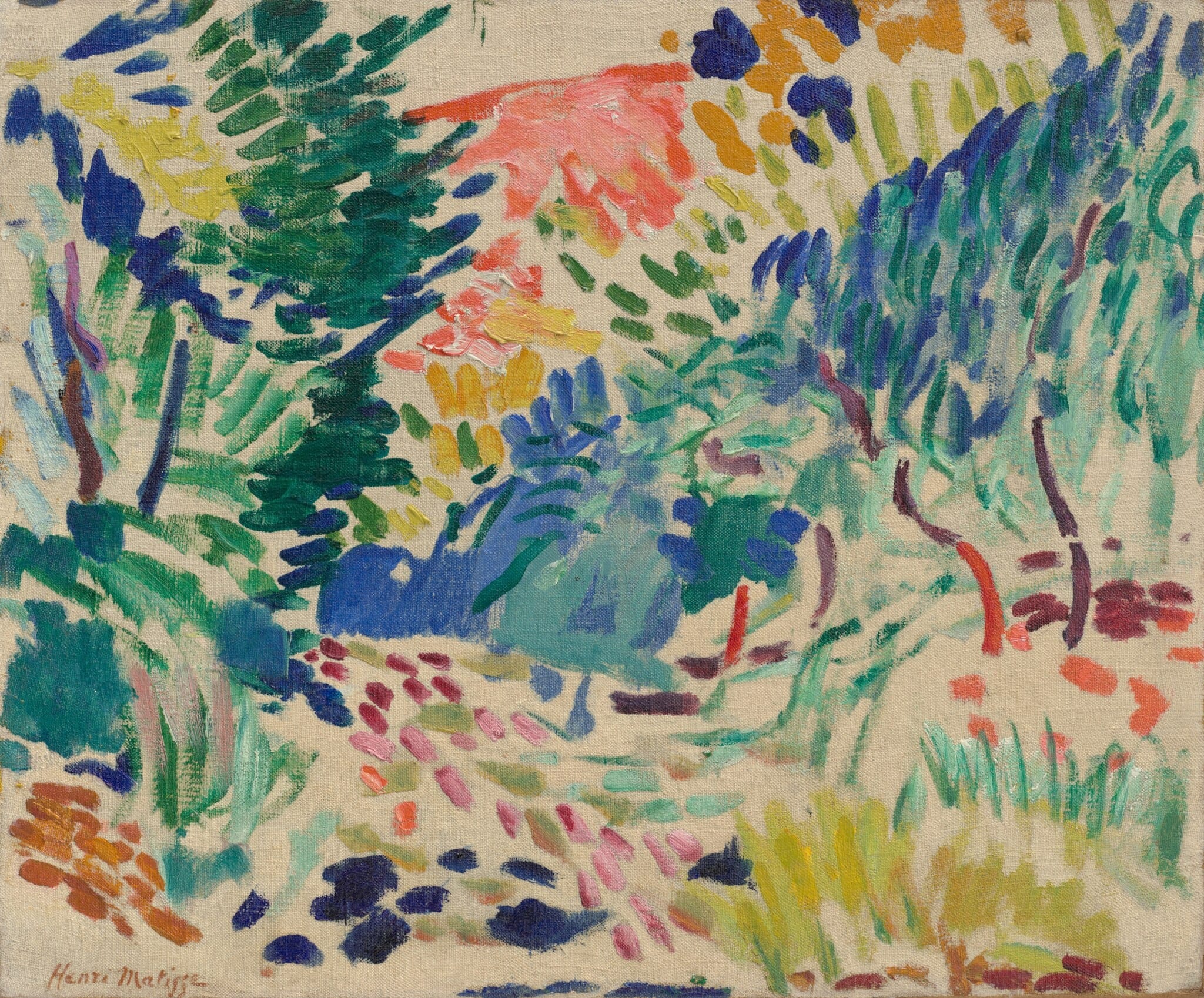
Landscape at Collioure
1905
A sunlit coastal scene showing the harbor and red-roofed houses of Collioure rendered in bold, nonnaturalistic colors and energetic brushwork. This early Fauvist work is significant for Matisse’s radical use of pure color to convey sensation rather than optical reality. Look for the juxtaposition of saturated blues, greens, and pinks and the way color defines form more than line or shading.
Must-see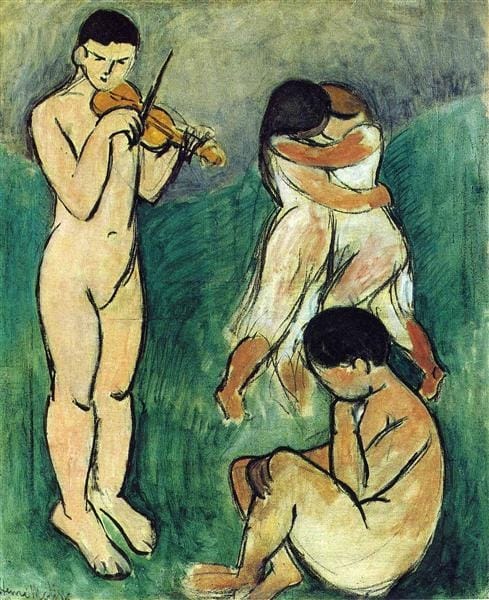
Music (Sketch)
1907
A preparatory, pared-down study suggesting figures grouped around an implied musician, reduced to simplified shapes and rhythmic lines. It’s important as a window into Matisse’s working process and his ongoing exploration of harmony between color, form, and musical metaphor. Notice the economy of marks, the emphasis on composition and balance, and how gesture conveys movement and mood.
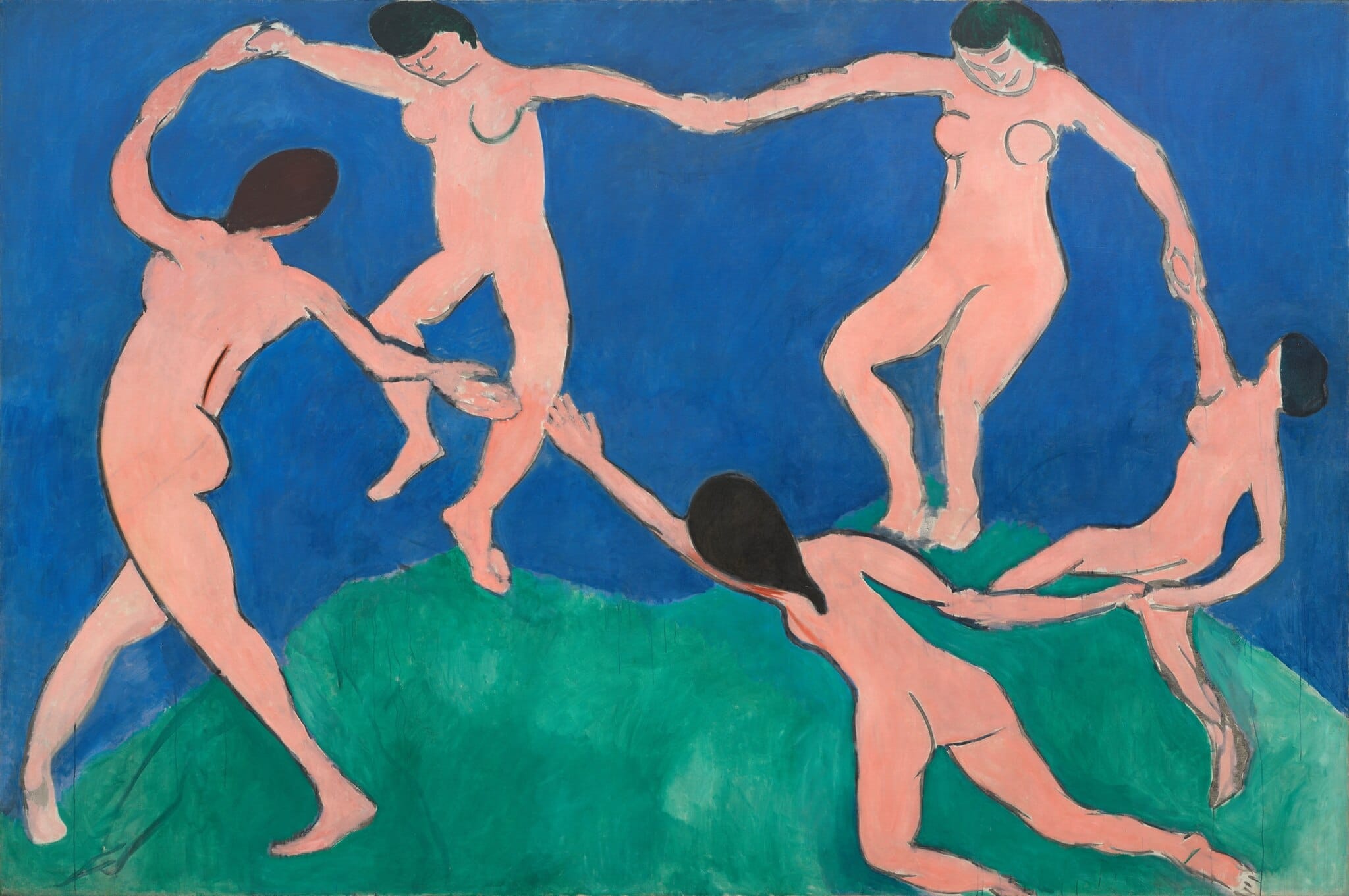
Dance (I)
1909
A dynamic composition of figures in motion—dancers linked in a circular, rhythmic embrace—reduced to sweeping outlines and flattened color planes. As an early exploration of the themes he would refine in later monumental Dances, this painting is significant for its emphasis on primal movement and compositional rhythm. Look for the flowing continuity of line, the repetition of forms that create a sense of rotation, and the interplay between figure and ground.
Must-see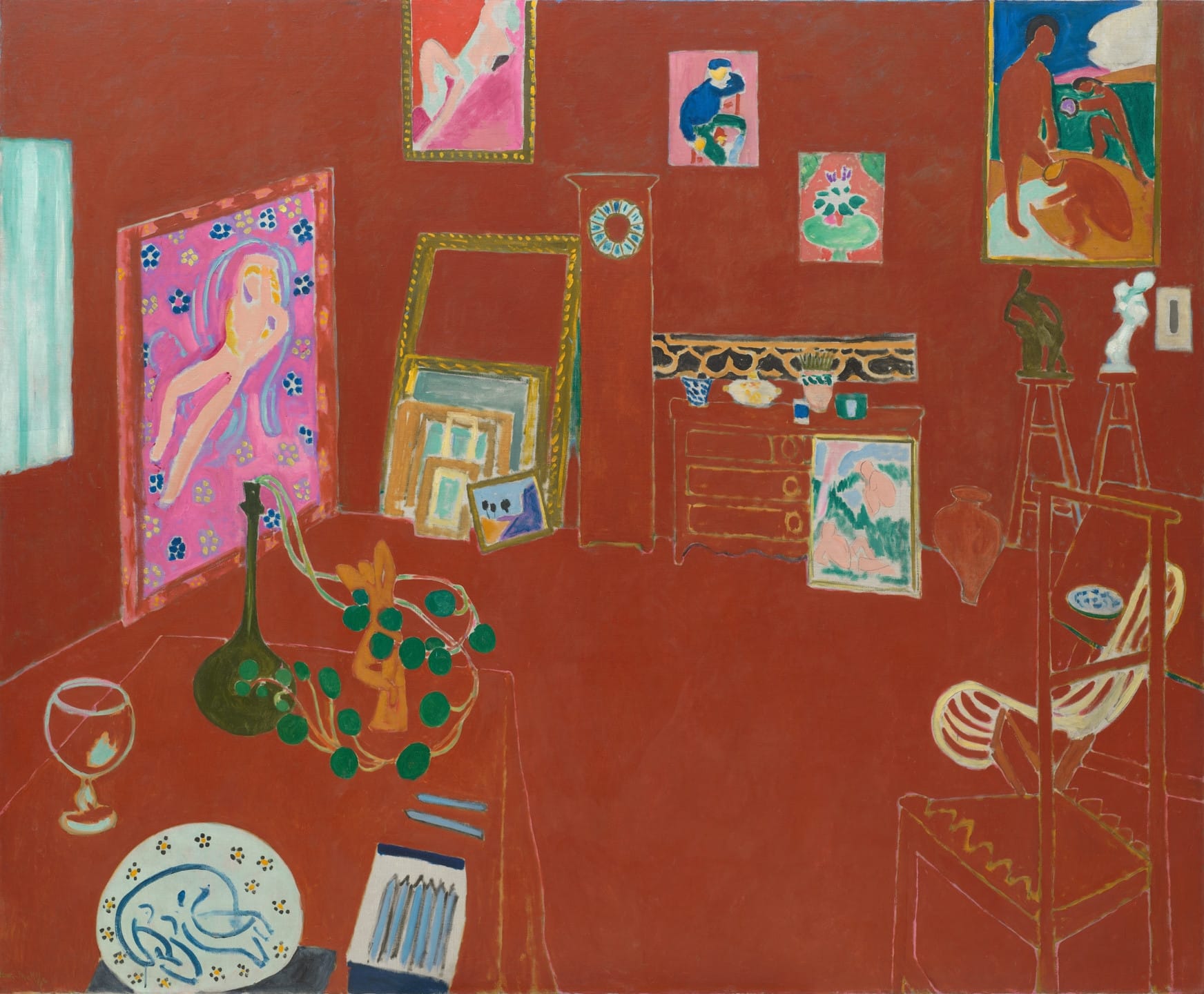
The Red Studio
1911
An interior view of Matisse’s studio dominated by a deep red ground in which paintings, furniture, and sculptural objects float in a flattened, almost diagrammatic space. This iconic work is significant for its radical flattening of pictorial space and its meditation on the artist’s environment and creative identity. Look for the interplay of line and color to delineate objects, the absence of conventional depth cues, and the way negative space unifies the composition.
Must-see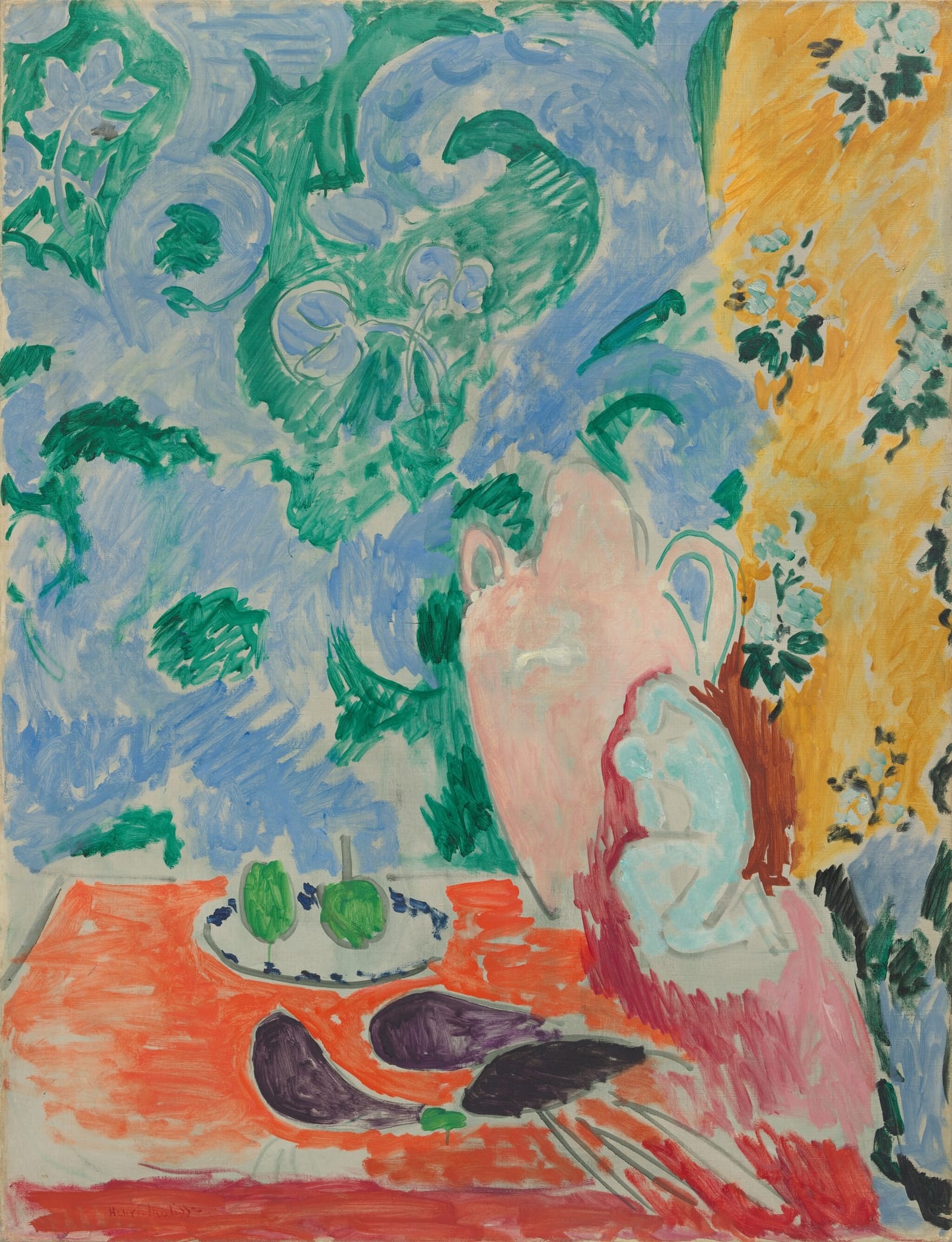
Still Life with Aubergines
1911
A tabletop arrangement of eggplants and other objects rendered with strong outlines, simplified shapes, and a vibrant but controlled palette. The painting is important as an example of Matisse’s still-life practice where decorative pattern, color harmonies, and compositional balance take precedence over illusionistic detail. Notice the rhythmic placement of forms, the contrast between organic shapes and patterned surfaces, and how color organizes the picture plane.
Brooklyn Museum
Even without paintings by Matisse in its permanent collection, the Brooklyn Museum matters because it presents contexts that illuminate Matisse’s sources and influence — its holdings in textiles, global decorative arts, and prints highlight the patterns, motifs, and non‑Western art objects that Matisse collected and referenced. Exhibitions and loans at Brooklyn often stage dialogues between decorative practice and modernist painting, helping visitors understand how Matisse synthesized craft, color, and pattern into his pictorial vocabulary.
Whitney Museum of American Art
Although the Whitney’s collection contains no Matisse paintings, the museum is important for seeing Matisse’s impact on American artists: nearby galleries chart how American modernists and postwar painters responded to his color theories and compositional freedoms. Exhibitions and interpretive materials at the Whitney frequently situate Matisse’s formal innovations as a point of reference for major 20th‑century American movements, making it a useful place to measure his international influence.
The Frick Collection
With no Matisse paintings on view, the Frick still matters because its intimate, Old‑Master dominated rooms offer a powerful counterpoint for understanding Matisse’s radical modernism: seeing his concerns about portraiture, line, and composition against the Frick’s pre‑modern European portraits clarifies what he was breaking with and reimagining. The Frick’s exhibitions and loans sometimes bring drawings, prints, or works on paper into conversation with the historic paintings, offering a close‑up lesson in how Matisse simplified form while retaining classical composure.