Henri Matisse Paintings in Paris — Where to See Them
Paris is essential for encountering Henri Matisse because the city concentrates roughly 10 of his paintings on permanent display in a single museum, the Musée de l'Orangerie (10 paintings), allowing you to compare his use of color and composition up close without hopping between institutions. Visiting the Orangerie gives a practical, focused encounter with Matisse’s work in the context of Paris’s historical art scene and nearby collections.
At a Glance
- Museums
- Musée de l'Orangerie
- Highlight
- See Matisse's vibrant canvases at Musée de l'Orangerie
- Best For
- Art lovers and fans of modern French painting
Musée de l'Orangerie
The Orangerie matters for Matisse because it preserves a concentrated group of roughly ten Matisse paintings from the famed Walter–Guillaume collection, allowing visitors to see his work alongside key contemporaries (Monet is, of course, the anchor of the site) and to trace his use of color and composition within the same intimate museum sequence. The compact, natural‑light galleries at the Orangerie encourage close, comparative looking—you can see how Matisse’s canvases interact with neighboring works and with the museum’s focus on modern French painting, which clarifies his role in shaping 20th‑century colorism and modernist interior space.
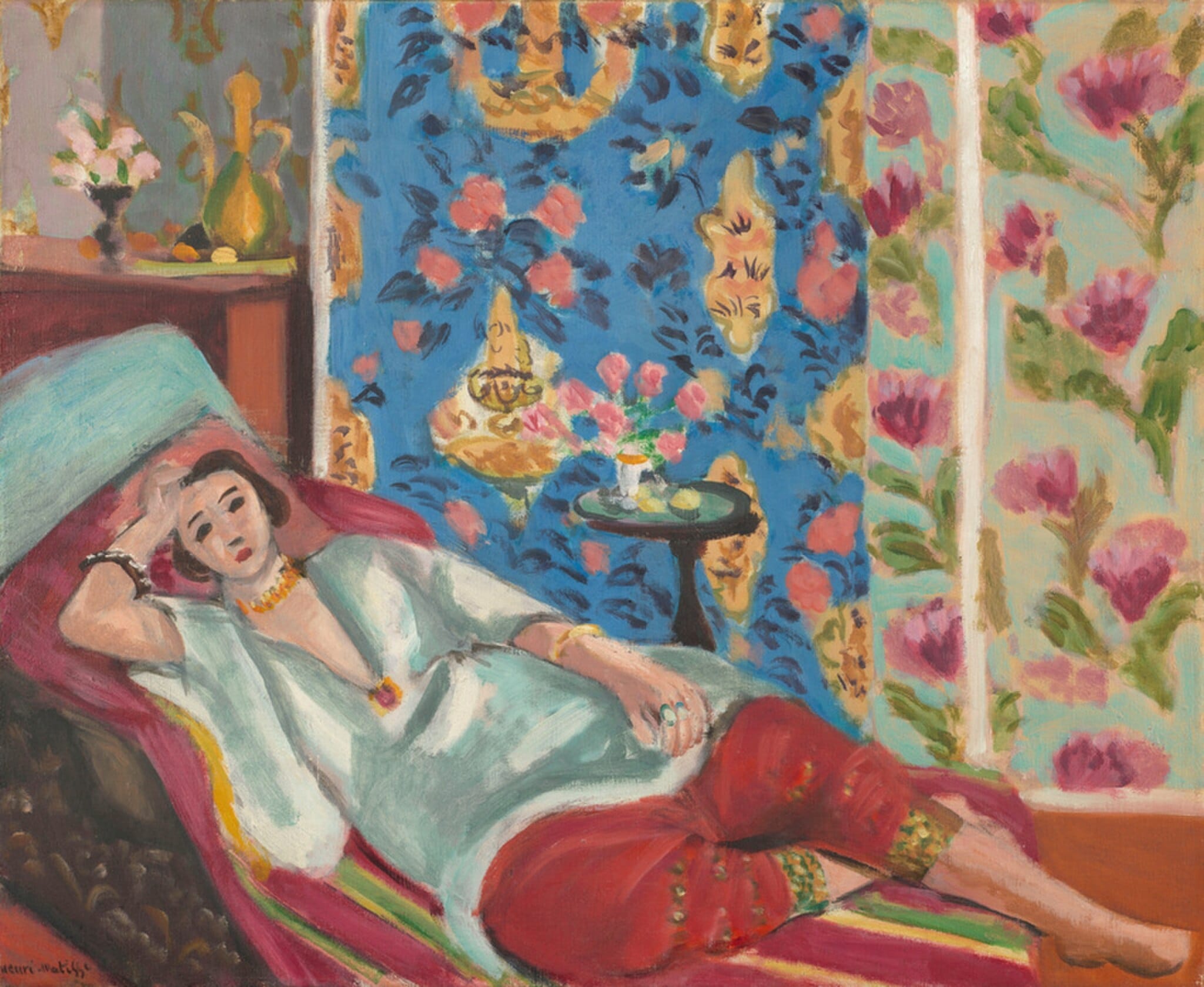
Odalisque à la culotte rouge
1924
A reclining odalisque dressed in a vivid red pantaloons, set against simplified patterns and warm color fields. The work is significant as an example of Matisse’s late interest in exoticized, classical subject matter and his mastery of color harmony to convey sensuality without excessive detail. Look for the confident, flowing contour lines, the contrast between the red garment and calmer background tones, and the rhythmic flattening of space.
Must-see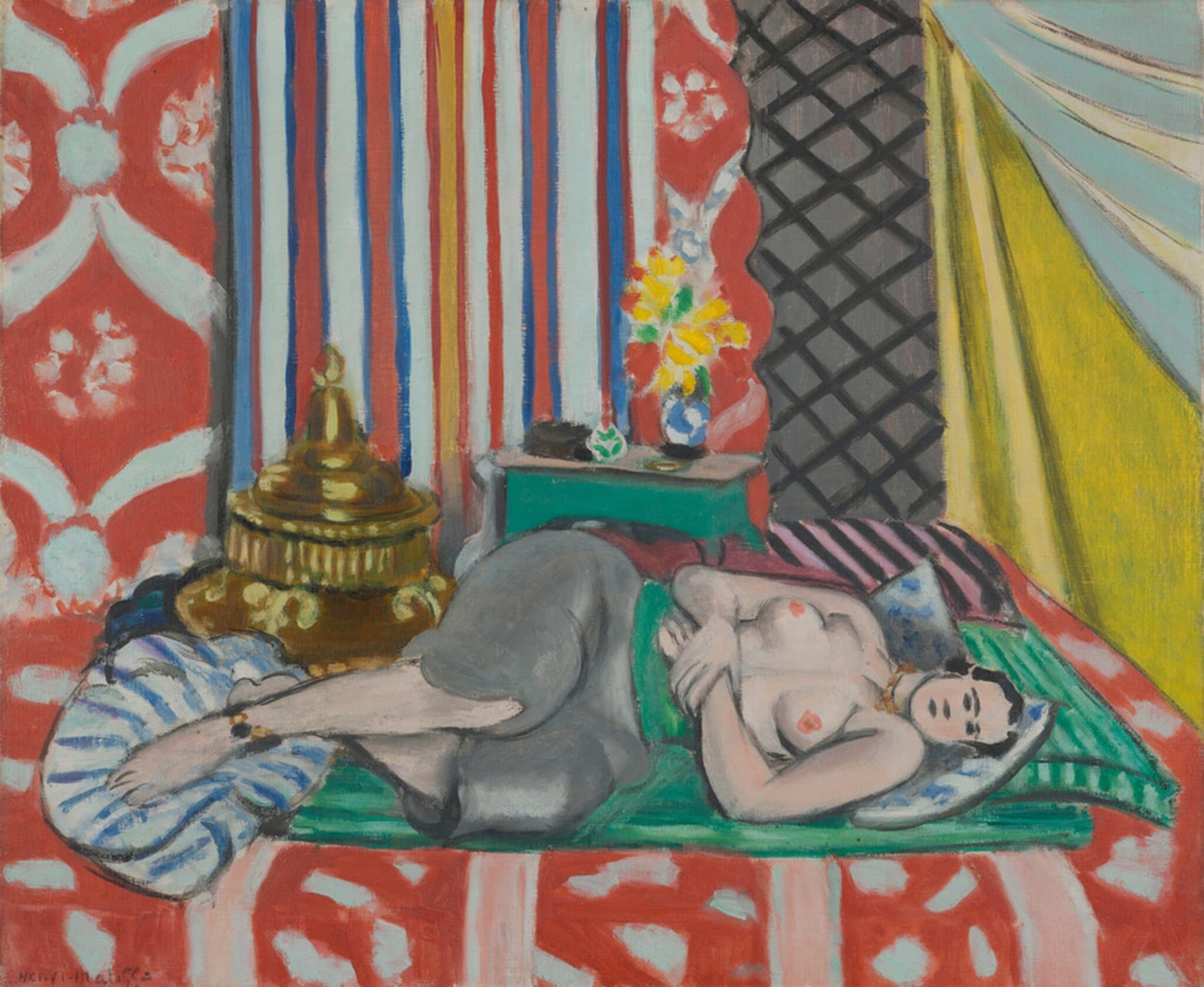
Odalisque à la culotte grise
1927
This painting shows a relaxed odalisque wearing gray pantaloons, posed in an intimate interior with decorative fabrics. It reflects Matisse’s continuing refinement of the odalisque theme—where color, pattern, and pose replace narrative—as well as his economy of form in the late 1920s. Attend to the subtle shifts in gray and flesh tones, the pattern relationships between textiles and wall surfaces, and the elegant, simplified silhouette.
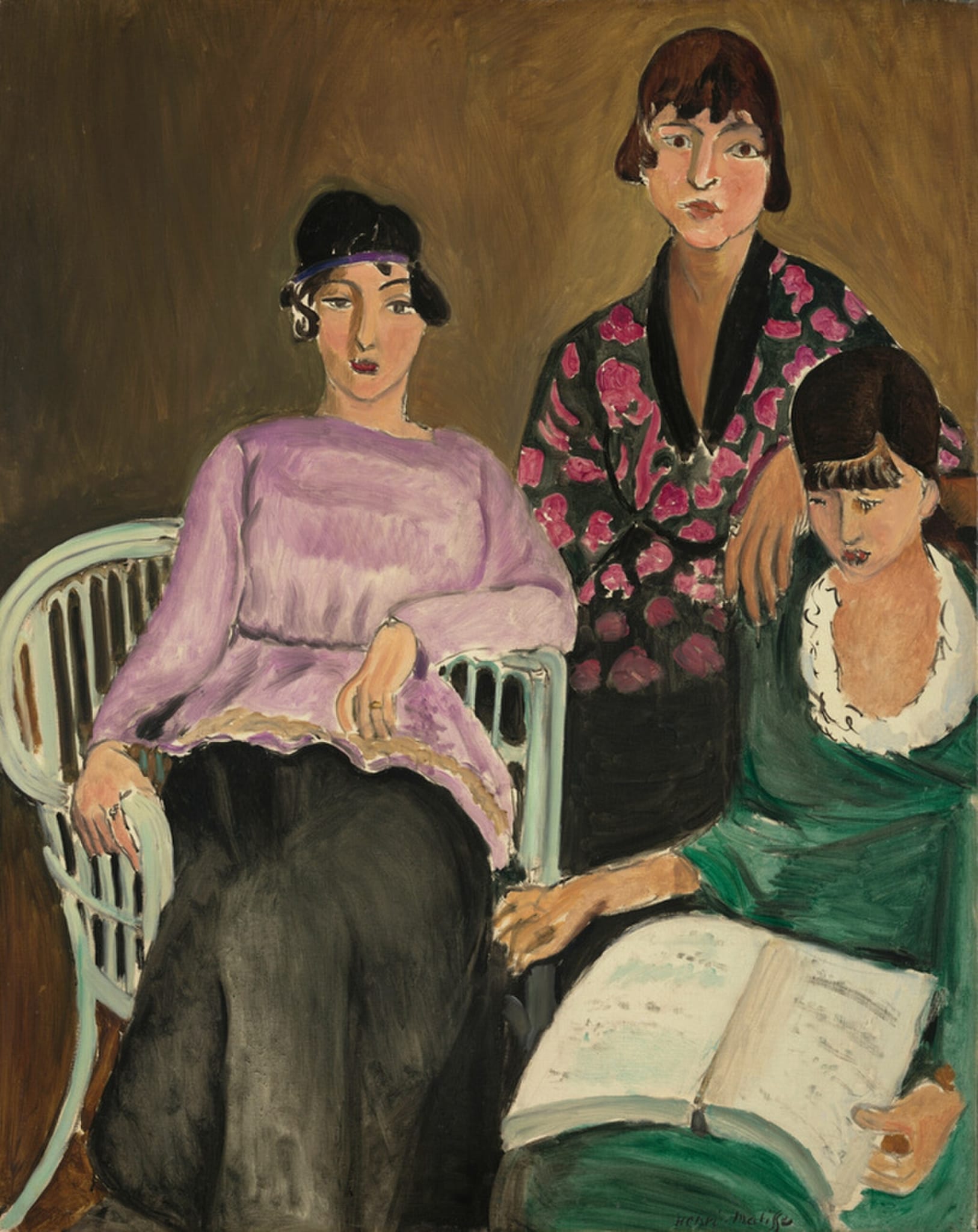
Les Trois Soeurs
1917
Three seated women form a calm, triangular arrangement, their figures articulated through harmonious colors and gentle outlines. The painting is important for its balance of portraiture and decorative composition, showing Matisse’s ability to merge human presence with ornamental space during and after World War I. Notice the compositional geometry linking the figures, the interplay of warm and cool hues, and the way patterns integrate the subjects into their environment.
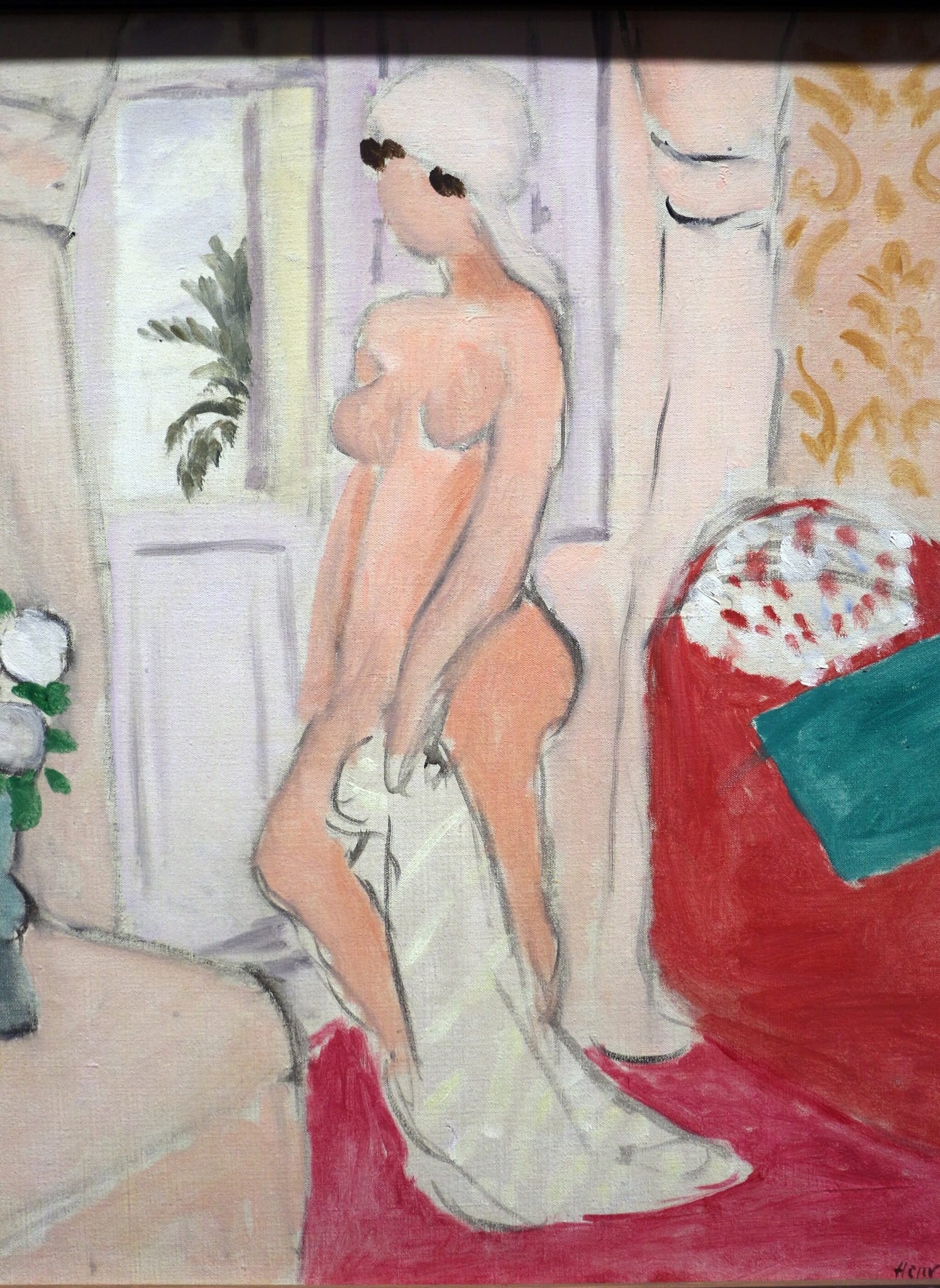
La Jeune Fille et le vase de fleurs
1920
A young woman sits beside a prominently placed vase of flowers, the two elements forming a lyrical dialogue of color and shape. The work is significant for its intimate scale and for demonstrating Matisse’s sensitivity to still life within figure painting—how objects and sitter create a unified decorative plane. Look for the delicate balance between the floral motif and the figure, the brushwork that flattens spatial depth, and the subtle color echoes linking skin, fabric, and blossoms.
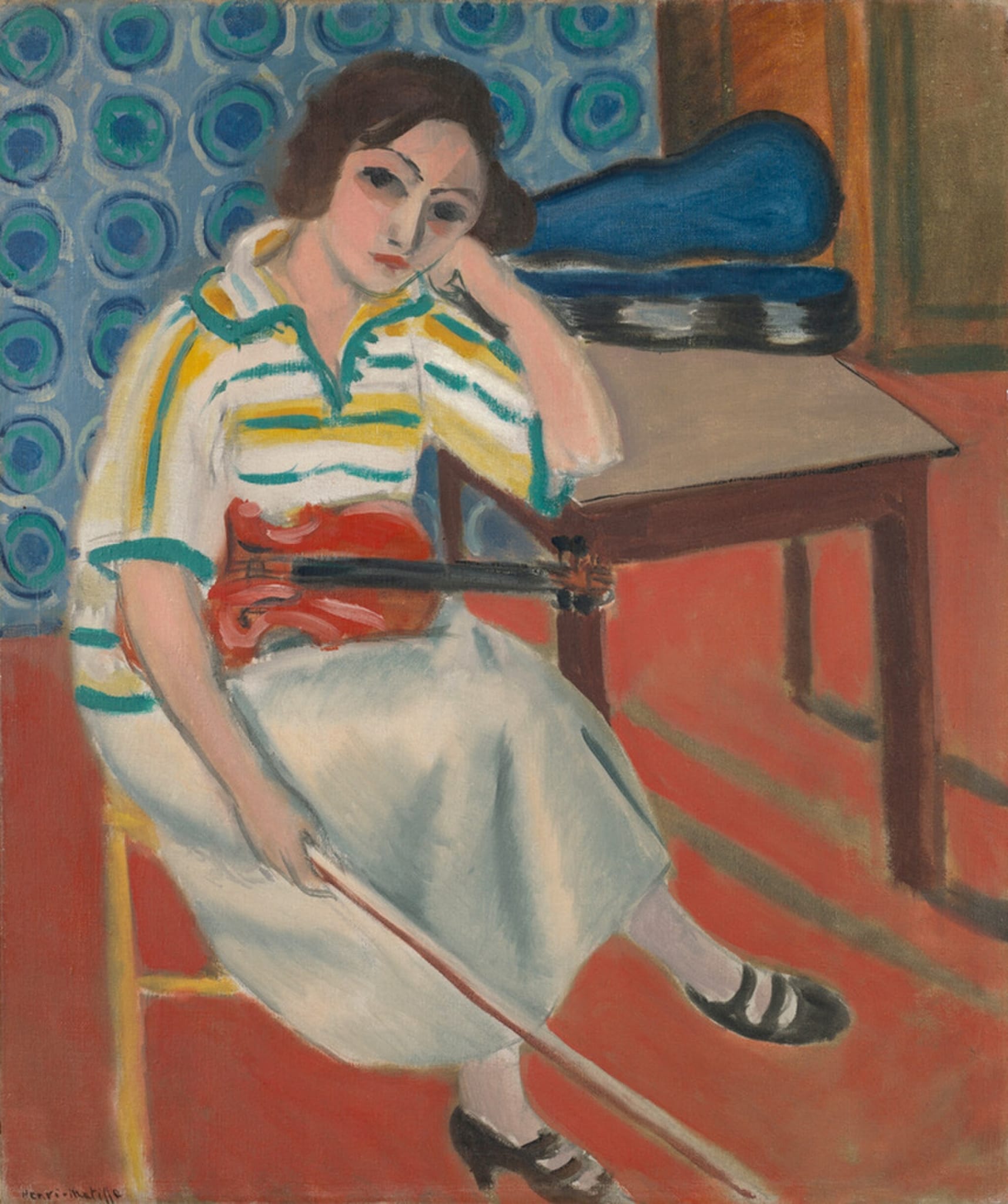
Femme au violon
1921
A seated woman holds a violin, the instrument echoing the curves of her body and the surrounding composition. This painting captures Matisse’s exploration of musical analogy—rhythm and harmony rendered visually—and his focus on elegant line and color relationships. Observe how the violin’s shape reinforces the figure’s posture, the simplified modeling of the face and hands, and the patterned background that frames the subject like a stage.
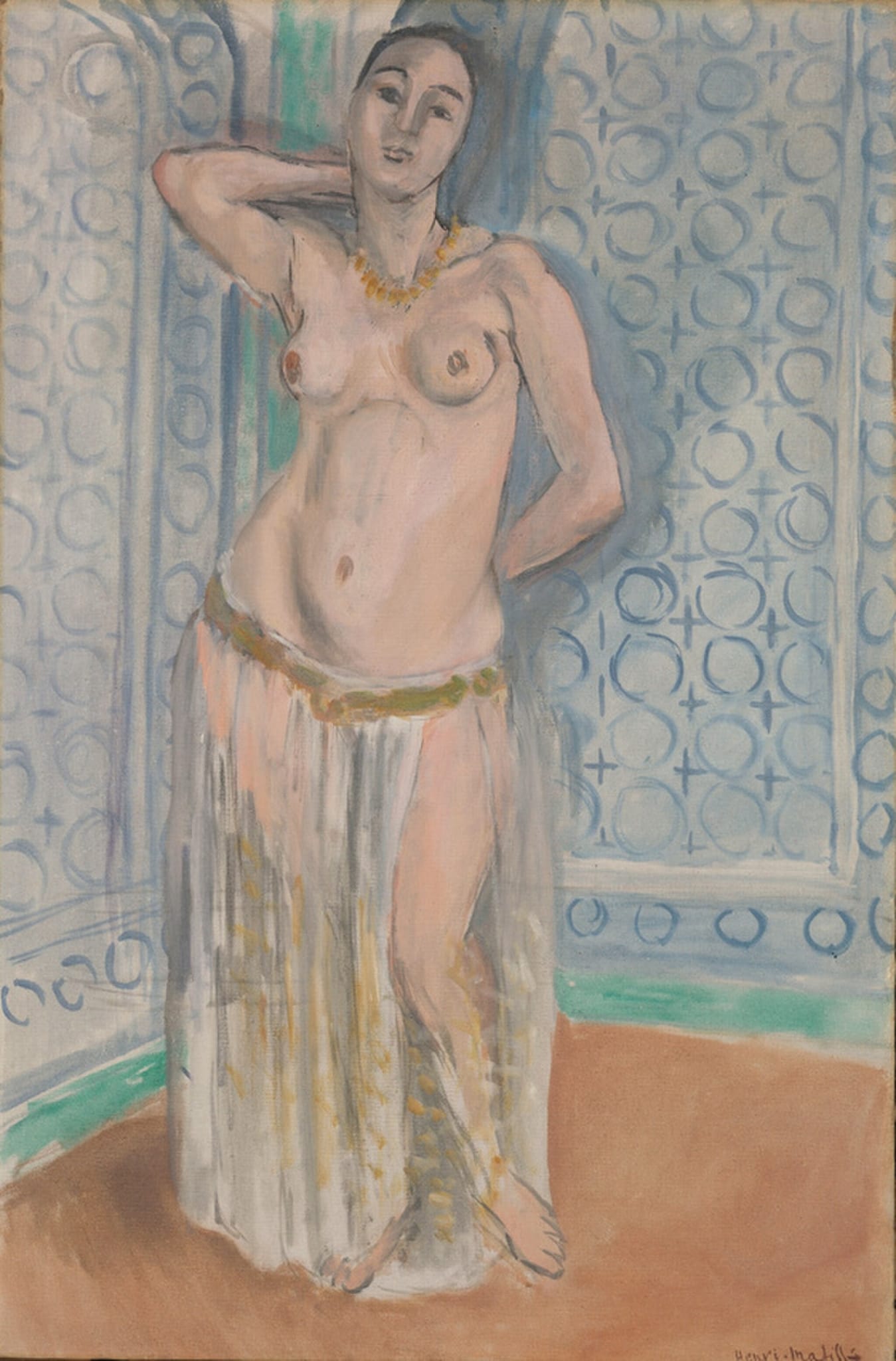
Odalisque bleue
1921
Rendered in a cool, predominantly blue palette, this odalisque reclines amid decorative textiles, her form defined by sweeping contour and calm color contrasts. The piece is significant for its stylistic clarity: Matisse reduces detail to emphasize color temperature and compositional harmony, producing a meditative, sensual image. Look for the tonal unity created by blues, the rhythmic repetition of curved shapes, and the way pattern and negative space shape the figure.
Must-see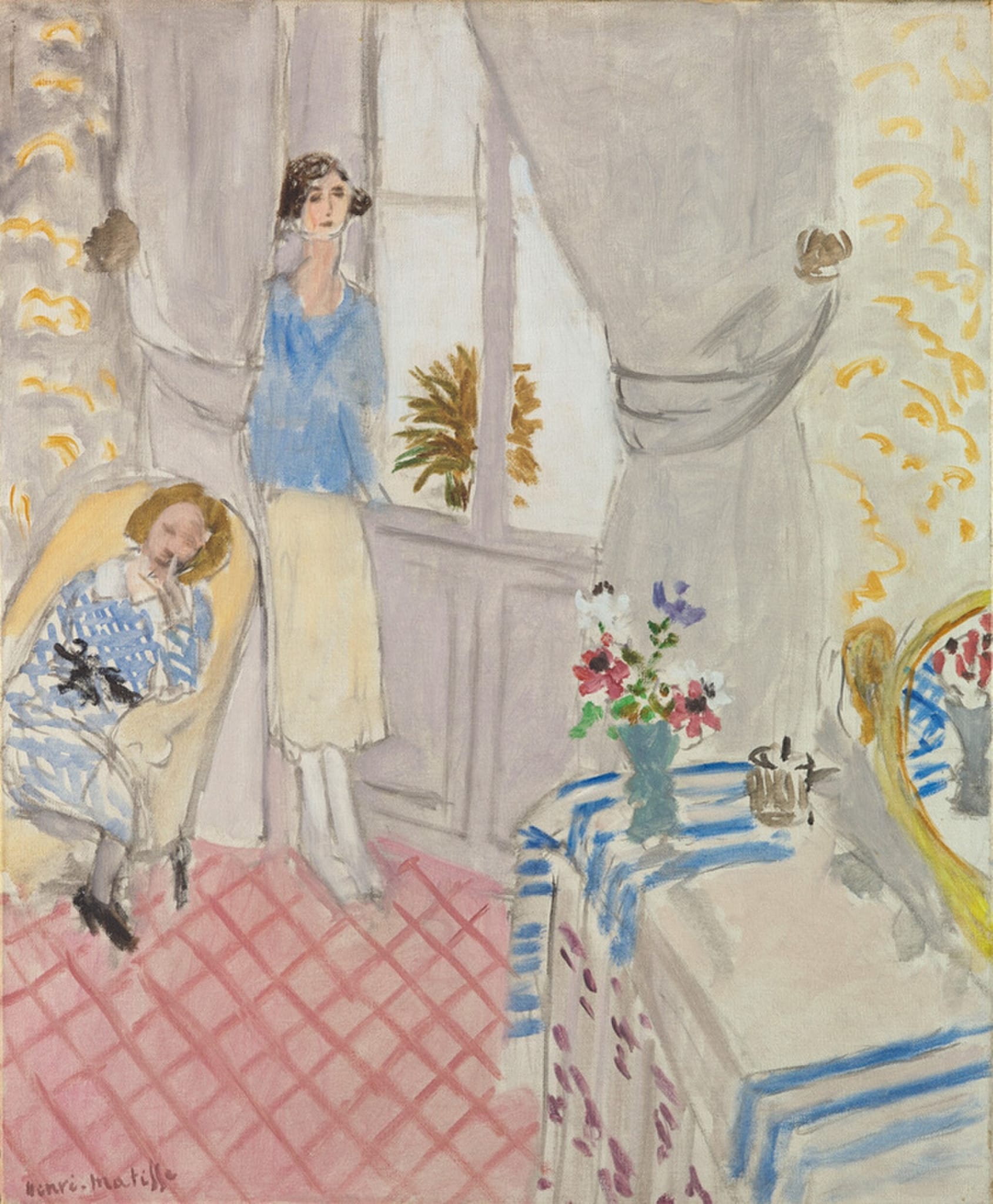
Le Boudoir
1921
An intimate interior scene depicting a woman in a boudoir surrounded by textiles and furnishings rendered as pattern and color fields. The painting is notable for Matisse’s treatment of domestic space as a decorative environment where figure and setting are visually inseparable. Pay attention to the layering of patterns, the flattened sense of depth, and how small color accents guide the eye through the composition.
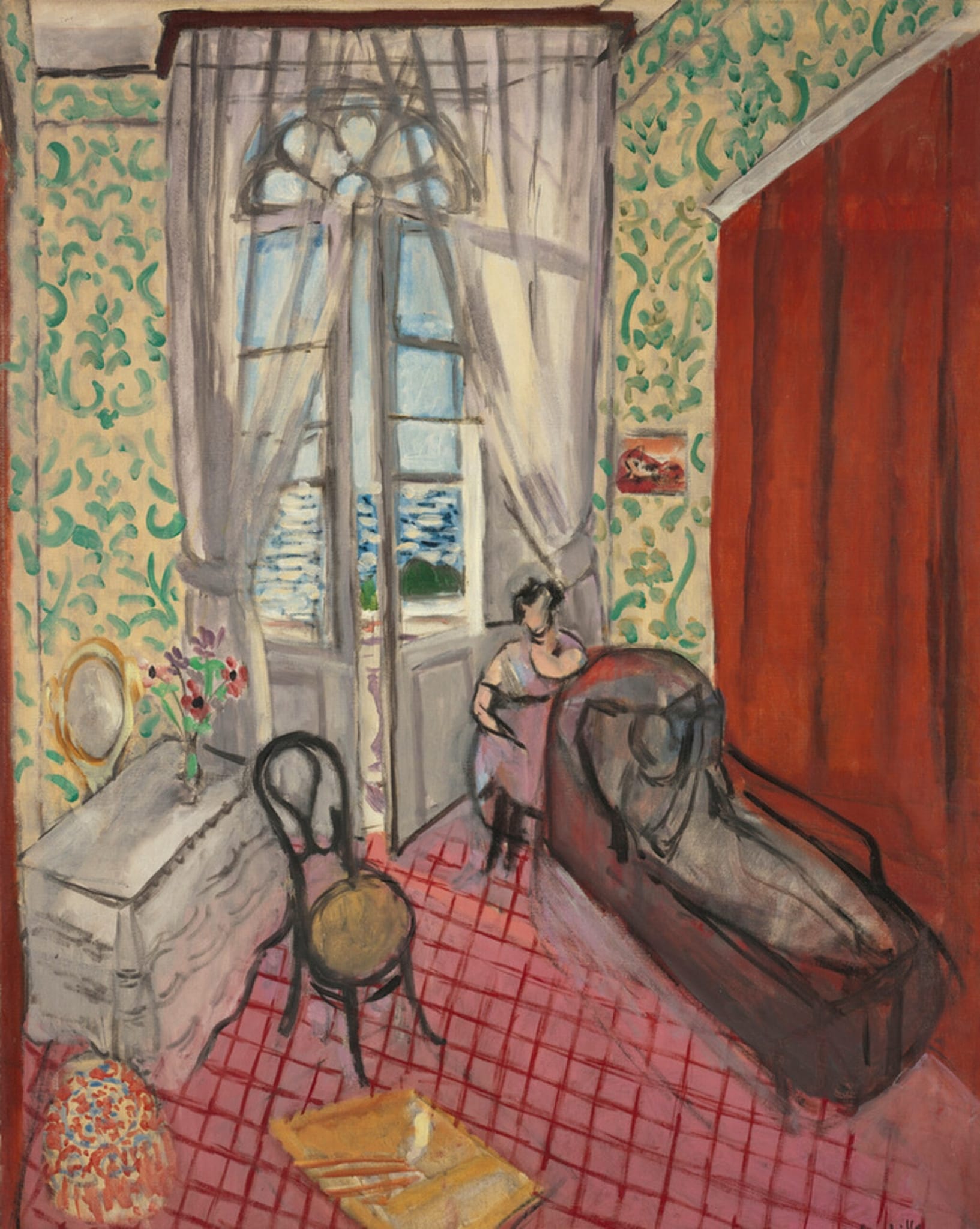
Femmes au canapé
1921
Two women are posed on a sofa, their gestures and garments forming a composed study of posture and decorative motif. This work is important for the way Matisse synthesizes portraiture and interior décor into a single harmonious surface, emphasizing elegance over narrative. Notice the careful arrangement of the figures on the couch, the repetition of curvilinear forms, and the contrast between fabric patterns and smooth flesh tones.
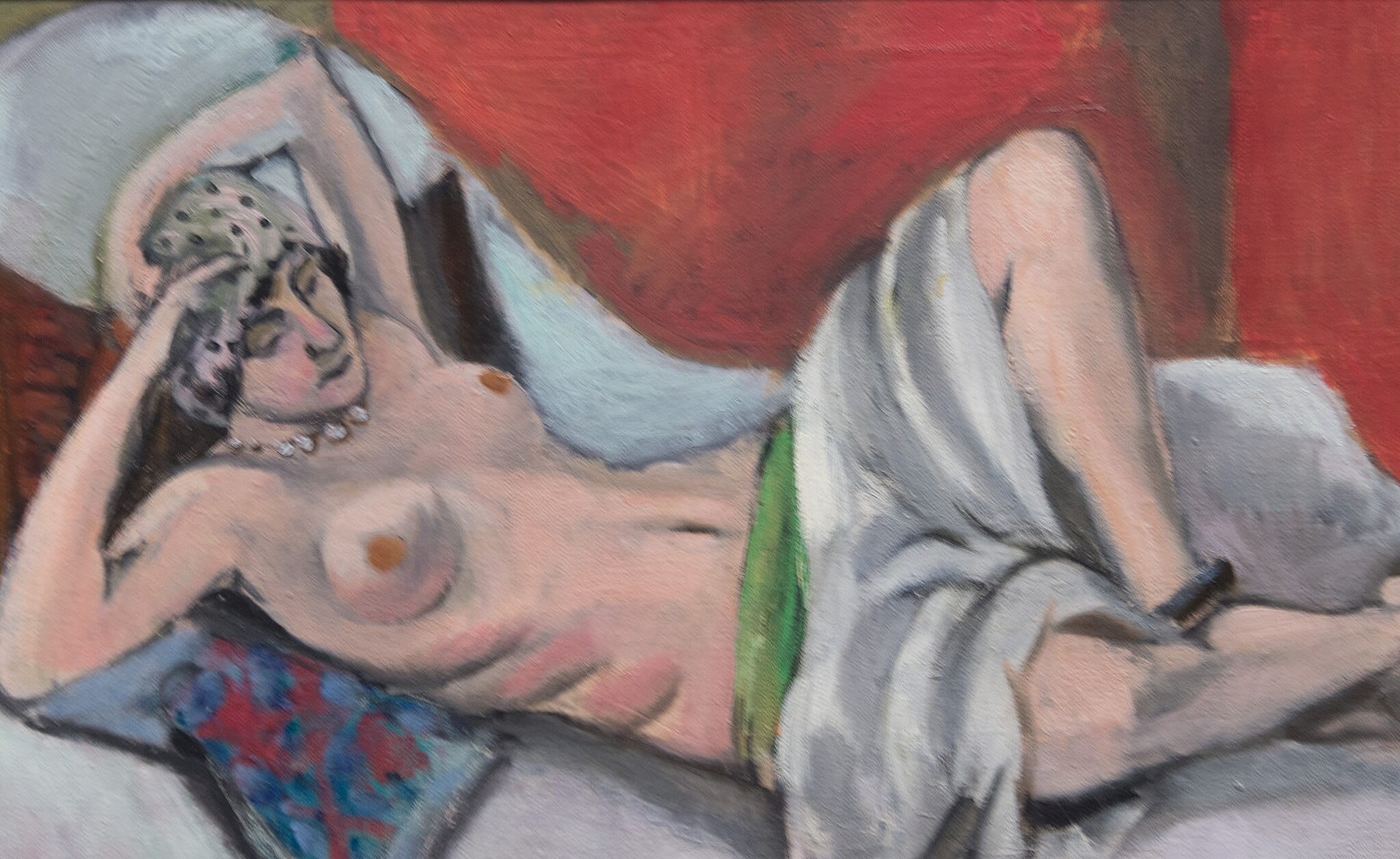
Nu drapé étendu
1923
A reclining nude partially covered by a drape, rendered with broad, fluid contours and a restrained palette. The work is significant as a study in classical repose filtered through Matisse’s modern sensibility—simplifying anatomy to emphasize line, rhythm, and the tactile quality of fabric. Observe the interaction between the drapery and the body, the economy of stroke that defines volume, and the calming spatial compression that brings figure and cloth into unity.
Must-see