Michelangelo Paintings in Rome — Where to See Them
Rome matters for experiencing Michelangelo because it lets you see his painted work in the same architectural and sculptural contexts he helped create and reshape. Approximately 2 paintings are on permanent display across one museum—the Vatican Museums (Musei Vaticani)—so a visit there lets you view his painted frescoes in the Sistine Chapel alongside the sculptures and spaces that define his career.
At a Glance
- Museums
- Vatican Museums (Musei Vaticani)
- Highlight
- See Michelangelo's Sistine Chapel ceiling and Last Judgment in the Vatican Museums
- Best For
- Art lovers, Renaissance enthusiasts, religious and history visitors
Vatican Museums (Musei Vaticani)
The Vatican is essential for experiencing Michelangelo because it houses his two most monumental painted works: the Sistine Chapel ceiling (1508–1512) and The Last Judgment on the altar wall (1536–1541). These frescoes are not isolated paintings but immersive, theologically charged programs that reveal Michelangelo’s sculptural approach to the human figure, his evolving style, and his central role in High Renaissance and Mannerist art; seeing them in situ—on the chapel’s curved vault and altar wall—lets you read scale, perspective, and the painted architecture exactly as he intended.
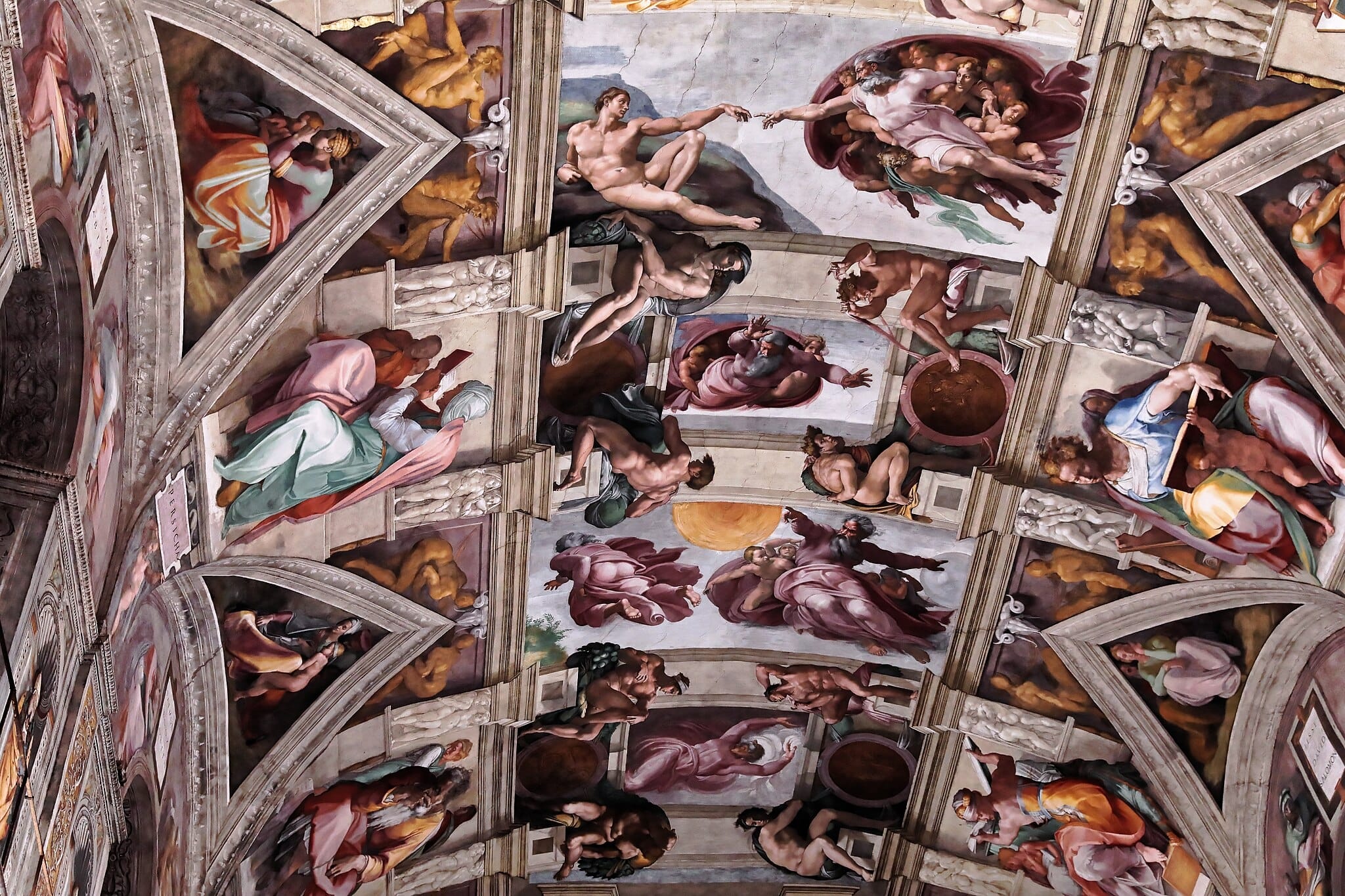
Sistine Chapel ceiling
1508-1512
A vast fresco cycle covering the vault of the Sistine Chapel that depicts central scenes from Genesis—most famously The Creation of Adam—surrounded by prophets, sibyls, ancestors of Christ, and ornamental figures. It is significant as a revolutionary synthesis of sculptural anatomy, narrative complexity, and humanist theology that redefined High Renaissance art and Michelangelo’s status as a master; the scale and ambitious integration of figures into the architectural space were unprecedented. Viewers should look for the dynamism of the human body (note the power and tension in muscles and poses), the iconic fingertips of Adam and God in The Creation of Adam, and the way smaller narrative panels and supporting figures create a coherent visual program across the vault.
Must-see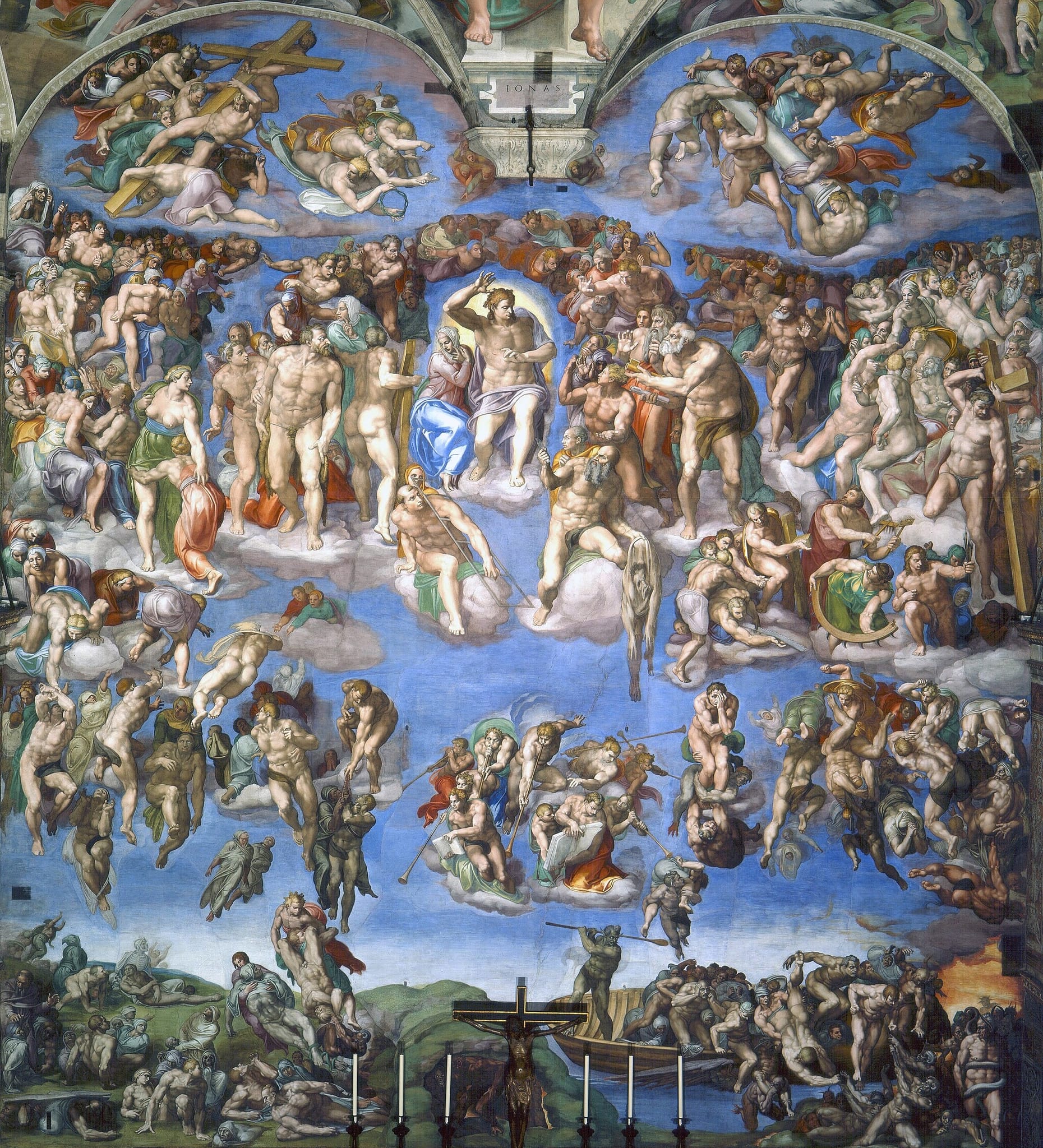
The Last Judgment
1536-1541
A monumental fresco on the Sistine Chapel’s altar wall portraying the Second Coming of Christ, the resurrection of the dead, and the final separation of the blessed and the damned, with Christ at the center as a stern, powerful judge. Its significance lies in its dramatic emotional intensity, dramatic foreshortening, and its reflection of Counter-Reformation anxieties and Michelangelo’s late style—rawer, more muscular, and more expressive than his earlier ceiling. When viewing, focus on Christ’s commanding central pose and gesture, the spiraling composition of rising and falling figures, and the expressive faces and contorted bodies that convey salvation, despair, and movement across the scene.
Must-see