Pierre-Auguste Renoir Paintings in London — Where to See Them
London matters for experiencing Pierre-Auguste Renoir because you can see about five of his paintings on permanent display across just two museums — the National Gallery (2 works) and The Courtauld (3 works) — making a focused, walkable encounter with his art. The Courtauld’s intimate rooms let you study Renoir’s brushwork and domestic portraits up close, while the National Gallery’s hangings place his luminous figure painting in dialogue with earlier European masters, revealing how his approach to color and composition reshaped portraiture.
At a Glance
- Museums
- National Gallery, Courtauld Gallery (The Courtauld)
- Highlight
- See Renoir's intimate portraits and vibrant brushwork at The Courtauld.
- Best For
- Impressionism lovers, students, and anyone seeking classic French painting
National Gallery
The National Gallery’s small but carefully selected Renoir holdings let visitors compare his work directly with earlier French academic painting and with other Impressionists in the same galleries, which highlights how Renoir balanced formal composition with painterly light. Because the Gallery integrates his paintings into chronological and stylistic narratives rather than isolating them, you can see Renoir’s development in relation to his peers and predecessors within the wider story of 19th-century French art.
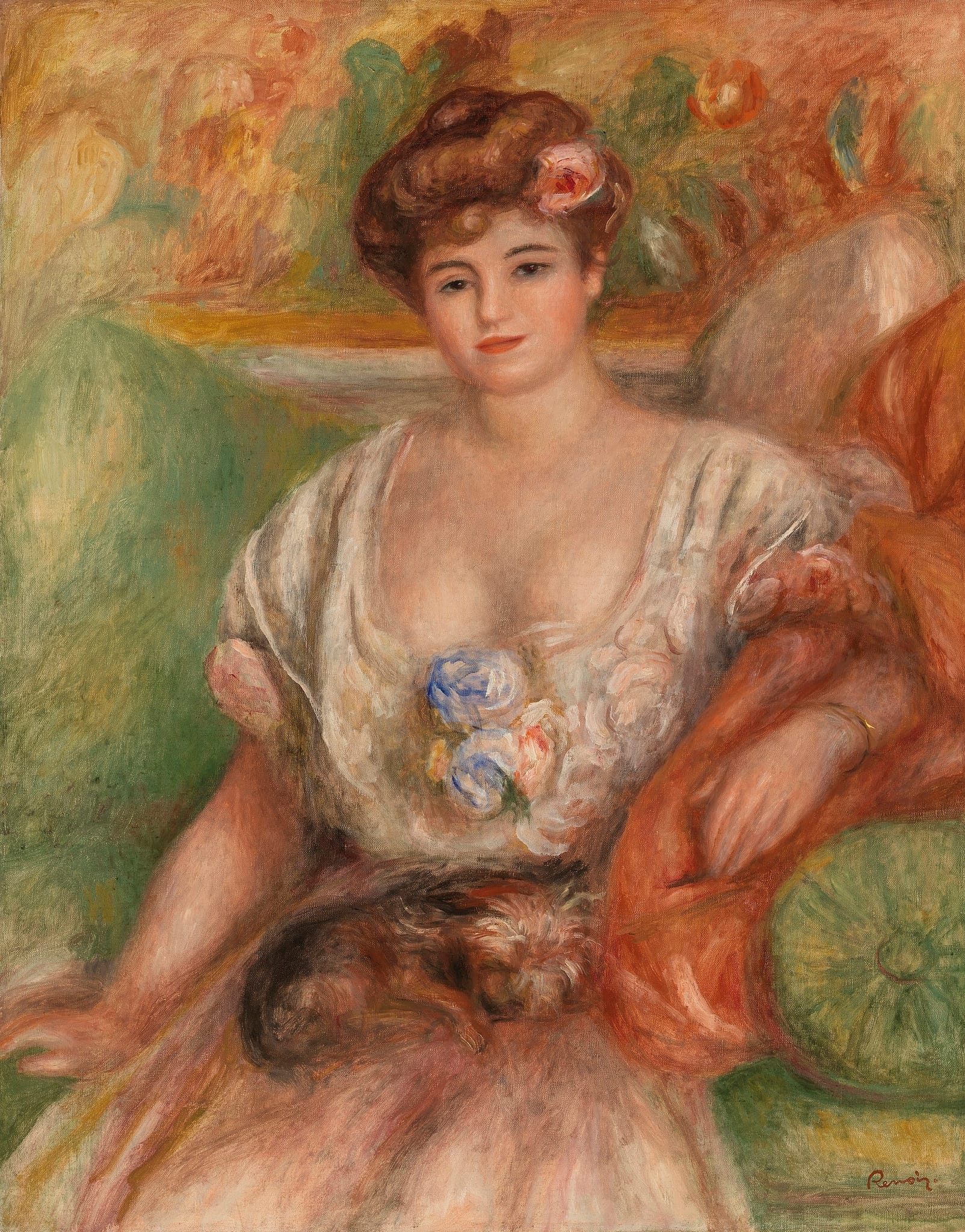
Misia Sert
1904
A refined portrait of Misia Sert, showing Renoir’s late-career interest in elegance and warmth: she is presented seated, wearing fashionable dress and a composed expression that blends intimacy with theatricality. Significant as a portrait of an influential Parisian salon hostess and friend of many artists, it demonstrates Renoir’s mature handling of luminous skin tones and soft, sensual brushwork. Viewers should look for the rich, warm palette, the delicate modeling of the face and hands, and the painterly, textured background that frames her like a stage set.
Must-see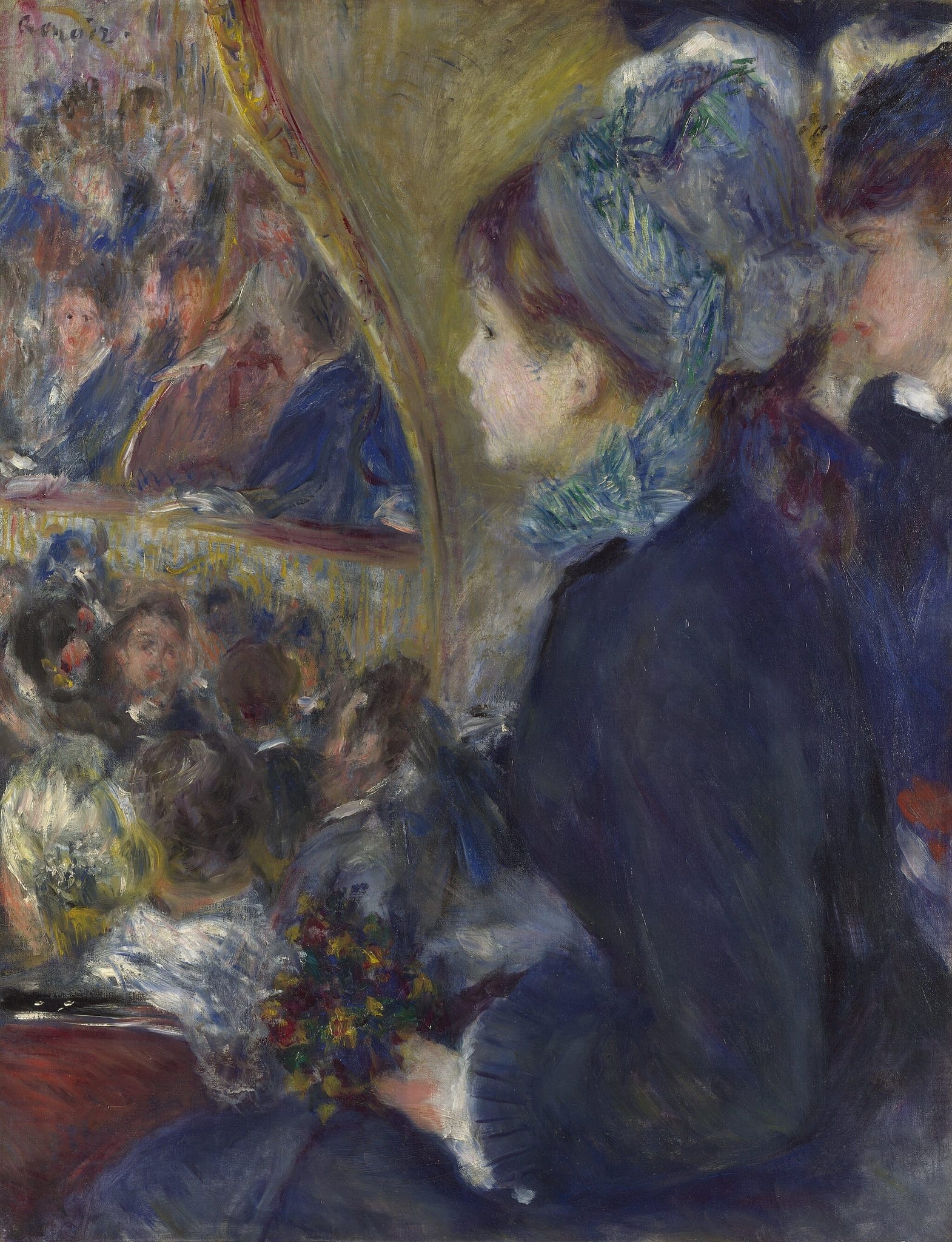
At the Theatre (La Première Sortie)
1876-1877
This lively scene captures the social ritual of an evening at the theatre, focusing on fashionable Parisians in their first public outing of the season and emphasizing color, pattern, and the play of gaslight. Important to Impressionism for its depiction of modern urban leisure and its exploration of light effects and immediacy, the work balances portrait-like attention to figures with a sketch-like sense of atmosphere. Notice the contrasts between the illuminated faces and darker auditorium, the quick, rhythmic brushstrokes, and the careful rendering of fabrics and accessories that signal social status.
Must-seeCourtauld Gallery (The Courtauld)
The Courtauld’s intimate scale and focus on Impressionist and post‑Impressionist work make it one of the best places to experience Renoir up close: the museum’s lighting and close viewing distances let you appreciate his brushwork, glazing, and color harmonies in detail. Because the Courtauld arranges its Impressionist collection to encourage close visual comparison, Renoir’s paintings are shown in direct dialogue with contemporaries, which reveals subtleties of technique and temperament that can be missed in larger institutions.
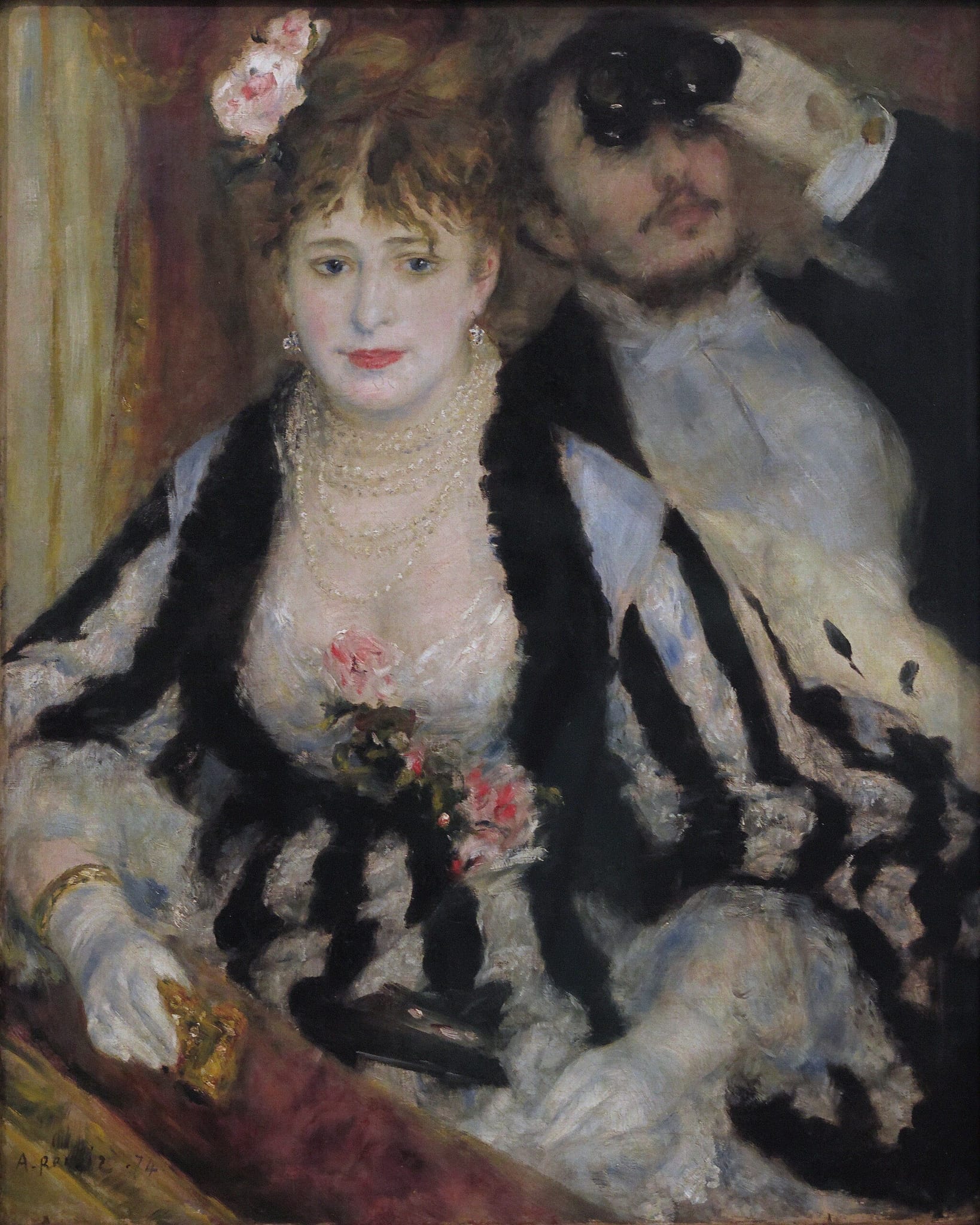
La Loge
1874
Masterpiece of Impressionism exploring spectatorship and fashion in a theatre box.
Must-see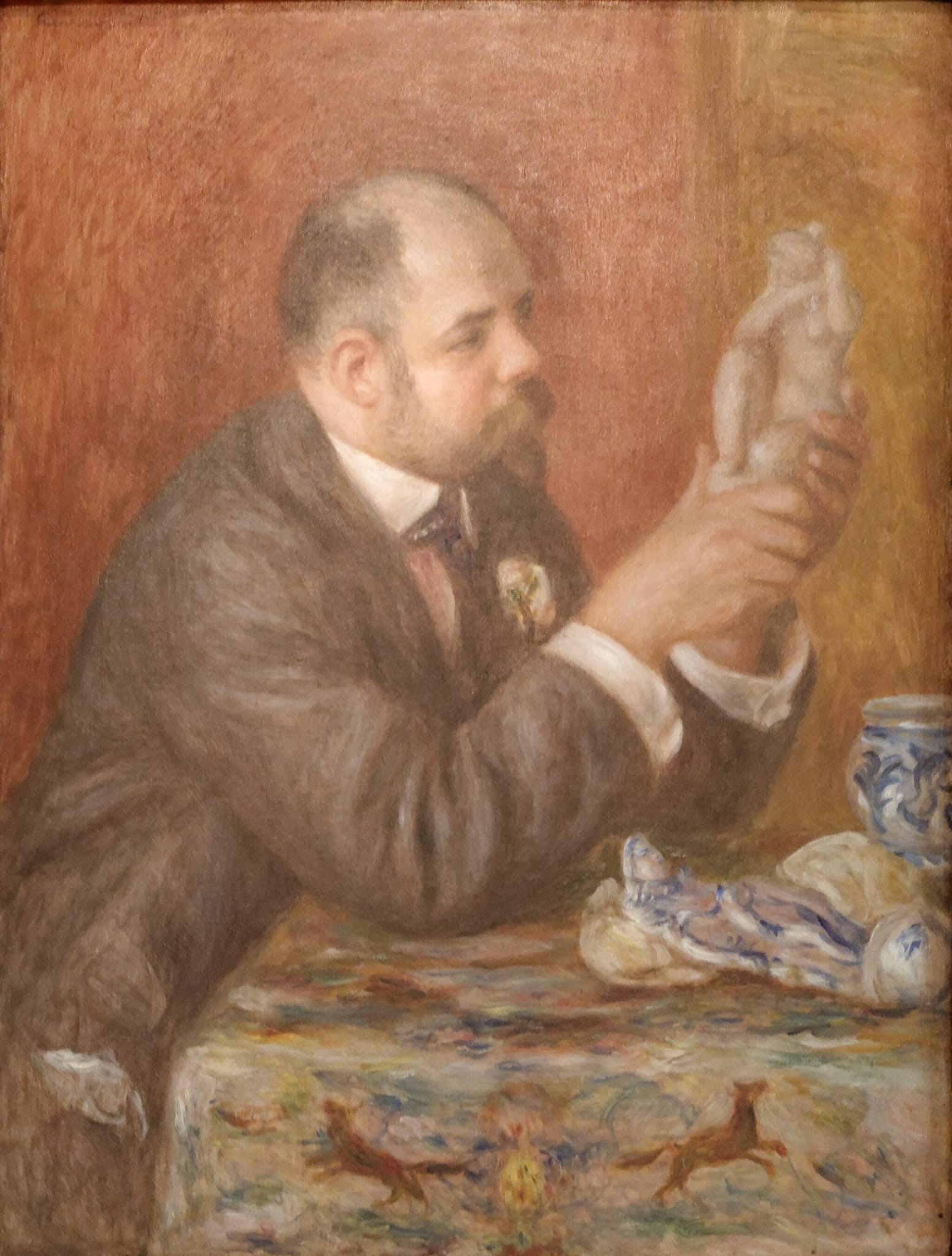
Portrait of Ambroise Vollard
1908
Notable late portrait of the influential dealer Ambroise Vollard, showing Renoir’s mature style.
Must-see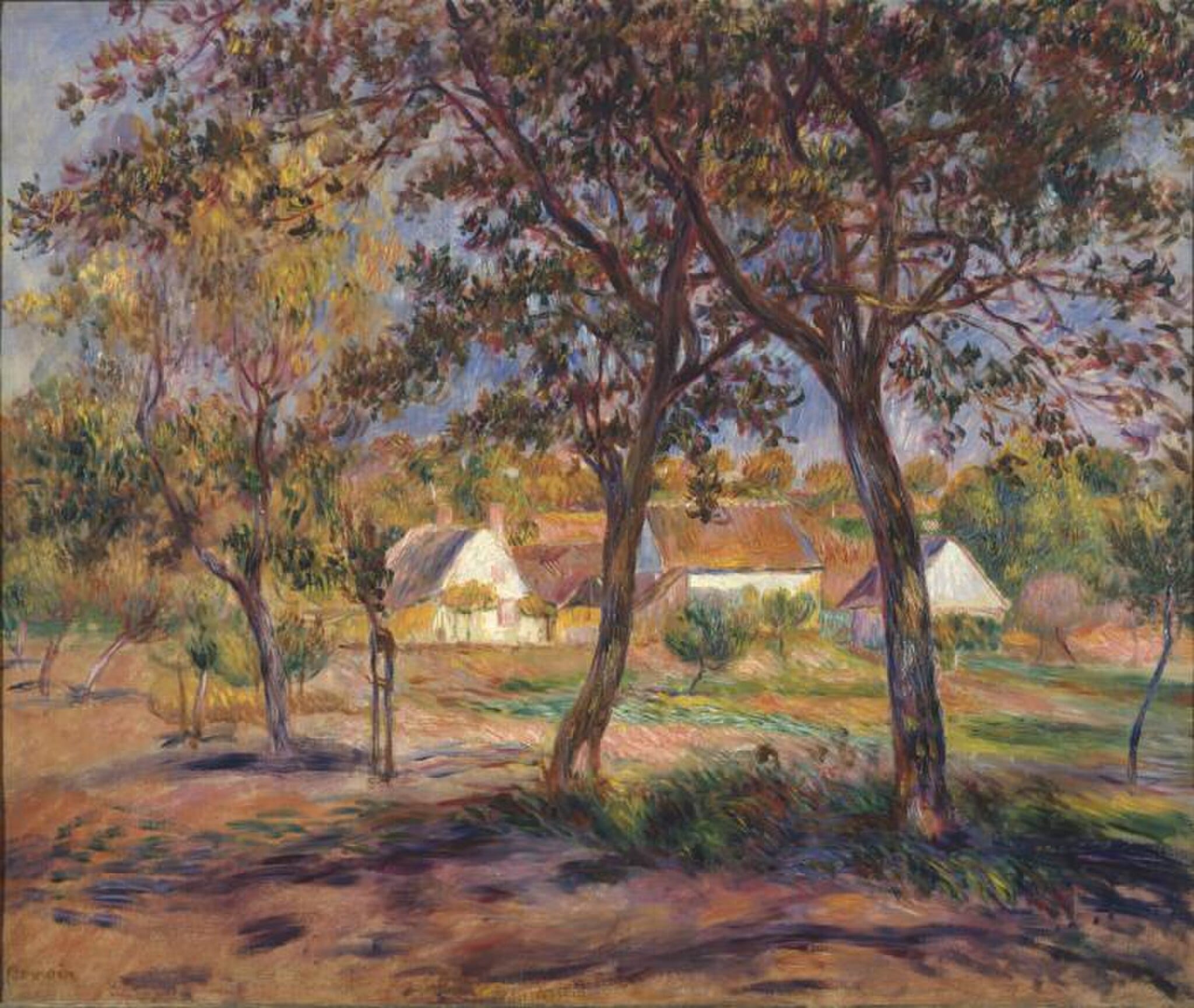
Outskirts of Pont-Aven
Outskirts of Pont‑Aven represents a Breton landscape on the edges of the artists’ colony at Pont‑Aven, with cottages and country lanes rendered in sunlit, richly textured paint. The painting is important as evidence of Renoir’s visits to Brittany in the late 1880s and his engagement with regional subject matter outside Paris, showing how Impressionist technique adapts to rural scenery. Viewers should note the handling of light across roofs and foliage, the sense of place conveyed by the small architectural details, and the brushwork that unifies forms through color and atmosphere. ([gallerycollections.courtauld.ac.uk](https://gallerycollections.courtauld.ac.uk/object-p-1978-pg-339?utm_source=openai))