Pierre-Auguste Renoir Paintings in Paris — Where to See Them
Paris houses approximately 7 of Pierre-Auguste Renoir's paintings on permanent display across four museums: Musée Marmottan Monet (4), Musée du Louvre (3), with Musée d'Orsay and Musée Jacquemart-André currently showing none. That concentration — four works in the Impressionism-focused Marmottan and three in the national collection at the Louvre — makes Paris the place to see how Renoir's intimate, light-filled canvases fit both the movement's heart and the academic narrative that later embraced him, so prioritize Marmottan and the Louvre on a short itinerary.
At a Glance
- Museums
- Musée d'Orsay, Musée Marmottan Monet, Musée du Louvre, Musée Jacquemart-André
- Highlight
- See Renoir masterpieces at Musée Marmottan Monet.
- Best For
- Impressionism lovers and museum-goers seeking iconic French paintings
Musée d'Orsay
Although your list shows no Renoir paintings currently in the Musée d'Orsay, the museum is central to understanding Renoir because it frames his career within the larger story of French Impressionism and the break with the academic salon. Orsay’s displays, labels, and comparative hangings often place Renoir’s themes — modern life, portraiture, and the treatment of light and color — alongside works by Monet, Degas and Manet, which helps visitors see what was radical or shared in Renoir’s approach.
Musée Marmottan Monet
With a small but significant group of Renoir paintings in its collection, Marmottan places Renoir inside the domestic and collector-focused world of early Impressionism. Seeing his canvases here — often hung near major Monet works and private 19th‑century portraits — helps you appreciate Renoir’s palette and brushwork in an intimate, salon-style setting similar to how collectors first encountered his art.
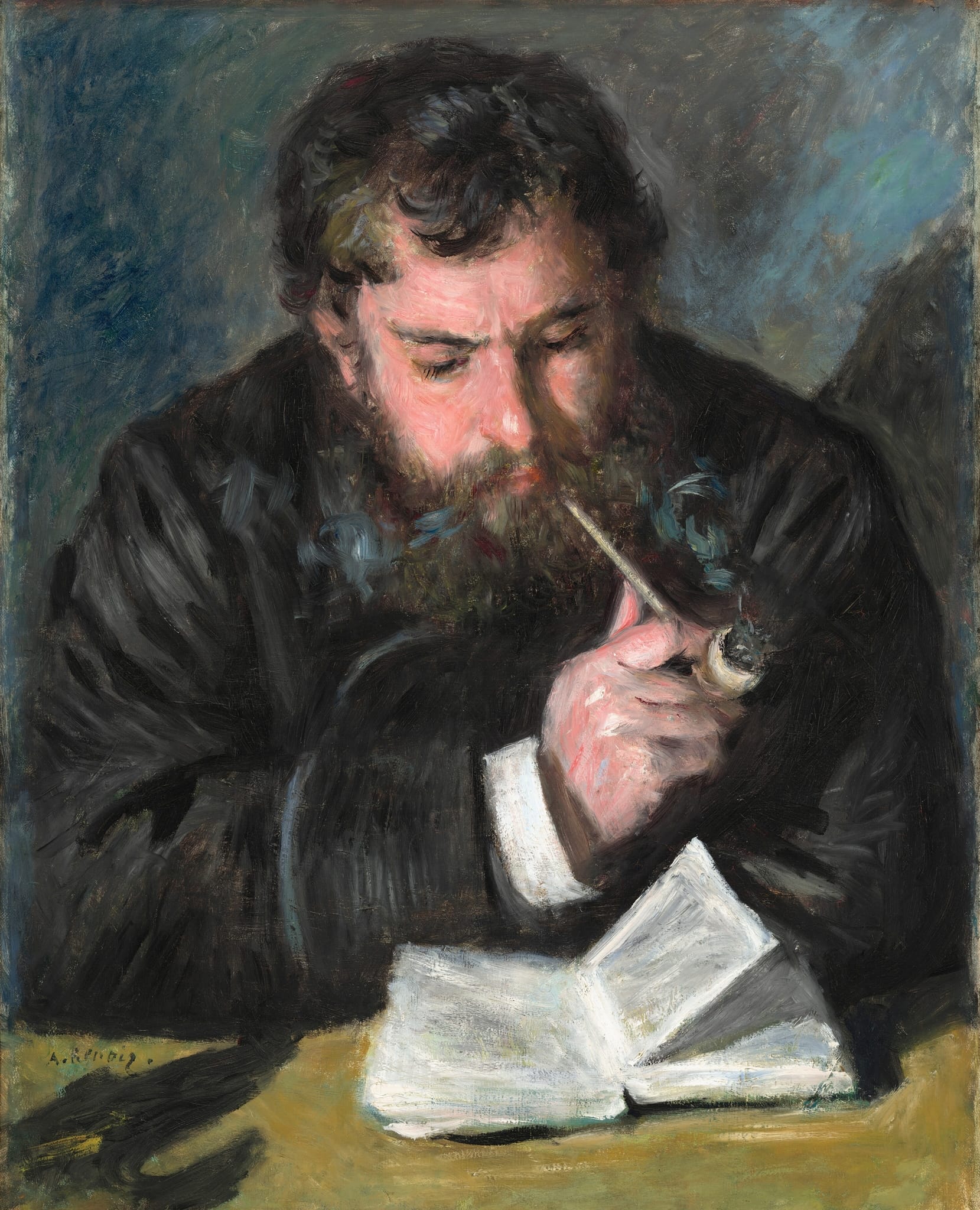
Claude Monet reading
1873
Renoir shows his friend Claude Monet seated and absorbed in a book, an intimate domestic study rather than a formal portrait. The work is significant as an early Impressionist depiction of a fellow artist and as evidence of Renoir’s interest in everyday moments and the effects of light on surfaces. Viewers should notice the loose, fluid brushstrokes, the warm, harmonized palette, and how small touches of color define fabric and face rather than tight contouring.
Must-see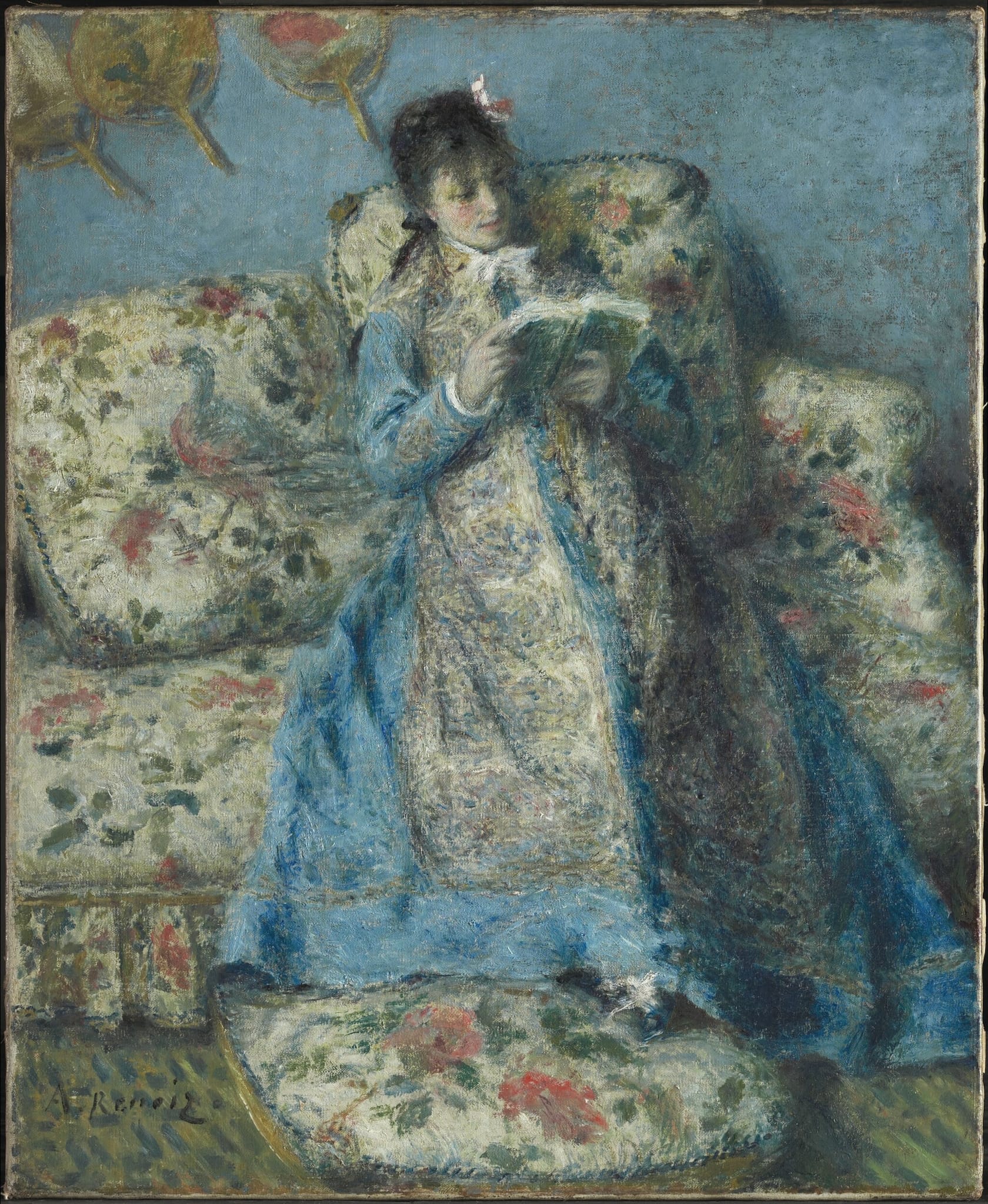
Portrait of Mme Claude Monet
1873
This portrait depicts Monet’s wife (Mme Claude Monet) with a calm, dignified presence, rendered with Renoir’s soft modeling and sensitive attention to expression. It’s important as an example of Renoir’s early Impressionist portraiture and his ability to combine intimacy with painterly freshness. Look for the gentle transitions of light on the skin, the delicate handling of facial features, and the way clothing and background are suggested by color patches rather than precise detail.
Must-see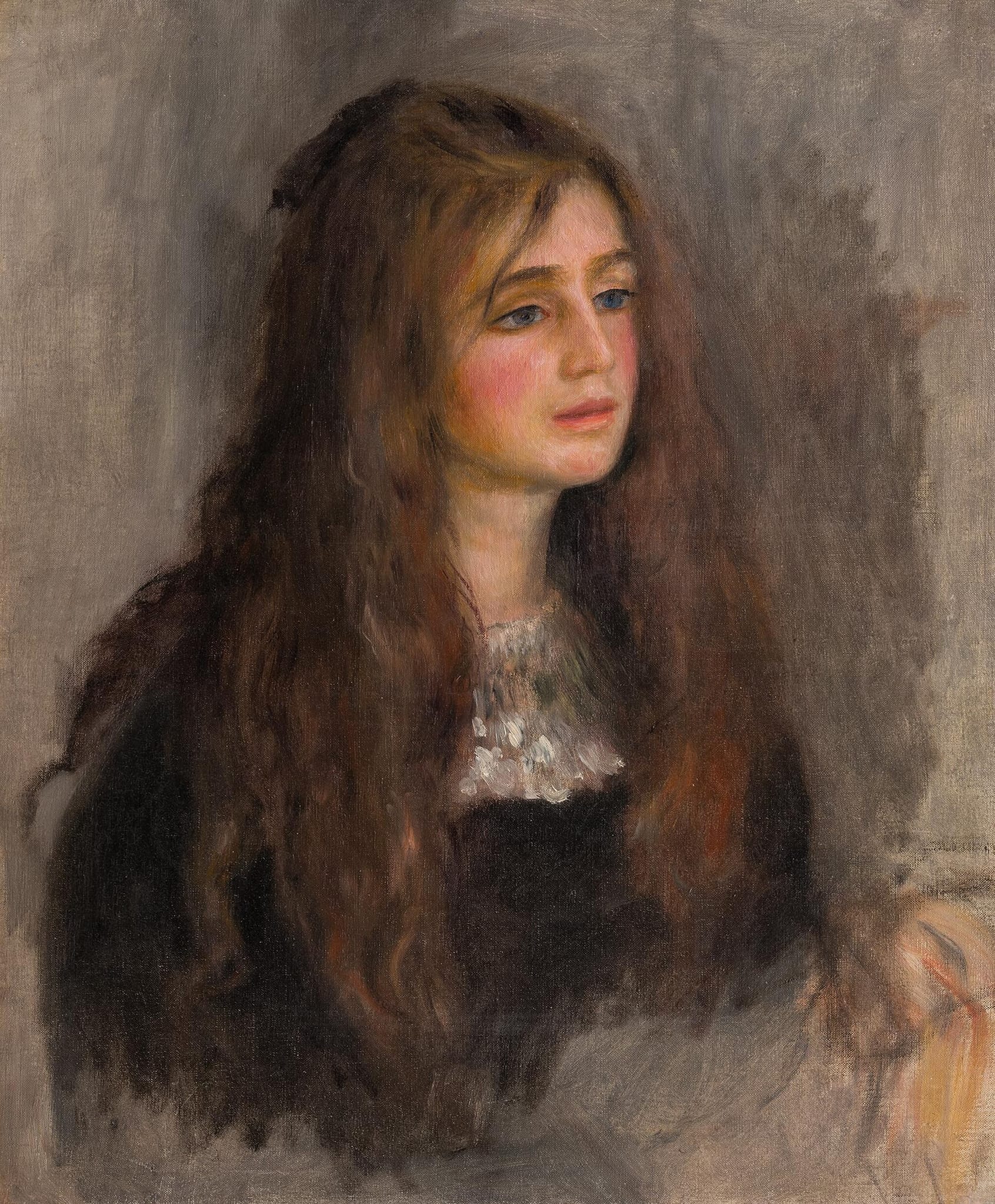
Portrait of Julie Manet
1894
This portrait captures Julie Manet (daughter of Berthe Morisot) with a youthful, introspective expression and an immediacy that reflects Renoir’s close ties to the Impressionist circle. It’s significant both as a sensitive likeness of a well-known sitter within the movement and as an example of Renoir’s late-19th-century balance between spontaneity and finish. Look for the luminous rendering of skin, the soft but confident brushwork in the clothing and background, and the engaging, slightly wistful gaze that anchors the composition.
Musée du Louvre
The Louvre’s holdings of a few Renoir paintings are significant because they show how an artist associated with modern life later gained acceptance into France’s national narrative of art. Placed within the Louvre’s broader historical collections, those Renoirs highlight the links between academic training, official taste, and the later institutional recognition that helped cement Renoir’s reputation.
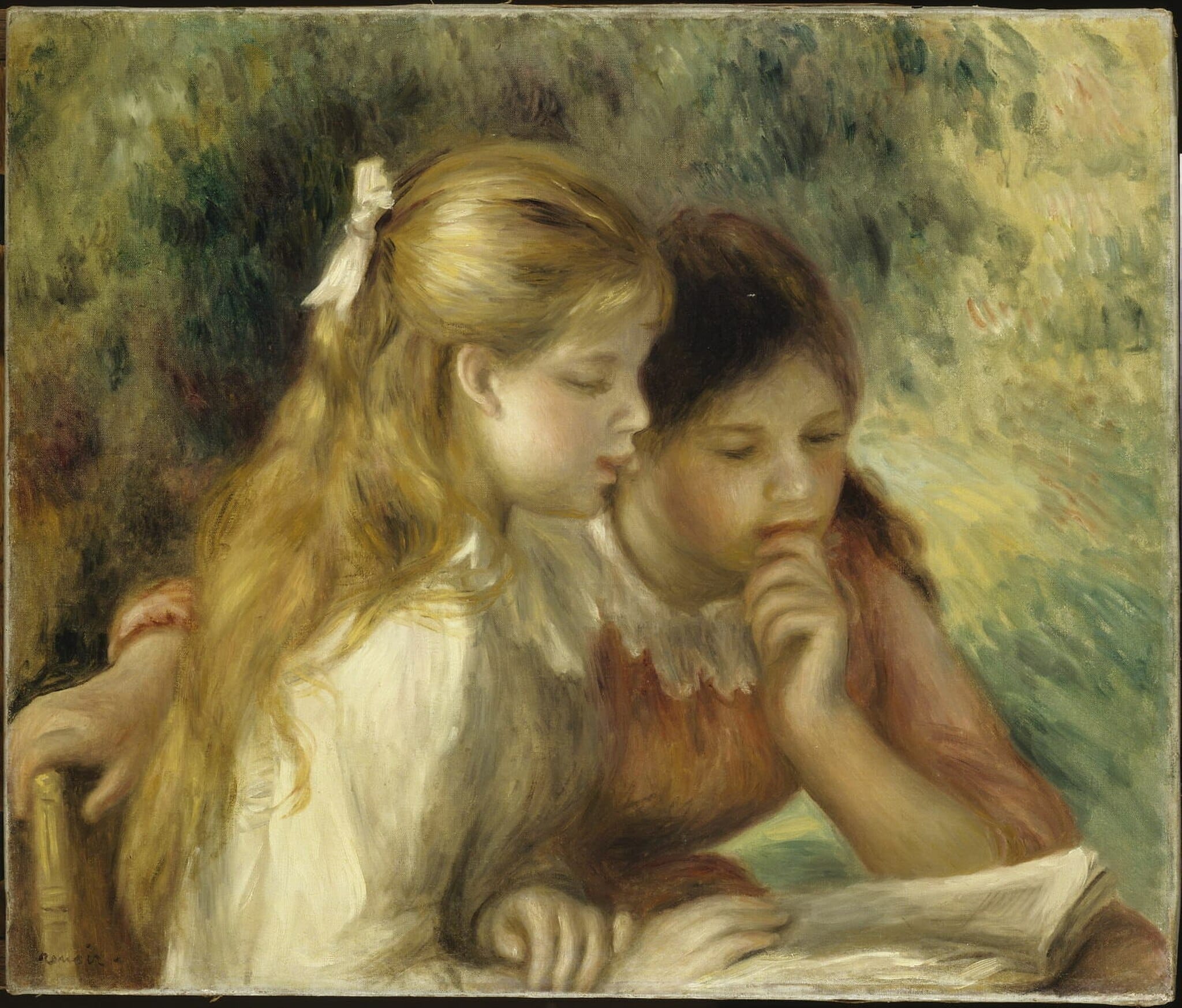
La lecture
Depicts a young woman seated and absorbed in reading, rendered with Renoir’s warm palette and soft, dappled brushwork that blends figure and surrounding foliage. Significant as an intimate example of Renoir’s late-19th-century portraiture that emphasizes atmosphere and the quiet dignity of everyday moments. Look for the gentle modeling of the face, the delicate handling of light on the hair and hands, and the loose strokes that turn details into an overall impression of calm. ([pop.culture.gouv.fr](https://pop.culture.gouv.fr/notice/joconde/000PE013730?utm_source=openai))
Must-see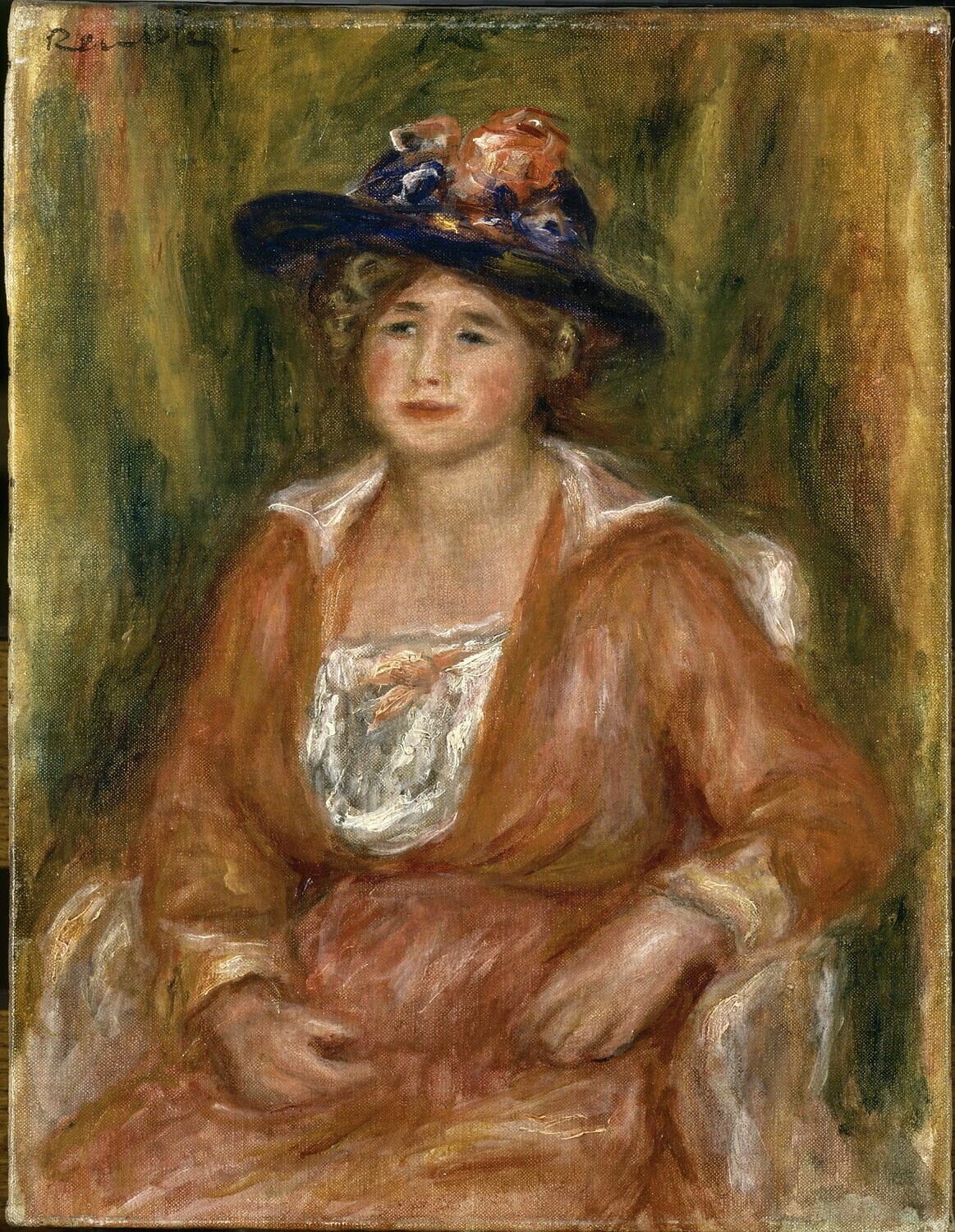
Portrait de femme assise
Shows a seated woman portrayed three-quarter length, presented with a poised, quietly attentive expression and a restrained, harmonious color scheme. Important as part of the Louvre’s holdings of Renoir’s portraiture, illustrating his ability to combine likeness with a soft, Impressionist sensibility that privileges color and light over tight line. Observe the subtle contrasts between skin tones and clothing, the relaxed pose that suggests personality, and the painterly brushwork that unifies figure and background. ([collections.louvre.fr](https://collections.louvre.fr/en/ark%3A/53355/cl010062706?utm_source=openai))
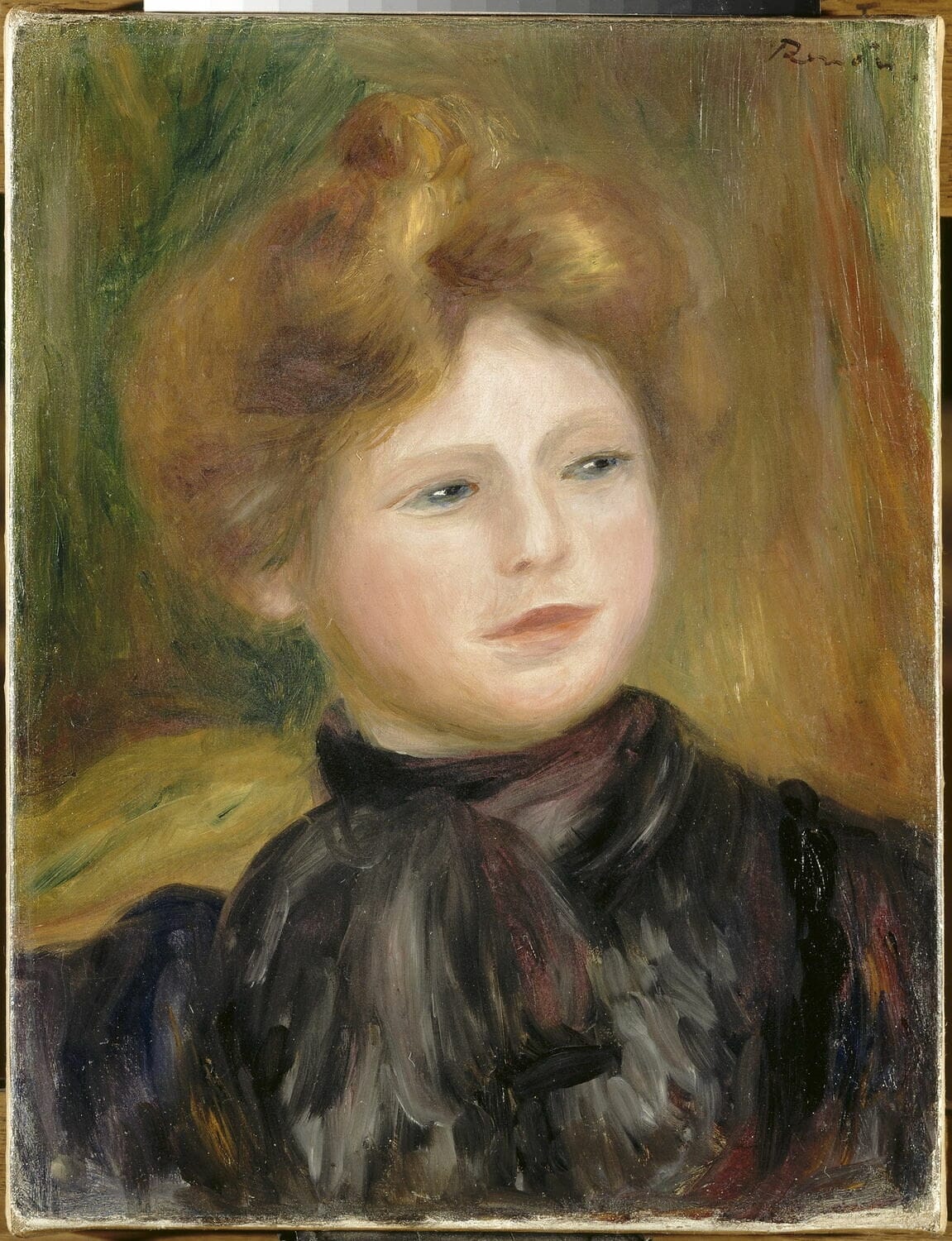
Portrait de femme (buste)
A bust portrait that frames the sitter from the chest upward, focusing attention on face, expression, and the interplay of light across shoulders and hair. Significant for demonstrating Renoir’s treatment of the head-and-shoulders format—his interest in capturing warmth and immediacy through color harmonies rather than strict academic finish. Look closely at the handling of the sitter’s eyes and mouth for emotional nuance, and at the textured brushstrokes that create a lively surface while keeping the overall composition serene. ([collections.louvre.fr](https://collections.louvre.fr/ark%3A/53355/cl010062705?utm_source=openai))
Must-seeMusée Jacquemart-André
Even without Renoir paintings in its present inventory, Jacquemart‑André matters for Renoir scholarship and appreciation because it preserves the period domestic setting and collector taste of the Belle Époque that shaped demand for Impressionist paintings. The museum’s richly furnished rooms and rotating loans recreate the kind of private interiors where collectors displayed and lived with modern works, giving insight into how audiences originally experienced Renoir’s art.