How Much Is Death and Life Worth?
Last updated: March 16, 2026
Quick Facts
- Methodology
- comparable analysis
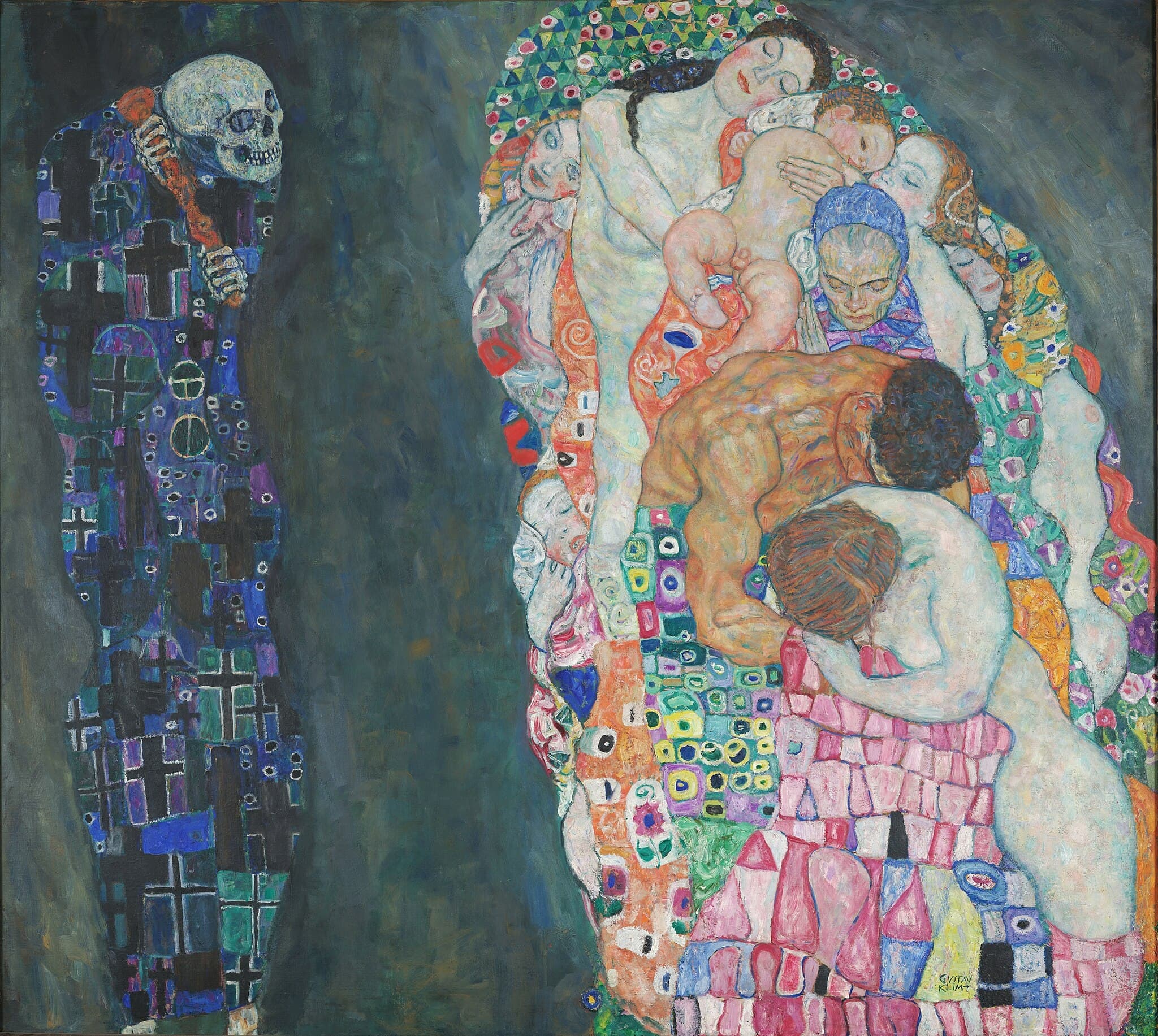
If authenticated as the autograph, full‑scale oil Tod und Leben by Gustav Klimt and offered with clean title and excellent condition, a reasonable private‑market estimate is $100–150 million. This hypothetical range is grounded in recent trophy Klimt auction results and the work’s museum‑level rarity and exhibition history.
Valuation Analysis
Valuation conclusion: Assuming the object is the autograph, full‑scale oil "Death and Life" (Tod und Leben) by Gustav Klimt in museum‑quality condition with clear title, I estimate a hypothetical private‑market value of $100–150 million. This valuation is derived from direct comparable analysis of recent trophy Klimt sales, the painting’s canonical standing in scholarship and collections, and the observable scarcity of comparable large Klimt canvases [1][2].
Comparables and anchors: The top end of the Klimt market has been set by a small number of trophy consignments that realized mid‑eight to low‑nine‑figure sums; these results act as market anchors and justify a $100M+ ceiling for museum‑quality oils. Large Klimt landscapes and late portraits have recently sold publicly in the $50–120M band, while exceptionally rare portrait masterpieces have driven even higher figures when provenance and condition are optimal [2]. Those outcomes demonstrate strong buyer appetite for rare, exhibition‑grade Klimt canvases and provide the principal empirical basis for the estimate.
Museum status, rarity and art‑historical weight: Tod und Leben is catalogued and published in major institutional dossiers and has a sustained exhibition history, which increases its cultural capital but places it outside the active market; the Leopold Museum holds the canonical version and that institutional ownership explains the absence of a recent market sale [1]. Were an authenticated, identical work to appear in private hands, its combination of scale, iconography and documentation would position it in the upper tier of Klimt pricing—hence the multi‑tens to low‑hundreds of millions range proposed here.
Key sensitivities and caveats: This valuation presumes (a) autograph attribution, (b) museum‑grade condition or conservable condition without disfiguring loss, (c) unambiguous, continuous provenance and clear legal title (no restitution claims), and (d) sale through a major auction house or top‑tier private treaty. Deviations—such as classification as a workshop piece, substantial restoration damage, or contested ownership—would reduce marketability and could lower value dramatically into the low millions or less.
Practical next steps: Treat this as a market‑anchored hypothesis. To convert it to a formal, market‑ready appraisal you should obtain high‑resolution photography, technical analysis (X‑ray, IRR, pigment/ground testing), written opinions from recognized Klimt scholars/catalogue raisonné editors, and full provenance documentation. With those materials, senior specialists at Christie’s, Sotheby’s or leading dealers can produce binding pre‑sale estimates and a recommended sale strategy.
Key Valuation Factors
Art Historical Significance
High ImpactDeath and Life (Tod und Leben) is widely regarded as a major allegorical composition from Klimt’s mature period. Its narrative juxtaposition of Death and clustered figures of the living, its scale and decorative surface place it firmly within the artist’s late symbolic output and make it a touchstone in Klimt scholarship and exhibition histories. Canonical works that are both visually distinctive and well‑documented are prized by museums and collectors alike; this academic and cultural prominence translates directly into market premium because buyers pay for works that anchor museum narratives and scholarship. In short, the painting’s art‑historical importance is a primary driver of a top‑tier valuation.
Provenance & Legal Title
High ImpactProvenance for Tod und Leben is well documented in public institutional records (ownership recorded through private hands to Rudolf Leopold and then the Leopold Museum), and continuous, museum‑quality provenance materially increases saleability and price. Clear title, documented exhibition history and published catalogue references reduce purchaser risk and are essential for top auction placement. Conversely, any gap in provenance or the existence of restitution claims (given the historic context of early‑20th‑century Central Europe) would sharply depress market value, complicate export and insurance, and could prevent sale in major venues.
Condition & Technical Integrity
Medium ImpactCondition and technical verification are decisive. Catalogued reworking and known interventions must be documented with X‑radiography, infrared reflectography and pigment/ground analysis to confirm authorship and assess conservation needs. A stable, well‑conserved surface with reversible restorations supports the full estimate; heavy damage, inpainting or structural issues reduce buyer competition and can meaningfully lower the achievable price. Technical reports also help attribution and therefore influence the confidence premium buyers will pay.
Market Demand & Comparables
High ImpactRecent sale results for large Klimt oils and late portraits demonstrate that top works can command multi‑tens to low‑hundreds of millions in competitive sales environments. Scarcity of museum‑quality examples and episodic appearance of trophy lots create spikes in demand when a suitable work reaches the market. The venue (private treaty vs auction), marketing, and presence of competing deep‑pocketed bidders are practical determinants of final price. Given these dynamics, Death and Life’s scarcity and stature justify a valuation at the upper end of Klimt’s usual market band—conditional on the factors above.
Sale History
Death and Life has never been sold at public auction.
Gustav Klimt's Market
Gustav Klimt occupies a top position among early 20th‑century European modernists in private and institutional collecting. His market is characterized by extreme concentration of value in a small number of trophy works—major portraits and large allegorical canvases—while drawings and minor works trade at much lower levels. Recent high‑profile sales have reset headline prices upward, increasing demand for museum‑quality canvases and tightening supply. Provenance clarity and exhibition history are especially important in Klimt’s market given restitution sensitivities.
Comparable Sales
Portrait of Elisabeth Lederer
Gustav Klimt
Major, museum‑quality Klimt oil sold at auction in 2025; sets the current top market precedent for Klimt oils.
$236.3M
2025, Sotheby's New York
Dame mit Fächer (Lady with a Fan)
Gustav Klimt
High‑profile late Klimt portrait that realized a contemporary European auction record; demonstrates strong demand and price ceiling for top figurative works.
$108.4M
2023, Sotheby's London
~$115.6M adjusted
Birch Forest (1903)
Gustav Klimt
Large, museum‑quality Klimt landscape that previously set an auction record for the artist; shows top demand for non‑portrait Klimt oils as trophy lots.
$104.6M
2022, Christie's New York
~$115.4M adjusted
Insel im Attersee (Island in the Attersee)
Gustav Klimt
Major Klimt landscape sold in 2023 at mid‑eight figures; provides a lower‑end anchor for large Klimt oils and shows range of prices by subject/rarity.
$53.2M
2023, Sotheby's New York
~$56.7M adjusted
Current Market Trends
The Klimt market remains supply‑constrained and demand‑driven: a few marquee consignments have pushed headline prices higher, but liquidity is episodic. Top‑end interest is strong when museum‑quality works appear; mid‑tier pieces are more sensitive to macroeconomic conditions. Provenance clarity, institutional interest, and competitive bidding remain the key determinants of realized prices.