Gustav Klimt
Biography
Themes in Their Work
Where to See Gustav Klimt's Paintings
Explore Gustav Klimt's works on display in museums around the world.
Featured in Essays
Essay
How a Portrait Beat a Country
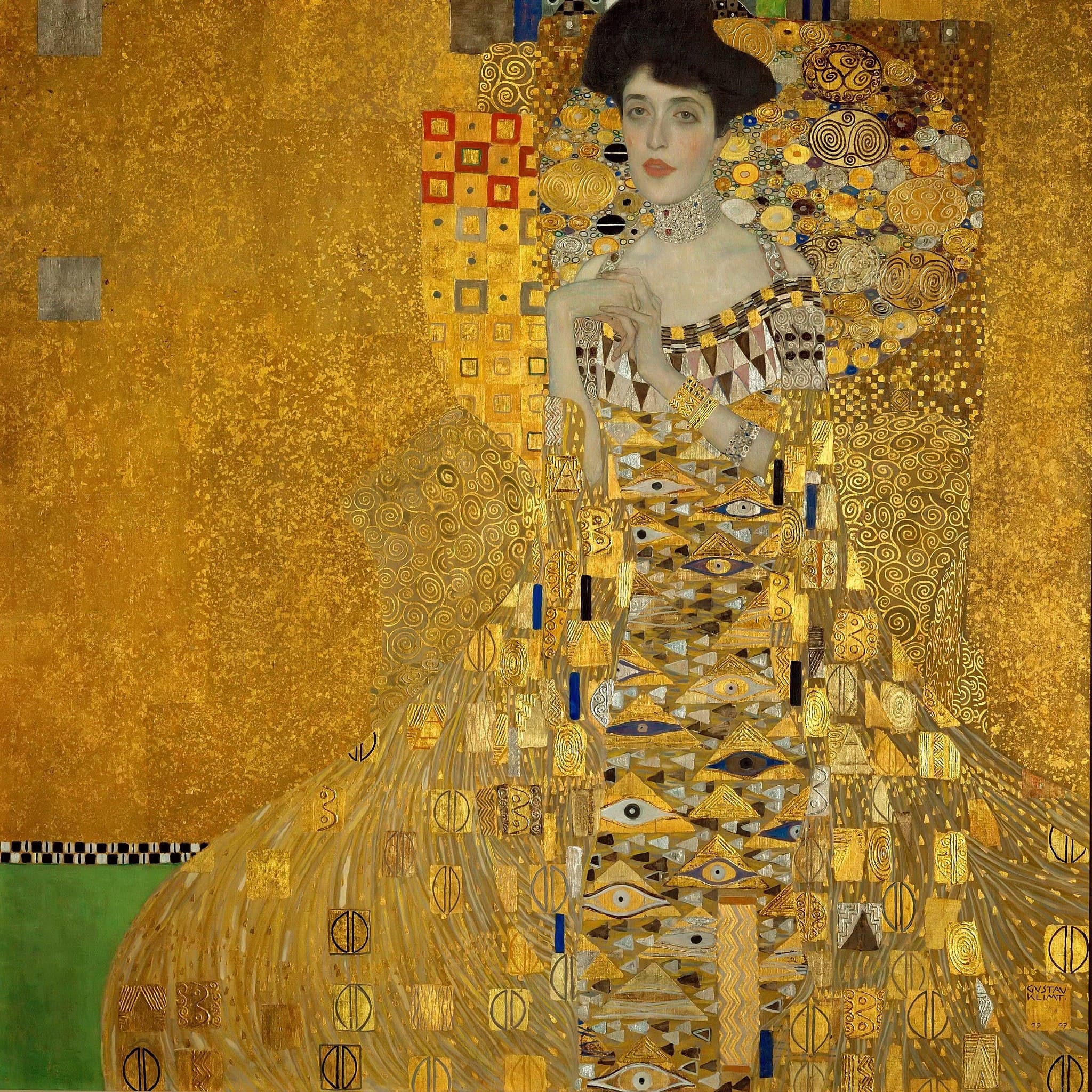
Start with the face everyone in Vienna knew. Adele Bloch-Bauer—wealthy, sharp, and restless—sat for Klimt as he built a shrine of gold around her in 1907. It’s the image that made his reputation glitter, the one now on every tote bag. But scroll past the sparkle and you hit a fault line: this portrait wasn’t just coveted; it was contested to the bone. See the work here for context and image details: /artworks/gustav-klimt/portrait-of-adele-bloch-bauer-i [1].
Essay
The Courtesan Behind the Sword
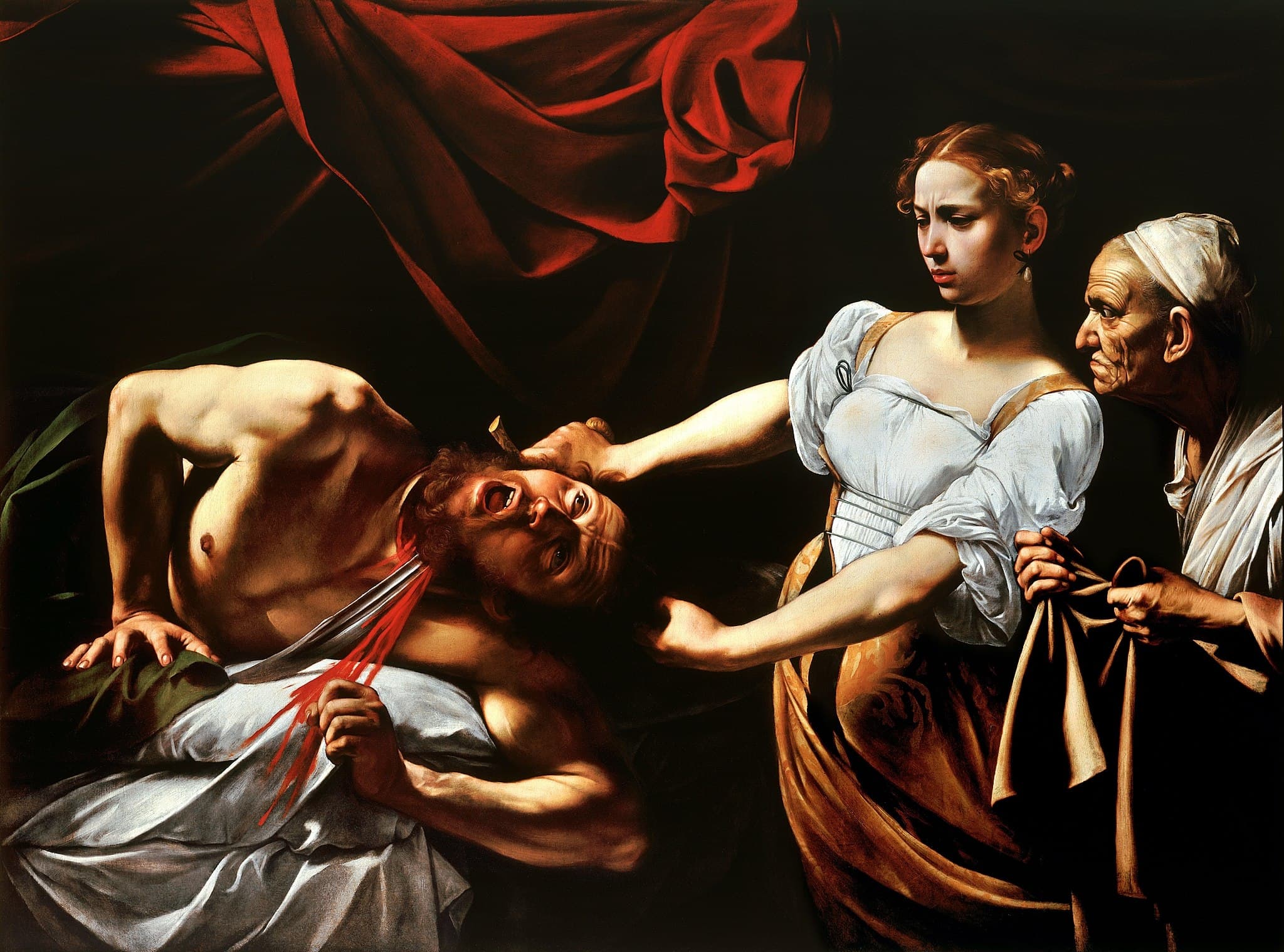
Start in a rented room with a curtain pulled high. A banker is waiting for a deliverable; a patronage network is watching a comet of a painter. Caravaggio steps to the canvas and chooses his Judith — not a saint from a sermon, but a woman Rome’s police could name. “And she smote twice upon his neck, and cut off his head.” The Book of Judith gives the script. Caravaggio turns it into live theater.
Essay
The Day Manet Took a Knife to His Own Painting
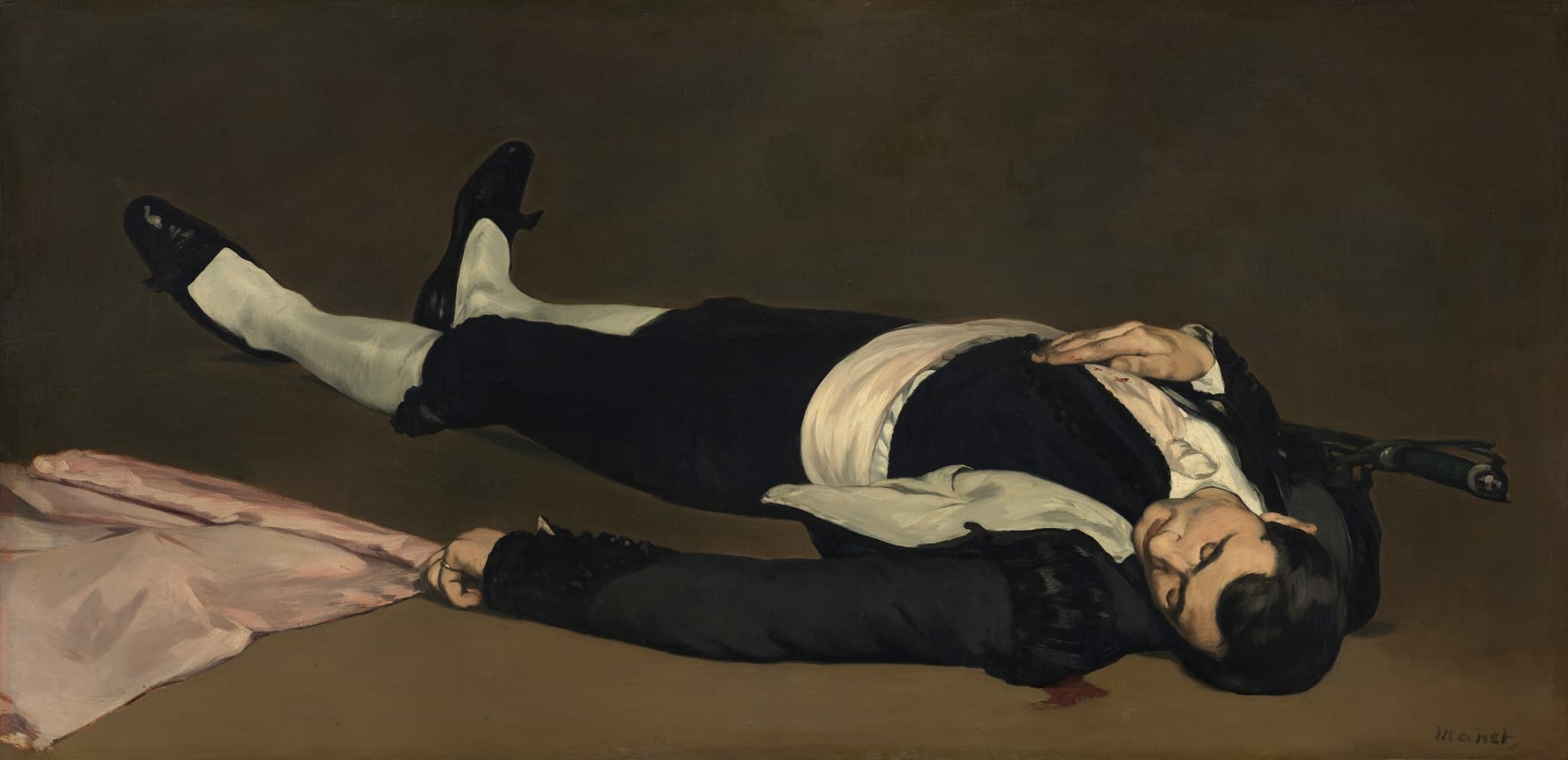
Paris, 1864. The Salon is the arena. A painting can knight you or end you. Manet, already bruised by scandal the year before, bets big on spectacle: a sweeping bullfight scene, Spanish costume, blood and bravado. He hangs it for the crowd. The critics circle. The verdict is icy. He can’t afford another public drubbing; every jeer dents his chances of becoming more than a punchline. The stakes are career, pride, and Paris itself. Here’s the twist sitting in plain sight: the famous close‑up of the fallen matador you know as The Dead Toreador — you can see it here [link](/artworks/edouard-manet/the-dead-toreador)[1] — started life as just one corner of that doomed panorama.
Essay
The Iron and the Eye: Degas Against the Glare
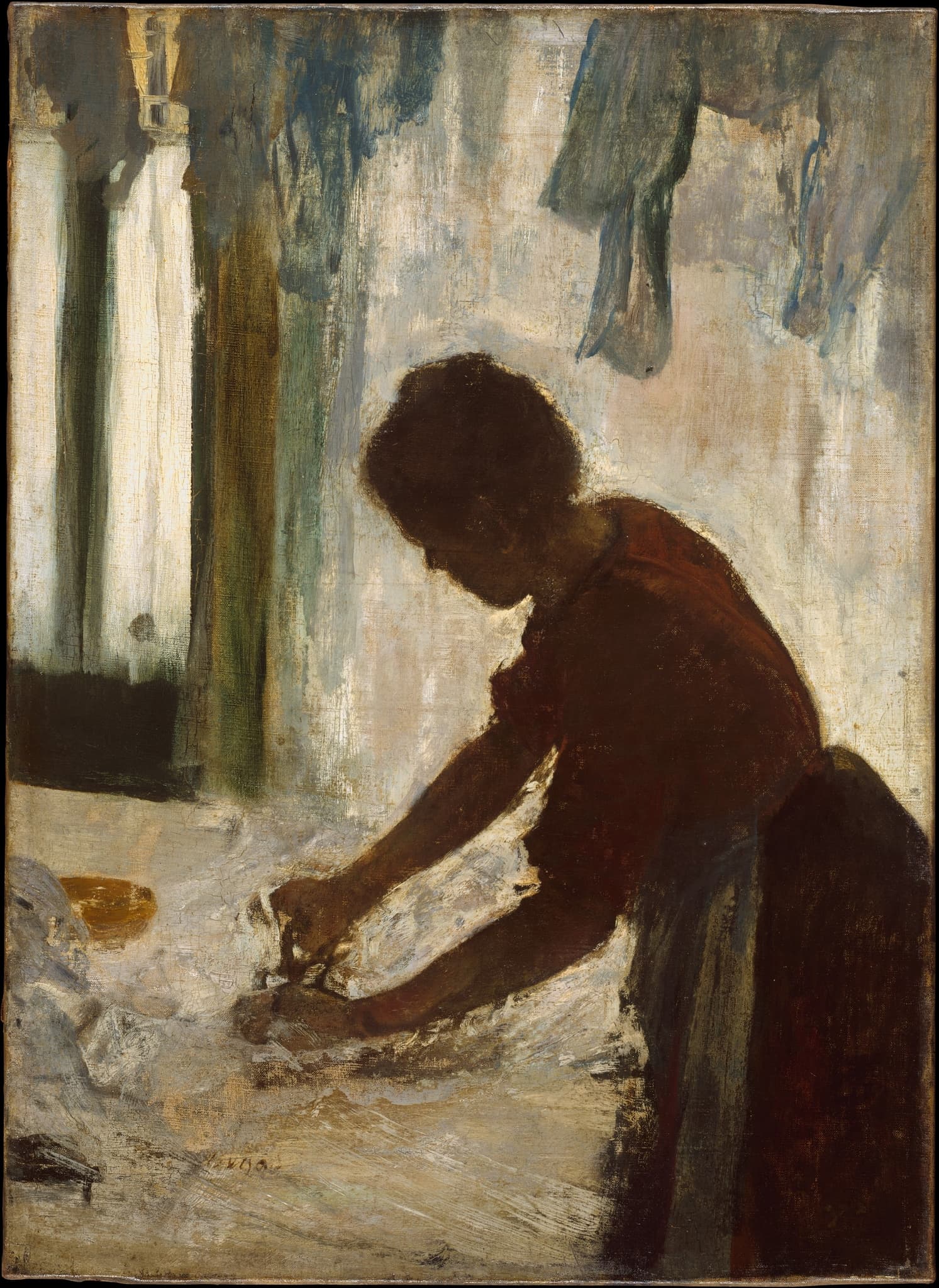
By the mid‑1870s, collectors wanted Degas for ballet: satin shoes, mirrored studios, the sellable dream. Instead, he kept showing up in steam and starch. Over and over, he painted laundresses—women who boiled, beat, and pressed other people’s clothes for pennies in rooms as hot as kilns. The choice wasn’t neutral; it could stall sales and annoy patrons who preferred dancers to drudgery. But Degas wouldn’t look away. The Musée d’Orsay calls this an obsession, tracing versions of ironers across the decade, including the famous yawning pair in Repasseuses [1].
Essay
The Blue Armchair Rebellion
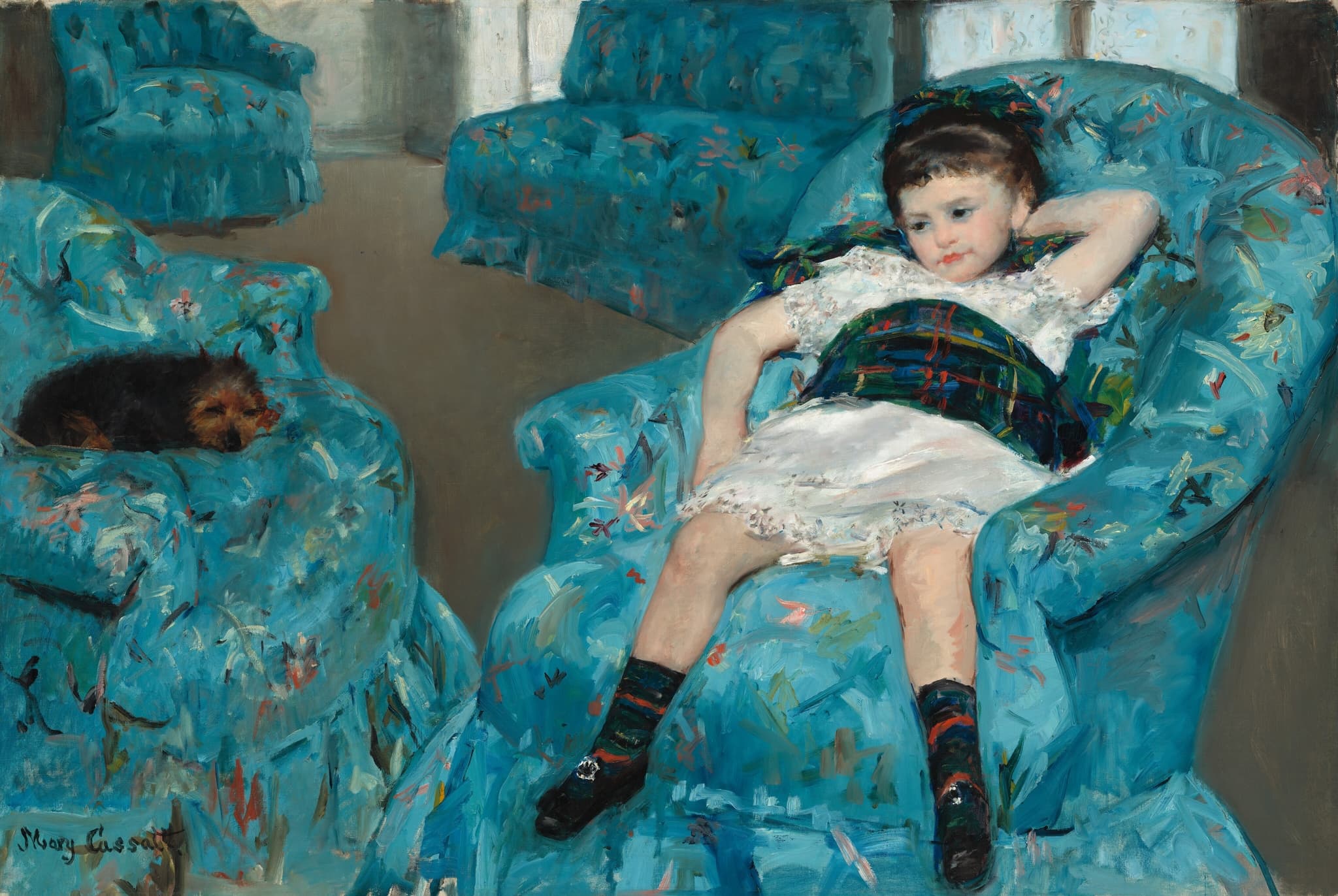
Paris, 1878. An American woman is fighting for entry into the most controversial circle in art. Reputation on the line, money scarce, critics circling. Her next move must land. She paints… a kid who won’t behave. A small girl slumps diagonally across a vast sea of turquoise upholstery, socks rumpled, gaze elsewhere, a terrier comatose on a neighboring chair. It looks unbothered, even rude. And that’s the point. In a market that rewarded sugarcoated childhood, Mary Cassatt risked everything on a portrait that shrugs at adult decorum [1]. Cassatt had just thrown in with the outsiders—at Degas’s urging—and was preparing for her first Impressionist exhibition the following year. It wasn’t a club you entered softly. “I accepted with joy,” she later said of the invitation, because the Salon “crushed all originality” [3]. If this picture failed, the doubters would say she didn’t belong.
Essay
The Balcony That Started a Riot
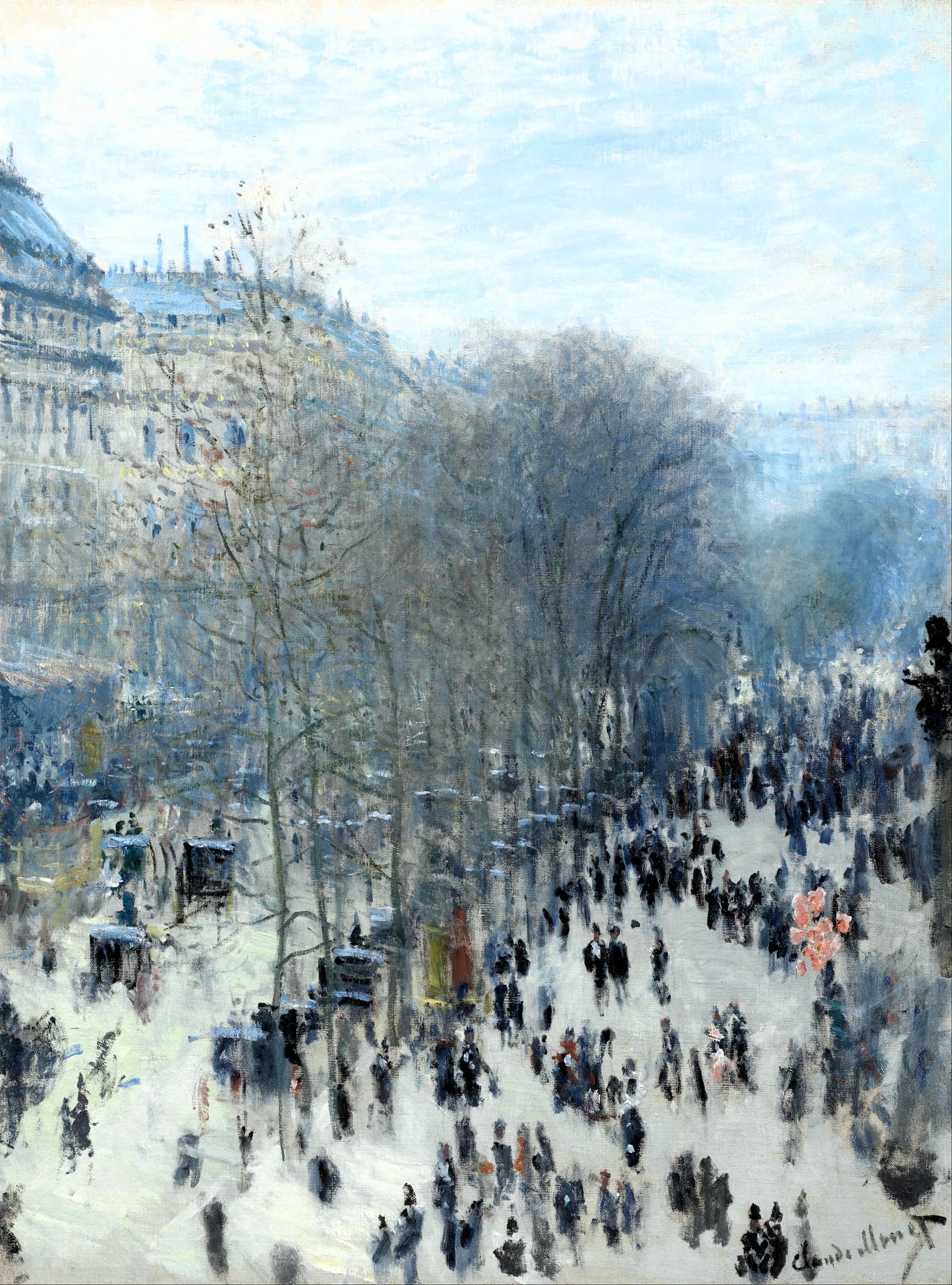
Picture the stakes. Paris still bowed to the Salon, a jury that could mint careers or erase them. Monet had a young family, debts, and a dwindling market. So he and a handful of friends did the unthinkable: rent the grand studio of star photographer Nadar at 35 Boulevard des Capucines and hang their own show—no permission, no jury, all risk. The vantage in this painting is that balcony, that window, that leap.[2][7]
Essay
Degas’s Vanished Paris: The Painting That Went to War and Came Back With a Secret
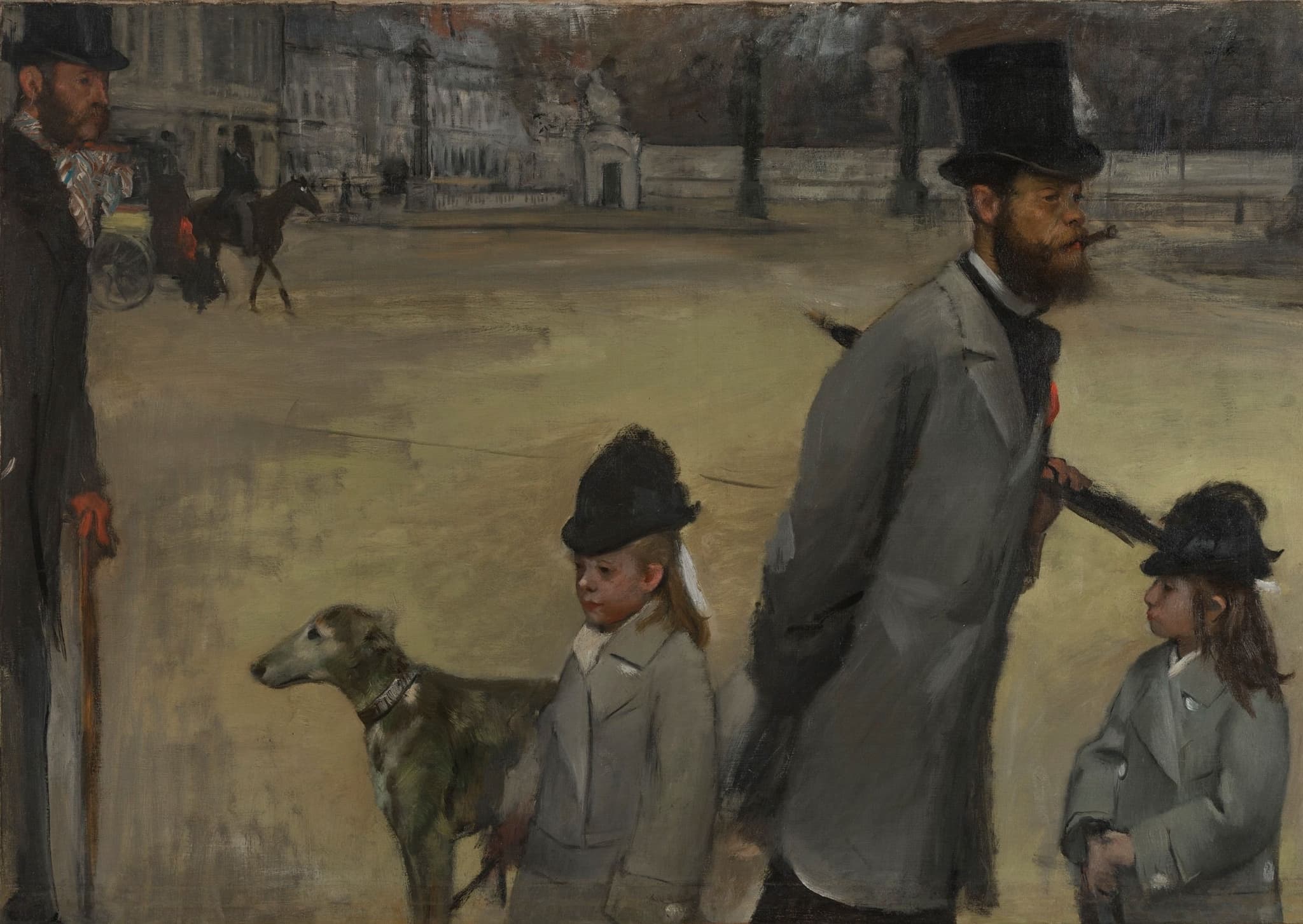
Start in 1875: a man strides, girls in gray keep pace, a dog scouts the pavement. No one looks at each other. A city square yawns like a stage. Edgar Degas freezes it all with brutal cuts at the frame, the visual grammar of a world too fast for eye contact. Today the canvas lives at the State Hermitage Museum in St. Petersburg, a long way from the Paris square it depicts—and even farther from where it was last seen before the war [State Hermitage Museum](https://hermitagemuseum.org/digital-collection/29681?lng=en)[1].
Essay
The Audition in Blue: Renoir’s Gamble Behind Girl with a Watering Can
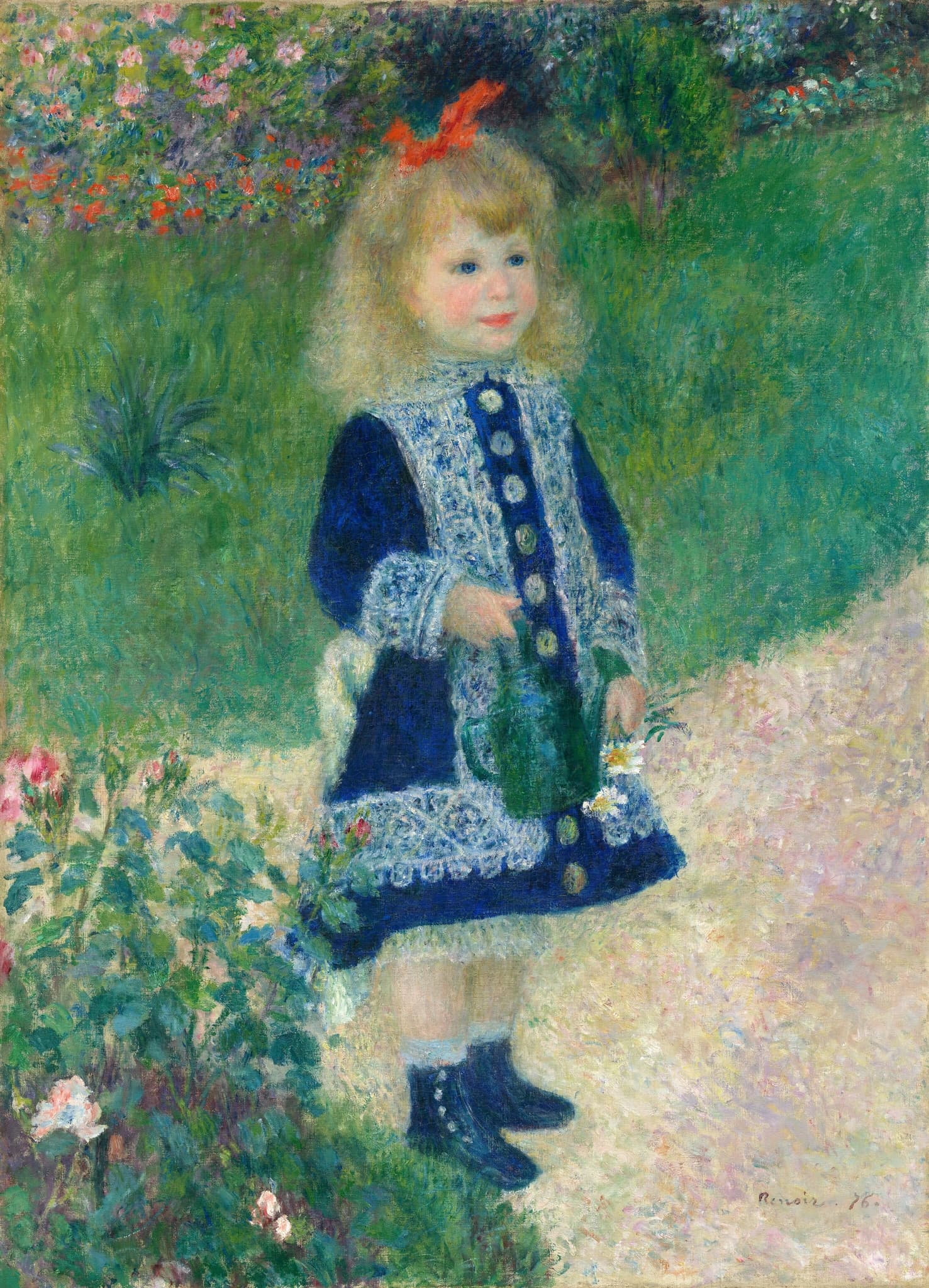
Picture Renoir at 35, debts circling, reputation wobbling after the second Impressionist show. The critics mocked his circle; the market yawned. Portrait commissions — the cash engine of Paris — kept going to establishment names. He had to change that or sink. [National Gallery, London](https://www.nationalgallery.org.uk/artists/pierre-auguste-renoir) [2].
Essay
The Picnic That Made an Emperor Blink
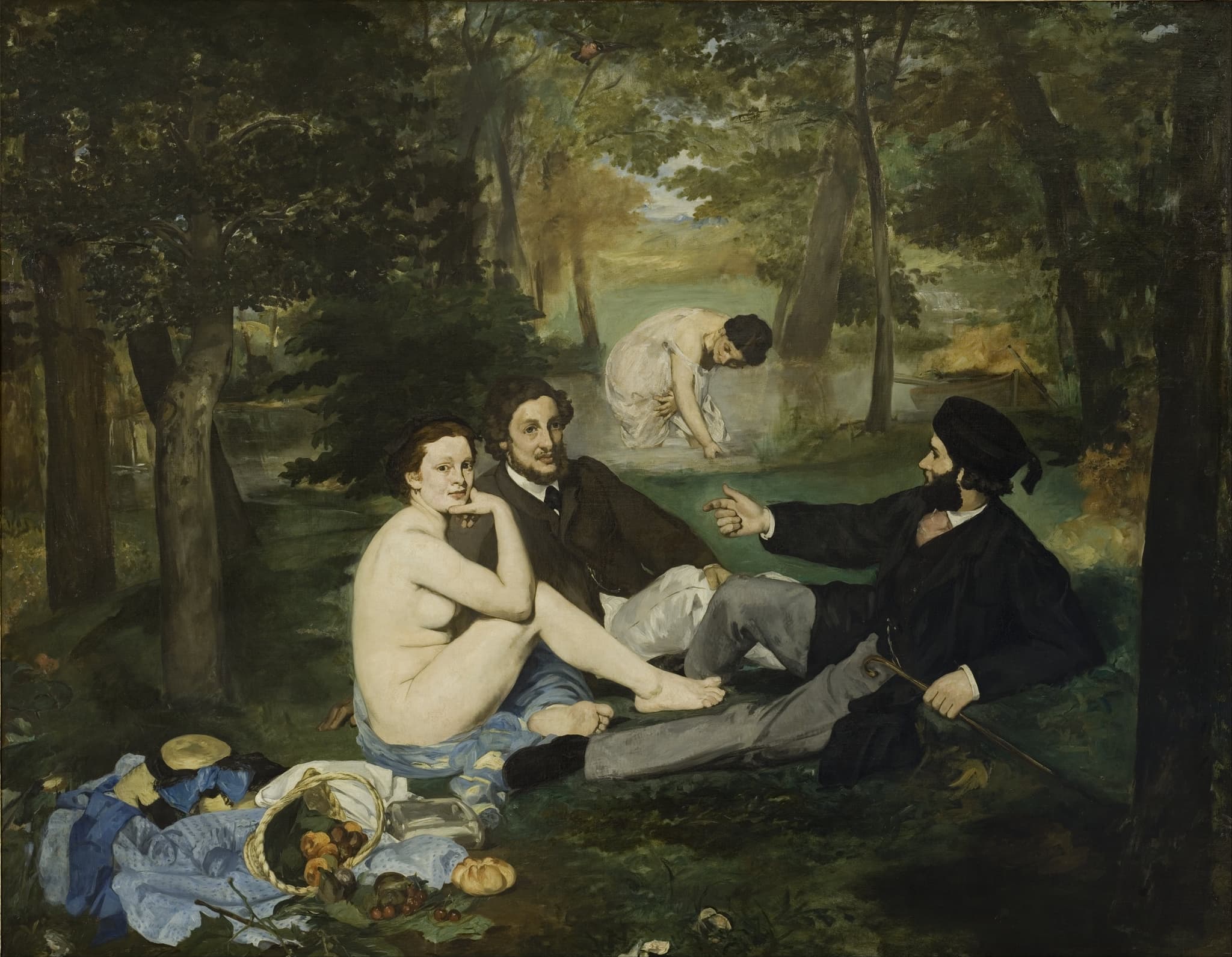
Start with the stakes: the Paris Salon decided an artist’s fate. Win the jury, you get buyers, critics, immortality. Lose, you vanish. That year, the jury rejected an unusually high number of submissions. Among the refusés was a picnic with a stare that wouldn’t look away—Édouard Manet’s Le Déjeuner sur l’herbe, then called Le Bain. The museum that owns it now says flatly: it “caused a scandal.” [Musée d’Orsay](https://www.musee-orsay.fr/en/artworks/le-dejeuner-sur-lherbe-904) [1].
Essay
She Put Down the Fan
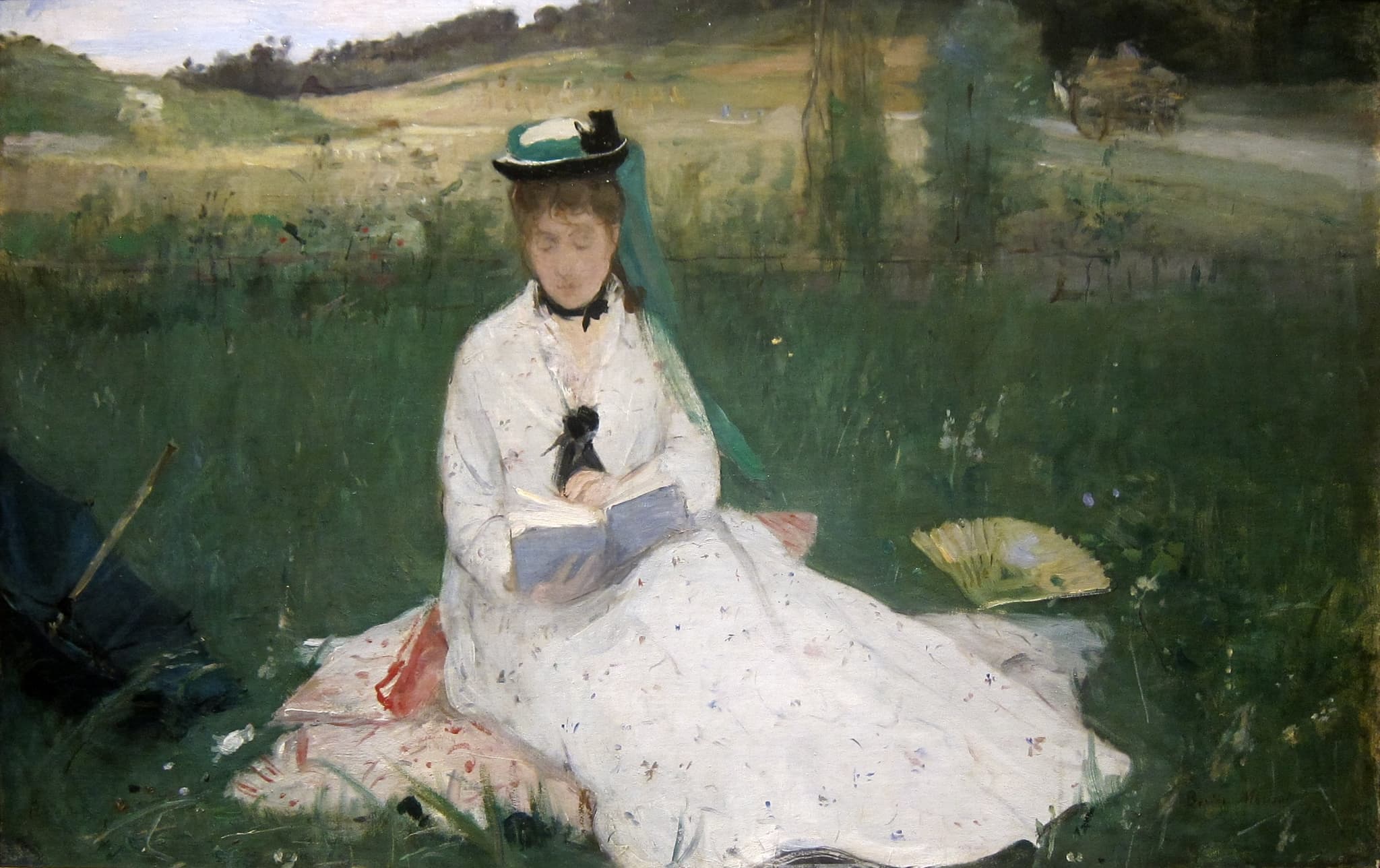
Look closely: the props of flirtation lie useless in the grass. The fan is shut. The green parasol is abandoned. A carriage blurs by in the distance, but the figure never looks up. She reads, and the world waits. Morisot painted this in 1873, her surface quick and alive, the scene almost dissolving around the reader’s concentration. The Cleveland Museum of Art calls it Reading; it’s small, disarming, and dangerously calm [2].
Essay
Renoir’s Fake Date Night
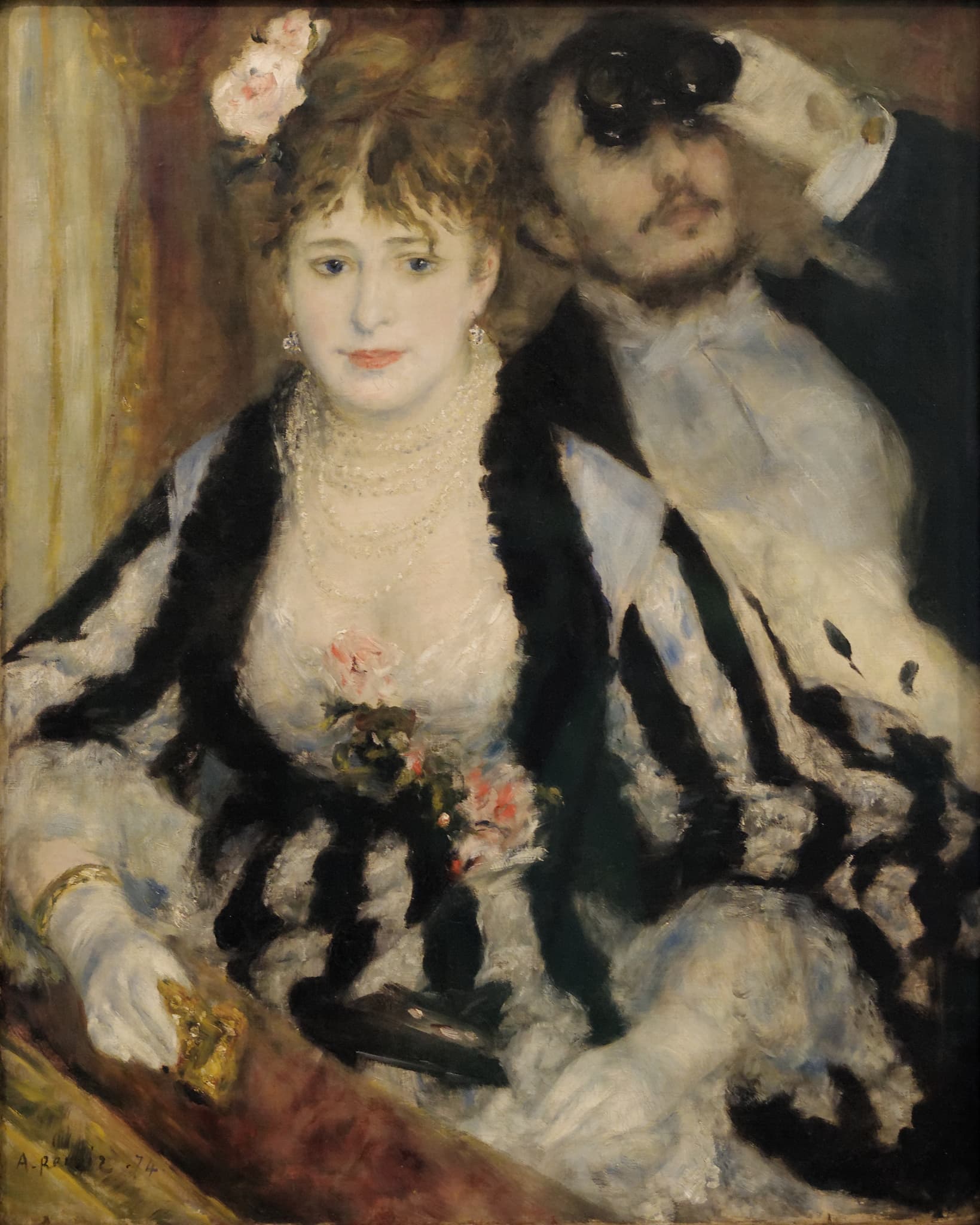
Picture the stakes: Renoir is thirty-three, broke, and rolling the dice on a renegade show the Salon has snubbed—the first Impressionist exhibition. If this painting doesn’t spark attention, he’s not just unfashionable; he’s finished.
Essay
The Sunniest Monet Was Painted in a Storm
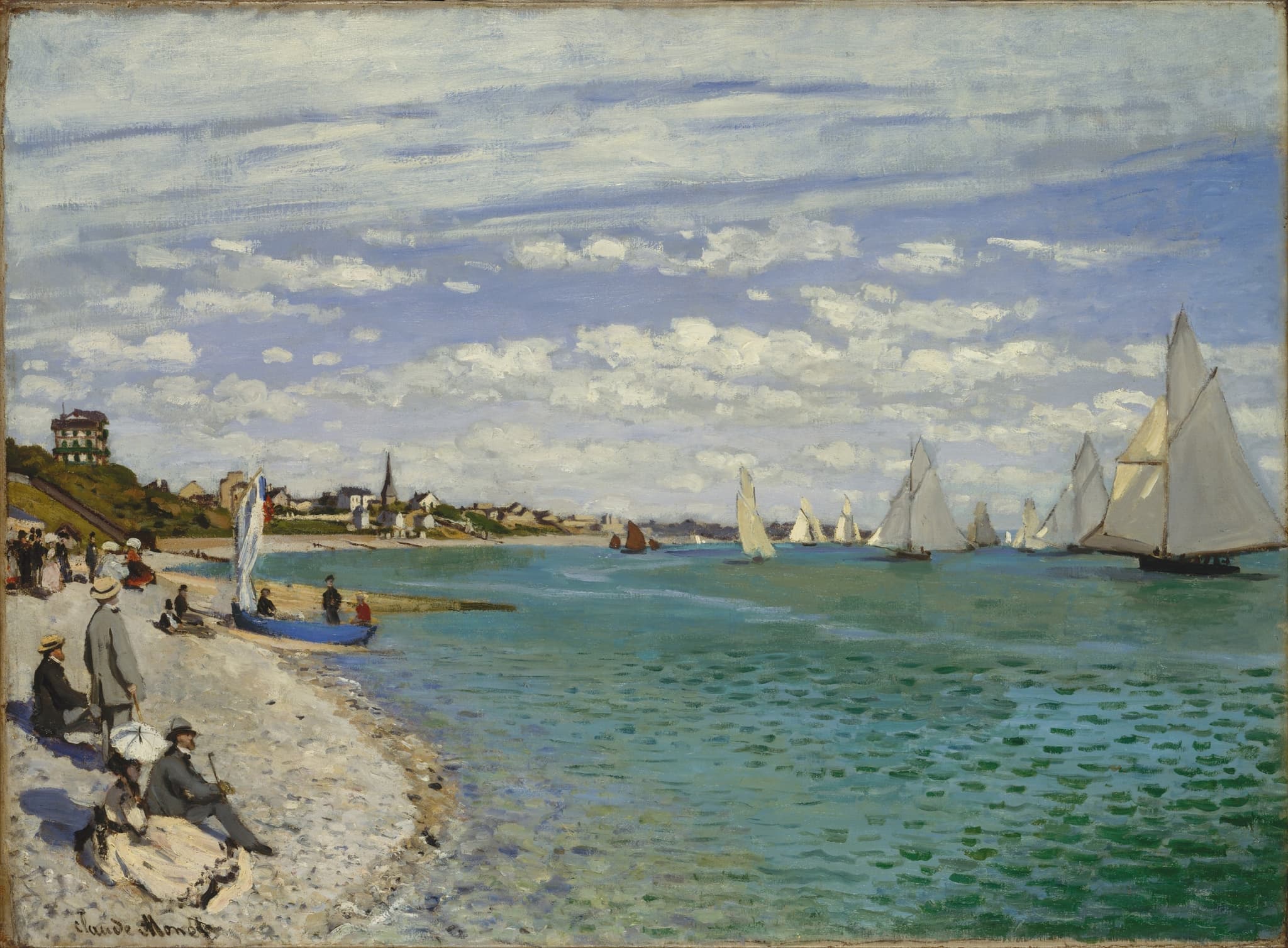
First glance: a perfect day. Parasols tilt. White sails cut the Channel. Sun freckles the water like confetti. It looks like a rich man’s postcard. That’s the trap.
Essay
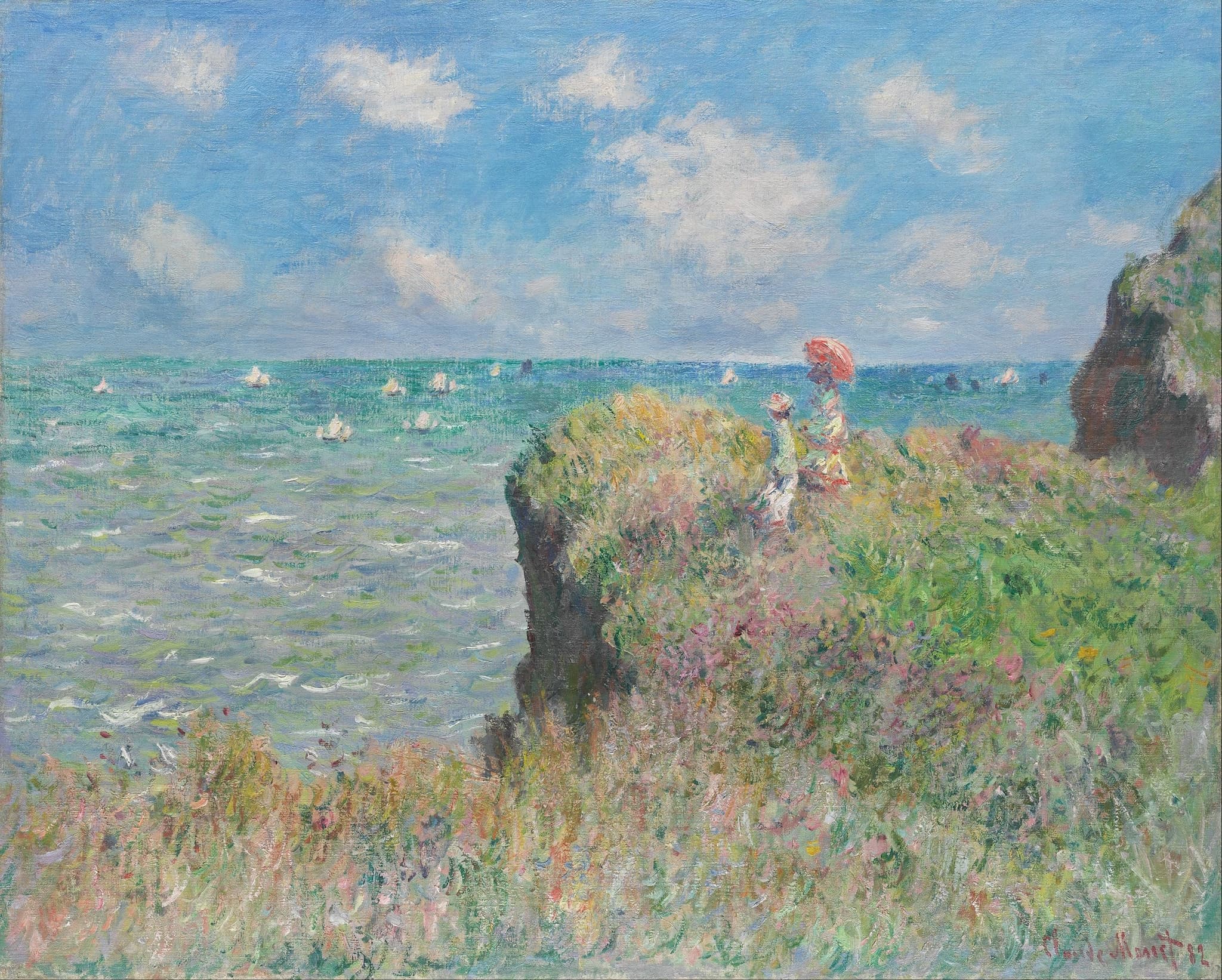
Monet’s Pink Parasol, and the Secret It Was Hiding
Start at the edge. In 1882 Monet escaped to a fishing village on the Normandy coast and worked like a man trying to outrun gossip. He had fallen in love with Alice Hoschedé, the wife of his former patron Ernest, whose finances had collapsed. Two households had fused into one. The art world was watching, and not kindly [4].
Essay
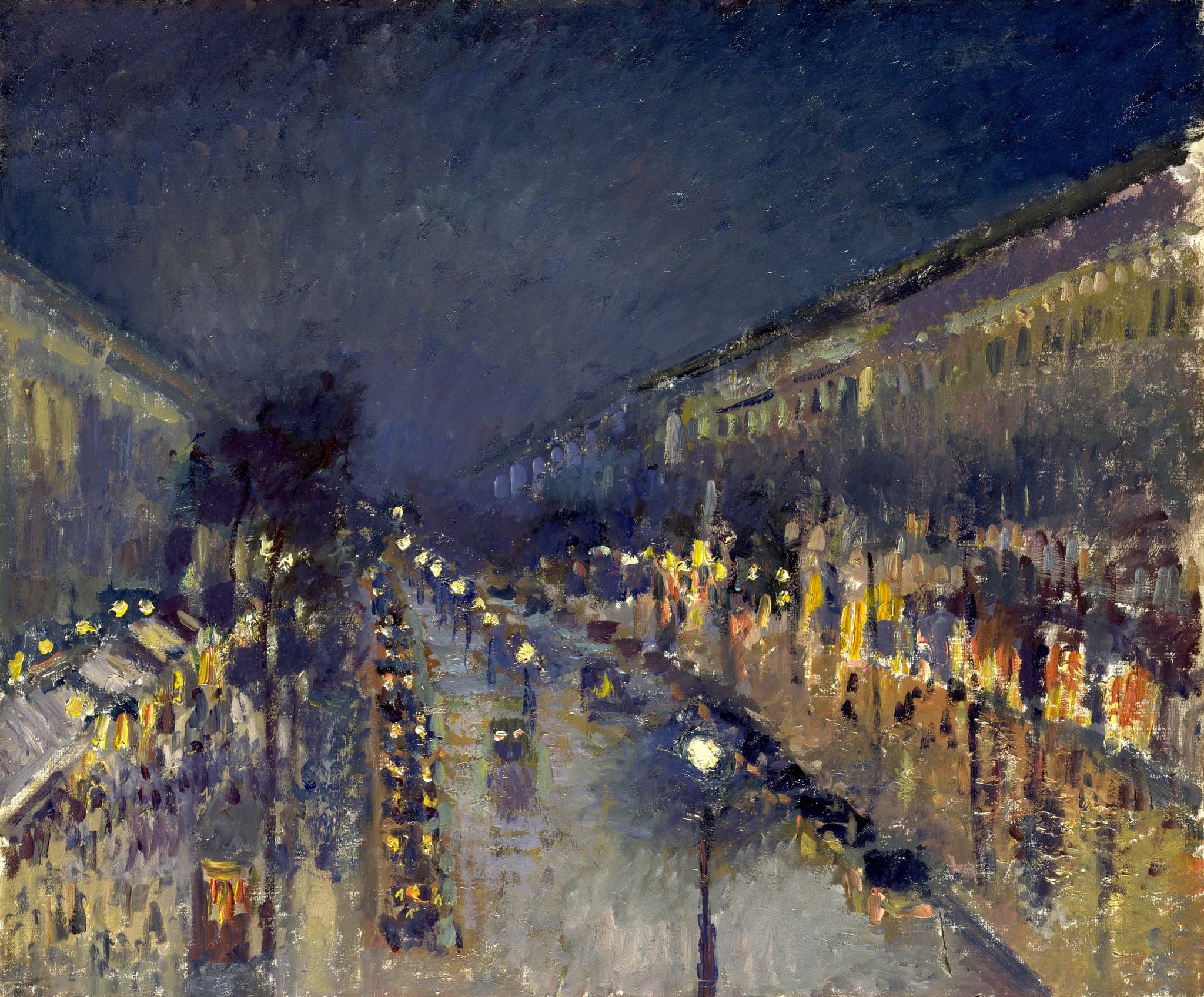
The Night Pissarro Learned to See Again
He was in his mid‑sixties, the elder statesman of Impressionism with bills to pay and younger stars sprinting past. Critics loved the myth of Pissarro the tireless outdoor painter. But his reality was uglier: an infection had made bright, dusty daylight brutal. So he moved indoors and up—into a rented high window on the Boulevard Montmartre—staking his reputation on whether a man who couldn’t face the sun could still paint light.[5]
Essay
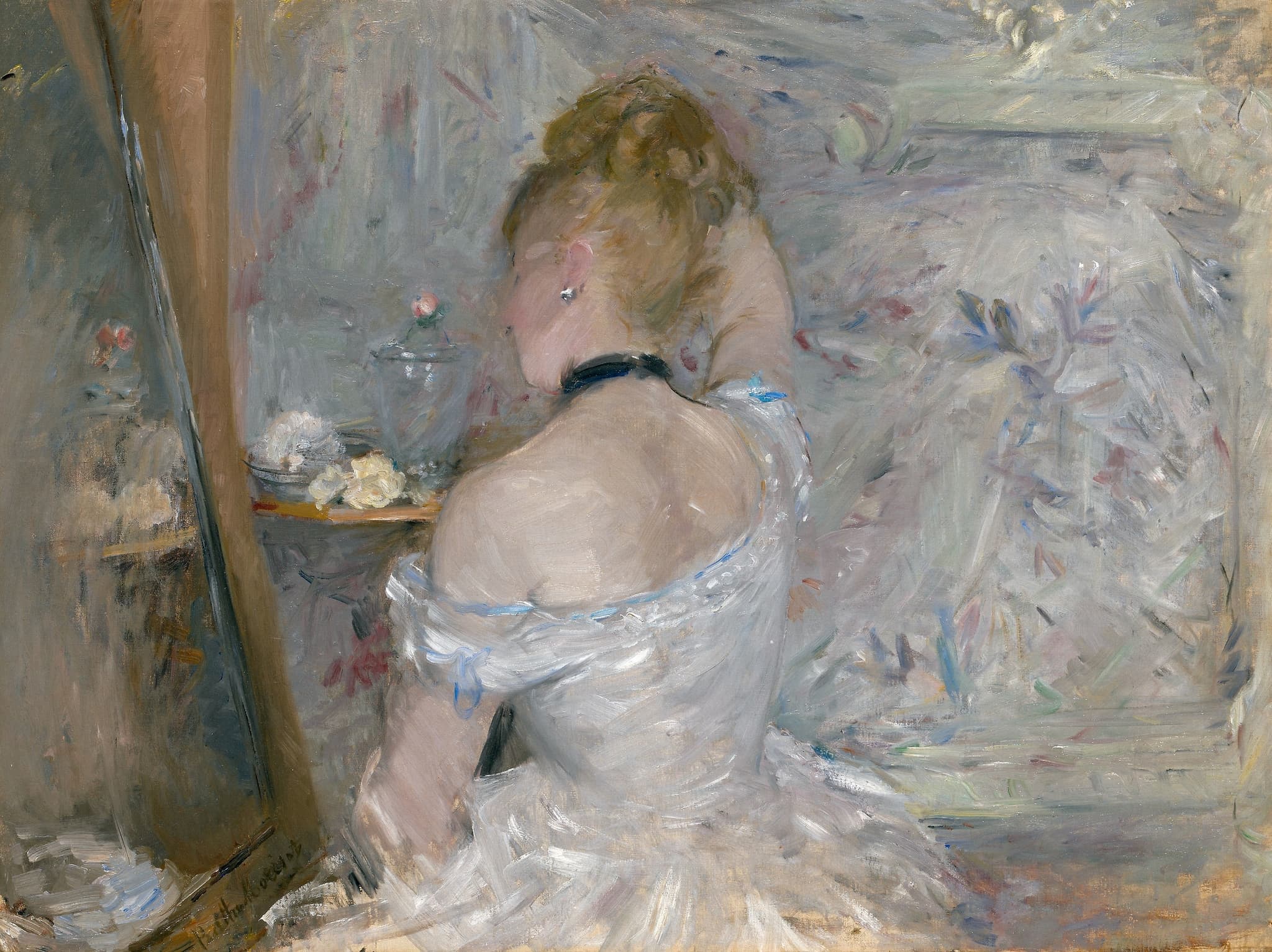
The Mirror That Said No: Berthe Morisot’s Quiet Rebellion
Look at the setup: a woman in satin, arm lifted, powders and jars within reach. Paris, late 1870s. It reads like flirtation. But the reflection is a smear, the face withheld. Morisot built a trap for the viewer and sprung it with a brush.
Essay
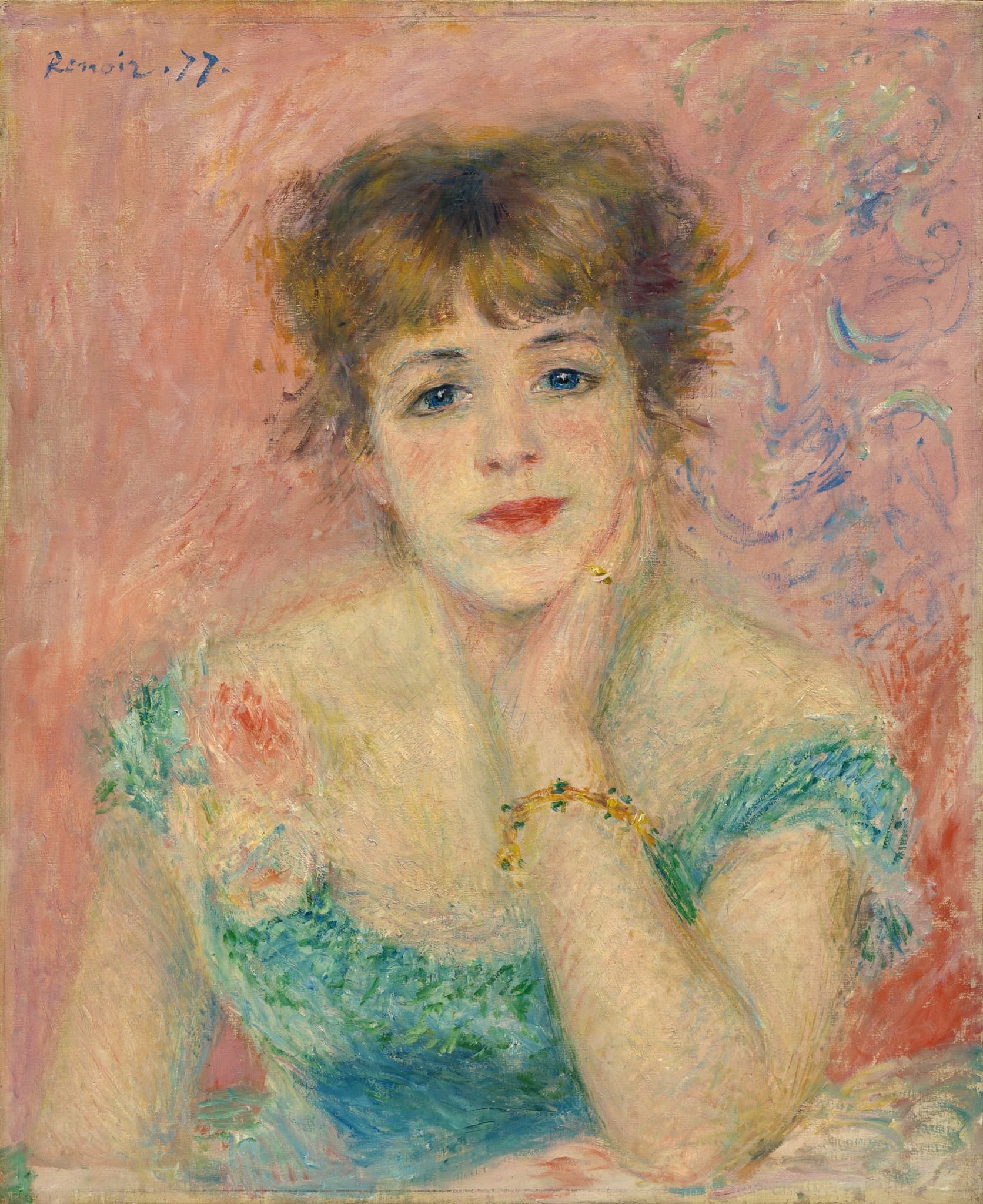
The Pink Portrait the Revolution Seized
Start in 1877. Renoir is broke, ambitious, and tired of being called a lightweight. He paints a young actress from the Comédie‑Française—Jeanne Samary—with a coral-pink atmosphere and a sea‑green dress, a portrait designed to charm the Salon and the paying classes. The picture glows like a debutante’s rumor. It still does. See it up close on our artwork page: /artworks/pierre-auguste-renoir/portrait-of-jeanne-samary.
Essay
The Prettiest SOS on the Seine
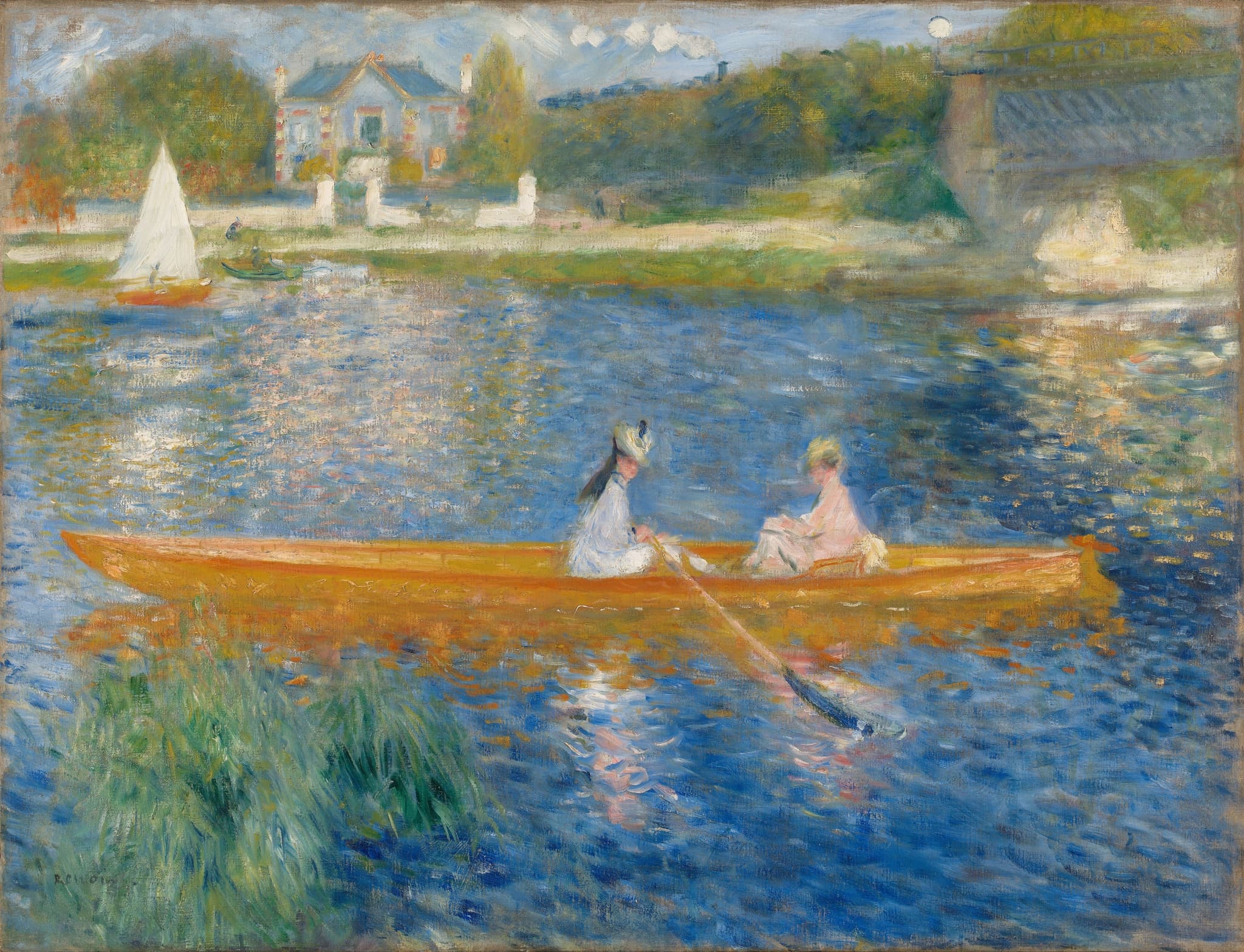
Picture Renoir at thirty-four, rent due, reputation wobbling. He’s fresh from the first Impressionist shockwaves and a Paris press that mocked his friends as incompetents. One reviewer sneered that Renoir painted a woman’s body like “a mass of decomposing flesh with green and purple spots.”[4] The message was clear: stop, or starve.
Essay
The Wheatfield Myth: Van Gogh’s Stormiest Painting Isn’t a Suicide Note
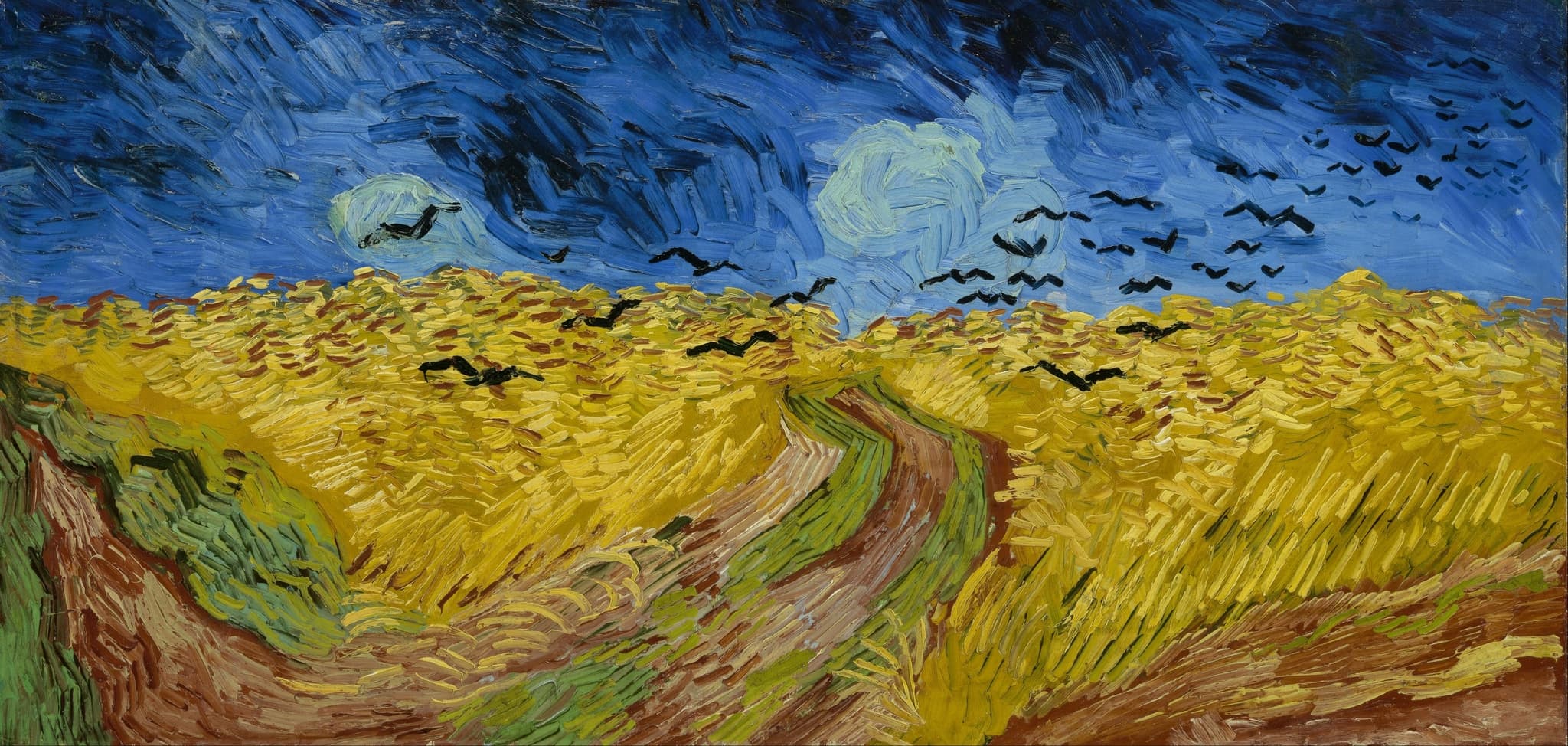
Scroll any feed and you’ll meet this image: a blasted-blue sky, a road that forks and dies, black birds like shrapnel. The caption is almost always the same: his last canvas, his farewell. Our shiver becomes the story.
Essay
Renoir’s Sweetest Breakup
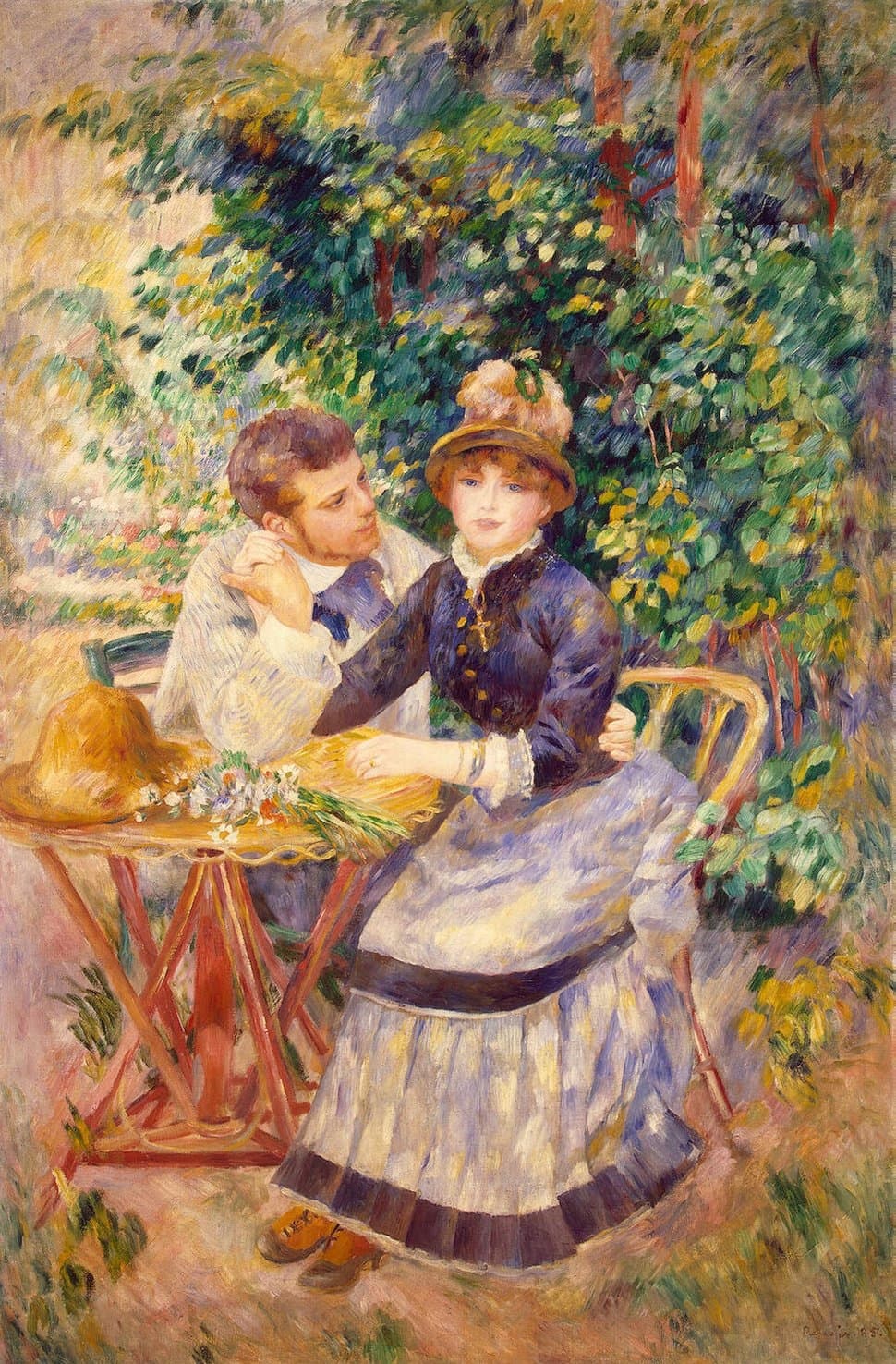
You know this image: a couple under a living arbor, hands grazing over a café table. Soft light. Soft edges. Soft story. Except the year is 1885, and Pierre‑Auguste Renoir is in crisis. The painter who helped spark Impressionism is suddenly telling friends he no longer knows how to paint. The romance on canvas hides a rupture off it.[3][10]
Essay
The Day Monet Turned a Picnic into a Comeback
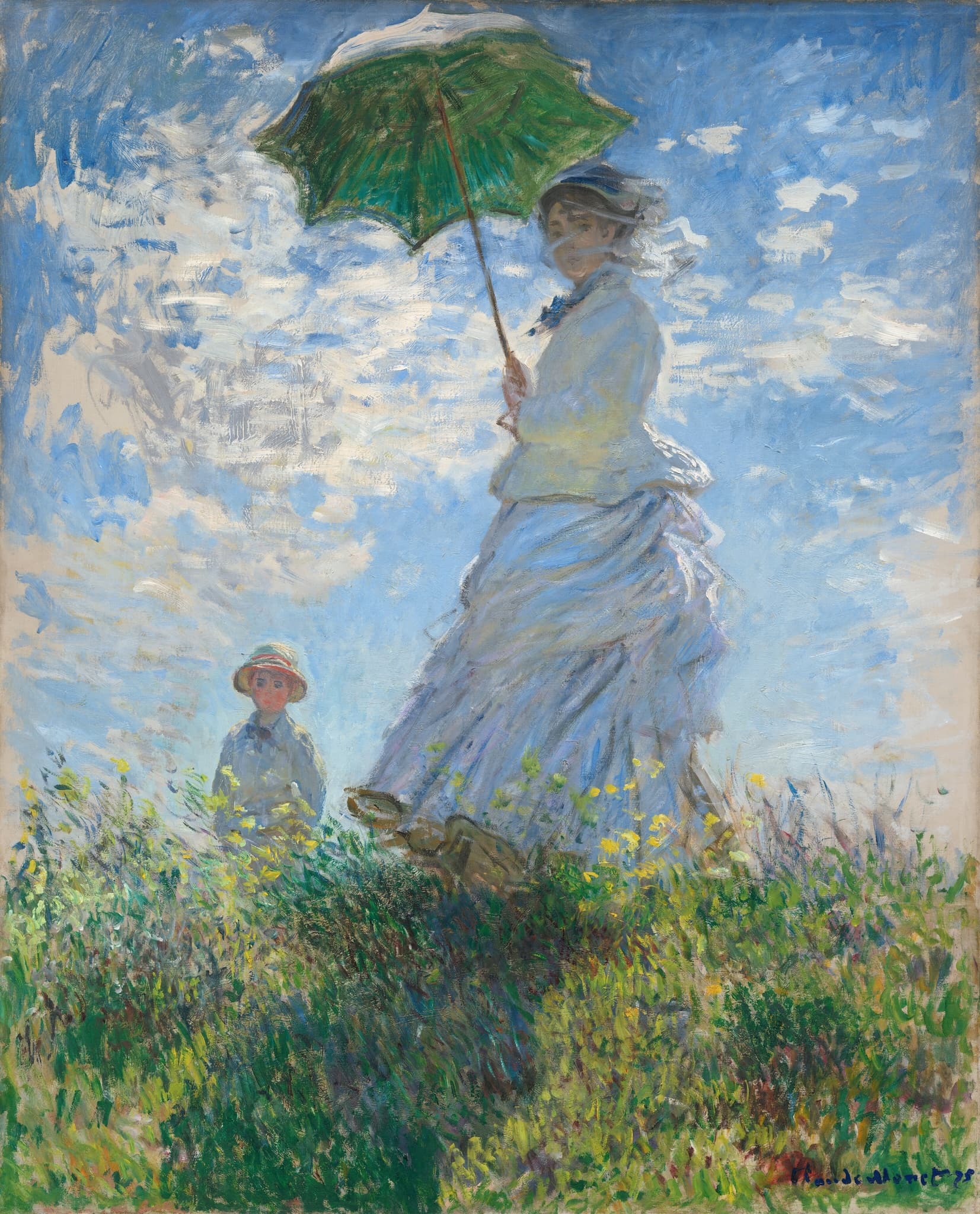
Start here: a hill at Argenteuil, a flash of white dress, a boy blinking in the wind. The painting feels tossed-off and weightless. That’s the trick. Because months earlier, the money and the mood were brutal. In 1875, fresh from the first Impressionist exhibition’s ridicule, Monet and friends tried an auction at Hôtel Drouot. The crowd jeered, prices collapsed, and police were called. His name became shorthand for recklessness with paint, not value. The family’s comfort—rent, food, even paint—was on the line. The parasol wasn’t shade; it was cover. Monet needed an image that could flip the narrative: not starving bohemians, but modern life, bright and breathable, the very leisure new suburban rail lines were selling. Argenteuil was Paris’s weekend playground—sailboats, strolls, picnics, and status on display—exactly the world collectors fancied seeing on their walls.
Essay
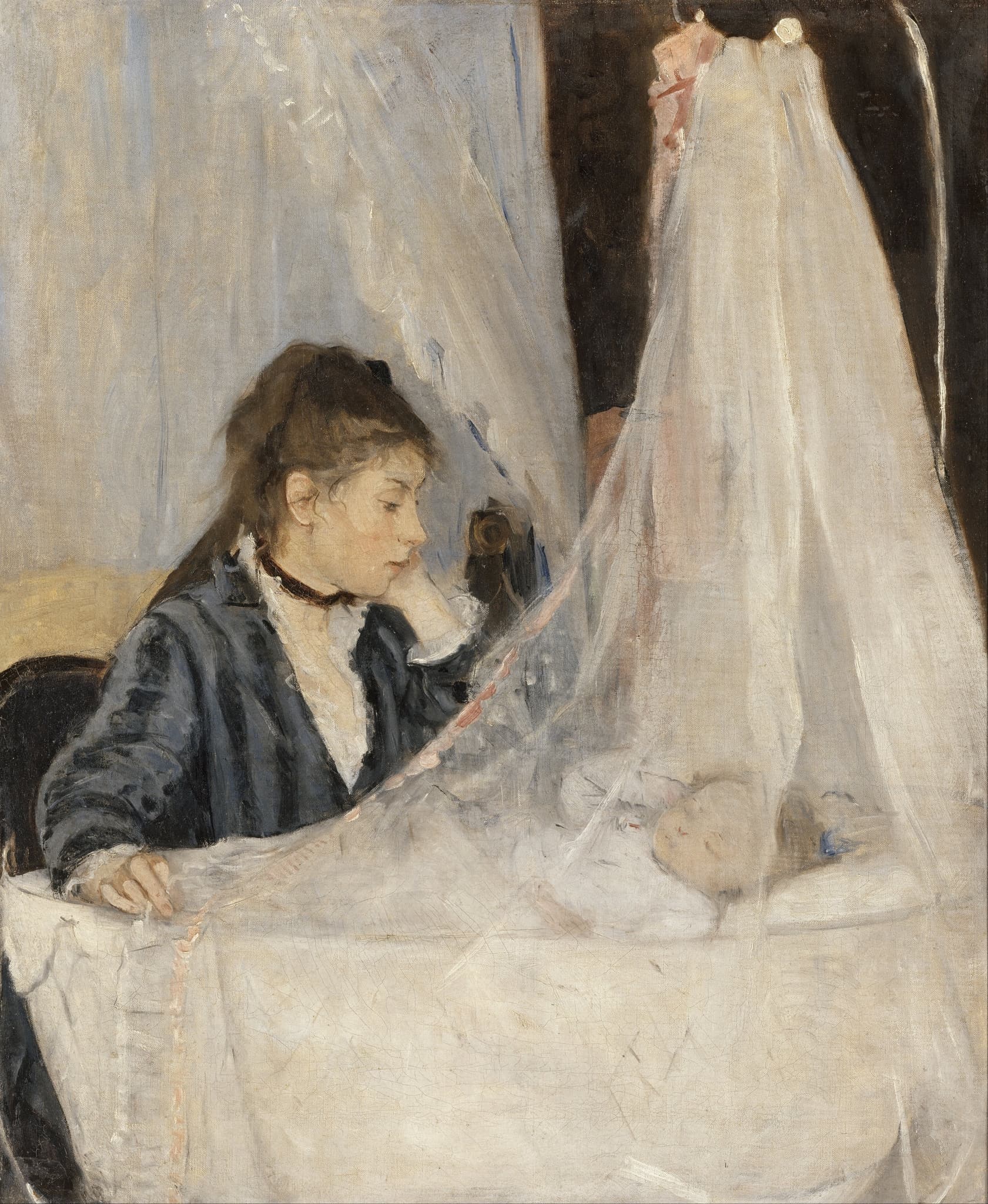
The Cradle Was a Warning, Not a Lullaby
Paris, 1874. A young painter stakes her reputation on a domestic scene while her comrades hang boats, boulevards, and fog. Berthe Morisot chooses a nursery. Money, credibility, and a seat at the table are on the line—because if the public writes her off as merely “feminine,” she’s finished.
Essay
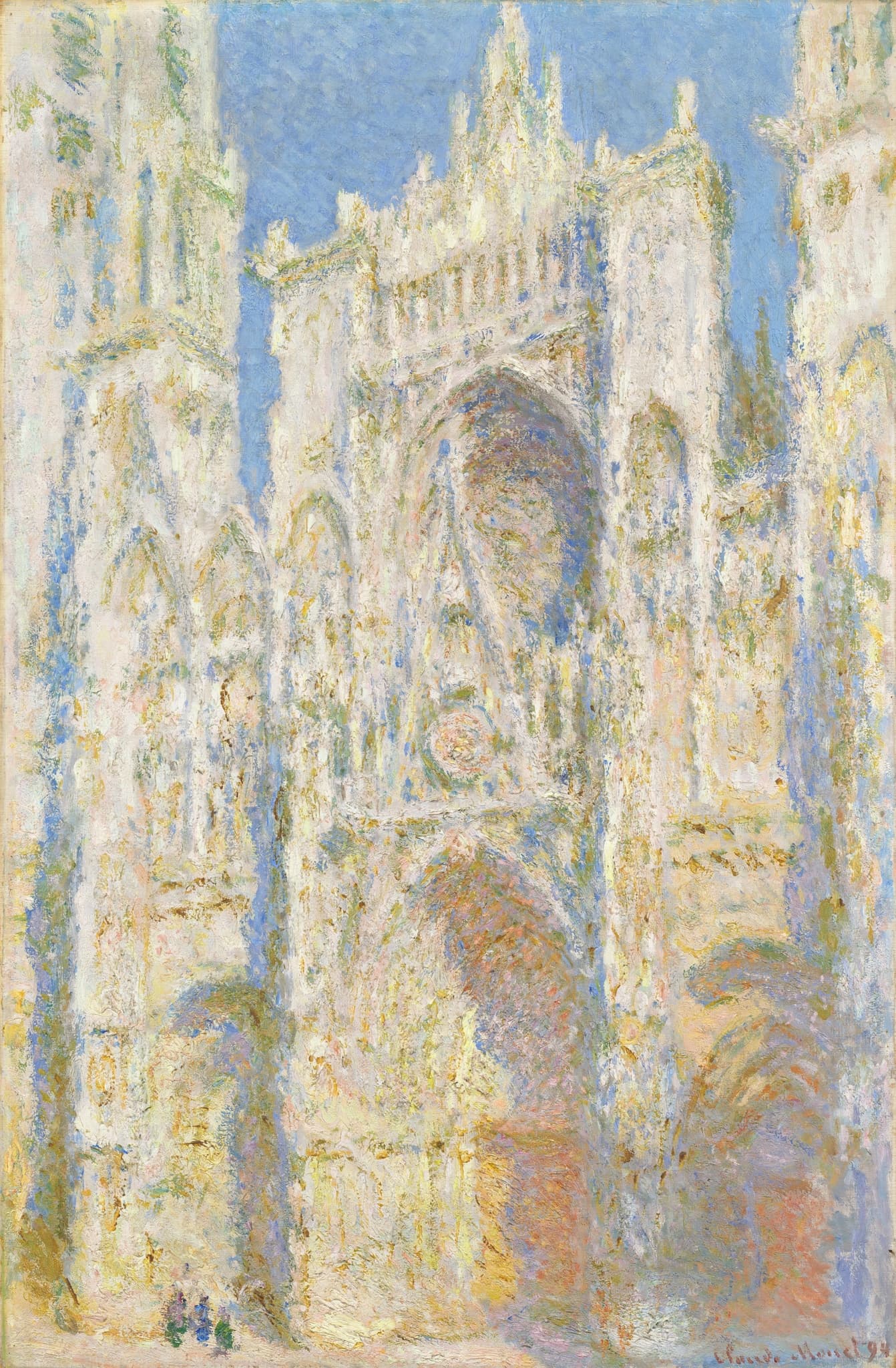
The Cathedral That Took Monet Hostage
The postcard version is easy: stone lace, soft color, Impressionism behaving. But Monet’s cathedral wasn’t decor. It was a duel with the sun, run on minutes and panic, with a dealer betting that the public would finally understand what Impressionism had been saying all along.
Essay
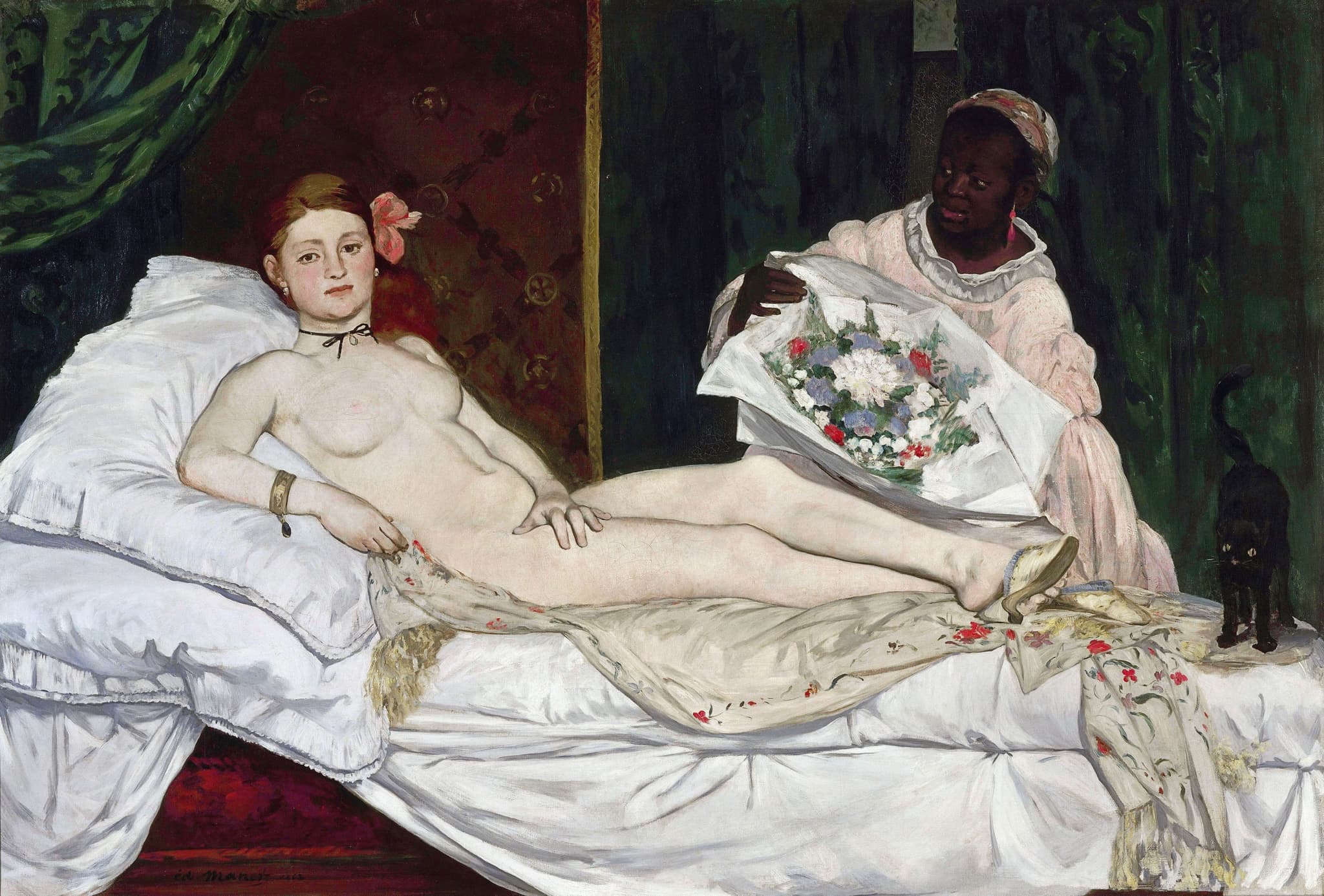
The Woman Paris Refused to See
The Salon was the only career ladder that mattered. Manet needed it. Respectability, buyers, a future—hung on a wall in 1865. Then the crowd arrived, and the painting that wouldn’t behave drew jeers so thick the museum put up a cord to protect it. The Musée d’Orsay is blunt about the reception: scandal, fury, and a guard between public and paint.
Essay
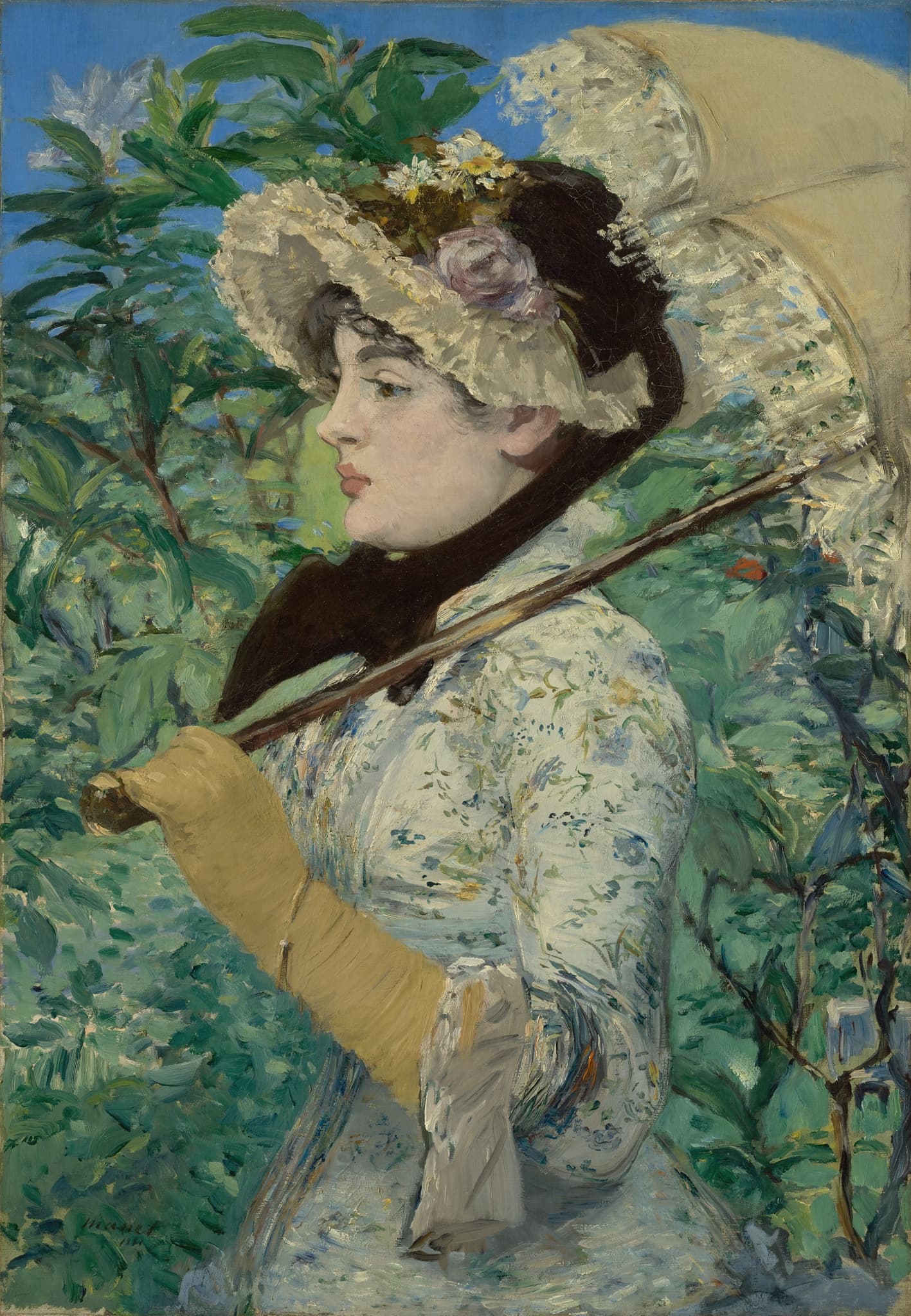
The $65 Million Spring
Christie’s, New York, 2014. Phones light up. The bidding climbs past the price of many houses, then many museums’ annual acquisitions budgets. When the hammer falls, Manet’s Jeanne (Spring) shatters a record and the Getty wins the picture for $65.1 million—a new pinnacle for the artist at auction [3][1].
Essay
The Night Degas Put the Ballerinas in the Back Row
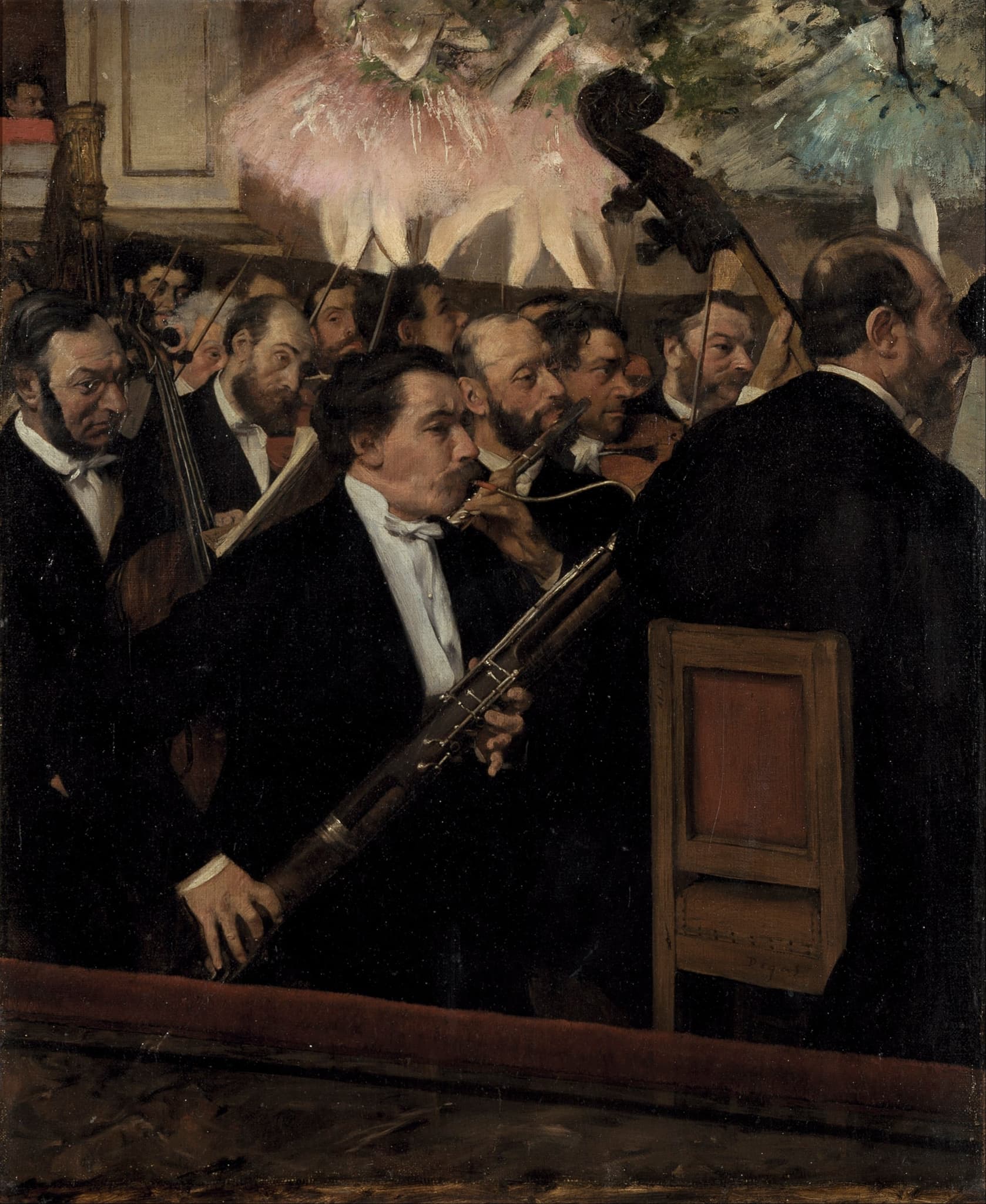
Picture Paris in the late 1860s: velvet boxes, diamonded patrons, ballerinas floating like chandeliers. And then an unknown painter plants his easel where no one is looking—down in the orchestra pit. Why risk it? Because reputation was on the line. Degas was switching gears, ditching history painting for modern life, and the Opéra was the city’s most ruthless stage: art, money, and gossip in a single address.[1] If he chose wrong, he’d stay a nobody. He also had a personal stake. The man gripping that diagonal bassoon is Désiré Dihau—a real friend, a working musician whose salary depended on staying visible to an audience that never looked his way.[2][3] Degas knew the rules of this house, and he was about to break them on canvas.
Essay
Monet’s Quiet Bridge, Built on Noise
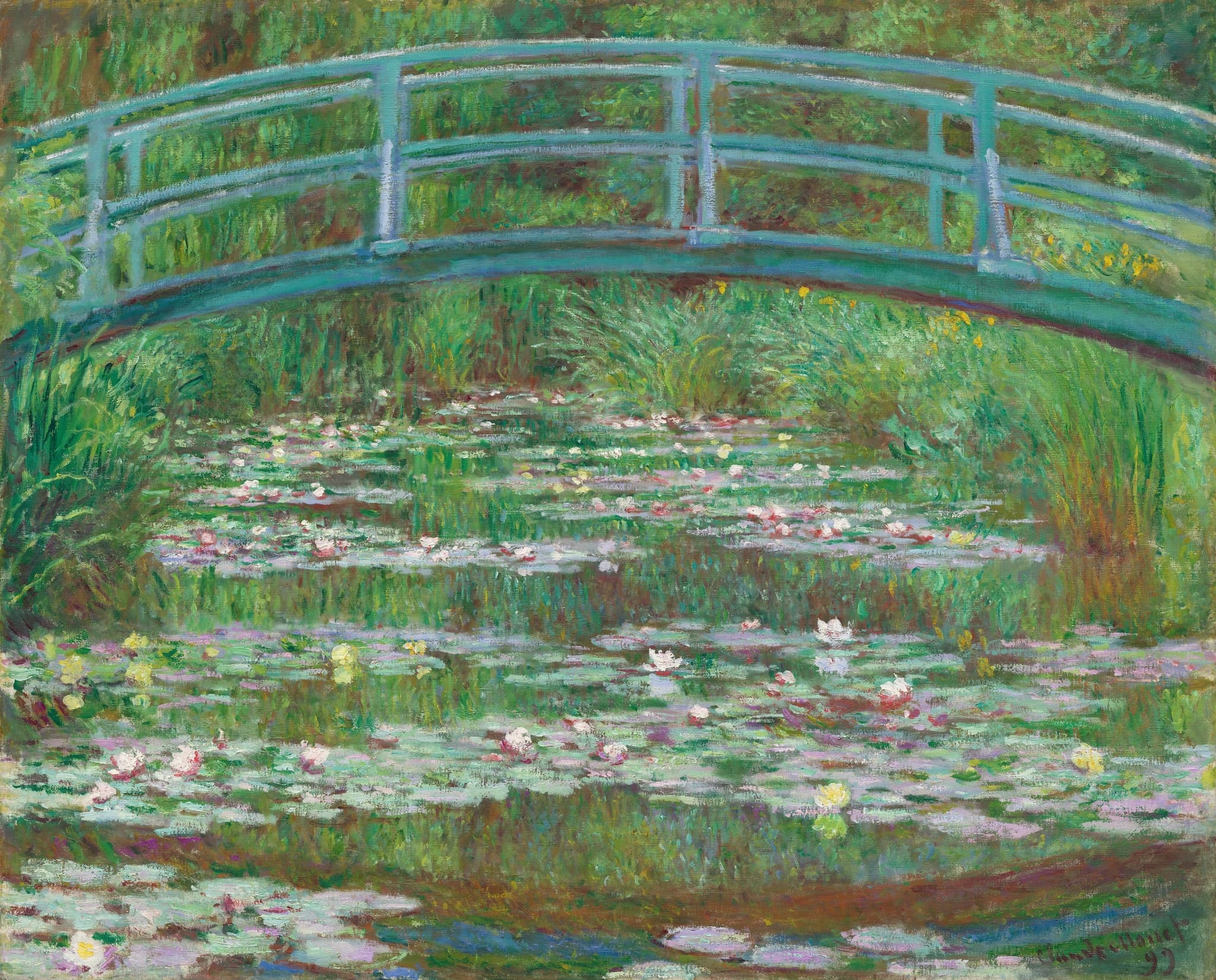
In 1893, Monet walked into local bureaucracy with a radical request: let me reroute a stream and build a lily pond in my backyard. Farmers objected, fearing floods and foreign plants. The painter pushed through anyway, secured permission, and set about reshaping the land at Giverny. The tranquil bridge you know was born out of paperwork and protests, not Zen stillness. [1] Money and reputation were on the line. Monet had finally bought his home in 1890 after years of financial precarity; now he was risking cash and goodwill to turn a garden into a studio—and a studio into a legacy. He wasn’t just planting; he was betting his name. He staged the scene with precision: a curved wooden span, no horizon, and a pond thick with lilies. This wasn’t picturesque chance—it was design. The bridge, lifted from the era’s mania for Japan, signaled a fashionable cool while tightening the composition like a drum. As the National Gallery in London notes, the structure arrived alongside Paris’s craze for Japanese art and prints, which Monet collected obsessively. [2] Then came the first payoff: in 1899, he painted it. If you think the image recorded a walk in the park, consider how hard he worked to make the park exist. The Japanese Footbridge compresses space, removes the sky, and turns reflection into theater, a trick he could repeat at will from his doorstep. [1] [5]
Essay
The Prettiest Sunset in Art Was Air Pollution
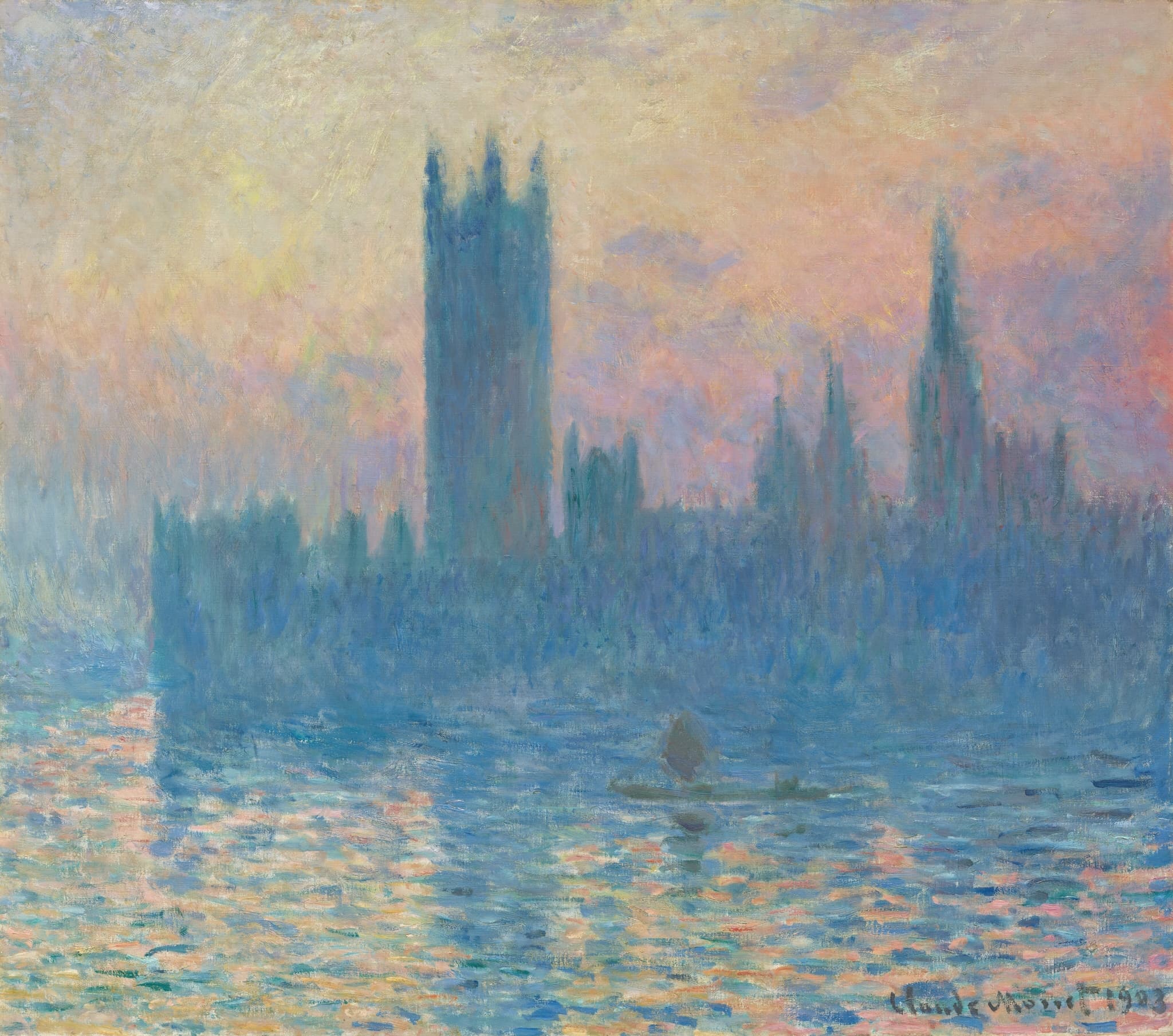
He arrived not for Parliament’s Gothic drama but for the weather report. From a window on the south bank, Monet lined up the towers and waited for the sky to burn through the haze. The National Gallery of Art notes he finished the canvas in 1903, after returning to Giverny to tune the color of the Thames like a violin string—then unveiled the London series in 1904, betting his mature reputation on a city that barely wanted to be seen at all. [NGA link][1]
Essay
Monet Booked the Steam
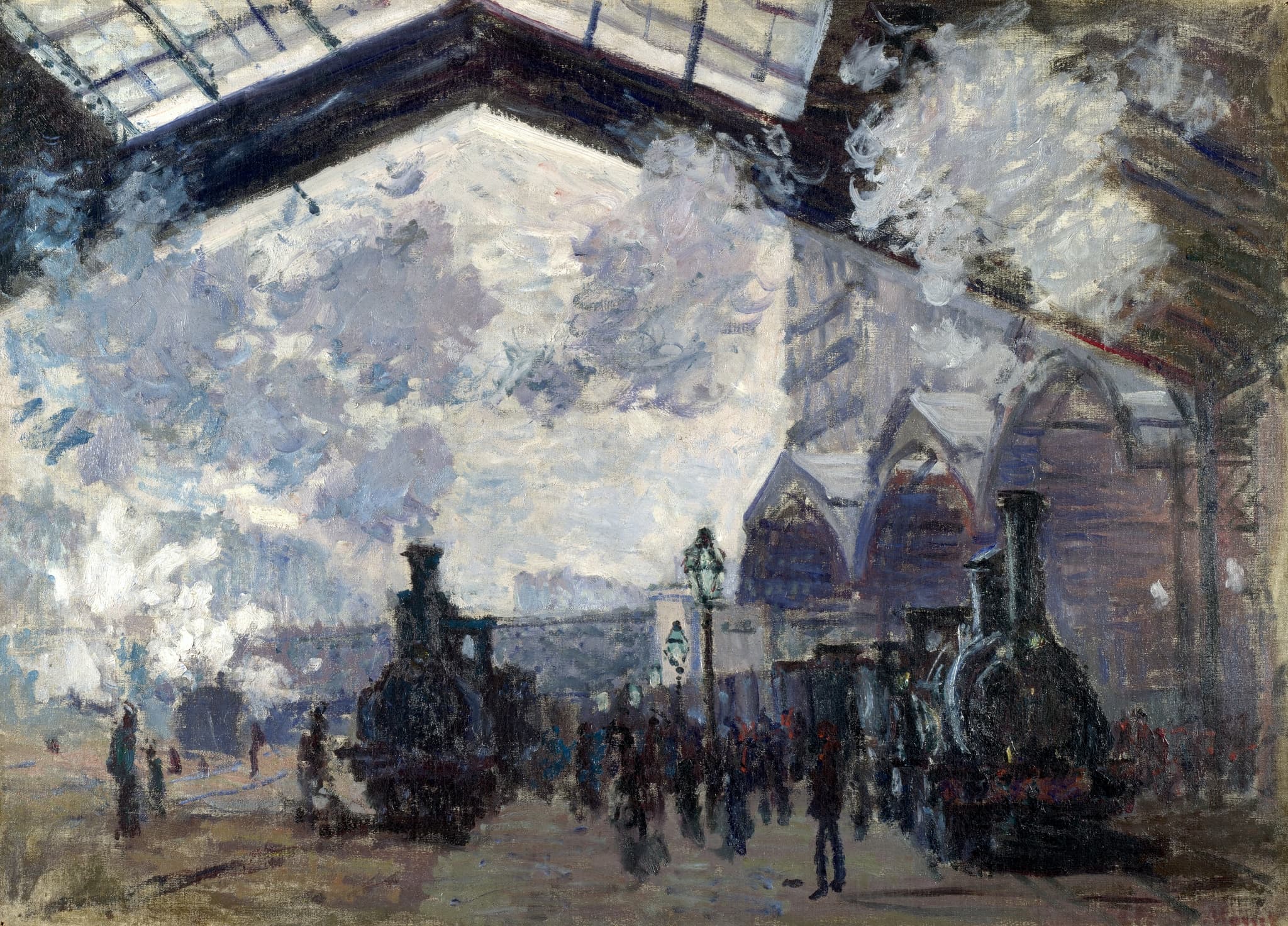
Monet was in his late thirties and still not a sure thing. The Impressionists had split with the Salon, but the public wasn’t buying in bulk. He needed a subject that felt undeniable—modern, popular, unmistakably Paris. He picked the engine room of the city itself: the Gare Saint-Lazare, the Western Railway’s iron-and-glass cathedral of departures.
Essay
Grit in the Light: Monet’s Trouville, Captured Not Just Seen
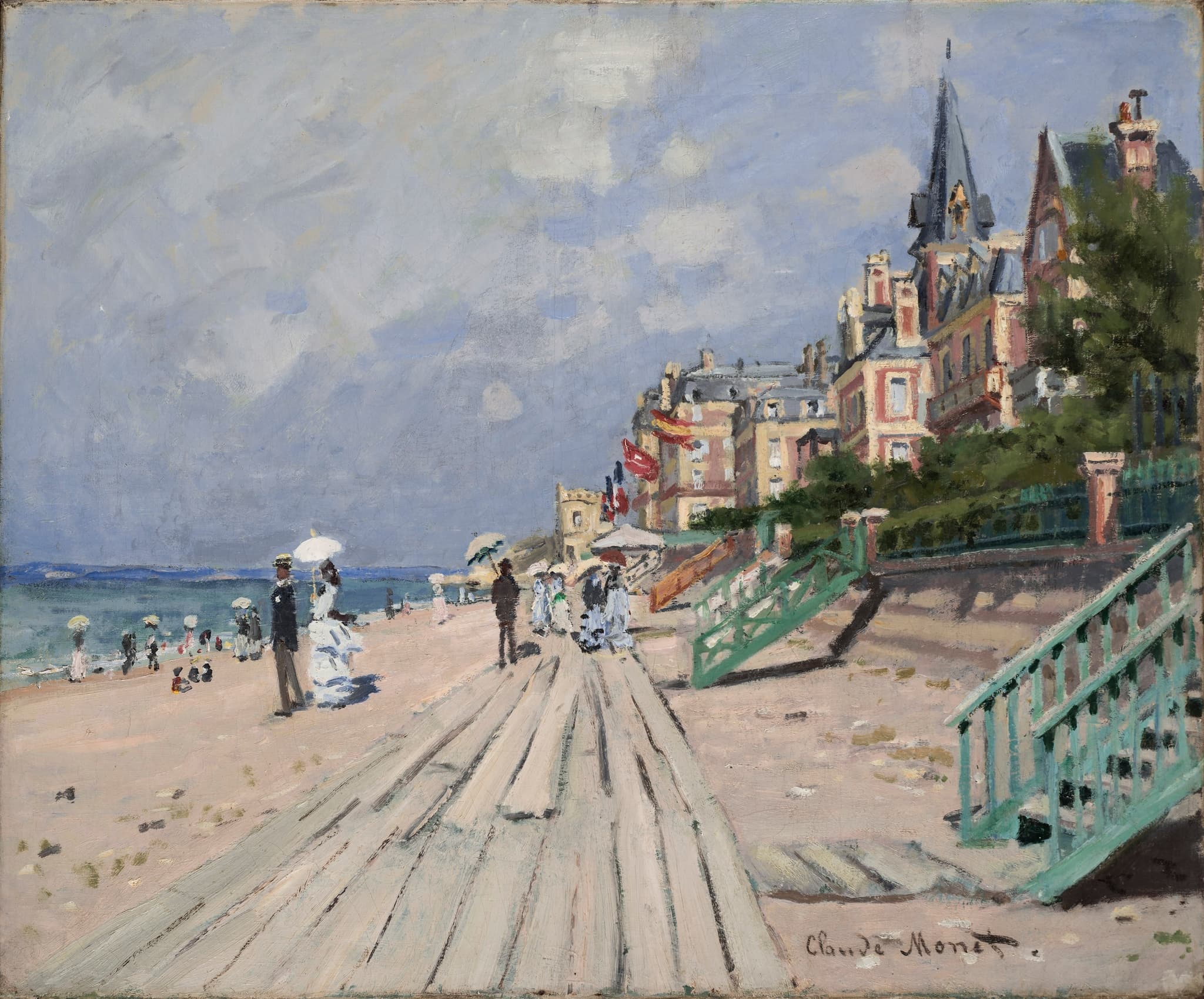
Stand before the National Gallery’s Beach at Trouville and the composition immediately leans into you: a boardwalk pulled taut on the diagonal, parasols opening like sails, and a regiment of red flags firing toward the Channel. The confection of hotels to the right—anchored by the fashionable Hôtel des Roches Noires—presses the promenade into a stage for modern leisure, a Second Empire theater of strolling and display. Monet painted it on site in the summer of 1870, a blustery day made legible by architecture and cloth rather than narrative incident, as the museum’s entry for the work recounts ([The Beach at Trouville](https://www.nationalgallery.org.uk/paintings/claude-monet-the-beach-at-trouville) [1]). [Image: Beach at Trouville (1870) — /artworks/claude-monet/beach-at-trouville] That slanted boardwalk does more than guide the eye: it sets a vector. From left surf to right-hand steps, every stroke queues to the wind’s push, a coastal physics lesson rendered in broken blues and bleached ochres.
Essay
The Wind Is the Protagonist: Monet’s Beach at Trouville as a Pre-Digital Live Feed
Beach at Trouville looks, at first glance, like a souvenir of a fashionable afternoon: sun-struck planks, white parasols, genteel promenaders. But every element is drafted into a single task—measuring the air. The diagonal boardwalk hurries the eye past the figures; a volley of red flags snaps mid-gust; skirts and veils flare into vectors. In Monet’s 1870 season at the Normandy resort, modern leisure had met meteorology—tourism built to be felt in motion [2][4]. [Artwork: /artworks/claude-monet/beach-at-trouville] That sense of motion anchors the canvas in a specific place and moment. Trouville had exploded into a Second Empire playground, its grand hotels and villas marching right up to the sand. Monet painted those very facades elsewhere that same season, including the newly fashionable Hôtel des Roches Noires—a statement of seaside modernity still rising from the dunes [1].
Most Expensive Gustav Klimt Paintings
Explore ranked valuations of Gustav Klimt's most valuable works →
Featured Artworks
Portrait of Adele Bloch-Bauer I
Gustav Klimt (1907)
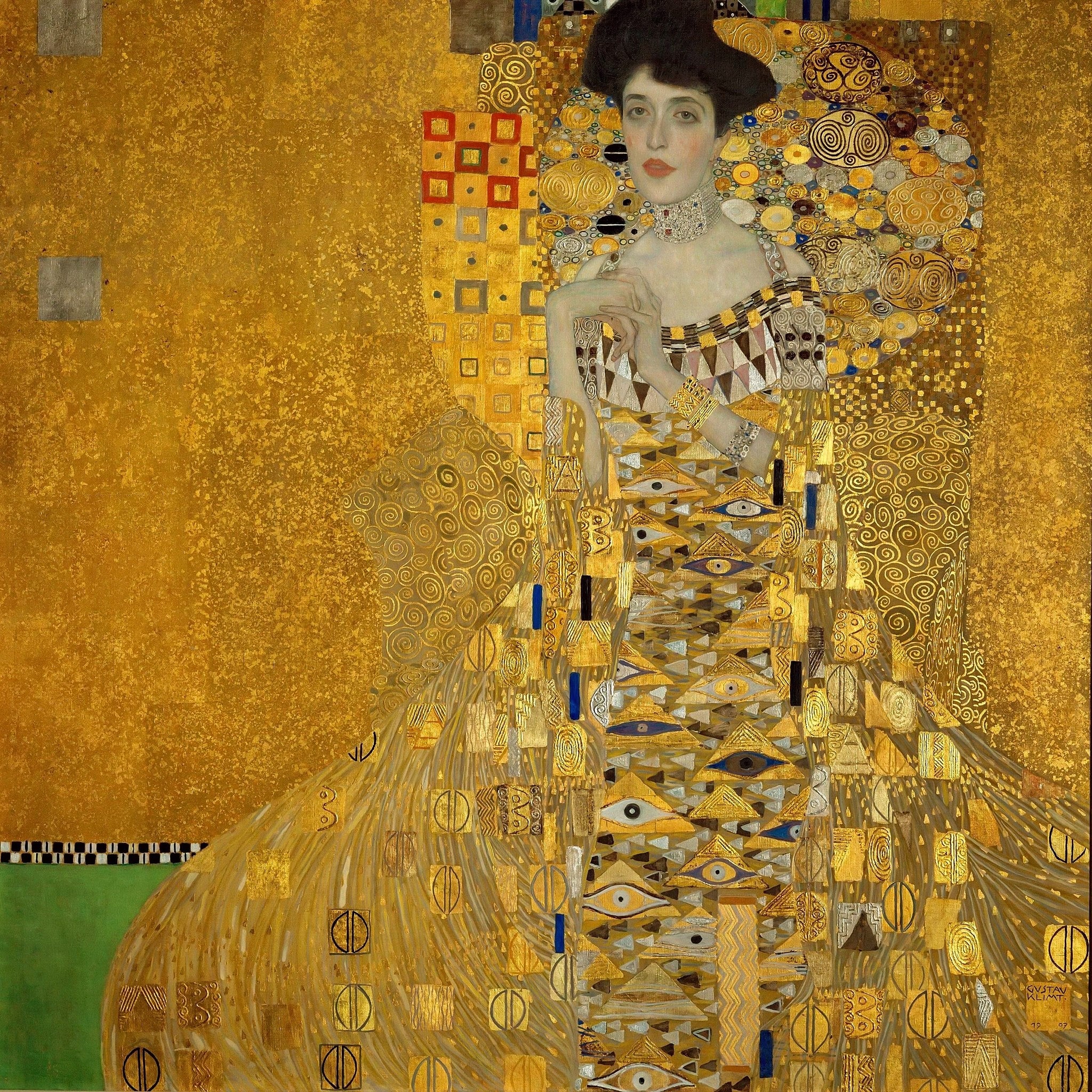
Gustav Klimt’s Portrait of Adele Bloch-Bauer I stages its sitter as a <strong>secular icon</strong>—a living presence suspended in a field of gold that converts space into <strong>pattern and power</strong>. The naturalistic face and hands emerge from a reliquary-like cascade of eyes, triangles, and tesserae, turning light, ornament, and status into the painting’s true subjects <sup>[1]</sup><sup>[2]</sup>.
Birch Forest
Gustav Klimt (1903)
Sunflower
Gustav Klimt (1907/1908)
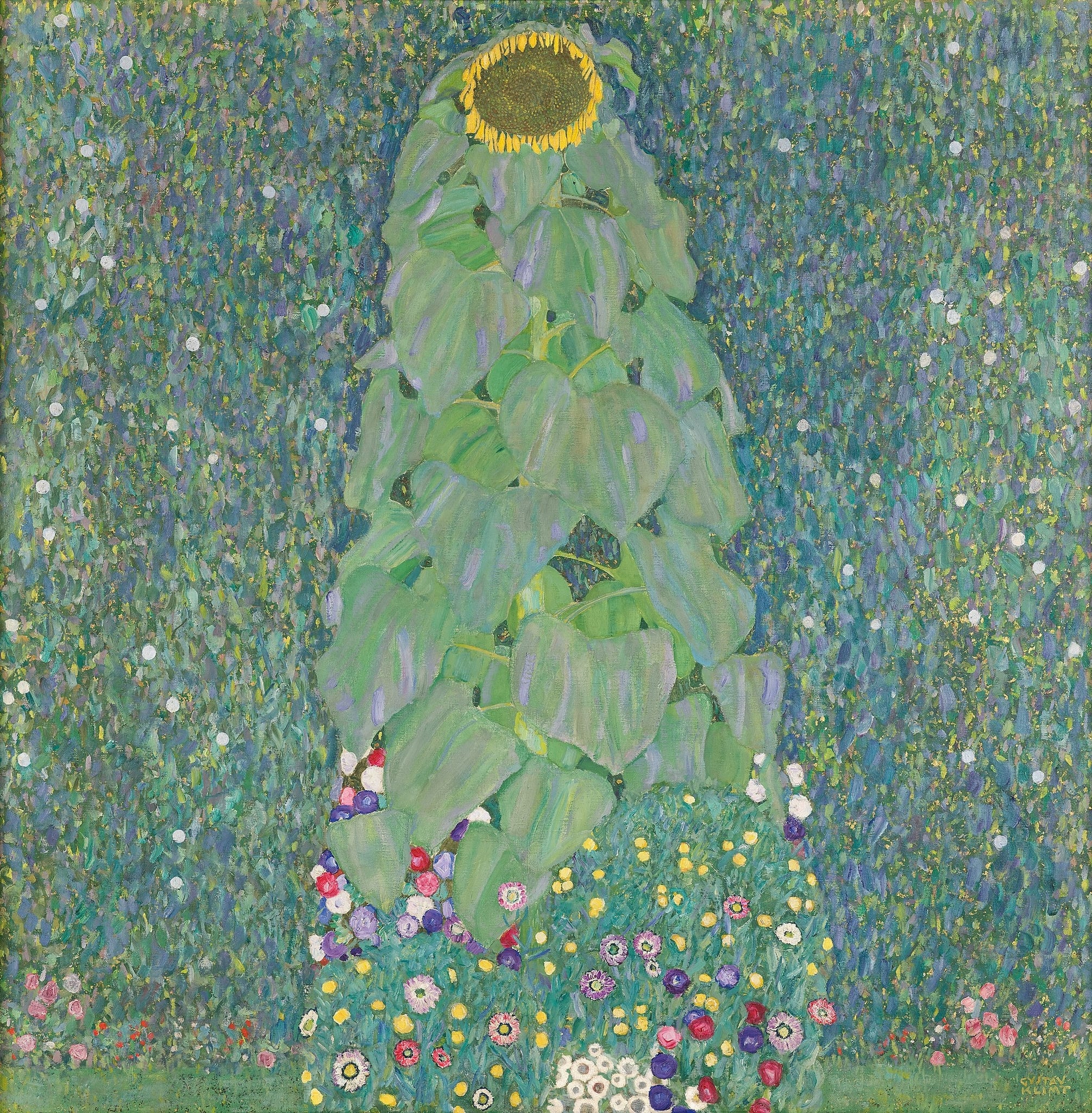
Gustav Klimt’s Sunflower turns a single bloom into a <strong>monumental, figure-like presence</strong>. A tapering stack of broad, drooping leaves rises from a <strong>mosaic-like carpet of round blossoms</strong>, crowned by a gold-flecked disc that glows against a cool, stippled field. The work fuses <strong>portrait, icon, and landscape</strong> into one emblem of vitality and quiet sanctity <sup>[1]</sup><sup>[2]</sup>.
Cottage Garden with Sunflowers
Gustav Klimt (1906–1907 (signed 1907))
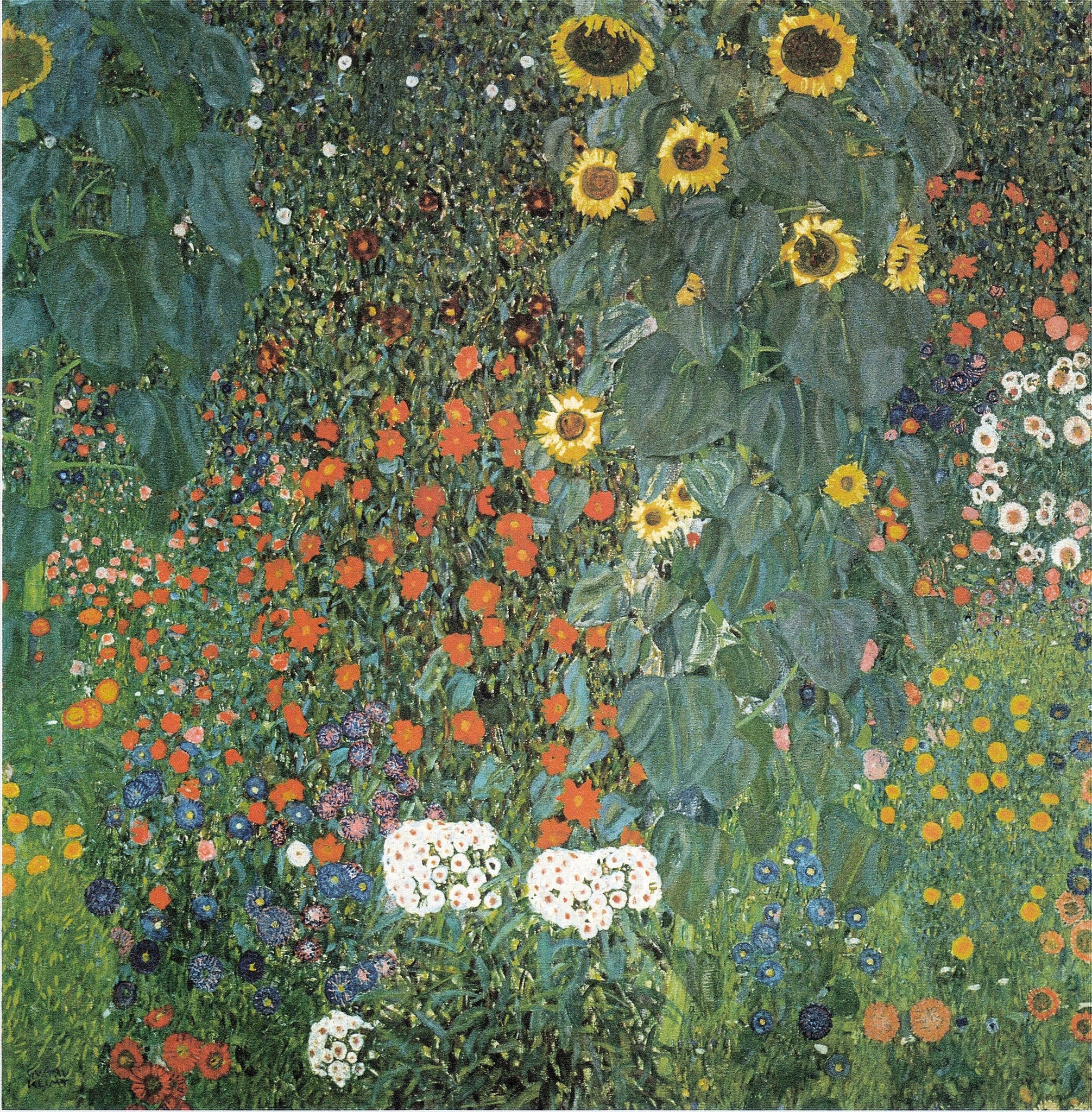
Cottage Garden with Sunflowers is a square, horizonless field of blooms where a vertical column of <strong>sunflowers</strong> anchors an all-over weave of color and pattern. Klimt fuses <strong>ornament and nature</strong>, turning a humble Litzlberg cottage plot into a radiant matrix of cyclical life and renewal <sup>[1]</sup><sup>[4]</sup><sup>[5]</sup>.
The Kiss
Gustav Klimt (1908 (completed 1909))
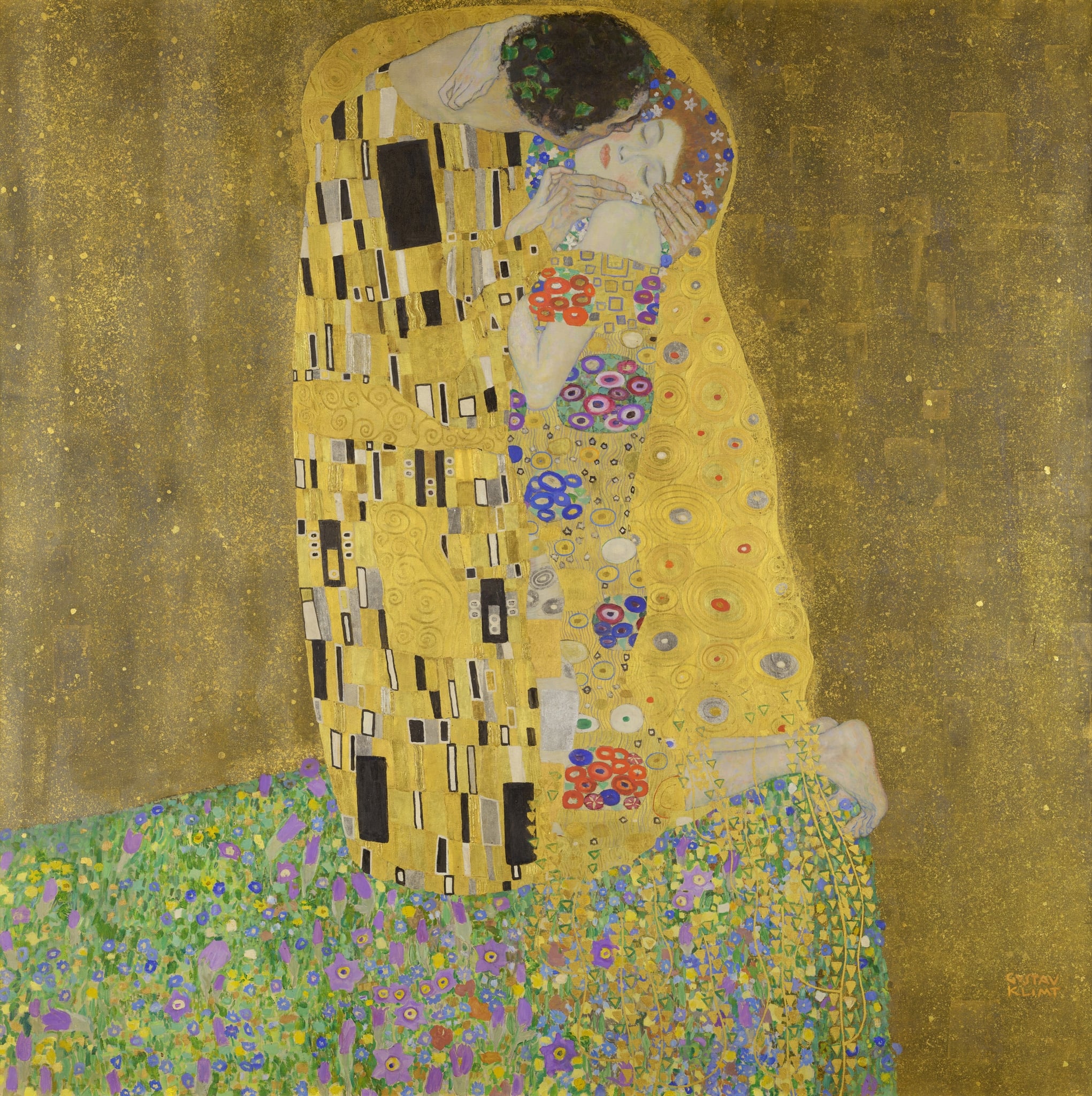
The Kiss stages human love as a <strong>sacred union</strong>, fusing two figures into a single, gold-clad form against a timeless field. Klimt opposes <strong>masculine geometry</strong> (black-and-white rectangles) to <strong>feminine organic rhythm</strong> (spirals, circles, flowers), then resolves them in radiant harmony <sup>[1]</sup><sup>[2]</sup>.
The Tree of Life
Gustav Klimt (1910–1911 (design; mosaic installed 1911))
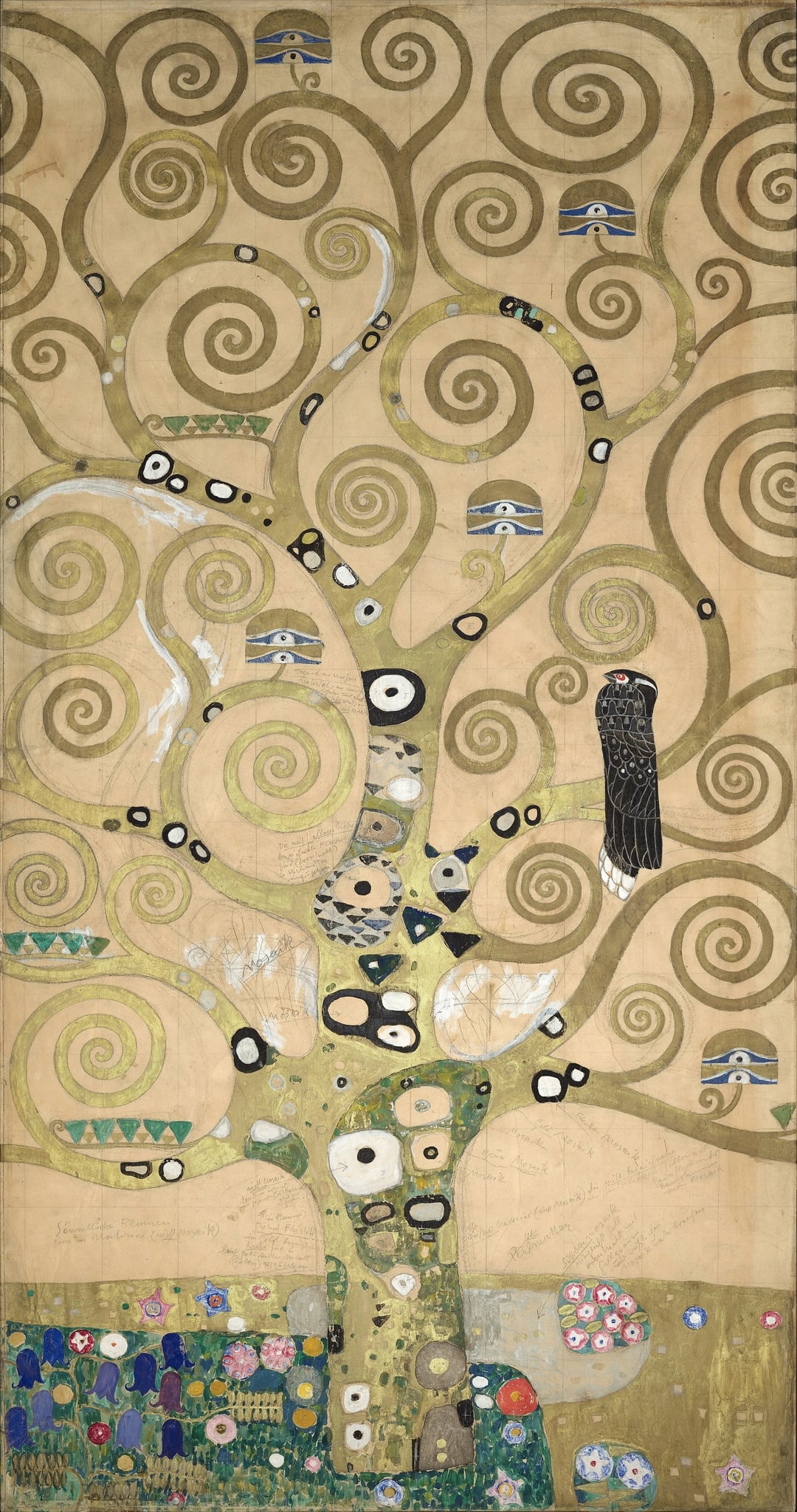
Gustav Klimt’s The Tree of Life crystallizes a <strong>cosmological axis</strong> in a gilded ornamental language: a rooted trunk erupts into <strong>endless spirals</strong>, embedded with <strong>eye-like rosettes</strong> and shadowed by a black, red‑eyed bird. Designed as part of the Stoclet dining‑room frieze, it fuses <strong>symbolism and luxury materials</strong> to link earthly abundance with timeless transcendence <sup>[1]</sup><sup>[2]</sup>.
The Kiss (Lovers)
Gustav Klimt (1907–1908 (Belvedere lists 1908/09))
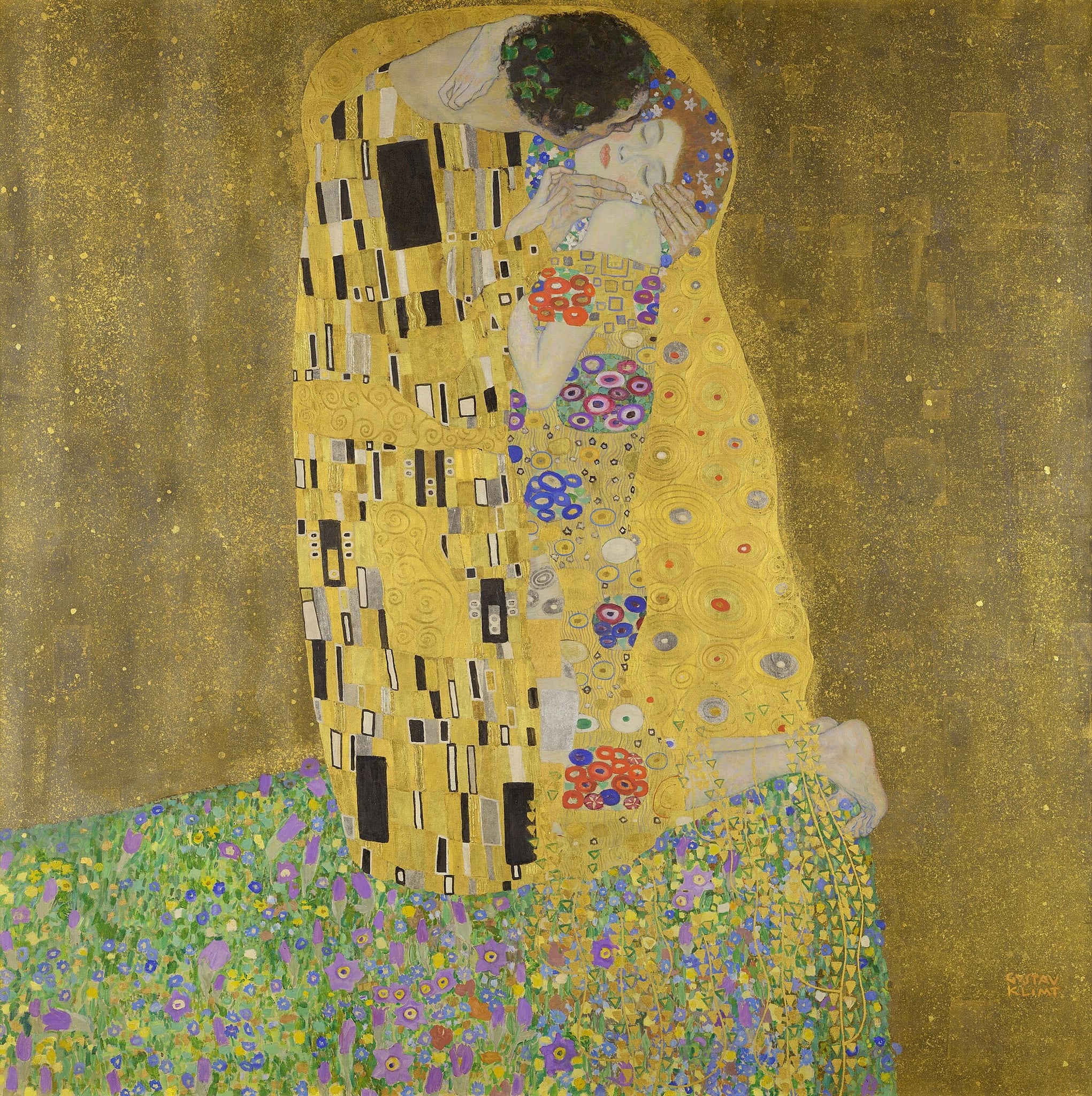
The Kiss (Lovers) crystallizes Klimt’s <strong>Golden Period</strong> ideal: erotic union staged as a sacred vision. Two bodies fuse beneath a single golden mantle, poised on a flowered ledge at the brink of the unknown, where <strong>pattern becomes symbol</strong> and intimacy becomes icon.
Flowering Poppies
Gustav Klimt (1907)
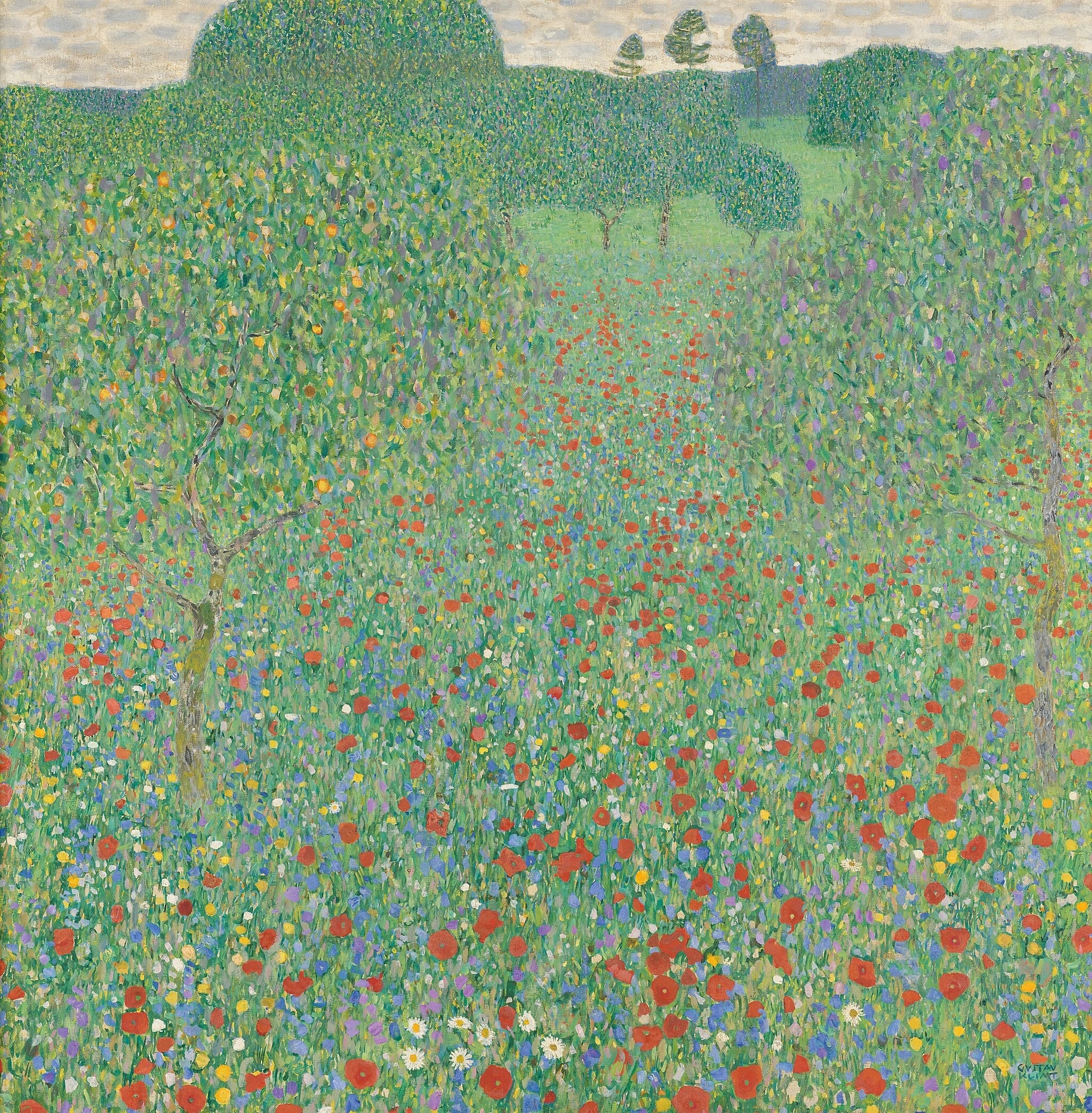
Gustav Klimt’s <strong>Flowering Poppies</strong> (1907) turns a meadow into a shimmering, all-over field where botany becomes <strong>ornament</strong>. A square canvas packed with red poppies, daisies, and fruiting trees compresses depth and invites a drifting gaze rather than linear recession <sup>[1]</sup><sup>[2]</sup>. The result is a sensuous, immersive vision that fuses observed nature with <strong>decorative abstraction</strong> <sup>[2]</sup>.
Farmhouse in Buchberg (Upper Austrian Farmhouse)
Gustav Klimt (1911)
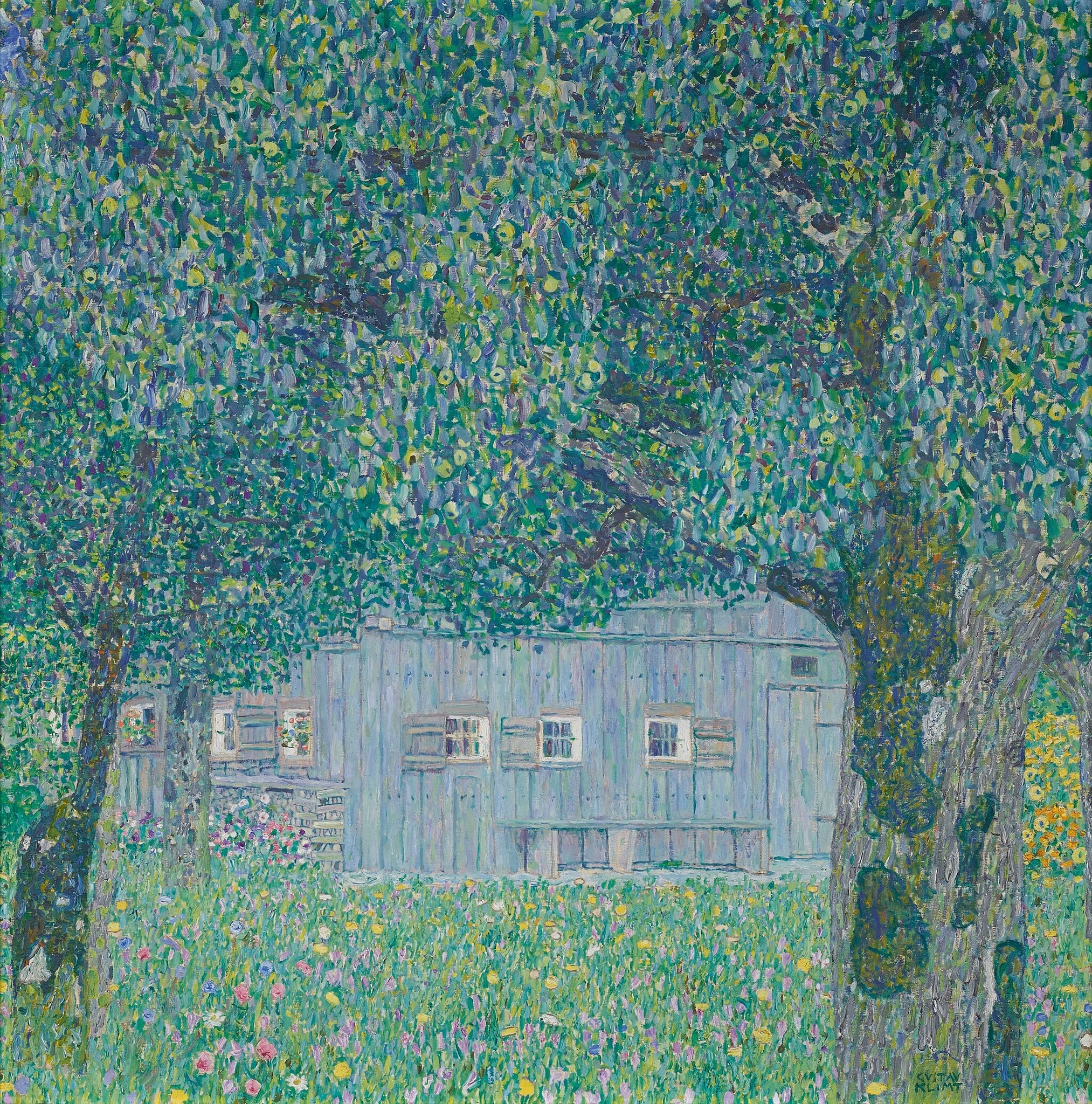
Gustav Klimt’s Farmhouse in Buchberg (Upper Austrian Farmhouse) renders a rural dwelling almost absorbed by an orchard, its cool façade held in balance against a vibrating canopy of leaves and a jewel-like meadow. Through a square format and <strong>selective pointillism</strong>, Klimt fuses house, trees, and flowers into a contemplative, patterned field that privileges <strong>stillness</strong> over incident <sup>[1]</sup><sup>[6]</sup>. The work turns everyday architecture into an emblem of <strong>refuge within fecund nature</strong>.
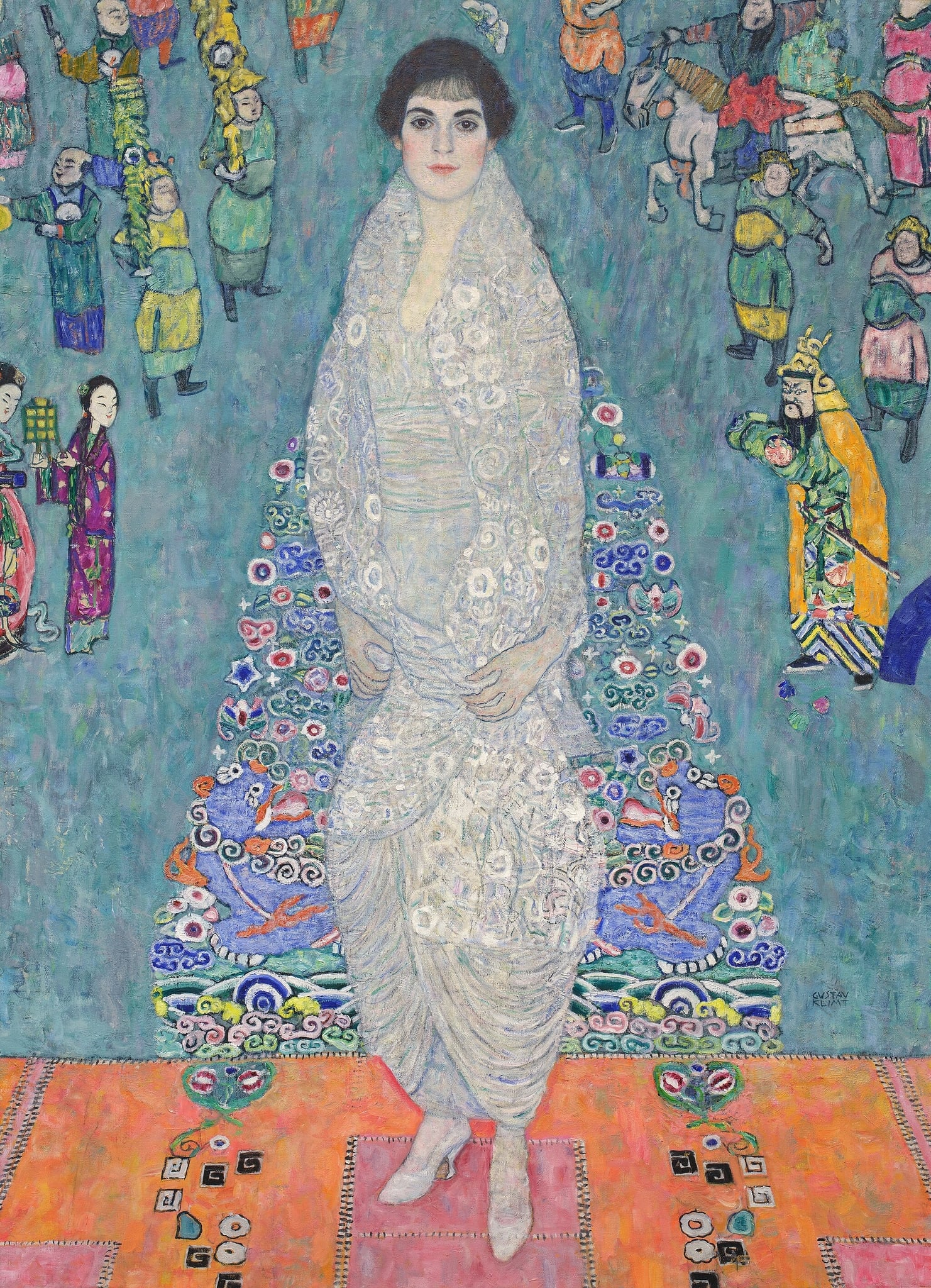
Portrait of Elisabeth Lederer
Gustav Klimt
Girlfriends (Water Serpents I)
Gustav Klimt (1904; last revisions by 1907)
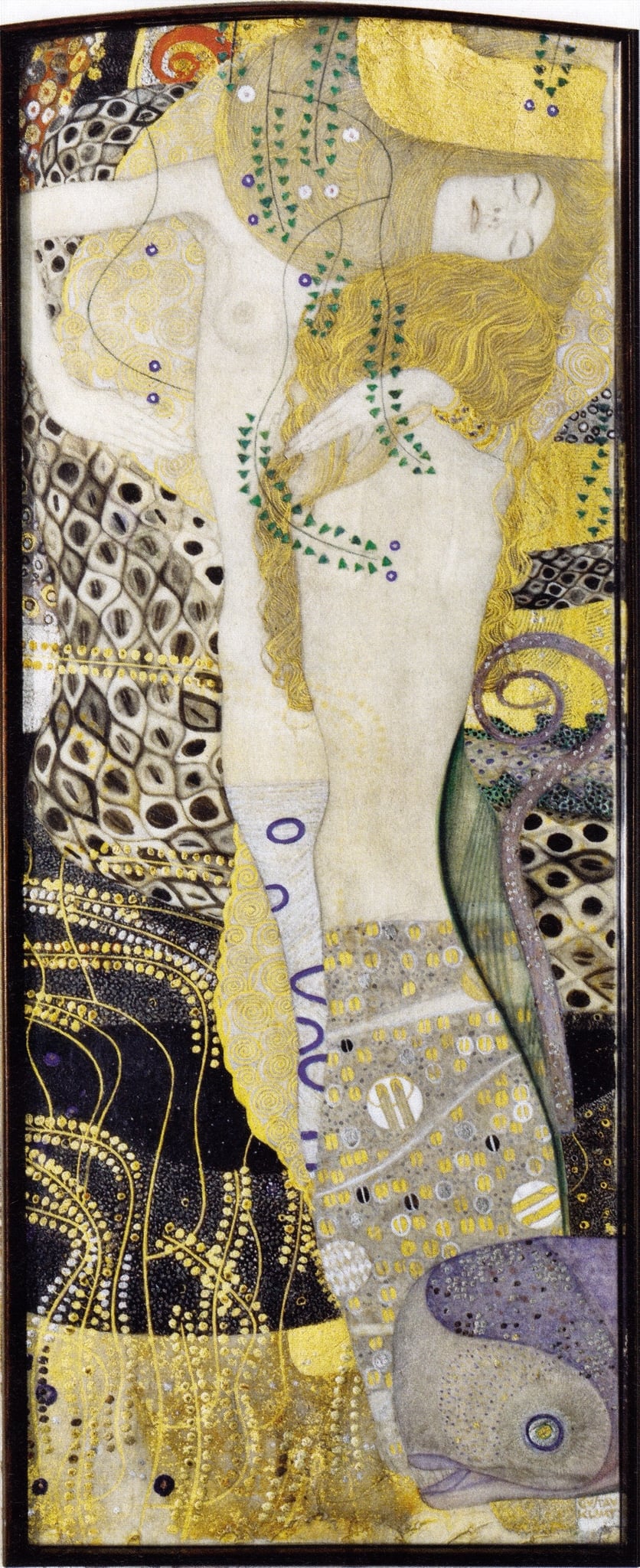
Gustav Klimt’s Girlfriends (Water Serpents I) stages two elongated nudes drifting in a jeweled, underwater field where bodies and ornament fuse into a single, <strong>luminous</strong> surface. Closed eyes, interlaced arms, and hair that streams like <strong>currents</strong> seal the scene in intimate secrecy, while metallic scales, eye-shaped ovals, and a watchful fish charge the water with <strong>erotic</strong> and <strong>mythic</strong> tension <sup>[1]</sup><sup>[2]</sup><sup>[3]</sup>.
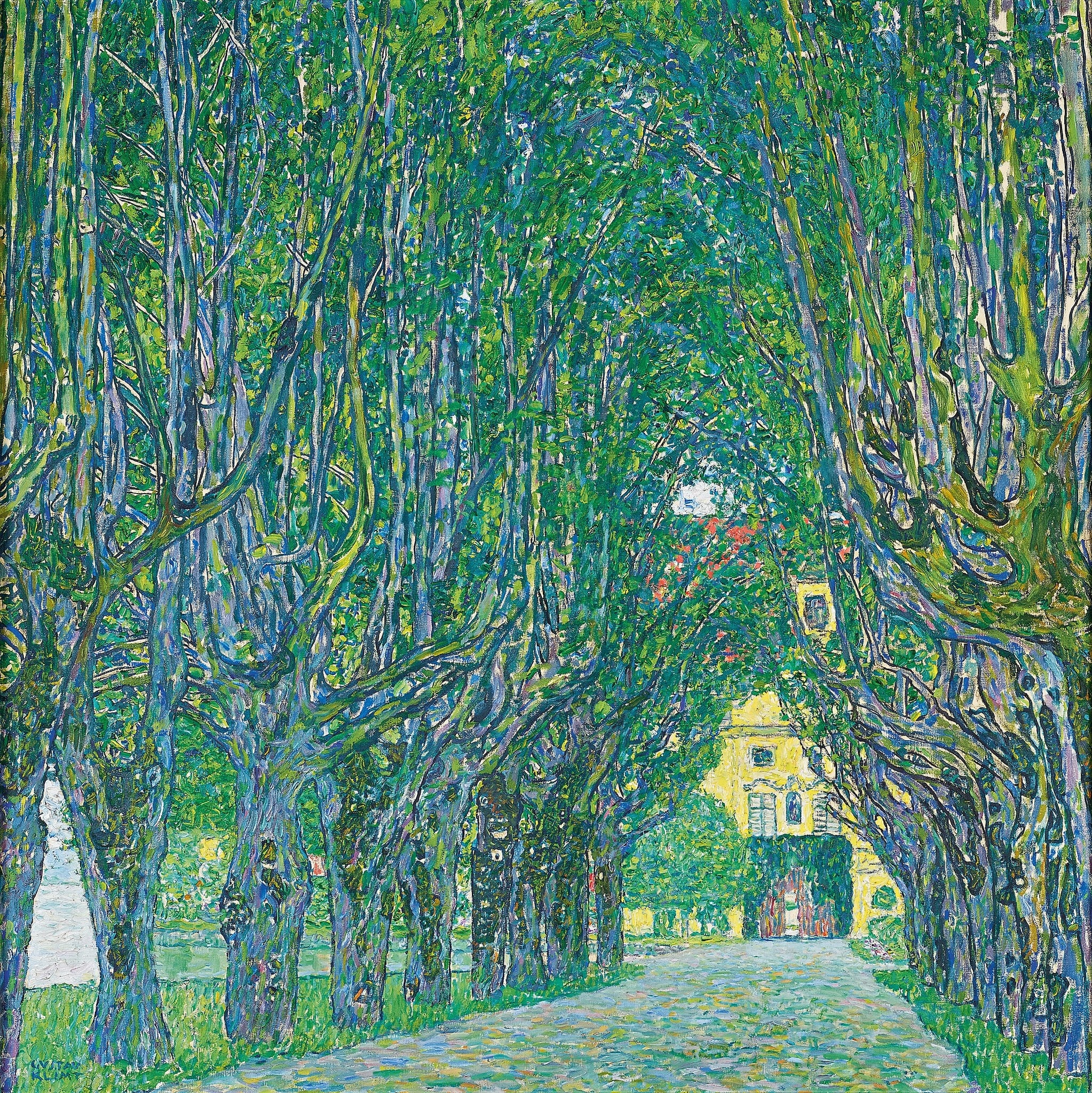
Avenue in Schloss Kammer Park
Gustav Klimt (1912)
Gustav Klimt’s Avenue in Schloss Kammer Park stages a ceremonial approach beneath a vaulted <strong>tunnel of linden trees</strong>, their pollarded limbs clasping to form a green nave. A cobbled axis pulls the eye toward a sunlit <strong>ocher façade and arched doorway</strong>, while Klimt’s tessellated strokes make foliage, bark, and shadow flicker between <strong>pattern and depth</strong> <sup>[1]</sup><sup>[5]</sup><sup>[6]</sup>.
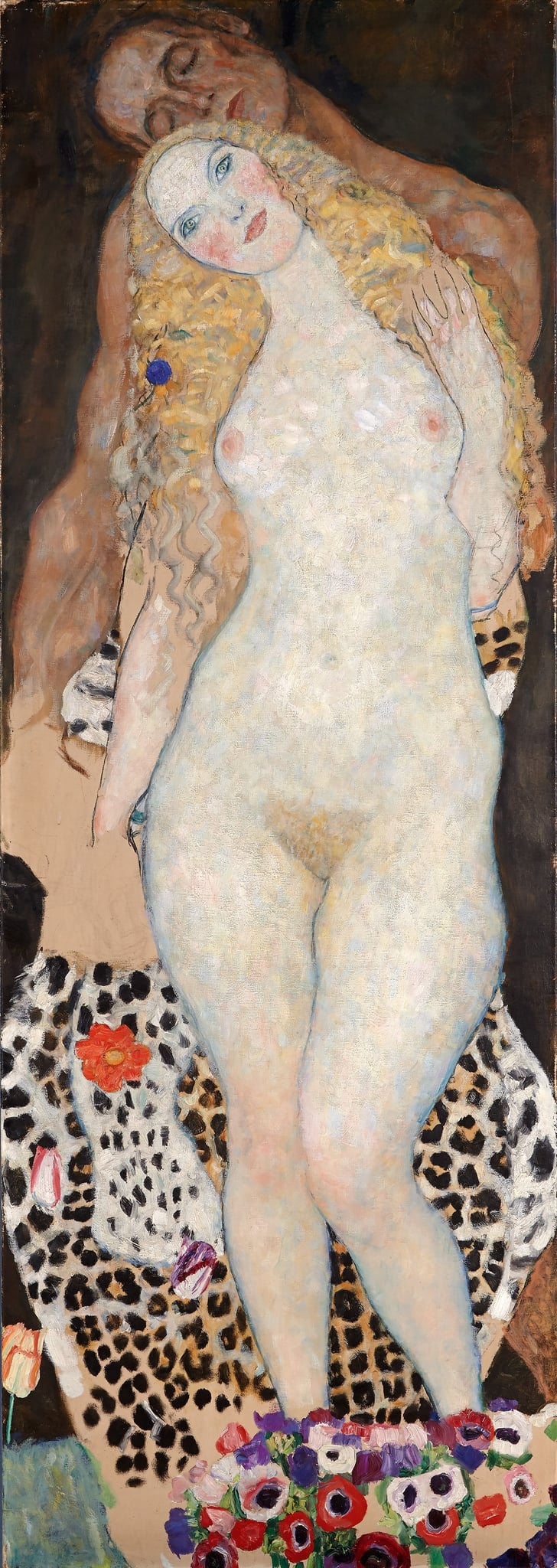
Adam and Eve
Gustav Klimt (1916–1918 (unfinished))
Gustav Klimt’s Adam and Eve recasts the biblical pair as a <strong>sensual, timeless allegory</strong> rather than a didactic tale. Eve’s <strong>luminous, opalescent body</strong> and direct gaze dominate, while Adam recedes in shadow, enfolding her amid a <strong>leopard pelt</strong> and a <strong>carpet of anemones</strong> that signal erotic vitality and fertility <sup>[2]</sup><sup>[3]</sup>.
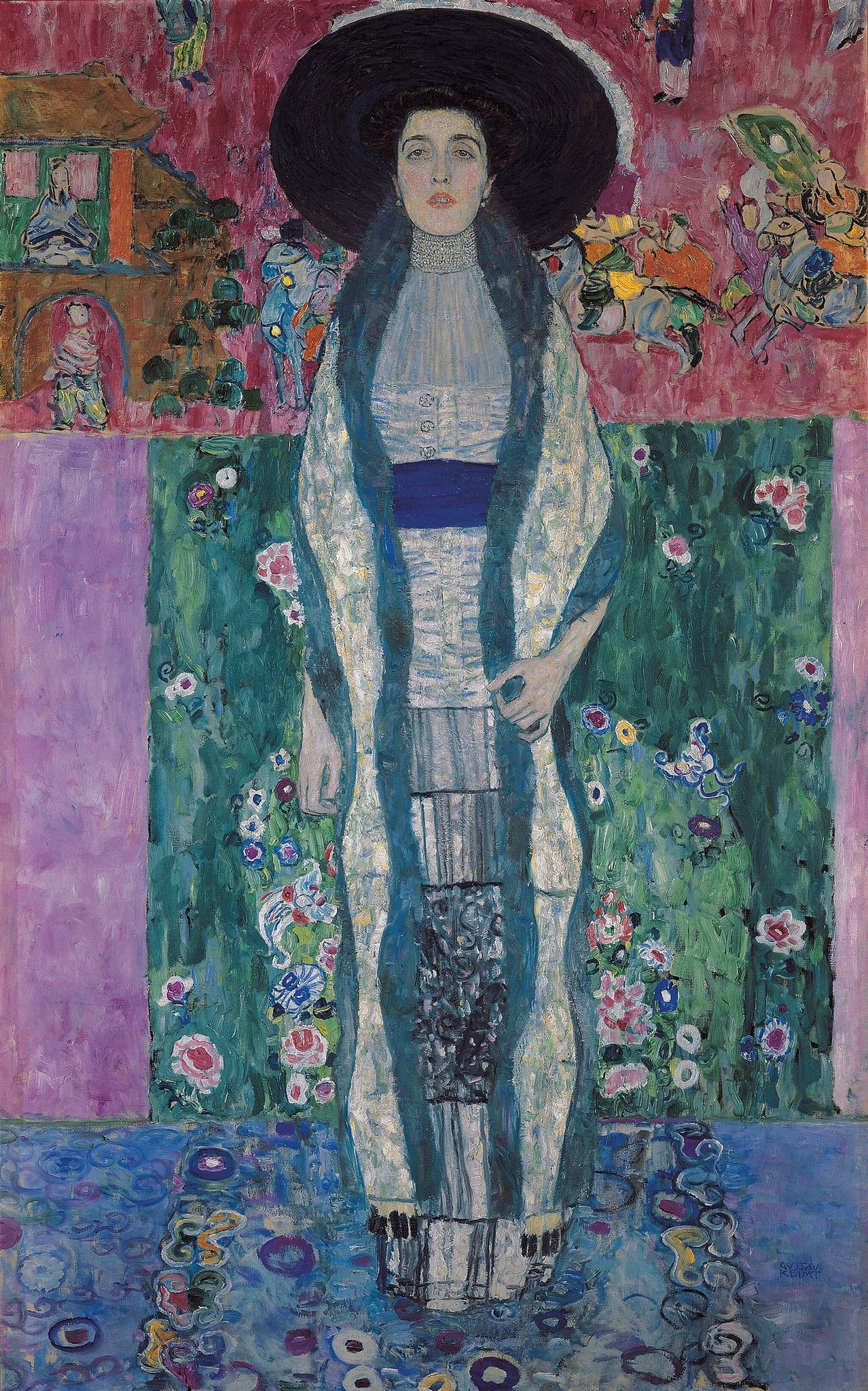
Portrait of Adele Bloch-Bauer II
Gustav Klimt (1912)
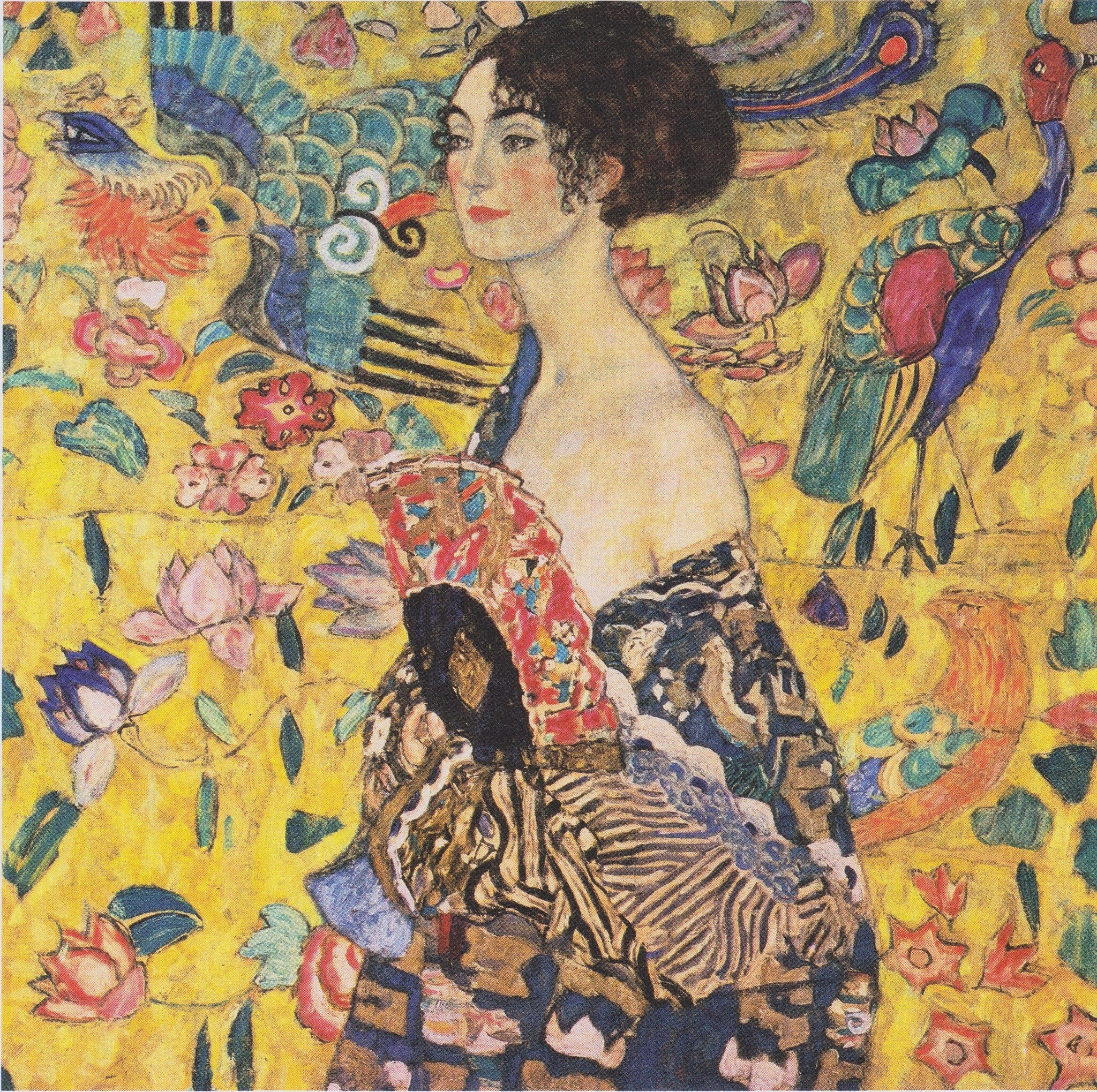
Lady with a Fan (Dame mit Fächer)
Gustav Klimt
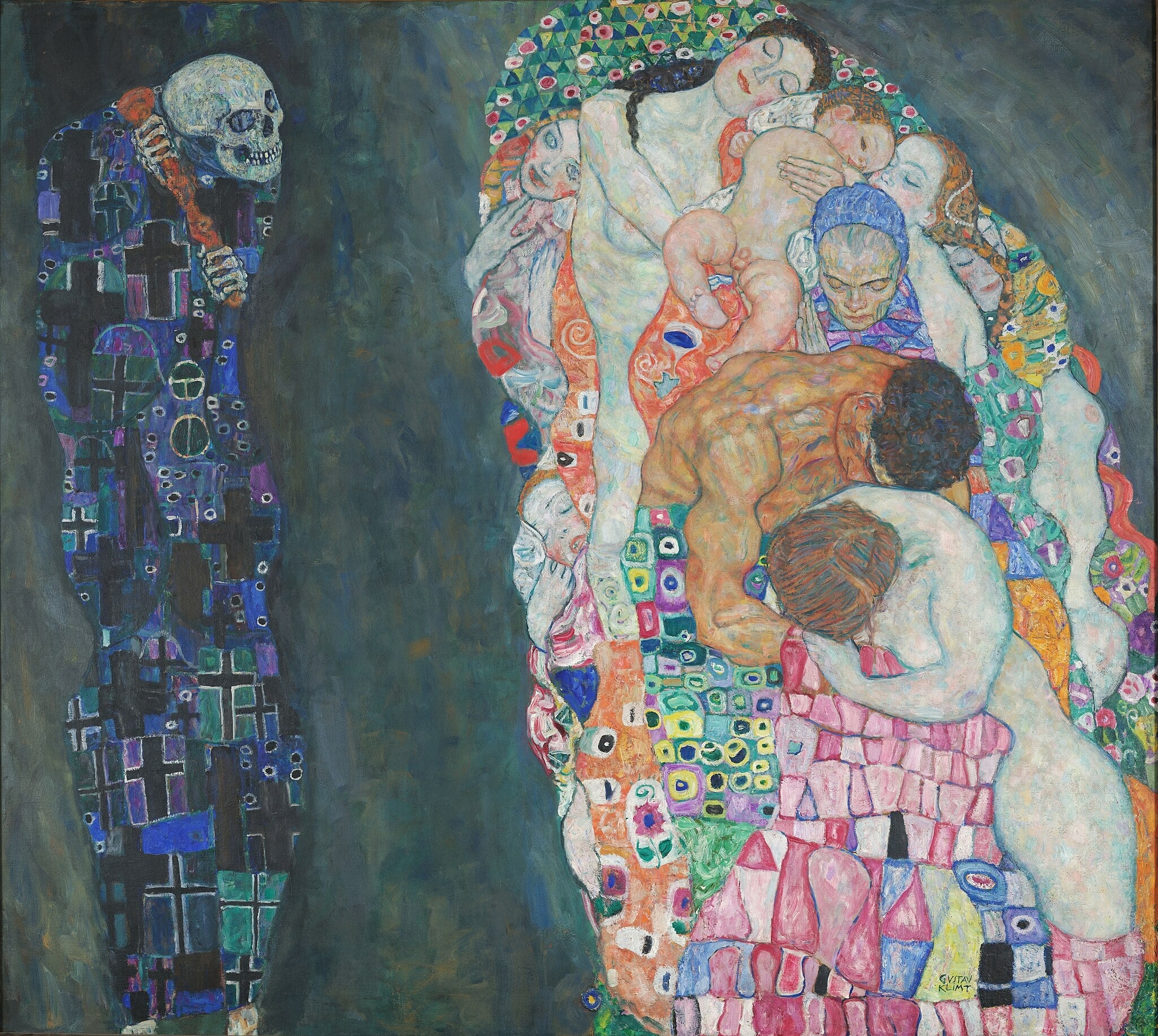
Death and Life
Gustav Klimt
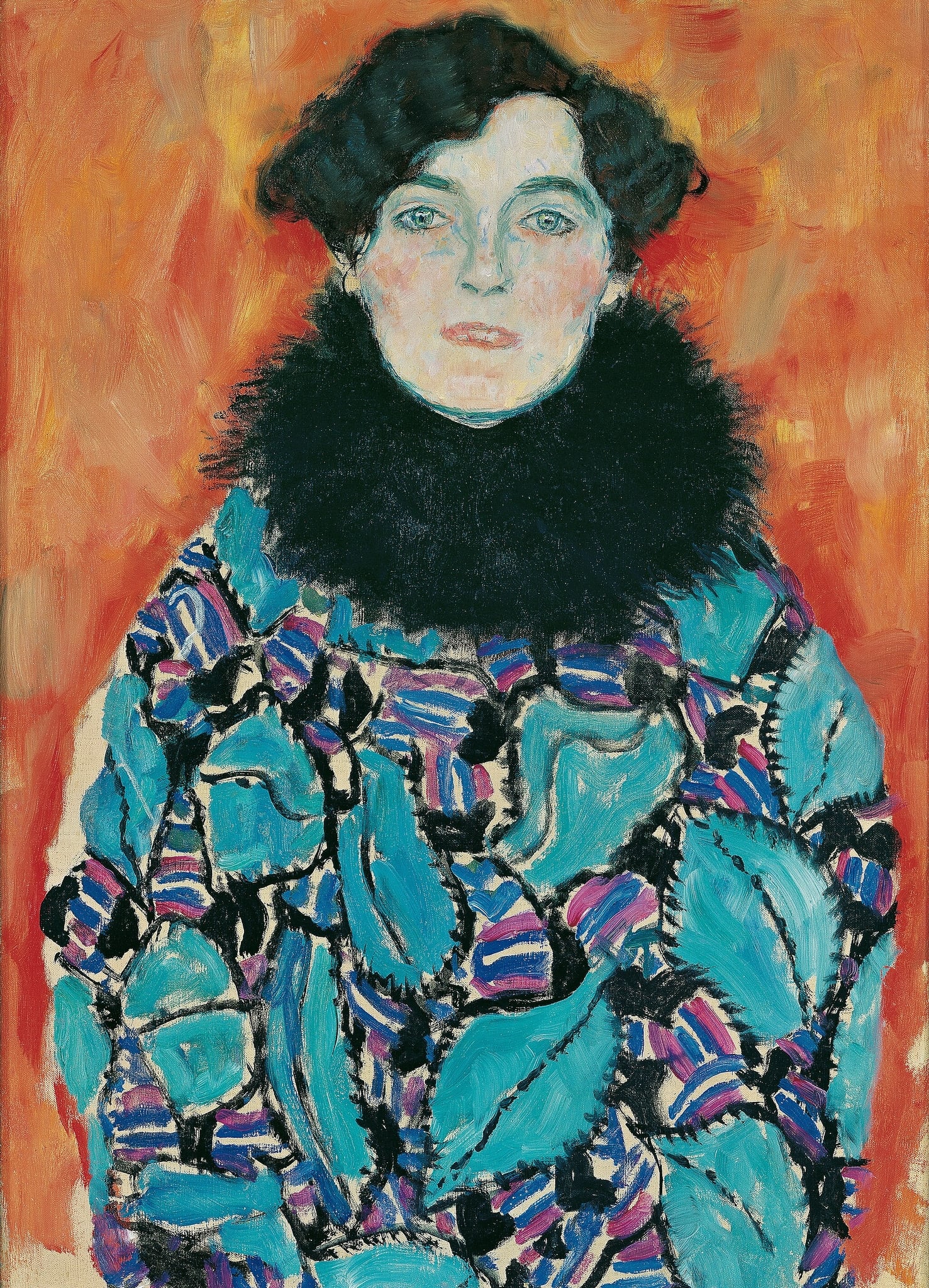
Johanna Staude
Gustav Klimt (1917/1918)
<strong>Johanna Staude</strong> distills Klimt’s late style into a charged encounter between a cool, impassive face and a blazing orange field. The sitter’s head is isolated by a <strong>black feather collar</strong>, while a <strong>Wiener Werkstätte</strong> blouse in turquoise leaves and violet stripes surges forward as a near-abstract surface <sup>[1]</sup><sup>[2]</sup>. Painted in 1917/1918 and left <strong>unfinished</strong> at the mouth, it becomes a poised emblem of modern identity in Vienna on the eve of Klimt’s death <sup>[1]</sup><sup>[2]</sup><sup>[5]</sup>.
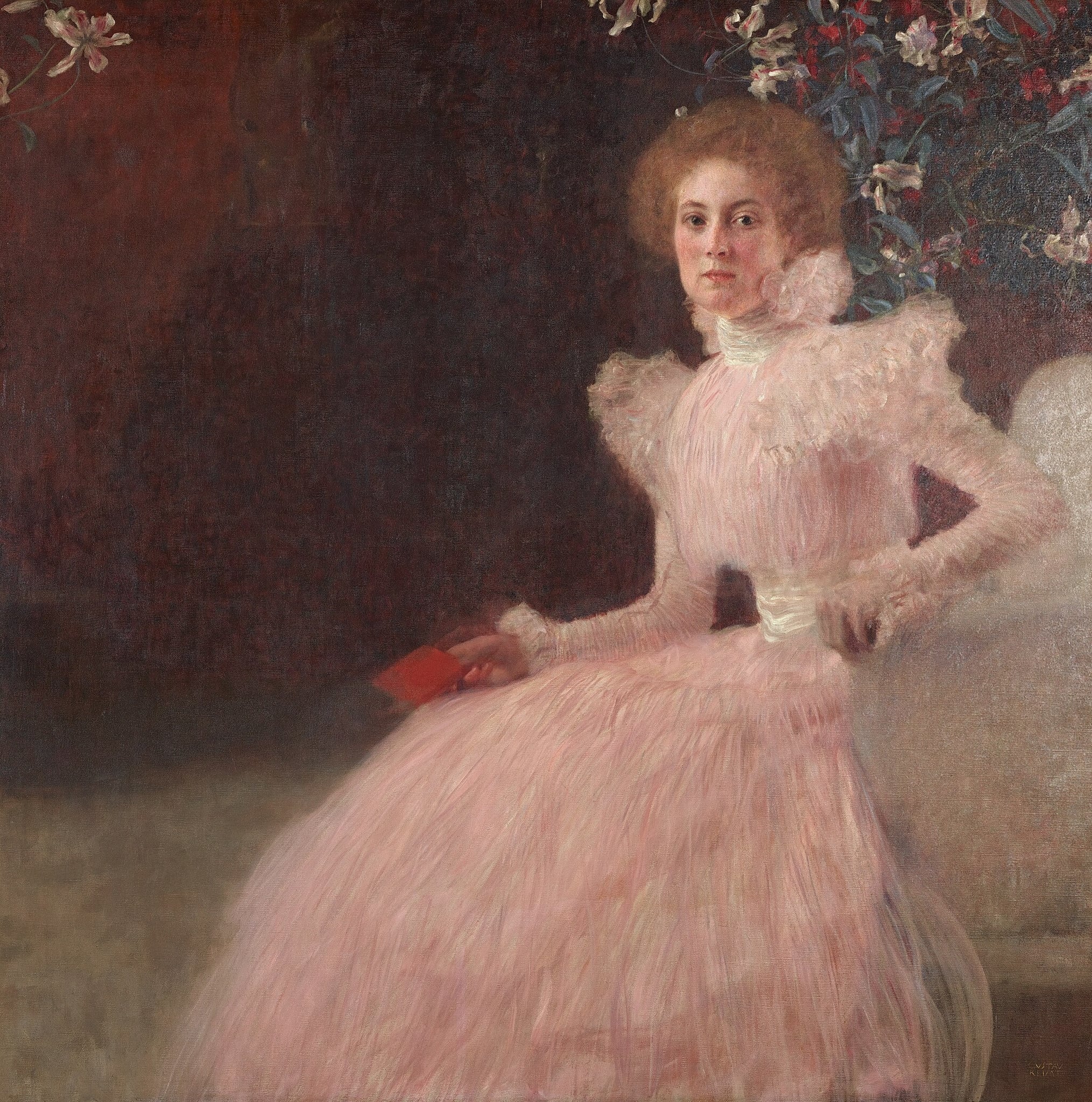
Sonja Knips
Gustav Klimt (1897/1898)
In Sonja Knips, Gustav Klimt stages a poised young woman as a modern self—held taut between <strong>lucid presence</strong> and <strong>ornamental dissolution</strong>. The square canvas, the feathery pink dress, the climbing white lilies, and the single <strong>red sketchbook</strong> in her hand crystallize an identity that is reflective, intelligent, and self‑aware within a decorous world <sup>[1]</sup><sup>[2]</sup><sup>[4]</sup>.
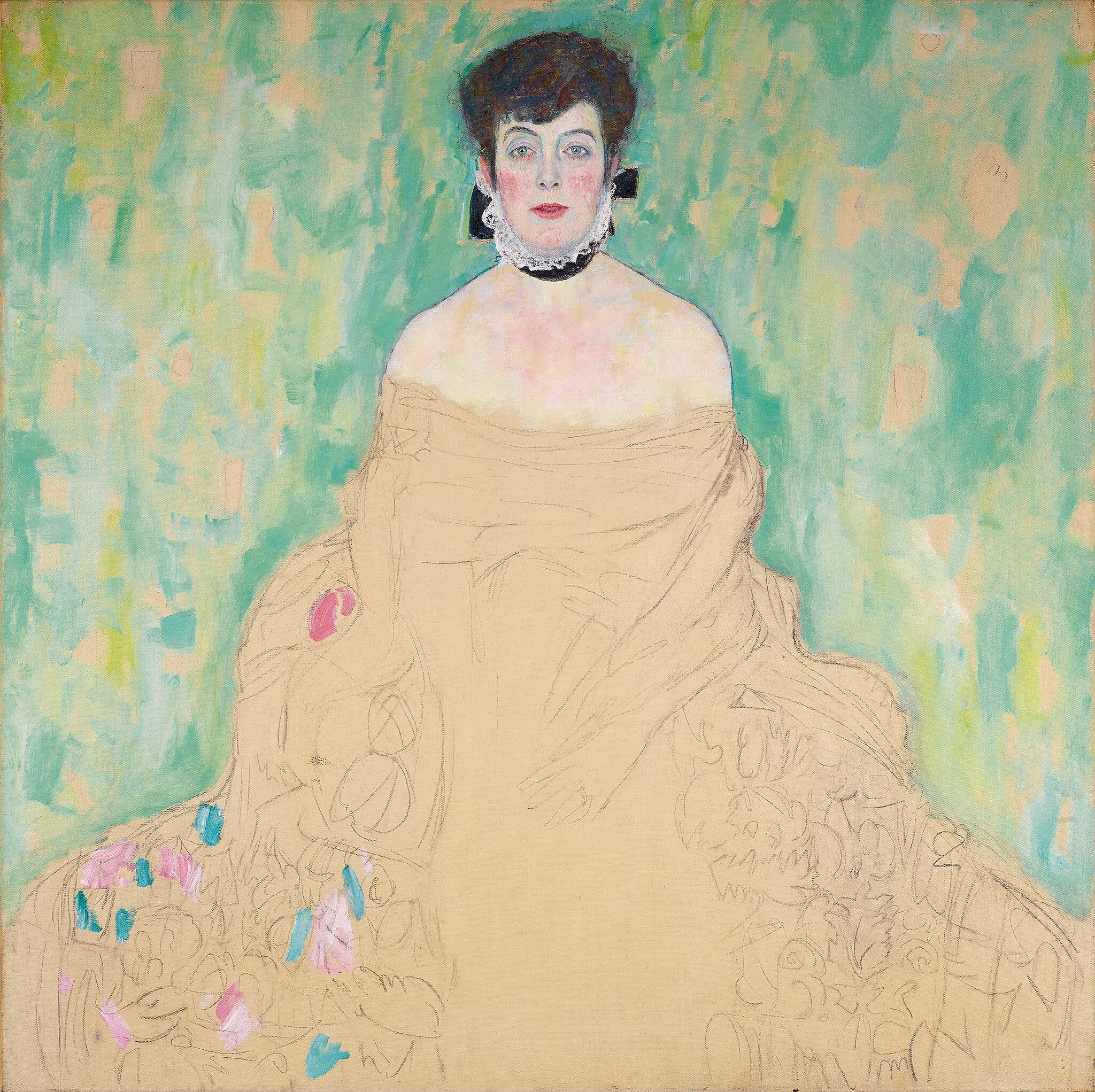
Amalie Zuckerkandl
Gustav Klimt (1917–1918)
Gustav Klimt’s Amalie Zuckerkandl is an <strong>unfinished</strong> late portrait in which a fully realized head and shoulders float above a gown left as <strong>skeletal graphite and washes</strong>. Set against a mottled, cool <strong>green ground</strong>, her flushed face, direct gaze, black <strong>choker</strong> and crisp lace collar stage a drama of poise, sensuality, and restraint <sup>[1]</sup><sup>[6]</sup>. The painting’s incompletion becomes the work’s meaning: a vivid selfhood <strong>emerging</strong> while ornament remains <strong>in potential</strong>.
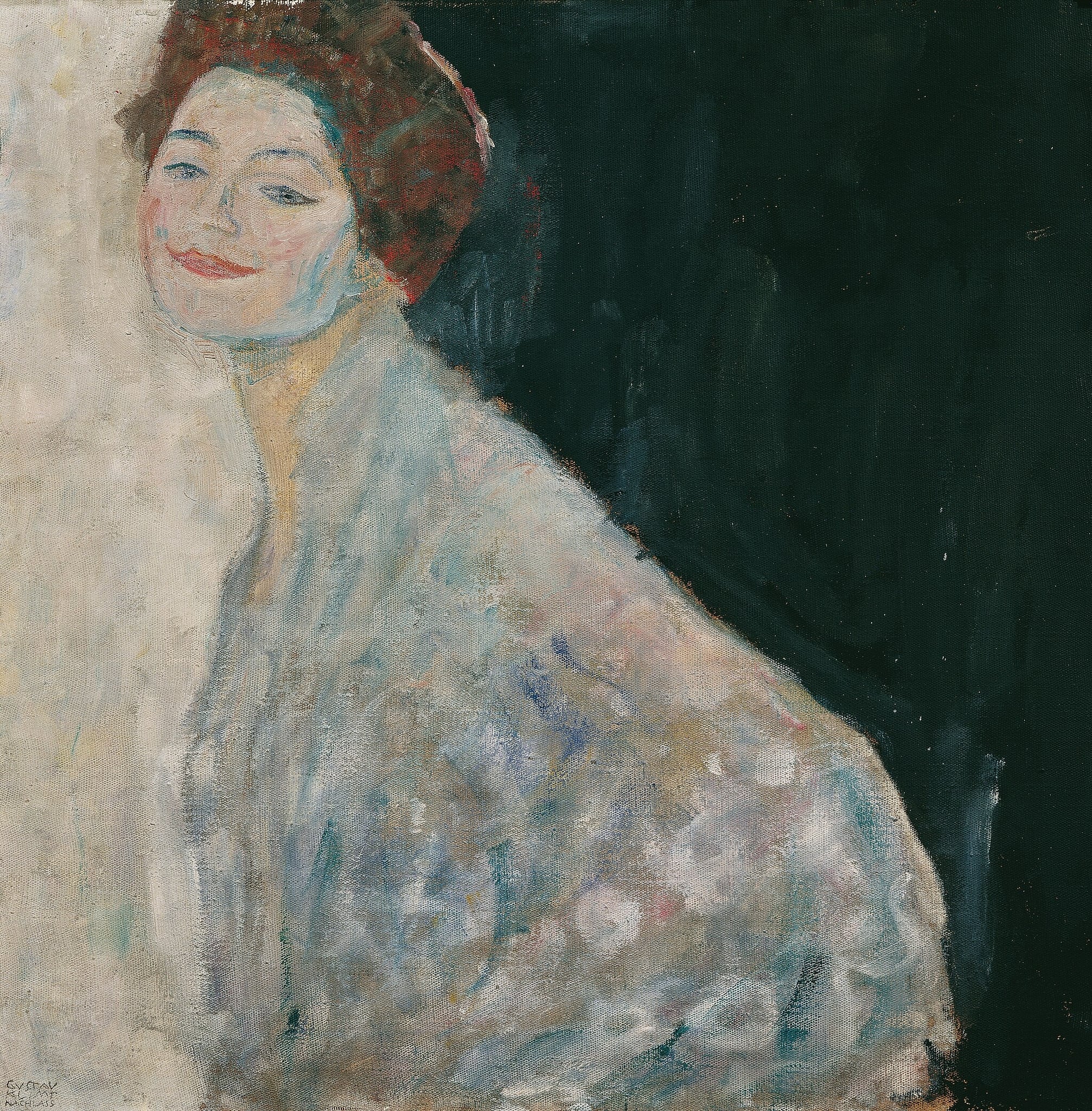
Lady in White
Gustav Klimt (1917–1918)
Lady in White crystallizes Klimt’s late style as a <strong>liminal apparition</strong>: a woman who seems to form out of paint where a pale field meets a dark one. Her kimono‑like robe dissolves into <strong>iridescent whites</strong> touched by blues and violets, while a tilted, <strong>mask‑like smile</strong> hovers between intimacy and anonymity <sup>[1]</sup><sup>[2]</sup><sup>[3]</sup>. The result is less a likeness than a <strong>luminous state of being</strong> suspended on a threshold.
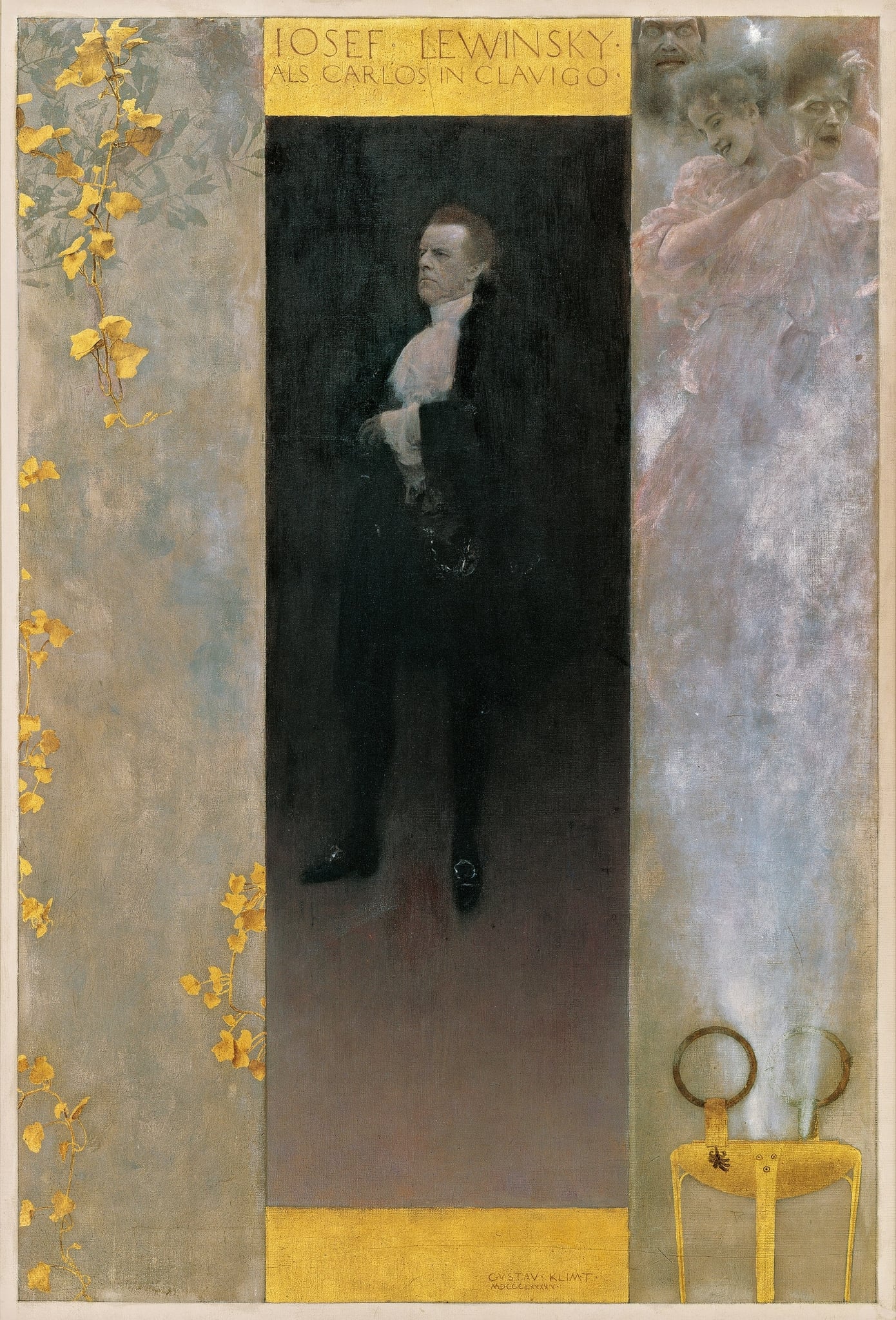
Josef Lewinsky as Carlos in Clavigo
Gustav Klimt (1895)
A stark, triptych-like design turns the actor’s upright silhouette into a test of <strong>will</strong> against a surrounding chorus of <strong>masks</strong>, <strong>laurel/ivy</strong>, and a smoking <strong>antique tripod</strong>. Klimt fuses <strong>portrait</strong> and <strong>allegory</strong> to stage the psychic weather of Goethe’s drama while previewing his turn toward <strong>Symbolism</strong> and ornamental modernity <sup>[1]</sup><sup>[2]</sup>.
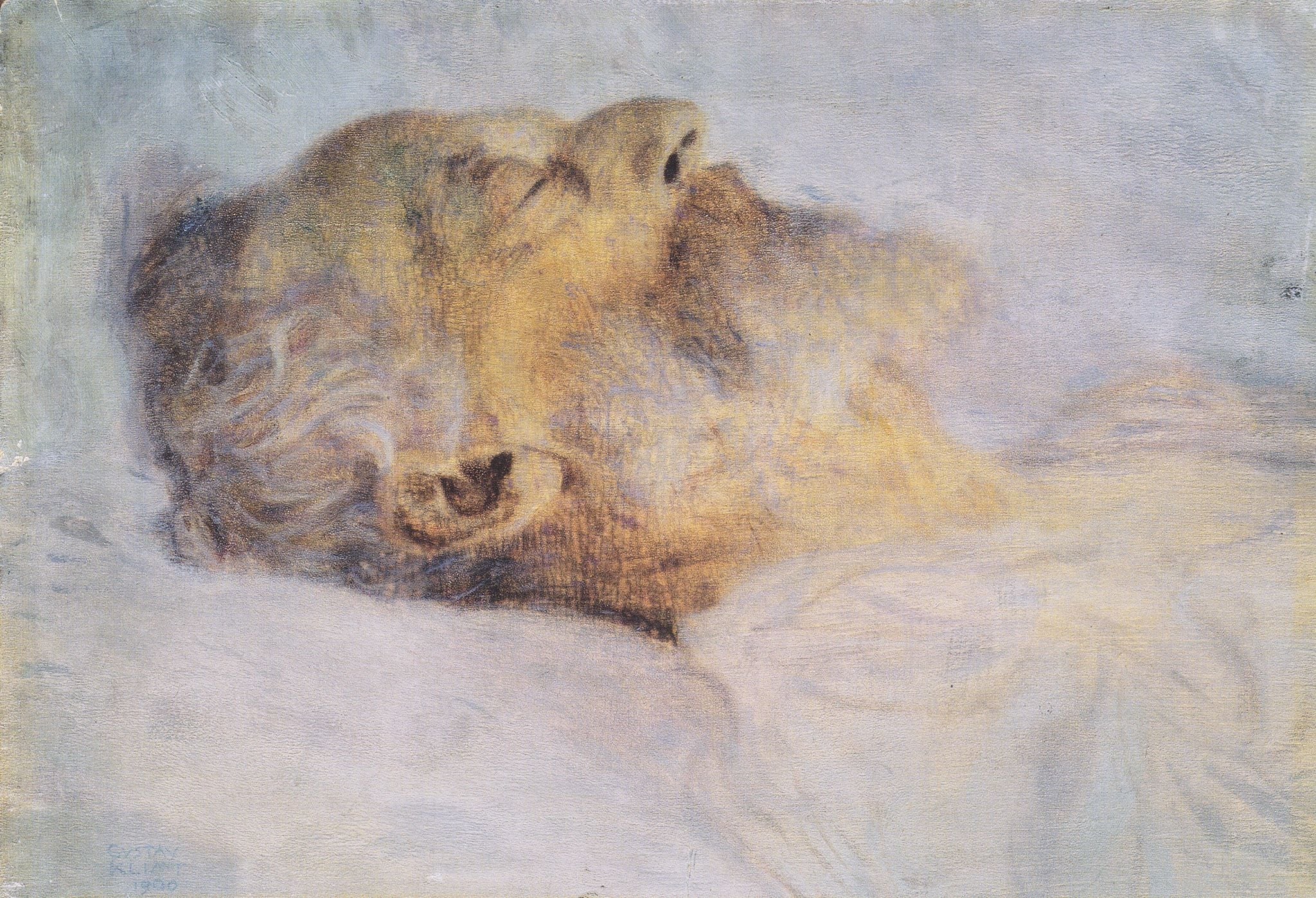
Old Man on His Deathbed
Gustav Klimt (1900 (cataloged; c. 1899–1900, inscription likely by another hand))
Gustav Klimt’s Old Man on His Deathbed is a concentrated vigil at life’s threshold, rendered in <strong>vaporous blues and ochers</strong> that let head, pillow, and air bleed into one another. The profile turned toward light, with <strong>closed eyes and a slightly parted mouth</strong>, transforms observation into a modern <strong>memento mori</strong> <sup>[1]</sup><sup>[2]</sup>.
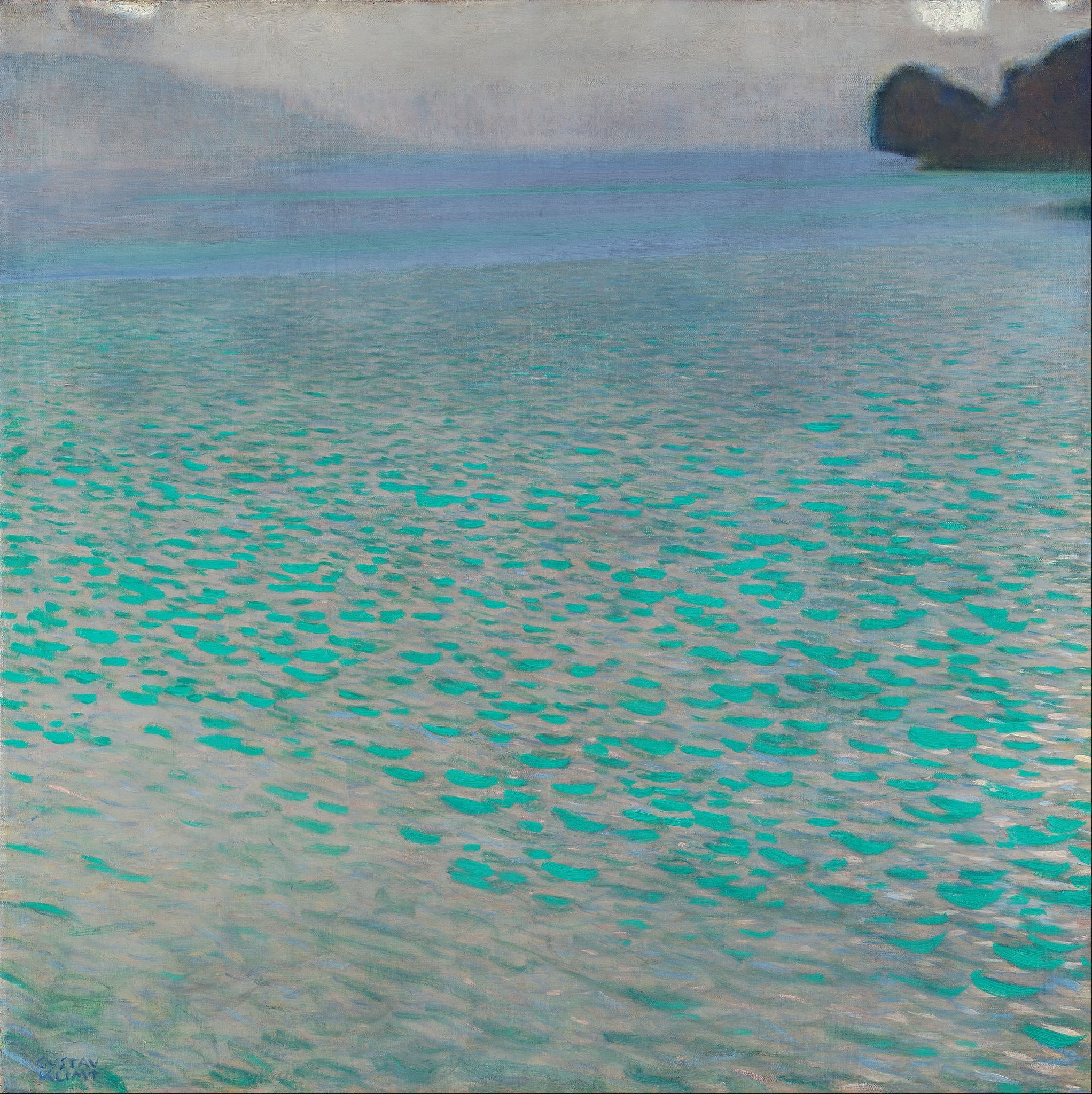
On Lake Attersee
Gustav Klimt (1900)
Gustav Klimt’s On Lake Attersee (1900) turns a summer lake into a <strong>woven field of light</strong>. A square canvas nearly filled with water, it stages a quiet duel between <strong>surface pattern</strong> and <strong>atmospheric depth</strong>, letting a tiny dark headland at the upper right anchor an otherwise hypnotic expanse <sup>[1]</sup><sup>[2]</sup>.
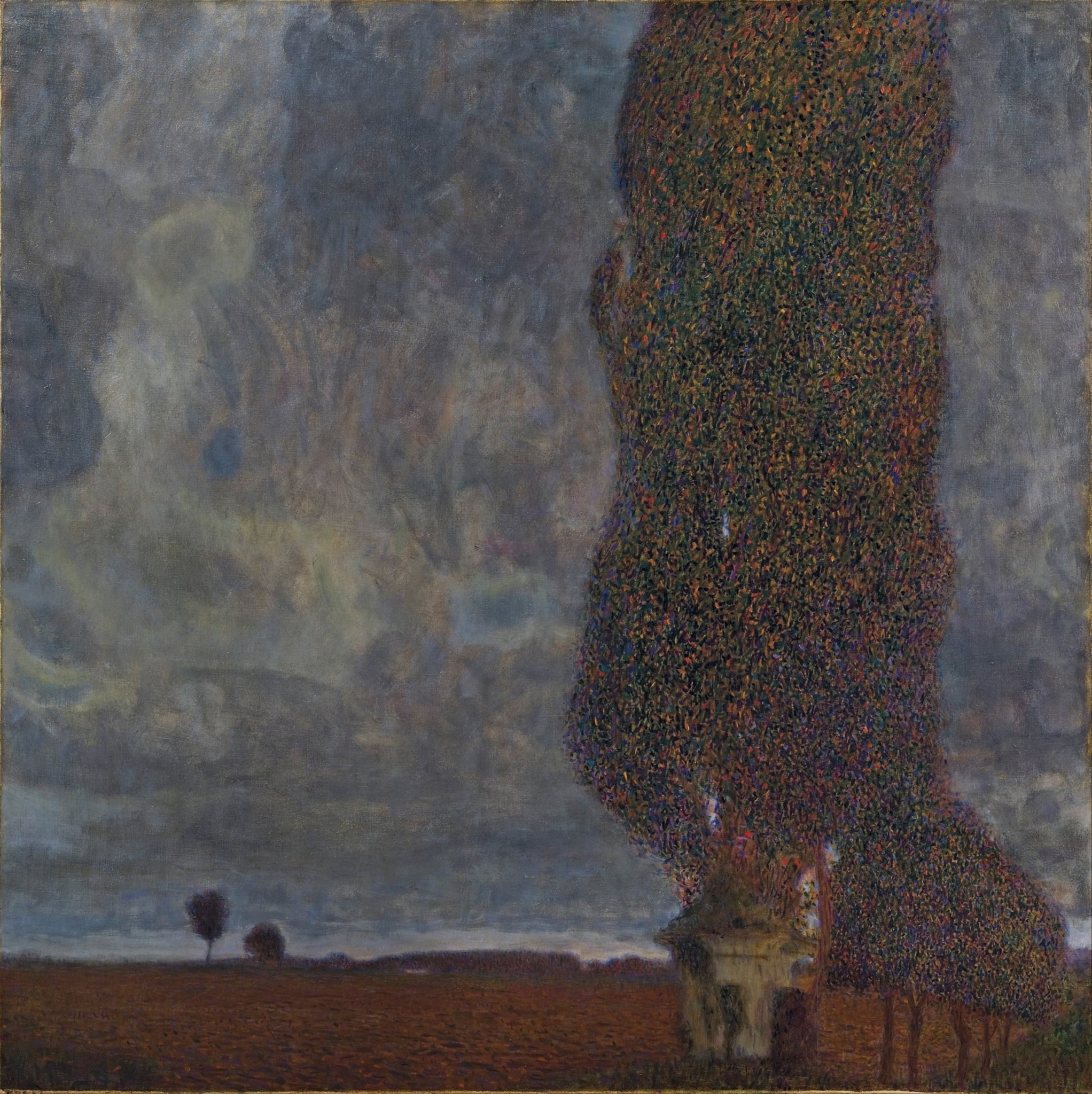
The Large Poplar II (Gathering Storm)
Gustav Klimt (1902/03)
In The Large Poplar II (Gathering Storm), a monumental poplar rises like a <strong>sentinel</strong> at the right edge while a low, rust-toned plain and tiny chapel anchor the horizon. Klimt devotes most of the square canvas to a <strong>charged, near-monochrome sky</strong>, making weather the protagonist and turning the tree’s flecked canopy into a shimmering, ominous <strong>mosaic</strong> <sup>[1]</sup><sup>[2]</sup>.
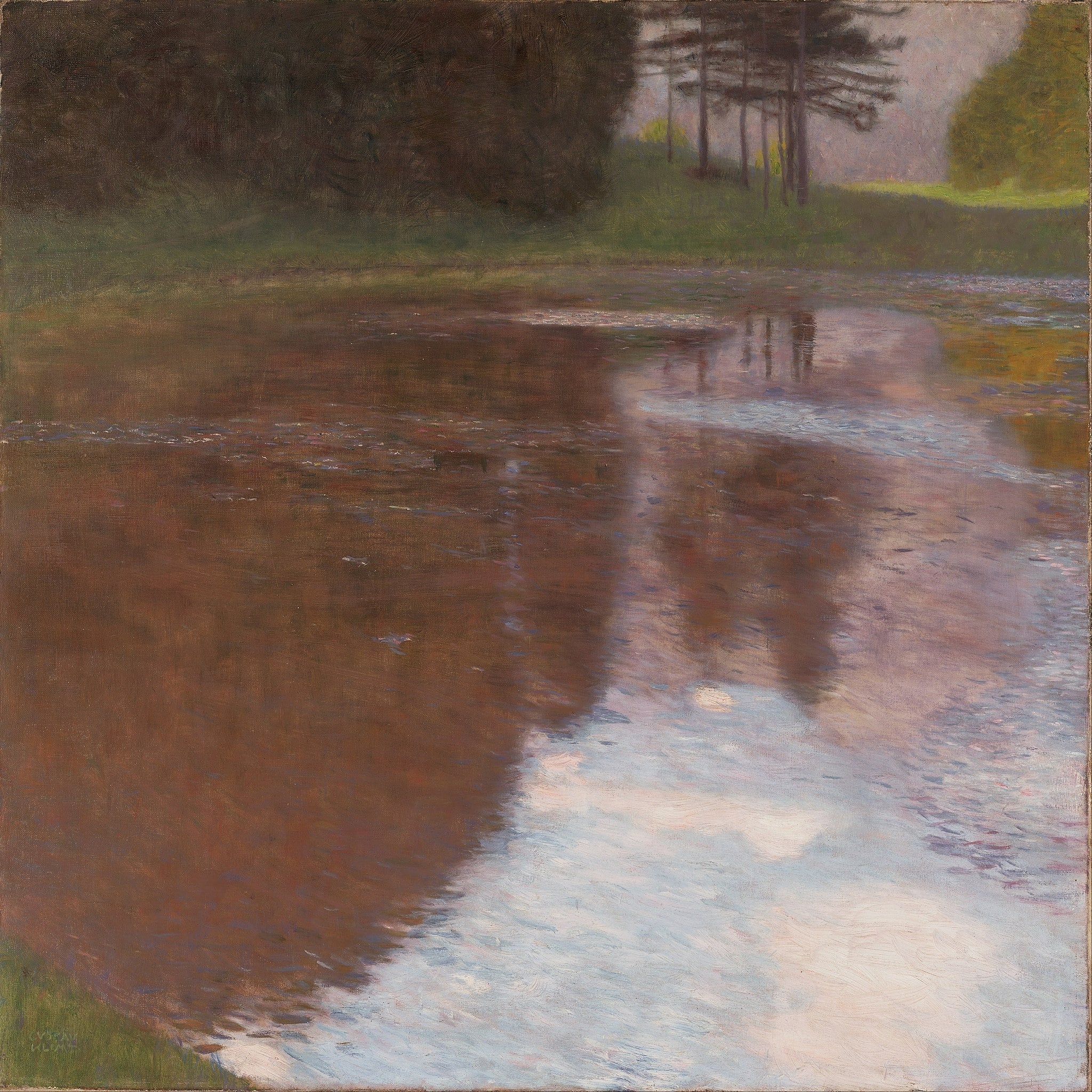
A Morning by the Pond
Gustav Klimt (1899)
A Morning by the Pond turns a quiet Egelsee shoreline into a field of <strong>reflection</strong> where trees, bank, and sky dissolve into one surface. Klimt’s first <strong>square format</strong> landscape compresses depth and makes water the true subject, staging a luminous <strong>threshold</strong> between night and day. The work establishes perception itself—what we see and how—as Klimt’s modern theme.
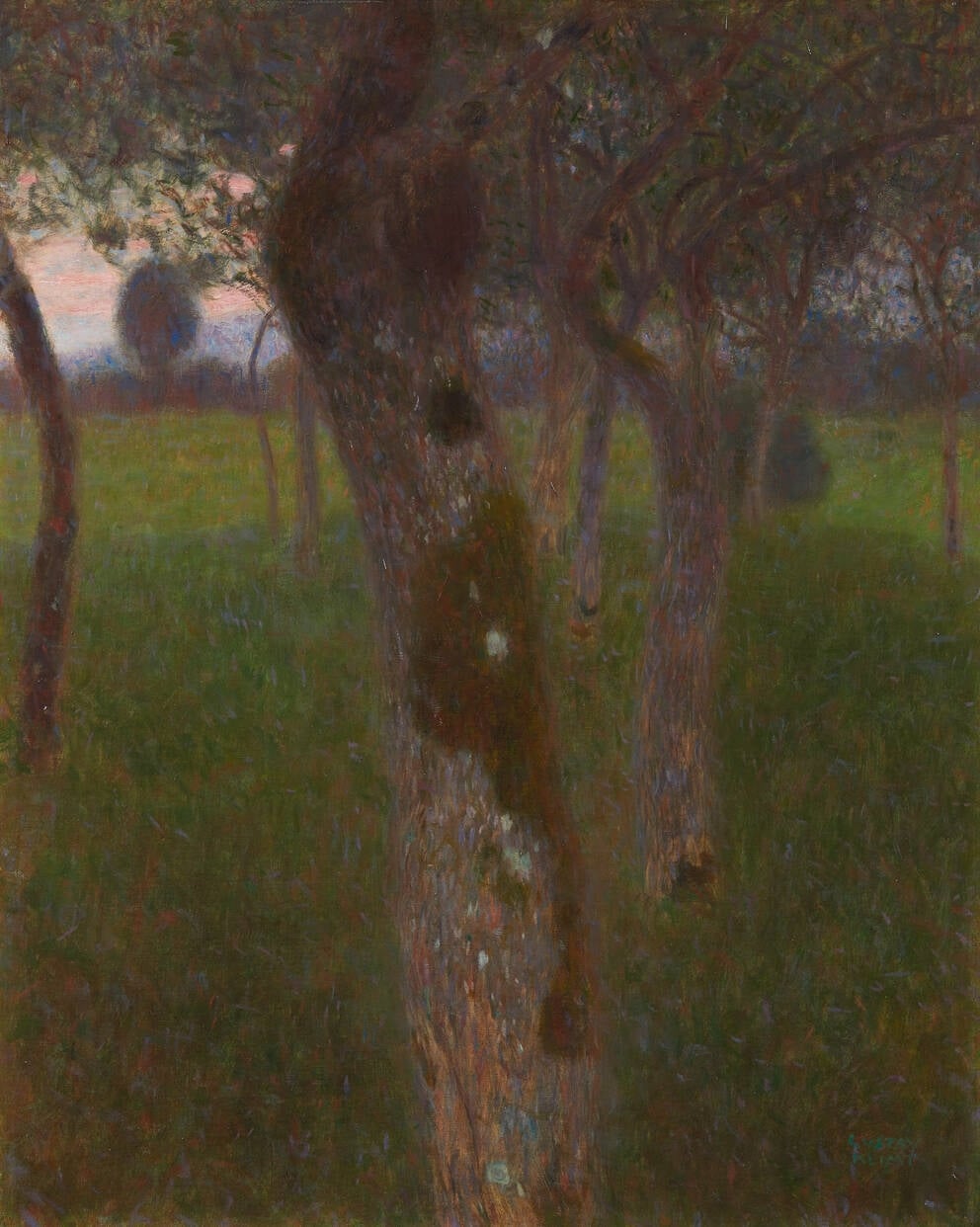
Orchard in the Evening
Gustav Klimt (1898)
Gustav Klimt’s Orchard in the Evening compresses a grove of fruit trees into a shallow, <strong>planar</strong> field where trunks press forward and dusk thins the color. A pale <strong>twilight</strong> band at the high horizon seals the space, turning observed nature into a contemplative, <strong>ornamental</strong> enclosure <sup>[1]</sup><sup>[2]</sup>.
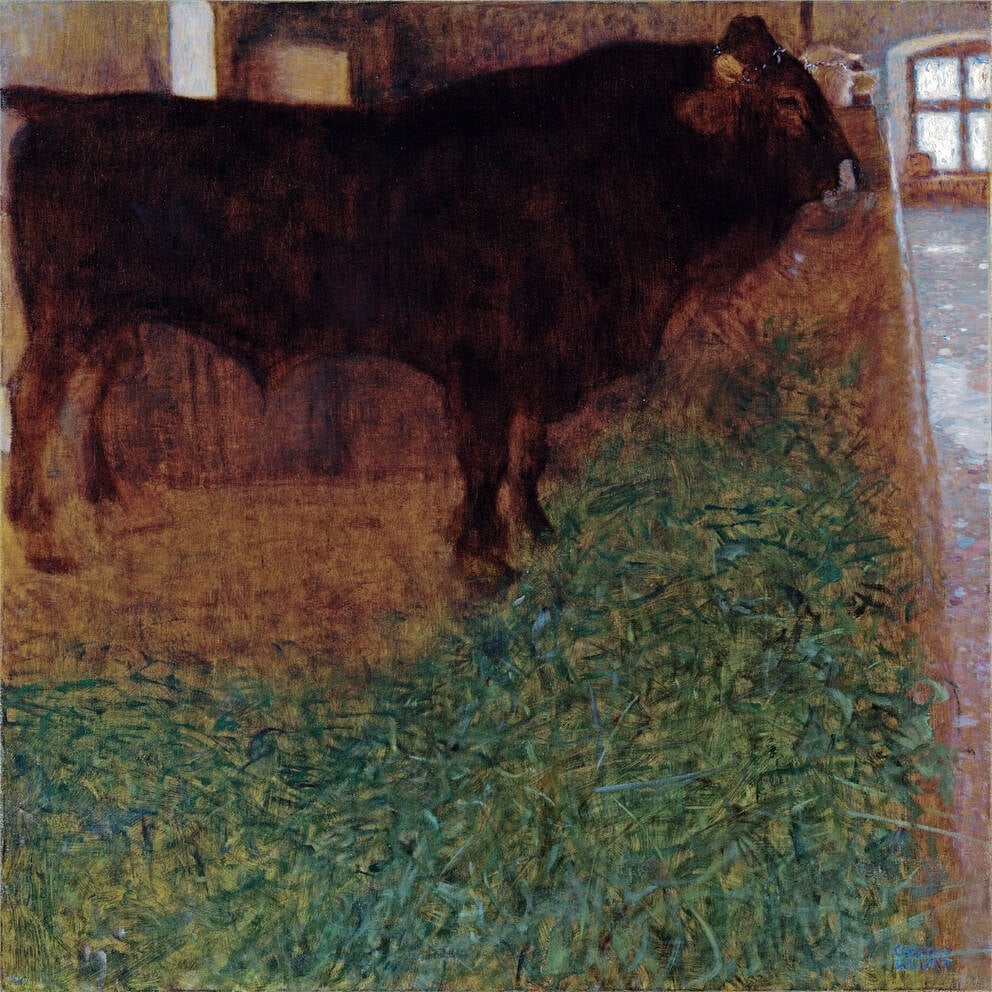
The Black Bull
Gustav Klimt (1900 (1900–1901 also cited))
<strong>The Black Bull</strong> distills raw animal power into a near-monolithic presence, its dark mass occupying the square field while a cool window flare touches the snout and horn. <strong>Gustav Klimt</strong> transforms a stable interior into a drama of force and limit, the diagonal swath of green fodder channeling energy toward the tethered head. The work finds grandeur in a local motif from Klimt’s first Attersee summer, uniting tactile surface with psychological tension <sup>[1]</sup><sup>[4]</sup>.
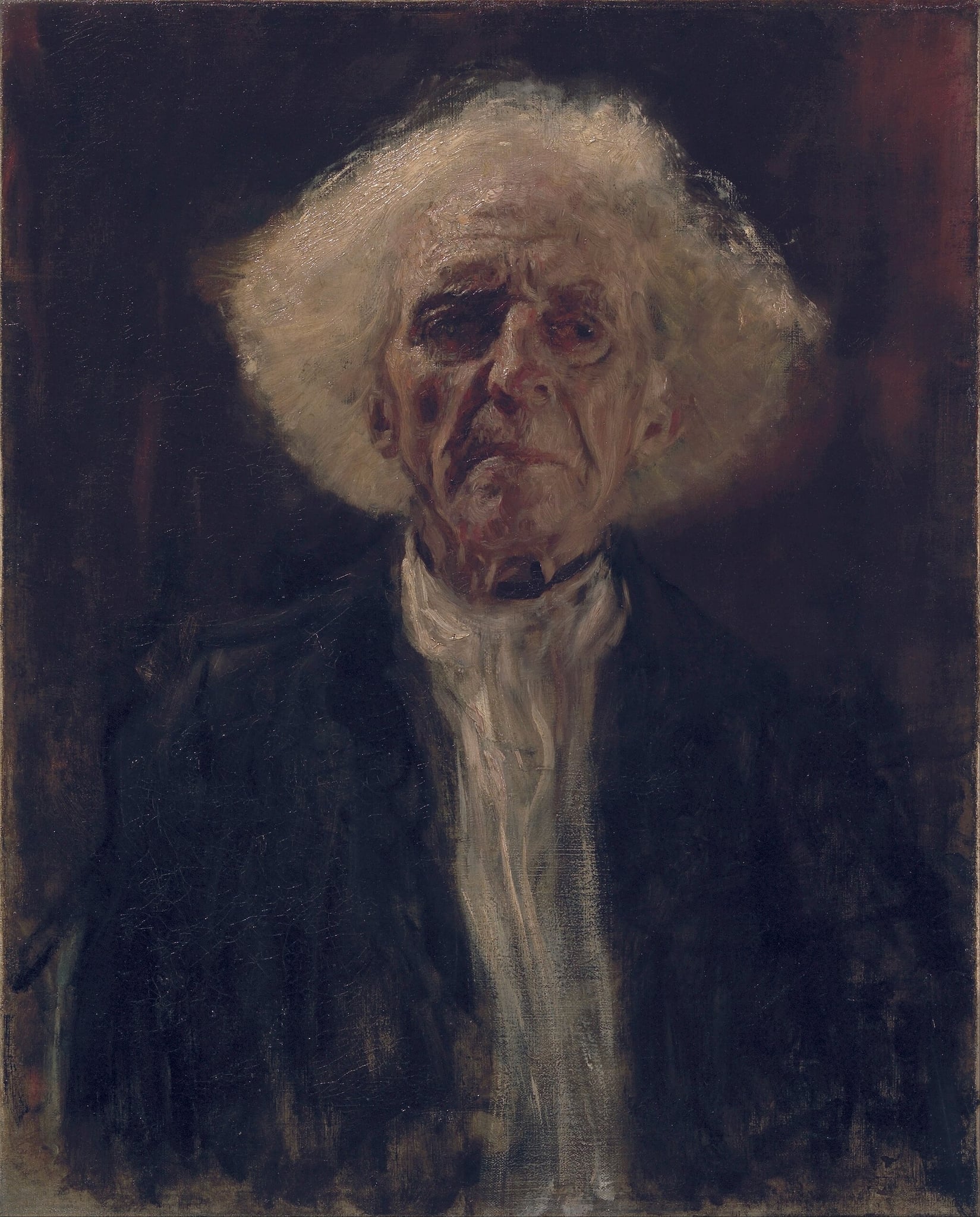
The Blind Man
Gustav Klimt (c. 1896)
Gustav Klimt’s The Blind Man confronts the viewer with a monumental head and torso emerging from a near-black field, where <strong>chiaroscuro</strong>, <strong>tactile paint</strong>, and an <strong>occluded gaze</strong> redirect attention from sight to touch and memory. The dissolving white collar and scumbled halo of hair make the figure feel carved from darkness, asserting <strong>dignity without sentiment</strong> and turning blindness into a form of inward presence <sup>[1]</sup>.

Portrait of an Old Man in Profile (Count Traun?)
Gustav Klimt (c. 1896)
Gustav Klimt’s Portrait of an Old Man in Profile (Count Traun?) distills human presence to a <strong>strict profile</strong> set against a <strong>dusky, earth‑toned</strong> field. With thin oil on cardboard, Klimt lets edges <strong>dissolve into atmosphere</strong>, turning the bald crown, graying wisps, and slack jaw into a meditation on <strong>age and transience</strong> <sup>[1]</sup>.
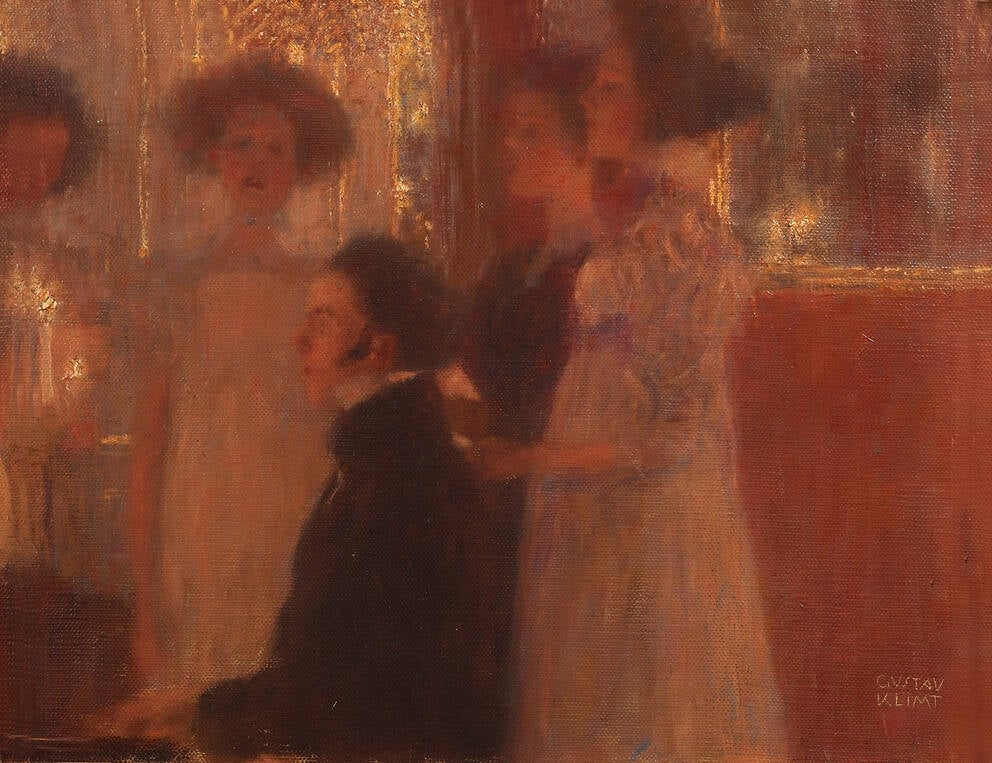
Schubert at the Piano. Design for the music room by Nikolaus Dumba
Gustav Klimt (1896)
Klimt’s 1896 oil study <strong>Schubert at the Piano. Design for the music room by Nikolaus Dumba</strong> turns a domestic recital into a glowing myth of listening. In dim, rosy-gold light, a dark-clad pianist is encircled by a soft choir of women whose blurred faces dissolve into the shimmer of the room. Klimt fuses contour and light so that sound seems to become <strong>radiance</strong>, anticipating his decorative modernism <sup>[1]</sup><sup>[2]</sup>.
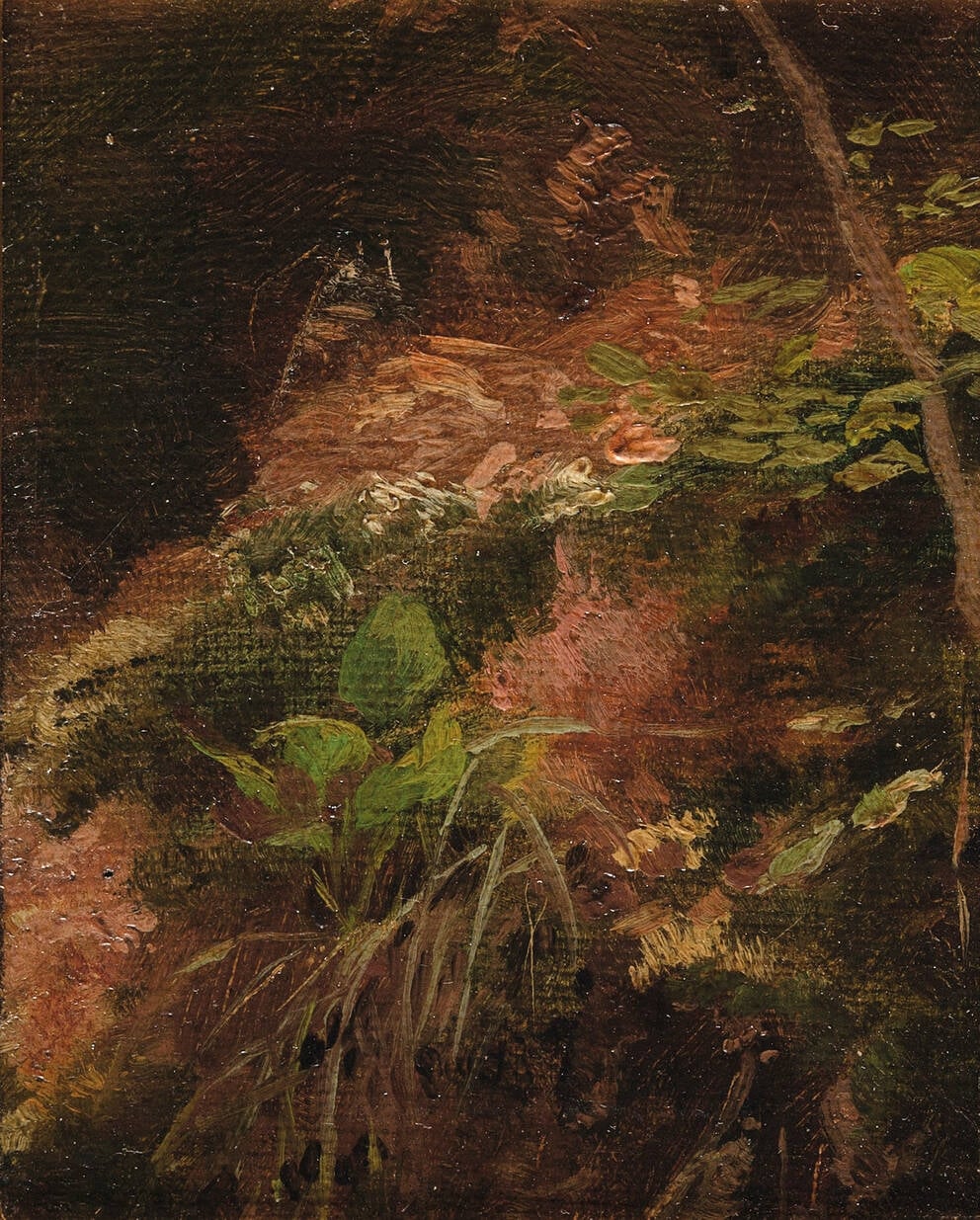
Forest Floor
Gustav Klimt (c. 1881/1882)
Forest Floor concentrates the eye on a miniature world of soil, moss, and leaf-litter rendered in tactile strokes and dark-to-amber light. Klimt frames a diagonal bank with a small sapling and sprouting leaves, turning the ground into a <strong>living tapestry</strong> of decay and renewal <sup>[1]</sup>. As an early oil sketch, it fuses <strong>academic chiaroscuro</strong> with a proto-decorative rhythm that hints at later developments <sup>[1]</sup>.

Sitting Nude Man Turned to the Left
Gustav Klimt (1883)
Painted in 1883, Sitting Nude Man Turned to the Left shows Klimt’s academic command of the male figure through a <strong>Naturalist/Realist</strong> approach. The model’s bowed head, splayed legs, and braced forearms form a taut <strong>triangular structure</strong> against rough wooden crates, where <strong>soft flesh meets hard geometry</strong> <sup>[1]</sup>. The restrained, earthy chiaroscuro isolates the body, turning a studio exercise into a quiet study of <strong>concentrated presence</strong>.
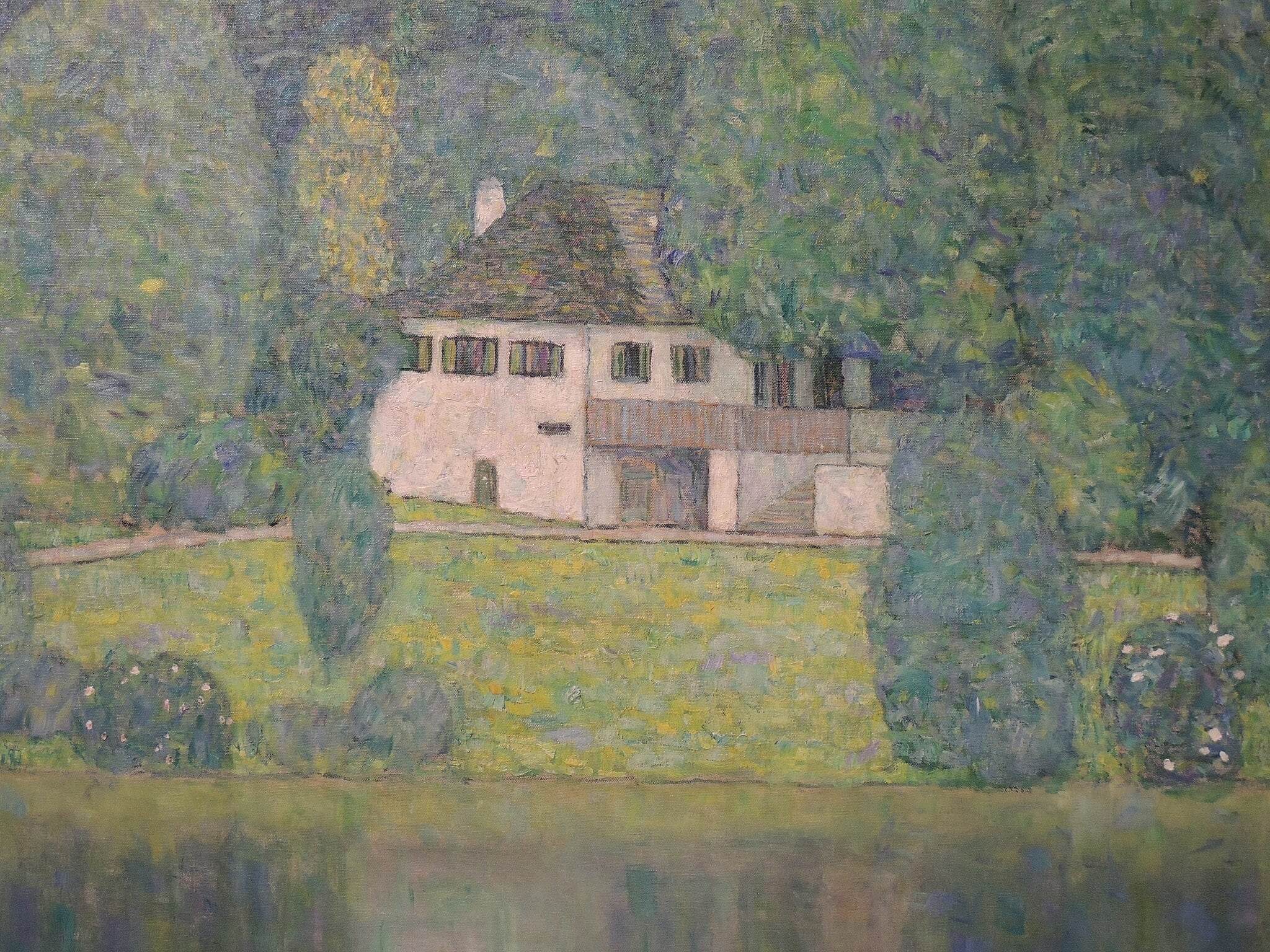
Litzlbergkeller
Gustav Klimt (1915–1916)
Litzlbergkeller distills a lakeside inn into a square, shimmering field where the house’s pale rectangle and window rhythm quietly answer the vertical screen of trees and the calm band of water below. Klimt fuses geometry and foliage into a <strong>decorative, contemplative refuge</strong>, converting observation into patterned memory <sup>[1]</sup><sup>[2]</sup>.
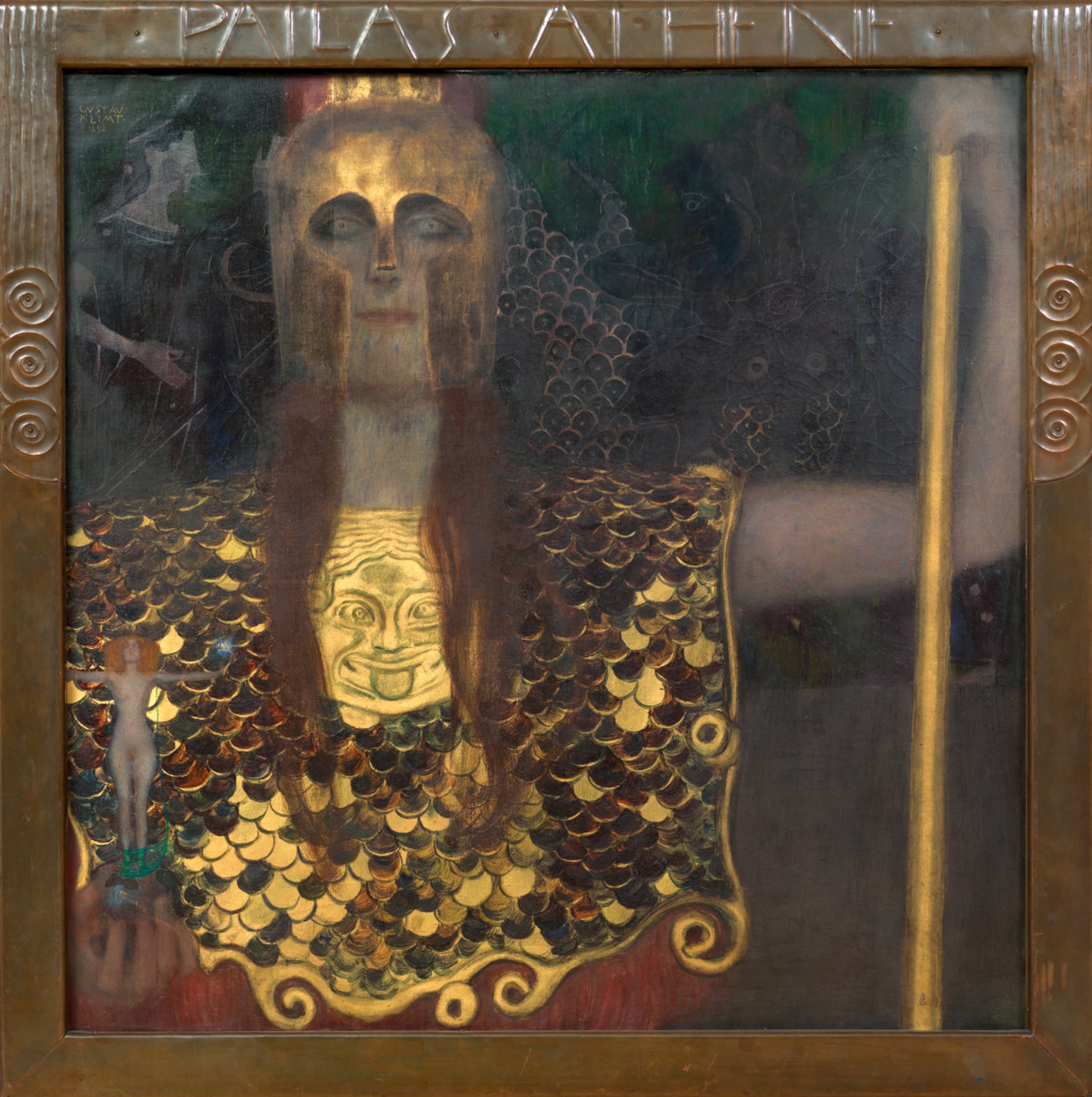
Pallas Athena
Gustav Klimt (1898)
Pallas Athena confronts the viewer as a <strong>frontal icon of power</strong>: helmeted, impassive, and armored in <strong>gleaming scale aegis</strong> crowned by a <strong>gorgoneion</strong>. Klimt fuses archaic authority with modern ornament to proclaim <strong>Vienna Secession</strong> ideals—reason, strategy, and artistic truth held in a single, implacable image <sup>[1]</sup><sup>[2]</sup>.