How Much Is Portrait of Adele Bloch-Bauer II Worth?
Last updated: March 16, 2026
Quick Facts
- Last Sale
- $87.9M (2006, Christie's New York (Impressionist & Modern Evening Sale))
- Methodology
- comparable analysis
Estimated market value for Gustav Klimt’s Portrait of Adele Bloch‑Bauer II is $100–150M, based on the verified 2006 Christie’s auction anchor and later high‑end private/auction comparables. Final realizable price will pivot on provenance/title clarity, condition, and sale channel (auction vs private).
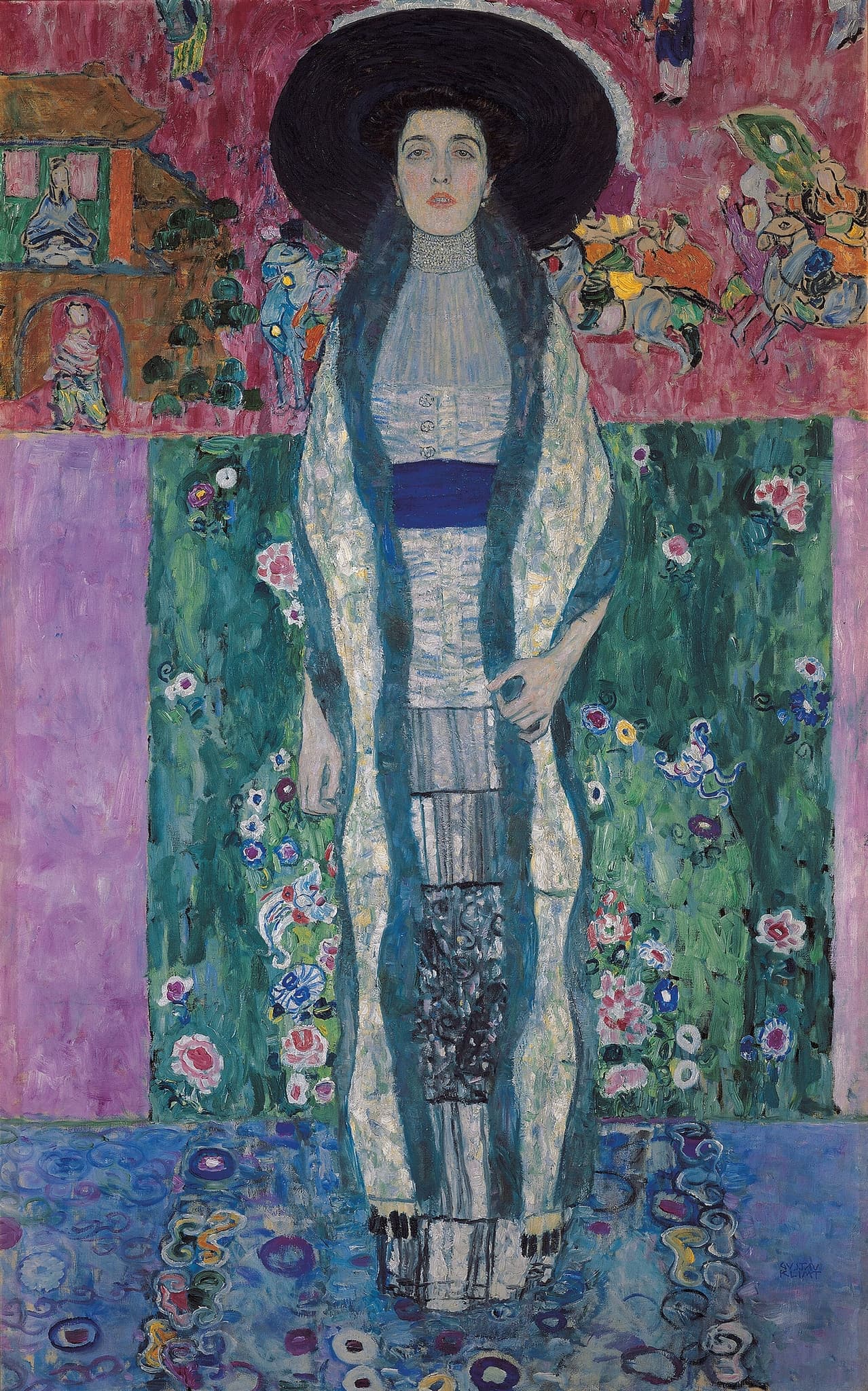
Portrait of Adele Bloch-Bauer II
Gustav Klimt, 1912 • Oil on canvas
Read full analysis of Portrait of Adele Bloch-Bauer II →Valuation Analysis
Valuation conclusion: Based on direct comparables and recent top‑end Klimt price discovery, I place Portrait of Adele Bloch‑Bauer II in a working market range of $100–150 million. The concrete public anchor is the Christie’s New York sale on 8 November 2006 (buyer’s premium inclusive) for $87,936,000 [1]; the upper bound of the range is informed by widely reported private‑sale activity (~$150M in 2016) and subsequent trophy Klimt auction records that demonstrate continued appetite for museum‑quality Klimts [2][3].
Method and adjustments: I derived the range using a comparable‑analysis approach. The verified 2006 hammer, when adjusted for market movement and headline price resets in the Klimt market, sits near the midpoint of the proposed band. Recent auction results for major Klimt works — including high nine‑figure outcomes in single‑owner and evening sale contexts — support the argument that a well‑marketed, cleanly titled example can trade at or above the mid‑point; conversely, a less favorable condition/provenance profile will compress results toward or below the low end.
Value drivers: Provenance and title clarity (restitution history resolved in 2006) materially improve marketability; any outstanding claims would sharply reduce market value. Exhibition and publication history increase institutional interest and buyer confidence. Condition and conservation history are critical: conservation treatment or structural issues can move the price by tens of percent in either direction.
Sale channel and buyer pool matter. In private negotiated sales motivated by trophy buyers or institutions, reported prices can reach the top of the range (and occasionally exceed it in exceptional, competitive circumstances). Auctions provide public price verification and can produce high results if the lot is marketed as a marquee evening sale; however, auction outcomes depend on timing, competing lots, and bidder turnout.
Risks and recommendations: Treat the 2016 ~$150M report as an unverified private‑sale ceiling until documentation is obtained [2]. To convert this working range into a defensible insured or sale valuation, obtain a current condition/conservation report, secure full provenance/title documentation, and obtain written pre‑sale indications or formal estimates from leading auction houses. If you want, I can draft outreach to Christie’s/Sotheby’s specialists and compile the provenance/exhibition dossier required for formal appraisal.
Key Valuation Factors
Art Historical Significance
High ImpactPortrait of Adele Bloch‑Bauer II is an important work within Klimt's portraiture: it features the same eminent sitter as the iconic Adele I and dates from Klimt’s mature period. Though visually less lavish in gold ornamentation than Adele I, it remains a major example of his portrait practice, combining formal innovation with provenance tied to a prominent Viennese household. This stature draws sustained institutional and high‑net‑worth collector interest. Because there are very few museum‑quality Klimt portraits available, scarcity amplifies value for works with strong scholarship and exhibition history; such pieces routinely outperform lesser examples and command premium prices in both auction and private channels.
Provenance / Title Clarity
High ImpactClear, documented title is decisive. The painting’s restitution to the Bloch‑Bauer heirs in 2006 and the Christie’s sale that followed materially restored market confidence; that event underpins the public auction anchor. Any residual or contested claims, export restrictions, or gaps in ownership history would substantially impair marketability and reduce price, potentially by a large margin. Conversely, documented restitution, a continuous post‑war ownership chain, and institutional loan history (catalogue and exhibition records) will support the upper end of the value range and broaden the buyer pool to include major museums and foundation buyers.
Market Comparables & Demand
High ImpactComparable sales frame the estimate: the 2006 Christie’s hammer ($87.94M) is the hard public anchor; later private reports (~$150M) and high‑profile auction trophies (e.g., recent Klimt sales exceeding $100M and record‑setting portrait results) establish upside. Demand is concentrated among trophy collectors, institutions and deep‑pocketed private buyers in Europe, North America and Asia. Market momentum (notably event‑driven single‑owner consignments) has lifted top comparables in recent years, validating a high‑nine‑figure ceiling for the best, cleanly documented Klimts.
Condition & Conservation
Medium ImpactA current, detailed condition report is essential. Surface paint stability, relining or canvas condition, inpaintings, or past restoration work will affect buyer confidence and insurance/lending options. Significant conservation needs reduce the pool of bidders and will lower realizable value, while documented, stable conservation and professional treatment can sustain or increase price. Condition issues are often negotiated as price concessions or hinge on warranty language in private sale agreements, and they can materially change net proceeds relative to the headline estimate.
Sale Channel & Buyer Pool
High ImpactChoice of venue — marquee evening auction vs negotiated private sale — drives price discovery and confidentiality. Auctions deliver transparent public verification and can create competitive bidding events, but timing and sale‑room dynamics matter. Private sales allow tailored marketing to targeted trophy buyers and can achieve premiums in confidential negotiations; however, publicly reported private prices may be harder to substantiate for insurance/appraisal purposes. Matching sale channel to owner objectives, tax considerations and the most likely buyer cohort is therefore critical to maximizing value.
Sale History
Christie's New York (Impressionist & Modern Evening Sale)
Private sale (reported)
Gustav Klimt's Market
Gustav Klimt is a blue‑chip, trophy‑level artist in the global market. Supply of museum‑quality Klimts is extremely limited, and works from his mature period routinely attract high‑net‑worth collectors and institutional buyers. Recent years have produced multiple nine‑figure outcomes, resetting comparables and reinforcing Klimt’s top‑tier status. At the same time, buyers and houses now demand rigorous provenance, condition documentation, and scholarship; where those elements are impeccable, Klimt canvases achieve premium prices and strong cross‑border demand.
Comparable Sales
Portrait of Adele Bloch‑Bauer II
Gustav Klimt
Direct prior public auction result for the same painting (verifiable hammer price; buyer's premium included) — serves as the primary public anchor.
$87.9M
2006, Christie's New York (Impressionist & Modern Evening Sale)
~$137.2M adjusted
Portrait of Adele Bloch‑Bauer I
Gustav Klimt
Same sitter/artist and the canonical museum‑quality Klimt portrait; large private purchase in 2006 set a high precedent for top‑tier Klimt portraits.
$135.0M
2006, Private sale to Ronald Lauder / Neue Galerie (reported)
~$210.6M adjusted
Lady with a Fan (Dame mit Fächer)
Gustav Klimt
Major Klimt portrait sold at auction (2023) demonstrating sustained >$100M auction demand for Klimt portraits in recent market cycles; comparable in subject/period though less iconic provenance than the Bloch‑Bauer sitters.
$108.4M
2023, Sotheby's London
~$113.8M adjusted
Birch Forest (1903)
Gustav Klimt
High‑value Klimt masterpiece (landscape) sold at auction in 2022; indicates buyer willingness to pay $100M+ for top Klimt works beyond portraits — useful as a market-strength benchmark.
$104.6M
2022, Christie's New York
~$115.1M adjusted
Portrait of Elisabeth Lederer
Gustav Klimt
Record‑setting Klimt portrait auction (Nov 2025) and the current high‑water mark; establishes the upside for trophy‑grade, impeccably provenanced Klimt portraits.
$236.4M
2025, Sotheby's New York
Current Market Trends
Current market conditions demonstrate a flight to quality: trophy‑grade, well‑provenanced Klimt works command strong prices while mid‑market examples trade more cautiously. Provenance scrutiny and institutional interest are elevated; geographic diversity of bidders (Asia, Middle East, North America, Europe) supports liquidity. Event‑driven single‑owner consignments and museum auctions have reset top comparables, but outcomes remain sensitive to timing, documentation, and sale channel.