How Much Is Schubert at the Piano. Design for the music room by Nikolaus Dumba Worth?
Last updated: April 3, 2026
Quick Facts
- Methodology
- comparable analysis
We estimate Gustav Klimt’s Schubert at the Piano. Design for the music room by Nikolaus Dumba (1896, oil on canvas, 30 × 39 cm) at $18–28 million. The work is a fully painted early study for the famed Dumba commission, privately owned and on permanent loan to the Leopold Museum, with the related final overdoor destroyed in 1945—factors that enhance rarity and scholarly importance. The range reflects strong Klimt demand yet applies prudent discounts for small scale and early decorative subject matter versus the artist’s top-tier late portraits and prime landscapes.
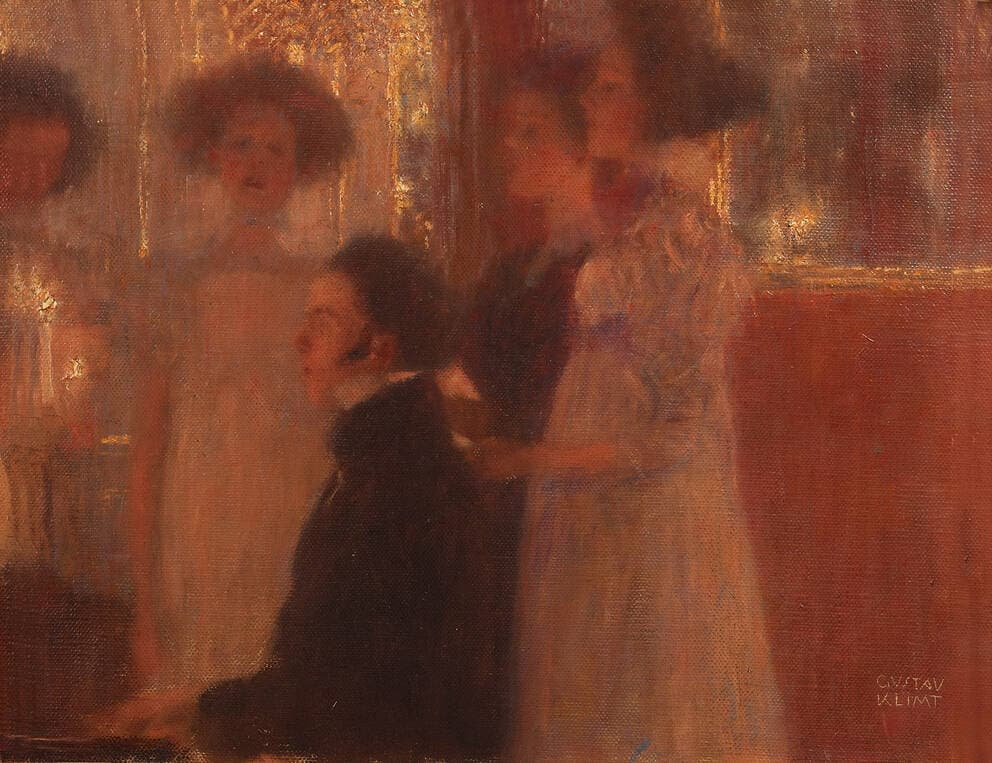
Schubert at the Piano. Design for the music room by Nikolaus Dumba
Gustav Klimt, 1896 • Oil on canvas
Read full analysis of Schubert at the Piano. Design for the music room by Nikolaus Dumba →Valuation Analysis
Overview. Schubert at the Piano. Design for the music room by Nikolaus Dumba (1896) is a small, fully painted oil study (30 × 39 cm) by Gustav Klimt, signed and long on loan to the Leopold Museum, Vienna. It was conceived for the influential Dumba music-room commission; the large, executed overdoor (1899) was destroyed at Schloss Immendorf in 1945, leaving this painted study as the most complete surviving counterpart. The museum’s record confirms private ownership and permanent loan status, with secure attribution, date, and literature references [1].
Market positioning. Klimt’s market is exceptionally strong at the top end. Recent headline results include a new artist record for a late portrait in 2025, reinforcing ultra‑blue‑chip status; late portraits and prime landscapes anchor the nine‑figure and high eight‑figure tiers [2]. The mature-period portrait Dame mit Fächer (1917–18) realized £85.3m ($108.4m) in 2023, and top Attersee landscapes achieved $53.2m (2023) and higher for the very best examples [3][4]. Even an unfinished late portrait in Vienna reached €35m with fees in 2024, underscoring depth of demand across regions [5].
Comparable analysis and adjustments. Direct auction comparables for small, early decorative Klimt oils are scarce. Accordingly, we calibrate from adjacent categories: late portraits ($100m–$200m+), prime landscapes ($50m–$100m), and noteworthy but secondary subjects that can transact in the mid‑eight figures when quality and provenance align [2][3][4][5]. This painted study earns premiums for medium (oil on canvas rather than paper), museum exposure, and its connection to the Dumba commission—magnified by the loss of the final overdoor, which elevates the study’s documentary and historical weight [1]. Offsetting factors include its small scale and early, pre‑“golden period” decorative subject, which sits outside the most commercially coveted Klimt clusters.
Estimate conclusion. Balancing these drivers, we value the work at $18–28 million. The low bound reflects a disciplined discount for size and category; the high bound recognizes the work’s museum‑level visibility, unimpeachable authorship, and the heightened significance conferred by the destroyed final painting. Works on paper related to the Dumba project have sold strongly relative to expectations (albeit at a vastly lower price tier), indicating healthy collector interest in the subject; they affirm demand but are not direct price proxies for an oil study [6]. In a best‑in‑class New York or London evening sale, with robust international demand and clean export/condition status, this estimate is fully supportable.
Key sensitivities. A recent condition report, clarified export status from Austria, and a comprehensive exhibition/literature checklist could push the result toward the upper end. Conversely, any condition, title, or export constraints would compress the outcome. Within today’s Klimt market, this object should command a confident mid‑eight‑figure price, well below gilded portraits but materially above most early/decorative works on paper [2][3][4][5].
Key Valuation Factors
Art Historical Significance
High ImpactThis painted study sits at a pivotal moment in Klimt’s pre‑Secession trajectory and anchors the important Dumba music‑room commission. The destruction of the final overdoor in 1945 makes the 1896 oil the most complete surviving witness to the concept, materially enhancing its scholarly and documentary importance. Its early date captures Klimt’s evolution from a leading decorative painter into the innovator who would soon spearhead the Vienna Secession. Within the artist’s oeuvre, this work is not a gilded icon or late portrait, but it is a critical link between his historicist and modernist phases—an attribute that museums and connoisseurs value highly.
Medium, Scale, and Finish
Medium ImpactAs an oil on canvas, the work commands a substantial premium over drawings or graphic studies. It is, however, a small format (30 × 39 cm) and a design study for an overdoor rather than a large independent easel painting. The level of finish—more resolved than a sketch yet still a preparatory conception—positions it above works on paper but below Klimt’s major portraits and landscapes. This combination supports robust pricing in the mid‑eight figures while requiring a prudent discount versus large, mature‑period oils favored by trophy‑driven collectors.
Provenance and Museum Exposure
High ImpactPrivate ownership with a permanent loan to the Leopold Museum confers sustained institutional visibility, rigorous cataloguing, and exhibition access that bolster market confidence. Museum‑level exposure often correlates with stronger bidding and fewer due‑diligence concerns. The work’s inclusion in scholarship around the Dumba commission and its continuous public presence in Vienna elevate its profile beyond a typical privately held study, supporting the upper half of the valuation range when paired with a top‑tier sale venue.
Market Liquidity and Comparables
Medium ImpactKlimt’s market is extraordinarily strong yet highly segmented by subject and period. Late portraits and prime Attersee landscapes now command $50m–$200m+ levels; this study must be priced with clear category and scale discounts. Still, the scarcity of Klimt oils—especially fully painted early works with museum exposure—supports competition from both Modern connoisseurs and Vienna 1900 specialists. Recent auction benchmarks across Klimt’s oeuvre bracket a credible mid‑eight‑figure result for significant but secondary‑category oils when offered in a marquee evening sale.
Condition, Legal, and Export Considerations
Medium ImpactA fresh condition report and clarity on export from Austria can materially influence the achievable price. Clean condition, minimal restoration, and straightforward title/export status support aggressive bidding and could nudge the result toward the high estimate. Conversely, meaningful conservation issues, title encumbrances, or export restrictions may compress pricing. While no public red flags are reported, confirming these points before marketing is standard best practice for Klimt and other Austrian masters.
Sale History
Schubert at the Piano. Design for the music room by Nikolaus Dumba has never been sold at public auction.
Gustav Klimt's Market
Gustav Klimt is an ultra–blue‑chip Modern master with exceptionally scarce supply of oils. The market’s ceiling has been reset by a record late portrait in 2025, while a 2023 portrait (Lady with a Fan) achieved $108.4m and prime Attersee landscapes have sold between c.$53m and well above that for the very best examples. Even an unfinished late portrait sold for €35m with fees in Vienna in 2024, illustrating depth of demand beyond London/New York. Pricing is highly subject‑driven: late portraits and mature landscapes dominate the top tiers, but early oils of clear importance still command strong mid‑eight‑figure results when provenance, visibility, and scholarship align.
Current Market Trends
The upper end of the Modern market has re‑concentrated around museum‑quality, fresh‑to‑market works with distinguished provenance. Klimt exemplifies this trend: late portraits and prime landscapes have achieved outstanding results, drawing global bidding from the U.S. and Asia. While subject selectivity remains pronounced, scarcity and institutional validation continue to underpin pricing for secondary categories when the medium is oil and the work carries strong exhibition and literature. Against this backdrop, a small but historically significant early Klimt oil with museum exposure is well positioned to realize a confident mid‑eight‑figure price in a marquee evening sale.
Sources
- Leopold Museum – Schubert at the Piano. Design for the music room by Nikolaus Dumba (object record)
- The Art Newspaper – Klimt record set in New York (Nov 2025)
- The Art Newspaper – Klimt’s Lady with a Fan sets European auction record (June 2023)
- Artnet News – By the Numbers: Sotheby’s May 2023 (includes Insel im Attersee)
- The Art Newspaper – Klimt’s Portrait of Fräulein Lieser sells at im Kinsky (Apr 2024)
- Dorotheum – Female figure study for Schubert am Klavier (result, Sept 2024)