How Much Is The Great Odalisque Worth?
Last updated: April 4, 2026
Quick Facts
- Methodology
- comparable analysis
Hypothetical fair-market value for Ingres’s The Great Odalisque is $200–300 million. This estimate reflects its canonical status, extreme scarcity of masterpiece-level Ingres oils outside museums, and trophy-market benchmarks for iconic pre-Modern figurative works. The painting is in the inalienable French national collection (Louvre), so any value is an insurance/indemnity proxy rather than a sale price.
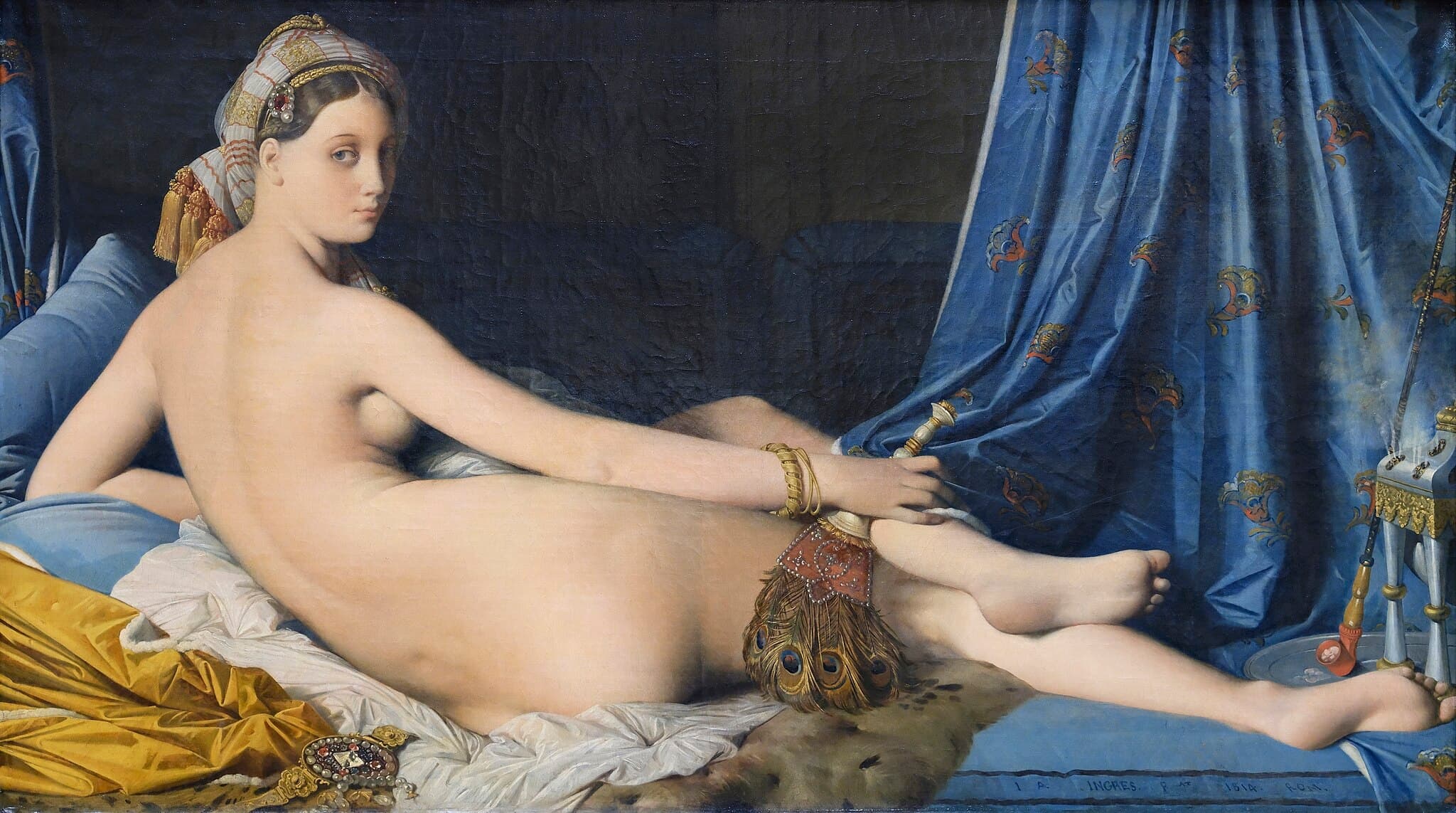
The Great Odalisque
Jean-Auguste-Dominique Ingres, 1814 • Oil on canvas
Read full analysis of The Great Odalisque →Valuation Analysis
Conclusion: In a hypothetical free-trade or insurance context, Jean‑Auguste‑Dominique Ingres’s The Great Odalisque would warrant a $200–300 million valuation. The work is an indisputable masterpiece in the artist’s oeuvre and one of the Louvre’s most iconic 19th‑century images; it is French state property and legally inalienable, so this figure functions as an indemnity/insurance proxy rather than a realizable sale price [1][2].
Comparables and market setting: Nine‑figure demand for canonical, museum‑caliber figurative pictures is well documented. Botticelli’s Young Man Holding a Roundel achieved $92.2 million in 2021, demonstrating trophy‑level depth for pre‑Modern icons [3]. At the pinnacle of Old Master appetite, a Michelangelo drawing brought $27.2 million in 2026, underscoring robust top‑end competition for the rarest Renaissance works on paper [6]. Within France, the €26.73 million Chardin record in 2024 illustrates strong institutional and private demand for classical French masterworks at marquee Paris venues [7]. These bellwethers collectively support a comfortable nine‑figure framework for a masterwork of The Great Odalisque’s stature.
Ingres’s supply dynamics: Major autograph oils by Ingres are overwhelmingly in museums and virtually never trade. Public auction data for the artist understate his real market ceiling: the often‑cited painting record (a small portrait in the 2009 YSL/Bergé sale) is only €2.081 million—reflecting the absence of prime oils at auction, not a limit on value [5]. A small, autograph Odalisque variant from the Jayne Wrightsman collection realized $1.71 million in 2020, again evidencing supply scarcity rather than price potential for a canonical image [4]. The Great Odalisque is categorically different: it is the artist’s signature nude, large in scale, and a cornerstone of 19th‑century art history, placing it in the same trophy conversation as the most recognizable pre‑Modern female figures.
Method and risk framing: This estimate relies on comparable analysis adjusted for icon status, subject, scale, and provenance, and extrapolates upward from thin artist‑specific auction data. While the broader Old Master middle market has been selective, top‑tier works continue to command aggressive bidding [8]. Recent U.S. results for mid‑range French drawings show price sensitivity, but that dynamic does not constrain truly “best‑in‑class” trophies [9]. On balance, a base‑case in the low‑to‑mid $200 millions with upside toward $300 million in a competitive, global contest is justified. Legal inalienability caps real‑world liquidity, but as an indemnity benchmark for an irreplaceable national treasure, $200–300 million is appropriate.
Key Valuation Factors
Art Historical Significance
High ImpactThe Great Odalisque is a textbook-defining image of 19th‑century French art and arguably Ingres’s most famous painting. Commissioned by Caroline Murat and exhibited at the 1819 Salon, it encapsulates the artist’s synthesis of classical line, sensual elongation, and prismatic surface—qualities that shaped generations of academic and modern painters. Its status as the iconic Ingres nude ensures universal institutional recognition and persistent scholarly engagement. Across the canon of reclining female figures, it stands alongside the most reproduced images in Western art, conferring a trophy premium independent of the thinner auction record for the artist’s paintings. That centrality to art history is a primary driver of the nine‑figure valuation and strongly supports the work’s positioning at the apex of its category.
Scarcity and Market Liquidity
High ImpactMasterpiece-level Ingres oils are effectively unavailable: the overwhelming majority are in museums, and fully autograph, finished paintings almost never surface. Auction data for Ingres therefore reflect small portraits, studies, and drawings rather than true price discovery for a canonical oil. This scarcity amplifies trophy competition in any hypothetical sale, as global collectors and institutions have very few chances to acquire an image of this caliber. In practice, scarcity tends to compress time-to-peak pricing for icons when they do appear, as seen in Old Master bellwethers. The Great Odalisque’s combination of autograph status, scale, and fame would catalyze an intense, international contest, supporting a step-change above the artist’s modest public records and aligning it with nine‑figure outcomes for comparably iconic works.
Condition, Scale, and Provenance
High ImpactThe painting’s large format and royal commission origins enhance its desirability and cultural weight. Subsequent 19th‑century private ownership by major French collectors and its ultimate acquisition by the State culminate in an unimpeachable museum pedigree. While a current technical condition report is essential for underwriting, long-term Louvre stewardship and continuous scholarly attention suggest a stable conservation history. Scale matters for nudes—particularly reclining formats—and The Great Odalisque offers a commanding presence that aligns with collector preferences for wall-dominant masterpieces. Taken together, scale, distinguished provenance, and museum-level care support a premium within the nine‑figure range, assuming no undisclosed structural issues. The valuation assumes normal conservation for a work of this age and status, with any significant condition variance adjusted in a dedicated underwriting exercise.
Legal and Marketability Constraints
Medium ImpactAs French state property in the Louvre, the painting is legally inalienable; no open-market transaction is possible. This limits real-world liquidity and means the valuation functions as an insurance or indemnity proxy rather than a price expectation for an auction or private sale. While legal constraints can suppress immediate monetization, they do not diminish cultural or replacement value; if anything, the national-treasure status emphasizes irreplaceability. In valuation practice for comparable museum-held icons, appraisers weight market proxies (iconic subject comparables, trophy outcomes in adjacent categories) over artist-specific auction records. Accordingly, the $200–300 million estimate reflects replacement cost and market comparables in a counterfactual sale scenario, with the understanding that legal status remains a non-economic gating factor outside an exceptional statutory framework.
Sale History
The Great Odalisque has never been sold at public auction.
Jean-Auguste-Dominique Ingres's Market
Ingres is a blue‑chip 19th‑century French master whose fully autograph major oils are concentrated in institutions, resulting in a thin public market skewed toward drawings and minor oils. Consequently, auction records understate real demand for his top-tier paintings: the often-cited painting record is the €2.081m Portrait de la comtesse de La Rue (Christie’s Paris, 2009), while a small autograph Odalisque variant brought $1.71m in 2020. Works on paper can reach mid‑six to seven figures when quality and provenance align, but finished masterpieces virtually never trade. Collectors and institutions regard Ingres as foundational to French Classicism and a precursor to modernism, ensuring deep, global esteem. In a trophy context, an iconic, museum-caliber Ingres would attract cross-category buyers accustomed to nine‑figure pricing for pre‑Modern masterworks.
Comparable Sales
Young Man Holding a Roundel
Sandro Botticelli
Old Master trophy painting with extreme scarcity and museum-level importance; a bellwether for nine-figure demand in pre-Modern masterpieces, useful to bracket a hypothetical price for a canonical Ingres.
$92.2M
2021, Sotheby's New York
~$106.9M adjusted
Portrait of Elisabeth Lederer
Gustav Klimt
Recent nine-figure result for an iconic female portrait by a blue-chip artist; demonstrates current trophy-market depth for best-in-class figurative works with strong provenance and museum-level stature.
$236.4M
2025, Sotheby's New York
Nu couché
Amedeo Modigliani
Iconic reclining female nude that reinterprets the odalisque tradition central to Ingres; a direct subject-matter comp showing the modern market ceiling for landmark nudes.
$170.4M
2015, Christie's New York
~$226.6M adjusted
Salvator Mundi
Leonardo da Vinci (attributed)
The definitive modern-era Old Master trophy sale; evidences how a universally recognized, museum-caliber painting with extreme scarcity can clear well into the nine figures.
$450.3M
2017, Christie's New York
~$594.4M adjusted
Odalisque (variant)
Jean-Auguste-Dominique Ingres
Same artist and subject family as The Great Odalisque; a small, autograph variant that underscores the near-absence of major Ingres oils at auction and helps set a floor for the artist’s painting market.
$1.7M
2020, Christie's New York
~$2.1M adjusted
Portrait of Adele Bloch-Bauer I
Gustav Klimt
Museum-caliber portrait of a female icon; a touchstone private sale demonstrating persistent nine-figure appetite for canonical, widely reproduced images with first-rate provenance.
$135.0M
2006, Private treaty (Neue Galerie New York)
~$209.3M adjusted
Current Market Trends
Old Master and 18th/19th‑century French markets remain barbelled: mid‑tier material is selective, but best‑in‑class works continue to command competitive bidding. The Art Newspaper characterized early‑2024 Old Master auctions as tepid at the middle, while recent marquee weeks delivered strong records, including a $27.2m Michelangelo drawing in 2026. In France, the €26.73m Chardin in 2024 confirmed robust top‑end demand for classical French pictures at marquee venues. Against this backdrop, a canonical, museum‑level Ingres would likely transact—or be insured—at a premium reflective of cross‑category, global trophy appetite. While macro selectivity persists, icons with pristine provenance, scholarship, and scale remain resilient, supporting a $200–300 million framework for The Great Odalisque.
Sources
- Musée du Louvre – Collections: La Grande Odalisque (RF 1158)
- POP – Joconde (Ministry of Culture, France): La Grande Odalisque
- Sotheby’s Press – Botticelli ‘Young Man Holding a Roundel’ achieves $92.2m
- Christie’s Press – The Private Collection of Jayne Wrightsman (Odalisque variant, $1.71m)
- Christie’s Paris – Portrait de la comtesse de La Rue (YSL/Bergé sale, €2.081m)
- Observer – Masters Week: Michelangelo drawing sells for $27.2m
- Gazette Drouot – Chardin’s Le Melon entamé: €26.73m record in France (2024)
- The Art Newspaper – Old Master sales recap: selective demand (Feb 2024)
- HENI News – Christie’s Old Master & British Drawings (US price sensitivity, Feb 2026)