How Much Is The Hay Wain Worth?
Last updated: February 7, 2026
Quick Facts
- Methodology
- extrapolation
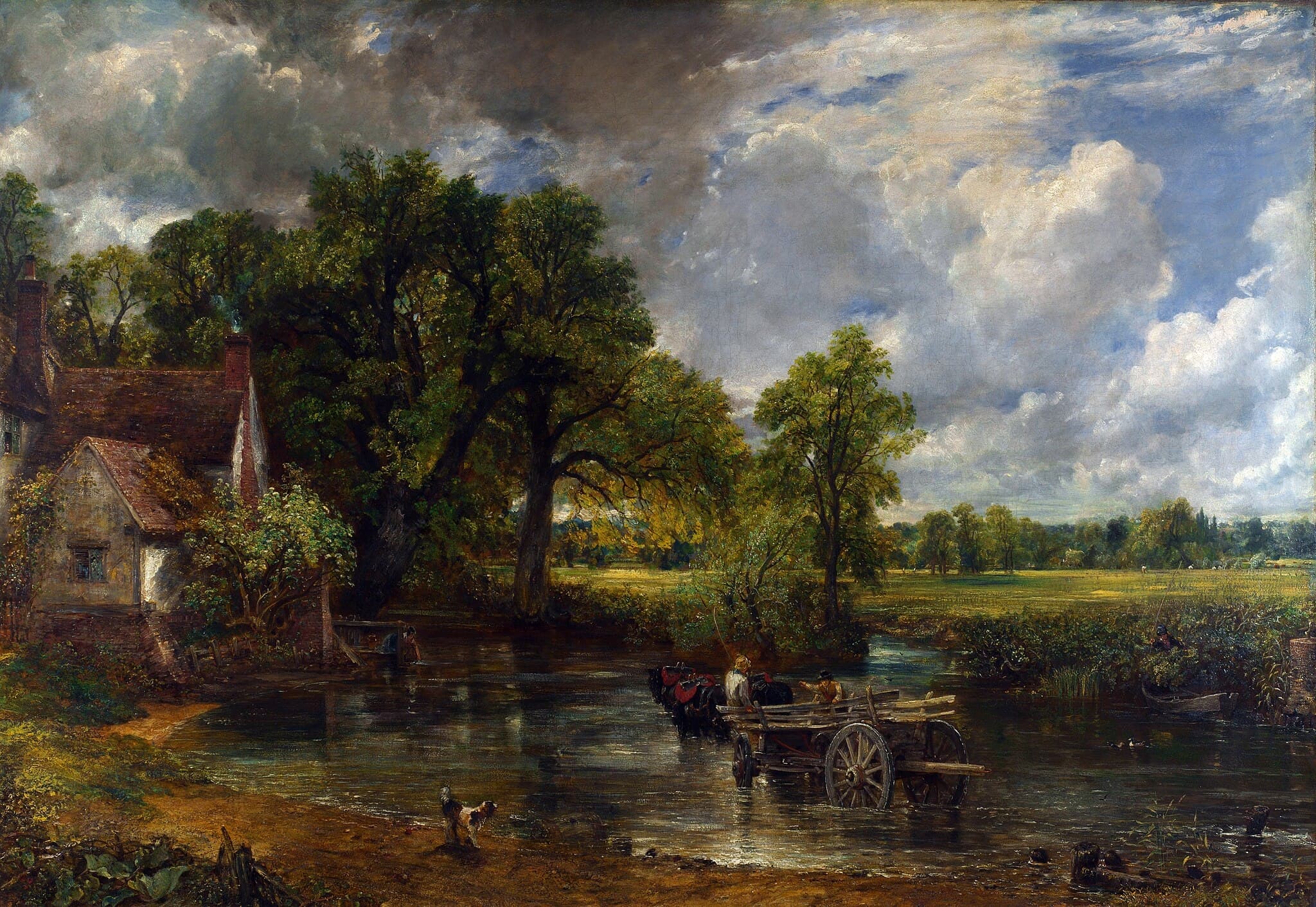
Hypothetical fair‑market value for John Constable’s The Hay Wain is estimated at $100–150 million, assuming the work were transferable and offered internationally. This range extrapolates from Constable’s record for The Lock and top Old Master trophy pricing, while recognizing The Hay Wain’s singular canonical status and extreme rarity.
Valuation Analysis
Conclusion: If John Constable’s The Hay Wain (1821) were legally transferable and exposed to global demand, a defensible fair‑market value is $100–150 million. This band is derived by extrapolating from the artist’s auction record and recent Old Master trophy pricing, then applying a substantial premium for the painting’s unique cultural and art‑historical standing as arguably the most celebrated British landscape.
Core comparables and uplift: Constable’s auction record is The Lock, a fellow “six‑footer,” at $35.2 million (Christie’s London, 2012) [2]. Adjusted for today’s market and scarcity at the masterpiece level, a simple parity would undervalue The Hay Wain, which is more famous, more frequently reproduced, and more central to Constable’s legacy. Cross‑category context shows best‑in‑class Old Masters continue to command very strong prices (e.g., Canaletto’s 2025 record at c. $43.9 million) [3]. The Hay Wain’s fame and scholarly weight justify a significant multiple of Constable’s 2012 record, placing it credibly into the low‑to‑mid nine figures.
Status and provenance: The painting has resided in the National Gallery, London, since Henry Vaughan’s 1886 gift and has not traded in the modern market [1]. Its 19th‑century auction appearances (notably in 1866) are historically interesting but not price‑setting in today’s context. The painting’s unassailable provenance and national‑icon stature materially enhance confidence and value signalling for insurance or indemnity purposes.
Liquidity and legal context: In reality, UK museum governance and export controls render a sale extraordinarily unlikely. However, insurance and state indemnity frameworks assess replacement value, not the probability of a transaction, and are set confidentially on a case‑by‑case basis [4]. For a universally recognized national treasure frequently used as a touchstone for British Romantic landscape, a nine‑figure replacement value is appropriate.
Why $100–150 million: This range balances three forces: (i) a clear premium over the artist’s best market proxy (The Lock) [2]; (ii) the observed spending capacity for top Old Master trophies [3]; and (iii) the distinctive, near‑singular cultural recognition of The Hay Wain, reinforced by ongoing scholarship and exhibition programming at the National Gallery [1][5]. The midpoint assumes sound structural condition consistent with a prime National Gallery canvas; access to technical files could refine the band but is unlikely to alter the order of magnitude.
Positioning: At $100–150 million, The Hay Wain would rank among the most valuable paintings by any British artist and one of the highest‑valued Old Master/Romantic works in an insurance or hypothetical FMV setting, reflecting its status as the emblematic image of Constable’s achievement and a cornerstone of British art history [1][5].
Key Valuation Factors
Art Historical Significance
High ImpactThe Hay Wain is one of Constable’s definitive “six‑footers” and a cornerstone of British Romantic landscape. Its impact extends beyond Britain: after its 1824 Paris showing, it influenced a generation of French painters and widened critical acceptance of naturalistic landscape. The composition—Willy Lott’s cottage, the ford, and the Stour Valley light—is widely reproduced in textbooks and museum education, anchoring Constable’s reputation. This canonical status materially elevates value, as the market pays a premium for works that define an artist’s achievement and serve as cultural symbols, not merely examples. Among Constable’s oeuvre, only one or two works rival its fame, making its significance an outsized, price‑setting factor.
Rarity and Scale (Six‑Footer Trophy)
High ImpactLarge exhibition canvases from Constable’s prime period are exceptionally scarce, with most held by major institutions. Among these, The Hay Wain is arguably the most recognized. The best market proxy, The Lock, achieved $35.2 million in 2012; no equivalent “six‑footer” has surfaced since. Scarcity at this apex level creates trophy dynamics: a tiny pool of potential buyers, but intense competition when a canonical masterpiece hypothetically appears. Because supply of directly comparable works is essentially fixed, pricing is less about incremental comparables and more about willingness to pay for a once‑in‑a‑generation opportunity, which supports a meaningful multiple of the artist’s existing record.
Marketability Constraints vs. Insurance/Indemnity Value
Medium ImpactThe painting is in the National Gallery, London, and would be subject to UK museum governance and export restrictions. Practically, it is non‑marketable. However, insurance and state indemnity are set on replacement value, not the likelihood of sale. Under the UK Government Indemnity Scheme, agreed valuations are confidential and negotiated for loans; for an icon of this magnitude, such values typically reflect global trophy pricing rather than domestic constraints. This distinction justifies using a hypothetical fair‑market lens even if an actual sale is implausible, while also acknowledging that legal realities could reduce the active buyer pool in any real transaction scenario.
Artist Market Benchmarks and Peer Context
Medium ImpactConstable’s auction record—The Lock at $35.2 million (2012)—sets the modern high for the artist, with eight‑figure prices for exceptional oils and strong six‑ to seven‑figure results for oil studies and drawings. At the category level, top Old Master trophies continue to command major prices (e.g., Canaletto’s 2025 record at c. $43.9 million). The Hay Wain’s brand‑level recognition, far exceeding typical Constable offerings, merits a premium multiple over The Lock and positions it within the low‑to‑mid nine‑figure tier despite a generally smaller global buyer base for British Romantic art relative to Impressionist/Modern fields.
Provenance, Exhibitions, and Condition Considerations
High ImpactAn unbroken, fully documented provenance culminating in the National Gallery’s 1886 gift strengthens value signalling and mitigates attribution or title risk. The painting’s constant visibility and scholarship, including recent NG programming, reinforce its status. While specific conservation data are not cited here, National Gallery stewardship typically indicates rigorous care and documentation. The valuation assumes sound structural condition for a canvas of this age; a current technical report could tighten the range. Given the work’s stature, moderate condition variances would likely influence the precise figure within, rather than outside, the $100–150 million band.
Sale History
Paris (Henry sale)
Annotated at 2,300 francs; buyer recorded as Jean‑François Boursault; USD value shown at 1828 gold parity.
Christie's London
George Young sale, lot 25; bought by dealer Cox for Henry Vaughan; USD value shown at 19th‑century $/£ parity.
John Constable's Market
John Constable is blue‑chip within British 19th‑century art, with global demand concentrated among museums and seasoned private collectors. His auction record stands at $35.2 million for The Lock (Christie’s London, 2012), a fellow “six‑footer.” While most works transact at lower price points—oil sketches and studies in the low‑ to mid‑six figures and strong drawings at similar levels—exceptional oils can reach eight figures. Supply of masterpiece‑level canvases is extremely limited, as key works reside in UK institutions. Recent years have seen healthy competition for authenticated rediscoveries and choice studies, confirming depth for quality, but true trophy‑grade Constables very rarely come to market, supporting large premiums when they do.
Comparable Sales
The Lock
John Constable
Same artist; one of the famed 'six-footers' from the same Stour series/period; closest available market proxy for an exhibition-scale Constable masterpiece.
$35.2M
2012, Christie's London
~$48.6M adjusted
Dedham Vale Looking Towards Langham (oil sketch)
John Constable
Same artist; subject is the Dedham Vale/Stour valley—the core Hay Wain geography—showing current demand for authenticated, fresh-to-market Constable material.
$415K
2025, Tennants, Leyburn
Cloud Study
John Constable
Same artist; though small, these plein‑air studies are a key facet of Constable’s practice and gauge liquidity/collector depth in the current market.
$580K
2025, Christie's London
View of the Back of Willy Lott’s House with Log‑Cutter (1814, oil sketch)
John Constable
Same artist; directly linked subject (Willy Lott’s Cottage appears in The Hay Wain), evidencing market appetite for works tied to the iconic composition.
$245K
2023, Martel Maides, Guernsey
~$257K adjusted
Venice, the Return of the Bucintoro on Ascension Day
Canaletto
Category benchmark: a best‑in‑class Old Master trophy selling at the top of the current market, indicating the upper range buyers will pay for canonical masterpieces.
$43.9M
2025, Christie's London
Current Market Trends
The Old Masters segment remains selective but resilient at the top: sell‑through can be mixed overall, yet best‑in‑class trophies continue to draw strong global competition. In 2025–2026, headline results included a Canaletto record around $44 million and new benchmarks for drawings by Michelangelo and Rembrandt, underscoring deep demand for rare, unimpeachable material. Price polarization persists—buyers pay up for scholarly, well‑provenanced icons while being more cautious elsewhere. Against this backdrop, a universally recognized national icon like The Hay Wain justifies a nine‑figure valuation under a hypothetical, unrestricted sale framework, even as the practical likelihood of an actual transaction remains remote.
Sources
- National Gallery, London — The Hay Wain (NG1207) catalogue entry
- Christie’s — The Lock (Constable) auction record, London, 3 July 2012
- The Art Newspaper — Canaletto painting sells for record £31.9m (July 1, 2025)
- UK Government — Government Indemnity Scheme guidance
- National Gallery — Press release: Discover Constable & The Hay Wain (2024–25)