Guernica
Study Print Studio
Create a personal study print
Build a companion study sheet around the part of this painting that speaks to you most. Choose a detail, shape an interpretation, and walk away with something personal and display-worthy.
Fast Facts
- Year
- 1937
- Medium
- Oil on canvas
- Dimensions
- 349.3 × 776.6 cm
- Location
- Museo Nacional Centro de Arte Reina Sofía, Madrid
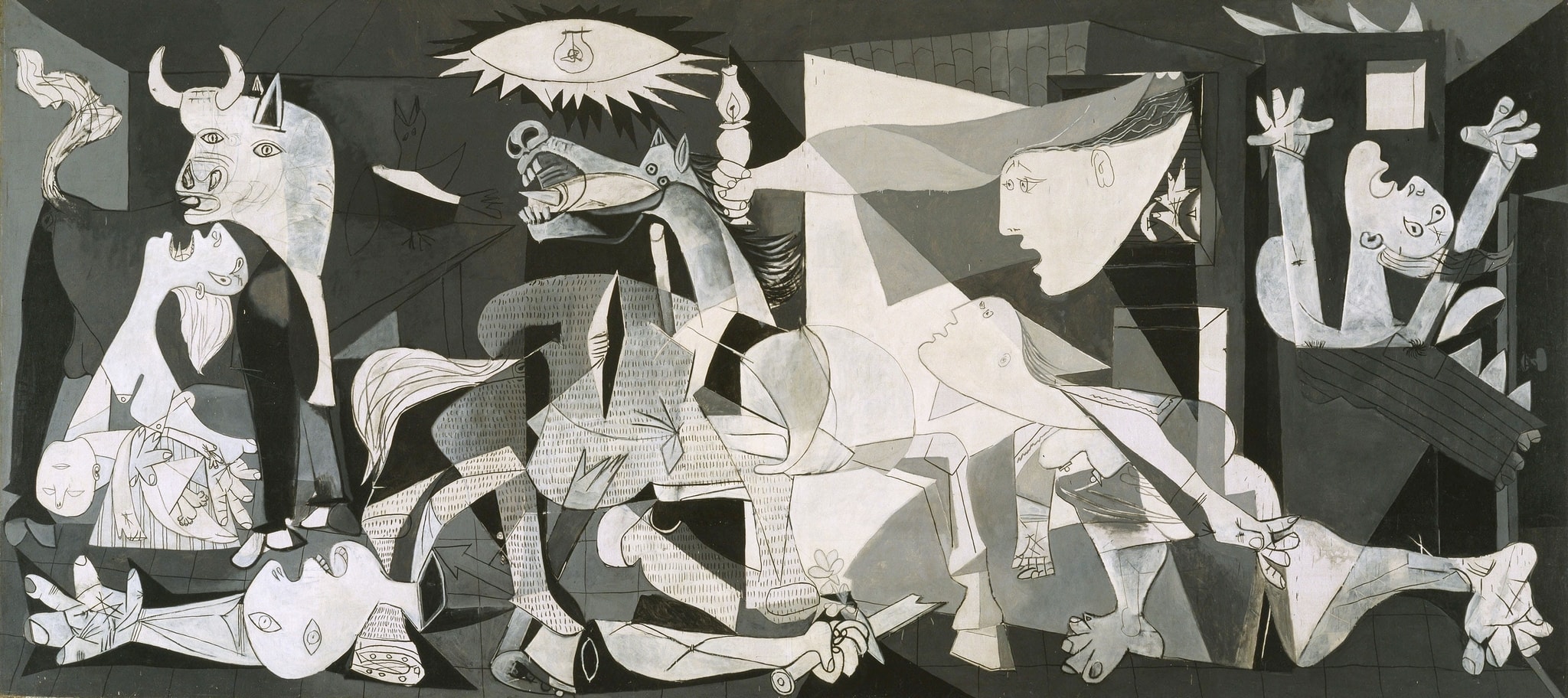
Click on any numbered symbol to learn more about its meaning
Meaning & Symbolism
Explore Deeper with AI
Ask questions about Guernica
Popular questions:
Powered by AI • Get instant insights about this artwork
Interpretations
Formal Analysis
Source: Rudolf Arnheim; Museo Reina Sofía
Media/Technology Lens
Source: Smarthistory; Max Raphael (via Paris Update)
Institutional/Reception History
Source: Museo Reina Sofía; MoMA
Iconographic Instability
Source: Paris Update (Seckler/Kahnweiler accounts); Museo Reina Sofía
Comparative Lineage
Source: Museo Reina Sofía; Britannica
Explore Specific Elements
Dive deeper into individual scenes and details within Guernica.
The Screaming Horse
At the heart of Guernica, a rearing, mortally wounded horse throws back its head in a blade‑tongued scream, crystallizing the mural’s terror in a single, unforgettable image. Drawn from Spain’s bullfighting vocabulary and reworked during the frantic weeks after the bombing of Gernika, the horse became Picasso’s clearest vessel for public agony and resistance.
The Weeping Mother
At the far left of Guernica, a mother kneels, head flung back, screaming as she clutches her dead child—a modern Pietà that condenses the mural’s grief into a single, unforgettable cry. Picasso makes her the work’s human ground zero, a figure forged in May 1937 studies and later distilled into the Weeping Woman series.
The Light Bulb Eye
High overhead in Guernica, a bare electric bulb glares like an eye and detonates like a blast. Picasso turns the emblem of modern illumination into a merciless spotlight that crowns the central tragedy. The Light Bulb Eye crystallizes the painting’s charge: technology that promises progress can also expose, surveil, and destroy.
The Dismembered Soldier
At the base of Guernica, Picasso scatters the head and arms of a fallen warrior; a severed hand still grips a broken sword as a tiny flower springs beside it. This compressed emblem of defeat and fragile endurance anchors the mural’s outcry against mechanized war and keeps a thread of human hope alive.
The Bull
The bull in Guernica stands like a dark, unblinking witness at the painting’s left edge, a charged emblem drawn from Picasso’s lifelong taurine imagery. Neither mascot nor mascot of a party, it condenses brutality, myth, and national memory into a single, magnetic silhouette that steadies the chaos around it.
The Burning Woman
At the far right of Picasso’s Guernica, a woman flings up her arms and screams as her home erupts in flames. This “Burning Woman” condenses the terror of aerial bombardment into a single, unforgettable image—turning a specific atrocity in 1937 Spain into a universal charge against modern warfare.
Related Themes
About Pablo Picasso
More by Pablo Picasso
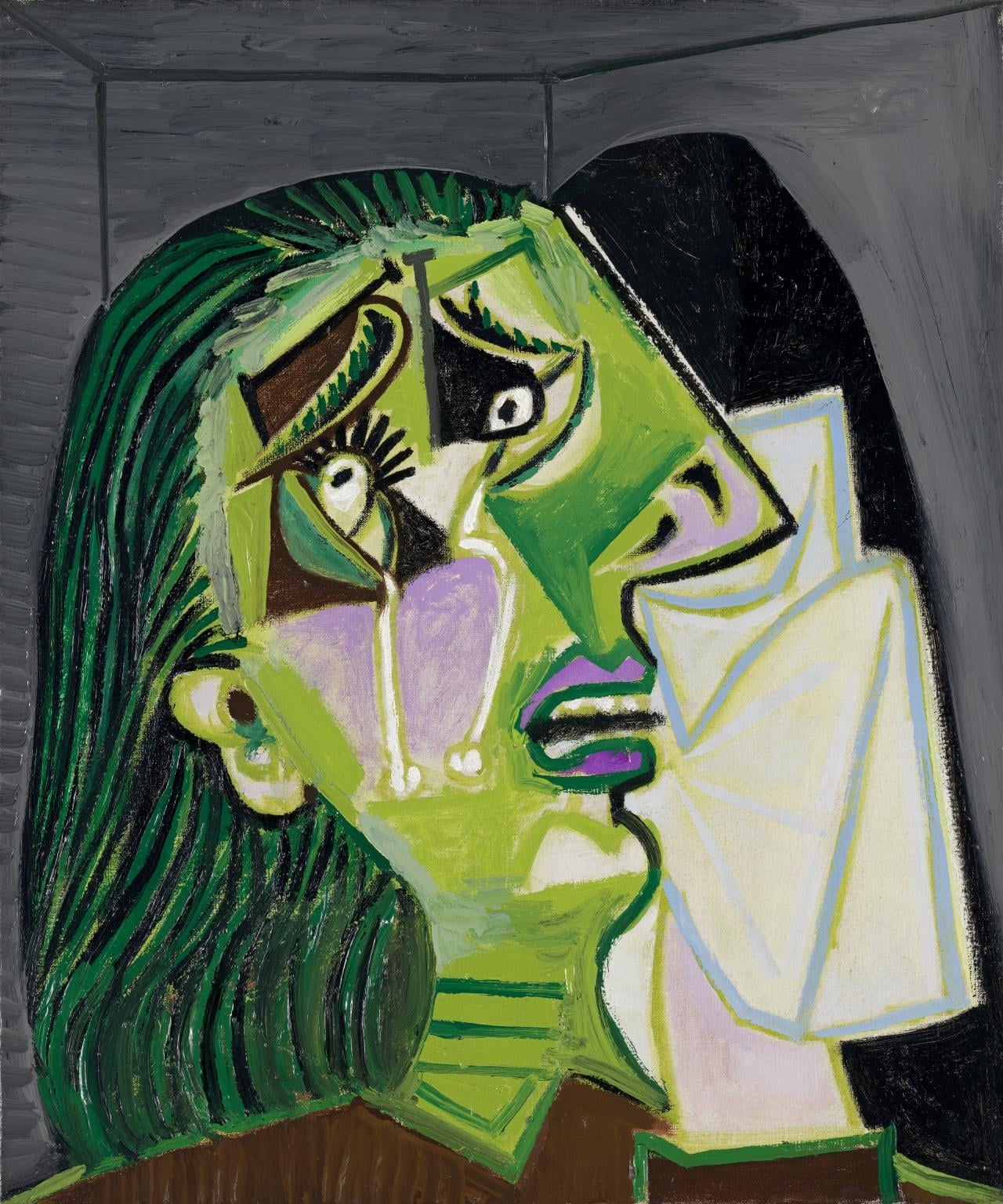
The Weeping Woman
Pablo Picasso (1937)
Picasso’s The Weeping Woman turns private mourning into a public, <strong>iconic emblem of civilian grief</strong>. Shattered planes, <strong>acidic greens and purples</strong>, and jewel-like tears force the viewer to feel the fracture of perception that follows trauma <sup>[1]</sup><sup>[2]</sup>.
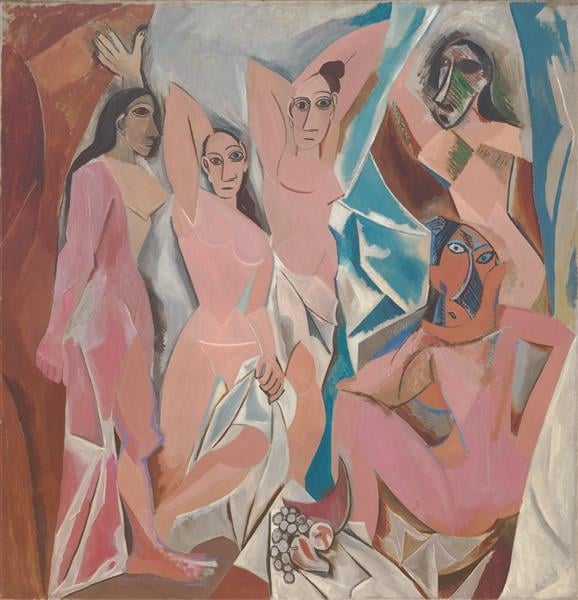
Les Demoiselles d'Avignon
Pablo Picasso (1907)
Les Demoiselles d'Avignon hurls five nudes toward the viewer in a shallow, splintered chamber, turning classical beauty into <strong>sharp planes</strong>, <strong>masklike faces</strong>, and <strong>fractured space</strong>. The fruit at the bottom reads as a sensual lure edged with threat, while the women’s direct gazes indict the beholder as participant. This is the shock point of <strong>proto‑Cubism</strong>, where Picasso reengineers how modern painting means and how looking works <sup>[1]</sup><sup>[2]</sup>.