Prophecy & vision
Featured Artworks
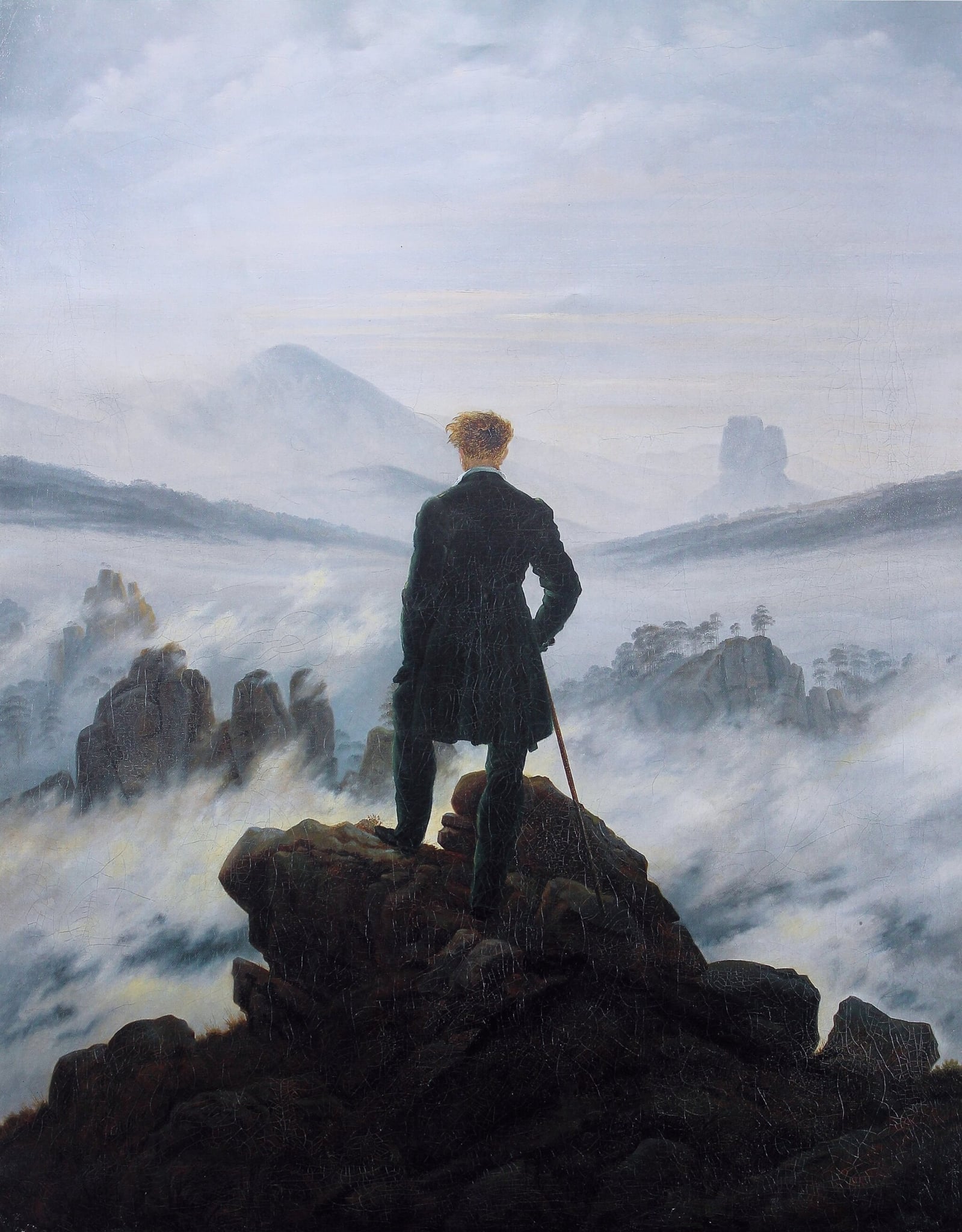
Wanderer above the Sea of Fog
Caspar David Friedrich (ca. 1817)
A solitary figure stands on a jagged crag above a churning <strong>sea of fog</strong>, his back turned in the classic <strong>Rückenfigur</strong> pose. Caspar David Friedrich transforms the landscape into an inner stage where <strong>awe, uncertainty, and resolve</strong> meet at the edge of perception <sup>[3]</sup><sup>[5]</sup>.

The Creation of Adam
Michelangelo (c.1511–1512)
Michelangelo’s The Creation of Adam crystallizes the instant before life is conferred, staging a charged interval between two nearly touching hands. The fresco turns Genesis into a study of <strong>imago Dei</strong>, bodily perfection, and the threshold between inert earth and <strong>active spirit</strong> <sup>[1]</sup><sup>[2]</sup>.

Guernica
Pablo Picasso (1937)
Guernica is a monumental, monochrome indictment of modern war, compressing a town’s annihilation into a frantic tangle of bodies, beasts, and light. Across the canvas, a <strong>shrieking horse</strong>, a <strong>stoic bull</strong>, a <strong>weeping mother with her dead child</strong>, and a <strong>fallen soldier</strong> stage a civic tragedy rather than a heroic battle. The harsh <strong>electric bulb</strong> clashes with a fragile <strong>oil lamp</strong>, turning the scene into a stark drama of terror and witness.
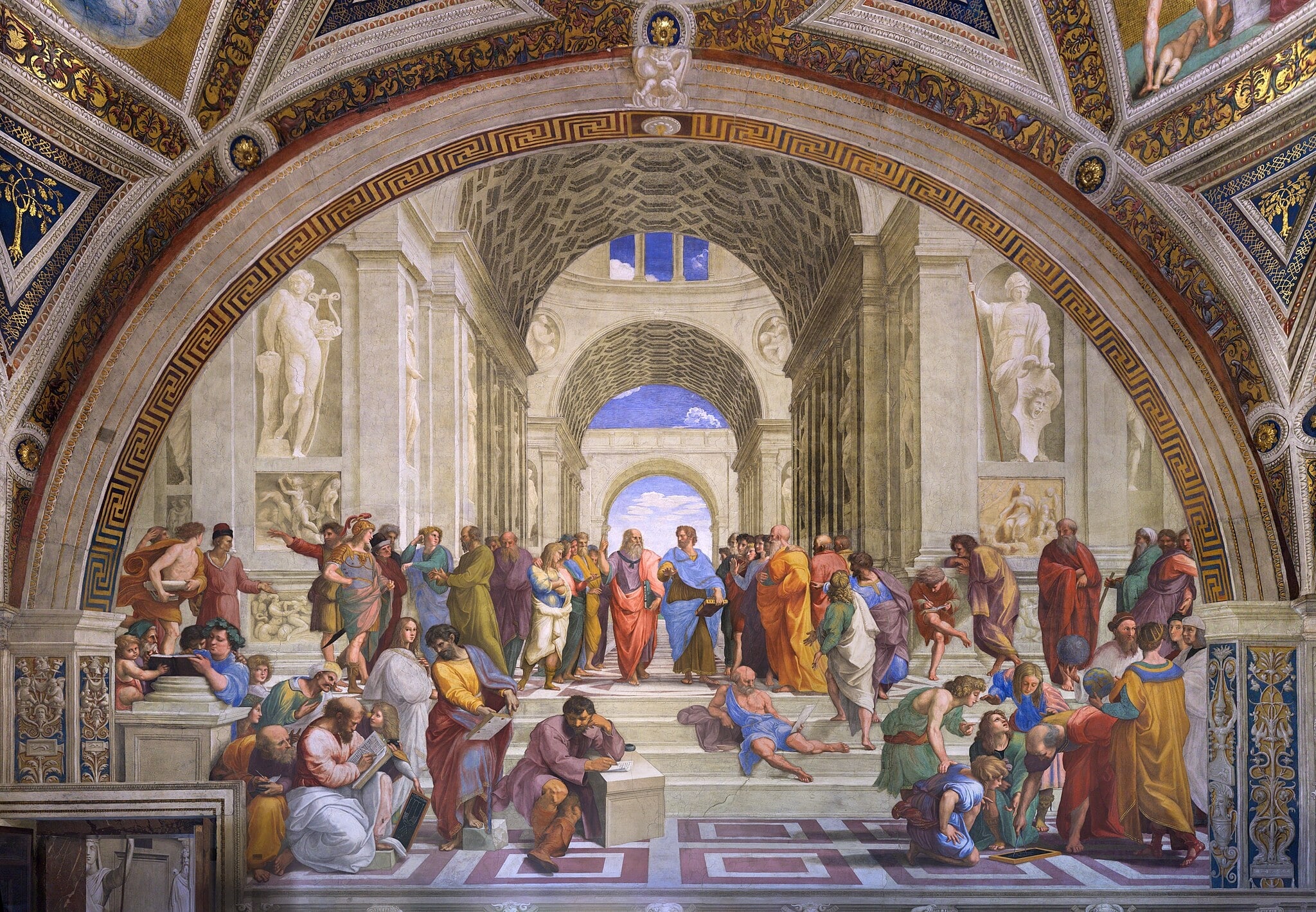
The School of Athens
Raphael (1509–1511)
Raphael’s The School of Athens orchestrates a grand debate on knowledge inside a perfectly ordered, classical hall whose one-point perspective converges on the central pair, <strong>Plato</strong> and <strong>Aristotle</strong>. Their opposed gestures—one toward the heavens, one level to the earth—establish the fresco’s governing dialectic between <strong>ideal forms</strong> and <strong>empirical reason</strong> <sup>[1]</sup><sup>[2]</sup>. Around them, mathematicians, scientists, and poets cluster under statues of <strong>Apollo</strong> and <strong>Athena/Minerva</strong>, turning the room into a temple of <strong>Renaissance humanism</strong> <sup>[1]</sup><sup>[3]</sup>.
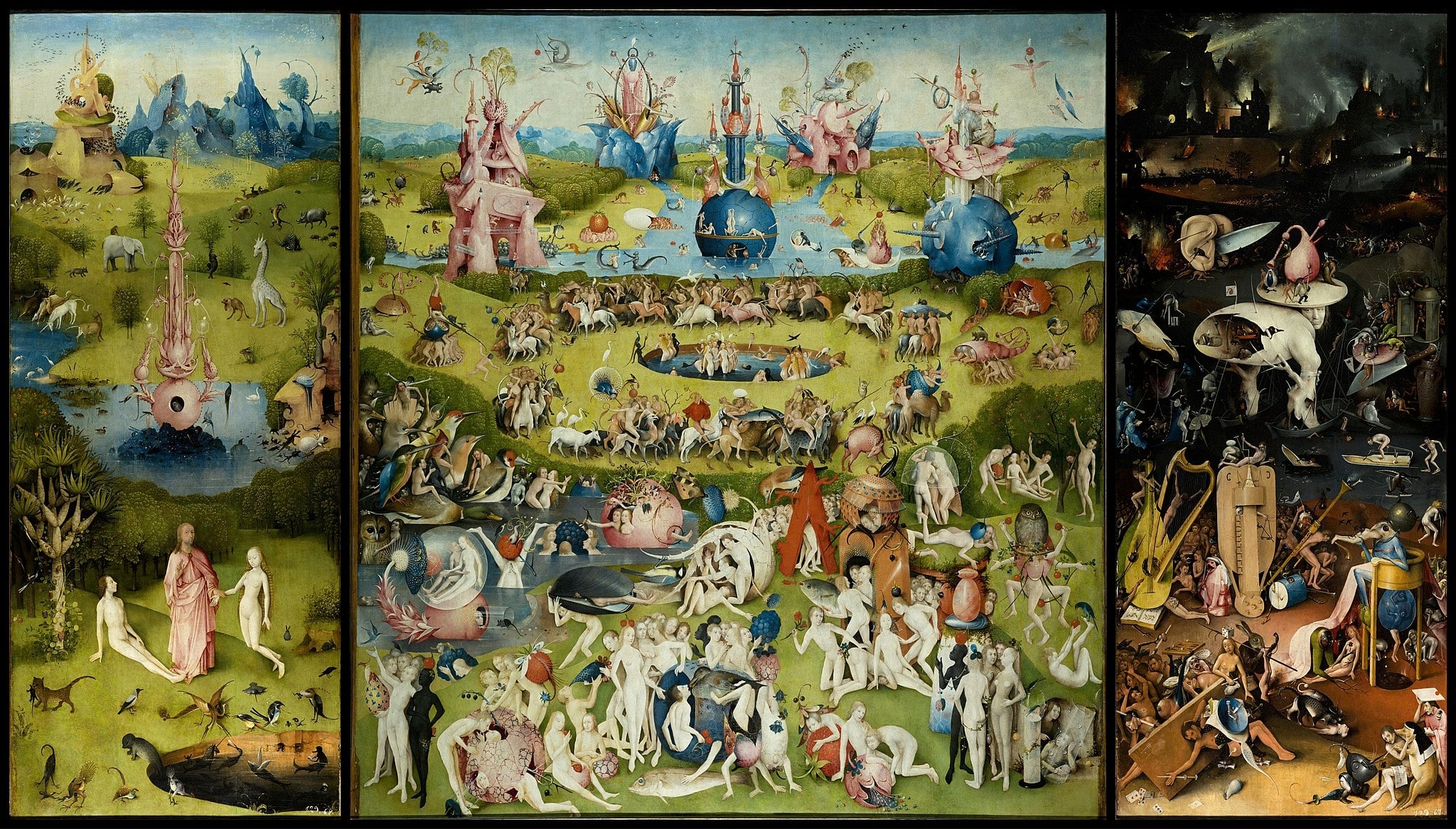
The Garden of Earthly Delights
Hieronymus Bosch (c.1490–1500)
The Garden of Earthly Delights unfolds a three‑act moral narrative—<strong>innocence</strong>, <strong>seduction</strong>, and <strong>retribution</strong>—from Eden to a punitive <strong>Musical Hell</strong>. Bosch binds the scenes through recurring emblems (notably the <strong>owl</strong>) and by echoing Eden’s crystalline fountain in the center’s fragile, candy‑colored architectures, then in Hell’s broken bodies and instruments. The work dazzles with invention while insisting that <strong>sweet, ephemeral pleasures</strong> end in ruin <sup>[1]</sup>.
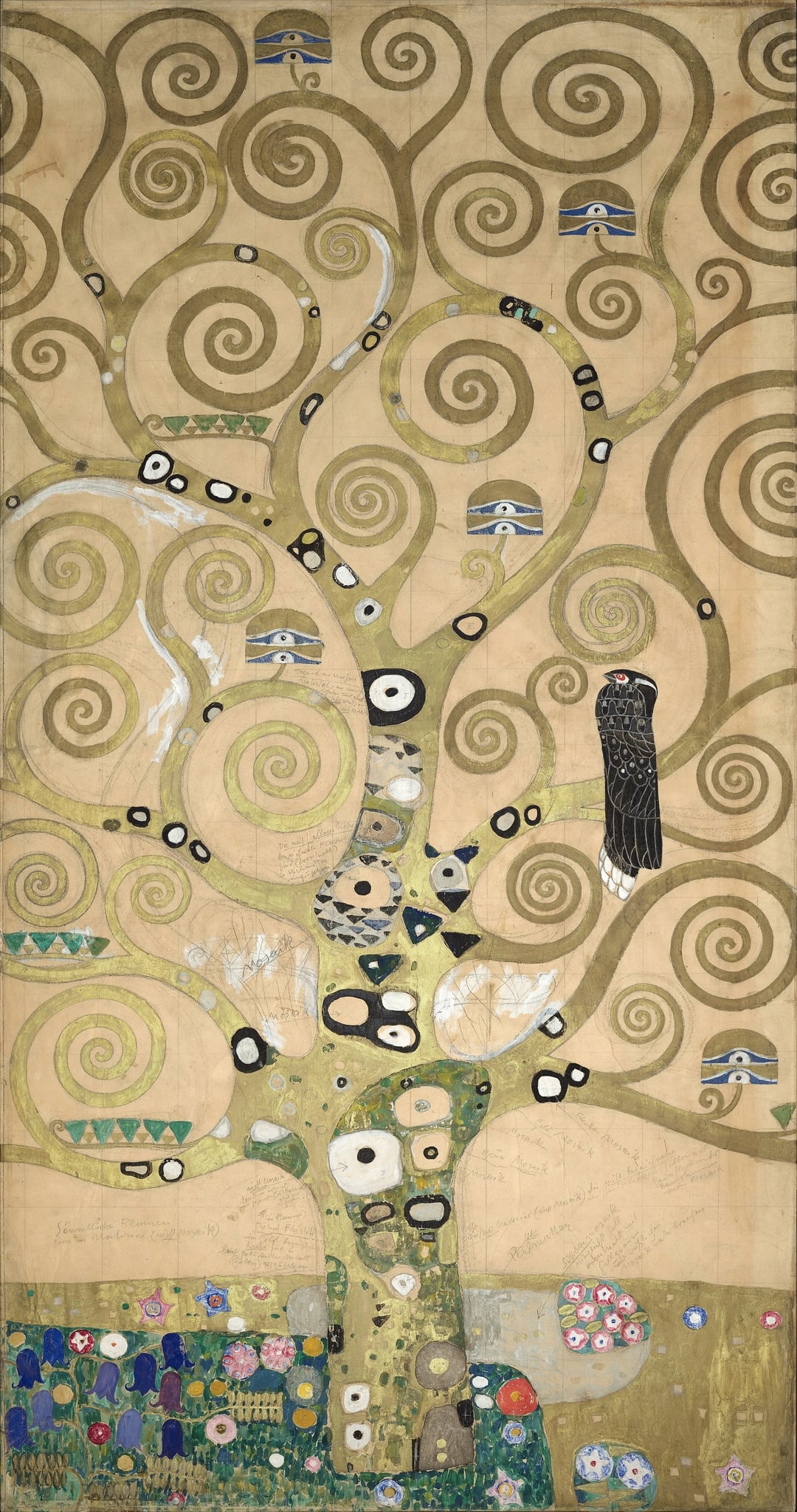
The Tree of Life
Gustav Klimt (1910–1911 (design; mosaic installed 1911))
Gustav Klimt’s The Tree of Life crystallizes a <strong>cosmological axis</strong> in a gilded ornamental language: a rooted trunk erupts into <strong>endless spirals</strong>, embedded with <strong>eye-like rosettes</strong> and shadowed by a black, red‑eyed bird. Designed as part of the Stoclet dining‑room frieze, it fuses <strong>symbolism and luxury materials</strong> to link earthly abundance with timeless transcendence <sup>[1]</sup><sup>[2]</sup>.
Irises
Vincent van Gogh (1889)
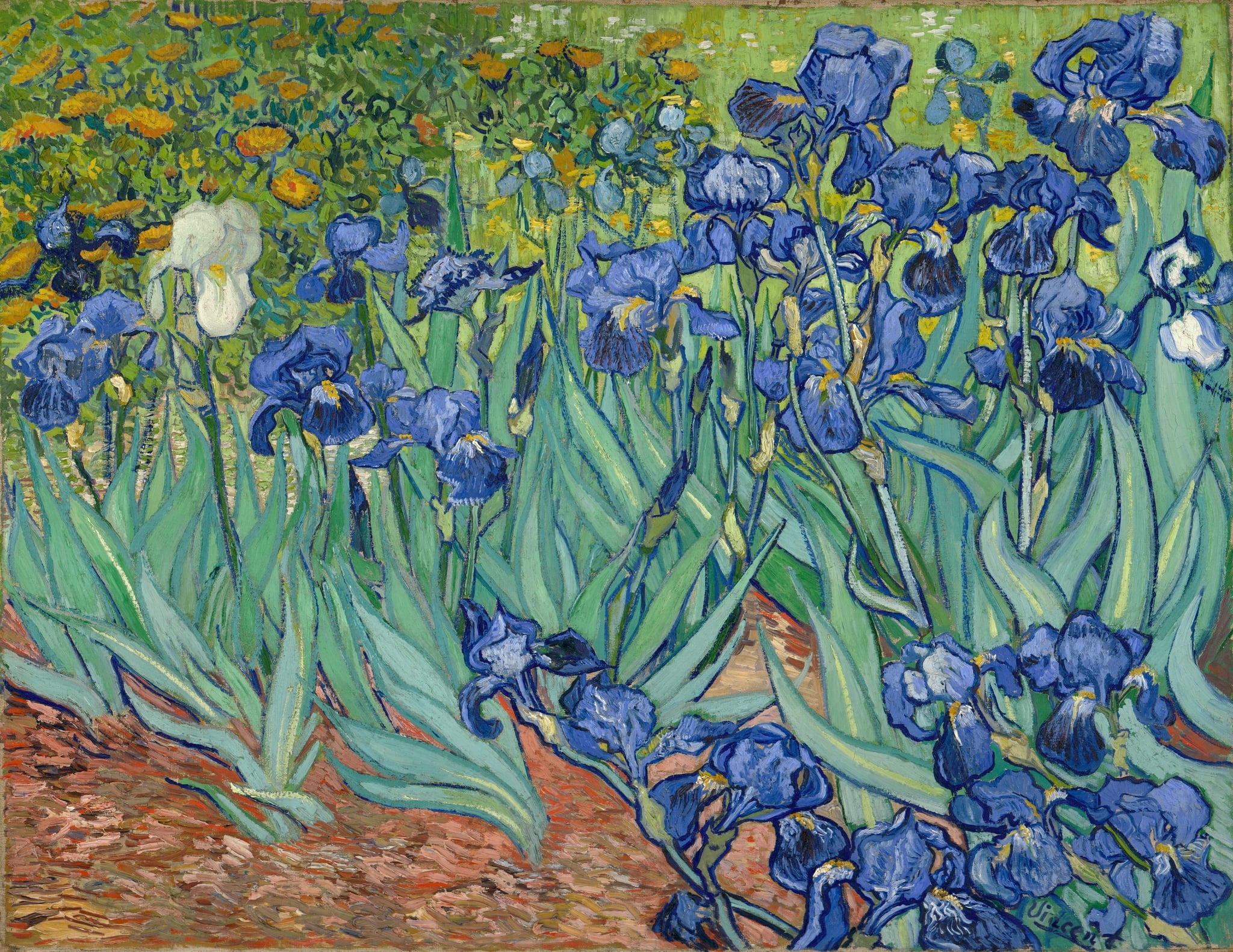
Painted in May 1889 at the Saint-Rémy asylum garden, Vincent van Gogh’s <strong>Irises</strong> turns close observation into an act of repair. Dark contours, a cropped, print-like vantage, and vibrating complements—violet/blue blossoms against <strong>yellow-green</strong> ground—stage a living frieze whose lone <strong>white iris</strong> punctuates the field with arresting clarity <sup>[1]</sup><sup>[2]</sup>.
A Morning by the Pond
Gustav Klimt (1899)
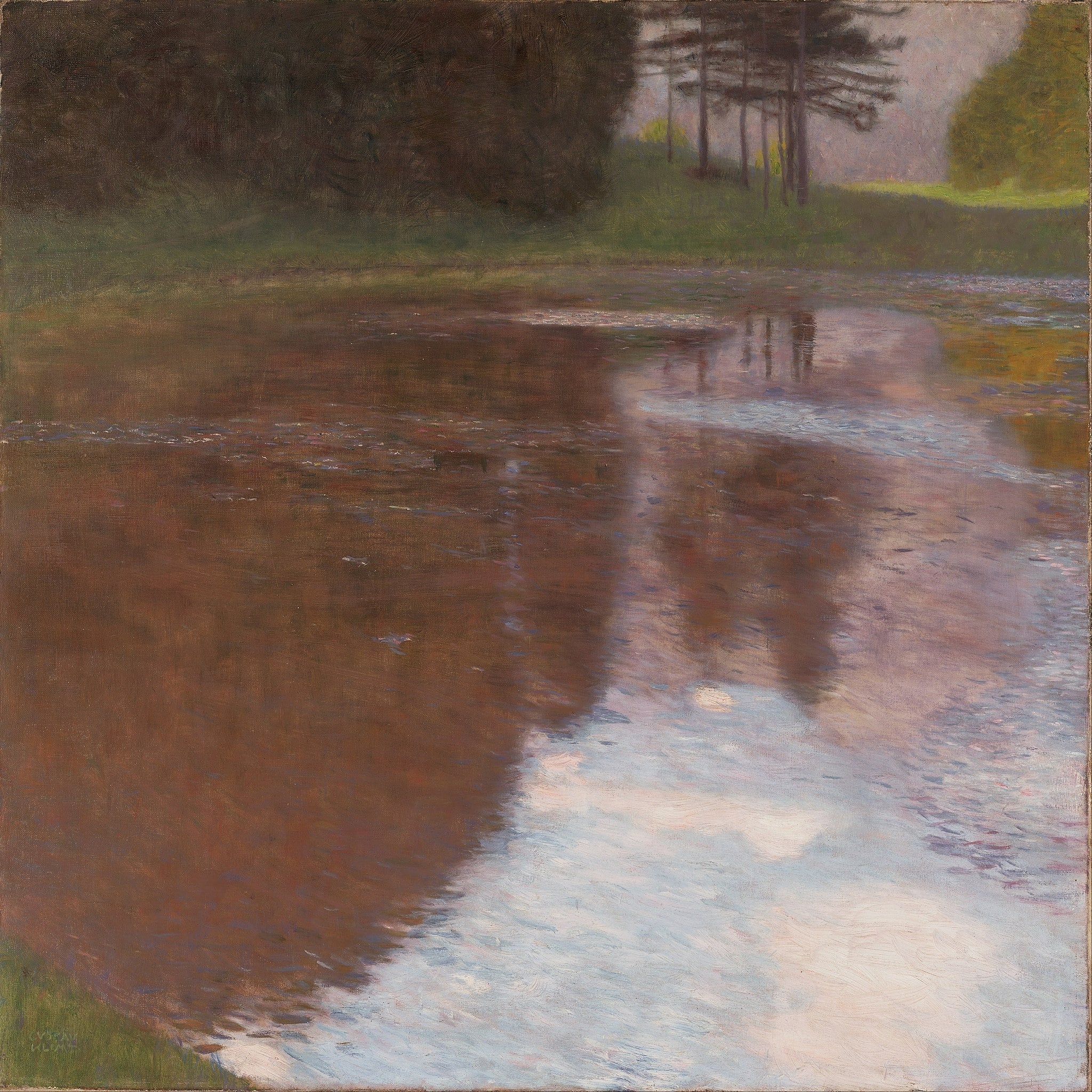
A Morning by the Pond turns a quiet Egelsee shoreline into a field of <strong>reflection</strong> where trees, bank, and sky dissolve into one surface. Klimt’s first <strong>square format</strong> landscape compresses depth and makes water the true subject, staging a luminous <strong>threshold</strong> between night and day. The work establishes perception itself—what we see and how—as Klimt’s modern theme.
The Tower of Babel
Pieter Bruegel the Elder (1563)
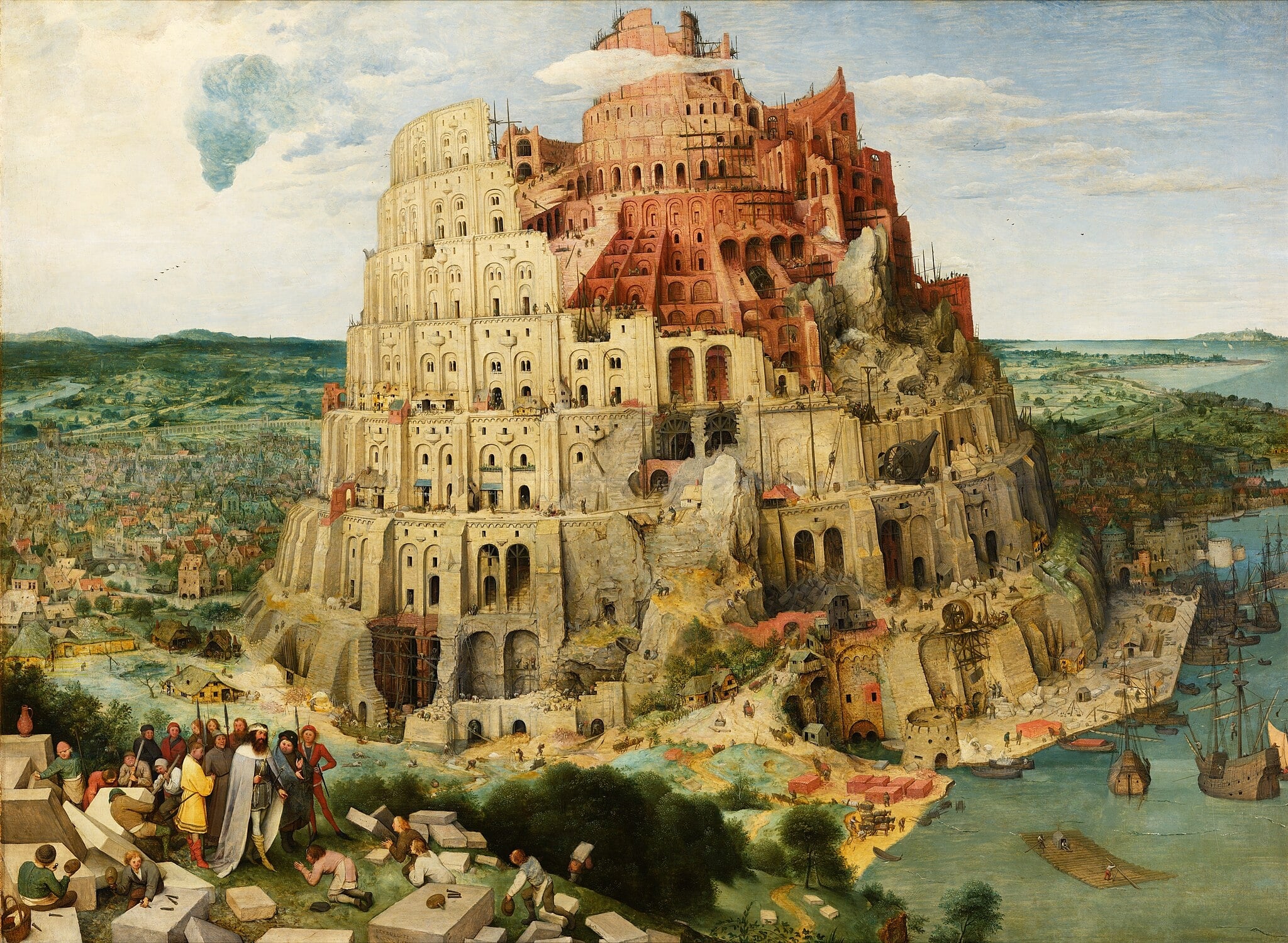
In The Tower of Babel, Pieter Bruegel the Elder stages a spiraling, Roman‑style colossus whose arches, cranes, and swarming labor proclaim <strong>human industry</strong> even as cracked foundations and misaligned tiers foretell <strong>collapse</strong>. The pale, orderly left flank opposes the raw red masonry at right, while a ruler (often read as <strong>Nimrod</strong>) inspects kneeling builders before a bustling Flemish harbor—an image of ambition already undermined from within <sup>[1]</sup>.
The Supper at Emmaus
Caravaggio (1601)
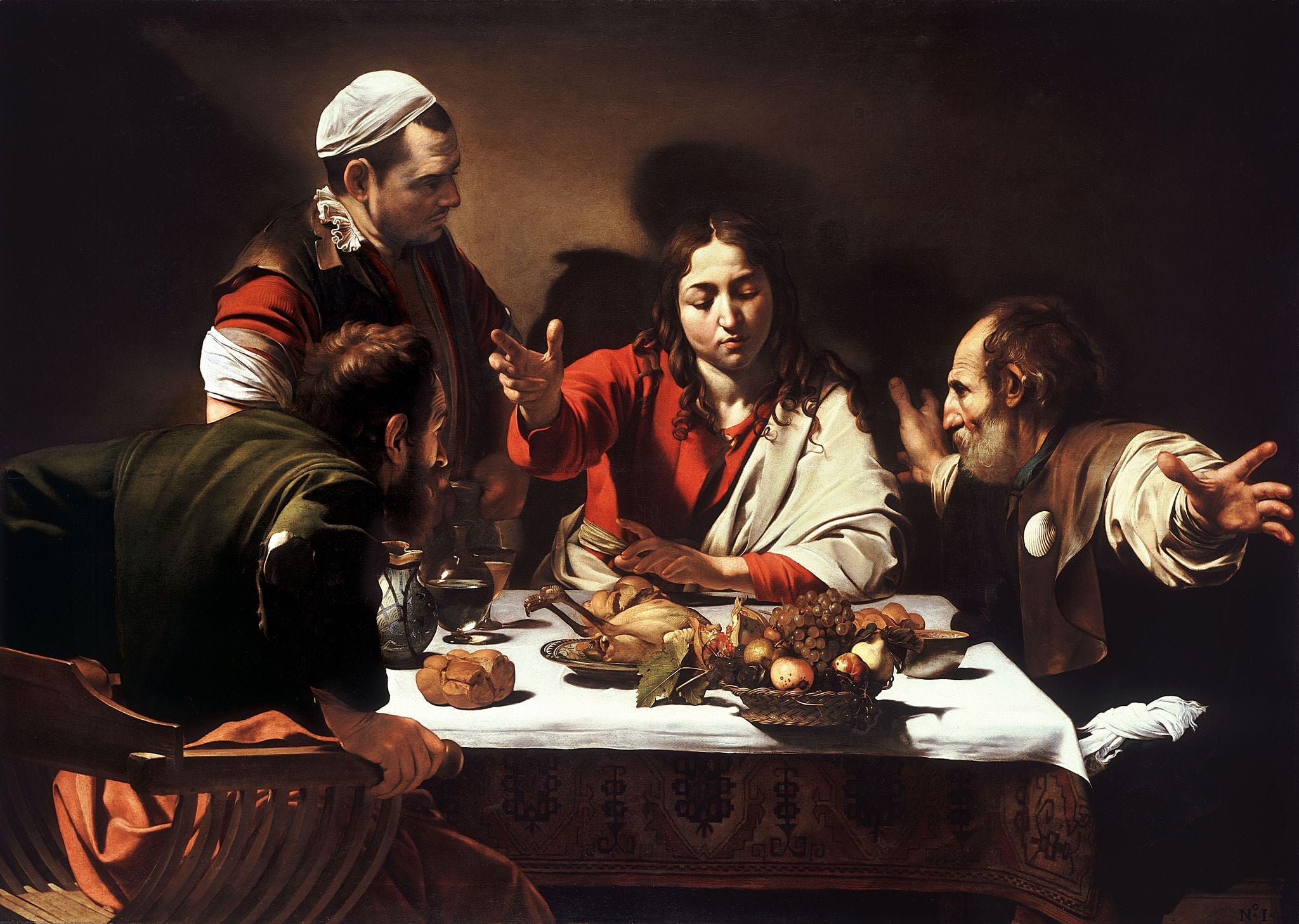
Caravaggio’s The Supper at Emmaus captures the split-second when two disciples recognize Christ in the <strong>breaking of bread</strong>. A raking light isolates Christ’s calm blessing while the disciples erupt—one surging forward with a torn sleeve, the other flinging his arms wide—so the shock of revelation reads as bodily fact. The teetering <strong>basket of fruit</strong> and Eucharistic table amplify themes of abundance and fragility <sup>[1]</sup><sup>[4]</sup>.