Bathers by Paul Cézanne: Geometry of the Modern Nude
by Paul Cézanne
Study Print Studio
Create a personal study print
Build a companion study sheet around the part of this painting that speaks to you most. Choose a detail, shape an interpretation, and walk away with something personal and display-worthy.
Fast Facts
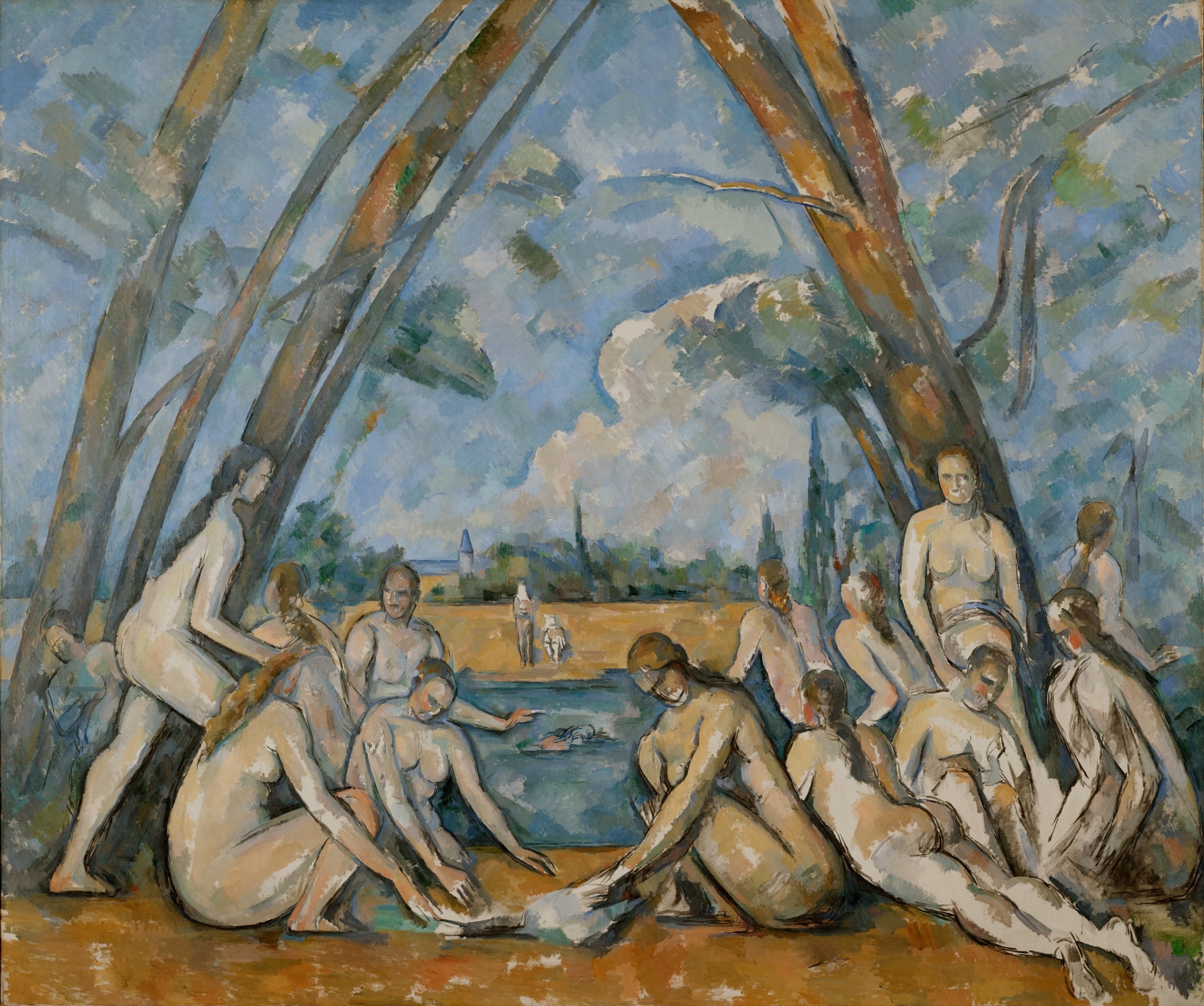
Click on any numbered symbol to learn more about its meaning
Meaning & Symbolism
Explore Deeper with AI
Ask questions about Bathers by Paul Cézanne: Geometry of the Modern Nude
Popular questions:
Powered by AI • Get instant insights about this artwork
Related Themes
About Paul Cézanne
More by Paul Cézanne
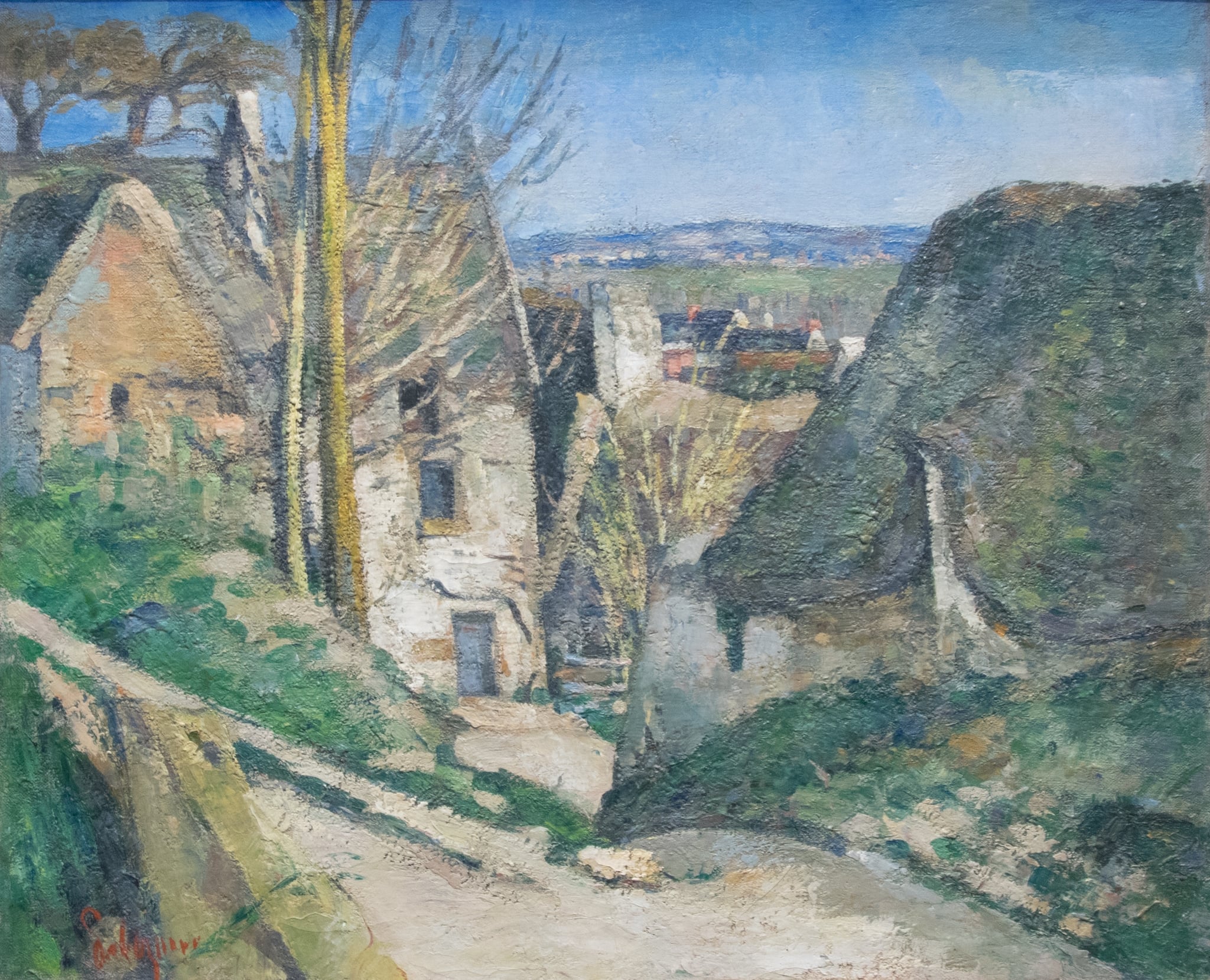
The House of the Hanged Man
Paul Cézanne (1873)
Paul Cézanne’s The House of the Hanged Man turns a modest Auvers-sur-Oise lane into a scene of <strong>engineered unease</strong> and <strong>structural reflection</strong>. Jagged roofs, laddered trees, and a steep path funnel into a narrow, shadowed V that withholds a center, making absence the work’s gravitational force. Cool greens and slate blues, set in blocky, masoned strokes, build a world that feels both solid and precarious.
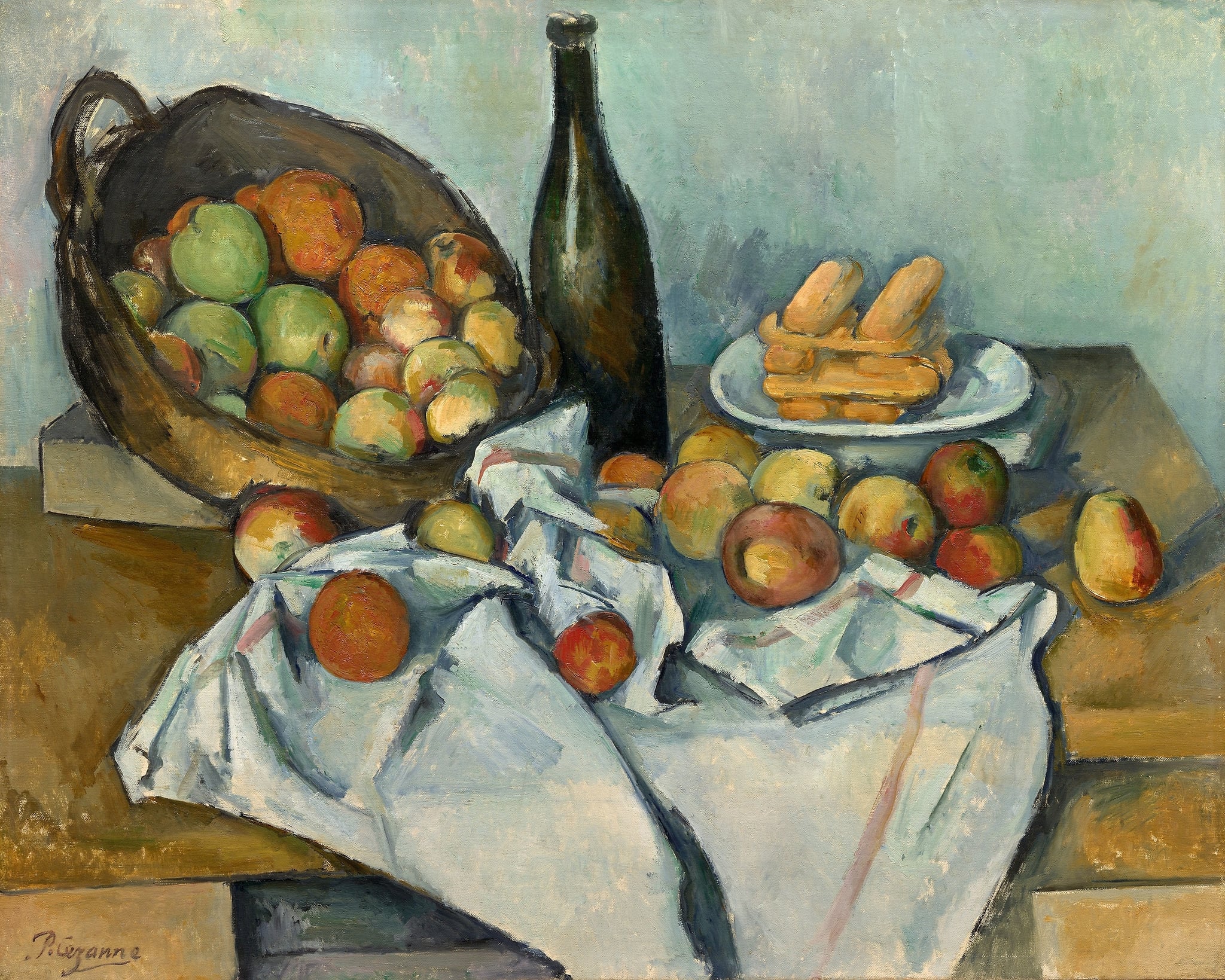
The Basket of Apples
Paul Cézanne (c. 1893)
Paul Cézanne’s The Basket of Apples stages a quiet drama of <strong>balance and perception</strong>. A tilted basket spills apples across a <strong>rumpled white cloth</strong> toward a <strong>dark vertical bottle</strong> and a plate of <strong>biscuits</strong>, while the tabletop’s edges refuse to align—an intentional play of <strong>multiple viewpoints</strong> <sup>[1]</sup><sup>[2]</sup><sup>[3]</sup>.
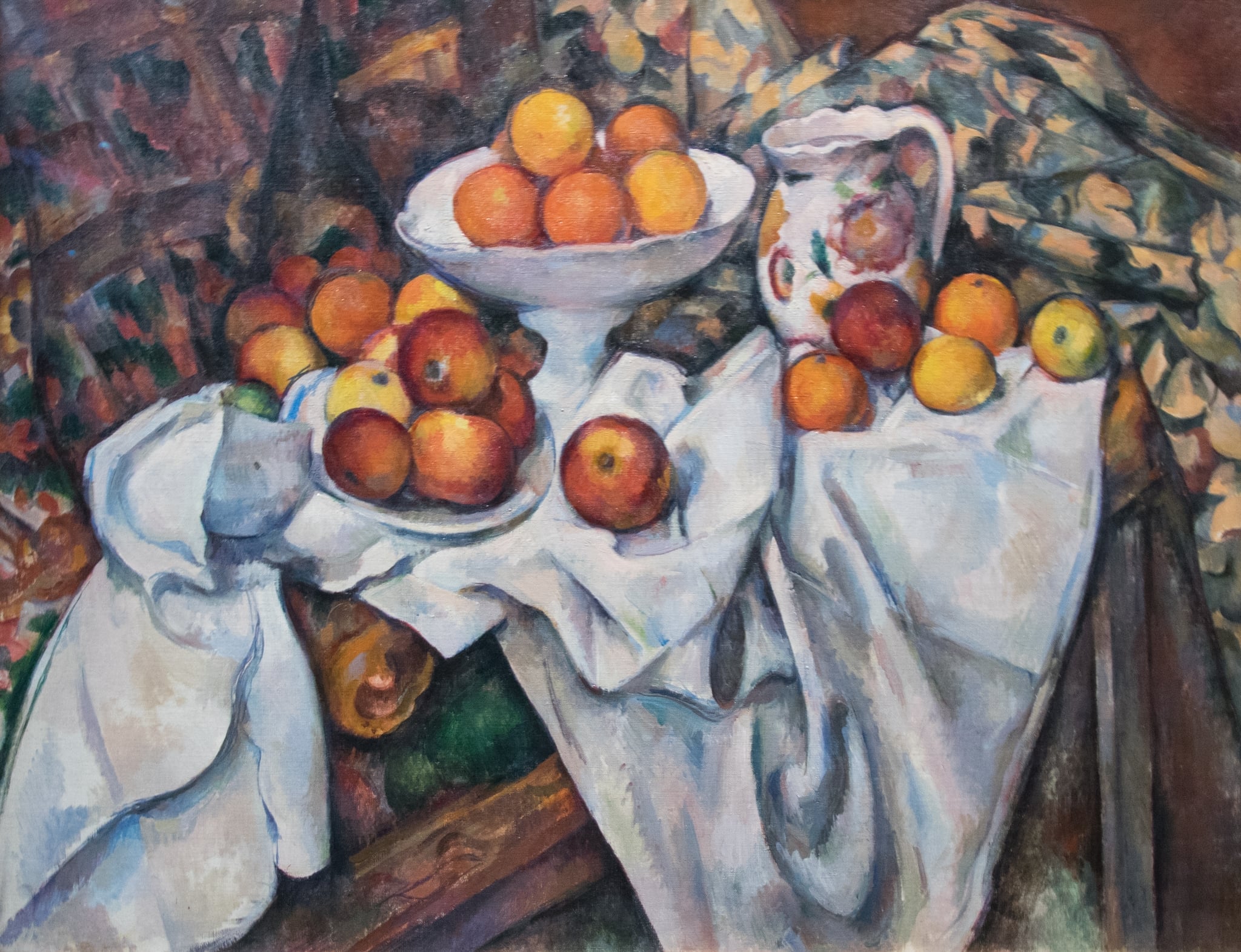
Still Life with Apples and Oranges
Paul Cézanne (c. 1899)
Paul Cézanne’s Still Life with Apples and Oranges builds a quietly monumental world from domestic things. A tilting table, a heaped white compote, a flowered jug, and cascading cloths turn fruit into <strong>durable forms</strong> stabilized by <strong>color relationships</strong> rather than single‑point perspective <sup>[1]</sup><sup>[2]</sup>. The result is a still life that feels both solid and subtly <strong>unstable</strong>, a meditation on how we construct vision.
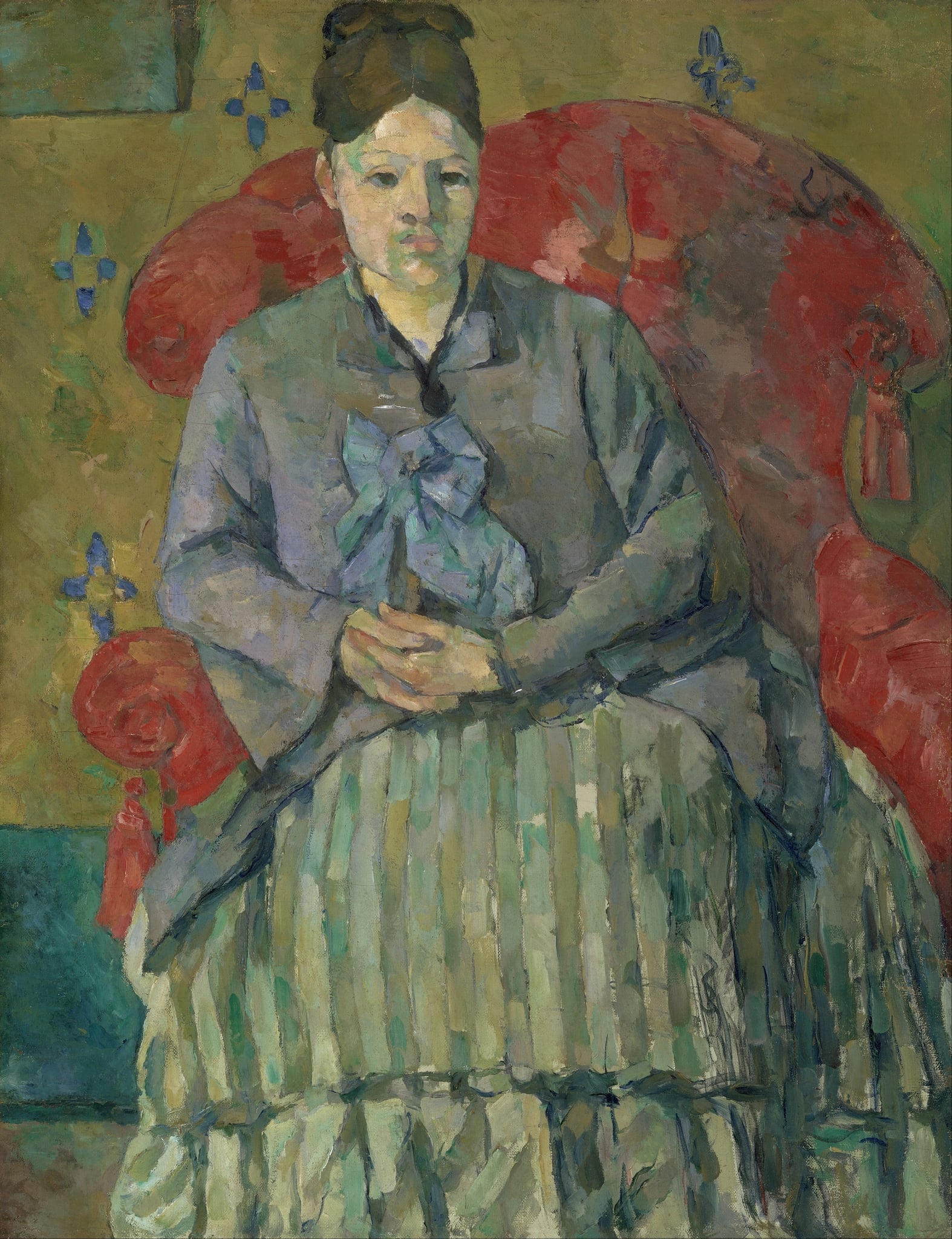
Madame Cézanne in a Red Armchair
Paul Cézanne (about 1877)
Paul Cézanne’s Madame Cézanne in a Red Armchair (about 1877) turns a domestic sit into a study of <strong>color-built structure</strong> and <strong>compressed space</strong>. Cool blue-greens of dress and skin lock against the saturated <strong>crimson armchair</strong>, converting likeness into an inquiry about how painting makes stability visible <sup>[1]</sup><sup>[3]</sup>.
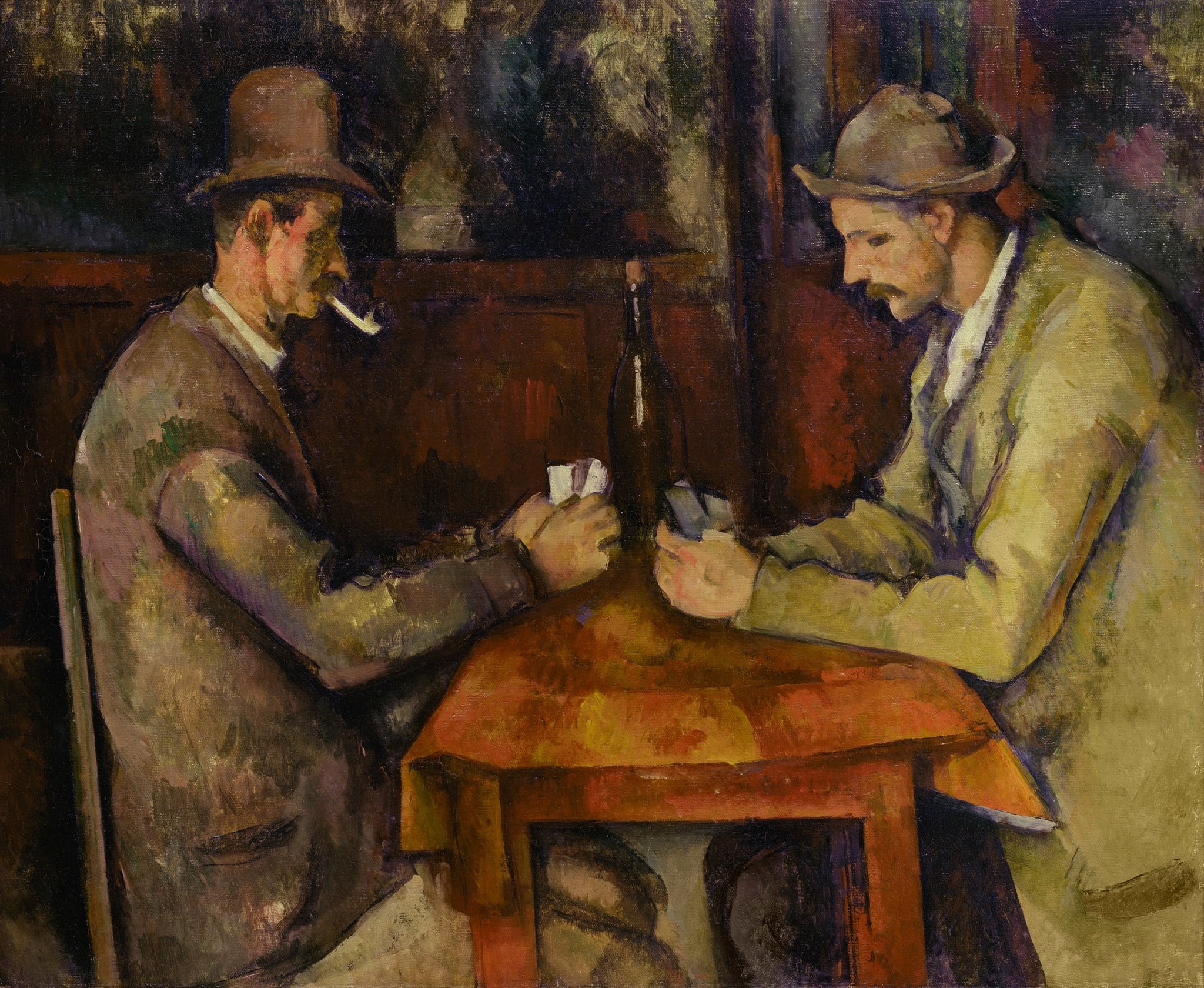
The Card Players by Paul Cézanne | Equilibrium and Form
Paul Cézanne
In The Card Players, Paul Cézanne turns a rural café game into a study of <strong>equilibrium</strong> and <strong>monumentality</strong>. Two hated peasants lean inward across an orange-brown table while a dark bottle stands upright between them, acting as a calm, vertical <strong>axis</strong> that stabilizes their mirrored focus <sup>[2]</sup><sup>[3]</sup>.
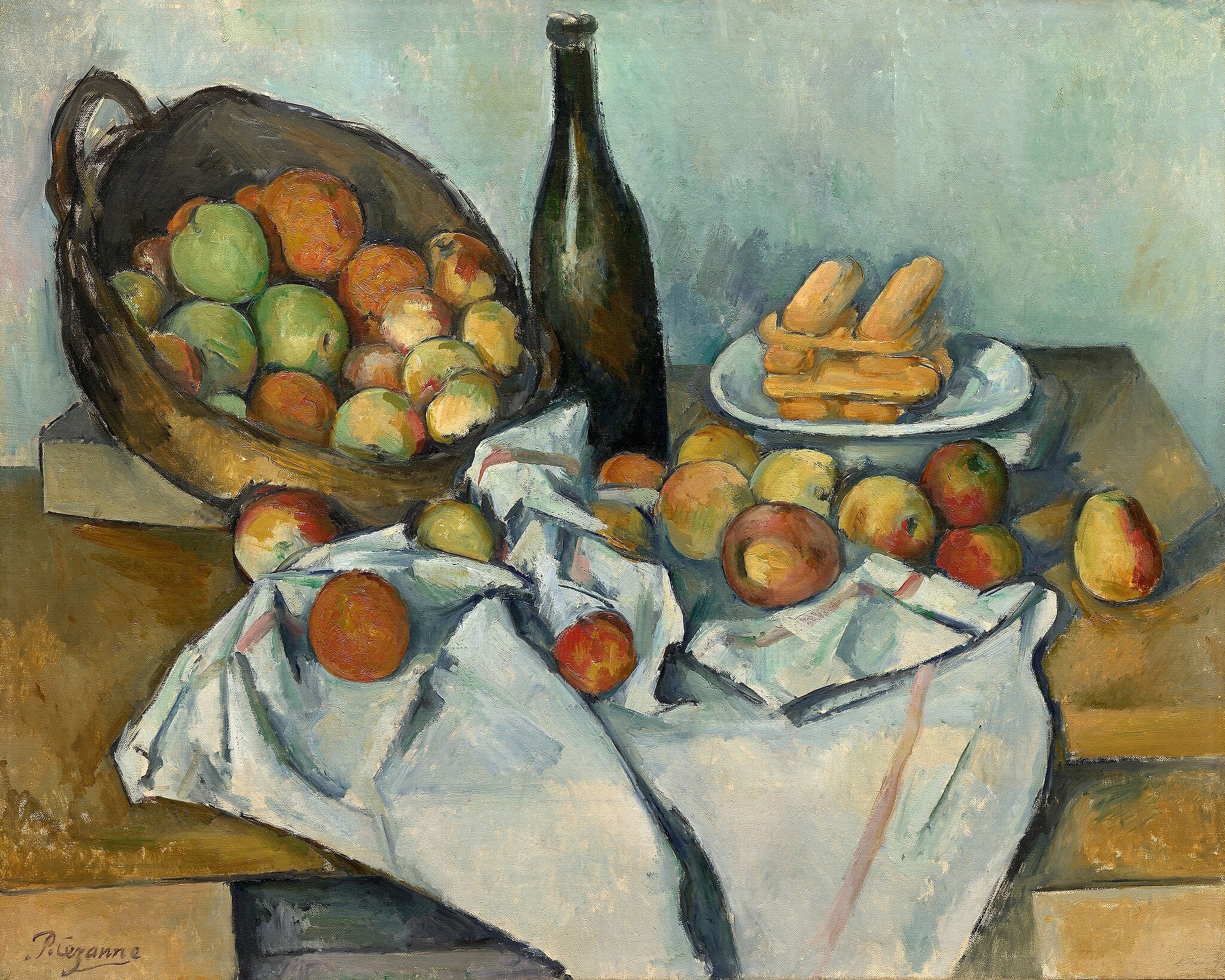
Still Life with a Basket of Apples
Paul Cézanne (c. 1893 (AIC range 1887–1900))
Paul Cezanne’s Still Life with a Basket of Apples stages a quiet crisis of balance: a basket tilts forward, a dark bottle leans, and a rumpled cloth surges like a ridge across the table. Through <strong>purposeful misalignments</strong> and <strong>constructed color</strong>, the painting turns ordinary fruit into an inquiry into how we see over time <sup>[1]</sup><sup>[3]</sup>.