How Much Is The Tower of Babel Worth?
Last updated: April 3, 2026
Quick Facts
- Methodology
- extrapolation
Hypothetical fair‑market value for Pieter Bruegel the Elder’s The Tower of Babel (1563, KHM Vienna) is estimated at $300–600 million. The range is extrapolated from top Old Master benchmarks and the work’s singular canonical status, acknowledging there is no modern sale history and deaccession is effectively implausible.
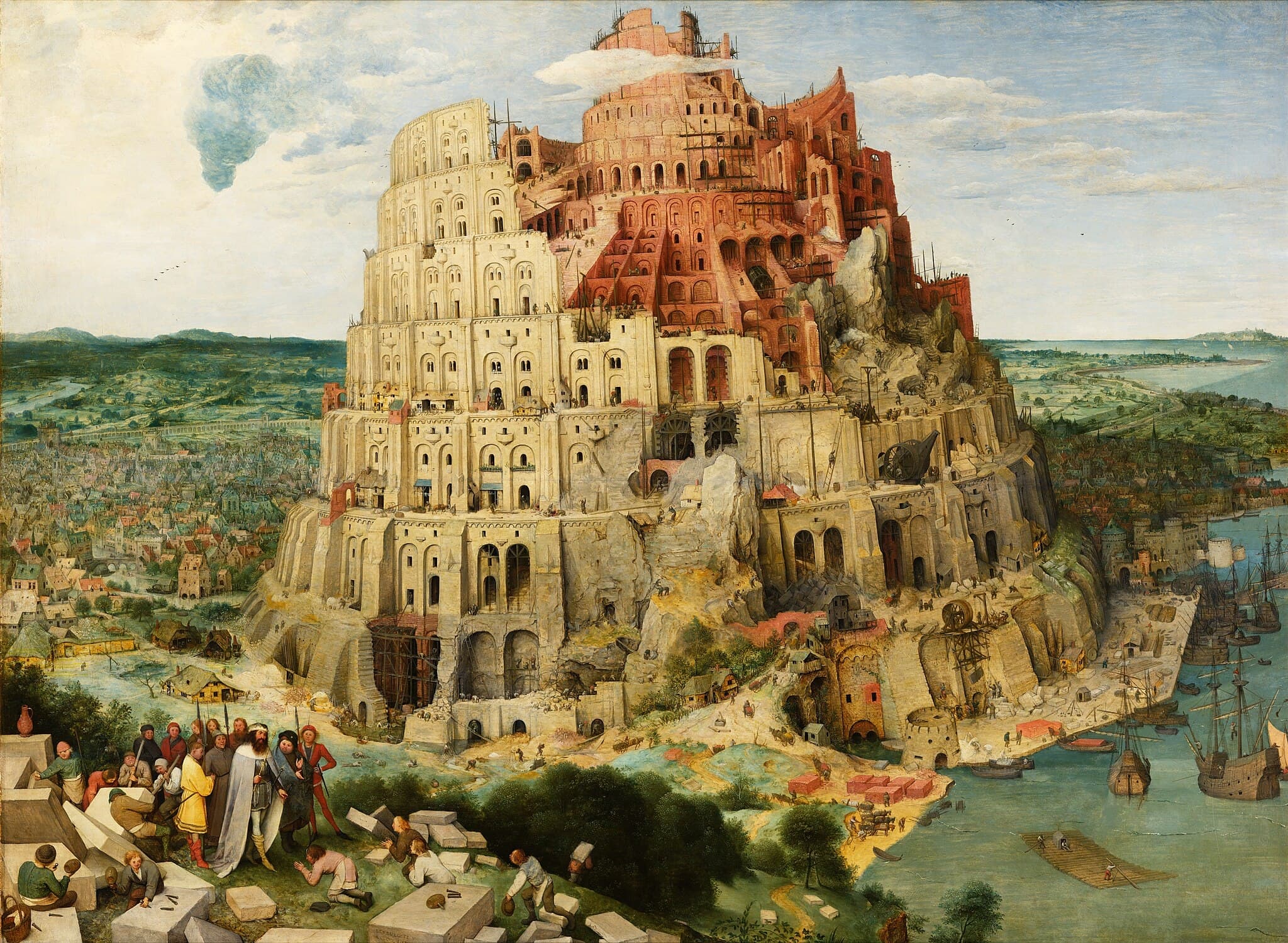
The Tower of Babel
Pieter Bruegel the Elder, 1563 • Oil on oak panel
Read full analysis of The Tower of Babel →Valuation Analysis
Estimate: $300–600 million (hypothetical fair‑market value). This synthesis triangulates from the very top of the pre‑1600 market (Leonardo, Rembrandt, Botticelli) and the painting’s unique canonical standing within Northern Renaissance art, rather than from direct Bruegel price history (which is too sparse to anchor a masterpiece of this caliber).
Work and significance. The Vienna “Great Tower of Babel” is signed and dated 1563 and is universally regarded as one of Bruegel the Elder’s defining masterpieces; it anchors the Kunsthistorisches Museum’s Flemish holdings and is among the most reproduced Northern Renaissance images [1]. Its scale, ambition, and cultural reach place it beside the artist’s Hunters in the Snow and Netherlandish Proverbs at the pinnacle of his oeuvre.
Rarity and artist market. Autograph Bruegel the Elder paintings are exceptionally scarce and overwhelmingly in museums. There is no public auction record for a comparably important Elder panel in the modern era. The last widely cited Elder painting at auction—a small, minor-subject tondo—sold in 2002 and is not price-relevant to a canonical, museum-defining masterwork. The Prado’s private‑treaty acquisition of The Wine of Saint Martin’s Day circa €7m (2010) confirms institutional appetite but does not represent open‑market pricing for a signature icon [5]. Christie’s 2013 appraisal of Bruegel’s The Wedding Dance for the DIA at $100–200m further indicates the baseline for major works by the Elder over a decade ago [6].
Benchmarks and positioning. Category precedents set the frame: Botticelli’s Roundel portrait realized $92.2m at auction in 2021 [2]; Rembrandt’s full‑length pendant portraits sold privately to the Louvre/Rijksmuseum for about €160m in 2016 [4]; and Leonardo’s Salvator Mundi achieved $450.3m in 2017, an outlier for any Old Master [3]. Given Babel’s art‑historical weight, image fame, and near‑zero supply of comparable Elder masterpieces, a rational market outcome would exceed Botticelli‑level benchmarks and could credibly situate between the Rembrandt pair and the Leonardo outlier. Hence the $300–600m range.
Key sensitivities. The estimate presumes strong structural condition of the oak panel and surface (full conservation review would refine the spread). While the KHM employs state‑indemnity/loan insurance practices, specific values are undisclosed [7]. Austrian federal policy makes deaccession extraordinarily unlikely; thus this is a hypothetical fair‑market valuation under unconstrained, international bidding.
Bottom line. On scarcity, stature, and global demand alone, The Tower of Babel would sit at or near the apex of the Old Master market were it ever tradable, justifying a $300–600m expectation under present‑day conditions.
Key Valuation Factors
Art Historical Significance
High ImpactThe Vienna Great Tower of Babel is a cornerstone of Northern Renaissance painting and one of Bruegel the Elder’s most studied and reproduced compositions. Its ambitious architectural conceit, encyclopedic detail, and moral narrative crystallize Bruegel’s synthesis of human folly and world‑building on a monumental scale. Within the artist’s oeuvre it stands alongside Hunters in the Snow and Netherlandish Proverbs as a signature image that defines Bruegel for both scholars and the public. This level of cultural resonance typically commands peak pricing in the Old Master category, as buyers pay premiums for works that anchor museum narratives and global art history.
Rarity and Market Liquidity
High ImpactAutograph paintings by Pieter Bruegel the Elder are vanishingly scarce and held almost entirely by institutions. In the modern era, no comparably important Elder panel has tested the public market. The few documented transactions (e.g., a small tondo in 2002; Prado’s private acquisition of The Wine of Saint Martin’s Day) sit far below this work’s stature and do not cap its value. When masterpieces with near‑zero supply appear, cross‑category competition (museums, sovereign buyers, trophy‑focused collectors) drives prices well beyond routine artist records, warranting an estimate extrapolated from the top Old Master benchmarks rather than from the artist’s thin sale history.
Image Fame and Global Demand
High ImpactThe Tower of Babel has extraordinary image recognition beyond the specialist market: it is widely reproduced in textbooks, exhibitions, and popular culture, and the Biblical theme resonates globally. Such fame expands the bidder pool beyond traditional Old Master collectors to include institutions and cross‑category trophy buyers. Works with this level of cultural currency often benefit from intense, reputation‑based competition that compresses supply‑demand gaps and supports pricing at the very top of their category—particularly when the work is the definitive version by the artist.
Condition and Conservation
Medium ImpactPanel paintings of this period can present structural or surface challenges—joins, warping, past restorations, varnish layers—that materially influence value. While the KHM’s stewardship suggests responsible care, the absence of a recent, public conservation dossier creates uncertainty that must be reflected in the range. A pristine or excellently preserved surface and stable support could compress the spread toward the upper end; conversely, evidence of significant structural intervention or condition issues would temper competition and justify a lower point within the band.
Sale History
The Tower of Babel has never been sold at public auction.
Pieter Bruegel the Elder's Market
Pieter Bruegel the Elder is a blue‑chip Old Master whose autograph paintings are exceptionally scarce and predominantly museum‑held. As a result, the public auction record for the Elder is not representative of his canonical works: a small tondo sold in 2002 for £3.3m, while a much later private‑treaty sale saw the Prado acquire The Wine of Saint Martin’s Day around €7m in 2010. In 2013, Christie’s appraised the Detroit Institute of Arts’ The Wedding Dance at $100–200m during bankruptcy proceedings, underscoring how institutions and advisors already value major Bruegel pictures at nine figures. True market pricing for a signature masterpiece remains untested but would likely sit near the apex of the pre‑1600 category.
Comparable Sales
The Wine of Saint Martin’s Day
Pieter Bruegel the Elder
Autograph Bruegel the Elder painting; large, complex crowd scene close in ambition to The Tower of Babel; only known 21st‑century museum acquisition of a Bruegel the Elder painting.
$9.8M
2010, Private sale to Museo Nacional del Prado
~$14.4M adjusted
The Drunkard Pushed into the Pigsty
Pieter Bruegel the Elder
Autograph Elder painting and the last widely cited Bruegel the Elder painting sold at public auction; shows scarcity and baseline pricing, though it is a small tondo with a minor subject versus the canonical, monumental Babel.
$5.1M
2002, Christie's London
~$9.1M adjusted
Salvator Mundi
Leonardo da Vinci
Best‑in‑class pre‑1600 Old Master trophy; demonstrates the global ceiling for Renaissance masterworks and cross‑category demand that a canonical image like Babel could attract.
$450.3M
2017, Christie's New York
~$587.9M adjusted
Portraits of Maerten Soolmans and Oopjen Coppit (pair)
Rembrandt van Rijn
Top‑tier Northern European Old Masters acquired by major museums via private treaty; frames institutional appetite and pricing for canonical masterpieces (sold as a pair).
$174.0M
2016, Private sale jointly to the Louvre and Rijksmuseum (Christie's brokered)
~$232.0M adjusted
Portrait of a Young Man Holding a Roundel
Sandro Botticelli
Record auction result for a major early Renaissance master (non‑Leonardo); shows the upper range for pre‑1600 trophies in today’s market outside of unique outliers.
$92.2M
2021, Sotheby's New York
~$108.9M adjusted
The Massacre of the Innocents
Peter Paul Rubens
Flemish master; large, multi‑figure narrative painting with long‑standing auction benchmark status—useful for gauging the appetite and pricing power for top Flemish pictures.
$76.7M
2002, Sotheby's London
~$136.4M adjusted
Current Market Trends
Old Masters experienced a dip in 2024 but rebounded strongly through 2025–26, with renewed depth for best‑in‑class material at calibrated estimates and robust records for drawings and select paintings. Top Renaissance and Baroque trophies continue to attract cross‑category capital, aided by guarantees and institutional participation. Benchmarks such as Botticelli’s $92.2m Roundel portrait and the €160m Rembrandt pendants frame a healthier high end, while Leonardo’s $450.3m outlier underscores the global ceiling for unique icons. In this context, a canonical Bruegel of museum‑defining status would command intense competition and price discovery at the very top of the Old Master market.
Sources
- Kunsthistorisches Museum Vienna – The Tower of Babel (work record)
- Sotheby’s – Botticelli Portrait of a Young Man Holding a Roundel sells for $92.2m (press release)
- Christie’s – Leonardo da Vinci’s Salvator Mundi sells for $450.3m (press release)
- The Art Newspaper – France and the Netherlands finalise €160m Rembrandt treaty
- El País – El Prado compra un Bruegel por siete millones
- Christie’s appraisal for Detroit Institute of Arts (public court filing excerpt)
- KHM – General loan conditions (insurance and indemnity framework)