The Tower of Babel
Study Print Studio
Create a personal study print
Build a companion study sheet around the part of this painting that speaks to you most. Choose a detail, shape an interpretation, and walk away with something personal and display-worthy.
Fast Facts
- Year
- 1563
- Medium
- Oil on oak panel
- Dimensions
- 114.4 × 155.5 cm
- Location
- Kunsthistorisches Museum, Vienna
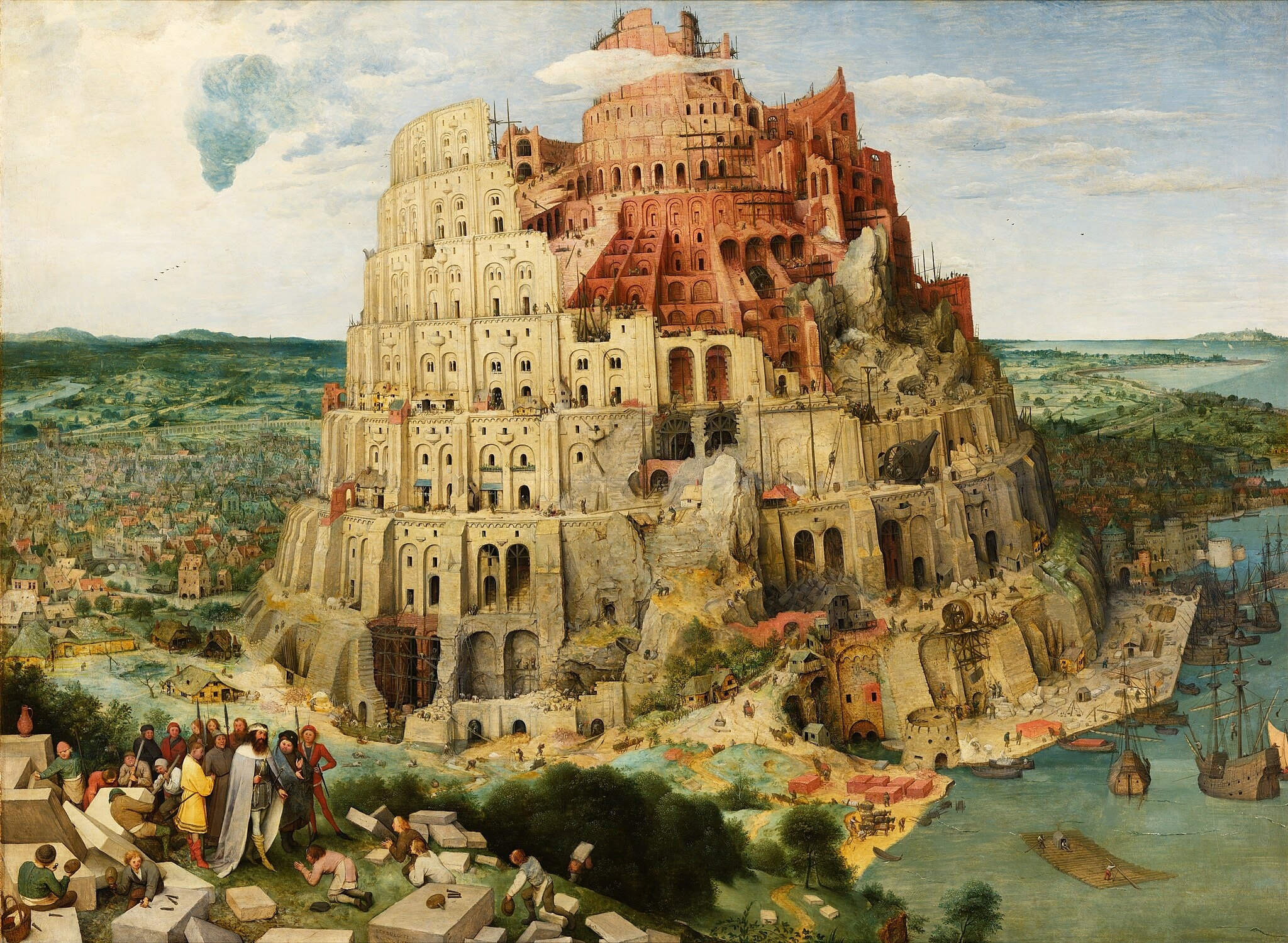
Click on any numbered symbol to learn more about its meaning
Meaning & Symbolism
Explore Deeper with AI
Ask questions about The Tower of Babel
Popular questions:
Powered by AI • Get instant insights about this artwork
Interpretations
Historical Context: Antwerp’s polyglot marketplace
Source: JHNA; Kunsthistorisches Museum; Britannica (Plantin Polyglot)
Formal Analysis: Logistics as system design
Source: Museum Boijmans Van Beuningen; Kunsthistorisches Museum
Allegorical Theory: Benjamin’s ruin and dialectic
Source: Art History (Oxford Academic) – Morra; Kunsthistorisches Museum
Political Semiotics: Nimrod, guilds, and soft dissent
Source: Kunsthistorisches Museum; JHNA; Oxford Academic (Occupational Medicine note)
Medium Reflexivity: Collaging Rome into the North
Source: Met Museum (Heilbrunn Timeline); Royal Museums of Fine Arts booklet; Kunsthistorisches Museum
Environmental Lens: Extraction and the built cliff
Source: Kunsthistorisches Museum
Related Themes
About Pieter Bruegel the Elder
More by Pieter Bruegel the Elder
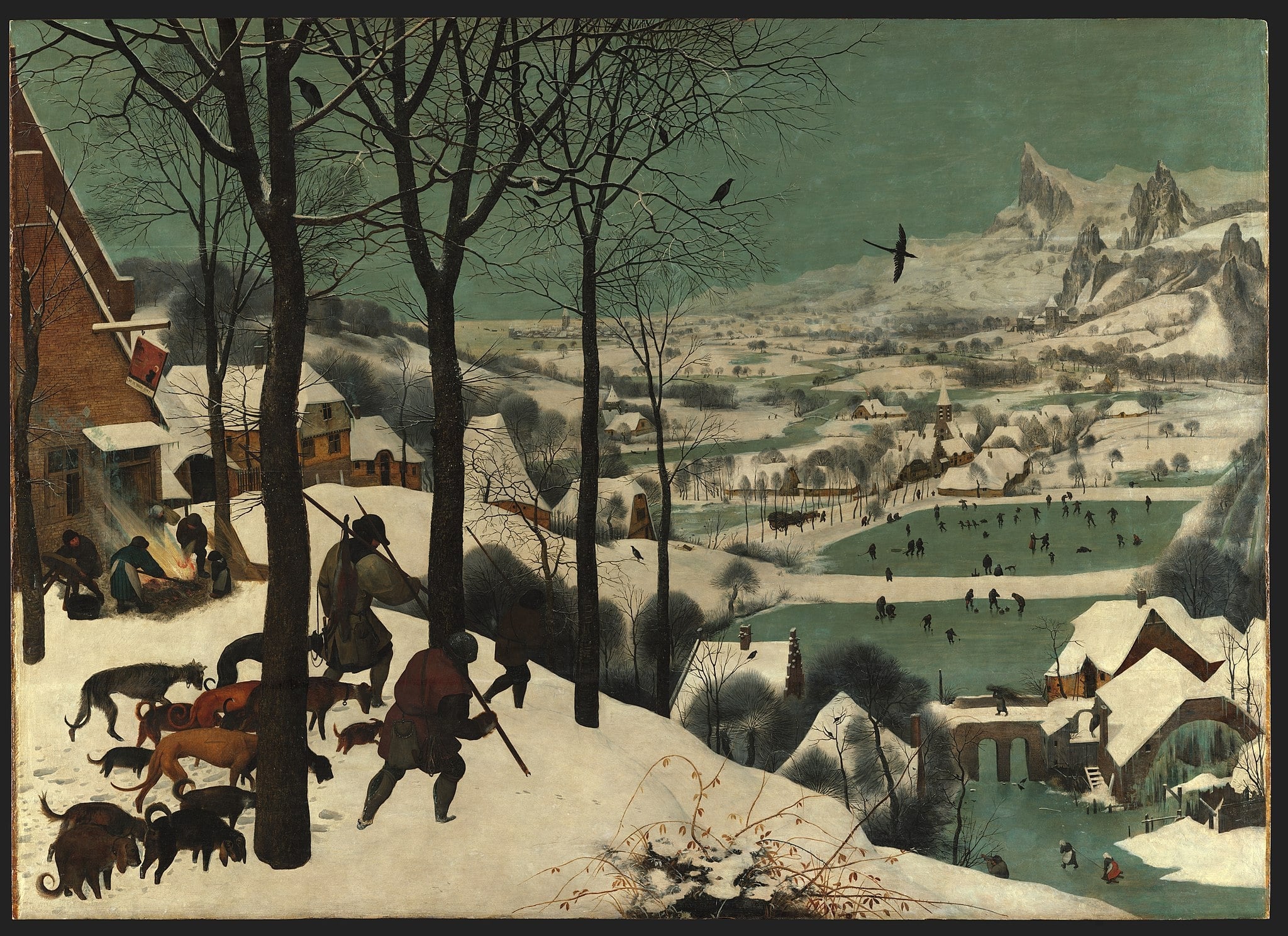
The Return of the Hunters
Pieter Bruegel the Elder (1565)
In The Return of the Hunters, Pieter Bruegel the Elder stages a wintry descent where three exhausted hunters and their dogs enter a valley alive with skaters and village chores. The painting forges a panoramic drama of <strong>hardship and resilience</strong>, contrasting scant game with communal play beneath a cold, teal sky <sup>[1]</sup><sup>[2]</sup>.
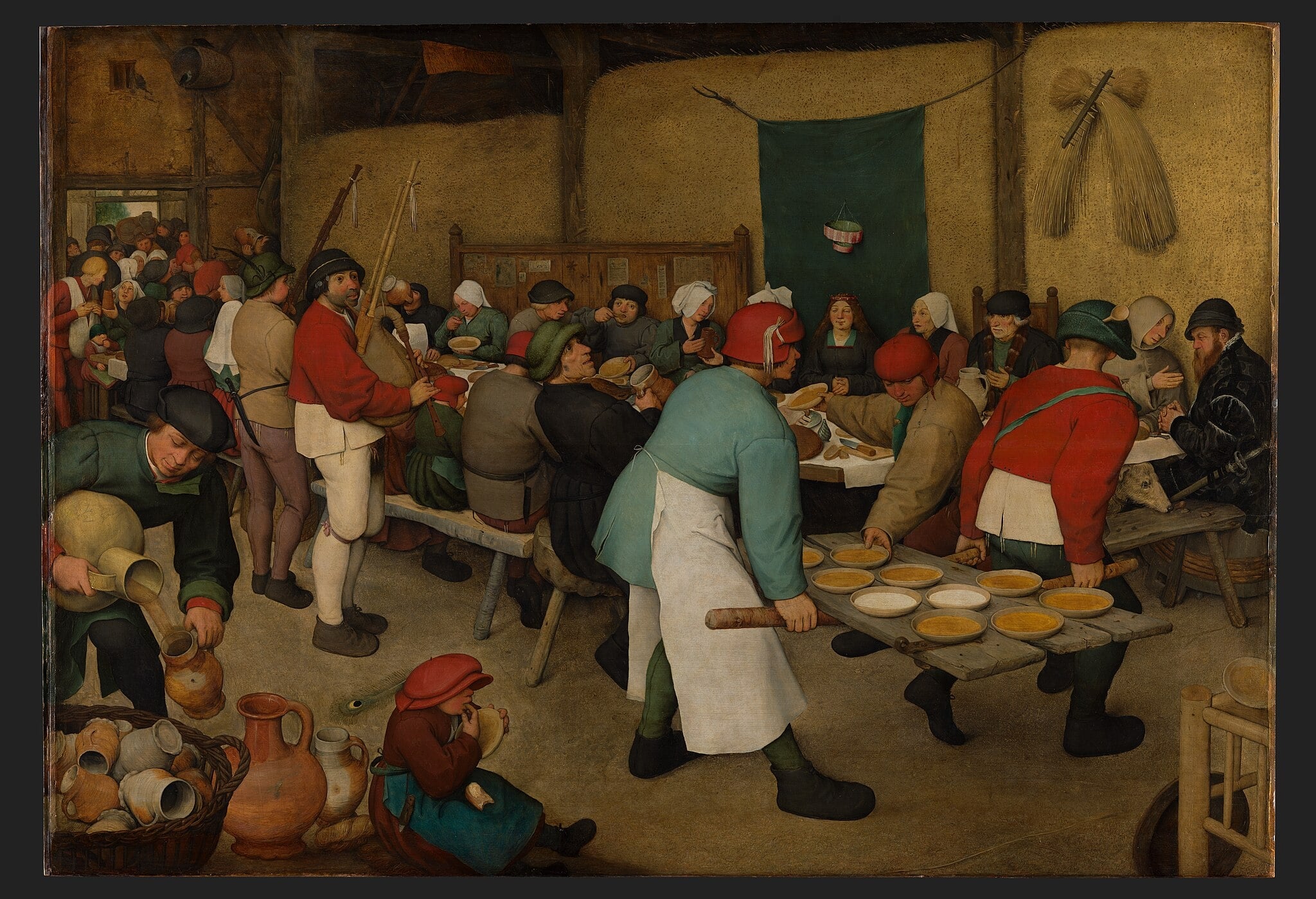
The Peasant Wedding
Pieter Bruegel the Elder (1568)
In The Peasant Wedding, Pieter Bruegel the Elder stages a <strong>communal rite</strong> inside a barn, where humble ingenuity and shared labor become the true spectacle. A bride sits beneath a <strong>green cloth of honor</strong> with a paper crown above, as servers balance bowls of porridge on a <strong>door turned into a tray</strong>, beer flows, and a bagpiper looks on <sup>[1]</sup><sup>[2]</sup>.
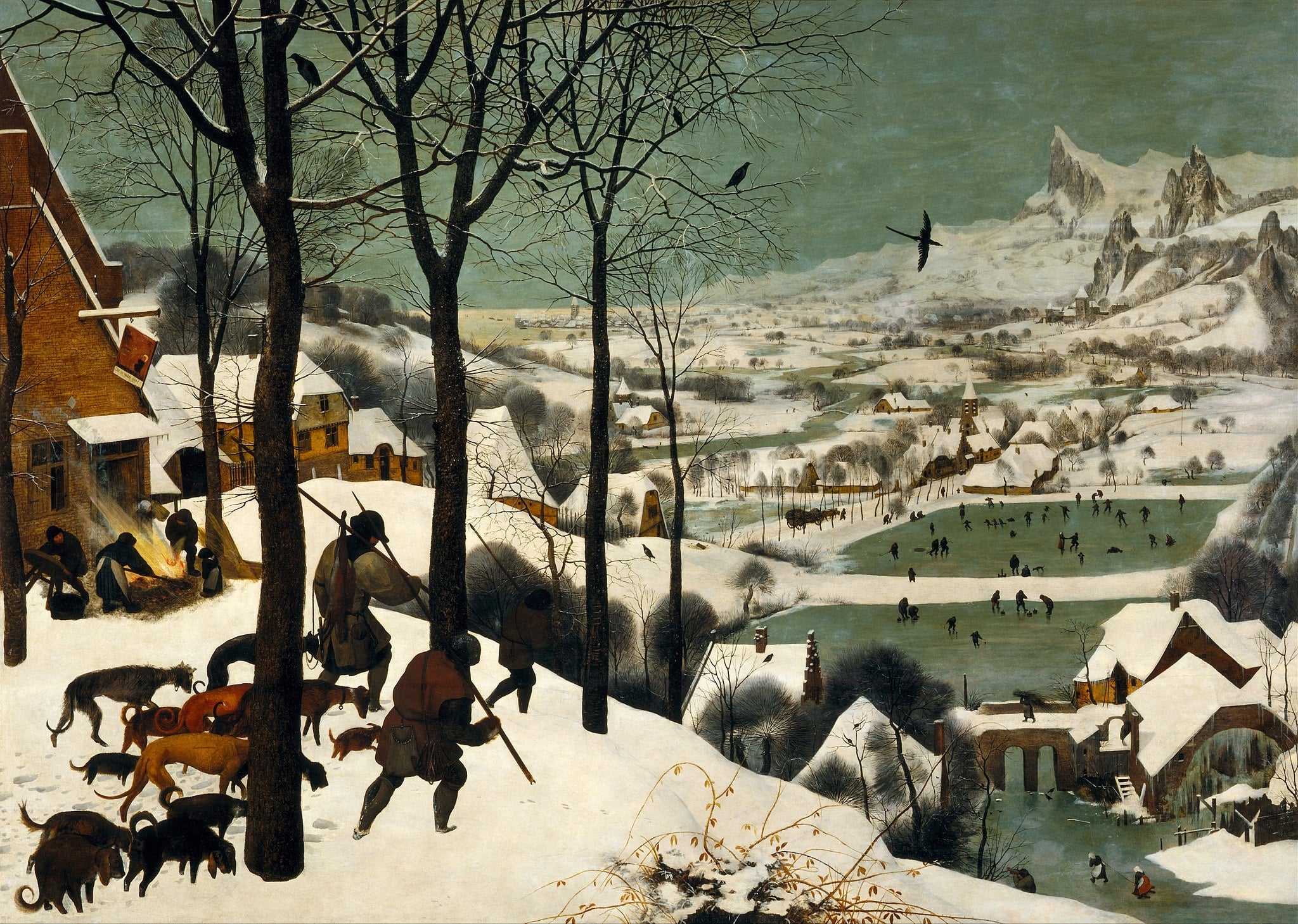
Hunters in the Snow
Pieter Bruegel the Elder (1565)
In Pieter Bruegel the Elder’s <strong>Hunters in the Snow</strong> (1565), a trio of tired hunters and <strong>gaunt dogs</strong> descend past an inn toward a vast frozen valley where villagers <strong>work, play, and endure</strong>. Bruegel fuses <strong>winter scarcity</strong> (a single fox, bare trees, crows) with <strong>communal resilience</strong> (pig-singeing fire, skaters, mill smoke) to stage a world ordered by the season’s cycle.
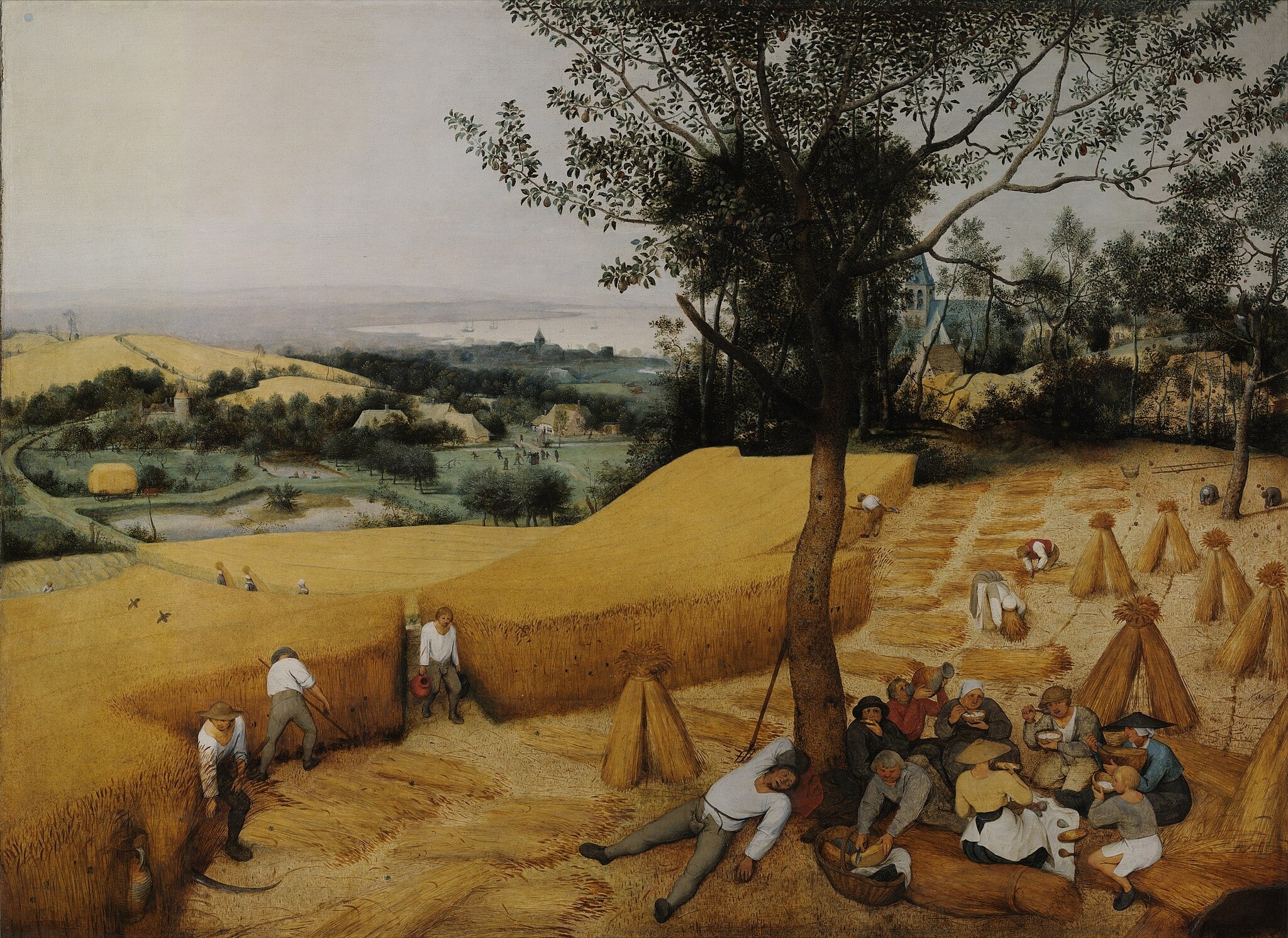
The Harvesters
Pieter Bruegel the Elder (1565)
The Harvesters distills late summer into a seamless weave of <strong>labor and reward</strong>: reapers bend to wheat while others eat and doze beneath a tree, and the world opens to roads, a village, and ships. Bruegel dignifies every action with <strong>even light</strong> and a democratic gaze, turning a specific day’s work into an image of <strong>cyclical time</strong> and shared sustenance <sup>[1]</sup><sup>[4]</sup>.