How Much Is Café Terrace at Night Worth?
Last updated: January 22, 2026
Quick Facts
- Methodology
- extrapolation
Hypothetical fair-market value for Vincent van Gogh’s Café Terrace at Night (1888) is $200–300 million. The estimate extrapolates from the artist’s $117.2 million auction record and recent trophy benchmarks above $195–236 million, reflecting the painting’s A‑tier Arles nocturne status and global iconography. The work is museum-held at the Kröller‑Müller and has no modern public sale history.
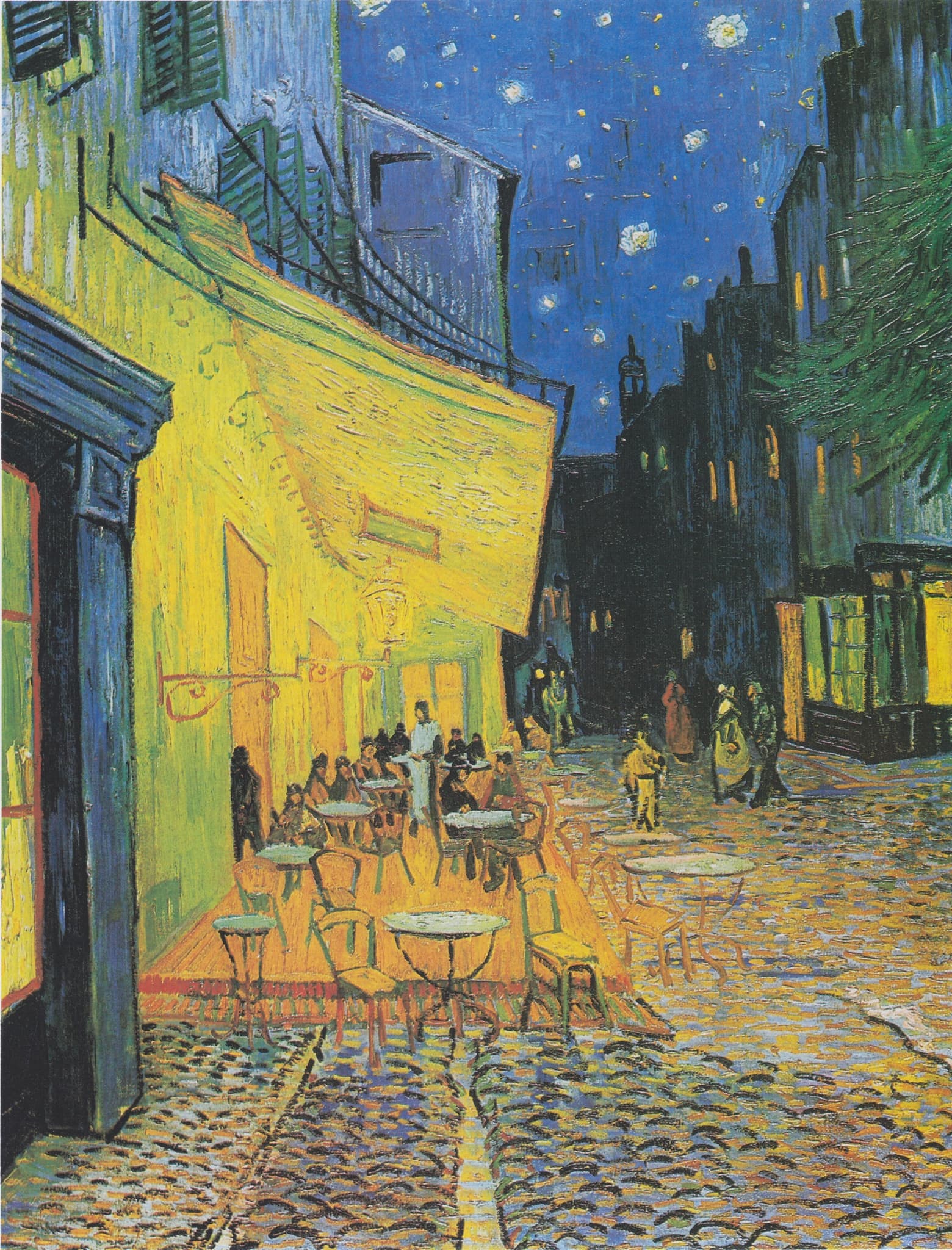
Café Terrace at Night
Vincent van Gogh, 1888 • Oil on canvas
Read full analysis of Café Terrace at Night →Valuation Analysis
Conclusion: If Vincent van Gogh’s Café Terrace at Night (1888; Kröller‑Müller Museum) were hypothetically offered today with clear title and excellent condition, a reasoned fair‑market value is $200–300 million. This range reflects an upward extrapolation from the artist’s modern auction record and the demonstrated depth of demand for universally recognizable, museum‑caliber masterpieces.
Benchmarking and extrapolation: Van Gogh’s current auction record is $117.18 million for Orchard with Cypresses (1888; Christie’s, 2022) [1]. That canvas is a prime Arles work, yet Café Terrace at Night is a more globally iconic image within the same year and artistic breakthrough. In parallel, the trophy market has recently supported $195.04 million for Warhol’s Marilyn (2022) and $236.4 million for a Klimt portrait (2025) [4][3]. Positioning Café Terrace at Night between those landmarks—and above van Gogh’s own record—is justified by its subject’s fame, art‑historical centrality, and extreme scarcity.
Subject, period, and significance: Painted in Arles in September 1888, Café Terrace at Night anchors van Gogh’s explorations of nocturnal light alongside The Night Café and Starry Night Over the Rhône. Its instantly legible composition, saturated palette, and cultural ubiquity confer a substantial “icon premium.” The Kröller‑Müller Museum treats it as a core highlight and is actively lending it internationally, underscoring its marquee status and sustained public resonance [2].
Scarcity and provenance: Comparable late‑1888–90 masterpieces reside overwhelmingly in museums; supply of works at this level is effectively near‑zero. Café Terrace at Night has been off the market for more than a century, passing from early owner/critic Albert Aurier to Helene Kröller‑Müller in 1914 before entering the museum—an unimpeachable, well‑documented provenance that enhances desirability in any hypothetical sale [5]. While deaccession is highly unlikely, the institutional anchoring further validates its top‑tier stature.
Adjustments and risks: The estimate assumes excellent condition and clean title. Any material conservation issues affecting the nocturne’s yellows or night sky would temper the top of the range. Conversely, a competitive, guarantee‑backed auction with global participation could push the outcome toward the upper bound, given the work’s brand recognition and the current ceiling for canonical Modern masters [3][4].
Bottom line: Anchored by van Gogh’s $117.2 million record and triangulated against the $195–236 million trophy corridor, a $200–300 million range is a disciplined yet confident statement of value for this A‑level Arles icon [1][3][4]. The painting’s fame, period, and scarcity uniquely support a price that would reset van Gogh’s record were it ever to come to market.
Key Valuation Factors
Art Historical Significance
High ImpactCafé Terrace at Night is a cornerstone of van Gogh’s Arles period, crystallizing his radical treatment of nocturnal light, complementary contrasts, and the expressive power of color. Created in September 1888, it forms a celebrated triad with The Night Café and Starry Night Over the Rhône and presages the emotive strategies that culminate in The Starry Night. The composition is both pedagogically central and culturally ubiquitous, reproduced in textbooks, exhibitions, and popular media worldwide. As a result, it commands an “icon premium” beyond most same‑year Arles landscapes. Within the canon, it is widely considered an A‑tier image—instantly legible to non‑specialists while also being essential to advanced scholarship—making its art‑historical weight a primary driver of value.
Iconicity and Subject Recognition
High ImpactAmong van Gogh’s most recognizable pictures, the café terrace under the night sky resonates with a global audience across cultures and collecting traditions. Works with this level of mass recognition trade within a distinct trophy cohort that includes the top Warhols and Klimts, where brand power and immediate visual recall lift pricing comfortably above the artist’s typical range. Because Café Terrace at Night encapsulates van Gogh’s coloristic daring in a single glance—yellow lanterns, deep blue night, and animated social space—it benefits from broad, non‑specialist demand alongside connoisseur interest. That dual appeal is especially potent in today’s international market, where cross‑category trophy collectors prioritize recognizability, provenance, and display impact.
Scarcity and Market Supply
High ImpactThe closest comparables—late‑1888 to 1890 masterpieces—are predominantly in museums, with vanishingly few A‑level examples circulating. Van Gogh’s most coveted periods (Arles, Saint‑Rémy, Auvers) have seen only sporadic top‑quality offerings in recent decades, and his modern auction record of $117.18m (for an Arles 1888 landscape) underscores how thin supply, not demand, caps pricing [1]. Café Terrace at Night has been effectively off the market for over a century, further heightening perceived rarity. Such scarcity reliably boosts competitive intensity when a masterpiece does appear, and it justifies extrapolating beyond past records, particularly when triangulated against broader trophy benchmarks across Modern masters.
Provenance and Institutional Anchoring
High ImpactThe painting’s early ownership by critic Albert Aurier and acquisition by Helene Kröller‑Müller in 1914 confer blue‑chip provenance before long‑term placement in a national museum. This pedigree signals historical endorsement and curatorial validation, reducing perceived risk for top buyers. While a state museum context makes an actual sale improbable, it also amplifies the work’s brand value through continuous exhibition, scholarship, and high‑profile loans [2]. In a hypothetical sale, this institutional anchoring would be a material positive for value—buyers prize the reputational assurance that comes with such histories—though any cultural‑heritage restrictions or export controls would need to be navigated carefully in transaction planning.
Sale History
Café Terrace at Night has never been sold at public auction.
Vincent van Gogh's Market
Vincent van Gogh sits at the apex of the blue‑chip market, with deep global demand and extremely limited supply for late‑period masterworks. His modern auction record stands at $117.18 million for the 1888 Arles painting Orchard with Cypresses (Christie’s, 2022), while historically significant sales like Portrait of Dr. Gachet ($82.5 million, 1990) would translate far higher today. Recent results show resilience across quality tiers: a major 1887 still life made $62.7 million in 2025, and Paris‑period oils in 2024 reached the low‑to‑mid‑$30 millions. Collectors prize his instantly recognizable imagery, psychologically charged color, and canonical status. The principal constraint is supply—most A‑tier works reside in museums—supporting strong pricing when masterpieces emerge.
Comparable Sales
Orchard with Cypresses
Vincent van Gogh
Same artist; same 1888 Arles period; large-scale, A‑tier landscape; current Van Gogh auction record and close in date/ambition (though not a nocturne).
$117.2M
2022, Christie's New York
~$127.7M adjusted
Laboureur dans un champ
Vincent van Gogh
Same artist; 1889 Saint‑Rémy period; museum‑caliber landscape near in date; comparable ambition and scale.
$81.3M
2017, Christie's New York
~$104.1M adjusted
L’Allée des Alyscamps
Vincent van Gogh
Same artist; 1888 Arles; among the strongest Arles subjects sold publicly; very close chronologically and stylistically to Café Terrace.
$66.3M
2015, Sotheby's New York
~$88.2M adjusted
Portrait of Dr. Gachet
Vincent van Gogh
Same artist; 1890 Auvers period; one of the most iconic Van Gogh images; serves as a trophy‑level benchmark for global demand.
$82.5M
1990, Christie's New York
~$198.8M adjusted
Irises
Vincent van Gogh
Same artist; 1889; universally recognized icon; demonstrates willingness to pay for instantly identifiable Van Gogh masterpieces.
$53.9M
1987, Sotheby's New York
~$149.3M adjusted
Piles de romans parisiens et roses dans un verre (Romans parisiens)
Vincent van Gogh
Same artist; 1887 Paris still life; major 2025 result showing current depth of demand for high‑quality Van Goghs even outside the most iconic subjects.
$62.7M
2025, Sotheby's New York
Current Market Trends
The top end of the Modern and Post‑Impressionist market remains selective but deep for world‑class icons. After a thinner 2023–24, late‑2025 marquee auctions re‑established confidence with a $236.4 million Klimt and continued demand for recognizable trophies. Warhol’s $195 million Marilyn (2022) further defines the corridor for universally legible masterpieces. Within this context, a marquee van Gogh with broad cultural resonance can justifiably trade above the artist’s own record, particularly when backed by guarantees and global bidding. Liquidity and condition remain gating factors, but the scarcity of A‑level van Goghs—and cross‑category appetite for brand‑name icons—supports a $200–300 million indication for Café Terrace at Night.