Diagonal quay/parapet Symbolism
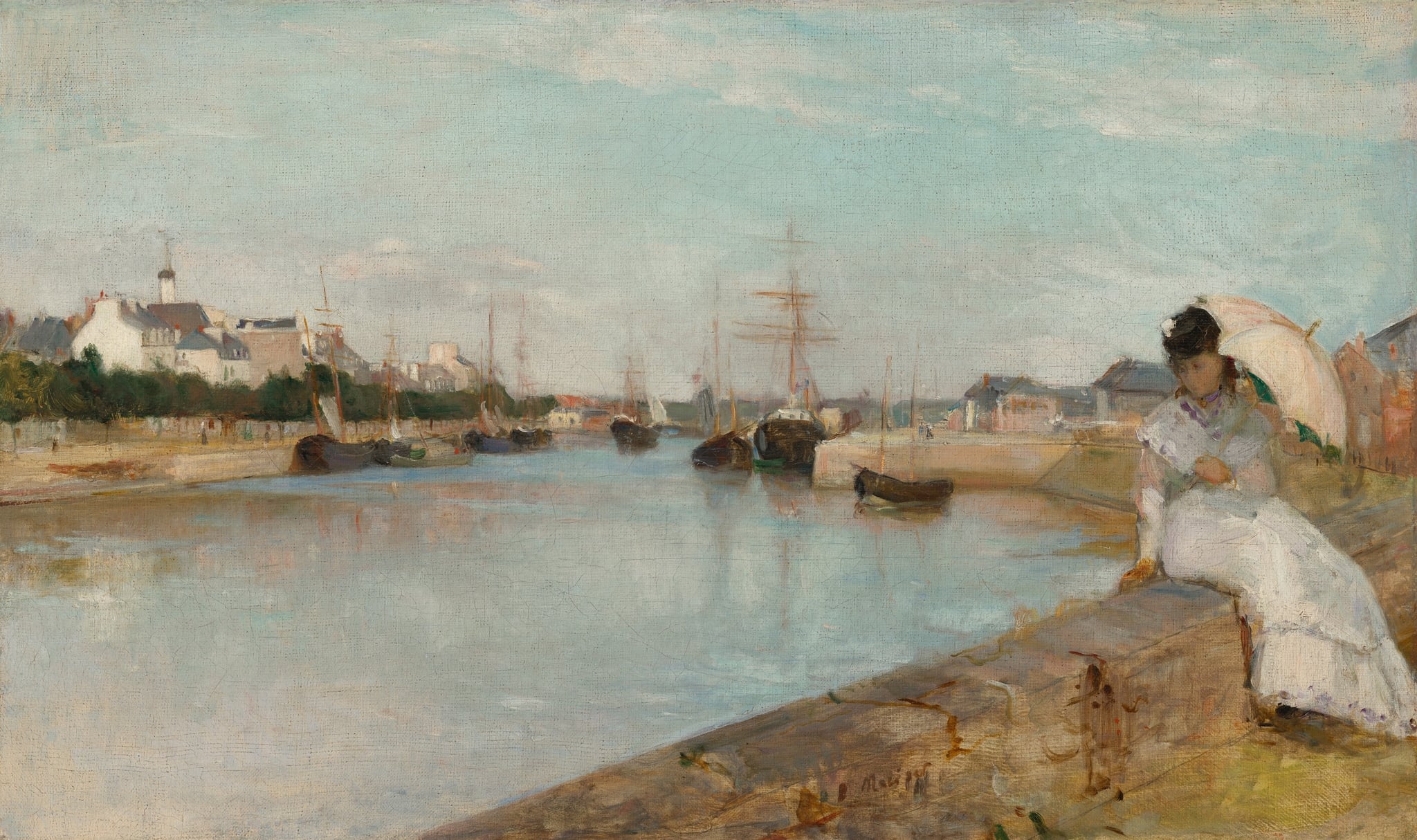
A diagonal quay or parapet organizes pictorial space as a slanted threshold, separating a near zone of looking from the broader scene while directing the eye across the picture. In Berthe Morisot’s The Harbour at Lorient (1869), the quay’s edge anchors the composition and mediates between private reverie and public movement on the water.
Diagonal quay/parapet in The Harbour at Lorient
In The Harbour at Lorient (1869), Berthe Morisot seats a woman under a pale parasol on the quay’s stone lip, a built boundary that separates the foreground from the silvery basin beyond. That edge works as a guiding vector: it grounds the figure’s private reverie while opening the view toward a flotilla of masted boats and their dissolving reflections. By letting the parapet hold the near space and the water carry brisk movement and light, Morisot makes the threshold between stillness and departure legible, so the viewer’s gaze moves from the intimate margin to the harbor’s public traffic.