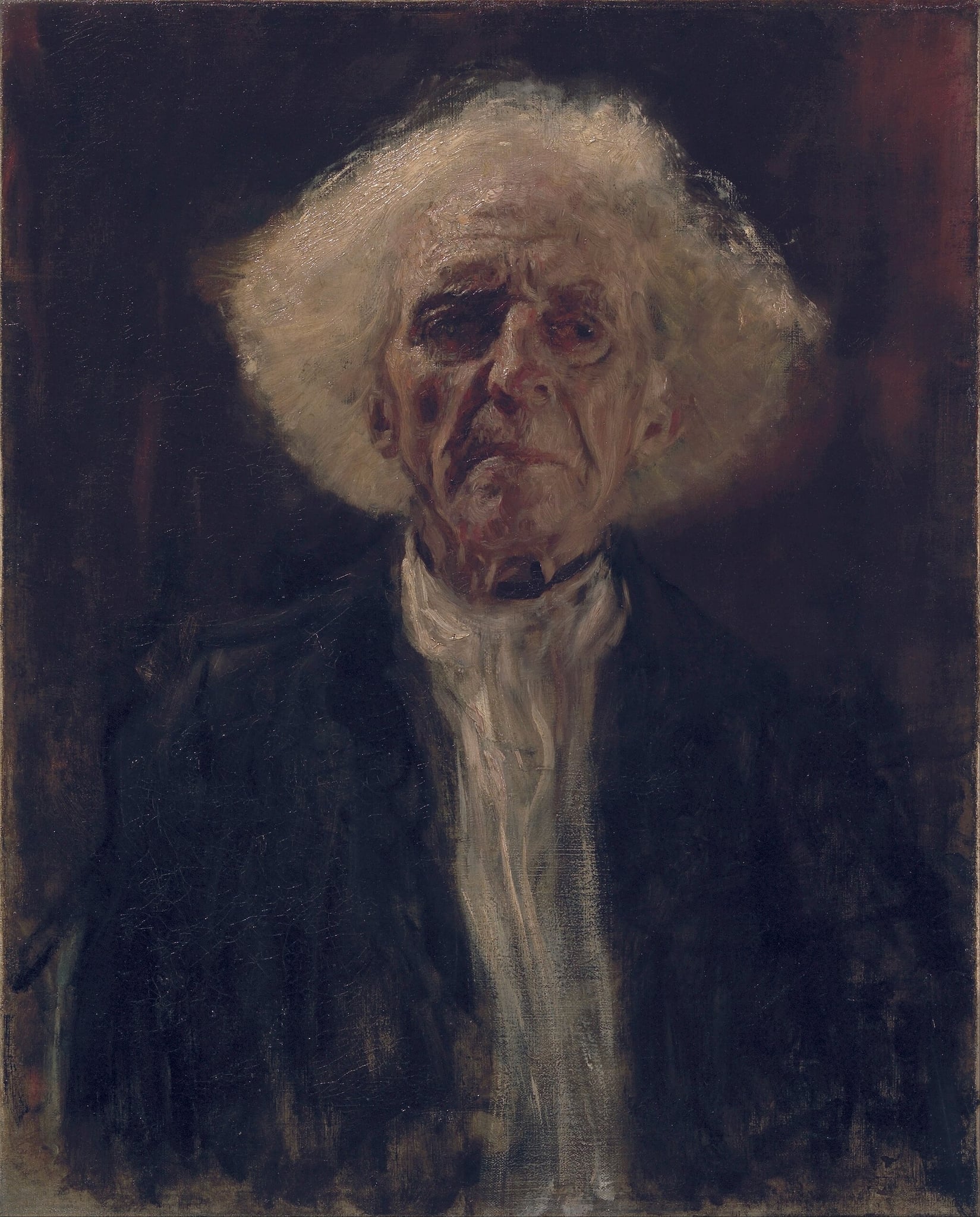
The Blind Man
Gustav Klimt (c. 1896)
Gustav Klimt’s The Blind Man confronts the viewer with a monumental head and torso emerging from a near-black field, where <strong>chiaroscuro</strong>, <strong>tactile paint</strong>, and an <strong>occluded gaze</strong> redirect attention from sight to touch and memory. The dissolving white collar and scumbled halo of hair make the figure feel carved from darkness, asserting <strong>dignity without sentiment</strong> and turning blindness into a form of inward presence <sup>[1]</sup>.