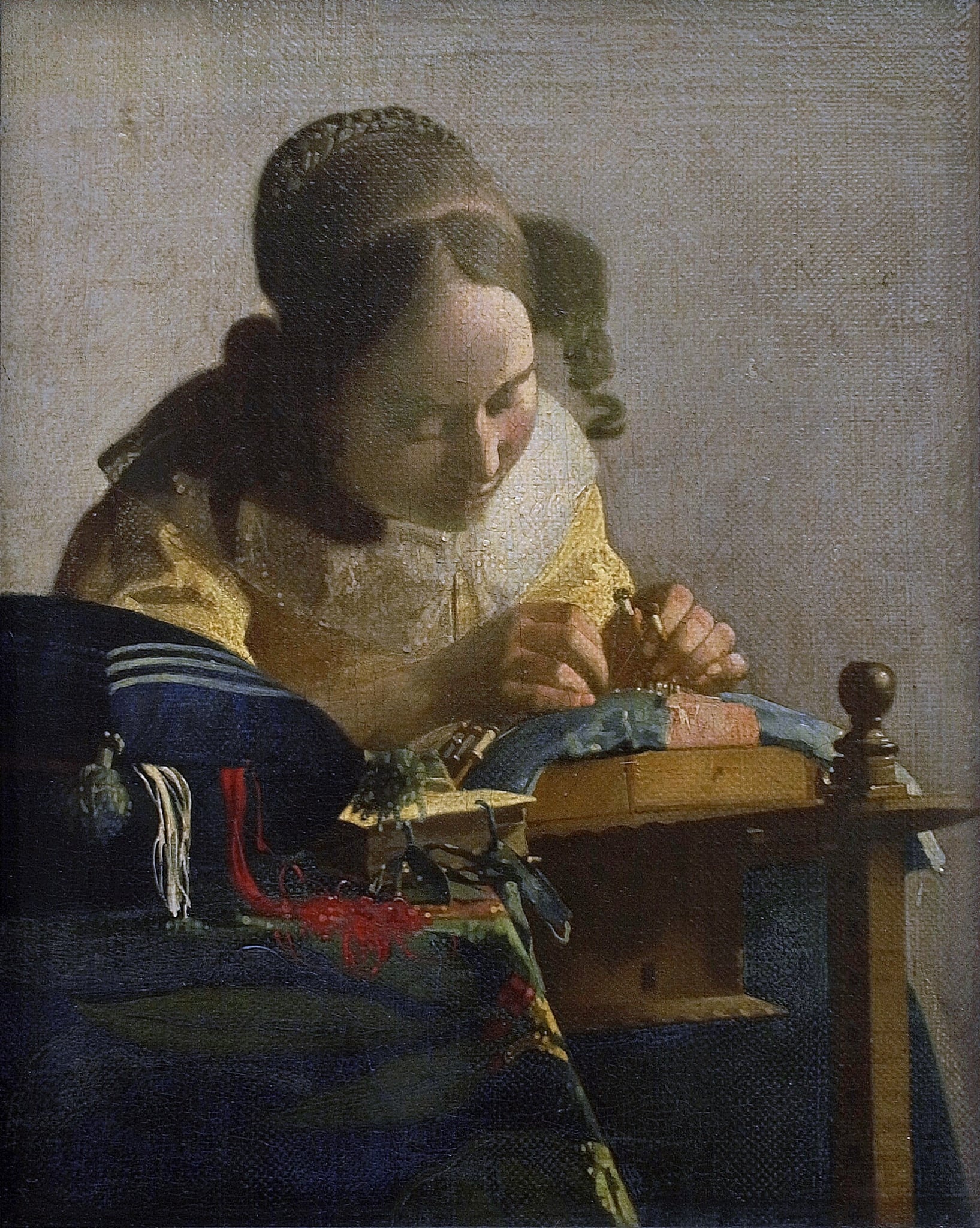
Lace pillow with bobbins and pins Symbolism
A lace pillow set with pins and hung with bobbins is a shorthand for lacemaking, a home-based craft prized for precision and self‑discipline. In art, these tools symbolize patient labor and the focused attention that turns loose threads into ordered pattern. In seventeenth‑century Dutch genre scenes, they often mark domestic industry and virtuous concentration.
Lace pillow with bobbins and pins in The Embroiderer
In The Embroiderer (1669–1670), Johannes Vermeer centers a lace pillow with its bobbins and pins as the locus of work. Right‑hand light isolates the young woman’s hands; loose red and white threads spill forward while an emerging pattern gathers beneath her poised fingers, so the pillow reads as a device that channels attention into order. In this example, the tools of lacemaking stand for disciplined craft and domestic industry, and the painter elevates them into a scene of virtuous concentration.