Ladder-like bare trees Symbolism
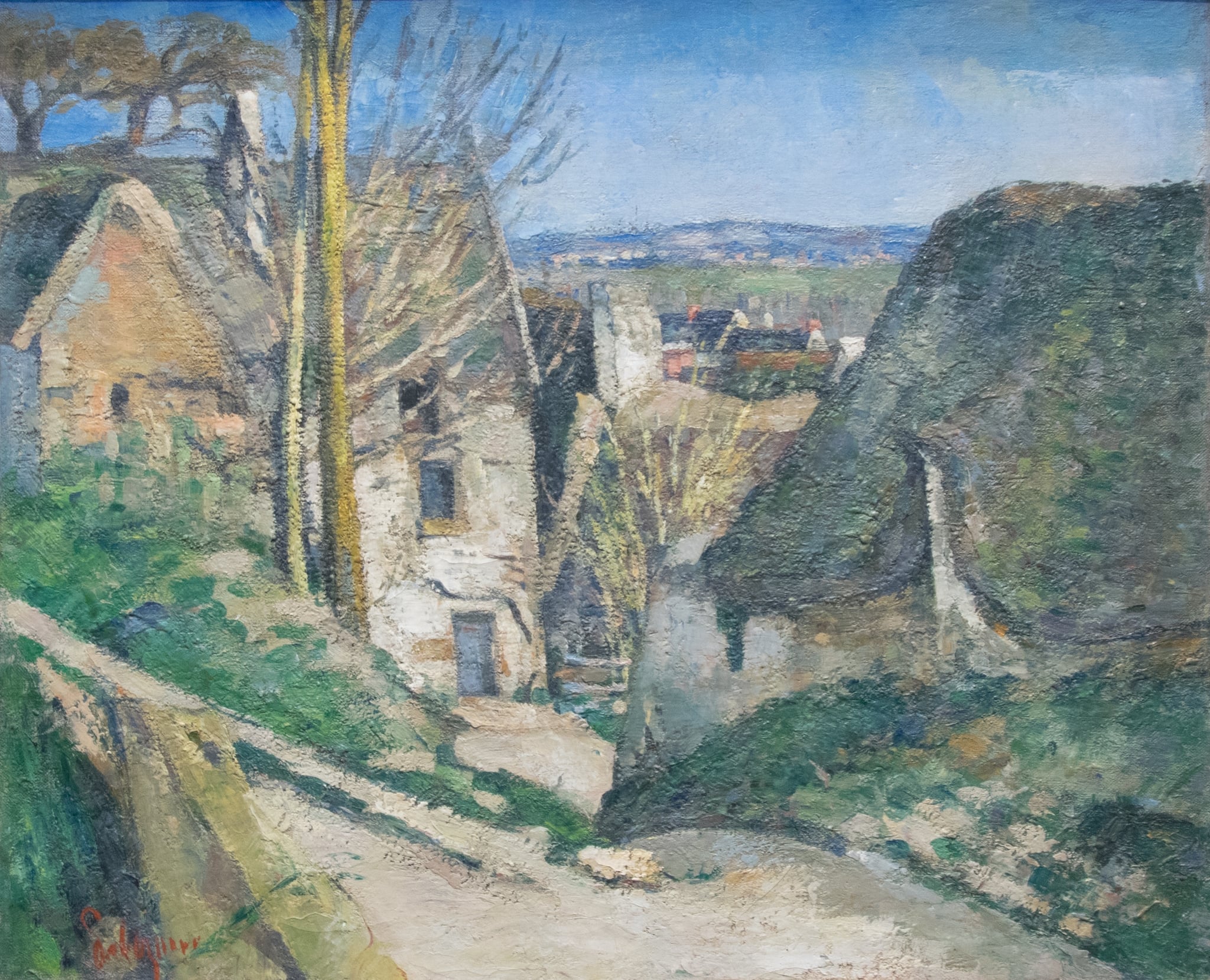
Ladder-like bare trees are leafless trunks with cross-branch “rungs” that read as a built framework within a landscape. In late-19th-century painting, they can steady tilted architecture and terrain while also exposing a scene’s strain. As seen in Paul Cézanne’s The House of the Hanged Man (1873), their skeletal geometry makes growth and brittleness visible at once.
Ladder-like bare trees in The House of the Hanged Man
In Paul Cézanne’s The House of the Hanged Man (1873), ladder-like bare trees act as vertical buttresses that pin the jagged roofs and steep path, directing the eye into the narrow, shadowed V that withholds a center. Their runged, leafless branches echo the work’s blocky, masonry-like strokes, so the trees read as both natural growth and constructed scaffold. Set amid cool greens and slate blues, these spare uprights steady the composition even as they heighten its engineered unease, making the scene feel simultaneously solid and precarious.