Oversized Fruit (strawberries, cherries, berries) Symbolism
Oversized fruit—especially strawberries, cherries, and other berries—often signal sensual pleasure heightened to excess in European art. Their sweetness and quick spoilage make them apt emblems of desire's allure and brevity in moralizing imagery from the late medieval and Renaissance periods. When enlarged and handled by figures, they turn appetite into spectacle and point to how quickly delight fades.
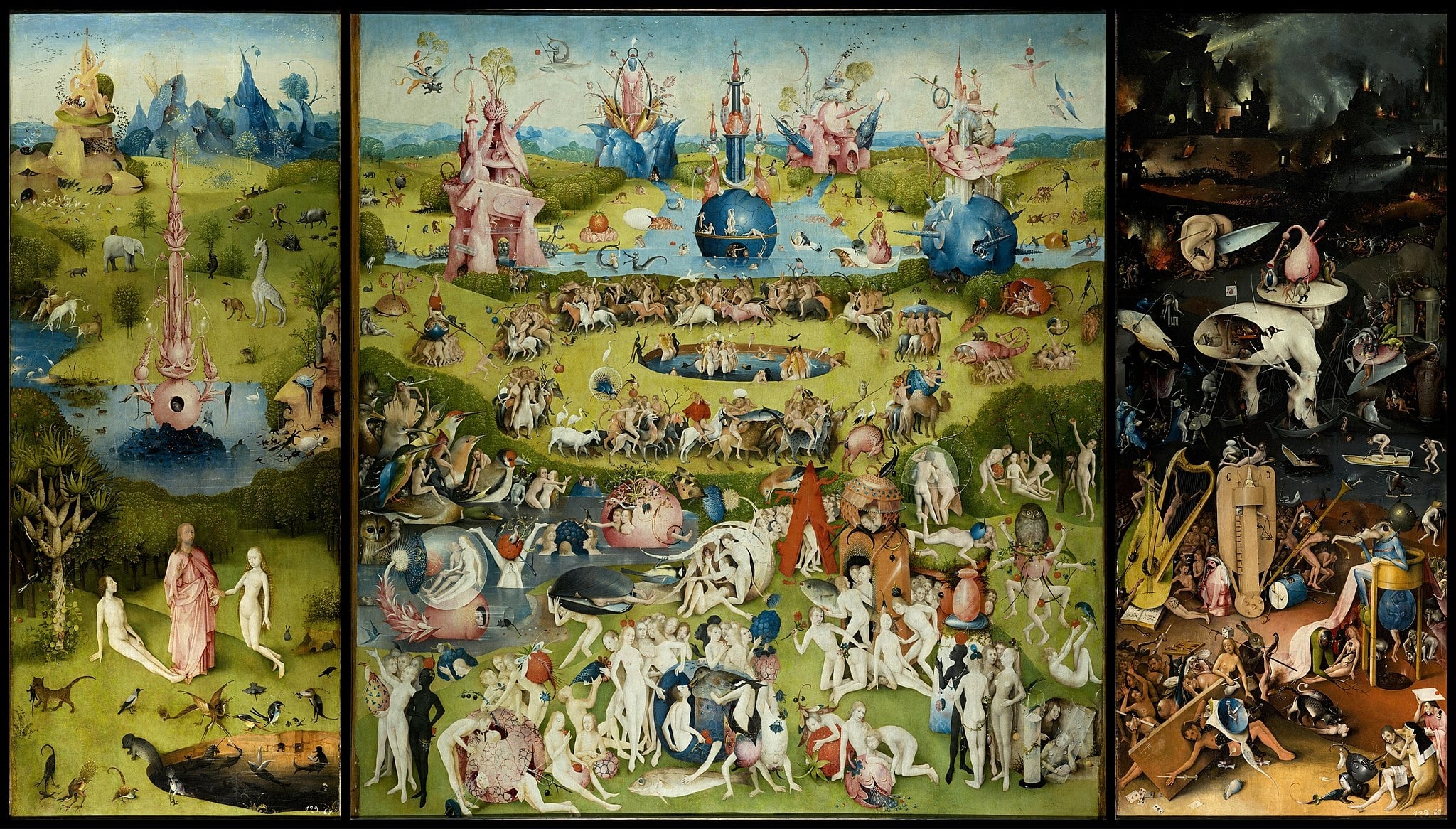
Oversized Fruit (strawberries, cherries, berries) in The Garden of Earthly Delights
In The Garden of Earthly Delights (c.1490–1500) by Hieronymus Bosch, the central panel teems with nude revelers who present, balance, and consume outsized strawberries and other berries. The exaggerated scale transforms bite-sized treats into environments and burdens, literalizing appetite and the seductions of touch and taste. Within the triptych's arc of innocence, seduction, and retribution, these glossy, fragile fruits epitomize the sweet, ephemeral pleasures that the work insists end in ruin, a lesson underscored by the move from the center's candy-colored abundance to the punitive Musical Hell at right.