Owl Symbolism
In art, the owl often embodies knowledge that sees in the dark—perception beyond ordinary daylight innocence. Depending on context, that night-sight can read as prudent wisdom or as a troubling, corrupted intelligence intruding where it does not belong.
Owl in The Garden of Earthly Delights
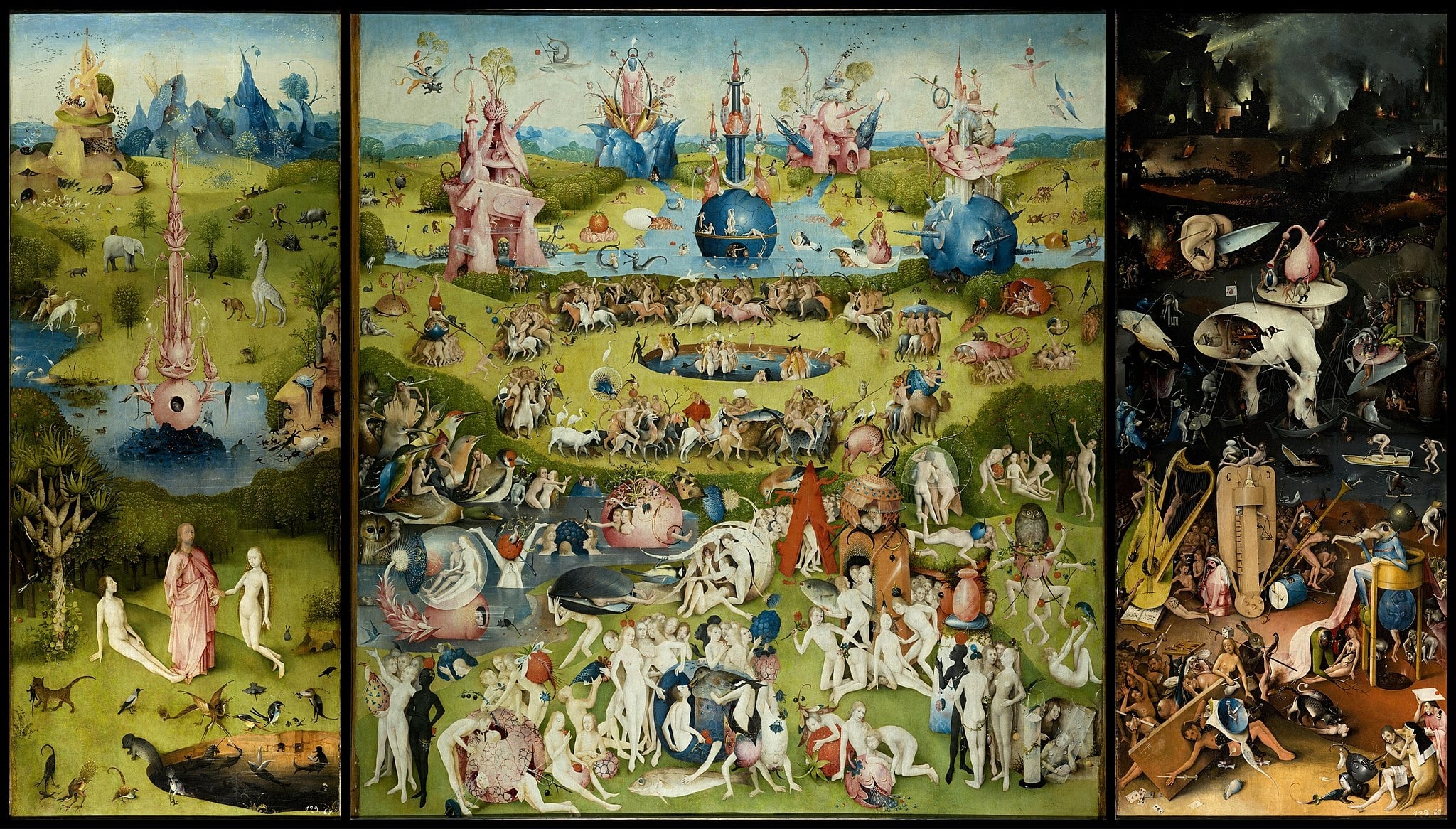
In Hieronymus Bosch’s The Garden of Earthly Delights (c.1490–1500), the owl functions as a recurring emblem that stitches together the triptych’s moral arc from Edenic innocence through seduction to punishment in Musical Hell. Set within Eden’s crystalline forms and returning amid the central panel’s fragile, candy-colored architectures, the bird registers as an ominous, knowing presence within scenes of human delight; by the time the narrative arrives at broken bodies and instruments in Hell, the motif clarifies that such curiosity and sweet, ephemeral pleasures are guided by a corrupted knowledge that ends in ruin.